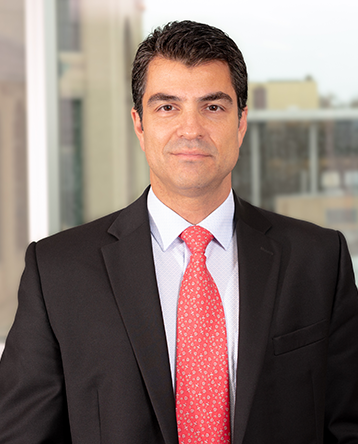
Ricardo Caballero is the Ford International Professor of Economics at the Massachusetts Institute of Technology's School of Humanities, Arts, and Social Sciences, where he previously served as Chairman of the Economics Department from 2008 to 2011. A leading scholar in macroeconomics and financial economics, his research focuses on safe assets, monetary policy, financial crises, and international economics. His research interests center on the macroeconomic implications of financial frictions, with particular emphasis on safe asset shortages, risk premium dynamics, and monetary policy transmission mechanisms. Caballero's work has pioneered the risk-centric approach to macroeconomics, explaining phenomena such as the Wall Street/Main Street disconnect, global imbalances, and the collapse of interest rates through the lens of safe asset scarcity and risk intolerance. His research bridges theoretical modeling with empirical analysis of financial crises and policy interventions. Caballero's recent publications demonstrate a consistent focus on financial conditions indexing, monetary policy frameworks, and the interaction between financial markets and the real economy. His work increasingly examines how central banks can target financial conditions directly and how risk premia evolve during crises, with applications to pandemic-era economic policy and zero lower bound environments. 2002 Frisch Medal of the Econometric Society Smith Breeden Prize by the American Finance Association Journal of Finance 2014 Brattle Group Prize 2022 Banque de France-TSE Senior Prize in Monetary Economics and Finance Elected Fellow of the Econometric Society (1998) Elected Fellow of the American Academy of Arts and Sciences (2010) As an NBER Research Associate and frequent policy advisor, Caballero has influenced central bank thinking globally through his work on financial stability, monetary policy frameworks, and global imbalances. His research has informed policy discussions at the Federal Reserve, IMF, and multiple central banks regarding crisis management, safe asset creation, and the appropriate monetary response to financial shocks. Caballero maintains active collaborations with major financial institutions and central banks worldwide, translating theoretical insights into practical policy frameworks.