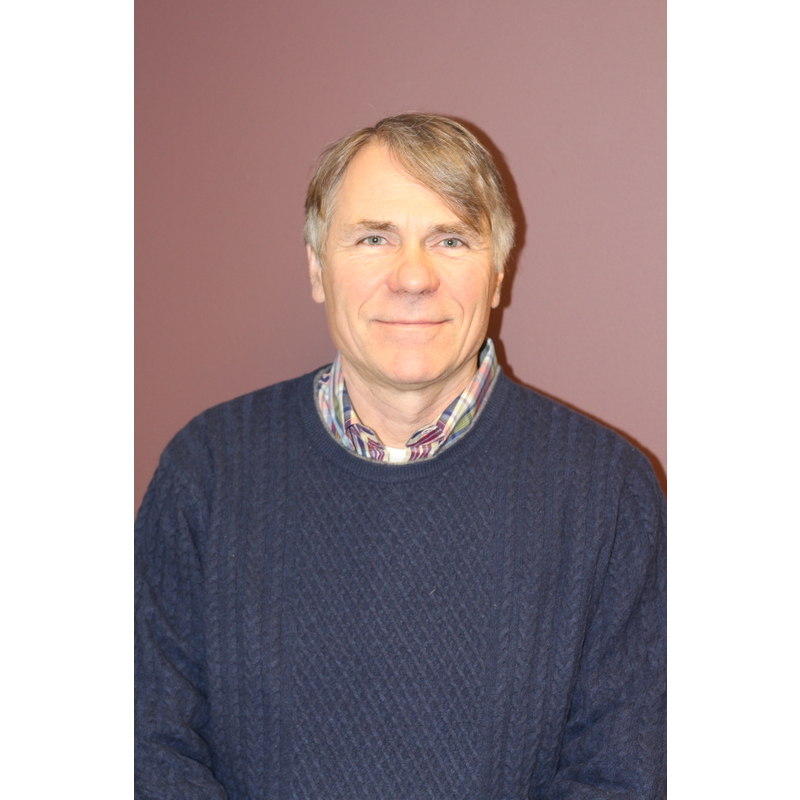
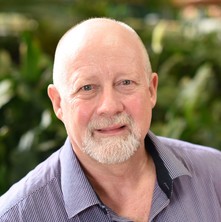
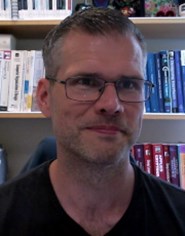
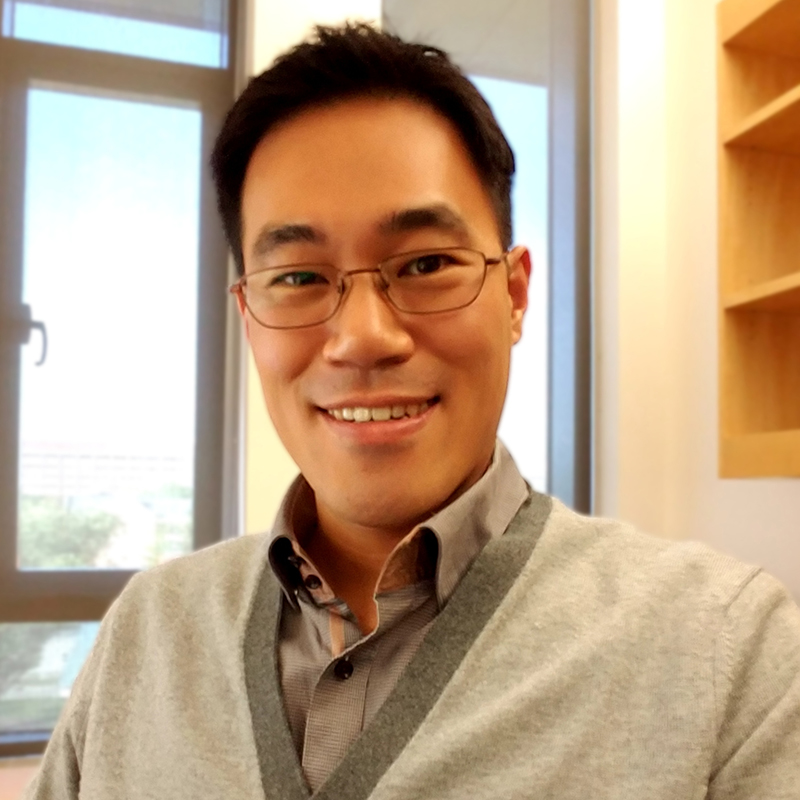
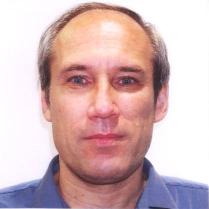
Paul A. Toro is a Professor of Psychology at Wayne State University and Director of the Research Group on Homelessness and Poverty. He has conducted extensive research on homelessness over 30 years, focusing on adults, families, and youth. His work includes cross-national studies, longitudinal designs, and policy advocacy. He holds a Ph.D. in Clinical/Community Psychology from the University of Rochester (1983). Education: Ph.D. in Clinical/Community Psychology, University of Rochester, 1983, with minors in Social and Developmental Psychology. Research interests prioritize understanding homelessness causes, mental health correlates, and intervention efficacy. His studies compare U.S. and European populations, analyze public opinion, and evaluate foster care transitions. He has authored/co-authored over 60 peer-reviewed articles and book chapters. Key contributions include identifying homelessness typologies, assessing program effectiveness for at-risk youth, and informing national policy. He collaborates with the National Alliance to End Homelessness and has advised on international prevention programs. Courses taught include Abnormal Psychology and Research Methods in Psychology.
Edward Kim is an Associate Professor in the Department of Computer Science at Drexel University's College of Computing & Informatics. His research spans computer vision, sparse coding, neuromorphic computing, and AI, with a focus on neuro-inspired machine learning and robust, interpretable models. Research Interests: Computer Vision Sparse Coding and Dictionary Learning Neuromorphic and Spiking Neural Networks Explainable and Adversarially Robust AI Multimodal Learning Medical Image Processing His recent publications highlight a strong trend in developing biologically inspired, robust, and interpretable machine learning models, particularly using sparse coding and spiking neural networks. Themes include adversarial robustness, model confidence calibration, and cross-modal integration. His work often bridges neuroscience and AI, aiming to create more human-like and trustworthy systems. Scientific Awards: NSF CAREER Award (2019) Longsview Fellow (collaborative project, 2021) Dr. Kim advises several graduate students in the SPARSE Lab and has secured significant research funding from the NSF, DARPA, and the Bill & Melinda Gates Foundation. His grants focus on ethical AI, racial bias in ML, and digital health platforms. He also contributes to academic leadership as a Provost Fellow at the Drexel Solutions Institute and co-chair of computer vision tracks at major conferences. Labs and Teams: He leads the SPARSE (SPiking And Recurrent SOFTwarE) Coding Lab, which investigates biologically inspired learning models beyond traditional deep learning. The lab integrates neuroscience principles to improve stability, interpretability, and robustness in AI systems.
Rainer Böckmann is a Professor of Computational Biology in the Department of Biology at Friedrich-Alexander-University Erlangen-Nürnberg (FAU), Germany, where he leads the Group for Theoretical and Computational Membrane Biophysics. His research integrates molecular dynamics simulations with biophysical analysis to study membrane structure, dynamics, and function. Research Interests: His work focuses on computational biophysics, particularly lipid bilayers, membrane proteins, molecular dynamics, and structural bioinformatics. He investigates how lipid composition, cholesterol, and embedded peptides influence membrane organization, curvature, and permeability, with applications in antimicrobial strategies and mRNA vaccine delivery systems. Recent Research Trends: His recent publications reflect a strong emphasis on lipid nanoparticles (LNPs), particularly their phase behavior, pH-dependent protonation, and structural transitions relevant to mRNA vaccines. He also explores antimicrobial peptides, membrane domain formation, and the role of cholesterol in modulating membrane properties. His group develops and applies advanced simulation techniques, including constant-pH MD and coarse-grained modeling. Member of Editorial Board, Biophysical Journal (2024–present) Elected Member, DFG Review Board for Biophysics (2020–present) Chairman, Molecular Biophysics Section, German Biophysical Society (2011–2012) Leadership and Service: Böckmann is actively involved in academic governance, serving on editorial boards, DFG committees, and as a guest editor for special issues in Frontiers journals. He contributes to graduate education and high-performance computing initiatives at FAU, including the NHR@FAU and Life@FAU Graduate School. He has organized major conferences and workshops in biophysics and membrane modeling. Laboratory and Collaboration: He leads a research group focused on biomembrane physics, collaborating with experimentalists and theorists. His lab develops and applies simulation tools to study membrane systems, bridging computational insights with biological function.
Professor Mark Morrison is an Affiliate Professor at the School of Chemistry and Molecular Biosciences, University of Queensland, and holds roles as Chair & Group Leader of Metagenomics at the Frazer Institute within the Faculty of Health, Medicine and Behavioural Sciences. His research focuses on clinical microbiology, gastroenterology, and the microbiome’s role in diseases like inflammatory bowel disease (IBD) and diabetes. He has extensive academic qualifications, including a Bachelor of Science from the University of New South Wales, a Master’s from James Cook University, and a PhD from the University of Illinois. Education : Bachelor of Science, University of New South Wales Masters (Research) of Science, James Cook University Doctor of Philosophy, University of Illinois His research interests span microbiome-driven health and disease mechanisms, particularly in gut-brain interactions, mucosal microbiota dynamics, and translational therapies. Over 390 works include studies on dietary FODMAP effects, microbiome-based IBD diagnostics, and SCFA therapy for diabetes. He leads interdisciplinary grants on microbiome manipulation and has advised numerous PhD students on topics like Crohn’s disease, archaeal biodiversity, and immune modulation. His recent articles highlight microbiota roles in SIBO, anastomotic leaks, and probiotic efficacy. While no explicit awards are cited, his contributions to gut microbiome science are recognized through active research collaborations and funding. He actively supervises students and chairs teams advancing metagenomics and clinical applications.
Fernando Manuel Marques Batista is an Associate Professor at ISCTE – University Institute of Lisbon, Department of Information Science and Technology, and an integrated researcher at INESC-ID Lisbon. He serves as the Executive Coordinator of the Human Language Technologies (HLT) Scientific Area at INESC-ID and is a member of its Scientific Council. He previously held leadership roles including President of the Pedagogical Council of ISCTE-IUL (2017–2019) and member of its Standing Committee (2015–2017). Research Interests: Natural Language Processing Machine Learning Text and Speech Processing Sentiment and Emotion Analysis Hate Speech Detection Social Media Analytics Automatic Speech Recognition and Transcription His recent publications reflect a strong focus on applying NLP and machine learning to social media, with particular emphasis on hate speech detection, sentiment analysis, and user behavior modeling. He has also contributed significantly to speech processing, including punctuation restoration and prosody modeling, and to digital humanities through medieval text analysis. His work spans both technical innovation and real-world applications in tourism, finance, and public discourse. Scientific Recognition: Senior Member of IEEE (since 2016) Member of ISCA (International Speech Communication Association) Fernando Batista actively advises numerous PhD and Master’s students, supervising research in areas such as generative AI, hate speech detection, sentiment analysis, and economic forecasting. He has coordinated research projects like SPEDIAL and AppRecommender and is involved in organizing major conferences including PROPOR, EAMT, IPMU, and the Lisbon Machine Learning Summer School (LxMLS), where he has served in editorial and technical roles. Research Labs and Teams: He is a key member of the HLT@INESC-ID research group, contributing to its leadership and scientific direction. This group focuses on human language technologies, including speech processing, natural language understanding, and multilingual systems.
Kyusang Lee is an Associate Professor in the Electrical and Computer Engineering and Materials Science and Engineering departments at the University of Virginia. His research focuses on optoelectronic devices, neuromorphic computing, and smart sensors, emphasizing applications in solar energy conversion and flexible electronics. He holds a B.S. from Korea University (2005), M.S. from Johns Hopkins University (2009), and Ph.D. from the University of Michigan (2014). He conducted postdoctoral research at the University of Michigan and MIT. Education: B.S., Electrical Engineering, Korea University, 2005 M.S., Electrical and Computer Engineering, Johns Hopkins University, 2009 Ph.D., Electrical Engineering and Computer Science, University of Michigan, 2014 Postdoctoral Fellowships: University of Michigan (EECS), MIT (Mechanical Engineering) His research interests span thin-film and flexible optoelectronics, neuromorphic computing architectures, and AIoT-enabled smart sensors. Notable contributions include remote epitaxy techniques for semiconductor membrane integration and solar-tracking concentrator designs. His work bridges materials science and device engineering to advance energy-efficient optoelectronics and bioinspired systems. Key Research Themes: Organic/inorganic optoelectronic devices for solar energy Flexible and stretchable electronics Neuromorphic hardware for edge computing Gas sensing and bioinspired sensor systems Lee’s publications reflect interdisciplinary innovation, with recent work on ferroelectric transistors, neuromorphic vision systems, and high-efficiency photovoltaics. He received the NSF CAREER Award (2020) and AFOSR YIP Award (2023).
Tommy Löfstedt is an Associate Professor at Umeå University , affiliated with the Department of Computing Science and the Department of Mathematics and Mathematical Statistics. His research focuses on machine learning , computer vision , and medical image analysis , with applications in life sciences, radiation therapy, and biomedical imaging. He leads multiple research projects, including AI-driven delineation in radiation therapy, quantitative MRI for radiotherapy, and machine learning for plant nutrient uptake. Current research emphasizes structured regularization methods to improve model interpretability and robustness. Key applications include medical image segmentation , Alzheimer's classification , and uncertainty estimation in MRI . Recent publications highlight his work on morphological regularization , adversarial attack mitigation , and multi-task learning in medical imaging contexts. His projects span 2022–2026 with funding for pediatric oncology automation and gynecological cancer staging. Affiliated with both computing and mathematical departments, he bridges algorithm development with applied mathematical frameworks in medical and life science domains.
Robert Anderson is a Professor at the University of Arkansas School of Law, currently serving as Dean of Law. His scholarly work focuses on business law and admiralty/maritime law, particularly examining transactional legal documents in corporate law and mergers & acquisitions through empirical and computational analysis. He previously held faculty positions at Pepperdine University Caruso School of Law and practiced law at Sullivan & Cromwell LLP. Education: J.D., New York University School of Law Ph.D., Stanford University Anderson's research explores how legal frameworks evolve to meet business needs, with a focus on corporate entities, contract design, and legal empiricism. His recent work bridges maritime law with modern corporate theory, revealing historical precedents for contemporary business structures. The 15 most recent publications reflect his expertise in corporate law (11 articles), empirical legal analysis (10), contract theory (8), and legal technology (5). Key trends include computational analysis of legal documents, jurisdictional competition in incorporation, and historical/legal comparisons between maritime and corporate systems. Collaborations: Regularly co-authors with Jeffrey Manns on M&A and corporate law topics. His work has been featured in the Wall Street Journal.
Colin Mills is an Associate Professor of Sociology at the University of Oxford and a Professorial Fellow at Nuffield College. His work focuses on social inequality , social mobility , and quantitative social research . Supervision: Quantitative work in social stratification, demography, employment sociology Geographic scope: UK-centric, with openness to Anglophone countries, Germany, France, Sweden Research Interests include: Social stratification and class dynamics Intergenerational mobility and demographic factors Quantitative methodology (not methodological innovation) Doctoral Students include graduates placed at Essex, Surrey, LSE, and international institutions. Contact : colin.mills@nuffield.ox.ac.uk , colin.mills@sociology.ox.ac.uk .
Dr. Patrick Park is an Assistant Professor at the Software and Societal Systems Department within Carnegie Mellon University's School of Computer Science. His work bridges computational and social sciences to analyze network dynamics, digital communication, and open source systems. Current position: Assistant Professor Institution: Carnegie Mellon University Department: Software and Societal Systems Park's research focuses on social network analysis, behavioral modeling, and computational sociology. Key contributions include studies on network diversity, geospatial visualization techniques, and digital communication patterns across civilizations. His recent publications (2023-2024) highlight expertise in network visualization, social contagion, and open source innovation. Earlier work spans topics like organizational classification, user behavior paradoxes, and cross-cultural communication networks.
Lukas Papritz is a Lecturer at the Department of Environmental Systems Science at ETH Zürich , Switzerland. He specializes in atmospheric dynamics, focusing on large-scale weather systems, Arctic climate processes, and air-sea interactions. Research Interests : Dynamics of extratropical cyclones and atmospheric blocking Arctic climate system, including air mass transformations Atmospheric and oceanic energy exchanges Physics of temperature extremes (cold/warm) Development of dynamical frameworks for weather system analysis His recent publications examine baroclinic wave energetics, heatwave thermodynamics, cold-air outbreak dynamics, and synoptic-scale moisture transport. These works integrate Lagrangian methods, climatological analysis, and regional climate modeling. Current Affiliation : Professorship for Atmospheric Dynamics (Professur für Atmosphärendynamik), ETH Zürich
Kathleen M. Brown is the David Boies Professor of History at the University of Pennsylvania's School of Arts & Sciences, specializing in gender and race in early America and the Atlantic World. She teaches a wide range of undergraduate and graduate courses on comparative slavery, colonial America, history of the body, race and sex in early America, and Atlantic history. Her educational background includes a Ph.D. (1990) and M.A. (1985) from the University of Wisconsin-Madison and a B.A. (1981) from Wesleyan University. Brown has been instrumental in the Penn & Slavery project since 2017 as the project's lead faculty historian. Brown's research focuses on the intersections of gender, race, and power in colonial contexts, with particular attention to bodily integrity, cleanliness practices, and the medical and legal dimensions of slavery and abolition. Her work demonstrates how bodily experiences were central to understanding power dynamics in early America and how racial categories were constructed through gendered frameworks. Her publications reveal consistent scholarly engagement with how bodies—particularly female bodies and Black bodies—were sites of political struggle, medical inquiry, and cultural meaning-making in the early Atlantic world. The trajectory of her work shows an evolution from examining colonial Virginia's gendered power structures to analyzing transatlantic abolitionist movements through the lens of bodily politics. Dunning Prize of the American Historical Association (for Good Wives, Nasty Wenches, and Anxious Patriarchs) Organization of American Historians' Lawrence Levine Book Prize for cultural history (for Foul Bodies) Society of the History of the Early American Republic Book Prize (for Foul Bodies) Guggenheim Fellowship (2015-2016) Brown has received significant research support through fellowships from the Omohundro Institute for Early American Studies, the American Antiquarian Society, the National Endowment for the Humanities, and the Bunting Institute at Radcliffe College. She serves as Co-Editor of the Early American Studies monograph series and is affiliated with Penn GSWS, the Center for Research in Feminist Queer and Transgender Studies, Africana Studies, and History and Sociology of Science.
Professor Spiridon Ivanov Penev is a leading academic in the School of Mathematics and Statistics at the University of New South Wales. He holds a PhD in Mathematical Statistics from Humboldt University (Berlin, Germany) and has been affiliated with UNSW since 1992, progressing from Lecturer to Professor in 2019. His research spans wavelet methods, saddlepoint approximations, structural equation models, and stochastic risk analysis. Education: PhD in Mathematical Statistics, Humboldt University Current Affiliation: Department of Statistics, School of Mathematics and Statistics, UNSW His work focuses on advanced nonparametric techniques, including wavelet-based signal recovery with adaptive sampling rates, and robust inference in structural equation models. He has developed bias-corrected reliability measures for psychometric applications and contributed to stochastic optimization problems in finance and engineering. Recent publications highlight his expertise in semiparametric regression, robust portfolio optimization, and marine engineering applications using machine learning. Key trends include the use of Bregman divergence for shape-preserving estimation and Markov chain methods for climate model weighting. Scientific Awards: DAAD award Elected member of the International Statistical Institute (ISI) He has supervised numerous grants as Chief Investigator, including Australian Research Council projects and industry collaborations. Administrative roles include membership in the School of Mathematics and Statistics Executive Committee. Teaching duties span advanced statistical inference, multivariate analysis, and data science applications.
Prof. Dr. Erik Theissen is a full-time faculty member at the University of Mannheim, holding the Chair in Business Administration and Finance. His research focuses on market microstructure, corporate governance, and information-based trading in equity markets. University of Mannheim, Department of Business Administration Research areas: Finance, Market Microstructure, Corporate Governance His work compares auction and dealer markets, analyzes insider trading regulations, and evaluates the impact of trader anonymity on market liquidity. He has explored competition between exchanges (e.g., Euronext vs. Xetra) and the role of internalized trading under MiFID. His publications include Organizational Forms of Securities Trading (1998), with over 15 major peer-reviewed articles since 2001. Key journals include the Review of Financial Studies, European Financial Management, and Journal of Corporate Finance. 2001 Financial Innovation Award of Bethmann Bank 2001 Best Paper Award (Association of University Professors of Business Administration) 1998 Dissertation Award of the German Stock Institute His research spans experimental economics (e.g., market design, risk attitude estimation) and empirical analysis of German capital markets, including IPO pricing and mutual fund performance.
Stephen T. Wong holds the John S. Dunn Presidential Distinguished Chair in Biomedical Engineering and serves as Professor of Radiology and Medicine with Tenure and Chief of Medical Physics at Houston Methodist. He maintains professorships across multiple prestigious institutions including Weill Cornell Medicine (Radiology, Neurosciences, Pathology and Laboratory Medicine), Texas A&M University, Baylor College of Medicine, University of Texas MD Anderson Cancer Center, Rice University, University of Texas Health Houston, and University of Houston. Weill Cornell Medicine: Professor of Computer Science and Bioengineering in Radiology (since 2008), Pathology and Laboratory Medicine (since 2010), and Neuroscience (since 2012) Houston Methodist: John S. Dunn Presidential Distinguished Chair in Biomedical Engineering Academic leadership: Director of multiple research centers including Ting Tsung and Wei Fong Chao Center for BRAIN and AI in Innovative Medicine lab Dr. Wong's research employs a systems-based approach integrating engineering with biology and medicine to elucidate disease mechanisms. His laboratory focuses on discovering novel drugs and biomarkers while developing advanced diagnostic and therapeutic devices, with particular emphasis on cancer, neurological disorders, and metabolic diseases. Current projects target micro- and macroenvironments of cancer and Alzheimer's disease, apply spatial and systems biology methods for drug discovery, create label-free point-of-care molecular diagnostics, and develop AI applications for stroke triage and treatment. His publication portfolio demonstrates consistent growth over three decades, with over 500 peer-reviewed papers and five books. Recent work shows strong emphasis on artificial intelligence applications in medical imaging, cancer therapeutics, and neurological diagnostics, with multiple 2025 publications featuring multimodal AI approaches for hepatocellular carcinoma, lung cancer interventions, tumor evolution, brain imaging, and thyroid nodule characterization. Fellowships: IEEE, AIMBE, IAMBE, ACMI, AMIA, Optica, and AAIA Honors: AIIA Fellow (2024), American College of Medical Informatics Fellow (2023), AAIA-Fellow (2021), AIMBE Fellow (2021) Professional: Registered Professional Engineer (PE), Executive education from Stanford, MIT, and Columbia Business Schools Dr. Wong has trained over 170 PhD, MD/PhD, and postdoctoral scholars, with four now holding endowed chairs. His research has received continuous NIH funding for three decades, supporting 35 active and completed projects including DeepStroke+ for AI stroke detection, Alzheimer's disease research, and cancer diagnostics. He has founded multiple research centers including the Division of Shared Resources at Houston Methodist Neal Cancer Center, Translational Biophotonics Lab, and Center for Modeling Cancer Development.