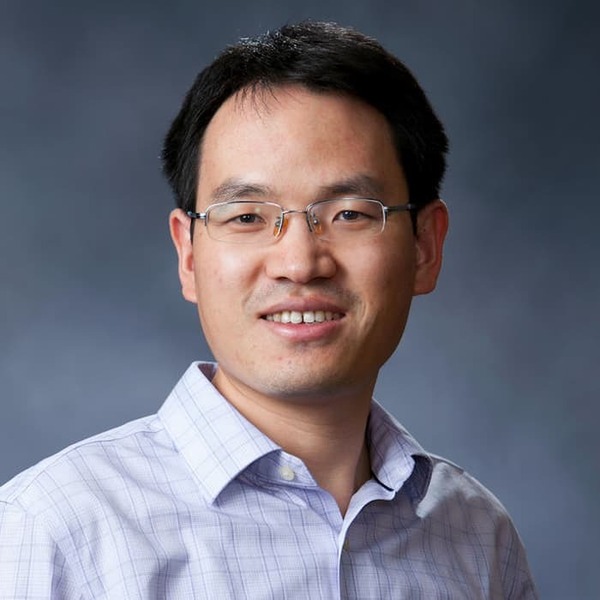
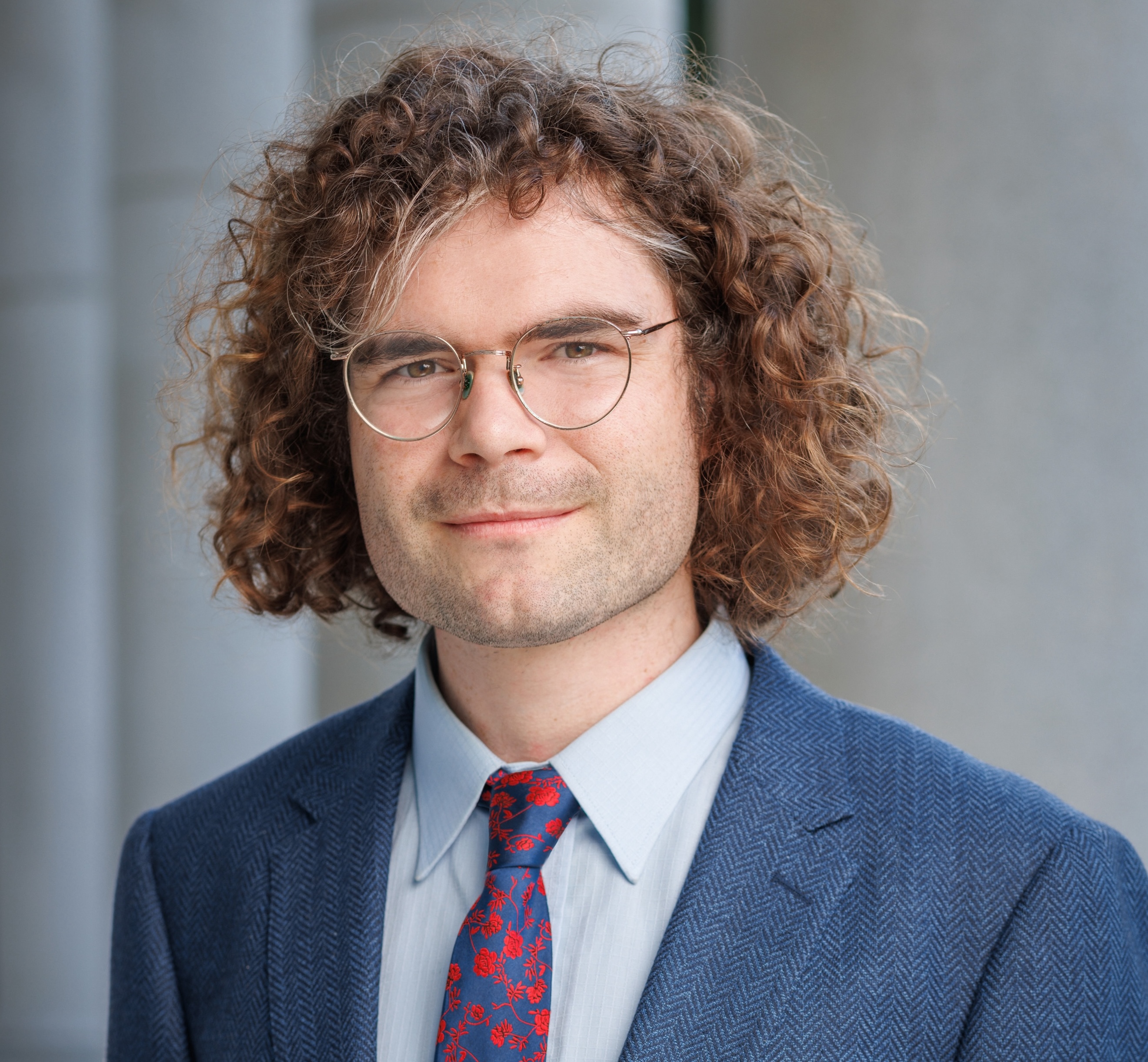
Professor Guido Kuersteiner is a leading academic in the Department of Economics at the University of Maryland . Holding a PhD from Yale University (1997), he has previously taught at prestigious institutions including MIT, Boston University, UC Davis, and Georgetown University. His research spans theoretical and applied econometrics , with focus areas in GMM estimation, spatial models, causal inference, and bias correction techniques.
Robert S. Maier is a Professor of Mathematics and Physics at the University of Arizona, holding a joint faculty appointment. He earned his Ph.D. in 1983 from Rutgers University. His research spans stochastic modeling, quantum mechanics, and mathematical physics, with a focus on noise models, semiclassical limits, and applications in statistical physics and dynamical systems. Maier's work bridges theoretical physics and applied mathematics, addressing topics like weak noise activation, WKB theory, and special functions such as hypergeometric functions and spherical harmonics. His recent publications explore machine learning applications in education and astrophysics, alongside foundational studies in operator ordering and recurrence relations. Despite his extensive contributions to stochastic processes and mathematical physics, he has no explicitly listed scientific awards or advisees. His interdisciplinary research often intersects with computational methods and data-driven approaches, reflecting his dual expertise in mathematics and physics.
Zhiyong (Johnny) Zhang is a Professor of Quantitative Psychology at the University of Notre Dame and serves as the Quantitative Area Director. He is the director of the Lab for Big Data Methodology and a Fellow at the Institute for Educational Initiatives. His primary research areas include Bayesian methods, network analysis, structural equation modeling, and statistical computing. Dr. Zhang holds a Ph.D. in Quantitative Psychology from the University of Virginia. His work focuses on developing advanced statistical methodologies and software for education, health, management, and psychology. He is the Editor of the Journal of Behavioral Data Science and an Associate Editor of Multivariate Behavioral Research. His research trends span Bayesian inference, neural network applications, mediation analysis, and methodological innovations in factor analysis and latent growth models. He has contributed to software tools like WebPower for statistical power analysis and RAMpath for structural equation modeling. Zhang has received prestigious awards, including Fellow status in the American Psychological Association and election to the Society of Multivariate Experimental Psychology. His advising and grants include mentoring students in quantitative methodologies and leading research on text mining, emotion recognition, and big data applications. The Lab for Big Data Methodology under his direction advances interdisciplinary statistical approaches.
Professor Gareth Peters is the Janet & Ian Duncan Endowed Chair of Actuarial Science and holds the Chair in Statistics for Risk and Insurance at the Department of Statistics & Applied Probability, University of California Santa Barbara (UCSB). His research focuses on statistical solutions for risk and insurance, with emphasis on actuarial science, financial engineering, environmental data analysis, and cybersecurity risk. He has received notable recognition including the 2024 IFoA Peter-Clark Prize, the oldest actuarial award established in 1891. His academic contributions span advanced statistical modeling techniques for financial markets, climate-related risk analysis, and healthcare analytics. Notable projects include developing methodologies for green bond valuation, cyber insurance frameworks, and machine learning applications in audiology and speech disorders. He has pioneered software tools such as CovRegpy for covariance regression and DivFolio for portfolio divestment analysis. Educations: Advanced degrees in statistics and actuarial science (specific details not provided) Professional Memberships: Fellow of multiple academic societies including the Royal Statistical Society and Institute of Mathematics and its Applications Research interests include: Statistical causality in financial and environmental time series Mortality modeling incorporating long-memory processes Quantifying climate change impacts on energy consumption Machine learning for cybersecurity risk mitigation His recent work emphasizes interdisciplinary applications of statistics in climate finance, sustainable investing, and precision agriculture. Over 2020-2025, his publications explore topics ranging from municipal green bonds to vocal analysis for Parkinson’s diagnostics. Awards: 2024 IFoA Peter-Clark Prize Elected Member of ISI (International Statistical Institute) IEEE Senior Member Labs/Initiatives: Develops open-source software packages for statistical analysis (e.g., AdvEMDpy, PyKronecker) and contributes to regulatory frameworks via tools like AuditChain for blockchain-based trading audits.
Ivana Malenica is an Assistant Professor of Biostatistics at the University of North Carolina at Chapel Hill's Gillings School of Global Public Health. Previously, she was a HDSI Fellow at Harvard Data Science Initiative and Postdoctoral Fellow in Statistics at Harvard University. She holds a Ph.D. in Biostatistics from UC Berkeley and a B.S. in Mathematics from Arizona State University. Her research focuses on causal inference, machine learning, nonparametric statistics, efficiency theory, and precision health. She specializes in longitudinal and structured dependent settings including adaptive sequential experiments, online learning, and reinforcement learning applications in personalized health. Her recent publications demonstrate strong methodological contributions to causal inference and machine learning, with applications spanning clinical trials, public health, genomics, and reinforcement learning. Her work consistently develops novel statistical approaches for complex data structures. Awards include: Harvard Data Science Initiative Fellowship (2022) Berkeley Wellness Letter Fellowship (2020) Wellness Scholarship in Honor of Chin Long Chiang (2019) Berkeley Institute for Data Science Moore-Sloan Fellowship (2018) She teaches graduate courses including Advanced Probability and Statistical Inference I (BIOS 760). Her computational work includes contributions to the tlverse ecosystem for causal inference in R.
Gerry Altmann is a Professor and Director of Perception, Action, and Cognition in the Department of Psychological Sciences at the University of Connecticut. He earned his Ph.D. from the University of Edinburgh in 1986. His research employs behavioral and neuroscientific methods to investigate real-time language processing, event cognition, and object representation dynamics. His research focuses on: Sentence processing and language comprehension mechanisms Event cognition and mental representation of object histories Real-time mapping between language and visual environments Neural correlates of language processing using EEG and fMRI Recent publications (2019-2025) demonstrate methodological diversity including eye-tracking, EEG, computational modeling, and behavioral paradigms. Predominant themes include event representation, neural dynamics of language processing, and cognitive architectures supporting abstract concept formation. Honors include: Founding Director of the CT Institute for the Brain and Cognitive Sciences (2015-2021) Editor-in-Chief of Cognition (2006-2015) Honorary Secretary of the UK's Experimental Psychology Society (2004-2007) He has supervised numerous graduate students including doctoral candidate Emily Yearling and master's student Wesley Leong. Recent graduates include Julia Mocciola, Katrina Turick, and Yanina Prystauka. Dr. Altmann directs the Altmann Lab at UConn, which uses eye-tracking, EEG, and fMRI to study language processing. The lab is affiliated with the CT Institute for the Brain and Cognitive Sciences and includes postdoctoral, graduate, and undergraduate researchers.
Marcel Weber is a Full Professor of Philosophy of Science at the Department of Philosophy, University of Geneva, with a focus on the philosophy of life sciences and general philosophy of science. He also teaches general epistemology and modern philosophy, particularly Kant. PhD in Philosophy (1996, University of Konstanz) Habilitation (2002, Leibniz University Hannover) Previous roles: SNSF Professor at University of Basel (2004–2009), Full Professor at University of Konstanz (2009–2011), and visiting appointments at institutions like University of California, Irvine, and Max Planck-Institute for the History of Science. His research spans the intersection of biology and philosophy, emphasizing evolvability, causality in biological systems, and the ontology of biological functions. Key projects include collaborations with the Institute of Genetics and Genomics of Geneva (iGE3), NCCR Evolving Language, and the DACH project on Inferentialism and Bayesianism. Marcel Weber's recent publications explore evolutionary developmental biology, causal specificity, and the metaphysics of biological modalities. His work often integrates experimental practices across levels of biological organization and critiques deterministic versus probabilistic interpretations in evolutionary theory. 2012: Elected to the German National Academy of Sciences Leopoldina 1996: Science Prize of the District of Constance He has edited volumes on probabilities in science, philosophical confirmation, and collective epistemology. His laboratory affiliations include interdisciplinary groups like 'What if? On Counterfactual Claims' and lgBig (Lake Geneva Biological Interest Group).
Dinand Webbink is a Full Professor of Policy Evaluation at the Erasmus School of Economics, Erasmus University. He is actively engaged in empirical economic research with a focus on assessing the impact of public policies in education, labor, health, and crime. He holds fellowships at the Tinbergen Institute and IZA Bonn, and is an academic partner at the Netherlands Bureau of Economic Policy Analysis (CPB), highlighting his national and international recognition. His research interests span a wide range of topics in applied microeconomics and econometrics. Key areas include policy evaluation using causal inference methods, education reform, labor market dynamics, health economics, and socioeconomic inequality. His methodological expertise includes difference-in-differences, fixed effects modeling, and analysis of large-scale survey and administrative data. His work frequently contributes to evidence-based policymaking and aligns with several UN Sustainable Development Goals, particularly those related to quality education and reduced inequalities. The most recent articles highlight his ongoing contributions to pressing policy debates—such as the shift from grants to income-contingent loans in Dutch higher education, the behavioral economics of happiness and altruism in sports contexts, and the effects of forced school attendance on student outcomes. His publications appear in leading journals like the Journal of Applied Econometrics , Economics of Education Review , and Scandinavian Journal of Economics , indicating sustained scholarly impact. Scientific Honors and Affiliations: Fellow, Tinbergen Institute Fellow, IZA Bonn Academic Partner, Netherlands Bureau of Economic Policy Analysis (CPB) Webbink has supervised 15 academic works, reflecting his commitment to mentoring the next generation of economists. Although specific grant details are not listed, his affiliations with CPB and Tinbergen Institute suggest involvement in major research initiatives and policy advisory roles. He has also contributed datasets to public repositories, supporting open science and reproducibility in empirical economics. He is associated with research groups and networks including the Tinbergen Institute, IZA, and CPB, which serve as collaborative hubs for economic research in Europe. These affiliations enable interdisciplinary and policy-relevant research with real-world impact.
Dr. Enrique Acebo Moral is an Assistant Professor in Management at the University of León's Department of Management and Business Economics, affiliated with the Faculty of Economics and Business. His work bridges eco-innovation , green-digital twin transition , and the new space economy , utilizing causal inference and econometric methods to study sustainable development and technological adaptation in firms. Education: PhD in Business Economics (Summa Cum Laude, International Mention) from the University of León (2022) His research explores how business ecosystems and sustainable innovation are shaped by policy tools like R&D grants, with a focus on multi-level innovation policy frameworks and financial constraints in technology adoption. Publications in Industry and Innovation , Science and Public Policy , and related journals demonstrate his expertise in econometric modeling of innovation dynamics. Recent articles analyze topics such as the heterogeneous impact of government support , complementary/substitutive stakeholder effects , and university-industry knowledge flows , reflecting his interdisciplinary approach to innovation management. His work has been cited over 90 times across Dimensions metrics. Awards: Best Reviewer Award (Industry and Innovation, 2022) PhD FPU Fellowship (2019-2022) Extraordinary Master's Prize (2019) He teaches operations management , innovation management , and conducts workshops on causal inference methodologies like Directed Acyclic Graphs (DAGs). Active in academic service as ACEDE Operations and Technology Division Coordinator and Social Media Editor for Industry and Innovation .
Lisbet Fjæran is an Associate Professor at the Department of Safety, Economics and Planning within the Faculty of Science and Technology at the University of Stavanger. Her research focuses on the intersection of risk perception, uncertainty analysis, and stakeholder dynamics, particularly in high-consequence industries like petroleum and technology sectors. Risk research methodology Uncertainty-based risk perspectives Stakeholder engagement frameworks Social dynamics of risk amplification Public-private sector risk governance Recent publications highlight her work on expert roles in risk communication, critical trust frameworks, and the paradox of risk attenuation leading to disaster. Her scholarship spans both theoretical and applied domains, with fieldwork in Norwegian regulatory contexts. Active collaborations include Terje Aven and Kenneth Gould, with co-authored works appearing in top-tier journals like Journal of Risk Research and Safety Science . While no formal awards are documented in the provided texts, her contributions to safety governance theory remain significant.
Professor M. Hashem Pesaran is a leading academic in Econometrics and Macroeconomics at the University of Cambridge's Faculty of Economics. His research focuses on dynamic panel data models, asset pricing, climate change impacts, and spatial econometrics. He has contributed extensively to methodologies addressing cross-sectional dependence, factor models, and policy analysis. Notable works include advancements in testing for alpha in asset pricing, analyzing pandemic transmission via stochastic networks, and assessing climate change's macroeconomic effects. His empirical studies utilize large datasets and advanced econometric techniques, often with real-world policy implications. Key research interests include: Econometric theory (panel data, factor models) Financial economics (asset pricing, risk premia) Macroeconomic policy (climate change, fiscal impacts) Spatial and network analysis (dominant units, SIR models) Recent articles highlight his work on heterogeneous dynamic panels, climate effects on US states, and pandemic modeling. No explicit awards are listed, but his publications indicate peer recognition. Advising and grants are not detailed here, but his collaborative projects suggest extensive academic leadership.
Serena Ng is the Edwin W. Rickert Professor of Economics at Columbia University and an Affiliated Faculty member in the Department of Statistics. Her research spans econometrics, empirical macroeconomics, time series analysis, and big data methods, with a focus on factor models, missing data, and macroeconomic forecasting. She has developed influential datasets such as FRED-MD and FRED-QD, widely used in macroeconomic research. Her research interests include: High-dimensional econometric modeling Factor analysis and principal components Missing data and matrix completion Dynamic modeling of disasters and climate shocks Macroeconomic forecasting and nowcasting Structural vector autoregressions and DSGE identification Her recent publications (2021–2025) reflect a strong trend toward integrating machine learning and computational methods into econometric modeling, particularly in handling large datasets, imputing missing values, and analyzing the macroeconomic impact of climate and disaster shocks. She has also contributed to foundational work in uncertainty measurement and time-varying parameter models. Her scientific contributions are recognized through extensive publication in leading journals. While no specific awards are listed, her editorial and collaborative roles (e.g., with the Journal of Econometrics) indicate high standing in the profession. She advises doctoral students in economics and statistics, though no names are publicly listed. She has received funding from major institutions including the National Science Foundation and NIH for interdisciplinary research. Her work bridges econometrics with environmental and health economics, particularly in projects related to climate adaptation and disaster impacts. She maintains a laboratory-like research group focused on macroeconometric modeling and big data analysis, contributing to the development of tools for real-time economic monitoring and policy analysis.
Gary L. Darmstadt, MD, MS, is a Professor (Teaching) of Pediatrics (Neonatology) at Stanford University School of Medicine and holds a courtesy appointment in Obstetrics & Gynecology. He serves as Associate Dean for Maternal and Child Health and leads the Global Center for Gender Equality at Stanford. His career spans academic medicine, global health leadership at the Bill & Melinda Gates Foundation, and pioneering work in newborn health research. Education & Training: MD from UC San Diego, MS in Agronomy from University of Wisconsin, and residency in Pediatrics at Johns Hopkins. Advanced training includes Dermatology at Stanford and Pediatric Infectious Disease at University of Washington. Research Focus: Advances in maternal and child health, neonatal survival, gender equality in global health, and application of artificial intelligence to health equity challenges. Key projects include The Lancet Series on Gender Equality, Grand Challenges for Women's Health, and interventions to reduce neonatal infections in low-resource settings. Publications & Impact: Over 245 peer-reviewed articles, including landmark studies on neonatal infection mortality, preterm birth biomarkers, and gender norms' impact on health outcomes. Recent work emphasizes machine learning applications in global health diagnostics and policy. Awards & Recognition: Recipient of prestigious honors such as the 2021 Johns Hopkins Outstanding Alumnus Award, 2017 UC San Diego Alumnus of the Year, and multiple Gates Foundation awards for innovative programs. Leads global advisory roles at WHO, UNICEF, and the Global Mental Health Council. Current Roles: Member of Bio-X, Stanford HAI, and Wu Tsai Neurosciences Institute. Oversees interdisciplinary initiatives like the Global Center for Gender Equality and co-directs global pediatric research programs.
Wilbur Townsend is an Assistant Professor in the Department of Economics at the University of California, Berkeley. His research focuses on labor economics, immigration policy, and structural methods. He holds a PhD from Harvard University (expected 2025). Key research areas include wage-setting mechanisms, job quality dynamics, and the impact of migration policies on labor markets. His work on New Zealand’s Essential Skills visa restrictions demonstrates how migration policies can inadvertently harm both migrants and local workers through wage suppression. He has also analyzed the effects of minimum wage policies, broadband infrastructure on education, and medical marijuana laws on crime rates. Publications span journals like Nature and the Journal of Business & Economics Statistics , with notable contributions to social capital measurement and economic mobility. His GitHub repository ( github.com/wilburtownsend ) includes open-source projects like a replication of New Zealand’s minimum wage model, showcasing his commitment to transparent research methods.
Irena Vodenska is Professor of Finance and Director of Finance Programs at Boston University’s Metropolitan College, Department of Administrative Sciences. She holds a PhD in statistical finance and an MA in economics from Boston University, an MBA from Vanderbilt University, and a BS in computer information systems from the University of Belgrade. She is also a Chartered Financial Analyst (CFA) charter holder. Her research is at the intersection of finance, complexity science, and artificial intelligence, focusing on systemic risk modeling, ESG investments, and financial network dynamics. She has led major interdisciplinary research projects funded by the National Science Foundation, the European Commission, and the U.S. Army Research Office. PhD, Statistical Finance – Boston University MA, Economics – Boston University MBA – Owen Graduate School of Management, Vanderbilt University BS, Computer Information Systems – University of Belgrade Dr. Vodenska’s research interests include network theory in finance, systemic risk propagation, AI-powered ESG analysis, cryptocurrency price forecasting, and financial regulation. She employs big data, machine learning, and natural language processing to analyze financial news, market dynamics, and corporate sustainability. Her work investigates how climate disinformation spreads via social networks and influences public policy and governance. The recent articles highlight a consistent focus on modeling financial and economic systems using network science and AI. Trends include systemic stress testing, sentiment analysis in financial markets, cascading failures, and the interplay between macroeconomic indicators and financial networks. Her work spans econophysics, behavioral finance, public health economics, and ethical AI in fintech. National Science Foundation (NSF) research grant (2023) NSF EAGER Award (2014–2015) European Commission FET Open Grant (2012–2014) U.S. Army Research Office (ARO) Grant (2020–2021) MEXT Post-K Computer Grant, Japan (2016–2019) Alexander Hamilton Fulbright Fellowship (1994) Owen Graduate School Fellowship (1995–1996) Dr. Vodenska teaches core finance courses such as Investment Analysis and Portfolio Management, Derivatives Securities, and Financial Regulation and Ethics. She co-developed the MET AD 678 course with Professor Tamar Frankel from BU Law, emphasizing real-world case studies and ethical decision-making. Her research grants have supported innovative work in systemic risk modeling, AI for ESG, and financial network stability. She is actively involved in mentoring, conference organization, and editorial roles in leading journals. She is a key organizer of the International School and Conference on Network Science (NetSci) and the Big Data in Economics, Science, and Technology (BEST) Conference. Her lab and research team focus on complexity in financial systems, bringing together economists, physicists, computer scientists, and data analysts to study global financial stability and sustainability.