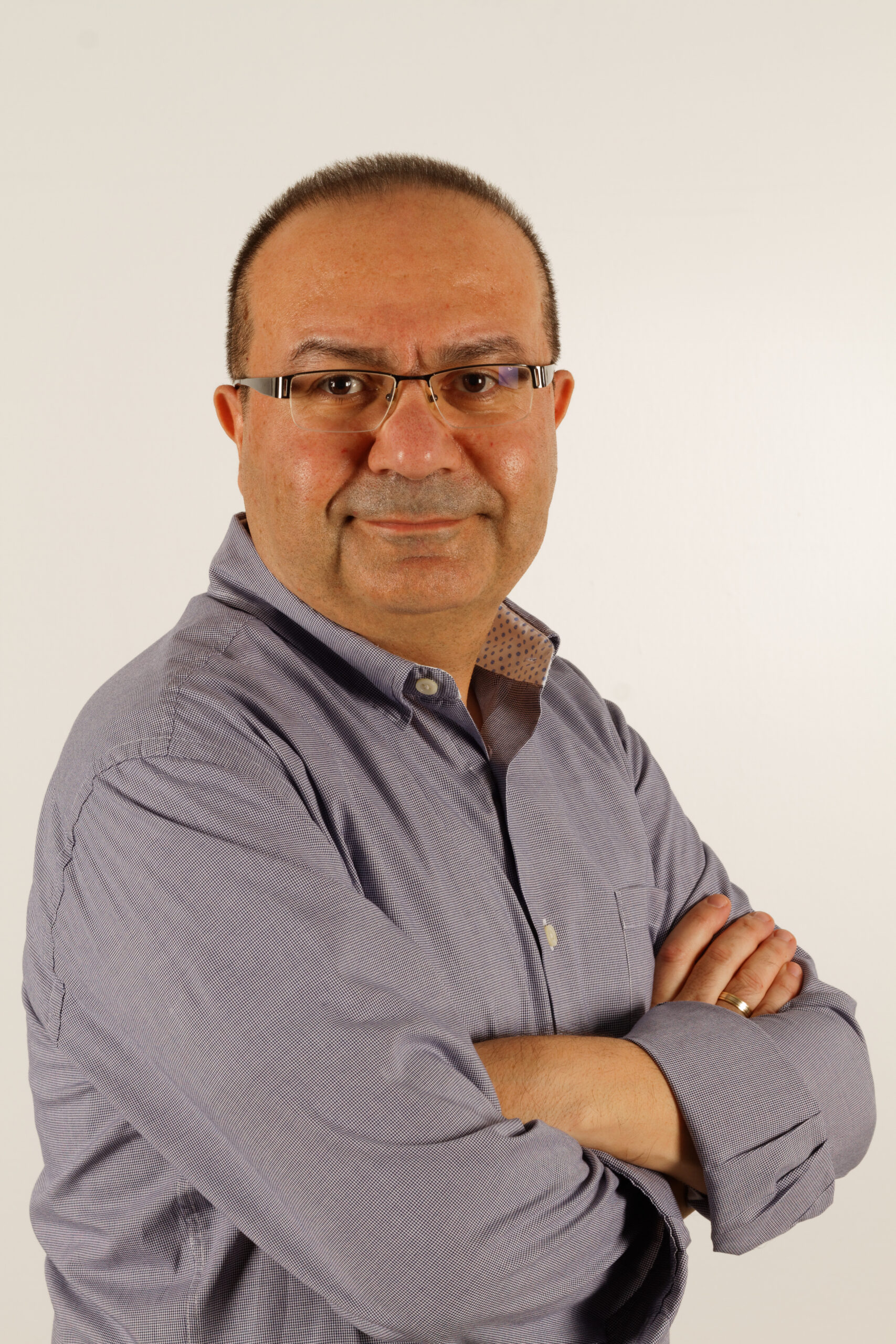
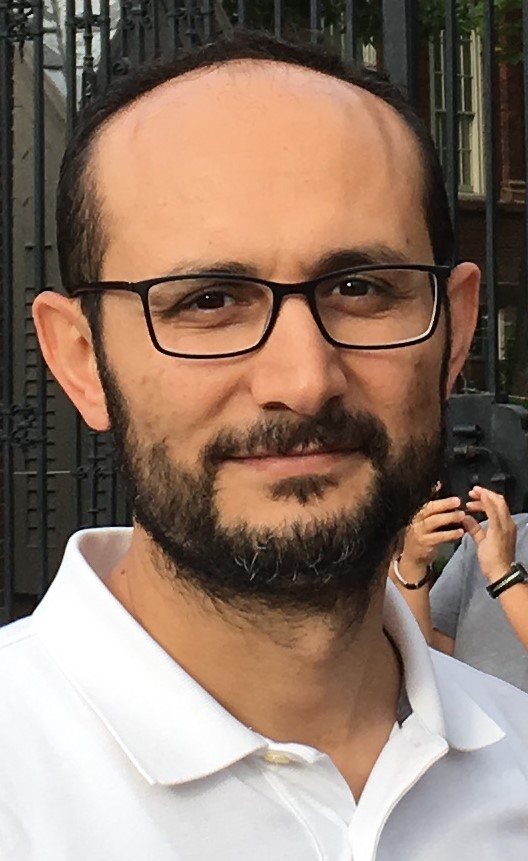
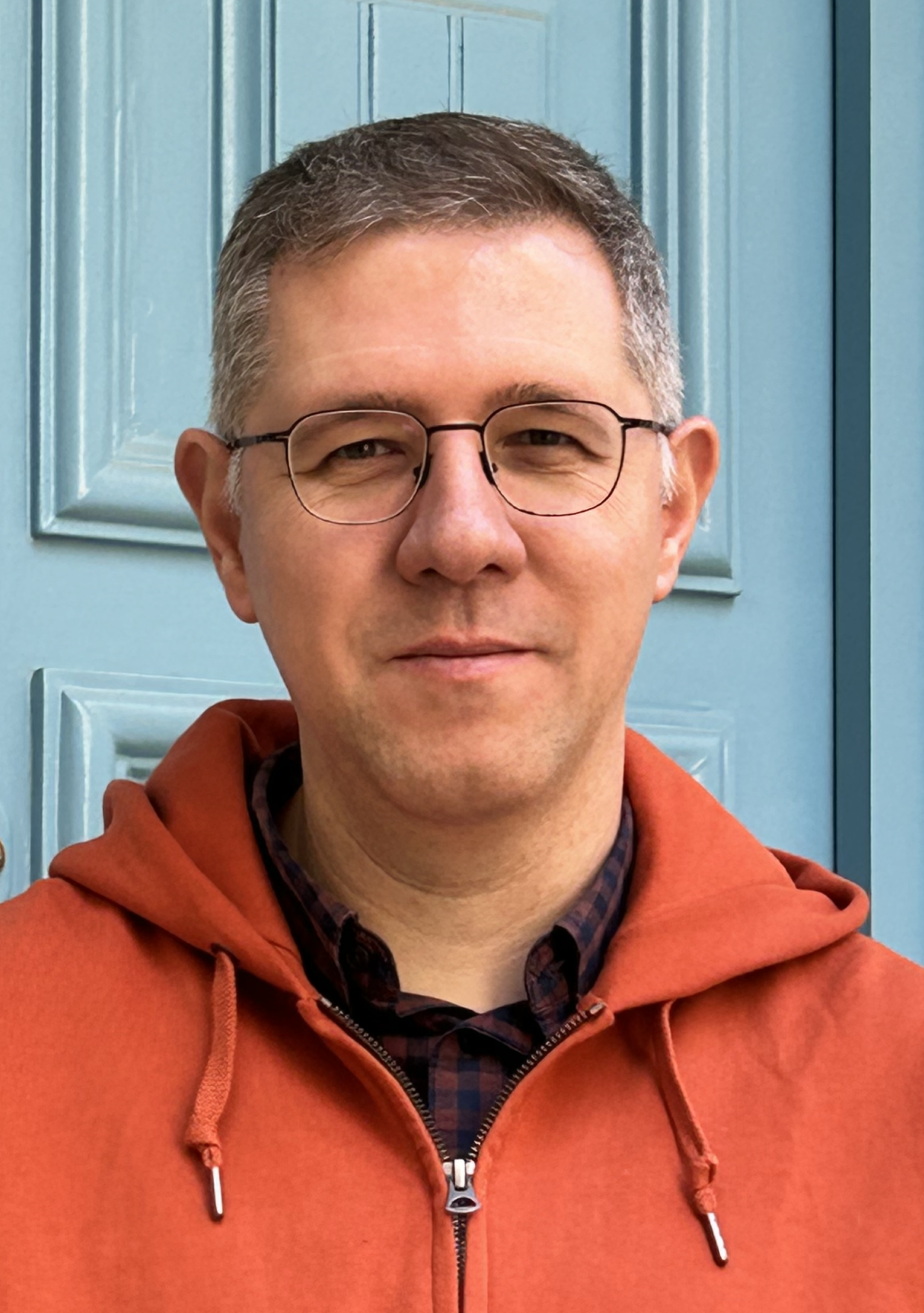
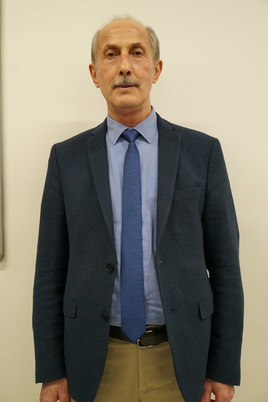
Prof. Dr. Sakibe Nalan BÜYÜKKANTARCIOĞLU is a Professor at Çankaya University, Faculty of Arts and Sciences, Department of Translation and Interpreting Studies (English). She previously served as Professor (2007–2019), Associate Professor (2000–2007), and Assistant Professor (1997–2000) at Hacettepe University, Department of English Linguistics. PhD in English Linguistics (Hacettepe University, 1991) MA in English Language Teaching (Middle East Technical University, 1985) BA in English Teaching (Istanbul University, 1978) Her research spans Linguistics, Cognitive Linguistics, Discourse Analysis, Psycholinguistics, Sociolinguistics, Translation Studies , with a focus on figurative language, interjections, political discourse, and endangered languages. She received the European Language Award (2011) and has supervised numerous PhD and MA theses, including work on Turkish idioms, gender representation, and language awareness. A prolific editor and conference participant, she has contributed to interdisciplinary projects and publications on Turkish sociolinguistics.
Prof. Dr. Cemal Ulutaş is a faculty member at Hakkari University , affiliated with the Faculty of Education in the Department of Mathematics and Science Education . He also holds administrative and advisory roles across multiple institutions: Dean of the Faculty of Education Board Member at Faculty of Engineering and Faculty of Fine Arts Coordinator at Education and Training Coordination Office Chairman of the Academic Evaluation and Quality Improvement Board Advisory Board Member at Career Development Application and Research Center His research focuses on materials science with an emphasis on thin film technology , particularly metal sulfides and oxides . He investigates structural, electrical, optical, and physical properties of films like γ-MnS, CuS, SnS, and Mn 3 O 4 , using methods such as chemical bath deposition and post-deposition annealing . Current projects examine the impact of variables like molar concentration, bath temperature, and substrate choice on thin film behavior. Recent publications (2010–2023) highlight systematic studies on metal chalcogenide thin films , including concentration gradients, substrate interactions, and thermal stability. Experimental techniques span X-ray diffraction , UV-Vis spectroscopy , and electrical resistivity measurements . Notably, his work bridges fundamental material science with applied engineering challenges, such as optimizing evaporative cooling systems in a 2010 study. As a thesis advisor, he has guided 2 graduate students . His academic contributions are documented in Google Scholar (10 citations, H-Index 620), Scopus (24 publications, H-Index 480), and Web of Science (15 citations, H-Index 9).
İBRAHİM ERDEM SEÇİLMİŞ is a Professor of Economics at Hacettepe University's Faculty of Economics and Administrative Sciences. His research focuses on experimental economics, public goods theory, behavioral economics, and tax policy with notable contributions to understanding risk perception, social discount rates, and creative industries in Mediterranean economies. He has authored/co-authored over 40 peer-reviewed publications and edited several academic volumes. Key research areas include: Experimental analysis of public goods provision Behavioral responses to environmental policies Comparative analysis of social discount rates in transition economies Evaluation of tax reforms through behavioral lenses Impact of cultural industries on regional development Notable publications include seminal works on Turkish presidential election policies (2025), risk aversion in public goods (2019), and Mediterranean creative industries (2016). His work frequently bridges theoretical economics with policy applications, particularly focusing on sustainability and social equity. He has presented at international conferences such as the Regional Studies Association European Conference (2014) and contributed to edited volumes on game theory applications and economic philosophy. Current research trends emphasize behavioral tax policy design and the socio-economic consequences of rising inequality.
Hakan Berument is a Professor in the Department of Economics at Bilkent University, Ankara, Turkey, where he has been teaching since 1995. His academic career spans over 25 years with progressive appointments from Assistant Professor to full Professor. He has also served as Director of the Bilkent Energy Policy Research Center (2018-2019) and Advisor/Director of Energy Studies at the Center for Middle Eastern Studies (2020-2022). Berument received his PhD in Economics from the University of North Carolina at Chapel Hill in 1994, following an M.S. in Economics from the University of Kentucky (1989) and a B.S. in Economics from Middle East Technical University (1987). His research focuses on Monetary Economics, Macroeconomics, Time Series Analysis, and Econometrics, with particular emphasis on energy economics, oil price dynamics, and monetary policy effectiveness. Berument has made significant contributions to understanding the relationships between oil prices, exchange rates, and economic performance, especially in emerging markets and Turkey. His work frequently examines asymmetric price effects, market structures, and policy impacts across various energy sectors. Berument's recent publications reveal a strong focus on energy economics, particularly oil and electricity markets. His research employs advanced econometric techniques to analyze time series data, with growing attention to cross-border energy trade, price transmission mechanisms, and the interplay between financial markets and energy commodities. The breadth of his work spans from micro-level consumer behavior to macroeconomic policy implications. Ranked #1 among Turkish academic economists on supervising PhD dissertations (1990-2011) Ranked #4 among Turkish academic economists based on international publications (1999-2003) Parlar Foundation Young Investigator Award (2003) Turkish Social Sciences Association Young Social Scientist Promotion Award (2002) Research Fellow to Economic Research Forum (2005-Present) Vice-president, Econometric Research Association (2005-Present) Berument has supervised numerous graduate students, including over 15 Master's theses and several PhD dissertations. His research has been supported by various funding agencies including TUBITAK and the Economic Research Forum. He has served on editorial boards of multiple economics journals and contributed to policy discussions through his work with the Central Bank of the Republic of Turkey and other institutions. He has advised on energy policy through his directorship roles and frequent participation in policy discussions. While not explicitly mentioned as leading a specific research lab, Berument has been instrumental in establishing academic initiatives including Pazar11 meetings among economists. His contributions to energy policy research through the Bilkent Energy Policy Research Center have shaped discussions on Turkish energy markets and policy frameworks.
Mine Uysal is a Researcher at Yıldız Technical University, Faculty of Mechanical Engineering, Department of Mechanical Engineering. Her academic journey includes a BSc (2005), MSc (2010), and PhD (2015) in Mechanical Engineering from Pamukkale University and Yıldız Technical University, respectively. She began postdoctoral research at the University of Kentucky (College of Engineering) in 2017. PhD, Mechanical Engineering (2015, Yıldız Technical University) MSc, Mechanical Engineering (2010, Pamukkale University) BSc, Mechanical Engineering (2005, Pamukkale University) Her research focuses on advanced materials behaviors, including functionally graded materials, polymers, adhesively bonded joints, and finite element modeling for engineering systems. Key areas include composite structures, thermal/mechanical loading effects, and sustainable manufacturing techniques like nanofluid-assisted machining. Scientific contributions include 15 recent articles spanning topics such as delamination analysis in bonded beams, sustainable machining optimization, buckling behavior of graded polymers, and fracture mechanics in composite materials. Her work integrates finite element methods with experimental validation for adhesive joints and sandwich structures. Collaborative projects include research funded by The Scientific and Technological Research Council of Turkey (TUBITAK) and international postdoctoral work at the University of Kentucky.
Ozcan Ozturk is a Professor in the Computer Science and Engineering and Electronics Engineering programs at Sabancı University's Faculty of Engineering and Natural Sciences. Previously, he held professorships at Bilkent University and adjunct roles at North Carolina State University. His expertise spans heterogeneous computing, parallel systems, processor architecture, and compiler optimization. He earned his Ph.D. from Penn State University, with prior academic roles at the University of Florida and internships at Intel and Marvell. Education: Ph.D. in Computer Science and Engineering (2007), Pennsylvania State University M.S. in Computer Engineering (2002), University of Florida B.Sc. in Computer Engineering (2000), Bogazici University Research interests include accelerator technologies, GPU-based systems, multicore processors, and compiler optimizations. His work focuses on improving parallelization efficiency, energy optimization, and reliability in heterogeneous architectures. He leads funded projects like 'Machine Learning for Compiler Flags' and 'Graph Accelerator Design'. Notable awards include the Bilkent Teaching Award (2019), BAGEP (2018), and HiPEAC Paper Award (2016). He serves on editorial boards of IEEE and ACM journals and chairs major conferences like ASPLOS and ICS. Grants and collaborations include partnerships with Huawei, Intel, NVIDIA, and TÜBİTAK. He advises over 20 students and has supervised projects in safety-critical systems, FPGA accelerators, and compiler-directed optimizations. His lab develops domain-specific architectures, including RISC-V extensions for graph processing.
Erkut Erdem is a Professor in the Department of Computer Engineering at Hacettepe University, where he leads the Computer Vision Laboratory (HUCVL). His research focuses on computer vision and machine learning, particularly on incorporating different kinds of context (spatial, temporal and cross-modal) into visual processing across all levels from low to high-level vision. He received his Ph.D. (2008), M.Sc. (2003), and B.Sc. (2001) from Middle East Technical University. Prior to joining Hacettepe University in 2010, he completed a post-doctoral fellowship at Ecole Nationale Supérieure des Télécommunications (2009-2010) and held visiting researcher positions at UCLA (2007) and Virginia Tech (2004). His current research interests include Visual Saliency Prediction, Automatic Image Description, Video/Photoset Summarization, Image Filtering, and Image Editing. Recent work has focused on multimodal learning with video-language models, diffusion-based image editing, and event-based vision for low-light conditions. His research has been published in top venues including NeurIPS, ICLR, ICCV, SIGGRAPH, and ACL. He has received significant recognition including The Young Researcher Award from Turkish Academy of Sciences and being named a 2022 Outstanding Associate Editor of IEEE Transactions on Multimedia. He has secured multiple research projects funded by TUBITAK and received gift funds from Adobe Research for text-guided image synthesis work. Current Teaching: BBM202: Algorithms, AIN434/BBM444: Fundamentals of Computational Photography Graduate Supervision: 6 current Ph.D. students, numerous recent graduates including Burak Ercan (2024) and Aysun Kocak (2023) Professional Affiliations: Co-affiliated with Koç University and İş Bank AI Center (KUIS AI)
Ferhan Çeçen is a Professor at the Institute of Environmental Sciences, Bogazici University, Istanbul, where she has maintained an active research and teaching role since 1999. Her career spans over three decades of contributions to environmental engineering with particular emphasis on advanced water treatment technologies and pollutant behavior in biological systems. Her academic foundation includes: B.S. in Chemical Engineering from Bogazici University (1984) M.S. in Environmental Engineering from Istanbul Technical University (1993) Ph.D. in Environmental Engineering from Istanbul Technical University (1990) Her research program centers on Water and Wastewater Treatment, Environmental Biotechnology, Adsorption Processes, and the Effects of Hazardous Substances on Biological Treatment. She has pioneered investigations into extracellular polymeric substances (EPS) dynamics, nanomaterial impacts on microbial communities, and the integration of adsorption with biological treatment for micropollutant removal. Her work bridges fundamental microbiological mechanisms with practical engineering applications for sustainable water resource management. Analysis of her publication record reveals consistent focus on pharmaceutical biodegradation mechanisms, nanosilver toxicity in activated sludge systems, and granular activated carbon applications for emerging contaminants. Her research demonstrates sophisticated integration of experimental biodegradation studies with predictive modeling frameworks, particularly BIOWIN models, to address complex challenges in modern wastewater treatment. She has secured significant research funding through Bogazici University's Scientific Research Projects Fund (BAP) and TÜBİTAK, directing projects including "Removal of Micropollutants From Drinking Water by Granular Activated Carbon" (2019-present), "Effect of nanosilver on biological treatment systems" (2015-2016), and "Microbial products and metal inhibition in biological systems" (2012-2015), demonstrating sustained leadership in addressing critical water quality challenges.
Kürşat Aydoğan is a Professor of Finance and currently serves as the Rector of Bilkent University. He holds a B.S. in Management from Middle East Technical University (1979), an MBA (1980), and a Ph.D. in Finance from Syracuse University (1986). His career includes teaching positions at Ball State University, Middle East Technical University, and Michigan State University, alongside a 13-year tenure as Dean of Bilkent’s Faculty of Business Administration (1991–2004). He has also consulted for the Central Bank of Turkey’s Research Department (1988–1993). His research focuses on corporate finance, asset pricing, and emerging markets, with notable contributions to banking sector analysis, market efficiency, and financial intermediation. His work bridges theoretical finance and practical market dynamics, particularly in Turkish and OECD contexts. His publications span topics such as stock market reactions to corporate actions, cross-sectional stock returns, and the interplay between banking and real sectors. His articles often address emerging markets’ unique challenges, offering insights into policy and institutional frameworks. His career reflects a blend of academic leadership, administrative roles, and impactful empirical research.
Professor Tolga Akçura is a distinguished faculty member at Özyeğin University's Faculty of Business, Department of Business Administration. With over 25 years of academic experience, he has developed and taught courses on marketing strategy, marketing analytics, and marketing research at prestigious institutions including Carnegie Mellon University, Purdue University, and Long Island University. At Özyeğin University, he teaches Marketing Strategy, Integrated Marketing Communication Strategies, Innovation, Business Model Development, and Advanced Topics in Marketing for undergraduate, graduate, and executive students. Professor Akçura holds a B.Sc. in Industrial Engineering from Boğaziçi University (1990), an MA in Business Administration from Boğaziçi University (1996), an MBA from Carnegie Mellon University (1998), and a Ph.D. in Quantitative Marketing from Carnegie Mellon University (2000). Before joining academia, he worked for Procter & Gamble across multiple European locations including Brussels, London, Manchester, and Istanbul. His research focuses on the intersection of Information Technology and Marketing, Brand Valuation, Consumer Learning Behavior, Structural Choice Models, Brand Equity dynamics, and Competitive Pricing Strategies. Professor Akçura has made significant contributions to marketing science through his extensive publication record in top-tier journals. His recent scholarly work demonstrates a strong trend toward digital marketing, AI applications in marketing analytics, healthcare marketing, and the strategic implications of data-driven decision making. His publications span from foundational work on brand equity to cutting-edge research on patient-generated health data and deep learning applications in campaign participation prediction. William W. Cooper Award (awarded twice for publications in Management Science and Marketing Science) Professor Akçura has successfully bridged academic research with practical business applications through his role as founder of eBrandValue A.Ş. and as a Y-Combinator alum (YCW15). He is an active member of professional organizations including the Institute for Operations Research and Management Science, American Marketing Association, and Direct Marketing Institute. His industry experience complements his academic work, providing students with valuable real-world insights into marketing strategy and implementation.
Ferhan Çeçen is a Professor at the Institute of Environmental Sciences, Boğaziçi University (Istanbul, Turkey). He has held academic positions since 1990, including Professor since 1999, and has conducted research in environmental engineering and biotechnology. His expertise includes water/wastewater treatment, environmental biotechnology, and adsorption processes. Education: Ph.D. in Environmental Engineering, Istanbul Technical University (1990) M.S. in Environmental Engineering, Istanbul Technical University (1993) B.S. in Chemical Engineering, Boğaziçi University (1984) Research Interests: Prof. Çeçen focuses on advanced water treatment technologies, including nanosilver effects on biological systems, biodegradation of pharmaceuticals, and adsorption using activated carbon. His work emphasizes practical solutions for hazardous pollutant mitigation in biological treatment systems. Key areas include: Environmental biotechnology applications Biodegradation kinetics and modeling Activated carbon integration in wastewater systems Toxicology of nanomaterials in water treatment Recent Projects (2015–2023): He leads projects funded by Boğaziçi University BAP and TÜBİTAK, including studies on micropollutant removal via granular activated carbon, nanosilver effects on biological systems, and biodegradation of pharmaceuticals. These projects address emerging contaminants and sustainable treatment methods. Grants and Advising: His grants include BAP-funded research on micropollutant adsorption and TÜBİTAK support for microbial product inhibition studies. He has advised numerous graduate students on environmental engineering topics, though specific student names are not listed in the provided texts. Labs and Teams: His research group collaborates on experimental and computational studies, focusing on lab/pilot-scale testing of water treatment innovations. Key facilities include Boğaziçi University's environmental engineering labs and partnerships with institutions like Munich Technical University.
Assoc. Prof. Dr. Esra Ece Bayat is an Associate Professor in the Civil Engineering Department at Istanbul Technical University (ITU), specializing in Earthquake Engineering, Soil Mechanics, and Geotechnics. She holds a PhD from Northeastern University (USA) and has been affiliated with ITU since 2010, progressing from Lecturer to her current rank. Her research focuses on liquefaction mitigation, soil-structure interaction, and dynamic soil behavior under seismic loads. She has led multiple projects funded by TUBITAK and BAP, including studies on induced partial saturation (IPS) techniques and p-y model development for earthquake-resistant designs. Her education includes a BSc from Middle East Technical University (1997–2002) and a PhD from Northeastern University (2004–2009). She has served in administrative roles such as Erasmus Coordinator and Education Coordinator, emphasizing international collaboration and academic development. Her work contributes to UN Sustainable Development Goals related to resilient infrastructure and disaster risk reduction. Dr. Bayat has published extensively on topics like dynamic soil behavior, liquefaction assessment, and foundation systems. Her research combines experimental methods (e.g., laminar soil containers, shaking table tests) with numerical modeling (e.g., FLAC 3D, SASSI). Recent work addresses the 2023 Kahramanmaraş earthquake’s impact on foundation systems in Iskenderun. She has advised over 20 graduate students and holds the ASCE Thomas Middlebrooks Award (2014).
Hamza Salih Erden is an Associate Professor (Docent) at the Informatics Institute of Istanbul Technical University in Turkey. His research focuses on energy optimization in data centers, thermal management systems, and computational fluid dynamics applications. With over 34 research outputs and an h-index of 12, he leads projects in energy-grid integration and carbon-aware load management. Research Focus Dr. Erden's work centers on improving energy efficiency in technological infrastructure through: Advanced cooling techniques for data centers Integration of thermal energy storage systems Computational fluid dynamics modeling Demand-response optimization for smart grids AI-driven monitoring of energy systems Publication Trends Recent works (2022-2025) demonstrate strong focus on sustainable energy technologies, particularly optimization of data center operations through thermal management innovations, integration of renewable energy solutions, and AI applications for system monitoring. Economic assessments of energy-saving techniques feature prominently. Awards and Recognition Technical Paper Award (2016) Multiple International Scientific Publication Incentive Awards (2017-2021) Poster Award (2012) Graduate Student Grant (2007) Projects and Funding Leads multiple energy research projects including: Carbon-aware load management in data centers (2025) Grid-integrated energy system modeling for data centers (2021-2023) CFD analysis of CRAH bypass methods (2018-2020) Economizer applications in Turkish data centers (2016-2017)
Nezir KÖSE is a Professor and currently serves as the Dean of the Faculty of Economics and Administrative Sciences at Beykent University. He has previously held academic positions at Istanbul Gelişim University and Gazi University, where he advanced from Research Assistant to full Professor. His academic career spans over three decades, with continuous contributions in teaching, research, and administrative leadership. Beykent University – Faculty of Economics and Administrative Sciences (2020–Present) Istanbul Gelişim University – Faculty of Economics, Administrative and Social Sciences (2017–2020) Gazi University – Faculty of Economics and Administrative Sciences (1990–2017) Education: Doctorate, Institute of Social Sciences, Gazi University (1992–1998) Degree, Faculty of Economics and Administrative Sciences, Gazi University (1990–1992) Licence, Faculty of Science, Gazi University (1985–1989) His primary research interests include Econometrics , Macroeconomics , Financial Economics , Time Series Analysis , and Energy and Environmental Economics . He has made significant contributions to the analysis of inflation, exchange rate volatility, foreign direct investment, oil price impacts, and financial stability, with a regional focus on Turkey and emerging markets. His recent publications (2023–2025) reflect a dynamic research agenda involving cryptocurrency markets , climate change economics , machine learning applications , and nonlinear macroeconomic modeling . His work frequently employs advanced econometric techniques such as panel data analysis, VAR/SVAR models, GARCH models, and time-varying parameter estimation. Scientific Awards: No awards mentioned in the provided text. Nezir KÖSE has supervised numerous graduate students, including PhD candidates who have completed theses on topics such as foreign direct investment, financial stability, oil price effects, and inflation uncertainty. He has also contributed to academic grants and collaborative research projects, particularly in energy and financial economics. He teaches core courses including Econometrics I & II , Time Series Analysis , and Nonparametric Statistics , demonstrating a strong commitment to pedagogy. He has authored several textbooks in econometrics and statistics, enhancing educational resources in Turkish academia. There is no indication of lab or team leadership, but his collaborative publications suggest active participation in research groups.
Prof. Dr. Ercan Yüksel is a full Professor in the Department of Civil Engineering at Istanbul Technical University (ITU), College of Engineering. He has been a faculty member at ITU since 1990, progressing from Assistant Professor to Professor in 2017. His research focuses on earthquake engineering, structural dynamics, and numerical modeling, with applications in seismic design, energy dissipation, and structural health monitoring. PhD, Civil Engineering, Istanbul Technical University MS, Structural Engineering (with thesis), Istanbul Technical University BS, Civil Engineering, Istanbul Technical University His research interests are centered on earthquake engineering , particularly seismic input energy analysis , energy dissipation systems , reinforced and precast concrete structures , and seismic isolation . He actively investigates the dynamic behavior of structures under earthquake loads and develops innovative solutions for improving structural resilience. His work integrates advanced numerical modeling with experimental validation. Recent publications (2023–2025) highlight a strong focus on energy-based seismic design, performance of mechanical couplers, damping systems for high-voltage insulators, and fatigue behavior of railway tracks. These works are closely tied to real-world seismic events like the 2023 Kahramanmaraş earthquake, demonstrating applied and impactful research. His scientific recognition includes: Notable Work Award, Turkish Academy of Sciences (TÜBA), 2012 Golden Beam Award, Turkish Prefabricated Association, 2011 Prof. Yüksel is an active Principal Investigator on multiple research projects funded by ITU’s BAP program, covering topics such as smart sleepers for railway monitoring, novel seismic input energy spectra, and earthquake isolation for racking systems. He has supervised numerous theses and is involved in professional organizations including UNESCO-IPRED and the Turkish Earthquake Foundation. He leads research on structural health monitoring of ballasted railway lines using smart sleeper technology and is developing earthquake isolation systems for industrial storage racks. His lab integrates experimental testing with numerical simulation to validate new structural components under cyclic and biaxial loading.