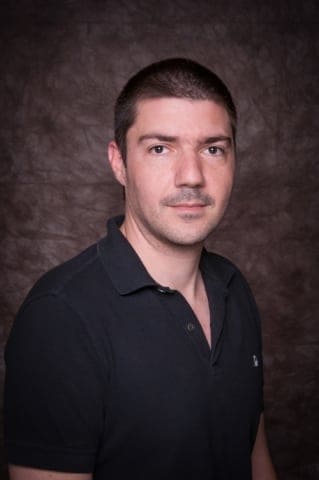
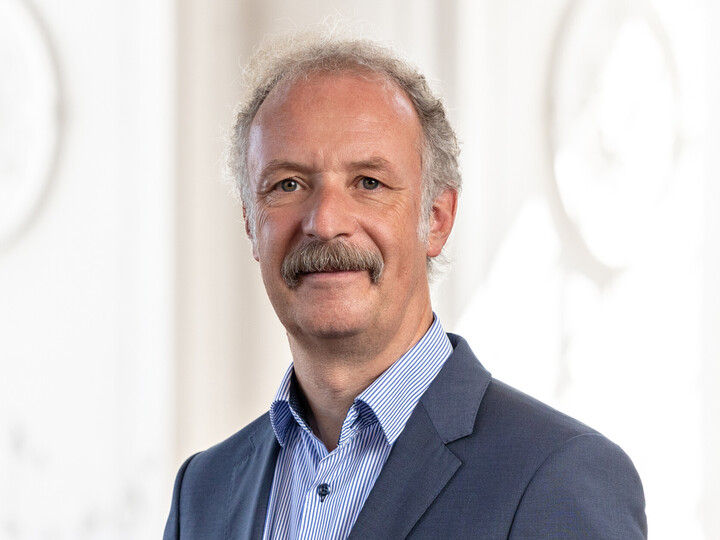
Professor Menelaos Apostolou holds a faculty position at the University of Nicosia, Cyprus, within the Department of Social Sciences, School of Humanities and Social Sciences. His research focuses on evolutionary psychology, particularly exploring intimate relationships, singlehood dynamics, friendship strategies, and mating behaviors. Key areas of interest include mate choice, in-law preferences, same-sex attraction, and the evolutionary underpinnings of social behaviors. He has conducted extensive cross-cultural studies, examining how cultural contexts influence relationship strategies and social dynamics. Education details indicate he completed postgraduate and graduate studies in the UK, though specific institutions are not listed. His work contributes to the UN Sustainable Development Goals, particularly addressing social inclusion and well-being through analyses of relationship structures and societal impacts of singlehood. Notable collaborations include projects on asylum seekers' living conditions in Cyprus (2017–2018) and cross-cultural research spanning multiple nations. His publications emphasize empirical and mixed-methods approaches, addressing topics such as infidelity detection, friendship dissolution strategies, and the implications of singlehood on emotional well-being. Professor Apostolou’s research spans over 170 publications, with a focus on evolutionary explanations for human behavior. His work frequently integrates qualitative and quantitative methodologies, highlighting the interplay between cultural norms and universal human tendencies.
Dr. Benedikt Holtmann is a Research Fellow at the Faculty of Biology, Ludwig Maximilian University of Munich. His research focuses on behavioral ecology and evolutionary biology, particularly studying how social environments influence behavior-related settlement decisions in wild passerine birds. Funded by the German Research Foundation (DFG), his work examines the non-random assortment of behavioral phenotypes and its implications for individual fitness and population dynamics. Research interests center on animal personality, behavioral syndromes, and evolutionary ecology in avian systems. His investigations utilize model species including great tits ( Parus major ) and dunnocks ( Prunella modularis ) to understand: Social environment effects on settlement patterns Fitness consequences of behavioral phenotypes Personality-matching habitat selection Genetic basis of animal behavior Reproductive strategies and sexual selection Recent publications demonstrate strong emphasis on: Integrative studies of animal personality traits Social structure dynamics in corvids and passerines Reproductive success determinants Long-term ecological monitoring approaches Physiological and genetic mechanisms underlying behavior with research conducted across European and New Zealand ecosystems. Current research infrastructure includes access to the Biozentrum Martinsried facilities and field sites across Germany supporting avian population studies through capture-mark-recapture methodologies and behavioral observation systems.
Dorothee Honhon is Associate Professor of Operations Management at the Naveen Jindal School of Management , University of Texas at Dallas. In addition to her faculty role she currently serves as Associate Dean for Sustainability and Societal Impact in the Dean’s Office. Education Ph.D. in Operations Management, New York University , 2006 B.S., University of Liège, Belgium , 2000 Research Interests Dr. Honhon’s scholarship lies at the intersection of retail operations , inventory theory , and sustainability . She investigates how firms can design product assortments, manage inventories, and structure promotions to simultaneously enhance profitability and reduce waste. Her work spans assortment planning under consumer-driven substitution , perishable inventory control , green transportation , and behavioral drivers of execution failures in retail supply chains. A unifying theme is the use of rigorous analytical models, laboratory and field experiments, and data analytics to generate actionable insights for industry. Publications Overview From 2006 to 2025 she has authored more than 40 peer-reviewed articles in leading journals such as Production and Operations Management , Manufacturing & Service Operations Management , and Operations Research . Recent work (2023–2025) focuses heavily on food waste reduction and sustainable retail operations , exploring how promotion, packaging, and supply-chain policies jointly influence waste and profit. Earlier contributions advanced assortment optimization and consumer choice modeling under dynamic substitution. Awards & Recognition Wickham Skinner Best Paper Award , Production and Operations Management (2012) Trammell/CBA Foundation Teaching Award for Assistant Professors (2011) University of Texas Regents’ Outstanding Teaching Award for Assistant Professors (2010) Teaching & Service She teaches core MBA and Masters courses OPRE 6302 Operations Management and OPRE 6341 Retail Operations . Active in multiple professional societies—INFORMS, POMS, MSOM, WORMS, and the Consortium for Operations Excellence in Retailing—she frequently advises doctoral students and serves on editorial boards, shaping the future of retail operations scholarship.
Dr. Anthony Lee is a Lecturer in Psychology at the University of Stirling, joining in 2019. He holds a PhD from The University of Queensland and was a Marie Curie Fellow at The University of Glasgow. His research focuses on human behavior and cognition, including mate preferences, face perception, and interdisciplinary methods from social psychology, evolutionary biology, and computer science. He explores topics such as multivariate mate choice modeling, musical/artistic ability in sexual selection, and self-perceptions’ impact on wellbeing. Lee is affiliated with the Behaviour and Evolution Research Group and Cognition in Complex Environments. His work bridges empirical and theoretical approaches, with a strong emphasis on methodological rigor. Potential PhD projects under his supervision include investigations into multivariate mate preference models, the evolutionary role of artistic ability in mate selection, and self-representation biases affecting mental health. His publications span 2011–2025, addressing facial perception, dominance cues, and the interplay between environmental factors and mating strategies. Lee’s research has been published in high-impact journals, reflecting his commitment to advancing understanding of human social and cognitive processes.
Spyros Angelopoulos is a Full Professor and co-Director of the Centre for Strategy, Technological Innovation, and Operations (CSTIO) at Durham University Business School. He leads research in digital transformation, user behavior on digital platforms, and cybersecurity, with affiliations spanning the Department of Management & Marketing. His academic journey includes a PhD in Information Systems from Warwick Business School (2014), an MSc (2009) and BSc (2007) in Production Engineering from the Technical University of Crete. Angelopoulos's research bridges business analytics, AI adoption, and digital resilience. His work examines: Human-algorithm interactions in healthcare diagnostics Circadian rhythms in e-commerce behavior Social media influencer engagement dynamics Institutional adaptation to digital disruption His 15 most recent publications demonstrate strong emphasis on algorithmic fairness, digital service optimization, and socio-technical system evolution. Honors include: Google Faculty Expert (2020-2023) ICIS Best Paper awards (2017) Microsoft Azure Research Awards (2014, 2016) Erasmus+ and Google Cloud grants He currently supervises PhD candidates Pearl Ding, Maddy Hunt, and Stefanie Gante. Secured research funding exceeds €5 million, including: Co-PI for €3.3M 'DLT Innovation & Ecosystem Management' project (2022-2025) £500K 'Space Analytics for New Markets' initiative €230K 'Digital Healthcare Transformation' program As CSTIO co-Director, he leads interdisciplinary teams exploring military digitalization, blockchain ecosystems, and AI governance frameworks. Regularly serves as guest editor for leading IS journals and organizes international special issues.
Jessica H Gray is a Lecturer in the Department of English at the University of California, Davis (2022–present), with previous experience as a Visiting Lecturer at Johannes Gutenberg University, Mainz, Germany (2019–2020). Possessing a PhD in English Literature with a Science and Technology Studies emphasis from UC Davis (2022), she also holds an MA from Wright State University (2014) and a BA from the University of North Florida (2009). Her research focuses on intersections between early modern British literature, science, and intellectual histories, particularly examining themes of reproduction, monstrosity, and maternal agency. Education: PhD English Literature (UC Davis 2022), MA English (Wright State 2014), BA English (UNF 2009) Teaching specialties include early modern literature, scientific literacy, and academic writing. She has instructed over 30+ courses across institutions, including advanced composition, Shakespeare studies, and interdisciplinary topics like 'Witches, Virgins, Mothers, and Other Assorted Monsters.' Award-winning scholar with extensive fellowships including the Obama Institute Exchange Program and multiple UC Davis research grants. Her publications explore utopian citizenship narratives, maternal occultism in Shakespeare, and eighteenth-century motherhood ideals. Active in pedagogical innovation, she balances remote and in-person modalities in teaching. Key Awards: Academic Federation Research Travel Award (2024), Dean's Summer Fellowship (2022) Current academic service includes advising on scientific literacy initiatives and collaborative work bridging humanities and STEM fields.
Prof. Dr. Daniel Guhl is an Assistant Professor of Consumer Behavior at the School of Business and Economics, Humboldt University Berlin. He serves as an incoming Principal Investigator for project A05 within the CRC TRR 190 Rationality and Competition, collaborating with Daniel Klapper (HU) and Martin Spann (LMU). His academic career includes ongoing postdoctoral research at Humboldt University Berlin since 2014, complemented by industry experience as Head of Econometric Research & Development and Data Scientist at So1 GmbH from 2012-2016. Daniel Guhl earned his Dr.rer.pol. from TU Clausthal in 2014 and his Dipl.-Kfm. from RWTH Aachen University in 2006. His educational foundation spans business administration with a strong quantitative focus, preparing him for his research in consumer behavior and econometric modeling. Dr. Guhl's research focuses on consumer choice behavior at the intersection of marketing, economics, and applied econometrics. He specializes in developing and applying discrete choice models using both classical and Bayesian methods to analyze market and experimental data. His work aims to deepen understanding of individual consumer decision-making, particularly where it diverges from neoclassical economic assumptions. His research interests span Discrete Choice Models, Consumer Behavior, Applied Econometrics, Behavioral Economics, and Machine Learning. Methodologically, he excels in discrete choice modeling, econometric analysis of panel data, and experimental design for consumer research, with particular expertise in time-varying parameters and attribute non-attendance in choice models. Dr. Guhl's publication record demonstrates consistent scholarly productivity with a clear evolution toward increasingly sophisticated modeling techniques and dynamic aspects of consumer behavior. His recent work integrates machine learning approaches with traditional econometric methods to address complex marketing challenges including brand equity measurement, loyalty program effectiveness, and retail marketing optimization. His research consistently bridges theoretical insights with practical marketing applications, contributing significantly to both academic literature and industry practice. Dr. Guhl maintains active engagement with the academic community through multiple professional affiliations. He is a member of the VHB (MARK) since 2018, a member of CRC TRR 190 (Rationality and Competition) since 2017, a Fellow at the Berlin Centre for Consumer Policies (BCCP) since 2016, and a member of the European Marketing Academy since 2016. These connections position him at the forefront of marketing and consumer behavior research. As an Assistant Professor, Dr. Guhl likely mentors graduate students and participates in research collaborations. His role in the CRC TRR 190 project indicates active involvement in securing research funding and leading collaborative research teams focused on rationality and competition in market contexts. His industry background provides valuable practical perspective for student training and research design. Dr. Guhl's work is closely associated with the Berlin Centre for Consumer Policies (BCCP), where he serves as a Fellow. This affiliation suggests interdisciplinary collaboration with economists, legal scholars, and policy experts, extending the impact of his research beyond traditional marketing boundaries into consumer policy domains.
Dr. Yih Hwai Lee is an Associate Professor of Marketing at the National University of Singapore (NUS) Business School, holding tenure since 2004. He has served as Head of the Marketing Department, Academic Director of the CEMS MSc Programme, and Assistant Dean of Undergraduate Studies at NUS. His research focuses on advertising effects, consumer information processing (including linguistic effects in Chinese and English contexts), and the psychological mechanisms underlying consumer behavior. Notable contributions include studies on information ambiguity, brand naming strategies, and the role of emotional receptivity in marketing interactions. Dr. Lee earned his Bachelor's degree in Business Administration (First Class Honors) from NUS and a PhD in Marketing from the University of North Carolina at Chapel Hill. He has advised corporations such as Singapore Pools, Fidelity Investments, and Shell Singapore, applying his expertise in consumer decision-making and marketing strategy. His research outputs span key journals like the Journal of Consumer Research and Journal of Marketing Research, addressing topics such as service encounter dynamics, incentive design for learning, and cross-cultural consumer well-being. Teaching is a cornerstone of his career, emphasizing critical thinking, professional knowledge transfer, and student engagement. Dr. Lee’s academic leadership roles include Co-Academic Director of the MSc (Marketing Analytics and Insights) program starting July 2025, underscoring his commitment to advancing data-driven marketing education and research.
Seda Can is a Professor at the Department of Psychology, Izmir University of Economics, Turkey. Her academic career focuses on psychometrics, social psychology, and behavioral science, with methodological expertise in structural equation modeling and measurement equivalence. Ph.D. in Psychometrics from Ege University (2010). Visiting Researcher at Utrecht University (2011-2012) in Methodology and Statistics in Social Sciences. M.A. in Measurement and Evaluation from Middle East Technical University (2003). B.A. in Psychology from Hacettepe University (1999). Her research spans cross-cultural studies on interpersonal touch, infidelity responses, and pro-environmental behaviors. She investigates personality traits influencing risky driving and predictors of physical attractiveness globally. Recent work emphasizes environmental psychology, including waste separation practices and altruistic attitudes toward waste pickers. Methodological contributions involve comparing Bayesian and maximum likelihood estimations in multilevel confirmatory factor analysis and analyzing collinearity in latent variables. Publications from 2010-2025 cover psychometrics, cognitive psychology, and social psychology, with trends toward behavioral science and cross-cultural analysis.
Professor Moritz Fleischmann serves as Vice President for Sustainability and International Affairs at the University of Mannheim , while holding the Chair of Supply Chain Management in its Business School. With a background in Mathematics, Business, and Economics from Bayreuth, Bordeaux, and Ulm, he earned his PhD in General Management (2000) at Erasmus University Rotterdam, focusing on reverse logistics. Assistant Professor (Quantitative Methods), Erasmus University Rotterdam (until 2004) Associate Professor (Supply Chain Management), Erasmus University Rotterdam (2004–2009) Chair of Supply Chain Management, University of Mannheim (2009–present) Academic Director, ESSEC–Mannheim Modular Executive MBA Program (2011–2019) Interim Acting Dean (2019) and Vice Dean (2019–2020), Mannheim Business School His research spans reverse logistics , sustainable supply chains , inventory control , and dynamic pricing . A pioneer in closed-loop supply chain modeling, he has developed frameworks for recycling credit allocation, attended home delivery optimization, and vendor-managed inventory systems. His work bridges theoretical operations research with practical applications in plastics production, e-commerce, and agrochemical industries. From 2023 to 2024, he led institutional sustainability initiatives and international collaborations. His 15 most recent publications (2025–2020) focus on tackling contemporary challenges like circular economy strategies , crisis logistics , and AI-driven inventory optimization , reflecting his commitment to sustainability and innovation in supply chain operations.
Fernando Bernstein is a Professor in the Operations Management department at Duke University's Fuqua School of Business . He holds the William and Sue Gross Distinguished Professor of Business Administration title and serves as Associate Dean for Global Initiatives . Ph.D. in Operations Management, 2001, Columbia University Graduate School of Business Licentiate in Mathematics, 1995, University of Buenos Aires His research focuses on supply chain management , retail operations , and game theory applications in production systems. Recent publications explore dynamic assortment personalization , show-up profile modeling , and government regulation impacts on distribution networks. He has served as associate editor for leading journals like Operations Research and Management Science . Excellence in Teaching Award for core MBA course 2008 M&SOM Meritorious Service Award
Yunzong Xu is an Assistant Professor in the Department of Industrial and Enterprise Systems Engineering (ISE) and Coordinated Science Laboratory (CSL) at the University of Illinois at Urbana-Champaign, with affiliations in the Departments of Computer Science (CS) and Electrical and Computer Engineering (ECE). He holds a Ph.D. in Data, Systems, and Society from MIT (2023) and dual B.S. degrees from Tsinghua University in Economics and Mathematical Sciences (2018). His research focuses on machine learning theory , foundations of AI , operations research , and management science , with specific interests in online learning , deep learning , sequential decision making , and mathematical problems related to markets , incentives , and social good . His work bridges theoretical analysis with applications in dynamic pricing, reinforcement learning, and network revenue management. Recent publications highlight algorithmic complexity in contextual bandits, offline reinforcement learning , and phase transitions in constrained bandit problems. His research has been recognized by awards from INFORMS, Applied Probability Society, and IBM Service Science. Honorable Mention, INFORMS George Nicholson Student Paper Competition (2020) Winner, INFORMS Data Mining Best Theoretical Paper Award (2020) Finalist, Applied Probability Society Best Student Paper Award (2019) Finalist, INFORMS Undergraduate Operations Research Prize (2018) Finalist, IBM Service Science Best Student Paper Award (2021) He teaches graduate courses on Foundations of Modern Machine Learning (IE598) and undergraduate courses in optimization models (IE310). For more information, visit his personal homepage .
Dr. Alyson Blanchard is a Lecturer in Psychology at the University of Salford, School of Health & Society, and a member of the Centre for Applied Health Research. With an unconventional academic path beginning in archaeology, she transitioned to psychology through a self-funded part-time PhD at the University of Liverpool, completed in 2017. BA in Archaeology and Prehistory (2.1) from University of Sheffield (1997-2000) Learning Conversion Entry Award in Psychology from Staffordshire University (2005-2006) Graduate Diploma in Psychology (equivalent 1st) from Liverpool Hope University (2008-2009) PhD in Personality and Evolutionary Psychology from University of Liverpool (2011-2017) Dr. Blanchard's research focuses on personality and individual differences from an evolutionary psychological perspective, with particular expertise in Dark Triad traits (psychopathy, narcissism, Machiavellianism), life history theory, and mate preference research. Her work investigates how these psychological constructs manifest in contemporary contexts including pandemic behavior, political attitudes, and relationship dynamics. She has published 18 journal articles between 2010-2025, with recent work examining the Dark Empath construct, vulnerable dark triad traits, and evolutionary explanations for social phenomena. Her research output demonstrates consistent productivity with publications across multiple high-impact psychology journals including Personality and Individual Differences and Evolutionary Behavioral Sciences. The thematic evolution of her work shows progression from foundational research on digit ratio and psychopathy to more complex investigations of dark traits in contemporary social contexts. As an educator, Dr. Blanchard serves as Programme Leader for Psychology of Human and Animal Behaviour and teaches across multiple modules focused on individual differences and research methods. Her teaching reflects her research expertise in personality psychology and evolutionary approaches to understanding human behavior. Dr. Blanchard actively supervises research students and collaborates with international colleagues, as evidenced by her multi-national publications. Her research program represents a distinctive contribution to understanding how evolved psychological mechanisms continue to shape contemporary human behavior in novel social contexts.