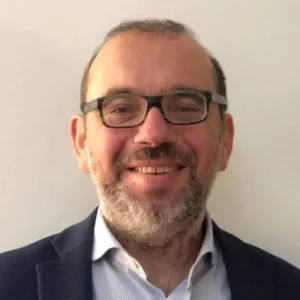
Jakob Conradi serves as a Researcher at the Faculty of Business and Economics, Humboldt University of Berlin, specializing in Corporate Finance. Based in Room 404 at Dorotheenstraße 1, Berlin, he contributes to the faculty's academic mission through research and teaching support within the Corporate Finance group. His research centers on Corporate Finance with emphasis on capital structure, investment valuation, and firm-financial market interactions. Key focus areas include: Corporate investment behavior and decision-making Financial market dynamics and asset pricing Risk assessment in capital allocation Corporate governance implications for financial strategy As part of Humboldt University's academic ecosystem, Conradi collaborates within the Corporate Finance research unit, supporting doctoral training and contributing to the faculty's scholarly output in business administration. His work interfaces with broader economic theory and empirical finance applications.
HUANG Dashan is an Associate Professor of Finance and PGR Coordinator at the Lee Kong Chian School of Business, Singapore Management University (SMU). He holds a Ph.D. in Finance from Washington University in St. Louis (2013), a Ph.D. in Engineering from Kyoto University (2007), and a B.S. in Mathematics from Lanzhou University (2002). His research focuses on Asset Pricing, Behavioral Finance, Big Data, and Machine Learning, with notable contributions to portfolio optimization, factor models, and market sentiment analysis. He has received prestigious awards such as the CIRF/CFRI Research Award (2020) and the WRDS Best Paper Award (2018). His work integrates econometric methods, machine learning, and behavioral theories to analyze financial markets. Recent studies include predicting bond returns using real-time macro data, exploring presidential approval ratings' impact on stock returns, and developing dimension-reduction techniques for factor models. Huang collaborates widely, publishing in top journals like Journal of Financial Economics and Management Science . Education : Ph.D. in Finance, Washington University in St. Louis (2013) Ph.D. in Engineering, Kyoto University (2007) M.A. in Management Science, Chinese Academy of Sciences (2004) B.S. in Mathematics, Lanzhou University (2002) Awards and Recognition include multiple conference best-paper awards, emphasizing his innovative contributions to empirical asset pricing and quantitative finance. His research has been supported by grants, and he advises students on topics spanning behavioral finance and computational methods. Huang is actively involved in interdisciplinary initiatives, bridging finance with computing and social sciences. His lab develops tools like the PLS Sentiment Index and PLS Disagreement Index, widely used in academic and applied research.
ZHANG Hong is a Full-time Faculty member and Professor of Finance at Singapore Management University's Lee Kong Chian School of Business, holding the Keppel Professorship in Financial Economics. She also serves as Director of the Sim Kee Boon Institute for Financial Economics. Her academic credentials include a Ph.D. from Yale University's School of Management, an M.S. in Physics from New York University, and a B.S. in Physics from Fudan University. Her research interests span market efficiency, delegated portfolio management, short selling dynamics, and the intersection of finance with social, environmental, and cultural issues. Notable contributions include work on international asset pricing, hedge fund behavior, and the impact of air pollution on investor decision-making. Awards: Arthur Warga Award (2018), AsFA Best Paper in Banking (2015), CFA Society Toronto Award (2013), and multiple other accolades. Advising: Advisor to PhD student Yonghao Zhai. Grants: Omitted due to lack of explicit mention in provided texts. Labs/Teams: Heads the Sim Kee Boon Institute for Financial Economics, leading interdisciplinary research in financial economics.
Cara Marshall is a tenured Lecturer at Queens College, part of the City University of New York (CUNY), and serves as the Director of the Graduate Program in Risk Management. She also designs and teaches Financial Risk Management courses at the School of Professional Studies, Wake Forest University. Ph.D. in Financial Economics, Fordham University MBA in Quantitative Analysis, St. John’s University B.S. in Marketing and Computer Information Science, Oswego State University Her research focuses on financial engineering, derivatives, and risk management. She has authored publications in Applied Economics , Journal of Financial and Economic Practice , and Global Finance Journal , addressing topics like volatility trading, Monte Carlo simulations, and dispersion trading. Her work challenges efficient market assumptions while advancing quantitative risk management techniques. Recent publications highlight applications of financial derivatives, empirical analysis of options markets, and computational methods in finance. Key themes include volatility modeling, risk decomposition, and quantitative trading strategies. Cara consults globally for investment banks, hedge funds, and government agencies, bridging academic theory with industry practice. She teaches courses spanning corporate finance, investment analysis, Python for financial applications, and enterprise risk management.
Roman Neunteufel is a dedicated researcher at the University of Natural Resources and Life Sciences, Vienna (BOKU) , affiliated with the Institute of Sanitary Engineering and Water Pollution Control under the Department of Landscape, Water and Infrastructure . His work focuses on critical intersections of water management, climate change, and sustainable infrastructure, with over 15 years of experience in analyzing Austrian water systems. Education: PhD in 2008, Graduate Engineer (2001) Dr. Neunteufel’s research spans water demand modeling, climate change adaptation strategies, benchmarking in water utilities, and household consumption patterns. His recent projects address drought resilience, groundwater sustainability, and innovative heat extraction from water supply systems, reflecting a commitment to environmental policy and engineering solutions. Key trends in his publications highlight collaborations with international experts on cross-border benchmarking, macroeconomic assessments of climate impacts, and guidelines for water loss reduction (e.g., ÖVGW Richtlinie W 63). His work emphasizes data-driven decision-making and integrating scientific insights into Austrian water policy. Scientific Awards: ÖVGW Studienpreis (2009) Leistungsstipendium (1998) Dr. Neunteufel has supervised numerous theses and contributed to strategic asset management frameworks, including the DATMOD-Leitfaden for model creation and calibration. His presentations at global conferences like the IWA World Water Congress and World Congress of Environmental and Resource Economists underscore his influence in shaping sustainable water practices.
Dr. Ilona Ewa Skibińska-Fabrowska is an Adjunct Professor at the Department of Insurance and Investments, Institute of Economics and Finance, Faculty of Economics, Maria Curie-Skłodowska University, Lublin. Her research focuses on monetary policy, alternative investments, corporate financing, and capital structure theory. Studied central banking and unconventional monetary policy during crises Published works on financial stability, retirement planning for self-employed individuals, and corporate investment in crisis-affected firms Collaborated on interdisciplinary economic studies with Polish institutions Her research spans economics, finance, and policy analysis, with an emphasis on practical applications in financial systems and markets. Recent publications examine unconventional monetary tools, alternative investment strategies, and corporate finance dynamics during economic downturns. Key trends in her work include analyzing central bank responses to crises (e.g., European Central Bank, Czech National Bank), financial education for retirement planning, and risk management in developing markets. Her studies often integrate empirical data with theoretical frameworks. She maintains active academic engagement through publications, consultations (Wednesday & Thursday office hours), and digital collaboration via Microsoft Teams and email.
Willem Schramade is a Professor of Finance at Nyenrode Business University, affiliated with the Faculty Centre for Corporate Reporting, Finance & Tax. His research focuses on Sustainable Finance, ESG Investing, and Long-Term Value Creation. He holds a Master’s in Business Economics (specializing in Corporate Finance) from Tilburg University (2000) and a PhD from Erasmus University (2006), with a dissertation on corporate bond issuers. Over 20 years of experience in finance and ESG advisory roles Former equity analyst at Robeco and portfolio manager for impact investing at NN Investment Partners (2016–2019) Supervisory board member for Triodos Investment Management funds (2022) Key research areas include stakeholder governance, sustainable investment frameworks, and decision rules for corporate finance. He co-authored a sustainability-integrated corporate finance textbook and developed models for long-term value creation. His work emphasizes aligning financial decisions with societal and environmental stewardship. Publications span journals like Finance Research Letters and Journal of Sustainable Finance & Accounting , with a focus on integrating ESG into financial decision-making. He lectures at institutions including Euronext and TIAS, and advises organizations on sustainable finance strategies.
Mark Ørberg is an Assistant Professor at Copenhagen Business School, affiliated with the CBS LAW School and the Department of Business Humanities and Law. His research focuses on legal frameworks governing philanthropy, nonprofit governance, and ESG compliance, with particular attention to sustainable development goals. He collaborates internationally on projects analyzing corporate governance, foundation taxation, and the economic drivers behind nonprofit ownership structures. Recent work includes studies on ESG limitations in nonprofit control assessment, Danish legal environments for philanthropy, and long-termism in philanthropic enterprise foundations. His publications span peer-reviewed articles, policy reports, and media commentary on tax reforms affecting foundations and public policy debates around wealth redistribution. Key contributions include the 2024 Denmark: Legal Environment for Philanthropy in Europe report, co-authored with Troels Michael Lilja and Søren Friis Hansen, which examines fiscal policies and regulatory landscapes for philanthropy. Ørberg has also engaged with media outlets like Fundats.dk to discuss tax implications for major American foundations and the ethical dimensions of foundation governance. His advisory work includes supervising three research projects (details unspecified) and contributing to legal education through publications like Kompendium i forvaltningsret . Ørberg’s research integrates legal analysis with socio-economic policy, emphasizing the intersection of institutional frameworks and philanthropic impact.
Andrikopoulos Andreas is an Associate Professor at the Department of Maritime Studies, University of Piraeus. His research focuses on maritime finance, corporate governance, and financial economics with applications in the shipping industry. He teaches courses on maritime financial accounting and transportation economics. Research interests include ESG integration in shipping, real options valuation, and network analysis in financial markets. Recent work examines oil price impacts on shipping stocks, boardroom gender diversity effects, and herding behavior in shareholder activism. His publications span over two decades, with contributions to journals like International Journal of Forecasting and the Journal of Corporate Finance. He has authored/co-authored papers on topics ranging from Greek economic crises to cultural heritage restoration economics.
Paymon Khorrami is an Assistant Professor of Finance at Duke University's Fuqua School of Business, having previously held the same position at Imperial College Business School. He holds a PhD in Financial Economics from the University of Chicago, jointly awarded by the Department of Economics and Booth School of Business. His research focuses on asset pricing and macroeconomics with financial frictions, exploring topics such as financial intermediation, behavioral finance, and the impacts of monetary policy. He also investigates household and firm inequalities, leveraging insights from banking and market dynamics. Recent work emphasizes self-fulfilling market phenomena, sentiment-driven pricing, and the role of frictions in shaping economic outcomes. His articles span 2025 to 2017, reflecting a sustained engagement with systemic risk, liquidity dynamics, and policy implications. Teaching responsibilities include courses on Derivatives and Risk Management at Fuqua.
Johannes Muhle-Karbe is an Associate Professor in the Department of Mathematical Sciences at Carnegie Mellon University (CMU), affiliated with the Center for Computational Finance. He was on leave from January 2019 to join Imperial College London as a Chair in Mathematical Finance and Director of the CFM-Imperial Institute of Quantitative Finance. Education: PhD in Mathematics from TU München (2009), advised by Jan Kallsen. Awarded Förderpreis (2010) and Nicola Bruti Liberati Prize (2012). Diplom thesis (2006) won Hauptpreis (2007). Research: Focuses on mathematical finance, stochastic processes, and market microstructure. Key areas include transaction costs, portfolio optimization, asset pricing, and high-frequency trading. His work bridges theory and practice, addressing liquidity, risk management, and equilibrium models. Publications: Over 30 articles in top journals like Mathematical Finance , Finance and Stochastics , and SIAM Journal on Financial Mathematics . Recent work explores equilibrium models, optimal trading strategies, and liquidity dynamics. Awards: Multiple recognitions for his PhD and diploma thesis, highlighting contributions to stochastic finance and mathematical economics. Students: Supervised PhD students including Thomas Caye, Ren Liu, and Blanka Horvath. Postdocs include Martin Herdegen and Sebastian Herrmann. Labs/Teams: Active in CMU’s computational finance initiatives and Imperial College’s quantitative finance institute. Collaborates with leading institutions globally on market modeling and financial theory.
Luis M. Viceira is the George E. Bates Professor of Finance at Harvard Business School (HBS) and a Research Associate at the National Bureau of Economic Research (NBER). He has been on HBS faculty since 1998, teaching finance courses across MBA, Executive Education, and the Business Economics Ph.D. programs. His research focuses on investment management, capital markets, and long-term asset allocation. He co-chairs key programs like the HBS-CFA Institute Investment Management Program and the NBER-NBIM Conference on Long-Term Asset Management. Education: B.A. from Universidad Autónoma de Madrid, M.A. and Ph.D. in Economics from Harvard University. Research interests include macroeconomic drivers of financial risks, fintech disruption, index investing, and the behavior of retail investors. His work bridges academic rigor and practical applications, with notable contributions to strategic asset allocation and portfolio diversification strategies. He has authored influential books like Strategic Asset Allocation and over 50 peer-reviewed articles. Awards: TIAA-CREF Paul Samuelson Award (2002), Graham and Dodd Award (2005), Arthur Warga Award (2014). Leadership Roles: Member of NBIM's Asset Allocation Advisory Board, FINRA Governor, Harvard University Trustee. Consulting: Advises central banks, sovereign wealth funds, and asset managers globally. Labs/Teams: Active in HBS's Digital, Data, and Design (D^3) Institute, focusing on fintech innovations. Collaborates with institutions like NBER and Netspar on long-term investment challenges.
Professor Verity Watson is an internationally recognized health economist at the University of Aberdeen's School of Medicine, Medical Sciences and Nutrition, where she serves as Honorary Professor in the Health Economics Research Unit. With over 25 years of experience, she specializes in stated preference research including discrete choice experiments and contingent valuation, focusing on methodological validity and real-world application in health economics, environmental economics, and public policy contexts. Her educational background includes a PhD in Economics from the University of Aberdeen (2003), MSc in Economics from Glasgow University (1998), and MA(Hons) in Economic Science from the University of Aberdeen (1997). Professor Watson developed and co-leads the internationally recognized annual course 'Using Discrete Choice Experiments in Health Economics,' which trains researchers and industry professionals globally. Professor Watson's research examines fundamental questions about how stated preference methods perform in practice, investigating cognitive processes underlying preference elicitation and factors influencing response quality. Her work has established best practices in preference studies and guides researchers in understanding when and how these methods can be reliably applied across different contexts. Her recent publications (2023-2025) demonstrate a strong focus on rural and remote healthcare access, patient preferences across various conditions, environmental valuation of healthcare spaces, and methodological advancements in discrete choice experiments. Her interdisciplinary work bridges economics, public health, and healthcare policy, with publications spanning leading journals in health economics, public health, and clinical specialties. Professor Watson was Personal Chair in the Health Economics Research Unit until April 2024, leading the Preference and Value research theme, before transitioning to her current Honorary Professor position. She has over 75 widely cited peer-reviewed publications in leading journals including Journal of Economic Behavior and Organization, Health Economics, Social Science and Medicine, and The Lancet: Public Health.
Dr. Cathy Zishang Liu serves as Professor of Accounting and Fiesta Professor in Accounting at the University of Houston-Downtown's Marilyn Davies College of Business (MDCOB). She concurrently holds a board position at the Global Accounting and Finance Research Exchange, advocating for equitable financial systems to combat poverty through robust institutional frameworks. Education Ph.D. in Accounting, University of Houston MBA in Business Administration, Rice University B.A. in Arabic Languages and Cultures (with Supporting Emphasis in Chinese Languages and Cultures), Peking University Research Interests Her scholarly work spans accounting, finance, and economics with concentrated expertise in earnings management, auditing practices, capital market anomalies, social capital dynamics, and ESG implementation . She investigates how executive foreign experience influences corporate ESG performance in China and examines social capital's role in credit rating determinations. Dr. Liu's research integrates theoretical rigor with practical applications, addressing critical gaps in financial reporting standards, fraud detection methodologies, and sustainable business practices. Her interdisciplinary approach bridges accounting theory with real-world financial system challenges, particularly in emerging markets. Publication Trends Analysis of her 15 most recent publications (2014-2025) reveals three dominant trajectories: (1) growing emphasis on ESG performance drivers in Chinese markets, (2) persistent investigation of social capital's impact on financial outcomes, and (3) innovative research on accounting education pathways. Her 2024-2025 work intensifies focus on CPA competency frameworks and cross-cultural governance structures, while maintaining foundational work on earnings quality metrics and audit effectiveness. Awards and Honors xTechHBCU Research Competition Award (2021, U.S. Army-sponsored) MDCOB Teaching Fellow (awarded twice for pedagogical excellence) Advising and Grants As former Accounting Department Chair, Dr. Liu established the Master of Professional Accountancy (MPAC) program in 2020, graduating nearly 300 professionals. She secured substantial scholarship funding through strategic partnerships with the Texas State Board of Public Accountancy and Texas CPA Society. Her student-centered approach earned consistent recognition as the most impactful educator in students' academic journeys, reflected in her dual Teaching Fellow awards and departmental leadership in AACSB accreditation preparation.
Andrew Caplin is a Silver Professor of Economics at New York University's Department of Economics. He leads the Sloan Foundation Program on Cognitive Economics at Work and has made groundbreaking contributions to cognitive economics, behavioral macroeconomics, and human-AI collaboration. NYU Department of Economics Sloan Foundation Program on Cognitive Economics at Work Copenhagen Life Panel (CLP) research His research spans cognitive economics, focusing on decision-making mistakes, AI integration in economic systems, and housing finance reforms through equity-sharing mortgages. He developed novel frameworks for measuring subjective earnings risk, economic decision-making skills, and collaborative human-AI protocols in medical and financial contexts. Scientific Awards Sloan Foundation Program leadership Caplin's work examines belief calibration, rational inattention, and career trajectory dynamics. His Copenhagen Life Panel leverages Danish administrative data to study labor market transitions and economic well-being across life cycles, while his equity-sharing mortgage research addresses housing affordability through market design innovations.