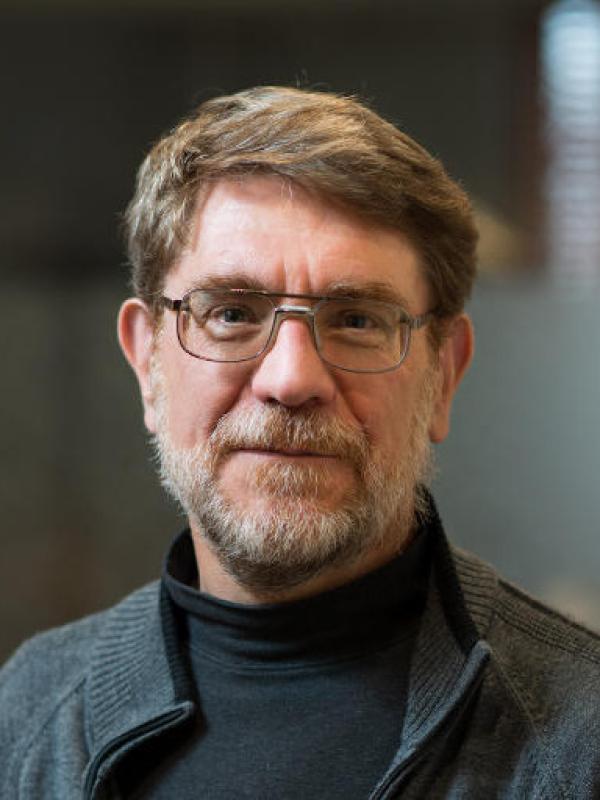
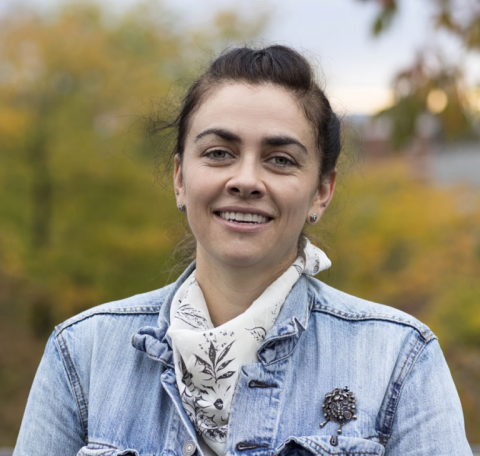
James King is an Associate Professor in the Department of Geography at the University of Montreal, specializing in geomorphology and aeolian processes. His research focuses on wind erosion, mineral dust dynamics, and their impacts on climate and ecosystems, particularly in high-latitude regions like the Yukon and Namibia. He holds a BSc in Earth surface sciences from the University of Guelph and a PhD in Physical Geography from an unmentioned institution, with postdoctoral training in climatology. Key research areas include dust emission climatology, glacial retreat impacts, and aerosol-climate interactions. Over 20 ongoing and completed projects, including dust dynamics in proglacial valleys and high-latitude dust sources, are funded by CRSNG, FCI, and international collaborations. King supervises graduate students on topics like dust deposition effects on ecosystems and remote sensing applications. His work integrates field measurements, remote sensing, and climate modeling to advance understanding of dust processes in arid and semi-arid environments. He collaborates with global teams, such as the Hominin Dispersals Research Group, and contributes to initiatives like the Changing Atmospheric Chemistry, Transport, and Emissions (ACTE) project.
Professor Joanna Bullard is a leading academic in Physical Geography at Loughborough University, specializing in aeolian processes, climate-landscape interactions, and dust dynamics. She holds adjunct roles at Griffith University, Australia, and has served in key leadership positions including Associate Dean (Teaching) and President of the International Society for Aeolian Research. Her work integrates field observations, remote sensing, and experimental methods to study dust emissions, microplastic transport, and environmental change in polar and arid regions. Bullard has received prestigious awards such as the EGU Ralph Alger Bagnold Medal (2021) and the Philip Leverhulme Prize (2004). Education: PhD from University of Sheffield Her research focuses on Arctic ecosystems, high-latitude dust pathways, and the geomorphic impacts of climate change. Recent work explores microplastic degradation via wind abrasion and the biogeochemical role of dust in Greenland’s lakes. Bullard’s teaching innovations include augmented reality tools for geomorphology education and crowd-sourced meteorological data projects. Awards: EGU Bagnold Medal, British Society for Geomorphology Fellowship, HEA Principal Fellowship Publications emphasize dust-climate feedbacks, aeolian sediment dynamics, and interdisciplinary methodologies. She leads international collaborations on dust cycle modeling and Arctic environmental monitoring.
Jay Strader is a Professor in the Department of Physics and Astronomy at Michigan State University, where he serves as Graduate Director for the astronomy PhD program and Associate Chair for astronomy. His research focuses on compact objects, particularly black holes and neutron stars in globular clusters, neutron star binaries in Fermi gamma-ray sources, and intermediate-mass black holes. He has received a Packard Fellowship for Science and Engineering and grants from NSF and NASA. His research group includes postdoc Ryan Urquhart, graduate students Thomas Do and Rebecca Kyer, and several undergraduates, with past students like Teresa Panurach (now director of NoVEL Consortium) and Samuel Swihart (NRC fellow at Naval Research Lab). Education: PhD in Astronomy, UC-Santa Cruz/Lick Observatory Awards: Packard Fellowship Collaborations: Member of Rubin Observatory's Stars, Milky Way, and Local Volume science collaboration since 2008 Previous Positions: Hubble Fellow and Menzel Fellow at Harvard-Smithsonian Center for Astrophysics (2007-2012) Program Initiatives: Co-founder of PAREDS program for early research opportunities at MSU His work has been supported by NSF and NASA grants, and he has contributed to studies on black holes in M22, hypervelocity globular clusters around M87, and transitional millisecond pulsars. His group collaborates with Laura Chomiuk and contributes to data catalogs like the M31 globular cluster velocity dispersion database.
Paul Withers is a Professor and Chair of the Department of Astronomy at Boston University. He leads research on planetary atmospheres and ionospheres, with a focus on Mars and Venus, and serves as Principal Investigator on multiple NASA-funded research projects. Education: B.A. in Physics, 1998, Queens' College, Cambridge University M.S. in Physics, 1998, Queens' College, Cambridge University M.A., 2001, Queens' College, Cambridge University Ph.D. in Planetary Science, 2003, University of Arizona Professor Withers' research focuses on the upper atmospheres and ionospheres of terrestrial planets, particularly Mars and Venus. His work involves analyzing spacecraft data and developing theoretical models to understand how solar flux, neutral atmospheres, magnetic fields, and ionospheres interact under unique planetary conditions. He has made significant contributions to understanding the response of the Martian ionosphere to solar flares, the structure of the Venus ionosphere, and meteoric plasma layers in planetary ionospheres. His research often involves multi-instrument campaigns and coordinated observations across different spacecraft missions including Mars Express, MAVEN, and Venus Express. Analysis of Professor Withers' recent publications reveals a strong emphasis on Martian ionospheric dynamics, particularly its response to solar activity and its variability under different conditions. His work frequently combines data from multiple missions to create comprehensive models of planetary upper atmospheres. He has developed important methods for analyzing radio occultation data and reconstructing atmospheric properties from entry, descent, and landing measurements. Major Funded Projects: "Characterizing the topside bulge in the ionosphere of Mars" (NASA Mars Data Analysis Program, 2014, $144K) "Integration of MAVEN neutral and plasma observations" (NASA MAVEN Participating Scientist Program, 2013, $284K) "Radio occultation studies at Mars" (NASA Early Career Fellowship Program, 2013, $99K) "EDL reconstruction for MSL" (NASA, JPL contract, 2012, $199K) "Meteoric plasma layers on Venus and Mars" (NASA Planetary Atmospheres Program, 2012, $232K) Professor Withers has been actively involved in mentoring students and collaborating with international researchers. He serves as a key member of the Mars Upper Atmosphere Network (MUAN) and has contributed to community white papers for planetary science decadal surveys. His work supports future Mars landers through atmospheric modeling and surface pressure prediction, with direct applications to mission planning and execution. He has presented his research at numerous international conferences including the American Geophysical Union meetings, Division for Planetary Sciences meetings, and European Planetary Science Congress. His work has important implications for understanding planetary climate evolution, space weather effects on technological systems, and the search for habitable environments beyond Earth.
Kunfeng Gao is a researcher at ETH Zürich's Staff of Experimental Atmospheric Physics , affiliated with EPFL's School of Architecture, Civil and Environmental Engineering (ENAC) . His work focuses on aerosol-cloud interactions, ice nucleation mechanisms, and atmospheric aging of particles. Key research areas: Ice Nucleation, Biological Aerosols, Soot Particles, Dust Particles, Cirrus Cloud Thinning, Climate Modeling. Contributed to major studies on diurnal variability of ice nucleating particles in the Eastern Mediterranean. Developed novel methods for characterizing particle morphology and ice nucleation efficiency. Scientific Awards : Highlight article in Atmospheric Chemistry and Physics (2024). Two awarded Chinese patents related to particle classification and graphene-based filtration. His research has garnered significant media attention, including features in ScienceNews , Le FIGARO , and Radio Télévision Suisse , highlighting biological particles' role in extreme weather events.
Dr. Jonathan T. Overpeck is the Samuel A. Graham Dean of the School for Environment and Sustainability (SEAS) at the University of Michigan, where he also holds the William B. Stapp Collegiate Professorship of Environmental Education. He is a Professor of both Climate and Space Sciences and Engineering, and Earth and Environmental Sciences, with a career spanning climate-vegetation interactions, abrupt climate change, monsoon dynamics, drought hydroclimate, sea level rise research, and interdisciplinary climate assessment. Overpeck has published over 230 works cited 60,000+ times, emphasizing public education, university-community partnerships for climate solutions, and environmental justice initiatives. PhD in Geological Sciences, Brown University MSc in Geological Sciences, Brown University BA in Geology (Honors), Hamilton College His research spans climate-biosphere interactions , climate variability and abrupt change , monsoon dynamics , drought and hydroclimate , sea level rise , climate law , and climate adaptation . Overpeck pioneered studies on megadrought terminology, temperature-driven drought intensification, and the aridification of North America. His work with the NOAA Paleoclimate Program and World Data Center for Paleoclimatology established foundational understanding of climate dynamics through annually-laminated sediment analysis in the Cariaco Basin. Overpeck's 2020-2024 research includes climate aridification , hydroclimate scaling mismatches , and temperature-precipitation interactions , with recent focus on Antarctic heatwaves, Mississippi River Basin changes, and corporate climate accountability. His article trends show concentration in climate attribution , hydrological extremes , paleoclimate modeling , and climate policy analysis . Scientific Honors: 2024 U.S. National Academy of Sciences 2015 American Geophysical Union Fellow 2009 AAAS Fellow 2007 Nobel Peace Prize contributor (IPCC) 2005 Guggenheim Fellowship Multiple U.S. Department of Commerce awards Overpeck has led or participated in significant climate adaptation projects , including NSF grants totaling $5.1M+ for Southwest Hydroclimatic Extremes (2017-2020), Amazon Drought Impacts (2014-2018), and Quantifying Drought Risk (2013-2018). He serves on the Colorado River Research Group (2014-present) and advises Climate Communication (2011-present). Current initiatives include Great Lakes University positioning, Michigan's climate resilience planning, and the Audacious Water podcast series examining Mississippi River Basin transformations. Overpeck actively contributes to climate policy discourse , advocating for science-informed decision-making and stakeholder collaboration across government, military, and corporate sectors.
Dr. Bronwyn Cahill is a Senior Scientist and Research Group Leader leading the Integrated Optical Remote Sensing Research Group at the Leibniz Institute for Baltic Sea Research Warnemünde (IOW), Germany. Her interdisciplinary research integrates optical remote sensing, in situ data, data science, and bio-optical process modeling to address challenges in coastal and marine ecosystems, with a focus on land-ocean connectivity, underwater lightscapes, and biogeochemical cycles. Education: Ph.D. in Oceanography (2006) – University of Rhode Island, USA BSc (Honours) in Ocean Science (1993) – University of Plymouth, UK BA (Honours) in French and Philosophy (1989) – Trinity College Dublin, Ireland Research Interests: Her work centers on understanding how changing light climates impact marine ecosystems and carbon cycles. Key themes include optical remote sensing applications, climate change effects on coastal seas, marine heatwaves, phytoplankton dynamics, and the development of advanced biogeochemical models for marginal seas like the Baltic. Publication Trends: Her 15 most recent articles (2011-2025) predominantly explore marine biogeochemistry, climate impacts on coastal systems, and ocean-atmosphere interactions. Over 60% focus on Baltic Sea dynamics, employing modeling, remote sensing, and field data to analyze carbon fluxes, algal blooms, and ecosystem responses to environmental stressors. Projects & Grants: She leads several major initiatives: SEAGUARD (2025-2027): AI-driven seagrass adaptation research (BMUKN-funded) ISOLUME (2025-2028): Lightscape indicators in marine ecosystems (BMFTR-funded) KIVib Küste (2025-2026): AI-based Vibrio risk assessment (EFRE-funded) SkaMix-WMT (2025-2028): Water mass transformation in Skagerrak (DFG-funded) Leadership: Heads the Integrated Optical Remote Sensing Research Group at IOW, fostering collaborations across physical, biological, and chemical oceanography to advance predictive capabilities for marine environmental change.
Dr. Diego Fernandez is a Research Professor in the Department of Geology & Geophysics at the University of Utah, specializing in isotope geochemistry, mineral resource characterization, and environmental dust dynamics. His work spans four decades of academic appointments (2006–present) with expertise in strontium isotope applications for migration tracking, critical mineral assessments, and dust pollution health impacts. PhD in Thermodynamics, University of Buenos Aires (1992) Research Professor (2021–present) Research Associate Professor (2014–2021) Research Assistant Professor (2006–2014) Research focuses include: strontium isotope geochemistry for reconstructing animal migration and geological processes; critical mineral characterization of coal-bearing strata for rare earth element extraction; environmental health impacts of dust from the Great Salt Lake playa; dust source apportionment in urban settings; and magmatic system petrochronology of the Alta Stock region. Recent publications (2024–2025) demonstrate methodological innovations in LA-ICP-MS analysis, Bayesian isotope turnover modeling, and dust-metal contamination frameworks. His studies document elevated health risks from thallium, arsenic, and lead in urban dust, while proposing solutions through dust suppression and international emission reductions. 2024 Distinguished Educator Award, University of Utah College of Science Current grants include USGS-funded terminal lake geochemistry, NSF projects on critical zone dust dynamics, and Bering Sea fisheries baseline studies Teaching activities include directing SRI Research courses (2024) and mentoring interdisciplinary projects on environmental isotopes. Collaborators include institutions across North America and Europe, with fieldwork in Utah, Alaska, Wyoming, and Kenya.
Christopher Kochanek is a Professor and Ohio Eminent Scholar in the Department of Astronomy at The Ohio State University, affiliated with the College of Arts and Sciences. His expertise lies in cosmology, gravitational lensing, and supernovae. He earned his Ph.D. from the California Institute of Technology (1989) and a B.A. from Cornell University (1985). His research focuses on using gravitational lensing to study dark energy, dark matter substructures, and quasar accretion disks. He pioneered time-domain astronomy, exploring variability in massive stars and quasars, and co-led the ASAS-SN project for all-sky supernova detection. Key achievements include the Dannie Heineman Prize for Astrophysics (2020) and the AAS Beatrice M. Tinsley Prize (shared 2020). His work spans binary neutron star mergers, Milky Way mass estimation, and dust-obscured stellar explosions. Recent studies analyze supernova progenitors and long-term variability trends in transient events. Awards: Heineman Prize (2020), Tinsley Prize (2020) Grants & Projects: ASAS-SN collaboration with Prof. Stanek, dark energy constraints via lensing, and Milky Way dynamics. Labs/Teams: Active in the Ohio State Astronomy Instrumentation Group and ASAS-SN observatory network.
Amy Bonsor is an Official Fellow and Director of Studies in Natural Sciences (Physical) at Queens' College, University of Cambridge. Her academic work focuses on the intersection of astronomy and planetary science, particularly examining the composition and evolution of planetary systems through the lens of white dwarf pollution. Dr. Bonsor's research primarily centers on understanding the composition of exoplanetary material by studying polluted white dwarfs. Her work combines observational astronomy with theoretical modeling to investigate planetary debris disks, tidal interactions, and the geochemical signatures of accreted planetary material. She has made significant contributions to understanding how white dwarfs can serve as cosmic laboratories for studying the bulk composition of exoplanetesimals, including their differentiation processes and volatile content. Her recent publications reveal a strong emphasis on the chemical analysis of planetary material through white dwarf spectroscopy, with particular attention to mineralogy, elemental abundances, and the implications for planetary formation and evolution. She has pioneered approaches combining machine learning with traditional astronomical techniques to categorize and interpret white dwarf spectral data at scale. As Director of Studies in Natural Sciences at Queens' College, Dr. Bonsor plays a key role in undergraduate education within the Physical Sciences track of Cambridge's renowned Natural Sciences Tripos. Her leadership position indicates her standing within the Cambridge academic community and her commitment to nurturing the next generation of scientists.
Professor Craig Wheeler is a distinguished academic in the School of Engineering at the University of Newcastle, specializing in Mechanical Engineering with a focus on bulk solids handling and belt conveyor technology. As Associate Director of the Centre for Bulk Solids and Particulate Technologies and Deputy Chairman for the Australian Society for Bulk Solid Handling, he has established the university as a global leader in fundamental and applied research within this field. Wheeler's research interests primarily center on reducing the energy intensity and environmental impact of ore and mineral transportation globally. His work develops novel theoretical approaches to model and optimize belt conveyor and bulk handling systems, with significant contributions in energy-efficient transportation, dust emission control, and innovative conveying technologies like the Rail Conveyor system. His research bridges fundamental computational techniques with practical industrial applications, addressing real-world challenges in bulk material handling. His extensive publication record demonstrates trends toward increasingly sophisticated modeling techniques, combining continuum mechanics, discrete element methods, and computational fluid dynamics to solve complex problems in bulk material flow and energy consumption. Recent work shows particular emphasis on large-diameter idler rollers for energy savings, rail-running conveyor systems, and advanced dust control methodologies. 2023 Engineers Australia - Australian Society for Bulk Solids Handling 2017 Significant Contributions to Engineers Australia's Warman Design and Build Competition (Weir Minerals) 2017 Australian Council of Engineering Deans National Award for Engineering Education Excellence 2016 Innovative Technology Award (Australian Bulk Handling) 2010 Rising Star Award (Newcastle Innovation, The University of Newcastle) 2009 Pro-Vice Chancellor's Award for Research Excellence 2006 Best Research and Development Project (Australian Bulk Handling Review) 2000 A.W. Roberts Award (Australian Society for Bulk Solids Handling) Professor Wheeler has successfully led numerous Linkage Projects with major companies including Rio Tinto, Veyance Technologies, and Laing O'Rourke, securing significant cash and in-kind contributions for research projects. His industrial consulting experience, built on a 10-year engineering career with BHP, provides valuable insights that bridge fundamental research with practical applications. He actively supervises research students and contributes to professional development courses both within Australia and internationally. As a key member of the Centre for Bulk Solids and Particulate Technologies in association with TUNRA Bulk Solids, Wheeler leads research teams focused on developing eco-friendly conveying solutions. His work has resulted in new licensed technologies, internationally recognized testing methods, design guidelines, and Australian Standards that have transformed industry practices worldwide.
Dr. Erik Linstead is an Associate Professor and Senior Associate Dean at Chapman University, affiliated with the Fowler School of Engineering, School of Pharmacy, and George L. Argyros College of Business and Economics. His expertise spans Machine Learning, GPU Programming, Autism Spectrum Disorder, Assistive Technologies, Predictive Analytics, and Virtual Reality. Education: Bachelor of Science, Chapman University Master of Science, Stanford University Ph.D., University of California, Irvine Dr. Linstead's research integrates machine learning with diverse domains, including autism treatment, environmental monitoring, and software engineering. His recent publications focus on coral reef health, land surface temperature trends, and embedded machine learning systems. His scholarly work includes collaborations in remote sensing, medical informatics, and neurodiversity support. Articles highlight his interdisciplinary approach, applying AI to ecological challenges (e.g., Red Sea coral reefs, Nile Basin droughts) and human-centered technologies (e.g., VR therapy for autism, medication adherence analysis).
Maria Grazia Alaimo is a Researcher in the Department of Earth and Marine Sciences at the University of Palermo . Her work focuses on environmental geochemistry, atmospheric pollution analysis, and biomonitoring using plants, lichens, and human biological matrices. She has conducted extensive studies on trace element distribution in urban and industrial areas of Sicily. Current affiliation: University of Palermo Academic rank: Researcher Research Interests: Her research spans trace element geochemistry , urban air quality , and human exposure to heavy metals . Key areas include: Atmospheric pollution dynamics Soil and plant interactions Biomonitoring techniques Industrial contamination effects Health risk assessment Recent publications demonstrate expertise in PM10/PM2.5 analysis , lichen biomonitoring , and heavy metal accumulation in mushrooms and human hair . While no explicit awards or students are listed in available data, her work contributes to environmental health and pollution mitigation strategies.
Sally Pusede is an Associate Professor in the Department of Environmental Sciences at the University of Virginia's College of Arts & Sciences, where she directs atmospheric chemistry research and co-leads the Repair Lab. Her work bridges atmospheric science and environmental justice through measurements from ground, aircraft, and satellite platforms in urban and agricultural environments. Dr. Pusede earned her Ph.D. from the University of California Berkeley in 2014. Her educational background established the foundation for her interdisciplinary approach combining chemical measurements with community engagement. As an atmospheric chemist, Pusede investigates reactive nitrogen cycles, greenhouse gas emissions (particularly nitrous oxide), and neighborhood-level air pollution disparities. Her research employs spatial and temporal variability analysis to derive mechanistic insights into urban atmospheric processes, with emphasis on how pollution adversely affects human health and ecosystems. She is co-director of UVA's Repair Lab, which develops community-based solutions to environmental justice issues like coal dust pollution in Hampton Roads and industrial swine facility impacts in North Carolina. Analysis of her 15 most recent publications (2022-2025) reveals three dominant research thrusts: 1) Quantifying air pollution inequality using satellite remote sensing (especially nitrogen dioxide and ammonia), 2) Investigating reactive nitrogen chemistry in urban-agricultural interfaces, and 3) Developing community-driven repair frameworks for environmental justice. Her work consistently demonstrates how neighborhood-level pollution disparities contribute to health outcomes and ozone formation, particularly in communities of color. Dr. Pusede's scientific contributions have been recognized with prestigious awards including: Presidential Early Career Award for Scientists and Engineers (PECASE), Biden Administration, 2024 Future Horizons in Climate Science Turco Lectureship, American Geophysical Union, 2022 National Science Foundation (NSF) CAREER Award, 2021 NASA New Investigator Program Award, 2021 Environmental Sciences Organization Faculty Teaching Award, University of Virginia, 2016 She mentors graduate students through the Pusede Lab while securing major grants from NSF, NASA, and the White House Office of Science and Technology Policy. Her teaching portfolio includes EVSC 4380 (Air Pollution and Environmental Justice), EVSC 4490/7490 (Air Pollution), EVSC 5350 (Atmospheric Chemistry), and EVSC 3300 (Atmosphere and Weather). The Repair Lab operates as an interdisciplinary environmental justice hub where Pusede collaborates with community practitioners, embedding researchers in Virginia communities through its practitioner-in-residence program. This lab focuses on coal dust pollution in Hampton Roads and industrial swine facility impacts in Eastern North Carolina, using satellite data to document environmental injustices while co-developing solutions with affected residents.
Jason E. Ybarra serves as a Teaching Assistant Professor and Director of the WVU Planetarium and Observatory at West Virginia University. His academic home resides within the Astronomy and Astrophysics department, where he integrates observational astronomy with innovative educational practices. As coordinator for the Sloan Digital Sky Survey (SDSS-V) Faculty and Student Team (FAST) program, he bridges research infrastructure with undergraduate development. Dr. Ybarra's educational background includes: Ph.D. in Astronomy from University of Florida (NASA GSRP Fellow) M.S. in Physics from San Francisco State University (co-discoverer of precessing jet evidence) His research spans galactic star formation in regions like the Rosette Molecular Cloud, protostellar outflow dynamics , and physics education with special focus on neurodiversity inclusion . Historical astronomy investigations feature prominently, particularly in rediscovering early variable star observations. His educational philosophy emphasizes neurodivergent accessibility, reflected in publications on inclusive STEM pedagogy. Recent publications reveal interdisciplinary trends merging astronomical research with computational methods (CNN analysis of historical records) and social sciences (neurodiversity studies). The Sloan Digital Sky Survey serves as a unifying thread across observational, educational, and historical investigations. Scientific recognition includes: NASA Graduate Student Researchers Program (GSRP) fellowship NASA Florida Space Grant Consortium fellowship As an educator, Dr. Ybarra has taught across diverse settings from Davidson College to Drepung Loseling Monastery in India through the Emory-Tibet Science Initiative. His FAST program coordination creates sustained undergraduate research pathways within SDSS-V. Current projects integrate planetarium outreach with neurodiversity-aware instructional design. The WVU Planetarium and Observatory serves as his primary research and educational hub, while SDSS-V provides large-scale collaborative infrastructure. His work uniquely connects historical astronomical practices with modern neuroinclusive education frameworks.