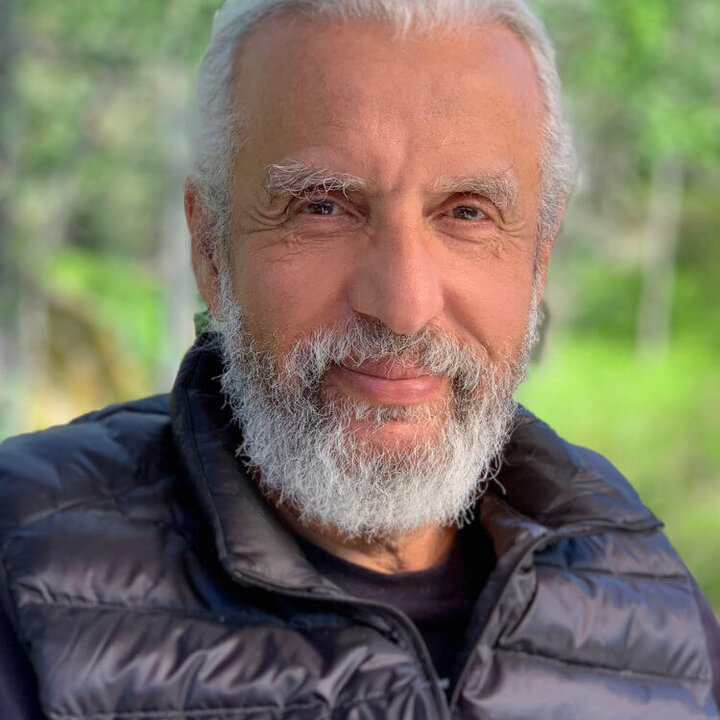
Pauli Murto is a Professor and Head of the Department at Aalto University School of Business, Department of Economics. His research spans microeconomic theory, information economics, and game theory, with a focus on strategic decision-making under uncertainty. Aalto University School of Business, Espoo, Finland Member of Helsinki Graduate School of Economics Research Interests: Dr. Murto's work examines strategic timing in economic decisions, information aggregation in games, auction theory, and investment behavior under uncertainty. His publications address topics like: Common value auctions and affiliated signals Stepwise investment under multi-dimensional uncertainty Equilibrium delay and neighborly coordination Irreversible investment in oligopolistic markets Publications (2002–2024): His research appears in top journals like Review of Economic Studies , Theoretical Economics , Journal of Economic Theory , and RAND Journal of Economics , often collaborating with scholars such as Juuso Välimäki and Chang-Koo Chi. Contact: Available at pauli.murto@aalto.fi or +358 40 353 8174. Office located in Room V308, School of Business building, Aalto University.
Maxim Sinitsyn is an Associate Professor of Instruction in the Department of Economics at Northwestern University, where he has held his PhD since 2005. His research focuses on product pricing strategies, particularly examining price promotions, coordination of promotions for related products, and the impact of technology licensing mechanisms on market outcomes. He has explored topics such as prescheduled sales, anti-stacking royalty clauses, and the effects of horizontal mergers in promotional contexts. Education: PhD in Economics from Northwestern University (2005). Research Interests: Dr. Sinitsyn's work concentrates on strategic pricing, including how firms optimize promotions for complementary products, the role of advance planning in promotional strategies, and the implications of different licensing payment structures for market dynamics. His studies also extend to broader economic phenomena such as price dispersion in duopolies and governance trade-offs in institutional design. Advising/Grants: No specific advising or grant information is listed in the provided texts. His contributions are primarily through research publications and teaching. Labs/Teams: No affiliated labs or research teams are mentioned.
Yan Huang is an Associate Professor of Business Technologies at the Tepper School of Business, Carnegie Mellon University. She holds a Ph.D. in Information Systems and Management from Carnegie Mellon University (2013) and a B.Sc. (with honors) in Information Systems and Management from Tsinghua University, Beijing, China (2009). Prior to joining Carnegie Mellon University, she served as an Assistant Professor of Technology and Operations at the University of Michigan–Ann Arbor, Ross School of Business (2013-2018). Her educational background includes: B.Sc. (with honors) in Information Systems and Management, Tsinghua University, Beijing, China (2009) Ph.D. in Information Systems and Management, Carnegie Mellon University, Pittsburgh, United States (2013) Dr. Huang's research examines the economic and social impacts of technologies and identifies effective designs and policies for technology-enabled markets and platforms. She employs economic theories, structural modeling, statistical modeling, machine learning methods, and an understanding of the underlying technologies in her research. Her recent work focuses on the economics of artificial intelligence (AI) and machine learning (ML), with particular attention to algorithmic fairness, transparency, and collusion. She is among the first to bring economic and social perspectives to research on fair ML. Additionally, she studies digital platforms and online markets, examining how firms can leverage data-driven strategies to optimize pricing, personalization, and user engagement. Her recent publications demonstrate a strong focus on the intersection of AI/ML with economic principles, particularly in areas like algorithmic bias, pricing strategies, and platform regulation. A significant portion of her work examines how machine learning algorithms impact financial lending decisions, housing markets, and content creation platforms. Her research methodology frequently combines structural econometric modeling with empirical analysis of real-world data, providing both theoretical insights and practical implications for platform design and policy. Dr. Huang has received several prestigious awards for her scholarly contributions: AIS Senior Scholar Best Publication of 2023 Award for "Algorithmic Transparency with Strategic Users" Runner Up, Best Paper Published in Information Systems Research for 2021 for "Crowds, Lending, Machine, and Bias" INFORMS Information Systems Society Sandy Slaughter Early Career Award Finalist, Best Student Paper Award, CIST 2021 for "Human-Algorithmic Bias: Source, Evolution, and Impact" Pounds Fellowship As an active member of the academic community, Dr. Huang serves on various committees at CMU including the MSBA Curriculum Review Committee and the Tepper School Strategic Plan Task Force. She has also held editorial positions for Management Science, Information Systems Research, and the International Conference on Information Systems. Her teaching portfolio includes courses on Human and Algorithmic Bias, Modern Data Management, and PhD-level instruction at the Tepper School.
Luigi Marattin is an Associate Professor in the Department of Economics at the University of Bologna. He holds a BA from the University of Ferrara (2001), a Master's from the University of Warwick (2002), and a Ph.D. in Economics from the University of Siena (2007). He was a Fulbright Scholar in New York (2005) and served as Economic Advisor to the Italian Prime Minister from 2014 to 2018. Currently on leave since March 2018. His research focuses on fiscal policy, public finance, and macroeconomics, with emphasis on sovereign debt, fiscal consolidations, and monetary union dynamics. Notable areas include the impact of fiscal rules in banking unions, pandemic fiscal responses, and municipal fiscal distress. His work bridges theoretical models (e.g., duopoly adjustments, delegation theory) with applied analyses of European integration and Italian economic policy. Marattin’s publications span over two decades, with recent contributions exploring post-pandemic fiscal strategies and sovereign bail-outs. He engages in policy debates through media interviews and political commentary, advocating for evidence-based economic frameworks. No scientific awards are explicitly listed, though his advisory roles highlight practical policy influence. His academic advising includes contributions to national economic policymaking, though formal student-mentor relationships are not detailed here. Grants and funding specifics are not documented in the provided materials.
Christian Bayer is a Professor of Economics at the University of Bonn , specializing in macroeconomics with a focus on inequality , heterogeneous agent models , and business cycles . His research explores the interplay between economic shocks and income inequality, emphasizing the role of financial frictions in shaping macroeconomic outcomes. Key Research Areas: Macroeconomics, Inequality, Heterogeneous Agent Models, Financial Frictions, Business Cycle Analysis Recent Publication Trends: 2024 work on U.S. business cycle inequality, monetary unions, and pandemic consumption dynamics; 2023 studies on fiscal policy liquidity channels, energy shock responses, and wage determinants. Scientific Awards: Three ERC Grants for inequality research Collaborative Approach: Bayer actively mentors young researchers through international collaborations and peer-to-peer team dynamics, fostering interdisciplinary work with economists like Benjamin Born, Ralph Luetticke, and Moritz Kuhn. He leads projects on topics such as monopsony in East Germany and HANK model applications. Contact: Department of Economics, University of Bonn; christian.bayer@uni-bonn.de
Francisco Martinez Sanchez is Professor in the Department of Quantitative Methods for Economics and Business at Universidad de Murcia's Faculty of Economics and Business. His research focuses on industrial organization, intellectual property protection, competition policy, and game theory applications in software markets and media industries. He leads the Time Series and Econometrics research group. His extensive publication record examines piracy economics, market competition, privatization policies, and behavioral economics. Education includes a PhD from Universitat d'Alacant (2008) on commercial piracy economics. Contact: fms@um.es
Zormpas Dimitrios is an Assistant Professor in the Department of Economics at the University of Macedonia. He holds academic staff positions in both the Master in Economics and Master in Applied Economics and Finance programs. He earned his PhD in Real Estate Appraisal and Land Economics from the University of Padova (2018), an MSc in Agricultural Food and Environmental Policy Analysis from the Swedish University of Agricultural Sciences (2014), and prior degrees from the University of Macedonia (MSc Economic Theory and Policy, 2011; BSc Economics, 2008). His research focuses on Investment Theory , Energy Economics , and Environmental Economics , with emphasis on real options analysis, common ownership dynamics, and vertical relationships in strategic markets. His work explores topics like preemptive investment strategies, public-private partnerships, and the impact of regulatory frameworks on energy systems. Key publication trends include analyzing investment timing under uncertainty, evaluating ownership structures in oligopolistic markets, and assessing policy impacts on agricultural and energy sectors. His research frequently intersects with real options methodology to model strategic decisions in dynamic environments. Dr. Zormpas has no listed awards or grants in the provided materials. His academic profile emphasizes theoretical contributions to industrial organization and applied economic policy analysis.
Benjamin Lev is a Professor in the Department of Decision Sciences and Management Information Systems (DS&MIS) at the LeBow College of Business, Drexel University. He previously served as Trustee Professor (2014–2021) and Department Head (2009–2014) at Drexel. His academic leadership extends to prior roles as Professor, Department Head, and Dean at the University of Michigan-Dearborn (1990–2009), Professor and Department Head at Worcester Polytechnic Institute (1987–1990), and Professor and Department Head at Temple University (1970–1987). He has held short appointments at institutions in China and the U.S., including the Wharton School and Tel Aviv University. Lev’s research spans Operations Research, Management Science, and Decision Sciences , with expertise in mathematical programming, operations planning, inventory control, supply chain management, and optimization under uncertainty. His recent work focuses on applications in disaster management, sustainable supply chains, AI in operations, water resource allocation, and emergency logistics. He has published over 150 journal articles and authored or edited 18 books, with a strong emphasis on real-world problem-solving using quantitative methods. The trends in his recent publications (2022–2025) reflect a focus on complex optimization under uncertainty , particularly in humanitarian logistics, environmental sustainability, and digital commerce. His work frequently employs advanced methodologies such as bi-level programming, stochastic optimization, fuzzy logic, and data envelopment analysis (DEA), often applied to critical societal challenges like disaster response, air pollution, and resource scarcity. Lev is an INFORMS Fellow (2003) and has received several honors, including the 2023 Top Cited Article award in Naval Research Logistics and the 2023 First Prize from the Jiangxi Province Social Science Outstanding Achievement Award. His editorial leadership is most notably demonstrated by his 23-year tenure as Editor-in-Chief (2002–2025) of OMEGA – The International Journal of Management Science , one of the premier journals in the field. He has advised numerous scholars and presented his work globally, particularly on his experience as EiC of OMEGA . He has been actively involved in academic collaborations, especially in China, serving on advisory boards and as an external reviewer for institutions like Sichuan University. He has also received significant grant funding from the U.S. National Institutes of Health, U.S. Public Health Service, and U.S. Air Force for research in medical information systems and operations research applications. Lev has been instrumental in organizing major international conferences and has served on the editorial boards of over 20 journals, including Interfaces, IIE Transactions, OR Journal, and Financial Innovation . His role as Vice President of TIMS and INFORMS further underscores his leadership in the global operations research community.
Ilkka Leppänen is an Assistant Professor (2nd term) at Aalto University's Department of Information and Service Management. His research focuses on behavioral operational research, game theory, and systems intelligence, with a particular emphasis on integrating psychophysiological methods to study decision-making processes in strategic interactions. Key research areas include emotional responses in negotiations, evolutionary stability of preferences in duopoly markets, and the application of systems thinking to complex organizational challenges. His work bridges theoretical models with empirical experiments, often employing psychophysiological measurements to understand human behavior in competitive and collaborative settings. Leppänen has contributed to advancements in behavioral OR through interdisciplinary studies, including the analysis of cooperation mechanisms in Stackelberg and Cournot games, as well as the design of educational platforms for operations management simulations. His research frequently addresses practical interventions to improve decision-making in real-world contexts. Notable collaborations include studies with Raimo P. Hämäläinen and Etiënne A.J.A. Rouwette, exploring topics such as strategic timing in duopolies and the impact of emotional states on economic interactions. His publications span prestigious journals like the European Journal of Operational Research and the Journal of Neuroscience, Psychology, and Economics.
Halvor Mehlum is a Professor in the Department of Economics at the University of Oslo, specializing in macroeconomics, development economics, economics of conflict, and crime . He has held academic positions since 1994, including Research Fellow (1994–1998), Researcher at the Frisch Centre (1999–2002), and Associate Professor (2002–2006) before becoming a full Professor in 2006. He also serves as Deputy Head of the Department of Economics (2016–present) and Deputy Leader of the Centre of Equality, Social Organization, and Performance (ESOP). Education: Cand. oecon (1992), Dr. polit (1999) from the University of Oslo; Visiting Scholar at the New School of Social Research (1996). Research Focus: Macroeconomics with applications to conflict dynamics, crime, development, and political economy. Recent articles explore topics like social capital, land redistribution, crime-protection dynamics, and pandemic economics. Leadership Roles: Board member at the Frisch Centre, Center for Development and Environment (SUM), and Executive Committee of the European Development Research Network (EUDN). Co-editor of the Nordic Journal of Political Economy.
Alcino Azevedo is an Associate Professor of Finance at Aston Business School, University of Aston. He serves as Research Director of the Economics, Finance and Entrepreneurship Department. Previously, he held roles at Alliance Manchester Business School and Hull University Business School, where he led the MSc Financial Management program. His academic background includes a PhD in Investments under Uncertainty and Competition from the University of Manchester (2009), an MSc in Finance from Universidade Católica Portuguesa, and an Engineering degree from Universidade do Minho. He combines academic rigor with industry experience from roles in manufacturing management. His research focuses on real options analysis, strategic investment timing under uncertainty, and risk management in financial markets. He has published in top journals like the Journal of Financial Economics and European Journal of Operational Research , and frequently presents at conferences such as the Financial Management Association and Real Options conferences. His work addresses topics like voluntary delisting strategies, wind farm location optimization, and derivatives effectiveness in firm value creation. He is also active in reviewing for high-impact journals including the RAND Journal of Economics and Journal of Economic Dynamics and Control . Teaching responsibilities include modules on Advanced Corporate Finance and Derivatives. He actively supervises PhD students in real options, risk management, and corporate finance. His research extends to energy economics, corporate governance impacts on hedging decisions, and policy analysis for renewable energy investments.
Antonio Cuñat Cuñat is an Associate Professor in the Department of Fundamentals of Economic Analysis at the Faculty of Economics, University of Valencia. He is affiliated with the ERI CES (Economic and Social Behaviour) research institute and the CES research group, focusing on behavioral and labor economics. Education: PhD in Economics, University of Valencia (2001), with thesis: Negociación estratégica y compromisos unilaterales , supervised by Dr. Gonzalo Olcina Vauteren and Dr. Vicente Calabuig. His research centers on labor economics, organizational design, and strategic negotiation , with a strong emphasis on theoretical modeling and experimental validation. He investigates topics such as temporary employment, worker motivation, team leadership, and bargaining under commitment and uncertainty. His work often integrates game-theoretic frameworks with real-world labor market data, particularly from Spain. The recent publications reflect a consistent focus on microeconomic theory applied to labor and organizational issues , including worker types, contract design, incentive systems, and market deregulation. The articles demonstrate a blend of theoretical modeling, empirical analysis, and experimental economics, primarily within the domains of industrial organization and behavioral microeconomics. No scientific awards are explicitly mentioned in the provided text. He has supervised doctoral research, including the thesis of Gonzalo Olcina Vauteren and Vicente Calabuig. There is no mention of external grants or funding in the text, but his sustained publication record suggests active research engagement. He collaborates within the CES research group and contributes to the ERI CES institute’s mission of studying economic and social behavior. He is involved with the CES research group and ERI CES institute, contributing to collective research on economic behavior, labor markets, and organizational efficiency.
Azzeddine Azzam serves as the Roy Frederick Professor of Agricultural Economics in the Department of Agricultural Economics at the University of Nebraska-Lincoln, where he conducts research at the intersection of industrial organization and agricultural policy. His career spans academic appointments at Harvard University, Swedish University of Agricultural Sciences, and University Mohammed VI Polytechnique, along with advisory roles at Dubai Chamber of Commerce and Industry and chairmanship of the University of Dubai's Economics Department. His educational foundation includes a Ph.D. in Agricultural Economics from the University of Nebraska-Lincoln (1985). Azzam's research centers on empirical industrial organization with emphasis on US beef supply chain dynamics, including oligopsony power, captive supplies, price transmission asymmetry, and pandemic-induced disruptions. His agricultural policy analysis examines biofuel impacts on grain-livestock markets, crop insurance effects on farm structure, and state-level initiatives like Nebraska's Livestock Friendly Country Program. International collaborations extend his work to Morocco, Sweden, and UAE, addressing food security and market structure issues across diverse agricultural contexts. Analysis of his 15 most recent publications (2021-2025) reveals three dominant research trajectories: pandemic resilience in meat processing (6 articles), market power dynamics in agricultural supply chains (5 articles), and policy impacts of biofuels/crop insurance (4 articles). These works consistently apply industrial organization frameworks to contemporary food system challenges, with increasing focus on crisis response and structural vulnerabilities since 2020. His recognition includes: University of Nebraska 2008 Excellence in Graduate Education Award for Outstanding Contributions to Graduate Education Lifetime Research Fellow of the Economic Research Forum Member of Phi Beta Delta, the Honor Society of International Scholars Azzam's academic leadership encompasses founding the Center of Agricultural and Food Industrial Organization (CAFIO), establishing the Journal of Agricultural and Food Industrial Organization (JAFIO), and creating RURALS: Review of Undergraduate Research in Agricultural and Life Sciences. He has mentored graduate students recognized by university awards and served as associate editor for leading journals including American Journal of Agricultural Economics and Agribusiness: An International Journal. Through CAFIO, he directs research on agri-food industrial organization, while JAFIO and RURALS platforms foster scholarly discourse and undergraduate research development in agricultural economics globally.
M. Ali Ülkü is a Professor and Director of the Centre for Research in Sustainable Supply Chain Analytics at Dalhousie University's Faculty of Management, where he also serves as Acting Chair of the Management Science & Information Systems Department. He holds cross-appointments in the College of Sustainability, Department of Industrial Engineering, and School for Resource and Environmental Studies. His educational background includes: PhD in Management Sciences (University of Waterloo) MSc in Operations Research (Çukurova University) BSc in Industrial Engineering (Bilkent University) Dr. Ülkü's research centers on sustainable supply chain innovation , with expertise in circular economy logistics, humanitarian operations, and green marketing analytics. His interdisciplinary work applies big data methodologies to solve environmental challenges, emphasizing "the science and teaching of better" through student-led research initiatives. Recent publications (2022-2023) reveal a strategic focus on climate-resilient supply chains, integrating machine learning for multimodal logistics optimization and game-theoretic models for green product development. Key themes include shipment consolidation techniques, physical internet applications, and subsidy-driven sustainability in duopolistic markets. Notable recognitions include: A. Gordon Archibald Teaching Excellence Award (2023) Global Triple E Awardee (Education Champion) (2023) Research Star Award, Faculty of Management (2021) Distinguished Professor Award, IEOM Society (2019) Program Chair, Canadian OR Society Conference (2018) INFORMS Best Paper Award (runner-up, 2013) An active educator, Dr. Ülkü teaches Supply Chain Planning (COMM 4520), Logistics Management (COMM 3507), and Operations Management (BUSI 5551), championing experiential learning through his research center. While specific grant details aren't documented, his award-winning publications indicate sustained funding for sustainability analytics projects. He leads the Centre for Research in Sustainable Supply Chain Analytics, fostering cross-disciplinary collaboration on climate-adaptive logistics systems and sustainable consumption models through industry partnerships and policy-focused research.
Giovanni Di Bartolomeo is the Dean of the Faculty of Economics and a Professor at Sapienza University of Rome. He holds additional positions including Advisor to the European Parliament, Member of the Experts Council of the Italian Ministry of Economy and Finance, Senior Fellow at the Luiss Institute for European Analysis and Policy, and co-founder of the Centre for Investigation and Modelling of Experimental Observations (CIMEO). His research focuses on monetary and fiscal policy, macroeconomics, experimental economics, and environmental policy. Di Bartolomeo studied at Sapienza University of Rome and Pompeu Fabra University (Barcelona), earning an MSc and PhD. His work spans ECB policy analysis, climate change mitigation, and the impact of large-scale events like the Euro 2020 on regional economies. He has contributed to evaluating Italy’s Recovery and Resilience Plan and addressing stagflation risks in the Eurozone. His recent publications examine topics such as carbon taxation, financial dominance in the eurozone, and behavioral macroeconomic modeling. Notably, he explores guilt aversion in experimental settings and the strategic dynamics of scarce resources. Di Bartolomeo’s research emphasizes policy resilience, fiscal-monetary coordination, and the long-term implications of short-term political decisions. He has advised on structural reforms, sovereign debt crises, and pandemic fiscal responses. His contributions to public economics and macroeconomic resilience have been published in specialized journals and policy reports.