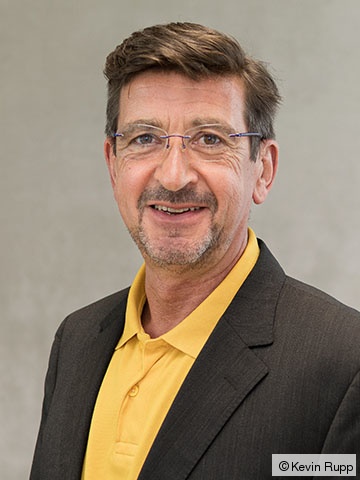
Otmar Leo Bock is a Professor at RWTH Aachen University, affiliated with the Institute for Training Science and Sports Informatics. His research focuses on cognitive and motor performance across the lifespan, with particular emphasis on aging, working memory, and attention mechanisms in sports and daily activities. Primary affiliation: Institute for Training Science and Sports Informatics, RWTH Aachen University Collaborators: Jens colleagues like Markus Kempe, Daniel Memmert, and others His research explores: Age-related cognitive and motor changes in dual-task scenarios Applications of fNIRS in studying brain activation during walking Effects of working memory training on intelligence Attention window measurement and peripheral attention in sports Mental chronometry in ecological contexts Impact of age stereotypes on older workers' performance Publication trends (2011-2015) show interdisciplinary work combining neuroscience, psychology, and sports science, with methodologies spanning laboratory experiments, ecological studies, and space medicine applications. Ongoing collaborations include researchers from Institute for Movement and Sports Gerontology and Psychological Institute. His work has been cited 147 times, with 287 readers on Mendeley.
Laura Will, Ph.D., is a scientific staff member at the Psychological Institute within the Department of Performance Psychology at German Sport University Cologne. She maintains active research collaborations across multiple departments including Sensorimotor Expertise and Applied Sports Psychology, with significant contributions to understanding cognitive processes in athletic performance. Her research focuses on dual-task performance (100% fingerprint match), group dynamics in sports (86%), and multitasking (57%), with particular emphasis on implicit learning mechanisms, reaction time optimization, and cognitive aspects of elite athletic performance. Current work examines how individual profiling can capture the multifactorial nature of sports excellence through meta-analytic approaches. Recent publications (2024-2025) reveal strong trends in developing taxonomic frameworks for cognitive demand analysis across sports, investigating menstrual cycle effects on female athlete cognition, and refining decision-making models for elite competitors. Her work consistently bridges theoretical cognitive psychology with practical sports applications. Laura actively participates in DFG-funded research projects including SPP 1772 on Inter-individual Differences in Multitasking (2021-2025) and previous Flexibilität Multitasking projects (2015-2022), collaborating with Markus Raab (39 joint publications) and Lisa Musculus-Schönenborn (15 joint publications). She regularly presents at conferences including the ASP Annual Conference and DVS University Days.
Daniel Meißner is a researcher at the Chair of Mathematics XII at Ruhr University Bochum. His work bridges mathematical physics and educational technology, with a focus on digital learning tools for higher mathematics instruction. Pioneered digital mathematics tasks using the STACK system Developed interactive web applications with JSXGraph Conducted research on Gibbs measures in statistical mechanics In educational research, he has led projects like DigStat and STACKrate to create open educational resources (OER) for stochastics and engineering mathematics. His publications reflect dual expertise in probability theory and pedagogical technology development. He teaches "Higher Mathematics C" courses for engineering students and contributes to the Bernoulli-IMS World Congress in probability and statistics.
Prof. Dr. Hermann Müller is a W3 Professor of Training Science at the Faculty of Psychology and Sports Science, Justus Liebig University Giessen, and Head of the Training Science Department. His research focuses on human motor strategies, predictive error processing, and neurophysiological correlates of movement kinematics through virtual and real-life sports scenarios. Bachelor's degree in Sports and Mathematics, Saarland University (1988) Doctorate in Sports Science (1995), Saarland University Habilitation in Sports Science (2001), Saarland University His work bridges Motor Learning , Neurophysiology , and Human Movement Analysis , often involving novel data collection methods. Recent publications emphasize error valuation , predictive modeling , and sensory signal integration in motor tasks, with applications in sports like basketball and throwing mechanics. Scientific awards include: Doctoral scholarship from the German Academic Scholarship Foundation (1992-1993) Habilitation scholarship from the German Research Foundation (1997-1999) Müller leads the junior research group Neuroprocessing in Movement and Training and has collaborated extensively with Dr. Lisa Maurer and Prof. Dr. Hegele on projects funded by the DFG priority program. His research group develops innovative methods for analyzing timing variability and error processing in motor learning.
Professor Peter Frensch is a distinguished cognitive psychologist serving as Chair of General Psychology at the Institute of Psychology, Humboldt University of Berlin. He has held this position since 1998 and previously served as an Honorary Professor at the same institution from 1995-1998. His academic journey includes significant roles at the Max Planck Institute for Human Development (1994-1998) and the University of Missouri-Columbia (1989-1996), where he progressed from Assistant to Associate Professor with tenure. Currently, he also serves as Dean of the Faculty of Mathematics and Natural Sciences II at Humboldt University. Professor Frensch earned his Ph.D. in Psychology from Yale University in 1989, following M.Phil and MS degrees from the same institution. His earlier academic background includes psychology studies at the University of Trier (1979-1984) and electrical engineering at TU Darmstadt (1976-1979). His research program has been consistently supported by major funding bodies including the German Research Foundation (DFG), with numerous projects spanning cognitive skill acquisition, implicit learning, and dual-task performance. Professor Frensch's research primarily focuses on the emergence of awareness of environmental regularities, implicit learning and memory processes, the role of language in behavior regulation, cognitive skill acquisition, and computational modeling of learning and knowledge representation. His work bridges theoretical cognitive psychology with practical applications, particularly in understanding how humans acquire complex skills and process information under various constraints. His research has significantly contributed to understanding the mechanisms of information reduction during skill acquisition and the relationship between implicit and explicit knowledge systems. His extensive publication record demonstrates consistent contributions to cognitive psychology over three decades, with recent work focusing on dual-task performance, implicit sequence learning, and the cognitive mechanisms underlying skill acquisition. Professor Frensch has served as editor for Psychological Research (2000-2008) and is on the editorial boards of several prominent journals including Learning & Individual Differences, Psychological Research, and Psychological Studies. Fellow, American Psychological Association (Division 3) Award from the Faculty of Mathematics and Natural Sciences II of the Humboldt University of Berlin for excellent teaching (2000, 2003, 2006, 2007, 2008) Robert S. Daniel Junior Faculty Outstanding Teaching Award (1992-1993) Graduate Fellowship, Yale University (1985-1989) Fulbright Scholarship, United States Government (1984-1985) His research group has secured substantial third-party funding for projects examining cognitive and neural changes during practice, the acquisition of action-effect bindings, and mechanisms of information reduction. Professor Frensch has supervised numerous doctoral students and collaborated extensively with researchers across Europe and North America, contributing to the international standing of cognitive psychology research at Humboldt University.
Sebastian Kübler is a Researcher at the Institut für Psychologie, Humboldt-Universität zu Berlin, where he investigates cognitive mechanisms in multitasking environments. He holds a Master of Science degree and actively contributes to experimental psychology through neurostimulation methodologies. Research Focus His primary research examines task-order control in dual-task scenarios, probing how cognitive systems prioritize concurrent tasks. He employs transcranial magnetic stimulation (TMS) and transcranial direct current stimulation (tDCS) to analyze neural correlates of executive control. Complementary interests include: Neural activation patterns under multitasking demands Comparative analysis of multitasking paradigms Embodied cognition perspectives on task sequencing Motor cortex involvement in memory encoding Collaborative Network Kübler collaborates with researchers across Europe, including Marco Steinhauser (KH Eichstätt) on neural activation, Andrea Kiesel (ALU Freiburg) on multitasking paradigms, and Veit Kubik (Stockholm University) on motor-memory interactions. Academic Supervision He mentors Bachelor and Master students in projects related to action control and multitasking, with emphasis on experimental design and cognitive modeling.
Prof. Dr. Bernd Grünewald is a faculty member at Goethe University Frankfurt with a focus on Neurobiology and Behavioral Plasticity . His research group investigates cellular mechanisms underlying memory formation in Apis mellifera (honeybees) and Drosophila melanogaster (fruitflies), using multidisciplinary approaches from molecular biology to computational simulations. Research Interests : Cellular neurophysiology of memory formation Neuromodulator regulation of ionic currents and calcium dynamics Behavioral pharmacology and gene silencing in insect models Computational modeling of neuronal activity Neuroreceptor function in learning processes Selected Publications (2002–2008) highlight his work on: GABA and nicotinic receptor mechanisms in Kenyon cells Role of calcium signaling in memory modulation Mushroom body function in insect learning Environmental impacts of insecticides on neural systems Computational modeling of neuronal dynamics Comparative olfactory pathway analysis
Prof. Dr. Alan Akbik is a Professor at the Humboldt University of Berlin , leading the Chair of Machine Learning within the Institute of Computer Science . His research focuses on Natural Language Processing (NLP) and the development of open-source tools like Flair NLP . Research Interests: LLM architecture, knowledge distillation, zero-shot evaluation, named entity recognition, synthetic data analysis, and model robustness. Articles Trends: Recent work spans NLP tasks (entity disambiguation, fact learning), LLM applications (code generation for 3D geometry), and benchmarking tools (MastermindEval, LM-Pub-Quiz). Grants: Funded by BMBF for industry collaboration, EXIST startup grant for FactorizeBio , and IBB Forschungstransfer project. Lab Members: New PhD student Piet Wagner (2025) and researcher Pieter Delobelle (2024), focusing on German/Dutch LLMs.
PD Dr. Gregor Hardiess is a Senior Lecturer in Cognitive Neuroscience at the Faculty of Biology, University of Tübingen. His research explores the interplay between gaze behavior, working memory, and spatial cognition, with a focus on both healthy subjects and visually impaired patients. Supervises student theses (PhD, Master, Bachelor) in Visual Cognition, Spatial Cognition, and Neurobiology Conducts practical courses and seminars on topics like Visual Cognition, Spatial Cognition, and Working Memory His work investigates how eye and head movements support cognitive processes, particularly in dynamic environments. He studies trade-offs between sensory acquisition and memory usage, spatial working memory metrics, and compensation strategies for visual field defects in navigation tasks. Key publication themes include gaze control in collision avoidance, cross-modal integration in working memory, and language's role in spatial cognition. He has contributed to journals such as Journal of Vision , Vision Research , and Frontiers in Psychology , with a focus on experimental methodologies in virtual reality. Hardiess also engages in interdisciplinary collaborations, delivering invited talks on topics like gaze adaptation, visual exploration in hemianopic patients, and cognitive strategies in spatial tasks.
Shin-Yuan Hung is a Professor in the Department of Information Management at National Chung Hsing University's College of Information Sciences, with an extensive research portfolio spanning over 25 years in information systems. His scholarly contributions include 88 publications in top-tier journals and conferences, with recent works focusing on smart retail, healthcare IT, knowledge management, and social media analytics. Dr. Hung's research interests center on the intersection of technology adoption and organizational behavior, with particular emphasis on healthcare information systems, knowledge management practices, and e-government services. His work frequently examines how user characteristics, organizational context, and technology features influence system success across various domains. Recent research has explored social shopping behaviors, tacit knowledge sharing in development projects, and the impact of service characteristics in smart retail environments. Analysis of his 15 most recent publications reveals a consistent focus on practical applications of information systems in healthcare, retail, and government contexts. His work demonstrates methodological diversity, employing both quantitative and qualitative approaches to investigate technology adoption phenomena. The research shows increasing attention to big data analytics applications across management levels and the evolving role of social media in consumer behavior. Dr. Hung has maintained long-standing collaborations with prominent scholars in the Pacific Asia region, particularly with David C. Yen (18 co-authored papers), Jacob Chia-An Tsai (11 papers), and Kuanchin Chen (9 papers). His leadership in the academic community is evidenced by co-organizing PACIS 2016 in Chiayi, Taiwan, and contributing to special issues honoring distinguished colleagues like Prof. Ting-Peng Liang. His research has significant practical implications for healthcare organizations implementing electronic medical records, businesses developing social commerce strategies, and government agencies designing e-government services. The work provides valuable frameworks for understanding technology adoption across different contexts while addressing both theoretical and practical challenges in information systems implementation.
Roland Deutsch is an Associate Professor of Social Psychology at Technische Universität Dresden. Previously, he held positions including Substituting Chair at the University of Jena (2009–2010) and Akademischer Rat auf Zeit (assistant professor equivalent) at the University of Würzburg (2006–2009). He obtained his PhD in Psychology from the University of Würzburg in 2003, advised by Prof. Dr. Fritz Strack, and holds a Diploma in Psychology from the same institution (1998). His research focuses on social cognition, automatic evaluations, and affective modulation of cognitive processes. Key areas include approach-avoidance behavior, semantic priming, and the interplay between reflective and impulsive social behaviors. He has contributed to journals like Psychological Science and the Journal of Experimental Psychology. Awards: Röntgen Preis 2007, Theoretical Innovation Prize 2003 (with Strack), and Fellow of the Society of Experimental Social Psychology. Editorial Roles: Associate Editor of Social Psychology (2009–2013), Editorial Board Member of European Journal of Social Psychology, Cognition and Emotion, and Social Cognition. Deutsch’s work bridges experimental methods with theoretical insights, examining how affective states and cognitive processes shape social behavior. His publications address topics such as stereotype perception, implicit attitudes, and the methodological challenges in measuring automatic evaluations.
Bettina Schwab is a Visiting Professor in the Faculty of Medicine at the University Medical Center Hamburg-Eppendorf (UKE). She holds an affiliation with the Institute of Neurophysiology and Pathophysiology within the Center for Experimental Medicine. Her research focuses on neural oscillations, transcranial alternating current stimulation (tACS), and their applications in motor control, stroke rehabilitation, and neurodegenerative diseases such as Parkinson's. Dr. Schwab’s work bridges computational modeling with experimental neuroscience, addressing questions about neural synchronization, neuroplasticity, and neuromodulation. Key research interests include studying the effects of tACS on cortical connectivity and motor performance, particularly in stroke survivors and healthy individuals. She investigates how rhythmic brain stimulation modulates sensory and motor processes, with a focus on theta-gamma coupling, phase-specific effects, and interhemispheric interactions. Her studies also explore computational models of deep brain stimulation (DBS) for refractory epilepsy and Parkinson’s disease, emphasizing the role of electric fields and neural network dynamics. Dr. Schwab’s contributions extend to understanding basal ganglia-thalamic communication in motor tasks and the role of intrinsic neural properties in Parkinsonian synchrony. She employs advanced techniques such as EEG, MEG, and computational simulations to dissect neural mechanisms underlying perception, movement, and neurological disorders. Her work highlights interdisciplinary approaches to advancing translational neuroscience and clinical neurorehabilitation. Her recent studies (2023–2025) emphasize the modulation of cortical high-gamma activity in stroke recovery, phase-specific effects of tACS on visual perception, and the differential impact of theta-gamma stimulation on motor skill acquisition. These findings contribute to optimizing non-invasive brain stimulation protocols for therapeutic applications.
Prof. Robert Gaschler is a Professor of Experimental Psychology specializing in Learning, Motivation, and Emotion at FernUniversität in Hagen. He holds a Dr. rer. nat. from Humboldt University Berlin and has held academic roles at the University of Koblenz-Landau and Humboldt University. His research focuses on interdisciplinary applications of psychology in energy/environment contexts, sequence learning, dual-tasking, and data visualization. He leads the MaxFab project exploring energy price trends and production timing visualization. Active in academic governance, he serves on FernUniversität's Faculty Board and the European Society of Psychology Learning and Teaching's Executive Committee. Education: 2009: Dr. rer. nat. in Psychology, Humboldt University Berlin 1998–2003: Psychology studies at Humboldt University Berlin Research Interests: Interdisciplinary psychology research in energy/environment fields, data graphic perception, sequence learning mechanisms, multitasking cognition, and e-learning strategies. He investigates how visual data representations influence decision-making in climate policy contexts and energy markets. Grants & Projects: DFG-funded research on multitasking mechanisms, MaxFab project on industrial energy optimization via data visualization, and EU-funded studies on pro-environmental behavior frameworks. Labs/Teams: Leads General Psychology: Learning, Motivation, Emotion lab at FernUniversität, collaborating with interdisciplinary teams in climate science and healthcare communication.
Jia Liu is a Professor at Tsinghua University's School of Information Science and Technology, Department of Computer Science, with a distinguished research career spanning multiple disciplines in computer science and engineering. Her extensive publication record demonstrates leadership in artificial intelligence, machine learning, and their applications across diverse domains. Dr. Liu's research interests encompass the development and application of advanced computational techniques to solve complex real-world problems. She has pioneered innovative approaches in neural network architectures, medical imaging analysis, remote sensing applications, and multi-agent systems. Her work on Asym-UNet and ThreeF-Net has significantly advanced breast lesion segmentation techniques, while her contributions to digital twin technology have enhanced nuclear reactor operations and Martian exploration systems. Analysis of Dr. Liu's recent publications reveals a strong trend toward interdisciplinary research that bridges theoretical computer science with practical applications in healthcare, environmental monitoring, defense technology, and education. Her work demonstrates consistent innovation in algorithm development, particularly in adapting machine learning techniques to domain-specific challenges. Dr. Liu maintains an active research program with numerous collaborations across academia and industry. Her work on federated learning for dual carbon initiatives reflects her commitment to addressing global sustainability challenges through technological innovation. As an educator, Dr. Liu has developed innovative teaching methodologies that integrate virtual reality and game-based learning, particularly in language education. Her research on interactive e-learning environments demonstrates her dedication to improving educational outcomes through technology.
Prof. Dr. Klaus Müller is a Professor of Pedagogical Tasks in Nursing at Frankfurt University of Applied Sciences, leading the Bachelor of Science in Care and Master of Arts in Vocational Education for Healthcare Professions. He holds dual appointments in the Faculty 4: Social Work & Health and oversees teaching modules in nursing pedagogy, project management, and reflection. His expertise spans healthcare training processes, motivational health counseling, and advanced nursing practice strategies. Education: Holds a degree in Health Sciences from Universität Bielefeld (1997-1999) and studied teaching at vocational schools (1990-1995). He has extensive professional experience in hospital management, network coordination, and educational leadership. Notable roles include coordinating the Robert Bosch Stiftung’s nursing education network (2006-2010) and serving as a TQM Assessor and NLP Coach. Research focuses on nursing education innovation, employee appreciation in healthcare, and hospice care history. Key projects include the ProWert initiative (BMBF-funded, 2010-2012) on workplace morale and the Aids-Hospizversorgung study (2007-2009). He is active in professional organizations such as the Deutsche Gesellschaft für Pflegewissenschaft (DGP) and Deutscher Berufsverband für Pflegeberufe (DBfK). Teaching responsibilities include modules like 'Theory-Practice Transfer' and 'Project Management Coaching.' His publications address nursing didactics, academic preparation, and healthcare professionalization trends.