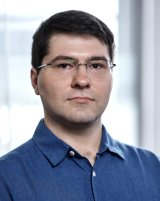
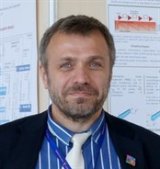
Vincenzo Spagnolo is a leading researcher affiliated with the PolySense team, focusing on optical gas sensing, photoacoustic spectroscopy, and laser-based sensor development. His work addresses critical challenges in environmental monitoring, energy safety, and industrial applications through advanced photonics technologies. Recognized in the AD Scientific Index World Scientists Rankings 2025 and 2024 Featured in Stanford University's Top 2% Scientists List (Full Career) 2023 Recent research highlights include: Ultra-compact QEPAS sensors for water vapor and greenhouse gases Black Quartz technology for mid-infrared absorption enhancement Remote gas sensing via optical synchronization methods PPB-level SO 2 and CO impurity detection in industrial gases Flow dynamics characterization for optimized sensor chambers His publications demonstrate expertise in: Quartz-Enhanced Photoacoustic Spectroscopy (QEPAS) Laser Diode Systems Waveguide and Fiber Optics Integration Trace Gas Detection High-Power Solid-State Lasers Multi-Heterodyne Spectroscopic Techniques Scientific awards and recognitions: AD Scientific Index World Scientists Rankings 2025 and 2024 Stanford University Top 2% Scientists List (Full Career) 2023 Five consecutive years in the Top 2% Scientists list The PolySense team's work under Spagnolo's contributions continues to push boundaries in optical sensing, with applications spanning hydrogen safety, natural gas analysis, and environmental monitoring through innovations in laser technology and sensor design.
Miguel González Herráez is a Professor in the Department of Electronics at the Universidad de Alcalá, affiliated with the GRIFO Grupo de Ingeniería Fotónica (Photonics Engineering Group). His research focuses on advanced optical fiber sensing technologies, including distributed acoustic sensing (DAS), phase-sensitive OTDR, and dual-comb spectroscopy. He holds a Ph.D. from the Universidad Politécnica de Madrid (2004) with a thesis on nonlinear techniques for measuring chromatic dispersion in optical fibers. His work emphasizes applications in environmental monitoring (e.g., climate change via submarine cables), seismology, and structural health assessment. Recent projects include high-resolution strain sensing, seismic wave analysis using dark fibers, and improving fiber-optic sensor performance through novel coding and signal processing techniques. He has pioneered time-expanded sensing methodologies to enhance spatial and temporal resolution in distributed systems. Key collaborations involve optimizing fiber-optic networks for geophysical studies and developing plugins like UniDam for composite material analysis. His contributions bridge fundamental photonics research with real-world applications in infrastructure monitoring and oceanography.
Mathieu Bertrand is a Researcher in the Department of Physics at ETH Zürich, part of the Institute of Quantum Electronics under Prof. Faist's group. His research focuses on mid-infrared quantum cascade lasers (QCLs), particularly on frequency combs, dual-comb interferometry, and RF properties enhancement. He has contributed to advancing technologies such as surface-emitting QCLs and low-dissipation devices. Education: He holds a graduate degree from Grenoble-INP Phelma (France/Grenoble), specializing in semiconductor physics and optoelectronics. Research interests include quantum walk combs, RF-modulated QCLs, and applications in spectroscopy. His work bridges theoretical and experimental physics, with contributions to both fundamental science and practical device development. Teaching: He has taught at ETH Zürich since 2020, including courses on Quantum Optics, Physics Practica, and IT infrastructure management. Previously, he taught electromagnetism at Polytech' Grenoble (2017–2019). Projects: Current projects include developing low-dissipation Quantum Cascade Surface Emitting Lasers (QCSELs) and advancing fiber networks for optical signal distribution. Side projects involve lab automation, interferometer design, and data processing tools. Collaborations: Works with D-ITET on fast signal detection and maintains a lab laser database. Enjoys interdisciplinary projects blending physics, engineering, and design.
Vladimir Gordienko is a Research Fellow at Aston University's College of Engineering and Physical Sciences, specializing in fiber optical parametric amplifiers (FOPAs) and related nonlinear optical technologies. He holds a PhD from Aston University (2018), an MSc in Photonic Networks Engineering (Erasmus Mundus MAPNET, 2013), and a BSc in Optical Equipment and Technologies (Bauman Moscow State Technical University, 2010). His research focuses on FOPA applications in optical communication systems, phase-sensitive amplification, Raman amplifiers, and optical phase conjugation. Key interests include polarization-insensitive design, multi-band networks, and high-capacity transmission solutions. His work addresses challenges such as pump phase modulation effects, nonlinear crosstalk mitigation, and broadband gain optimization. Recent publications highlight advancements in polarization-insensitive FOPAs for bidirectional access networks, record bandwidth phase conjugation in fiber loop mirrors, and high-performance Mach-Zehnder amplifier configurations. His datasets and experimental contributions include evaluations of 38-channel transmission systems and WDM signal amplification. Vladimir has collaborated on projects involving extended-reach passive optical networks (PONs), demonstrating FOPA superiority over erbium-doped and Raman amplifiers for burst-mode traffic. His work bridges theoretical modeling and experimental validation, with a focus on practical applications in modern optical communication networks.
Sergey Sergeyev is an Associate Professorial Research Fellow at the Aston Institute of Photonic Technologies (AiPT) within the College of Engineering and Physical Sciences at Aston University, UK. His research focuses on fiber lasers, polarization dynamics, ultrafast optics, and nonlinear phenomena. He holds a PhD in Optics and Laser Physics from Belarusian State University (1991) and has extensive industrial and academic experience, including a Marie Curie Fellowship (2010). He is a Senior Member of the Optical Society of America and a UK HEA Fellow. Key research interests include dissipative solitons, vector solitons, polarization instabilities, and applications in optical communication and sensing. His work spans fiber Raman amplifiers, rogue wave dynamics, and coherent photonic systems. He has authored over 120 publications and supervised 4 PhD students. Current projects explore dual-comb lasers for spectroscopic applications and polarization-multiplexed fiber systems. Education: PhD and MSc in Optics/Spectroscopy (Belarusian State University) Awards: Marie Curie Fellowship, Senior OSA Membership, UK HEA Fellowship Teaching: Module leader for Optical Networks and Fiber Device Modelling at MSc level Grants: Active projects on ultrafast fiber laser systems and photonic radar Labs: AiPT’s fiber laser laboratories. Collaborations include Royal Institute of Technology (Sweden), Waterford Institute of Technology (Ireland), and industry partners like Ericsson and Acreo.
Davide Luca Janner is an Associate Professor at the Department of Applied Science and Technology (DISAT) , Politecnico di Torino. He is also a member of the CleanWaterCenter@PoliTo and leads the GLANCE research group , utilizing advanced facilities like the Field-Emission Scanning Electron Microscopy Laboratory. Ph.D. in Physics (2006), Politecnico di Milano M.Sc. in Physics (2002), Università degli Studi di Milano His research focuses on bioresorbable photonic materials , functional nanomaterials for sensing , and laser micro/nano-structuring of surfaces. Applications span personalized medicine , environmental monitoring , and aerospace diagnostics . Recent publications highlight advancements in resorbable fiber optics for biomedical use, FBG strain sensing , and dual-comb interrogation systems . His work addresses SDG 3 (Health) and SDG 6 (Clean Water) . Scientific Director of BioPhET (2023-2025) and POLARIS (2023-2025) Principal Investigator in PHAST (H2020 Marie Curie, 2020-2024) and ECOTAN (2023) He supervises PhD students in materials science and photonics, including Sharon Russo , Malhar Nagar , and Alberto Rovera , and has contributed to 4 granted patents in optical sensing and nanomaterials.
Mitchio Okumura is a Professor of Chemical Physics at the California Institute of Technology (Caltech). He holds a Ph.D. from the University of California (1986) and has been at Caltech since 1988, serving as Assistant Professor (1988-94), Associate Professor (1994-2003), and Professor from 2003 onwards. He also served as Executive Officer from 2006-10. Education: B.S., Yale University, 1979 M.S., Yale University, 1979 C.P.G.S., University of Cambridge, 1980 His research focuses on laser spectroscopy, kinetics, and reaction dynamics in atmospheric chemistry and planetary atmospheres. His group develops advanced techniques like cavity-enhanced spectroscopy, frequency comb lasers, and VUV mass spectrometry, collaborating extensively with NASA Jet Propulsion Laboratory. He teaches courses in chemical dynamics and physical chemistry. Research Trends: Recent publications emphasize spectroscopic analysis of reactive intermediates (ClCO, ClSO radicals), kinetics of atmospheric oxidation cycles (CH₂OO, peroxy radicals), and planetary science applications (Venus, Mars, Titan). Techniques include cavity-ringdown spectroscopy, quantum cascade lasers, and synchrotron-based methods. Students & Collaborations: Hannah (2024 thesis defense) Wen (2024 thesis defense) Kristen Roehling (new graduate student, 2024) Rory Schmidt (new graduate student, 2024) Termeh (DAAD grant) Megan (NASA FINNEST Fellow) Collaborations include NASA JPL, SURF/WAVE programs, and CO2 satellite missions.
Piotr Ablewski is an Assistant Professor at the Department of Applied Informatics , Institute of Technical Sciences , within the Faculty of Physics, Astronomy and Applied Computer Science at Nicolaus Copernicus University. His research focuses on optical atomic clocks, precision metrology, and dark matter detection through global clock networks. Research Areas: Optical clocks, spectroscopy, quantum metrology, dark matter detection, frequency standards, and atmospheric science. Key Collaborations: Member of the "Biophysics at the Nanoscale" research team. Participates in multi-center work on clock development and dark matter studies. Publications: 31 documented publications with a total impact factor of 33,493 and ministerial score of 577. Instrumentation: Works on VIPA spectrometer calibration, frequency comb spectroscopy, and fiber-optic time/frequency delivery systems. Email: piotra@umk.pl
Wolf Wüster is a Lecturer at the Zurich University of Applied Sciences (ZHAW) School of Engineering, specializing in Applied Optics. He serves as a Project Leader and Researcher, collaborating with industry partners and academic institutions to advance optical technologies. PhD in Physics, ETH Zurich (2015) MSc in Physics, ETH Zurich (2009-2015) BSc in Physics, ETH Zurich (2004-2009) Wüster's research focuses on Applied Optics, Quantum Electrodynamics, and Spectroscopy. His work includes optical thermometry for cryogenic environments, NMR-based drug discovery, and optoelectronic innovations for medical imaging. Recent projects involve developing diagnostic tools for NMR CryoProbes and high-throughput drug screening platforms. His publications span quantum cascade laser frequency combs, cavity quantum electrodynamics, and optoelectronic material analysis. Key themes include cryogenic sensing, mid-infrared spectroscopy, and quantum dynamics in low-dimensional systems. Current roles include leading cryogenics projects at ZHAW and prior industrial R&D roles at Bruker Switzerland AG and IRSweep AG. He has held academic positions at ETH Zurich since 2009, including Postdoctoral Researcher and Dissertation Fellow.
Shuangyou Zhang is a Senior Scientist at the Max Planck Institute for the Science of Light, specializing in optical frequency combs, integrated photonics, and quantum optics. His work focuses on chip-scale atomic clocks, two-photon transitions for optical frequency standards, and dispersion engineering in microresonators. Education Bachelors in Electronics, Jilin University PhD in Electronics, Peking University Research Trends Analysis of his publications reveals expertise in soliton microcombs, Kerr symmetry breaking, Brillouin scattering, and silicon nitride-based photonic devices. His work spans nonlinear optics, photonic integrated circuits (PICs), and applications in sensing and optical computing. Labs & Collaborations He is affiliated with the Max Planck Institute for the Science of Light, which explores quantum optics, nanophotonics, and light-matter interaction.
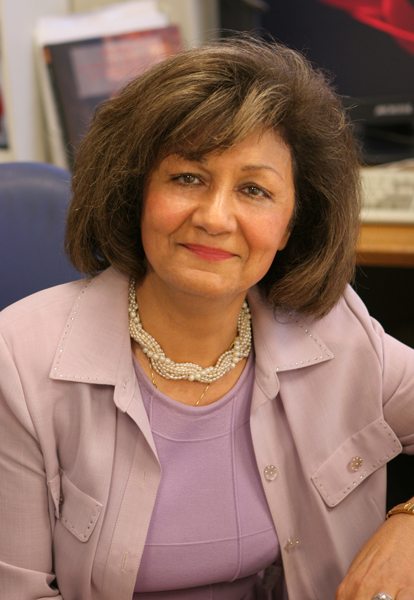
Manijeh Razeghi is the Walter P. Murphy Professor of Electrical and Computer Engineering and Director of the Center for Quantum Devices at Northwestern University. She also serves as an Adjunct Professor at the Optical Sciences Center, University of Arizona, and maintains significant professional connections with institutions in France and Switzerland. With a career spanning over three decades at Northwestern, Professor Razeghi has established herself as a world-leading authority in semiconductor physics and optoelectronic devices across the electromagnetic spectrum. Her educational background includes: 1980: Docteur d'etat es Sciences Physiques, Universite de Paris, France 1977: Docteur 3eme Cycle, Solid State Physics, Universite de Paris, France 1976: DEA, Science des Materiaux, Universite de Paris, France Professor Razeghi's research focuses on cutting-edge developments in semiconductor technology, particularly in the areas of quantum structures and devices spanning the electromagnetic spectrum from deep ultraviolet to terahertz frequencies. Her pioneering work in epitaxial manufacturing techniques has enabled significant advances in optoelectronic devices, particularly in infrared and terahertz technologies. She has made substantial contributions to condensed matter physics and engineering, with particular emphasis on nonlinear optics and semiconductor physics and technology. Her current research explores gallium oxide materials, quantum cascade lasers, and type-II superlattices for advanced photodetection applications, with a strong focus on practical implementations for telecommunications, imaging, and sensing. Analysis of Professor Razeghi's extensive publication record (over 1,000 papers) reveals a consistent trajectory of innovation in semiconductor photonics. Her recent work demonstrates a strategic progression toward developing high-power, efficient devices capable of room-temperature operation across challenging spectral regions. There is a clear emphasis on gallium oxide materials and type-II superlattices to overcome traditional limitations in infrared detection and terahertz generation. Her research increasingly bridges fundamental materials science with practical device engineering, resulting in technologies with significant commercial and scientific applications. Professor Razeghi has received numerous prestigious honors and awards throughout her distinguished career: Benjamin Franklin Medal in Electrical Engineering (2018) Elected Lifetime Fellow of IEEE (2017) Jan Czochralski Gold Medal (2016) IBM Faculty Award (2013) Elected Lifetime Fellow of Materials Research Society (2008) Multiple fellowships including APS, IOP, OSA, SPIE, and SWE Society of Women Engineers Achievement Award (1995) IBM Europe Science and Technology Prize (1987) As an academic mentor, Professor Razeghi has supervised 51 PhD dissertations and 20 MS theses at Northwestern University, and currently oversees approximately 15 PhD students, post-doctoral researchers, and visiting faculty. She created the Graduate and Undergraduate Programs in Solid State Engineering in the ECE Department at Northwestern, establishing a comprehensive 12-course curriculum. Her professional service includes chairing international conferences and serving on numerous editorial boards for leading journals in physics and engineering. She has also provided expertise to international organizations including the United Nations and the European Research Council, demonstrating her global impact on semiconductor science and technology. Professor Razeghi directs the Center for Quantum Devices (CQD) at Northwestern University, a world-class research facility focused on semiconductor materials and devices. Under her leadership, CQD has become a hub for innovation in infrared and terahertz technologies, with research spanning fundamental materials science to practical device applications. The center maintains strong connections with industry and government laboratories, facilitating the translation of basic research into real-world technologies. Current research directions at CQD include advanced quantum cascade lasers, novel infrared detectors, and next-generation semiconductor materials for optoelectronic applications.
Sonia Martín López is an Associate Professor in the Department of Electronics Technology at the Universidad de Alcalá, Spain. She leads the GRIFO (Photonics Engineering Group) research team and is the Researcher in Charge of the CSIC (Spanish National Research Council) Associate Unit of Sensors and Photonic Technology. Her expertise lies in advanced photonics and optical fiber sensing technologies, with a focus on distributed sensing systems for structural, environmental, and geophysical applications. Educated at the Universidad Complutense de Madrid, she earned a PhD in 2006 with a thesis on optical fiber supercontinuum generation. Her research emphasizes innovations in phase-sensitive OTDR (optical time-domain reflectometry), dual-comb spectroscopy, and high-resolution fiber optic sensing for applications like seismic monitoring, underwater acoustics, and climate change observation. Her recent work includes breakthroughs in time-expanded sensing techniques, submarine fiber networks for climate studies, and sensor systems for infrastructure integrity. Sonia actively contributes to international collaborations, leveraging optical fiber infrastructure to address global environmental and engineering challenges. Her lab, GRIFO, develops cutting-edge technologies such as millimeter-resolution fiber sensors and hybrid machine learning models for threat detection in smart surveillance systems. Her publications span high-impact journals and conferences, focusing on advancing the stability, resolution, and applicability of fiber optic sensing methods.
Muriel Lepere is a Researcher at the Institute of Life-Earth-Environment (ILEE) of the University of Namur, Belgium, managing the Technological Platform Optics, Lasers and Spectroscopy. She serves as Principal Investigator for major projects including IRSpectroLabForAtmos (2024-2025) analyzing water vapor and methane for satellite missions, and Etude de la dépendence en pression et en température (2020-2026) using dual-comb and quantum cascade laser techniques to study atmospheric gas mixtures. Her academic credentials include a Doctor of Science from Université de Paris-Sud (1999) with thesis on methyl fluoride collisional broadening coefficients. Research spans high-precision molecular spectroscopy for atmospheric science, focusing on line shape parameters, temperature dependence, and collisional effects in gases like CO 2 , CH 4 , H 2 O, and N 2 O using quantum cascade lasers and dual-comb systems to improve spectroscopic models for climate monitoring and space missions. Recent work reveals increasing emphasis on non-Voigt profile modeling and satellite data validation, particularly for Venus atmosphere studies (2024) and methane retrieval in thermal infrared. Her 148 research outputs demonstrate consistent output since 1995 with spikes in 2022 (17 outputs) and 2024 (11 outputs), reflecting sustained leadership in atmospheric spectroscopy. Award highlights: Winifred Cullis Fellowship (1996) French Community of Belgium Travel Grant (1994) Charles Courtoy Prize for Physics doctoral thesis (2000) Lepere has supervised 44 works and secured funding for 34 projects since 2001, including HighTempSpectroAtmos (2020-2021) on hydrocarbons and Spectroscopy and forward model error improvement for CH 4 retrieval (2019-2020). Her grant portfolio shows strong focus on NASA/ESA-relevant atmospheric validation. She directs the Optics, Lasers and Spectroscopy Technological Platform, providing critical infrastructure for high-resolution gas-phase studies. This facility supports 167 documented activities including international conference presentations and collaborative Venus atmosphere research with teams from France and the US.
Carlo Vicario is a Researcher at the Laboratory for Nonlinear Optics within the Paul Scherrer Institute . His work focuses on laser physics , terahertz (THz) science , and nonlinear optics , particularly for X-ray free-electron lasers (FEL) and electron accelerators . He earned his MSc in Electronic Engineering (Optoelectronics) and PhD in Electrical Engineering from University of Rome 'La Sapienza' . His postdoctoral research at INFN Frascati Laboratory involved ultrafast laser development for high-brightness electron beams and free-electron lasers . His research spans solid-state laser systems , THz pulse generation , and nonlinear optical materials , with applications in quantum magnetism , superconductivity , and phonon dynamics . Recent work explores two-color X-ray FEL , microbunching instability mitigation , and THz-driven coherent control of material properties. Key publication trends include terahertz photonics , laser-seeded free-electron lasers , nonlinear optical crystals , and ultrafast time-resolved experiments . He has contributed to SwissFEL operations and holds two European patents in THz technology and photoacoustic devices .
Manijeh Razeghi is the Walter P. Murphy Professor of Electrical and Computer Engineering at Northwestern University’s McCormick School of Engineering. She directs the Center for Quantum Devices (CQD), a world-class research laboratory established in 1992 with a focus on compound semiconductor science and nanotechnology. The Center specializes in developing advanced quantum devices such as lasers, photodetectors, and quantum cascade lasers, emphasizing interdisciplinary collaboration between academia, industry, and national laboratories. Her research interests span ultraviolet to terahertz photonics, including III-nitride semiconductors, antimony-based lasers, quantum dot devices, and nanotechnology. Under her leadership, the CQD has produced over 725 publications, 60 patents, and 152 awards. Key achievements include high-power quantum cascade lasers, Ga 2 O 3 heterostructures, and breakthroughs in infrared photodetectors. Razeghi’s work integrates solid-state physics, quantum mechanics, and materials science to address cutting-edge challenges. Notable projects include room-temperature terahertz lasers grown on silicon, high-efficiency quantum cascade lasers, and self-powered oxide sensors. Her contributions have been recognized through prestigious conferences and international collaborations. The CQD also prioritizes education, training future leaders in semiconductor technology through graduate and undergraduate programs. Current research focuses on advancing Ga 2 O 3 thin films, type-II superlattices, and novel materials for high-temperature detectors. The Center collaborates with industry partners to commercialize innovations in power electronics and optoelectronics.