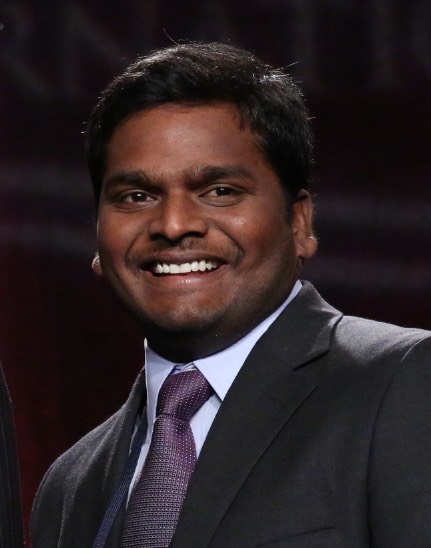
Qianxi (Emily) He is a Faculty Lecturer at McGill University, specializing in advanced materials processing and machining technologies. Her research focuses on optimizing cutting tool performance through innovative coating strategies and understanding wear mechanisms in extreme machining conditions. She has contributed to studies involving PVD coatings (e.g., AlCrN, AlTiN), tribology, and the machining of challenging materials like titanium alloys and super duplex stainless steel. Her work frequently addresses practical applications such as improving tool longevity, reducing machining-induced defects, and enhancing surface integrity. Key topics include thermal stability of coatings, stress corrosion cracking mitigation, and the impact of heat treatment on material properties. Dr. He’s publications highlight a strong emphasis on empirical validation through controlled experiments, often comparing different coating compositions or machining parameters. Her research is grounded in both theoretical material science principles and industrial manufacturing challenges. Notable contributions include studies on SiAlON ceramic inserts for high-speed milling, novel edge design approaches to delay tool wear, and the role of austempering in steel microstructure evolution.
Jiayun (Peter) Wang is a Postdoctoral Scholar Research Associate in the Department of Computing and Mathematical Sciences at the California Institute of Technology (Caltech). His research focuses on advancing AI-driven solutions in medical imaging, computational imaging, and computer vision. Current projects emphasize applying deep learning to diagnose ocular conditions like dry eye syndrome and improving 3D reconstruction techniques. Collaborations with institutions such as UC Berkeley, Microsoft, and NVIDIA highlight his interdisciplinary approach to solving real-world medical and imaging challenges. Research Interests: Medical AI and Healthcare Analytics Deep Learning Applications in Ophthalmology 3D Reconstruction and Scene Understanding Physics-Informed Neural Networks Compressed Sensing MRI Key Contributions: Developed machine learning models predicting dry eye-related outcomes using meibography images Pioneered physics-aware neural operators for ultrasound lung aeration mapping Advanced open-vocabulary 3D object detection systems Labs/Teams: Collaborates with Caltech's AI4Health initiative and NVIDIA's research group, contributing to medical imaging advancements through interdisciplinary teams.
Johan Ulrik Lind is an Associate Professor and Groupleader at the Department of Health Technology, Technical University of Denmark. His research focuses on cutting-edge biomedical engineering solutions including tissue engineering, bioprinting, and microphysiological systems. He actively contributes to additive manufacturing and functional materials development. Current Affiliation: Department of Health Technology, DTU Research Areas: 3D bioprinting, hydrogel technologies, microsystems engineering Expertise: UN Sustainable Development Goals for health and well-being Lind's work spans additive manufacturing for tissue engineering, functionalized biomaterials , and dynamic microphysiological systems . His recent publications highlight innovations in hydrogel formulation, bioink development, and particulate drug delivery systems. Notably, he holds a patent for transparent bioink formulation. He supervises multiple PhD projects including: micro-perfused bioartificial ovaries, embedded bioprinting of perfusable vasculatures, and 3D printed microsystems for tissue actuation. His research portfolio demonstrates strong interdisciplinary collaboration across engineering, biology, and pharmaceutical sciences.
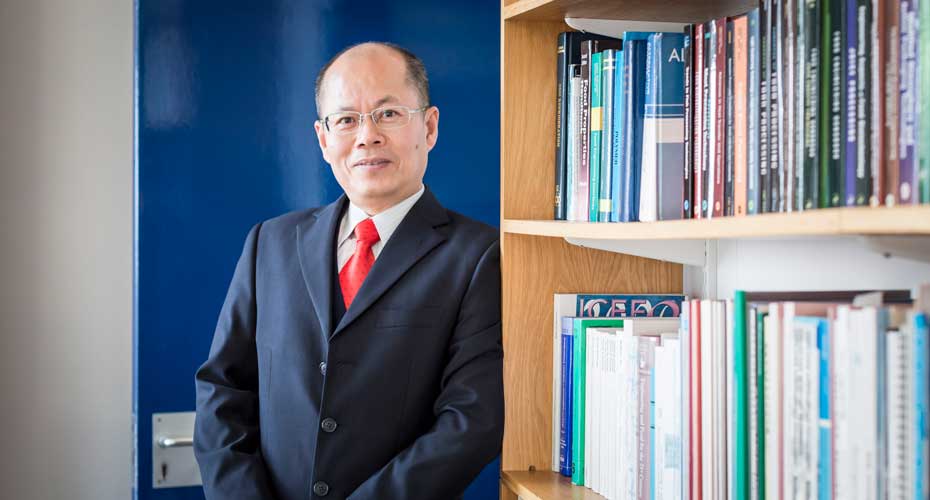
Tsun-Ming Tseng is a Professor and principal investigator at the Chair of Electronic Design Automation at the Technical University of Munich (TUM). He leads the Emerging Technology Group and oversees multiple DFG/BMBF-funded research projects in the areas of microfluidic large-scale integration, optical network-on-chip design, and novel microfabrication techniques. Dr. Tseng's research focuses on design automation for emerging technologies, with particular expertise in three main areas: microfluidic large-scale integration, optical network-on-chip systems, and novel microfabrication processes. His work bridges the gap between electronic design automation and cutting-edge applications in bioengineering, photonics, and advanced manufacturing. His research group develops sophisticated algorithms and tools for optimizing design, reliability, and performance in these emerging domains. Analysis of Dr. Tseng's recent publications reveals a strong focus on practical implementation challenges in emerging technologies. His work spans both theoretical algorithm development and practical system implementation, with particular emphasis on reliability, performance optimization, and manufacturing considerations. The research shows increasing integration between different technology domains, particularly the convergence of microfluidics, optical networking, and electronic design automation. Dr. Tseng has been awarded multiple significant research grants including: "DE-TW-CloudWRONoC" (BMBF-NSTC project, PI, 2025-2028, EUR 797.7K) "DE-TW-PI3D" (BMBF-NSTC project, PI, 2024-2027, EUR 391.6K) "Physical Design for Microfluidic Large-Scale Integration" (DFG research grant, PI, 2024-2026, EUR 331.9K) Multiple other DFG and industrial projects totaling over EUR 3 million in funding He has successfully supervised numerous doctoral researchers and postdoctoral fellows, with current group members including Jiahui Peng, Debraj Kundu, Liaoyuan Cheng, and several others. Dr. Tseng leads the Emerging Technology Group at TUM, which focuses on developing design automation methodologies for next-generation technologies. The group maintains strong collaborations with international institutions, including partnerships with researchers in Taiwan and Hong Kong. The team operates state-of-the-art facilities for research in microfluidics, optical networking, and advanced microfabrication techniques.
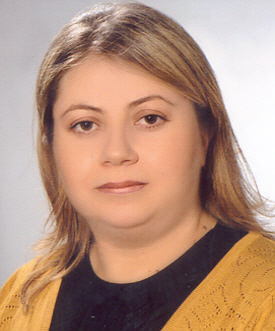
Prof. Dr. Emine Erçelebi is a full-time faculty member at Gaziantep University Faculty of Engineering, Department of Food Engineering . With over 25 years of academic experience, her research focuses on nanoemulsions, food preservation, and rheological properties of food systems. PhD (2007) : Food Engineering, Gaziantep University MS (2000) : Food Engineering, Gaziantep University BS (1997) : Food Engineering, Gaziantep University Her research program investigates: Stability and functionality of nanoemulsions for food applications Thermal degradation kinetics of natural food pigments Hydrocolloid effects on food rheology and texture Encapsulation techniques for bioactive compounds Physicochemical properties of fruit concentrates Recent publications demonstrate strong focus on nanoemulsions (2018-2024), fruit concentrate stability (2013-2020), and hydrocolloid applications (2016-2022). She has mentored 5 graduate students to completion and served as Domestic Erasmus Coordinator (2010-2014). Project Leadership : 2 completed research projects including a TÜBİTAK-funded study on protein-hydrocolloid systems Teaching : Delivers English-language courses in Analytical Chemistry, Instrumental Analysis, and Physical Properties of Foods (2014-2020)
Professor Da-Wen Sun is a globally recognized authority in food and biosystems engineering at the UCD School of Biosystems & Food Engineering , University College Dublin. His research focuses on enhancing food preservation through innovative technologies like ultrasound-assisted freezing to minimize nutrient loss and structural damage in frozen foods. Key contributions: Developed ultrasound freezing methods to reduce ice crystal damage Editor of seminal texts including Handbook of Frozen Food Processing Founded the journal Food and Bioprocess Technology His work bridges computational modeling (e.g., CFD simulations , machine learning ) with industrial applications, particularly in freezing, drying, and vacuum cooling. Recent studies explore terahertz imaging for pest detection, deep eutectic solvents for moisture control, and cold plasma for allergen reduction. Scientific awards include: Frozen Food Foundation Freezing Research Award (2013) - First non-US recipient CIGR Honorary President title (2016) for leadership in agricultural engineering He leads the UCD Food Refrigeration & Computerised Food Technology group , collaborating internationally on technologies like nanosensors and green cryoprotectants to advance sustainable food systems.
Zachary Aman is a Professor in the School of Engineering , Chemical Engineering department at the University of Western Australia . His research focuses on gas hydrates , flow assurance , and subsea pipeline management , with applications in petroleum engineering and hydrocarbon processing . Research Output: 127 publications Grants: 53 funded projects H-index: 39 Research interests include: Hydrate formation kinetics and rheology Subsea flowline stability and inhibition Hydrocarbon separation under high-pressure Novel composite materials and ionic liquids for hydrate management Article Trends highlight his work on hydrate probability models , flowloop experiments , and environmental applications like oil spill modeling and CO 2 capture. His recent work explores nanostructured additives and transient simulation tools for energy and environmental systems. Grants and Supervision reflect 53 funded projects and 19 supervised works, indicating active mentorship and industry collaboration.
Angela Sasic Kalagasidis is a Professor and Department Head at Chalmers University of Technology , leading the Building Physics research group. She serves as a board member of the Moisture Center at Lund University of Technology , contributing to interdisciplinary research in building science. Building Physics Heat and Mass Transfer Energy Efficiency Moisture Safety Indoor VOC Emissions Climate Change Adaptation Her recent publications focus on aerogel-based materials for insulation, urban heat island mitigation , and thermal energy storage systems . Key methodologies include CFD simulations , field testing , and life cycle assessment frameworks . Research trends show emphasis on: Advanced computational tools for hygrothermal analysis Integration of phase change materials in building systems Climate resilience in building envelopes Optimization of ventilation and moisture control
Graham Ormondroyd is a Professor at the School of Environmental and Natural Sciences , Bangor University , specializing in the Biocompounds department. His research focuses on innovative wood modification techniques, sustainable biomaterials, and environmental impact assessments. Current projects include scaling waste-based composites for infrastructure and developing Welsh wool applications. Collaborations span academia-industry partnerships like Bangor University and Zentia Ltd KTP. Research Trends: His 2025 publications emphasize multi-scale resin diffusion analysis and UK wood recycling frameworks, while 2024 work explores laser incising and phenolic resin-NMR interactions. Recent studies also address VOC emissions from formaldehyde-free composites. Professional Activities: He chairs academic panels (e.g., International Panel Products Symposium) and reviews publications. Projects focus on net-zero construction and climate resilience.
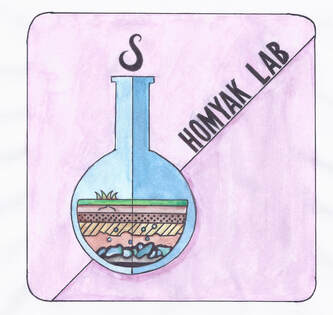
Peter M. Homyak is an Associate Professor in the Department of Environmental Sciences at the University of California, Riverside (UCR). He leads research on microbial and abiotic controls of soil trace gas emissions, focusing on nitrogen and phosphorus cycling in dryland and alpine ecosystems. His work integrates soil science, biogeochemistry, and climate change impacts. Homyak earned his Ph.D. in Soil and Water Science from UCR in 2012, following M.S. and B.S. degrees in environmental sciences. He has received prestigious awards including the 2017 S.A. Wilde Early Career Achievement Award and the 2016 Gene E. Likens Outstanding Publication Award. His research is supported by grants from NSF, USDA, and state agencies. Homyak mentors a diverse group of students, including PhD candidates Elizah Stephens and Aral Greene, and leads the Homyak Lab, which explores wildfire impacts, nitrogen cycling, and soil microbial resilience. Key research themes include mechanisms of nitric oxide (NO) and nitrous oxide (N2O) emissions, nitrogen saturation in xeric systems, and the role of pyrophilous microbes post-wildfire. He collaborates on global projects assessing dryland biogeochemistry and climate change consequences. Homyak also emphasizes STEM outreach, mentoring underrepresented students and engaging in K-12 education initiatives.
Prof. Aswin Gnanaskandan is an Assistant Professor in the Department of Mechanical & Materials Engineering at Worcester Polytechnic Institute (WPI), where he joined in August 2020. He directs the Computational Multiphase Transport Laboratory, focusing on developing high-fidelity models for multiphase flows with applications in engineering and biomedical fields. His research is funded by NSF, Office of Naval Research, NIH, and the Center for Advanced Research in Drying. Education: PhD, Aerospace Engineering & Mechanics, University of Minnesota (2015) MS, Aerospace Engineering & Mechanics, University of Minnesota (2012) BS, Aeronautical Engineering, Madras Institute of Technology (2006) Research Interests: Computational Fluid Dynamics (CFD), Multiphase Flow Modeling, Biomedical Acoustics, High-Performance Computing, and applications in underwater transportation, propulsion, and biomedical acoustics. His work bridges fundamental fluid mechanics with real-world challenges in energy, health, and environmental systems. Recent Research Trends: His articles focus on microbubble-enhanced ultrasound therapy, cavitation dynamics in propulsion systems, and multiphase flow modeling across scales. Key themes include improving thermal ablation precision in medical treatments and optimizing industrial processes like spray drying through advanced numerical techniques. Awards: Excellence in Research Award (WPI, 2024) NSF Engineering Research Initiation Award (2023) James Nichols Heald Research Award (WPI, 2022) Teaching & Advising: Teaches undergraduate/graduate courses in Fluid Mechanics, Thermodynamics, and Numerical Methods. Advises multiple Major Qualifying Projects and fosters interdisciplinary collaboration through lab activities. His lab actively engages with industry and academic partners on projects like HIFU therapy and sustainable energy solutions. Labs & Teams: Leads the Computational Multiphase Transport Lab, which collaborates on projects involving CFD solver development (MFC 5.0), exascale computing, and biomedical acoustics. Aligns research with UN Sustainable Development Goals (SDG 7, 9, 13).
Colm O'Donnell is a Full Professor at the School of Biosystems and Food Engineering, University College Dublin (UCD). He leads the Food Quality and Processing Pillar at UCD's Institute of Food & Health and has held roles including Head of the School and Vice-Principal for Teaching & Learning in the College of Engineering & Architecture. His research focuses on Process Analytical Technology (PAT), bioprocessing, and dairy technology, with emphasis on spectroscopy, bioactive compound extraction, and food safety. He coordinates EU-funded projects like DiTECT and FreshProof, and leads the UCD team in the Dairy Processing Technology Centre (DPTC). O'Donnell is a Fellow of the Irish Academy of Engineering and has been recognized as a Thomson Reuters Highly Cited Researcher. Education: BE and PhD from University College Dublin, Chartered Engineer (CEng). Research Interests: PAT for food/bioproducts, dairy processing innovations, and bioactive extraction from seaweeds. His group develops non-destructive technologies like NIR-HSI and acoustic sensors for real-time quality monitoring in food production. Grants: Over 40 grants including EU Horizon 2020, Marie Sklodowska-Curie, and industry partnerships. Recent projects include acoustic sensor development for milk protein concentrate (2020-2022) and seaweed biorefinery processes (2018-2023). Awards: Irish Academy of Engineering Fellowship (2022), EU Comett Fellowship, and editorial roles at International Journal of Food Properties and Food Engineering Reviews . Labs/Teams: Leads the PAT-focused research group at UCD's Institute of Food & Health, collaborating with industry partners like DPTC and global academic networks.
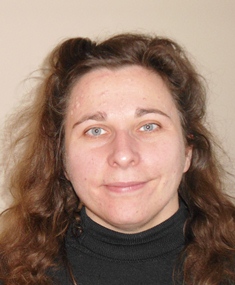
Dr. Emily Black is a Professor of terrestrial processes and climate at the University of Reading's Department of Meteorology, where she serves as research division lead for Earth Observation and Space and is a senior scientist at the National Centre for Atmospheric Science (NCAS). She leads the TAMSAT programme (Tropical Applications of Meteorology using SATellite data and ground-based observations), which provides real-time rainfall products and soil moisture forecasts to stakeholders across Africa through the TAMSAT-ALERT system. Her work bridges fundamental climate science with practical applications for climate risk management, particularly in vulnerable African communities. Dr. Black's research focuses on the hydrological cycle and its associated hazards, land-atmosphere interactions and their impact on climate, African climate and rainfall monitoring, and soil moisture monitoring and forecasting. She has established herself as a leading expert in African climate systems, with particular expertise in understanding rainfall patterns, drought mechanisms, and the development of forecasting tools that translate scientific knowledge into actionable information for decision-makers. Her work combines observational analysis, modeling approaches, and direct engagement with stakeholders to ensure scientific outputs address real-world needs. Analysis of Dr. Black's recent publications reveals a strong focus on the practical application of climate science for risk management, particularly through the TAMSAT-ALERT system. Her work spans multiple disciplines including climatology, hydrology, meteorology, and agricultural science, with consistent emphasis on African contexts. The research shows evolving sophistication in forecasting techniques, moving from basic rainfall monitoring to integrated systems that predict soil moisture, agricultural impacts, and drought risks. A notable trend is the increasing integration of user needs into scientific development, reflecting her commitment to user-driven science and knowledge exchange. Dr. Black has built an extensive collaborative network across institutions globally, with frequent co-authors including Richard P. Allan, Tristan Quaife, Brian J. Hoskins, Pier Luigi Vidale, and Julia Slingo, all from the University of Reading. Her work has been cited by numerous leading climate scientists worldwide, demonstrating her significant impact on the field. She has secured funding for multiple projects focused on climate monitoring, forecasting, and risk management in Africa, with particular emphasis on agricultural applications and drought resilience. As leader of the TAMSAT programme, Dr. Black oversees a team that combines satellite data analysis, ground-based observations, and modeling expertise to develop climate services specifically tailored for African contexts. The TAMSAT-ALERT system represents a major advancement in seasonal forecasting capabilities for the continent, providing critical information for agricultural planning and disaster risk management. Her team's work has evolved from basic rainfall monitoring to integrated systems that predict soil moisture, crop conditions, and drought risks, demonstrating continuous innovation in climate service development.
Lauri Rautkari is an Associate Professor in the Department of Bioproducts and Biosystems at Aalto University, Finland. His research focuses on water interactions in biomaterials, particularly wood, with an emphasis on developing advanced analytical methods for water vapor sorption, creating novel low-sorption materials, and investigating hygroscopicity and fungal decay resistance in modified wood systems. Research Highlights: Gas-phase ozone treatment for improved wettability, thermal and chemical wood modification, hyperspectral imaging for moisture prediction, bioinspired coatings for fungal protection, and interlaboratory studies on sorption data quality. Recent Publications: Key contributions to understanding lignin's role in moisture interactions, acetylation reversibility, and the impact of fungal degradation on heat-treated wood. The trend in his publications reflects a strong focus on hygroscopicity, chemical modification techniques (acetylation, melamine-formaldehyde impregnation), advanced imaging methods (hyperspectral, neutron scattering), and the development of sustainable wood-based materials for construction and acoustic applications. Collaborative interlaboratory efforts dominate his work, ensuring standardized methodologies for moisture analysis.
Kaliramesh (Kali) Siliveru is an Associate Professor and University Outstanding Scholar in the Department of Grain Science and Industry at Kansas State University. His work focuses on grain processing, food safety, and process modeling , with expertise in milling technologies, particle mechanics, and material handling. He holds a B.S. in Food Science from Acharya N.G Ranga Agricultural University, India, and a Ph.D. in Grain Science from Kansas State University. Dr. Siliveru’s research has produced 75+ peer-reviewed articles, 13 book chapters , and impactful studies on reducing microbial contamination in wheat-based products, optimizing pulse processing, and advancing nonthermal technologies like cold plasma. He has received prestigious awards including the ASABE Early Career Engineer of the Year and the University Distinguished Faculty Award for undergraduate mentoring. He teaches GRSC 310 (Materials Handling) , GRSC 810 (Particle Technology) , and GRSC 840 (Advanced Grain Processing) . His lab affiliations include the BIVAP Feed Quality Assurance Lab and Hal Ross Flour Mill, where he explores milling efficiency, microbial control, and sustainable food processing . Current projects address novel applications for minor millets and engineering solutions for safe, nutritious food production.