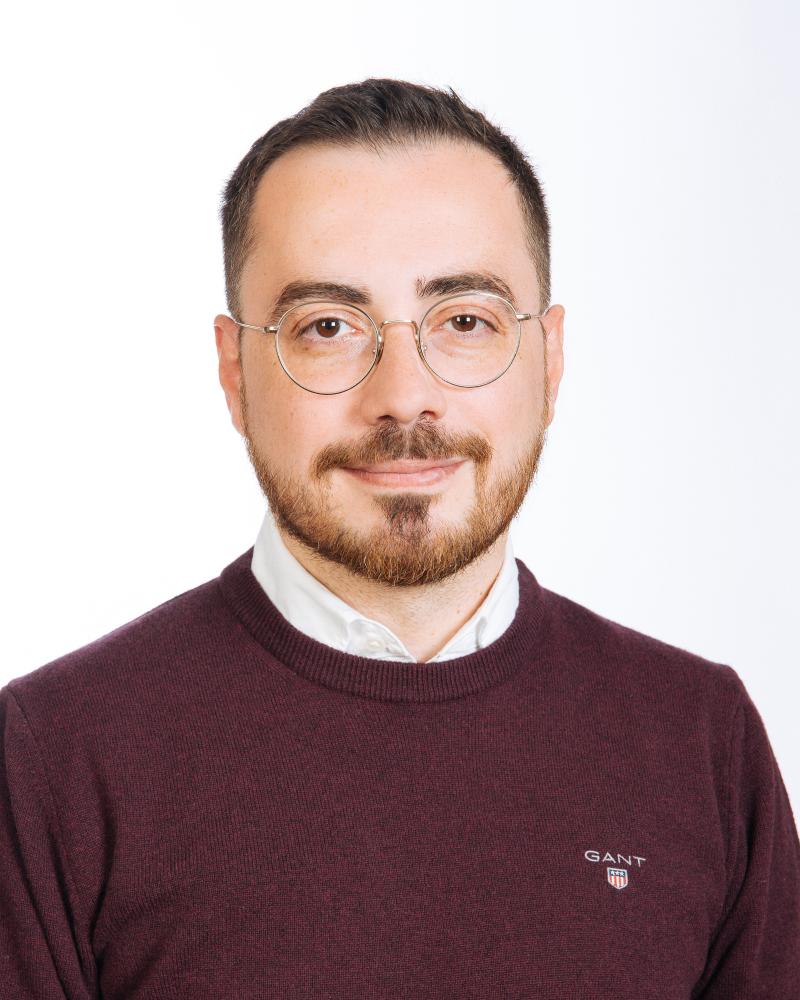
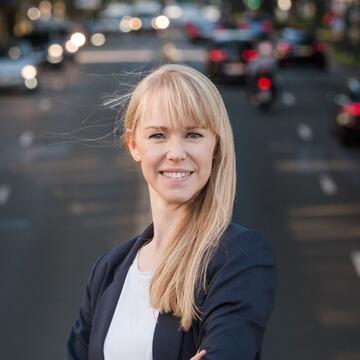
Dr. Pavlos Tafidis is a Lecturer in Transport (Systems) Engineering at the School of Engineering, University of Edinburgh. His work integrates interdisciplinary approaches to advance transport planning and engineering, with a focus on smart and sustainable mobility solutions. PhD in Transport Engineering, Hasselt University (2022) M.Sc in Transport Planning, Aristotle University of Thessaloniki (2015) M.Eng in Transportation, Aristotle University of Thessaloniki (2013) He leads projects like "BikeHood" (Science Foundation of Ireland), developing Ireland’s first cycling neighborhood, and contributes to initiatives such as "REALLOCATE" (Horizon 2020) and "CISMOB" (Interreg Europe). His research emphasizes accessible mobility solutions, equity in transport infrastructure, and urban livability. Recent publications analyze cyclist crash hotspots using machine learning, electric bike route preferences via GPS data, and traffic-emission correlations in Dublin. His expertise spans digital twins, virtual reality, and geospatial analysis. Dr. Tafidis teaches courses including Transport Engineering 3, Transport and Society, and Multi-Scale Energy Demand, affiliated with the School of Engineering and Edinburgh Future Institute.
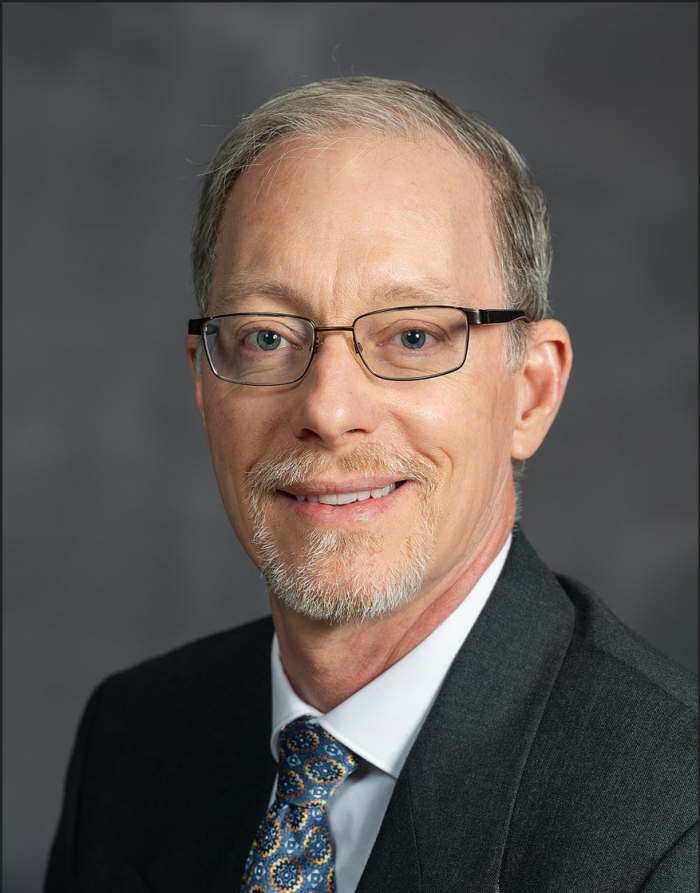
Vahid Behzadan is an Assistant Professor in Data Science and Computer Science at the University of New Haven's Tagliatela College of Engineering. He leads the SAIL Lab, focusing on AI safety and security, particularly in autonomous systems like driverless cars and smart cities. His work addresses adversarial attacks on machine learning and reinforcement learning, with applications in cybersecurity and healthcare. Behzadan has held prior positions at Kansas State University, University of Nevada Reno, and University of Birmingham, UK. He holds a Ph.D. in Computer Science and an M.S. from the University of Nevada Reno, and a B.Eng. from the University of Birmingham. His research spans AI ethics, cybersecurity, and complex systems. Behzadan advises the UNH hacking team and actively participates in policy initiatives, including Connecticut's AI Working Group and the Connecticut AI Alliance. He has contributed to over 30 peer-reviewed articles and frequently engages in media discussions on topics like AI safety, facial recognition, and cybersecurity threats. Key research areas include adversarial machine learning, AI forensics, and ethical AI design. His work bridges theoretical advancements with real-world applications in transportation, healthcare, and national security. Behzadan collaborates with organizations such as the Transportation Research Laboratory (TRL) and Open Web Application Security Project (OWASP).
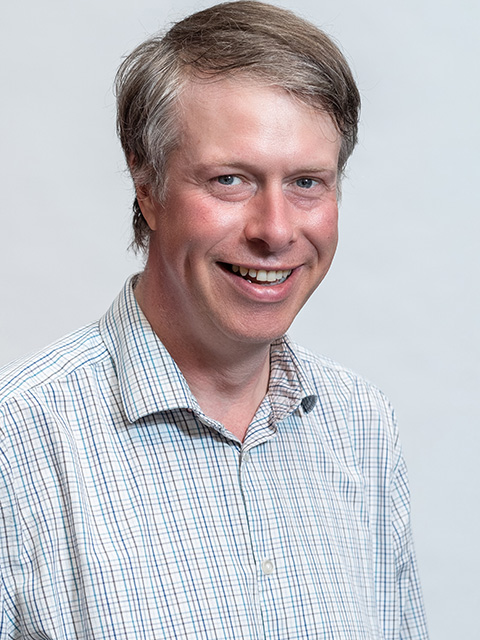
Professor Ben Horan is the Head of School of Engineering at Deakin University , Faculty of Science Engineering and Built Environment. He holds a Doctor of Philosophy and Bachelor of Engineering from Deakin University, with expertise in electrical engineering , control systems , and human-centred computing . As a leading researcher in virtual reality (VR) applications, he focuses on safety training, aged care, and extended reality (XR) systems. PhD in Electrical Engineering (Deakin University) Graduate Certificate of Higher Education (Deakin University) Bachelor of Engineering (Deakin University) His research spans VR for electrical safety training , automated vehicle interactions , and XR applications in museums . His work includes grants from the Department of Health, Melbourne Water Corporation, and City of Greater Bendigo. Recent publications analyze 360° video realism, cognitive load in virtual workplaces, and AR for Industry 5.0. Professor Horan supervises PhD candidates exploring topics like autonomous vehicle pedestrian interactions , VR stress mitigation , and industrial XR systems . He has completed supervision of 10+ PhD and Master’s students.
Dr. Weert Canzler is a senior researcher and head of the Research Group "Digital Mobility and Social Differentiation" at the Berlin Social Science Center (WZB), where he has been affiliated since 1994. His career spans leadership roles including Deputy Chair of WZB's Academic Council (2000-2007), Senior Researcher in Science Policy (2009-2019), and current Speaker of the Leibniz Research Alliance "Energiewende" since 2013. His work critically examines mobility transitions through social science lenses, integrating energy policy, technological innovation, and societal transformation. Dr. Canzler's academic credentials include: Diploma in Political Science (minor in Economics and Law) from the Free University of Berlin (1985) Ph.D. in Sociology from the Technical University of Berlin (1995) Habilitation in Social Science Based Mobility Research from the Technical University of Dresden (2015) His research centers on the societal dimensions of mobility systems, with particular focus on the Energiewende 's impact on transportation. He investigates how digitalization reshapes travel behavior, the cultural entrenchment of automobility, and policy frameworks for equitable mobility transitions. His approach bridges sociology, urban planning, and technology assessment, emphasizing that sustainable mobility requires reimagining social practices alongside infrastructure. Current work analyzes autonomous vehicle fleets, parking policy reforms, and the psychological dimensions of driving freedom in congested cities. Analysis of Dr. Canzler's 2022-2025 publications reveals intensifying focus on post-pandemic mobility patterns and multi-crisis contexts (climate, energy, geopolitical). His scholarship increasingly addresses implementation barriers for autonomous shuttles, the political economy of parking reform, and narrative-building for mobility transitions. A distinctive thread examines winners/losers dynamics in public space reallocation, with growing attention to educational outreach for future mobility literacy. His interdisciplinary methodology combines qualitative analysis with policy evaluation. While specific grant awards aren't documented in available sources, Dr. Canzler's leadership of major research initiatives implies significant funding oversight. As head of a WZB research group and Leibniz Alliance speaker, he directs collaborative projects involving multiple institutions. His extensive co-authorship patterns suggest active mentorship of junior researchers, though formal student advising isn't explicitly referenced in his public profile. Dr. Canzler co-founded WZB's mobility research group in 1998 with Andreas Knie and currently leads the "Digital Mobility and Social Differentiation" team. Through the Leibniz Research Alliance, he coordinates nationwide energy transition research across 18 institutes. His teams maintain strong policy linkages with German federal ministries and international bodies, frequently translating research into practical guidance for urban planners and transport authorities.
Dr. Liam Davies is a Lecturer in Urban and Environmental Policy within the School of Global, Urban and Social Studies (GUSS) at RMIT University, Australia. His research focuses on urban planning challenges such as affordable housing provision, transport equity, and the social impacts of urban policies. He investigates how governments address housing affordability and the implications of public housing redevelopment on tenants. His research interests span urban planning, human geography, policy analysis, transportation logistics, and public health. Notable areas include the spatial analysis of central city street space, parking policy innovations, and the relationship between neighborhood characteristics and cognitive health in aging populations. Recent publications explore topics like unbundling car parking requirements in residential developments, tenant relocation outcomes in public housing, and cost comparisons of redevelopment strategies. His work bridges urban policy, equity concerns, and interdisciplinary health studies. No academic awards or grants are explicitly mentioned in the provided texts. Collaborative projects include studies on transport equity, housing policy, and urban sustainability.
Dr. Varga István is a Full Professor at the Budapest University of Technology and Economics (BME) in the Faculty of Transportation Engineering and Vehicle Engineering, and a Scientific Advisor at the HUN-REN Institute for Computer Science and Control. He holds a D.Sc. from the Hungarian Academy of Sciences (2020), a Ph.D. (2007), and an M.Sc. in Transportation Engineering (1998). His primary research focuses on road traffic control and traffic automation systems , with expertise in intelligent transportation solutions and vehicle mechatronics. His research integrates control theory with practical applications in urban mobility, including dynamic traffic light systems, autonomous vehicle impacts, and emission modeling. Recent work explores V2X communication, platooning technologies, and microscopic traffic simulation for urban optimization. He has led major projects such as the national innovation project 'Dynamic, adaptive traffic control services based on digital data sources' (2020-2024) and industrial collaborations with Knorr-Bremse, Siemens, and nuclear energy sectors. Awards include the Hungarian Academy of Sciences Young Prize (2007) and multiple recognitions for technological innovation. Educational activities include courses on Road Traffic Control, Mathematical Methods, and Vehicle System Modeling. Laboratory leadership includes the Road Traffic Control Lab with industry partnerships like Bosch and SWARCO.
Ron Henderson serves as Department Chair in the Department of Physics and Astronomy at Middle Tennessee State University. He holds a PhD from the University of Virginia (1996), an MS from Duke University (1991), and a BSEE from the University of Tennessee, Knoxville (1989). Dr. Henderson's research spans multiple disciplines with a particular focus on: Urban navigation systems and driverless vehicle technology Physics of semiconductor materials and optoelectronic devices Chinese gardens and landscapes Urban stormwater management and environmental policy His recent publications demonstrate a strong interdisciplinary approach, bridging physics, urban planning, and cultural studies. Henderson has published extensively on autonomous vehicle navigation systems, particularly focusing on fault tolerance and sensor integration in urban environments. His work also explores the physics of semiconductor heterostructures and has a unique secondary interest in Chinese garden design and cultural landscapes. Dr. Henderson's scholarly output shows a clear evolution from fundamental physics research in the 1990s toward more applied urban technology and interdisciplinary studies in recent years. His publications span computer science, transportation engineering, landscape architecture, and environmental science, reflecting a truly interdisciplinary career trajectory. As Department Chair, Dr. Henderson oversees academic programs including the Physics, Astronomy Concentration BS degree and manages departmental operations from Room 220 of the Wiser-Patten Science Hall.
Professor Marcus Enoch is a Professor in Transport Strategy at Loughborough University, leading the Transport and Urban Planning Group. He also directs research groups in Architecture, Energy, and Urban Planning. His expertise spans transport governance, policy analysis, and the impact of societal/technological changes (e.g., driverless cars, aging populations) on transport systems. Education: BEng (Hons), MSc (Eng), Ph.D. in Transport-related fields. He has led over 23 research projects totaling £2.6m, including work for the UK and New Zealand governments, Innovate UK, and the EPSRC. His current portfolio exceeds £260,000. Research focuses on transport strategy integration, with emphasis on travel plans, car parking policy, and macro-level transport systems. Recent projects include CI for Shaping Loughborough (2024–2025) and Exploring Future Roles for Community Transport Schemes (2024–2027). He has supervised 16+ PhD students and authored over 70 journal articles. Policy engagement includes roles in the UK’s European Platform of Mobility Management and New Zealand Ministry of Transport. His work addresses future mobility challenges like Mobility-as-a-Service (MaaS), autonomous vehicles, and post-pandemic transport recovery. Key achievements include £2.6m research grants, 15 book chapters, and over 120 conference presentations. His work informs national and EU policy, emphasizing sustainable transport and urban resilience.
Laura Forlano is an Assistant Professor at the Institute of Design , Illinois Institute of Technology. She is a media expert and scholar in the social dimensions of emerging technologies , values in design , and urban computing , with a focus on critical social computing and sociotechnical practices in innovation ecosystems. Education: Ph.D. in Communications (Columbia University), Master of International Affairs (Johns Hopkins), Bachelor's in Asian Studies (Skidmore College) Research Interests: Urban Informatics, Science and Technology Studies, Speculative Design, Human-Computer Interaction, Critical Design Methods Her recent publications explore speculative futures for autonomous vehicles, collaborative cities , and design anthropology . She co-edits books on urban technology and Bauhaus Futures , and leads the Critical Futures Lab (2014–present). Funded by the National Science Foundation, her Design Collaborations as Sociotechnical Systems project analyzes global design networks in New York, Barcelona, and Brisbane. Scientific Awards: Newcity Design 50: Who Shapes Chicago (2017) IIT Nayar Prize for The Driverless City Project (2015) Projects: Designing Digital Networks for Urban Public Space Breakout! Escape from the Office (exhibited in Toward the Sentient City, 2009) Material Imagination (Fellow at Durham University, 2020) Forlano teaches and consults on design ethics , urban technology , and critical design futures . She is available for media interviews on Human and Behavioral Science topics.
Dr. Piotr Smolnicki is an Assistant Professor at the Department of Urban Design and Regional Planning, Gdańsk University of Technology. His work focuses on automated mobility, urban transportation systems, and the interplay between emerging technologies and spatial structures. He actively contributes to projects like ENACT 15mC, addressing urban transitions and sustainable development. Research Interests: Driverless vehicles and autonomous automobiles Smart mobility solutions and urban policy Impact of automated technologies on metropolitan spatial planning Key Projects: ENACT 15mC: Envisioning Neighborhoods and Co-Creating Thriving Communities Teaching Responsibilities: Urban Design Theory and Studio Urban and Road Engineering Spatial and Regional Planning Studies
Oana Stefana Mitrea is a Professor at Carinthia University of Applied Sciences (Fachhochschule Kärnten) and an external lecturer at Alpen-Adria-Universität Klagenfurt. Previously, she served as Director for Innovation and Technology in the Silicon Alps Cluster, coordinating expert groups on smart systems. Her research focuses on the social studies of technology, emphasizing user inclusion, diversity, and disability in digitalization contexts. Her recent publications address topics such as: Autonomous driving and societal transformation Diversity-friendly technology design Sustainability in intelligent transportation systems System dynamics modeling for socio-technical interactions Public transportation as a social transient space Elderly acceptance of assistive technologies Her work bridges sociology, technology assessment, and urban mobility, with a strong emphasis on ethical and inclusive design principles.
AnnaLisa Meyboom is an Associate Professor at the University of British Columbia (UBC) in the School of Architecture and Landscape Architecture (SALA), where she also serves as Director of the Transportation Infrastructure and Public Space Lab (TIPSlab). Her work bridges architecture, digital fabrication, and urban informatics, with a focus on autonomous vehicles and sustainable design. Education: M.Arch (UBC), BASc (University of Waterloo). Research Interests: Autonomous vehicle impacts on urban form, robotic wood fabrication, responsive architecture, and design capital in infrastructure. Professional Activities: Frequent international conference speaker and contributor to journals and books like Design Capital: The Hidden Value of Design in Infrastructure and Driverless Urban Futures . Her publications reflect trends in autonomous mobility , digital fabrication , and urban infrastructure , emphasizing interdisciplinary approaches to integrating technology, sustainability, and social value into architectural practice. She has no listed scientific awards but is actively involved in academic and design communities as a lecturer and critic at institutions like Harvard, the University of Stuttgart, and others.
Professor Ronald Henderson leads landscape architecture research at Illinois Institute of Technology's College of Architecture. His internationally recognized work examines driverless city implications, arboricultural practices, and East Asian garden traditions. Author of The Gardens of Suzhou and forthcoming The Driverless City , Henderson has lectured at Harvard, Tsinghua, and Oslo AHO. As Senior Fellow at Dumbarton Oaks, he advances landscape scholarship while directing design at Lirio Landscape Architecture. World Architect News Wood Building Award European Prize for Urban Public Space Special Mention ASLA Rhode Island Honor Award
Eric Jackson, Ph.D., serves as the Executive Director of the Connecticut Transportation Institute (CTI) and Director of the Connecticut Transportation Safety Research Center (CTSRC) at the University of Connecticut. He holds an Associate Research Professor position. Dr. Jackson earned his B.S. in Civil Engineering from the University of Kentucky (2002), followed by a Master's (2004) and Ph.D. (2008) from UConn. His research focuses on transportation data systems, web-based data analysis, safety data integration, and remote sensing. He has led initiatives like the modernization of Connecticut’s crash data repository (CTCDR) and the Connecticut Roadway Safety Management System (CRSMS). His work emphasizes accessible crash data tools and systemic safety improvements. Dr. Jackson’s recent publications (2021–2025) address topics such as autonomous vehicle-pedestrian interaction, telematics data for crash analysis, and ADAS driver reactions. His research bridges technological advancements with practical road safety solutions. He has collaborated on state-wide infrastructure projects, including asphalt material studies and pavement marking evaluations. Despite no listed awards, his leadership in CT transportation initiatives underscores his impact in the field. Dr. Jackson oversees the CTSRC Safety Analysis Team, driving software development for safety tools like the Highway Safety Manual integration. His work ensures timely, accurate data access for transportation planners and policymakers. He maintains a laboratory focused on data-driven safety analytics and has contributed to over 100 publications, reflecting his commitment to advancing transportation safety through innovation.
Henriette Cornet is an Adjunct Professor (Part-Time) at the University of San Francisco, specializing in sustainable urban mobility and autonomous vehicles. Her expertise spans user engagement in innovation, human-centric design, and material/environmental sciences. She holds a PhD in Civil Engineering (2012) from the Technical University of Munich and a Master's in Material and Environmental Sciences (2007) from the University of Technology of Troyes. Key Roles & Appointments: Member, TRB International Coordinating Council (A0020C), U.S. Member, TRB Standing Committee on Vehicle-Highway Automation (ACP30) Steering Committee Member, French Interest Community on Automated Vehicles (CIVA) Editorial Board Member, Lecture Notes in Mobility (LNMOB) book series Executive Board Member, European Commission’s CCAM Partnership (Cluster 1 Leader) Research Focus: Her work bridges urban mobility systems and autonomous technologies, emphasizing citizen engagement and sustainable implementation. Recent projects include leading the SHOW initiative (€30M budget) and pioneering virtual reality tools for evaluating human-vehicle interactions in Singapore. She has explored personas for autonomous deployments, regulatory frameworks, and multidisciplinary city-readiness assessments. Prior Experience: Thematic Area Leader for Automated Mobility at UITP (2020–2023) Team Lead for Autonomous Mobility Design at TUMCREATE, Singapore Consultant for automotive projects (BMW, Audi, K&S Projektmanagement) Labs/Teams: TUMCREATE research institute, CCAM Partnership, and collaborative networks within UITP. Her work emphasizes global partnerships and stakeholder-driven innovation.