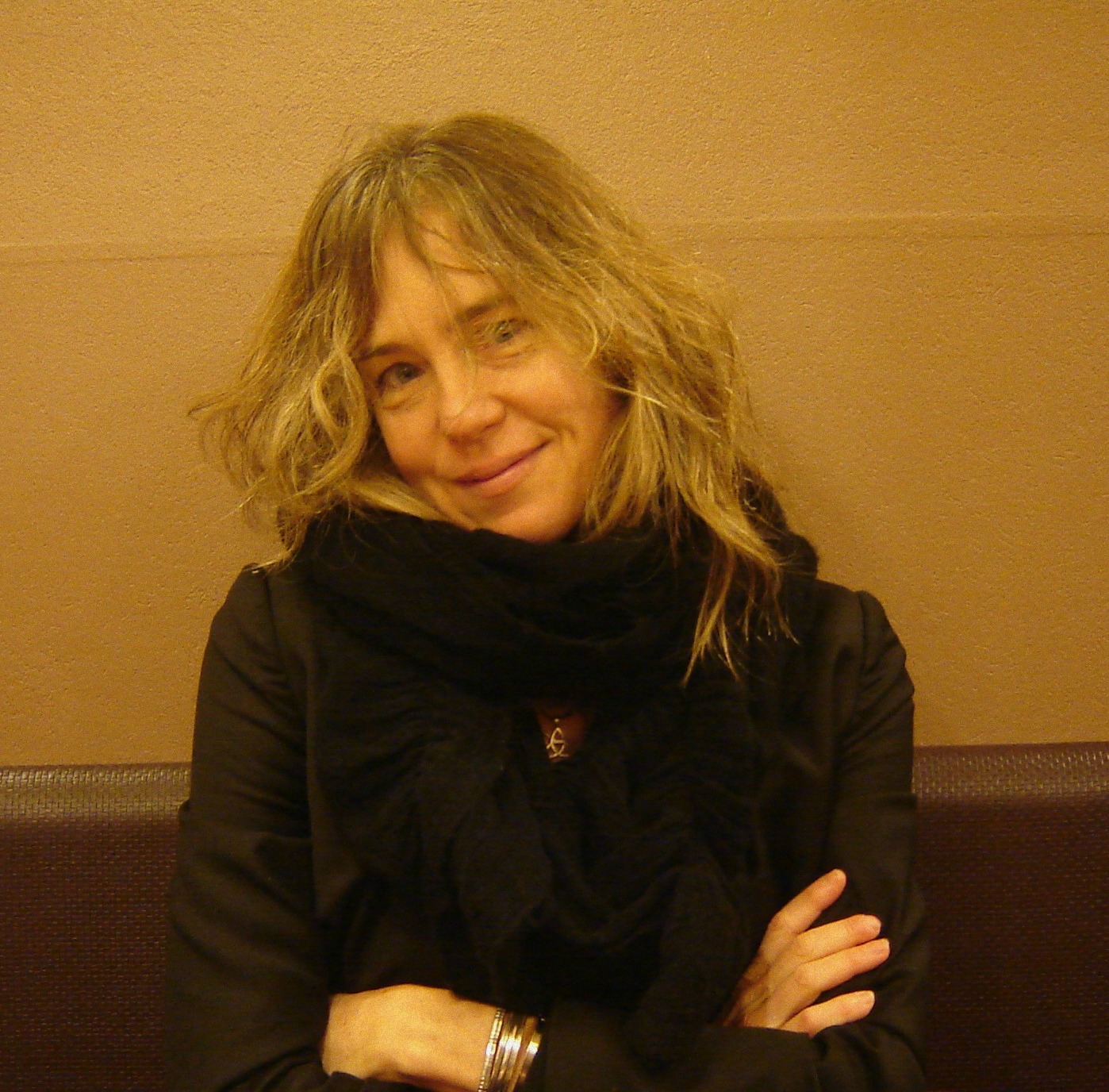
Chantal David is a Professor in the Department of Mathematics and Statistics at Concordia University. Her research focuses on number theory and its intersections with mathematical statistics. Formal Affiliation: Concordia University, Department of Mathematics and Statistics Email: chantal.david@concordia.ca Office: Library Building, LB 927.09 Research Interests revolve around Number Theory , particularly: L-functions and their non-vanishing properties Elliptic curves over finite fields and function fields Statistics of group structures and root numbers Connections to random matrix theory and metaplectic functions Extremal primes and Frobenius distributions Drinfeld modules and supersingular reductions Article Trends show a focus on cubic and quartic L-functions, non-vanishing phenomena, and statistical properties of elliptic curves over finite fields. Recent work explores metaplectic theta functions, extreme value distributions, and one-level density analysis. Labs & Teams : She is affiliated with the Montreal Number Theory Group (CICMA) .
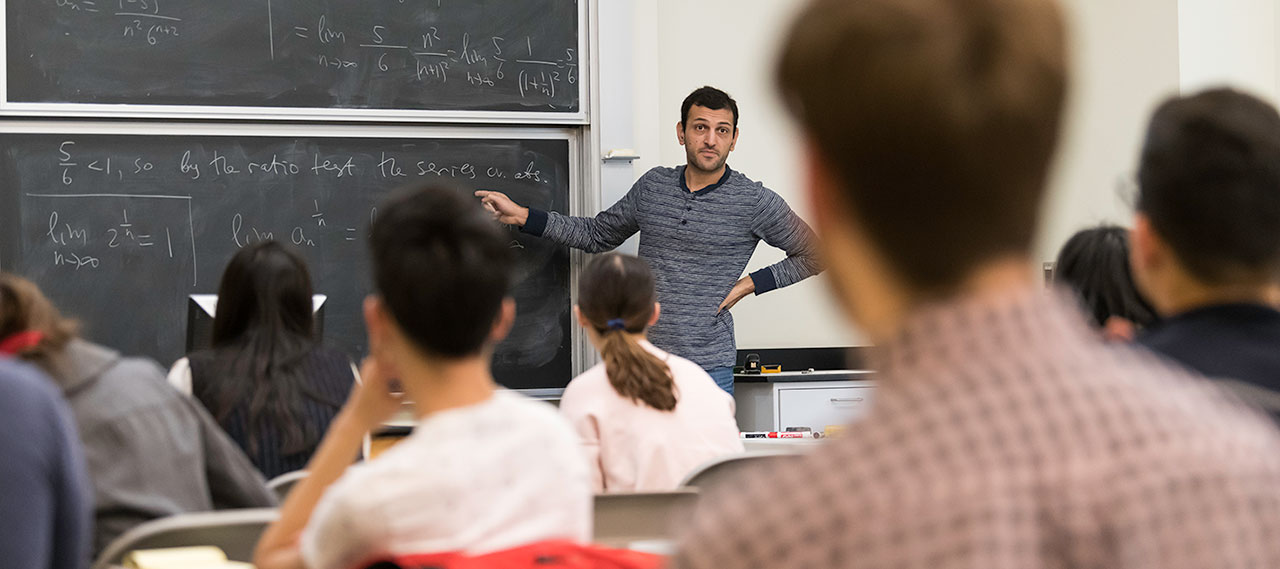
Professor Dinesh S. Thakur holds the position of Professor in the Department of Mathematics at the University of Rochester. He earned his PhD from Harvard University and has made significant contributions to number theory, arithmetic geometry, and function field arithmetic. His research focuses on developing theories related to zeta functions, Drinfeld modules, and p-adic analysis in finite characteristic environments. Education: PhD in Mathematics, Harvard University Research Interests: Thakur’s work integrates advanced topics such as elliptic curves, modular forms, Diophantine equations, and the arithmetic of function fields. He has pioneered studies on multizeta values, p-adic continued fractions, and the distribution of Diophantine exponents in finite characteristic. His research bridges classical number theory with modern algebraic geometry and p-adic analysis. Teaching & Mentorship: Thakur has taught a wide range of courses, including graduate-level topics in function field arithmetic, algebraic geometry, and number theory. He has advised 11 PhD students and several master’s students, whose theses span themes like elliptic Carmichael numbers, Drinfeld modular forms, and multizeta relations. Notable advisees include Javier Diaz-Vargas (1996), George Todd (2015), and Yao-Rui Yeo (2021). Outreach & Contributions: Thakur participates in initiatives like the Arizona Winter School and Olympiad training programs in India. He maintains an active seminar series at UR on topics such as L-values, Fermat’s Last Theorem, and automatic sequences. His work is accessible through his personal page and MathSciNet.
Brian Conrad is a Professor of Mathematics at Stanford University, specializing in number theory and arithmetic geometry. He holds a position in the Department of Mathematics and has contributed extensively to algebraic geometry, algebraic number theory, and representation theory. His research encompasses foundational work on reductive groups, pseudo-reductive groups, and their applications in arithmetic contexts. Dr. Conrad is an editor for the Journal of the AMS, Algebra and Number Theory, and IMRN. He has organized numerous learning seminars, including those on étale cohomology and the BSD conjecture, and has taught advanced courses on algebraic geometry, class field theory, and modular forms. His work bridges classical algebraic geometry with modern arithmetic applications, emphasizing foundational proofs and geometric intuition. His editorial roles and seminar leadership reflect his commitment to advancing mathematical exposition and education. Education details are not explicitly provided in the texts, but his academic trajectory includes significant contributions to the field through publications and mentorship. Dr. Conrad's research has led to advancements in areas such as the classification of algebraic groups, étale cohomology, and the arithmetic of elliptic curves. His collaborative work with mathematicians like Chai, Oort, and Prasad has produced influential monographs, including Pseudo-reductive Groups and Complex Multiplication and Lifting Problems .
Massachusetts Institute of TechnologyUnited States
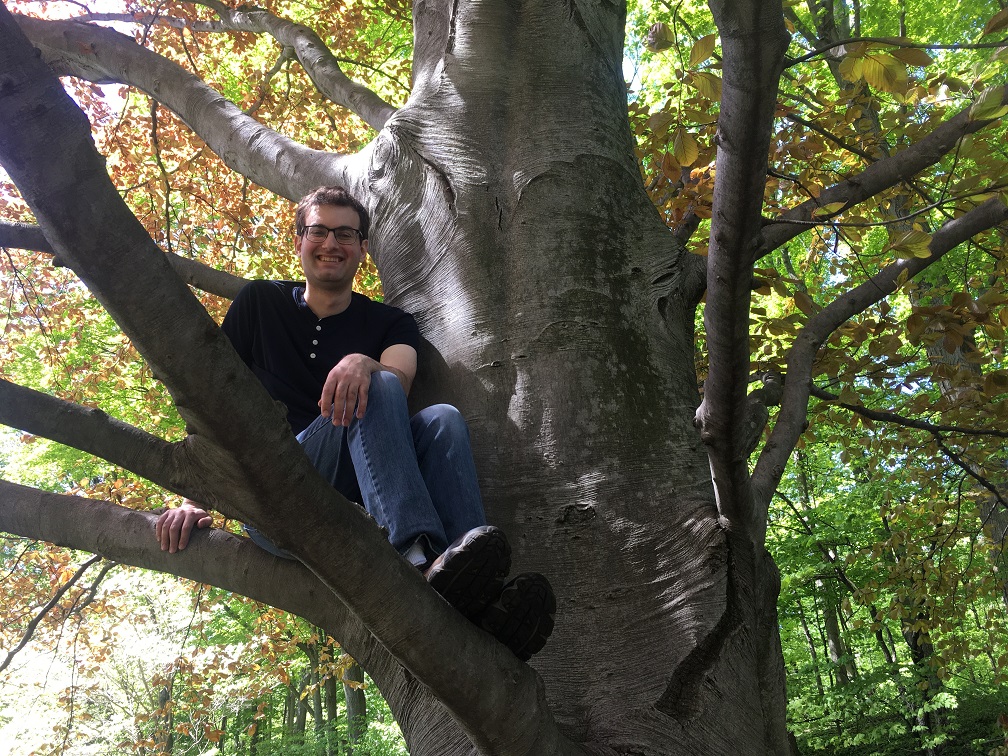
Jeremy Hahn is an Assistant Professor at the Massachusetts Institute of Technology (MIT), affiliated with the Department of Mathematics within the School of Science. His research focuses on Algebraic Topology, particularly structured ring spectra, chromatic homotopy theory, and equivariant homotopy theory. Supported by grants from the Sloan Foundation and the National Science Foundation (DMS-1803273), his work has contributed to foundational advances in topological K-theory, algebraic K-theory, and manifold topology. Education details are not explicitly listed, though past teaching roles at Harvard University suggest prior academic training. His research interests span topics including: Structured ring spectra constructions (e.g., truncated Brown-Peterson spectra) Chromatic redshift phenomena and algebraic K-theory Equivariant orientations and C_p actions Applications of homotopy theory to manifold classification Notable recent work includes counterexamples to Ravenel's telescope conjecture, advancements in motivic filtrations of topological cyclic homology, and the construction of multiplicative structures on classical spectra. Collaborations with researchers such as Robert Burklund, Dylan Wilson, and Allen Yuan reflect his active engagement in the global topology research community. Teaching includes advanced courses like Algebraic Topology I (18.905) and past roles as a teaching assistant for Linear Algebra (18.06) and multivariable calculus at MIT. His research has been supported by multiple NSF grants and the Sloan Fellowship, indicating sustained academic excellence and leadership in the field.
Prof. Dr. Urs Hartl is a faculty member in the Department of Mathematics and Computer Science at the University of Münster, affiliated with the Faculty of Mathematics and Computer Science. He is an Investigator in Mathematics Münster and a member of the Collaborative Research Centre (CRC) 1442 'Geometry: Deformations and Rigidity.' His research focuses on arithmetic geometry, representation theory, algebraic number theory, and arithmetic of function fields. He holds a prominent position in the field, contributing to areas such as Shimura varieties, p-adic Hodge theory, and the Langlands program. Affiliations: Member of CRC 1442 Geometry Investigator in Mathematics Münster Research Interests: Arithmetic algebraic geometry Algebraic number theory Arithmetic of function fields Structure theory of Shimura varieties p-adic Hodge theory p-adic Langlands programme Model theory Recent Publications: Hartl's recent work includes studies on moduli stacks of global G-shtukas, periods of Drinfeld modules, and p-adic Galois representations. His research emphasizes foundational contributions to arithmetic geometry and number theory, often involving collaborations with leading mathematicians such as Rajneesh Kumar Singh and Eva Viehmann. Grants & Advising: Hartl’s involvement in CRC 1442 reflects his leadership in geometric research. While specific advising details are not provided, his extensive publications suggest active mentorship in advanced mathematical research. Labs/Teams: Collaborates within the Mathematics Münster research group and the CRC 1442 team, focusing on geometric and arithmetic structures.
Pierre Colmez is a French mathematician affiliated with the École Polytechnique (1993-2010) and the National Center for Scientific Research (CNRS) at the Institut de Mathématiques de Jussieu since 2010. His academic journey includes postdoctoral positions at the Institut Joseph Fourier (Grenoble) and the Max Planck Institute for Mathematics (Bonn). Ph.D. in 1988 (Grenoble) under Jean-Marc Fontaine and John Coates École Polytechnique: Professor (2006-2010), Teaching Professor (1993-2005) Colmez’s research lies at the intersection of arithmetic geometry , Galois representations , p-adic Hodge theory , and the Langlands program . His work explores connections between automorphic forms, p-adic analysis, and cohomological structures in number theory. His most recent publications focus on p-adic cohomology, Drinfeld towers, and syntomic complexes, reflecting his expertise in advanced topics of nonarchimedean geometry and Galois cohomology . Collaborations with Gabriel Dospinescu and Wiesława Nizioł highlight his contributions to modern arithmetic geometry. Prix Léonid Frank (2016) Aisenstadt Chair (2015) Prix Fermat (2005) Prix Gabrielle Sand et Guido Triossi (1999) Colmez has held editorial roles at Astérisque (1999-2004), directed the SMF Mathematical Documents collection (2001-2016), and served on editorial boards for Annales de l'ENS and Publications de l'IHES . His academic network includes collaborations with Laurent Berger, Christophe Breuil, and Jean-Pierre Serre.
Patrick Ingram is an Associate Professor at the Department of Mathematics and Statistics , Faculty of Science , York University . His research focuses on number theory and diophantine geometry , particularly the arithmetic of elliptic curves and surfaces , and dynamical systems over global fields . His scholarly work includes significant contributions to the study of canonical heights , post-critically finite maps , and primitive divisors in arithmetic dynamics . His research often bridges complex dynamics with number theory, exploring the interplay between Galois representations , Drinfeld modules , and polynomial iterations . Patrick has received the Top Cited Article 2007 - 2011 award from the Journal of Number Theory . He collaborates with leading mathematicians in arithmetic dynamics, including Joseph H. Silverman , and has published extensively in top-tier journals such as the Duke Mathematical Journal , Proceedings of the London Mathematical Society , and Transactions of the American Mathematical Society . His work spans both theoretical advancements and computational techniques in algebraic divisibility sequences and rigidity theorems .
Thomas Scanlon is Professor of Mathematics at the University of California, Berkeley and serves as Vice-Chair for Graduate Affairs in the Berkeley Senate. He is additionally affiliated with the campus-wide Group in Logic and the Methodology of Science. His research lies at the intersection of mathematical logic and number theory, with a focus on model theory and its applications to diophantine geometry, difference and differential algebra, and arithmetic dynamics. Education S.B., University of Chicago, 1993 Ph.D., Harvard University, 1997 Research Interests Scanlon’s work centers on model theory , especially o-minimality , stability theory , and geometric model theory . He applies these logical tools to problems in diophantine geometry such as the André–Oort and Zilber–Pink conjectures, studies difference and differential algebraic structures, and investigates arithmetic dynamics of rational maps and Drinfeld modules. Publications Overview Since 1997 he has authored or co-authored more than sixty research papers. Recurring themes include the model theory of valued and difference fields, jet and prolongation spaces, effective bounds in diophantine problems, and functional transcendence results. Recent work (2018-2025) explores differential Chow varieties, strong minimality of modular functions, effective elimination procedures for differential-difference equations, and uniformity questions in diophantine geometry. Doctoral Supervision Scanlon has supervised at least sixteen Ph.D. theses at UC Berkeley, covering pure model theory, diophantine geometry, differential algebra, and stability theory. Students graduated between 2002 and 2022 include Alice Medvedev, Dragos Ghioca, Alex Kruckman, and Benjamin Castle. Contact & Office Email: scanlon@math.berkeley.edu Office: 723 Evans Hall, UC Berkeley Phone: (510) 642-3665
Alp Bassa is a Professor of Mathematics at Boğaziçi University, affiliated with the Department of Mathematics. He holds a Ph.D. in Mathematics from Universität Duisburg-Essen (2007) and dual bachelor's degrees in Computer Engineering and Mathematics from Middle East Technical University (2004). His research focuses on Number Theory, Algebraic Geometry, and their applications in Cryptography and Finite Fields. Education: Ph.D. in Mathematics, Universität Duisburg-Essen, 2007 Bachelor of Science in Computer Engineering & Mathematics, Middle East Technical University, 2004 Research Interests: Professor Bassa investigates algebraic structures over finite fields, including Drinfeld modules, function fields, and their cryptographic applications. His work bridges Number Theory and Geometry, with contributions to coding theory and the construction of algebraic curves with optimal properties. Recent Projects: TÜBİTAK 2509: Curves over Finite Fields, Jacobian Varieties, and Abelian Varieties (2018–2020) BAP-10540: Curves over Finite Fields and Irreducible Polynomials (2015–2017) Teaching: Recent courses include foundational mathematics (Math 101, Math 102), advanced topics (Math 344, Math 525), and specialized courses in cryptography and algebraic geometry.
Christoph Schweigert is full Professor (W3) of Mathematics at the University of Hamburg , based in the Department of Mathematics within the Faculty of Mathematics, Informatics and Natural Sciences (MIN-Fakultät). Since 2003 he has held this permanent chair, and he currently serves as a Principal Investigator and Area Coordinator for Quantum Theories in the Cluster of Excellence “Quantum Universe” . In addition he is a member of the Centre for Mathematical Physics , the DFG Collaborative Research Centre SFB 1624 and the Research Training Group 1670 “Mathematics inspired by string theory and quantum field theory” . Education & Career Path: 1987–1992: Degree in Physics, Universität Heidelberg 1995: PhD in Mathematics, University of Amsterdam (supervisor: Robbert Dijkgraaf) 1995–1996: Postdoc, IHÉS, Bures-sur-Yvette 1997–1998: Fellow, CERN, Geneva 1999–2002: Lecturer (tenured), LPTHE, Université Paris 6; Habilitation 2000 2002–2003: Professor (C3) for Physics, RWTH Aachen Since 2003: Professor (W3) for Mathematics, Universität Hamburg Research Interests: Schweigert’s work lies at the intersection of algebra, category theory, topology and mathematical physics . He focuses on tensor categories , Hopf algebras and quantum groups , topological and conformal field theories , string-net models , and modular functors . These structures find applications in quantum topology, knot theory, 3-manifold invariants, quantum codes and quantum information theory . Editorial & Service Roles: Editor, Communications in Mathematical Physics (since 2017) Editor, Letters in Mathematical Physics (since 2009) Editor, Journal of Mathematical Physics (since 2006) Editor, Springer book series Algebra and Applications (since 2005) Spokesperson/Deputy spokesperson, DFG-RTG 1670 Member, steering committee, DFG Priority Program “Representation theory” Henriette-Herz scout for the Humboldt Foundation (since 2020) Teaching & Supervision: Schweigert regularly teaches advanced courses in linear algebra, Hopf algebras, quantum groups and topological field theory at bachelor, master and graduate levels. He organises the research seminar Algebra and Mathematical Physics and the joint seminar Quantum Physics and Geometry . Office hours are by appointment via email. Laboratory & Research Group: He leads an active research group based in the Geomatikum building (Room 313), collaborating closely with PhD students, postdocs and visiting researchers on projects in tensor categories, TQFT and related areas.
Cristian Popescu is a Professor of Mathematics at the University of California, San Diego (UCSD), where he has been a faculty member since 2003. He previously held positions at Johns Hopkins University (2000-2003) and postdoctoral roles at the Mathematical Sciences Research Institute (Berkeley) and the University of Texas at Austin. His research focuses on algebraic number theory and arithmetic geometry, particularly Iwasawa Theory, L-functions, and Drinfeld modules. He has organized numerous conferences, including the Iwasawa Congress (2010) and Stark's Conjectures workshops. Education: Ph.D. in Mathematics from Ohio State University (1996), supervised by Karl Rubin. Postdoctoral mentors included Ken Ribet and John Tate. Research interests span special values of L-functions, Fitting ideals, Galois module structure, and étale cohomology. Key contributions include proofs of the Equivariant Main Conjecture in Iwasawa Theory and advancements in the Equivariant Tamagawa Number Conjecture. He has been recognized with awards such as the Simons Fellowship (2015-2016), the Simion Stoilow Prize (2005), and election as an AMS Fellow (2021). His work is funded by grants from the Simons Foundation and NSF. Teaching includes advanced courses on algebraic number theory, abstract algebra, and calculus. Advised over 15 Ph.D. students, many now in academia. Active in mentoring postdoctoral researchers through programs like the SEW Assistant Professorships. Leadership roles include organizing conferences on Iwasawa Theory and Stark conjectures. Collaborations with researchers like Cornelius Greither and Grzegorz Banaszak have produced foundational papers in the field. Current projects explore geometric main conjectures in function fields and applications to t-modules.
Dr Bernhard Koeck is a Reader in the Pure Mathematics Centre for Geometry, Topology, and Applications at the University of Southampton. His research focuses on Algebraic Geometry, Algebraic K-Theory, Algebraic Number Theory, and Homological Algebra, with a particular emphasis on Riemann-Roch theory, exterior power operations on higher K-theory, and geometric Galois module theory. He explores group actions on algebraic structures across algebra, geometry, and number theory, including equivariant Riemann-Roch theorems and wild ramification in finite fields. PhD (Regensburg) Habilitation (Karlsruhe) Heisenberg Fellow Koeck’s work on Riemann-Roch spaces and their equivariant properties has led to significant contributions in understanding local-global principles in number theory. His recent publications highlight advancements in exterior power operations, K-theory, and cohomology of curves and surfaces. Scientific awards include the prestigious Heisenberg Fellowship. He teaches modules such as GENG0001 Mathematics A and MATH3078 Further Number Theory , and supervises PhD students Jane Toni Joy Turner and Denver-James Logan Marchment.
Prof. Dr. Sascha Orlik is a Professor at the University of Wuppertal, leading the Algebra and Number Theory Working Group within the Department of Mathematics. His research focuses on arithmetic geometry, with particular emphasis on p-adic period ranges, the Langlands Program, Deligne-Lusztig varieties, and representation theory of p-adic and finite groups of Lie type. He has contributed to foundational studies in cohomology of period domains and equivariant vector bundles over Drinfeld's spaces. His working group includes members such as Dr. Andreas Bode, MSc. Erik Barinaga, and MSc. Dominik Briganti, alongside former members like Dr. Martin Bender and Dr. Christoph Spenke. He has authored a notable monograph *Period domains over finite and p-adic fields* (Cambridge Tracts in Mathematics) and numerous influential publications in journals like *Inventiones mathematicae* and *Advances in Mathematics*. Research trends in his articles span the interplay between geometric and cohomological methods in p-adic settings, with a focus on representation theory and its applications to number theory. His work bridges algebraic geometry, topology, and arithmetic, addressing key problems in modern arithmetic geometry and the Langlands Program.
Lukas Woike is a Junior Professor at the Institute of Mathematics of Burgundy (Université Bourgogne Europe), affiliated with the research groups "Geometry, Algebra, Dynamics and Topology" and "Mathematical Physics". His work intersects algebra, topology, and mathematical physics, focusing on topological field theories and higher algebraic structures. Education: PhD from the University of Hamburg under Christoph Schweigert Past Positions: Postdoc at the University of Copenhagen (2020-2022), supported by a Marie Skłodowska-Curie Fellowship His research explores non-semisimple modular functors, topological field theories, factorization homology, and higher algebraic structures in homological algebra. He has contributed to understanding the Deligne conjecture for finite tensor categories and developed differential graded generalizations of modular functors. Notable scientific awards include the Horizon 2020 Marie Skłodowska-Curie Fellowship . With Adrien Brochier, Renaud Detcherry, and Emmanuel Wagner, he organizes the Quantum Topology Days seminar. He is also co-authoring a textbook titled "A first course in topological field theory" for the American Mathematical Society.
Yuri Bazlov is a Lecturer in Pure Mathematics at The University of Manchester. His research focuses on Lie algebras, Hopf algebras, representation theory, reflection groups, and Coxeter groups. He holds a PhD in Mathematics from the Weizmann Institute of Science (2003), specializing in exterior powers of adjoint representations of semisimple Lie algebras. His work explores algebraic structures such as rational Cherednik algebras, braided doubles, and Nichols–Woronowicz algebras, with applications to Schubert calculus and noncommutative geometry. Recent projects include studies on cocycle twists, quantum Segre maps, and mystic reflection groups. Bazlov has contributed to foundational areas like Drinfeld modules, invariant polynomials, and Harish-Chandra isomorphisms for Clifford algebras. His research bridges abstract algebra with geometric and combinatorial methods, often involving reflection groups and their representations. He supervises PhD students in topics such as Lie algebra actions on noncommutative rings and is actively involved in the Digital Futures research beacon at The University of Manchester.