Swiss Federal Institute of Technology in LausanneSwitzerland
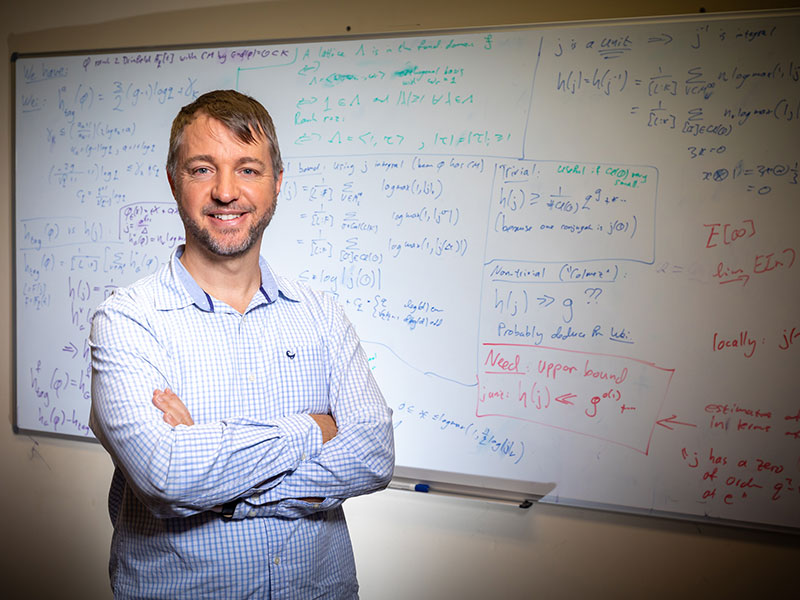
Andrei Negut is an Associate Professor and Chair of Representation Theory at the École Polytechnique Fédérale de Lausanne (EPFL). He holds positions in the School of Basic Sciences (SB) and Department of Mathematics (MATH), leading the CRT laboratory. His research focuses on quantum algebras, representation theory of Lie groups and algebras, and their geometric realizations through moduli spaces of sheaves. He teaches advanced courses like Representation Theory II and Quivers and Quantum Algebras, and advises PhD students such as Giacomini Niccolò and Kaushik Archi. His academic roles include membership in the Doctoral Program Mathematics committee and teaching responsibilities in SMA and EDAM programs. Research interests span quiver varieties, quantum loop groups, shuffle algebras, and K-theoretic stable envelopes. He has authored over 50 papers on topics including affine Hecke categories, Yangians, and categorification techniques.
Renate Scheidler is a Professor at the University of Calgary, holding dual appointments in the Department of Mathematics and Statistics and the Department of Computer Science. She obtained her Ph.D. from the University of Manitoba in 1993 and previously served as faculty at the University of Delaware until 2001. Her research focuses on computationally hard problems in mathematical structures like global fields and algebraic curves, driven by both theoretical insights and cryptographic applications. Dr. Scheidler is an editor for leading journals in her field and co-chairs the Steering Committee for the Algorithmic Number Theory Symposia (ANTS) series. She co-founded ISPIA’s predecessor, Calgary’s Centre for Information Security and Cryptography (CISaC), and serves on the steering committee of the Women in Numbers (WIN) research network, established in 2008. Her work bridges algorithmic number theory, cryptography, and computational algebra, with recent emphasis on isogeny-based cryptography and real quadratic field protocols. Her research trends reflect sustained contributions to cryptographic applications of algebraic curves, function fields, and infrastructure in number theory. Over the years, she has explored topics such as supersingular isogeny graphs, SCALLOP cryptosystem optimizations, and divisor class group arithmetic, highlighting her role in advancing post-quantum cryptography and computational methods. She actively promotes collaboration through initiatives like WIN and ANTS, fostering inclusivity and innovation in her field. In advising and grants, while no formal advisees are listed, her collaborative roles in institutes like ISPIA and CISaC suggest mentorship through institutional leadership. She contributes to interdisciplinary teams focused on security, privacy, and information assurance, leveraging her dual departmental expertise. Her involvement in labs and research networks underscores a commitment to both foundational research and applied cryptographic solutions.
Professor Gary McGuire is a Full Professor in the School of Mathematics and Statistics at University College Dublin (UCD), specializing in discrete mathematics, number theory, algebraic geometry, and cryptography. He holds a PhD from the California Institute of Technology and has been a central figure in advancing research in finite fields and their applications. BSc, University College Dublin MSc, University College Dublin PhD, California Institute of Technology His research focuses on algebraic structures over finite fields, including Galois theory, permutation polynomials, error-correcting codes, and quantum codes. He has made significant contributions to the understanding of supersingular curves, L-polynomials, and lattice-based cryptanalysis. His work spans theoretical advances and practical applications in cryptography and computational mathematics. The recent publications reflect a strong trend in algebraic and computational number theory, with emphasis on Galois groups of linearized polynomials, quantum code construction, and discrete logarithm algorithms. His work often involves deep connections between algebraic geometry and coding theory, particularly in the construction of MDS and quantum codes from generalized monomial-Cartesian and algebraic geometry codes. Notable scientific awards and recognitions include: Best Paper Award at CRYPTO 2013 Invited Speaker at the 12th International Conference on Finite Fields (2015) Invited Speaker at the 25th British Combinatorial Conference (2015) Invited Session Speaker at the AAAS Annual Meeting (2014) Speaker at multiple international workshops on finite fields, cryptography, and polynomials Professor McGuire actively supervises PhD students and has coordinated key modules such as Galois Theory, Cryptography, and Numbers & Functions. He has secured research grants, including one on the simulation of photo-electronic excitation in nanofilms. His most famous contribution is the proof that no 16-clue Sudoku puzzle exists, achieved through a novel hitting set enumeration algorithm. He is a principal investigator in computational and theoretical mathematics with ongoing collaborations across Europe. He is a member of research teams focused on finite field applications, cryptographic protocols, and algebraic coding theory. His lab-like collaborative environment involves work with postdocs and researchers on projects related to discrete logarithm computation, polynomial factorization, and quantum code design.
Joe Kramer-Miller is an Assistant Professor in the Department of Mathematics at Lehigh University. His contact details include the phone number 610.758.4376 and email jjk221@lehigh.edu, located in room 0017 of Chandler-Ullmann Hall. His research focuses on Algebra and Number Theory, with particular emphasis on arithmetic geometry, p-adic analysis, and Iwasawa theory. Current research interests include the study of Newton polygons on algebraic curves, Frobenius-torsion class group schemes, and the transcendence properties of exponential functions in modular arithmetic contexts. Key research directions involve exploring zeros of zeta functions, monodromy of F-isocrystals, and p-adic estimates of L-functions and exponential sums. His work often intersects with geometric aspects of arithmetic, such as Torelli loci and Newton strata in moduli spaces. Recent articles highlight advancements in understanding local-to-global principles for Newton polygons and logarithmic decay properties of isocrystals. No scientific awards or grants are explicitly listed in the provided information. He has not yet supervised any documented PhD or Master’s students, though this may reflect early career status rather than absence of advising activity. Laboratory or collaborative team affiliations are not detailed in the text. Office location and contact information are provided for direct academic engagement.
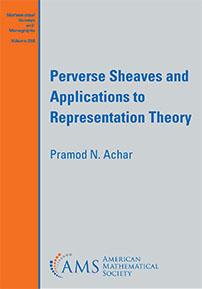
Pramod N. Achar is the Shirley Blue Barton Professor of Mathematics at Louisiana State University (LSU). His research focuses on the geometry and combinatorics of objects arising in representation theory of algebraic groups, with notable contributions to perverse sheaves and modular representation theory. He earned his Ph.D. from MIT under David Vogan in 2001. His work bridges algebraic geometry and representation theory, emphasizing categorical structures and geometric methods. He co-organizes the Southeastern Lie Theory Workshop series and serves on editorial boards for Advances in Mathematics and Representation Theory . Awarded a Fellowship by the American Mathematical Society, Achar has advised over 14 graduate students and mentored postdocs like Linyuan Liu and William Hardesty. His lab focuses on geometric representation theory, with recent projects exploring modular categories and affine flag varieties.
Jacob Tsimerman is an associate professor in the Department of Mathematics at the University of Toronto. His research lies at the intersection of number theory, algebraic geometry, and model theory, with a focus on arithmetic geometry and functional transcendence. Institution: University of Toronto Department: Department of Mathematics Position: Associate Professor Email: jacobt@math.toronto.edu Office: HU1001B, 215 Huron Street, Toronto His research interests include Number Theory, Arithmetic Geometry, Hodge Theory, o-minimality, Shimura Varieties, and Automorphic Forms. He has made significant contributions to the André-Oort conjecture, Ax-Schanuel theorems, and equidistribution problems using tools from model theory and transcendental number theory. His recent publications show a deep engagement with functional transcendence, differential geometry, and the interplay between algebraic and analytic structures. He frequently collaborates with leading mathematicians such as Jonathan Pila, Benjamin Bakker, and Michael Lipnowski. His work often appears in top-tier journals including Annals of Mathematics , Inventiones Mathematicae , and Compositio Mathematica . He has taught a variety of advanced courses such as Number Theory (MAT382), Algebraic Number Theory (MAT415), Topology (MAT327), and Problem Solving Seminars (MAT475, MAT495). He has also produced lecture notes on Etale Cohomology and organized Putnam preparation seminars. While no specific awards are listed in the provided material, his publication record in premier journals indicates high-level recognition in the mathematical community. He advises students informally through seminars and courses, though no formal PhD students are listed. He is involved in research grants and collaborations, particularly in areas bridging logic and number theory. His office hours and course materials suggest active engagement with undergraduate and graduate education. He maintains a research group or circle of collaborators, particularly with Benjamin Bakker, Jonathan Pila, and others working on o-minimality and its applications to Diophantine problems.
Prof. Dr. Hans-Georg Rueck is a Professor at the University of Kassel, affiliated with the Department of Mathematics and Computer Science and the Algorithmic Algebra and Discrete Mathematics research group. His office is located at Heinrich Plett Str. 40 (AVZ), Room 0448, D-34132 Kassel, Germany. Email: rueck@mathematik.uni-kassel.de Phone: +49 -(0)561 -804 -4245 Fax: +49 -(0)561 -804 -4646 Consultation hours: By appointment via email His research interests span Curves , Abelian varieties , Drinfeld modules , and Public-key cryptography , focusing on algorithmic algebra and discrete mathematics.
Guido Bosco is a Research Fellow at the Max Planck Institute for Mathematics in Bonn. Starting in September 2025, he will join Princeton University. He earned his PhD in 2023 from Sorbonne Université, under the Institut de Mathématiques de Jussieu – Paris Rive Gauche. His research focuses on arithmetic geometry, with particular emphasis on p-adic cohomology theories and their applications to number theory and algebraic geometry. His recent work includes studies on torsion in p-adic étale cohomology, rational p-adic Hodge theory for rigid-analytic varieties, and pro-étale cohomology of Drinfeld symmetric spaces. These investigations bridge foundational aspects of arithmetic geometry with modern methods in algebraic topology and representation theory. Bosco has delivered influential talks on topics such as D-modules on the Fargues-Fontaine curve (MPIM, 2024) and Hodge theory for p-adic analytic varieties (IAS, 2024), reflecting his deep engagement with cutting-edge research areas in the field.
Dr. Jake Doliskani is an Assistant Professor in the Department of Computing and Software at McMaster University, Faculty of Engineering. His research focuses on Post-Quantum Cryptography, Quantum Computing, and Applied Cryptography. He previously held faculty positions at TMU and was an NSERC postdoctoral fellow at the Institute for Quantum Computing (University of Waterloo). He earned his PhD in Computer Science from Western University under Éric Schost, with a focus on computational algebra and cryptography. Education: PhD in Computer Science, Western University (2016) MSc/BS in Computer Science (Details not explicitly stated) His research explores quantum-resistant cryptographic systems, quantum algorithms, and cryptographic protocol design. Notable contributions include advancements in isogeny-based cryptography, quantum money schemes, and efficient quantum algorithms for polynomial factorization. His work bridges theoretical foundations with practical applications in security and computational efficiency. Publications span topics like cryptographic hash functions, quantum software verification, and algebraic methods in cryptography. His work has been recognized with awards, including the Distinguished Paper Award at ICSE 2020 for contributions to quantum software testing. Advising & Opportunities: Open to supervising MSc/PhD students in Quantum Computing, Post-Quantum Cryptography, and Cryptography. He teaches advanced courses such as Quantum Computing and Quantum Cryptography (Theory) , emphasizing quantum mechanics fundamentals and cryptographic applications. Affiliations & Lab Involvement: Active in research groups focused on post-quantum security and quantum algorithm design. Office: ITB 125, McMaster University.
Professor Florian Breuer is a mathematician at the University of Newcastle , Australia, affiliated with the Priority Research Centre for Computer-Assisted Research Mathematics and its Applications (CARMA) and the School of Information and Physical Sciences . PhD in Mathematics (2002) from Université Denis Diderot, Paris 7 D.E.A. (Masters) in Mathematics (1999) from Université Pierre et Marie Curie, Paris 6 His research focuses on Number Theory , particularly Elliptic Curves , Drinfeld Modules , and Drinfeld Modular Forms . He explores the interplay between number fields and function fields, with applications to Cryptography and Post-Quantum Cryptography . His work also spans Ducci Sequences and Finite Field Arithmetic . Recent publications highlight his contributions to modular polynomial coefficients, Drinfeld modular forms in higher rank, and the arithmetic of real quadratic fields. His research bridges abstract mathematical structures with practical cryptographic applications, emphasizing long-term technological impact. Scientific Awards Meiring-Naude Medal (2008, The Royal Society of South Africa) Alexander-von-Humboldt Fellowships (2009, 2019, 2024) Grants 2025: Bloom AI grant for tutoring platform refinement 2024: Alexander-von-Humboldt research stay 2023: AI for psychological well-being grant He actively supervises PhD and Masters students in topics like Drinfeld A-modules and modular forms. As director of CARMA, he fosters collaborative mathematical research and organizes international conferences, including the 2020 online Number Theory conference.
Massachusetts Institute of TechnologyUnited States
Bjorn Poonen is a Professor of Mathematics and Distinguished Professor in Science at the Massachusetts Institute of Technology . His research spans Arithmetic Geometry , Number Theory , and Computational Mathematics , with support from the National Science Foundation and the Simons Foundation . He is a founding member of the Simons Collaboration on Arithmetic Geometry, Number Theory, and Computation . Research Interests : Poonen investigates Rational Points on Varieties , Undecidability in Number Theory , and Computational Methods for solving Diophantine equations. His work bridges Arithmetic Geometry with Number Theory , often leveraging Algebraic Geometry and Model Theory to address foundational problems. Recent Publications highlight trends in Explicit Descent , Brauer-Manin Obstructions , and Galois Representations . Notably, he explores Effective Methods for determining Integral Points on curves and Uniform Boundedness of rational and preperiodic points on varieties. Awards and Recognition : Awarded the 2023 AMS Doob Prize for his influential book Rational Points on Varieties . Recipient of the 2011 Chauvenet Prize for expository excellence in Undecidability in Number Theory . Recognized for Outstanding Undergraduate Teaching at MIT, including the MIT School of Science Prize in Undergraduate Teaching (2014, 2009). Academic Service : Poonen has organized major conferences like the Arizona Winter School and Arithmetic Geometry, Number Theory, and Computation workshops. He serves on editorial boards for journals such as the Journal of the American Mathematical Society and Involve , and participates in panels for the American Mathematical Society , including the Leroy P. Steele Prize and Cole Prize committees.
Ellen Kirkman is a Professor of Mathematics at Wake Forest University in the College of Arts and Sciences. Her research spans noncommutative algebra, representation theory, and homological algebra, with significant contributions to Hopf algebras and Artin-Schelter regular algebras. She has authored 55 peer-reviewed publications and serves as a Fellow of the American Mathematical Society. Education: Ph.D. in Mathematics, M.S. in Statistics from Michigan State University Dr. Kirkman’s work explores quantum algebraic structures, including Drinfeld doubles, Taft algebras, and reflection groups. Her publications analyze homological properties, invariant theory, and geometric interpretations of noncommutative rings. Recent articles focus on tensor representations, McKay matrices, and degree bounds under Hopf actions. She has held leadership roles as Graduate Program Director (2009-2017), Judicial Council member (2000-2010), and Co-chair of the Honor and Ethics Council. Awards include the Donald O. Schoonmaker Faculty Award for Community Service (2007), MAA Distinguished Service Award (2012), and AWM Distinguished Service Award (2022). She serves on the Board of Directors of the EDGE Foundation since 2014.
Valentijn Karemaker is an Assistant Professor at the Faculty of Science, Utrecht University , specializing in the Mathematical Institute under the Fundamental Mathematics sub-unit. He focuses on the Foundations of Complex Systems , with particular expertise in Abelian Varieties , Finite Fields , Galois Representations , and Isogeny Classes . His research bridges theoretical mathematics and computational methods, notably contributing to problems like Hilbert's Tenth Problem and the Gauss problem for central leaves . He has published extensively in top-tier journals and co-authored significant surveys on local-global principles. Scientific Awards : NWO-Veni Award (2019) Westerdijk Award (2021-2022) Utrecht Young Academy (2021) NWO-XL Award (2022) NWO-Vidi Award (2023) Grants and Collaborations : He has received competitive NWO awards, hosted international researchers like Chia Fu Yu and Mihran Papikian, and contributed to editorial work for the American Mathematical Society.