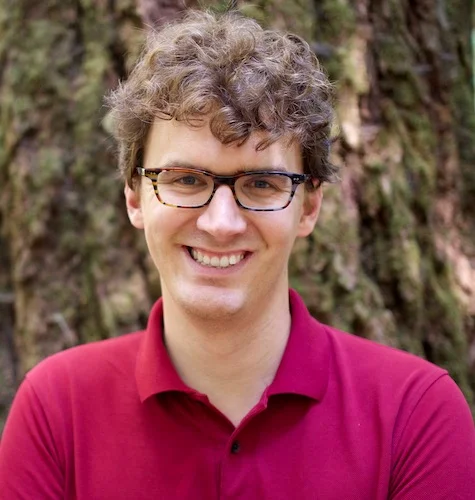
Carl Vondrick is a Professor in the Department of Computer Science at Columbia University. His research focuses on creating robust and versatile perception systems that leverage video and interaction with the natural world, with applications in 3D reconstruction, visual question answering, and robot manipulation. Former research scientist at Google Visiting researcher at Cruise Education: PhD (2017) from MIT, advised by Antonio Torralba BS (2011) from UC Irvine, advised by Deva Ramanan His research explores multimodal approaches for cross-task and cross-modal transfer, scene dynamics, audiovisual perception, interpretable models, and spatial awareness systems. The lab emphasizes zero-shot generalization and neuro-symbolic methods while addressing safety and robustness in AI systems. Key publication trends include: 2025: Video generation for robotics 2024: Differentiable rendering and cross-modal reasoning 2023: Robust perception and 3D modeling Scientific Awards: 2024 PAMI Young Researcher Award 2021 NSF CAREER Award Teaching Roles: Teaching Computer Vision II (2021-2025), Computer Vision I (2018-2019), and Representation Learning (2020-2022). Advising: Advises 8 current PhD students and has mentored 5 graduated students now at institutions like MBZUAI and UMD. The lab recruits 1-2 PhD students annually through Columbia’s PhD program. Grants and Collaborations: Funded by NSF, DARPA, Toyota Research Institute, Amazon Research, and Google.
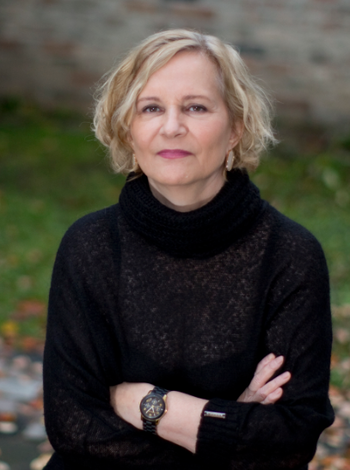
Asia J. Biega is a tenure-track faculty member (W2) at the Max Planck Institute for Security and Privacy (MPI-SP), where she leads the interdisciplinary Responsible Computing group. She is also a principal investigator of the Cluster of Excellence CASA and the FINDHR consortium. Her work sits at the intersection of computing and society, focusing on responsible computing, data protection & governance, and digital well-being within data-driven and AI-based systems. Dr. Biega's research spans multiple disciplines including computer science, law, philosophy, and social sciences. Her work examines how principles of responsible computing can be computationally operationalized, with particular attention to data protection frameworks, privacy technology governance, and digital well-being. She actively collaborates across disciplinary boundaries to make technical contributions while supporting research in other fields. Her approach combines theoretical rigor with practical applications, often drawing from her industry experience at Microsoft and Google. Her publication record reveals a strong focus on the intersection of fairness, privacy, and transparency in information retrieval systems. She has pioneered work on data minimization compliance, fair ranking algorithms, and user perceptions of data collection practices. Her research consistently bridges technical and legal perspectives, particularly examining how GDPR principles can be computationally implemented. Recent work shows increasing attention to generative AI governance, algorithmic hiring systems, and the relational aspects of data in recommender systems. Dr. Biega has received several prestigious awards including the Council of Europe's Rodotà Award for innovative research in data protection, the SaTML Notable Reviewer Award, the GI-DBIS Dissertation Award of the German Informatics Society, and recognition as one of the '100 Brilliant Women in AI Ethics' in 2025. She has advised numerous PhD students and postdocs who have gone on to faculty positions at institutions including the University of Trieste, Penn State, and the University of Washington. Her research is funded by the Max Planck Society, Alexander von Humboldt Foundation, and the European Union (Horizon Europe FINDHR). She serves as General Co-Chair for ACM FAccT 2025 and has held leadership roles in multiple academic conferences.
Darold Cuba is an intellectual historian and political scientist affiliated with the Department of History at the University of Cambridge. He serves as a Teaching Fellow at the Global History Lab (GHL) and a Research Associate at the Cambridge Black Advisory Hub (CamBAH). As a founder of multiple initiatives including MarronageOrg, Oxbridge Africas (OA), the Cambridge AntiRacism Forum (CARF), Cambridge Enterprise's CRoSS+Hub, and the Cambridge Histories of Marronage (CHoM) Workshop series, he maintains significant influence in academic and social justice circles. His research focuses on the concept of "Landed Blackness" and "United States Post Emancipation Marronage (USPEM)," examining how Freedom Colony Founding Families (FCFFs) in the United States from 1865 to 1900 created autonomous Black communities through land ownership, strategic worship traditions, and collective governance. His work engages deeply with anticolonial, postcolonial, and decolonial scholarship, drawing on theorists like Frantz Fanon, Edward Said, Homi Bhabha, Gayatri Chakravorty Spivak, and Linda Tuhiwai Smith. By applying Michel Foucault's concept of the "regime of truth," Cuba investigates how Black communities created their own truths to resist systemic white supremacy and institutional racism. Cuba serves on the Fairfield Foundation's Family Circle Leadership Group's Executive Committee and is a descendant of indigenous Native AmerIndian, African, and European communities from Tsenecommacah (Gloucester County in the Virginia Tidewater region). His scholarship connects historical freedom colonies to contemporary Black political thought, emphasizing their continued relevance in modern movements for reparations and racial justice.
Kord Eickmeyer is a Lecturer at Technische Universität Darmstadt in the Department of Mathematics, specializing in the mathematical logic group. He holds a PhD in mathematics from Humboldt University Berlin and has held postdoctoral positions at TU Darmstadt (2011–2017) and the National Institute of Informatics in Tokyo (2011–2013). His research focuses on finite model theory, graph structure theory, and computational complexity, particularly in descriptive and parameterized complexity, as well as randomization and derandomization techniques. Research interests include exploring the boundaries of computational complexity through logical frameworks, analyzing graph structures for efficient algorithm design, and investigating the role of randomness in computation. His work bridges theoretical computer science and mathematical logic, with applications in algorithm design and formal methods. Publications span topics from model-checking on ordered structures to gap-planar graphs and randomized logics. Collaborations include prominent institutions like the National Institute of Informatics and Humboldt University Berlin. No scientific awards are explicitly listed, but his extensive academic contributions reflect a strong research trajectory. Advising and grants are not detailed in the provided text, though his academic career includes supervision roles during his PhD and postdoctoral phases. His involvement with the mathematical logic group at TU Darmstadt highlights collaborative research efforts in foundational areas of computer science and mathematics.
Lieselotte Ahnert serves as a Visiting Professor for Developmental Psychology at the Free University of Berlin's Department of Education and Psychology, specifically within the Department of Developmental Science and Applied Developmental Psychology. Her academic journey began at Humboldt University in East Berlin, where she studied psychology during a period of significant political change in the GDR. After completing her doctorate in 1982, she held various research positions including director of the Interdisciplinary Center for Applied Socialization Research (IZAS e.V.) from 1991-1996 and a visiting scientist position at the National Institutes of Health in Washington from 1996-1999. Prior to her current position at FU Berlin (since 2019), she was a Professor of Developmental Psychology at the University of Vienna from 2008-2019. Professor Ahnert's research focuses on early childhood development, attachment theory, and the specific contributions of fathers to child development. Her work examines how children develop within various caregiving contexts, including the transition from home to childcare settings, the effects of socioeconomic disadvantage on attachment security, and the unique role fathers play in children's language development and emotional regulation. She has conducted extensive research on stress responses in infants during childcare transitions and how care providers influence these responses. Her interdisciplinary approach draws from behavioral biology, genetics, neuroscience, pediatrics, and education to understand the complex interplay between genetic and environmental influences in early development. Ahnert's publication record demonstrates significant contributions to understanding father-child relationships, with recent work exploring how fathers' attachment security and education contribute to early child language skills beyond mothers' influence. Her research has also examined the 'terrible twos' phase, investigating how children cope with frustration and tantrums and how parents support them through these developmental challenges. She has published extensively in high-impact journals including Child Development, Developmental Psychobiology, and Attachment and Human Development. Professor Ahnert has received recognition for her expertise, including being commissioned to provide expertise for the Federal Chancellery of Austria in 2021. Her work has practical applications in early childhood education and intervention programs, particularly in understanding how public childcare can compensate for developmental risks in socioeconomically disadvantaged children. In addition to her research, Ahnert has made significant contributions to academic training and supervision. Her book publications, including 'It's the fathers who matter' (2023) and 'How much mother does a child need?' (2020), bridge the gap between academic research and public understanding of child development. Her work continues to influence both academic discourse and practical approaches to early childhood care and education.
Georg Martius is a Senior Research Scientist at the Max Planck Institute for Intelligent Systems in Tübingen and a full Professor at the University of Tübingen since 2023. His work focuses on autonomous learning in embodied agents, drawing inspiration from child development to create self-motivated robotic systems. Research Areas: Model-based reinforcement learning, intrinsic motivation, deep learning, haptic sensor development, and integration of combinatorial algorithms into neural networks. Affiliations: Former postdoc at IST Austria (Christoph Lampert and Gašper Tkačik groups) and Max Planck Institute for Mathematics in the Sciences (Leipzig). Contact: georg.martius@tuebingen.mpg.de Education: PhD in 2009 (Göttingen), Computer Science studies in Leipzig and Edinburgh.
Prof. Dr. Nadja-Christina Schneider is Professor of South Asian Societies and Cultures at the Humboldt University of Berlin, where she is affiliated with the Institute of Asian and African Studies within the Faculty of Humanities, Social Sciences and Education. She previously served as Professor of Gender and Media Studies for the South Asian Region at HU Berlin from 2017 to 2024, and before that as Professor of Media and Society at the IAAW with a focus on Global South Asian Studies from 2009 to 2016. She also held an interim professorship in Visual and Media Anthropology at Heidelberg University during the winter term 2016/17. Her research focuses on media culture, gender, urban transformation and intersectional im/mobility in South Asia. She is particularly interested in media developments in South Asia, mediatization processes and social change, and debates on Islam, media and gender. Her interdisciplinary approach draws from South Asian Studies, Modern and Contemporary History, and Islamic Studies. Prof. Schneider's recent publications demonstrate a strong focus on transcultural media and communication, critical regionalism in architecture, and visual representations of social cohesion and identity politics in South Asia. Her work often explores how media forms shape and are shaped by social transformations, with particular attention to gender dynamics and religious identities. Her significant research projects include 'Beyond Social Cohesion - Global Repertoires of Living Together (RePLITO)' from October 2021 to December 2024, where she served as co-spokesperson and HU project leader. Prof. Schneider has supervised several doctoral projects including: Mobility and Witnessing: Independent Documentary Film Practices in the Kashmir Conflict (Max Kramer) Cinema, Cultures and Marker of Muslim Identity (Saima Haq) Mobility Differentiated: Navigating Religion, Activism and Everyday Life among LGBT Indonesians (Wikke Jansen) Unveiling Images. Regimes of Visibility in the Visual Politics of Contemporary Far Right Parties in Europe (Anna Kathrin Oswald) She has held prestigious research fellowships such as the Alexander von Humboldt research fellowship (Feodor Lynen Fellowship), a senior research fellowship at the Humanities Center for Advanced Studies 'Multiple Secularities' at Leipzig University, and a research fellowship at the Heidelberg Center for Transcultural Studies.
Markus König is a Professor of Informatics in Civil Engineering at Ruhr University Bochum, where he has been researching and teaching since October 2009. His work focuses on Building Information Modeling (BIM), digital construction technologies, and civil engineering informatics, with significant contributions to the development and implementation of digital methods in German construction industry. Dr. König earned his degree in civil engineering with a focus on applied computer science at Leibniz University Hannover, where he also completed his doctorate on cooperative building planning at the Institute for Building Informatics. He subsequently held a junior professorship for Theoretical Methods of Project Management at Bauhaus University Weimar before joining Ruhr University Bochum. His research spans multiple cutting-edge areas including Building Information Modeling (BIM), construction process simulation, tunneling informatics, infrastructure asset management, and the application of artificial intelligence and computer vision in civil engineering. As chair of the Building Informatics Working Group from 2012-2016, he played a key role in developing the first national BIM curriculum for German universities and serves as editor of the book 'Building Information Modeling: Technological Foundations and Industrial Practice.' Analysis of his recent publications reveals a strong trend toward semantic technologies, digital twins, automated compliance checking, and the integration of AI in construction processes. His work increasingly focuses on information containers, ontology development, and the application of large language models to infrastructure data, reflecting the evolving landscape of digital construction. Dr. König's significant contributions to digital construction have been recognized with prestigious awards: Lower Saxony-Bremen Construction Industry Award (2017) for 'services in the development and introduction of digital construction in Germany' Konrad Zuse Medal (2020) While specific details about his advising and grant activities aren't explicitly mentioned in the provided text, his extensive publication record with numerous co-authors suggests active supervision of doctoral students and research staff. His involvement in multiple collaborative research projects is evident from his publication history. At Ruhr University Bochum, Professor König leads a research group focused on civil engineering informatics, with particular emphasis on BIM, digital construction technologies, and their application across the building lifecycle. His team appears to work at the intersection of computer science and civil engineering, developing innovative solutions for construction process optimization, infrastructure management, and digital transformation of the AEC industry.
Barbara Henning is Professor of Turkology at the University of Hamburg's Asia-Africa Institute. Previously a junior professor for Islamic History in the Eastern Mediterranean at Johannes Gutenberg University Mainz, she holds degrees in Islamic Studies, Arabic Studies, Ethnology (BA), and Turkic Studies (MA) from Halle, Bamberg, and Paris. Her doctoral research at Bamberg (2016) examined the Ottoman-Kurdish Bedirhani family. She has held positions at the German Foreign Office and participated in the DFG priority program Transottomanica. Henning's research investigates Ottoman-Kurdish history, Arab provinces under Ottoman rule, imperial elites, identity/memory politics, and concepts of social boundary drawing. Current projects explore social differentiation among Prophet's descendants and post-Ottoman educational history in Northern Iraq. She co-manages the 'Urban Differentiation Potentials' graduate program and holds memberships in DFG-GRK 2304 Byzantium and Euro-Mediterranean War Cultures, the DFG Network Post-Ottoman Transformations, and the Arab-German Young Academy (AGYA).
Vidyasagar Sharma is a Research Associate at Bielefeld University's Faculty of Sociology, working on the DFG-funded project "Navigating Universities. Student Aspirations, Boundary Drawing, and Transformations in India and the Philippines" under Prof. Dr. em. Joanna Pfaff-Czarnecka. He is affiliated with Department 6 - Sociology of Transnationalization and Social Anthropology and the Bielefeld Graduate School in History and Sociology. Education: 2023-04 - Ongoing: Research Associate in DFG project "Navigating Universities..." at Bielefeld University 2021-08 - 2022-05: Urban Fellows Program, Indian Institute of Human Settlements, Bengaluru 2018-10 - 2021-02: Master of Philosophy in Political Science, University of Delhi (Dissertation: Changing Contours of Caste in Urban Spaces: A Case Study of Delhi) 2015-07 - 2017-07: Master of Arts in Political Science, Jawaharlal Nehru University 2011-07 - 2014-06: Bachelor of Arts in Political Science, Indira Gandhi National Open University Research Focus: Sharma's work critically examines caste dynamics in Indian educational institutions, institutional violence against marginalized students, and the commodification of higher education. His research explores how social hierarchies manifest in university spaces and affect student experiences, particularly for Dalit-Bahujan communities, with strong emphasis on belonging, social exclusion, and educational equity. Publication Trends: His prolific output spans academic journals and major media outlets including The Indian Express and The Wire. A consistent theme across his work is the intersection of caste discrimination and mental health among university students, with particular attention to institutional responses to student suicides and the moral crisis in India's higher education system. Scientific Awards: 2019-07 - 2023-03: Junior Research Fellowship, University Grants Commission, India 2015-07 - 2016-07: Nirman Foundation Fellowship, Centre for Policy Studies, Jawaharlal Nehru University Professional Activities: Sharma is a member of the British Sociological Association (2023-present) and founded the academic initiative "Speaking From Margin" in 2021 to build solidarity for social justice in higher education. His research experience includes work as a Principal Investigator at the Indian Institute for Human Settlements and a Research Intern at the Center for Policy Research in New Delhi. Additional Information: Fluent in Hindi and English with working knowledge of German, Sharma bridges academic scholarship with public discourse through regular contributions to major media platforms addressing pressing issues in education policy and social justice.
Caspar Meyer is a Professor at the Bard Graduate Center, Bard College, where he serves as Editor of West 86th: A Journal of Decorative Arts, Design History, and Material Culture . His research bridges archaeology, art history, and material culture studies, with emphases on ancient Greek and Eurasian societies, cross-cultural exchange, and the role of temporality in art. Meyer leads archaeological fieldwork at the sanctuary of Apollo on Despotiko and has excavated in Ukraine, Russia, and the Cyclades. Education includes a PhD and MS from the University of Oxford and a BA from King’s College London. Meyer's work interrogates how people and objects co-create environments through embodied craftsmanship, with current projects examining ancient 'future-making' via technological choices in pottery, metalwork, and stone carvings. His interests span: Intercultural dynamics in first-millennium BCE Eurasia Classical reception in modern scholarship and museums Archaeological method and sensory engagement with artifacts Recent publications (2018–2025) cluster around materiality, temporality, and interdisciplinary critique. Trends include museum display ethics, Scythian art technology, and re-evaluations of classical reception through Foucaultian and possibility-studies frameworks. Articles consistently merge technical analysis (e.g., chaîne opératoire) with cultural theory. He directs a field school for BGC students and co-edits thematic journal issues on topics like metalwork and magic, fostering collaborative research networks.
Professor Annika Larsson is a distinguished faculty member at the University of Fine Arts Hamburg (HFBK Hamburg), specializing in Time-based Media. She leads the three-year artistic research project Non-knowledge, Laughter and the Moving Image , realized in collaboration with HFBK Hamburg and the Royal Institute of Art Stockholm. Her research explores the philosophical connections between laughter, non-knowledge, and moving images, drawing on Georges Bataille's theories. She examines how laughter functions as a transgressive force that can shatter established thought patterns and create new possibilities for social existence. Similarly, she investigates how moving images function as active forces that change our consciousness rather than merely representing reality. Larsson's artistic practice focuses on the 'speaking body' and moments of uncontrollable laughter, with skepticism toward instrumental language and linear narration. Her work Blue (2010), based on Bataille's Blue of Noon , explores parallels between pre-fascist Europe and contemporary political situations through found footage. She has initiated collaborative student projects such as The Open Mouth , a platform for time-based media works that emphasizes collaboration and socialization among students. Her research also addresses contemporary concerns about digital culture, data collection, and how algorithms increasingly predict and define human behavior.
Dr. Uwe Grünefeld is a Visiting Professor at the Faculty of Computer Science , Institute for Computer Science and Business Information Systems (ICB) of the University of Duisburg-Essen. He has been actively contributing to Human-Computer Interaction research through multiple publications in 2025-2022 focusing on Virtual Reality , Augmented Reality , and Robotics . Research Interests span across immersive technology applications for health behavior change (situated artifacts, weight visualization mirrors), haptic feedback systems (EMS for weight perception, vibrotactile directional cues), and behavioral biometrics (hand tracking identification, gaze-based user recognition). His work addresses cross-reality system design , collaborative robotics , and human-in-the-loop simulation methodologies . Key Publications demonstrate significant contributions to VR/AR user engagement, with particular focus on Physical activity promotion through situated artifacts Advanced haptic feedback techniques for immersive environments Behavioral biometric identification systems Robot motion intent communication Cross-reality transition visualization His research often employs mixed-method approaches combining technical implementations with user studies involving quantitative and qualitative data collection.
Helen A. Gibson is a Visiting Assistant Professor at the John F. Kennedy Institute, Department of History, Freie Universität Berlin. She is actively engaged in interdisciplinary research at the intersection of history, spirituality, and material culture, with a focus on African American and Indigenous epistemologies. Gibson also serves as the editor for history, political science, and international relations at the European Journal of American Studies . Research Interests: Her work explores the significance of mattering beyond empiricism, particularly through practices of sacred reciprocity. She investigates how plants like dogwood function as both medicine and spiritual boundary markers within the tradition of grand midwifery, drawing on WPA interviews with formerly enslaved people. Her scholarship bridges historical analysis with decolonial theory, emphasizing relationality, kinship, and the transmission of ancestral knowledge. Publication Trends: Her recent work centers on the entanglement of material objects and spiritual meaning in African American cultural memory. By analyzing oral histories and plant-based practices, she contributes to emerging fields in critical race theory, medical humanities, and the history of science, emphasizing non-dualistic ontologies and Indigenous ways of knowing. Scientific Awards: No awards listed in the provided text. Advising and Grants: While no formal advisees or grant funding are mentioned in the text, her role as a visiting professor and journal editor suggests active participation in academic mentorship and scholarly networks. Her prior research fellowship at the University of Erfurt indicates competitive postdoctoral support. Labs and Research Teams: Helen Gibson is affiliated with the research colloquium and PhD projects at the Department of History, Freie Universität Berlin. She contributes to the 'CIH VII: Uncertain Boundaries' program, which explores ambiguity in international history, suggesting collaboration within an interdisciplinary research group focused on liminality and boundary-making in historical contexts.
Jilles Vreeken is a Professor of Computer Science at Saarland University and tenured faculty at the CISPA Helmholtz Center for Information Security, where he leads the Exploratory Data Analysis research group. He is also an ELLIS Fellow and Faculty of the Saarbrücken Unit on AI and ML. His work bridges theoretical foundations with practical applications in causal inference, unsupervised learning, and exploratory data analysis. Dr. Vreeken's research focuses on developing theory and algorithms for answering fundamentally exploratory questions about data: "what is going on in my data?", "what causes what and how?", and "what can we learn from this model?" without making unnecessary or unjustified assumptions. He takes a principled approach based on information theory to identify what is worth knowing, then develops efficient algorithms for extracting useful interpretable results. His work spans causal inference under realistic conditions (including hidden confounding, selection bias, and non-i.i.d. data), summarizing complex data and models in understandable terms, and combining these threads to create more robust and useful models across diverse data types. His recent publications demonstrate a strong trend toward causal discovery in increasingly realistic settings, including non-stationary time series, event sequences, and scenarios with hidden confounders. He has made significant contributions to federated learning, interpretable machine learning, and pattern mining. His work consistently applies information-theoretic principles to develop methods that are both theoretically sound and practically useful for extracting insights from complex data. Dr. Vreeken has received numerous prestigious awards including: IEEE ICDM'18 Tao Li Award for Excellence in Research IEEE ICDM'18 Best Paper Award UdS-CS'15 Busy Beaver Teaching Award ACM SIGKDD'11 Best Student Paper Award ACM SIGKDD'10 Doctoral Dissertation Runner-Up Award ECML PKDD'09 Best Student Paper Award As an advisor, Dr. Vreeken has mentored numerous doctoral researchers to completion, including Dr. Osman Ali Mian, Dr. David Kaltenpoth, Dr. Boris Wiegand, Dr. Sebastian Dalleiger, Dr. Janis Kalofolias, Dr. Jonas Fischer, Dr. Alexander Marx, Dr. Panagiotis Mandros, Dr. Kailash Budhathoki, Dr. Roel Bertens, Dr. Koen Smets, and Dr. Michael Mampaey. He has secured significant research funding as PI for multiple projects including "AI for Prediction and Therapy Guidance in Acute Stroke" (HAICU, 2025-2028), "Neuro-Explicit Models of Language, Vision and Action" (RTG, DFG, 2023-2028), and "Crushing Antimicrobial Resistance using Explainable AI" (HAICU, 2021-2024). Dr. Vreeken leads the Exploratory Data Analysis (EDA) research group at CISPA, which focuses on developing theory and algorithms for discovering novel insights from data, learning inherently interpretable models, and drawing reliable causal conclusions. The group has produced numerous influential algorithms and frameworks in causal inference, pattern mining, and exploratory data analysis, with applications spanning healthcare, materials science, and cybersecurity.