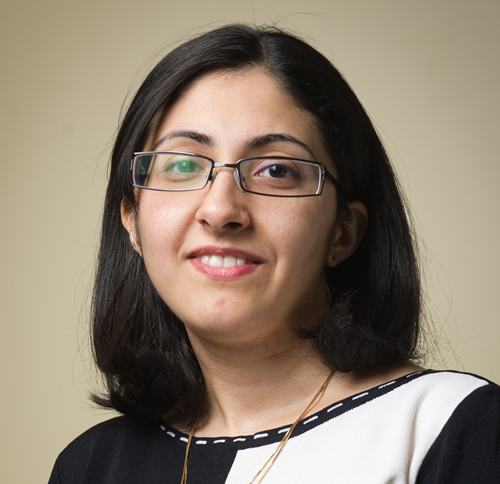
Professor Kripa K. Varanasi is a faculty member in the Department of Mechanical Engineering at the Massachusetts Institute of Technology, operating within the School of Engineering. Her interdisciplinary research spans physico-chemical phenomena, thermal-fluids, interfacial science, and electrochemical systems, with applications in energy, water, biomedical technologies, and sustainable manufacturing. Alumnus of Indian Institute of Technology Madras (B.Tech, 1998), MIT (M.S. 2002, Ph.D. 2004) Former GE Global Research lead with multiple technology awards Her research program uniquely bridges fundamental surface science with scalable industrial solutions, evidenced by startup ventures like LiquiGlide, Infinite Cooling, and AgZen. Expertise lies in Nanostructured surfaces , electrochemical fluid control , and bio-inspired material design . The group's visible light-responsive TiO 2 surfaces enable transformative approaches to oil-water separation and microfluidic manipulation. Scientific recognition includes: NSF Career Award DARPA Young Faculty Award ASME Bergles-Rohsenow Heat Transfer Award MIT Graduate Advising Excellence Award Multiple startup competition victories Key publications reveal systematic innovations in optically modulated wetting , dye-sensitized interfacial engineering , and industrial fluid dynamics . The group's startups have won prestigious competitions including the MIT-100K and MassChallenge Diamond Winner distinction.
Shabnam Raayai is an Assistant Professor in the Department of Mechanical Engineering at Boston University. Her research focuses on fluid mechanics, aerodynamics, and flow control, particularly exploring bio-inspired designs such as riblet surfaces and V-formation dynamics. She holds a PhD and MS in Mechanical Engineering from MIT. Education: PhD (MIT, 201?), MS (MIT, 201?) Her research integrates experimental, theoretical, and computational approaches to study drag reduction techniques and fluid dynamics in nature-inspired systems. Key interests include fluid-solid interactions, laser diagnostic methods, and complex geometric boundary analyses. Her recent work examines riblet-covered surfaces for drag reduction, bio-inspired formations, and multi-propeller flow dynamics. She has pioneered techniques like double-light-sheet PIV for studying opaque object flows and volume-controlled cavity expansion for soft material analysis. Awards: Rowland Fellowship (2019-2025) Andreas Acrivos Dissertation Award (2018) Rising Stars in Mechanical Engineering (2018) Her grants and advising activities are not detailed here, but her research team actively explores nature-inspired fluid dynamics applications in engineering systems.
Marcus N. Hultmark is a Professor in the Department of Mechanical and Aerospace Engineering at Princeton University within the School of Engineering and Applied Science. His research focuses on fluid mechanics, turbulence, and its applications in wind energy, drag reduction, and boundary layer dynamics. He received his Ph.D. from Princeton University in 2011 and M.Sc. from Chalmers University in Sweden. Ph.D., Princeton University, 2011 M.Sc., Chalmers University, 2007 Dr. Hultmark's work spans advanced manufacturing, living and soft materials, and turbulent flow analysis. His FAST lab investigates drag reduction, boundary layers, and wind turbine aerodynamics using high-pressure wind tunnels (e.g., SuperTank) and novel sensors (e.g., NSTAP, LaDrone). Key themes include turbulence scaling, heat transfer enhancement, and UAV-based flow sensing. His recent publications highlight advancements in wind turbine wake modeling, spanwise wall forcing for heat transfer optimization, and sensor design for turbulent flows. Over 15 articles from 2024-2025 reflect expertise in Reynolds-number effects, Lagrangian particle tracking, and flow control mechanisms. 2016 Air Force Young Investigator Award 2017 NSF CAREER Award 2017 Nobuhide Kasagi Award Dr. Hultmark has mentored students in diverse projects, including Nate Simon (2025 thesis), Lena Sabidussi (2025 thesis), and Ian Gunady (2024 thesis). His lab members have secured prestigious fellowships like the New Jersey Wind Institute Fellowship and NSF GRFP . Current initiatives involve the LaDrone project for atmospheric boundary layer studies and collaborations in high-Reynolds-number fluid dynamics with institutions like the University of Melbourne.
Dr. Matthew Marino is an Associate Professor in the School of Aerospace Engineering and Aviation at RMIT University. He leads the Unmanned Aerial Systems Research Team and focuses on advancing drone technology for novel applications. With 15 years of experience in fixed-wing and multirotor drones, he emphasizes teaching and empowering engineering students. His research spans aerodynamics, UAV design, and sustainable aviation. Industry Experience: Siemens AG, Thales, Austal Ships, and Stoprotor. Research Interests: Aerospace Engineering, Fluid Dynamics, UAVs, and Environmental Science. Supervision: Open to PhD/Masters students in areas like wingtip optimization, propulsion systems, and humanitarian UAV applications. His work bridges theoretical aerodynamics with practical drone solutions, addressing urban flight challenges and energy-efficient systems. Key contributions include drag estimation models and hybrid-electric propulsion research.
Dr. Ilan Kroo Academic Appointments: Thomas V. Jones Professor in Aeronautics and Astronautics at Stanford University's School of Engineering. Active in teaching and research since at least 1983 (PhD Stanford). Education: PhD in Aeronautics and Astronautics, Stanford University (1983). Research Focus: Multidisciplinary optimization and aircraft synthesis Unconventional aircraft configurations (e.g., joined wings, oblique wings) Low-speed aerodynamics: vortex wake analysis, induced drag computation Awards: Elected Member of the National Academy of Engineering (2013–Present). Teaching: Leads courses on aircraft design, applied aerodynamics, and sustainable aviation. Courses include AA 146A/B, AA 241A/B, and independent study modules. Students: Advises master's students William Ho, Sean Lin, Adrian Loekman, and Sebastian Monsalvo. Labs/Teams: Involved in NASA and industry-sponsored projects on computational aircraft design and transonic formation flight. Recent Work: Focus on pilot-induced oscillation mitigation, extended formation flight efficiency, and UAV swarm control. Active in publishing since 2009, with 116+ papers.
Sanjay Jayaram is an Associate Professor in the Department of Aerospace and Mechanical Engineering at Saint Louis University's School of Science and Engineering, where he has served since 2005 and became Aerospace Engineering Coordinator in 2013. His academic foundation includes a Ph.D. and M.S. in Mechanical Engineering from the University of Central Florida and a B.S. from R.V. College of Engineering in India. His educational background: Ph.D. Mechanical Engineering, University of Central Florida M.S. Mechanical Engineering, University of Central Florida B.S. Mechanical Engineering, R.V. College of Engineering, Bangalore, India Dr. Jayaram's research pioneers bio-inspired aerospace systems through five interconnected thrusts: (1) Bio-AIMS for fluid-structure-control morphing using shape memory alloys; (2) Tubercle-inspired vertical tail drag reduction via biomimetic flow control; (3) Intelligent Learning Control (ILC) for autonomous morphing wing systems; (4) Multirotor drone turbulence mitigation and noise reduction for Urban Air Mobility; and (5) Distributed guidance/navigation for multi-UAV teams. His work integrates wind tunnel experimentation , computational fluid dynamics , and adaptive control theory to solve real-world aerospace challenges. Analysis of his recent publications reveals dual emphasis on cutting-edge aerospace research (morphing structures, drone stability, spacecraft systems) and transformative engineering education , with 60% of his 2013-2025 publications focusing on student-led projects in rocketry, satellite design, and curriculum innovation. His publications span spacecraft engineering, control systems, and sustainable propulsion technologies. As an educator, Dr. Jayaram mentors multiple student spacecraft teams including SLUCube, BillikenSat, and high-powered rocket projects for Spaceport America Cup. He serves as Treasurer for the ASEE Aerospace Division and Committee Chair for the AIAA/ASEE Leland Atwood Awards Committee, demonstrating leadership in aerospace education communities. His laboratory infrastructure supports wind tunnel testing for bio-inspired morphing structures, drone aerodynamics characterization, and full spacecraft integration/test facilities for student satellite programs, enabling hands-on research from concept to flight validation.
Dr Luke Kelleher is an Associate Professor in Environmental Policy at University College Dublin (UCD), working within the UCD School of Architecture, Planning and Environmental Policy. He is a member of the UCD Environmental Policy Group, a research-intensive faculty group central to national and international debates and policy action in environmental policy. Kelleher also serves as a Principal Investigator in the UCD Earth Institute and is a member of both BiOrbic, the National Bioeconomy Research Centre funded by Science Foundation Ireland, and the UCD Centre for Irish Towns. Dr Kelleher holds a BA and PhD from Queen's University Belfast, an MSc from the University of Ulster, and a UCD Professional Certificate in Creativity and Innovation for Education. Prior to joining UCD, he was a lead researcher at the University of Hertfordshire in its high-impact transport evaluation group. Before his academic career, he gained nearly 10 years of experience in the public service, including roles in local government, the Land Registers of Northern Ireland, Northern Ireland Water Service, and the global consulting firm RPS Group. Dr Kelleher's research focuses on two main areas: transport policy and environmental performance, and bioeconomy policy. His work applies strong theoretical and methodological expertise in spatial analysis, policy analysis and evaluation, stated preference techniques, and demand-side policy instruments. His research has been published in prestigious journals such as Energy Policy, Atmospheric Environment, Environment and Planning B, and Transport Research Part A, and presented at leading conferences including the World Conference on Transport Research and Transportation Research Board Annual Meeting. Analysis of Dr Kelleher's recent publications reveals a strong focus on the bioeconomy and its policy coherence, transport poverty, and just transition frameworks. His work often employs spatial analysis methodologies to address environmental policy challenges, with a particular emphasis on creating practical tools for policymakers. There's a clear trajectory showing increasing focus on the bioeconomy in his more recent work, while maintaining strong connections to transport policy and environmental justice issues. Dr Kelleher has secured research funding from multiple prestigious sources including the Economic and Social Research Council (ESRC), Northern Ireland Department of Education (DENI), Arts and Humanities Research Council (AHRC), and Science Foundation Ireland (SFI). Current projects include "Enable-BIO Project" funded by the Environmental Protection Agency, "Aerodynamic Design and CFD Analysis of Drag Reducing Appendable Devices for Large Ground Vehicles" funded by Science Foundation Ireland, and "Just Transition for Agriculture in the Circular Bioeconomy" (JusTACE) also funded by the Environmental Protection Agency. Dr Kelleher actively supervises PhD students and contributes to multiple educational programs including the BSc (City Planning & Environmental Policy), MRUP, MSc (Environmental Policy), the Graduate Diploma Bioeconomy with Business, and the BSc in Transport City Planning and Environmental Policy at Chang'an University. His teaching philosophy emphasizes active participation, critical analysis, and the development of informed judgment. Dr Kelleher maintains strong connections with policy makers at multiple levels, having provided expert advice to the European Commission, UK Department of Transport, Department of Education (DENI), Department of Agriculture, Food and Marine (DAFM), Department of Environment, Climate and Communications (DECC), and various city councils. He has been particularly active in the Heritage Council led Collaborative Town Centre Health Check Programme since 2016.
Andreas Strohmayer is a Professor and Managing Director of the Institute of Aircraft Design at the University of Stuttgart, leading research in aircraft design, electric/hybrid propulsion, and lightweight construction. His work focuses on sustainable aviation solutions, including electric aerotow systems, hydrogen tank integration, and hybrid-electric regional aircraft. He previously held senior industry roles at Grob-Werke, Sky Aircraft, and SST Flugtechnik before joining academia in 2015. Education & Career: 1989–1995: Studied Aerospace Engineering at TU Munich 1995–2002: Research Assistant at TU Munich's Aerospace Chair 2002–2009: Managing Director of Grob Aerospace GmbH 2009–2013: Deputy Director at Sky Aircraft (Metz) 2013–2015: Vice President at SST Flugtechnik GmbH 2015–Present: Full Professor at University of Stuttgart Research Focus: Electric and hybrid-electric propulsion systems Lightweight structural design and simulation Flight testing of demonstrators like the e-Genius-Mod Hydrogen storage integration in aircraft fuselages Aerodynamic optimization and wing tip propulsion Open-source tools for aircraft design (SUAVE) Recent Projects: Development of the e-Genius-Mod for electric aerotow and autonomous flight Hydrogen tank modeling for zero-emission aviation FUTPRINT50 initiative for 50-seat regional aircraft sustainability Investigation of distributed electric propulsion systems Academic Contributions: Over 50 peer-reviewed publications since 2015 Active in industry-academia collaborations (EASN, European projects) Supervisor of numerous master's and Ph.D. students Teaching courses on aircraft design and propulsion systems
Dr. Linda Duffy is an Associate Professor in Psychology at Middlesex University, where she conducts research at the intersection of sport psychology, cognitive development, and behavioral rehabilitation. Her work spans diverse populations, from elite athletes to youth offenders and individuals with autism spectrum disorder. Research Interests: Her primary fields include sport psychology, expert performance, gender differences in motor skills, and psychological rehabilitation through physical activity. She investigates how mental skills, personality, and social context influence athletic performance and behavioral outcomes. The recent publications reflect a strong focus on darts as a model for studying expert performance, alongside broader inquiries into autism, youth sports dropout, and cross-cultural child development. Her work often employs mixed methods and comparative designs, emphasizing both empirical rigor and practical application. Scientific Engagement: While no formal awards are listed, her extensive publication record in journals such as Frontiers in Psychology and Journal of Exercise Rehabilitation underscores her academic impact. She also contributes to public discourse through blog posts on platforms like Psychreg. Advising and Collaboration: Dr. Duffy frequently collaborates with researchers such as Baluch, Ericsson, and Cohen. Though specific advisees are not named, her role as Associate Professor implies graduate student mentorship. Her research has been downloaded over 1,200 times, indicating strong academic engagement. Laboratories and Teams: While no formal lab name is mentioned, her research group appears to focus on sport and exercise psychology, with ongoing projects involving darts performance, rehabilitation through rugby, and cognitive development in children.
O. Remus Tutunea-Fatan is a Professor in the Department of Mechanical & Materials Engineering at Western University, with cross appointments in Biomedical Engineering and Electrical and Computer Engineering. His work focuses on laser polishing, CNC machining, and surface structuring for drag reduction and biomedical applications. Ph.D. in Mechanical Engineering, The University of Western Ontario M.E.Sc. and B.E.Sc. in Mechanical Engineering, Transilvania University, Romania Research interests include: Advanced CAD/CAM frameworks Laser remelting process optimization Biomedical device design Composite manufacturing techniques Surface topography analysis Artificial intelligence in process control Recent publications indicate expertise in: Laser polishing of metallic surfaces Riblet microstructures for drag reduction AI-driven process monitoring 5-axis machining error compensation Scientific recognition includes: Edward G. Pleva Award for Excellence in Teaching (Western University, 2023) Dr. Terry Base Memorial Teaching Award (2022 co-winner, 2021, 2019) R. Mohan Mathur Award (Faculty of Engineering, 2020) University Students' Council Teaching Honour Roll (2011-2012) Prof. Tutunea-Fatan serves as Associate Chair for Graduate Research Programs (2025-2027) Acting Associate Dean for Undergraduate Studies (2023-2024) Acting Chair, Department of Mechanical and Materials Engineering (2021-2022) He supervises over 40 graduate students and collaborates with industry partners including DuPont Safety and Construction, General Motors, and Active Industrial Solutions Inc.
Professor Amos Winter is the Germeshausen Professor in Mechanical Engineering at the Massachusetts Institute of Technology (MIT). He directs the K. Lisa Yang Global Engineering and Research (GEAR) Center, focusing on creating high-performance, low-cost technologies for emerging markets through interdisciplinary engineering science. His work spans water purification, prosthetics, agricultural systems, and transportation solutions. Education: B.S. in Mechanical Engineering from Tufts University (2003), S.M. and Ph.D. from MIT (2005, 2011) Labs: Founder and Director of MIT Mobility Lab (2007-2012), GEAR Center PI Winter’s research combines biologically-inspired design with mechanical and product development, emphasizing constraints-driven innovation. His projects include a solar-powered desalination system for rural India, the Leveraged Freedom Chair for off-road mobility, and smart drip irrigation systems for water-stressed regions. His publications analyze biomechanical interactions, adaptive robotics, and reverse innovation frameworks. Recent projects focus on time-variant desalination systems, low-pressure drip emitters, and energy-efficient agricultural technologies. These align with his expertise in mechanics, fluid dynamics, and cross-cultural technology transfer. Winter has received numerous honors including the 2025 Bose Award for Excellence in Teaching, the 2017 NSF CAREER Award, and the 2015 USAID Desal Prize. He was named to the TR35 list in 2013 and earned multiple design accolades for humanitarian technologies. As a co-founder of Global Research Innovation and Technology (GRIT), Winter bridges academic research with real-world implementation. He teaches Design and Manufacturing (2.007) and Global Engineering (2.76) at MIT, while advising startups and mentoring students through initiatives like the MIT Formula SAE Team.
Professor Gavin Butt is a writer and creative researcher specializing in visual art, popular music, queer culture, and performance. He holds the position of Professor of Fine Art at Northumbria University's School of Design, Arts and Creative Industries and serves as co-chair of the Contemporary Arts Research Forum. Previously, he held roles including Professor of Visual Cultures and Performance at Goldsmiths, University of London, and the Attenborough Chair in Drama, Theatre and Performance at the University of Sussex. Trained as a fine artist and art historian, Butt's research explores the intersections of art, music, and queer culture. His award-winning book No Machos or Pop Stars examines the subversive influence of UK art schools on post-punk and pop music. Current projects include Radical Lessons , a collaboration with Heike Roms exploring regional UK art school histories and modern art education. Butt has delivered talks globally, including at institutions like MoMA Warsaw and the Museum of Contemporary Art, Umeå. His essays span topics from David Hoyle's camp performances to the legacy of the Leeds art school. He frequently collaborates with artists and institutions on creative research projects, emphasizing interdisciplinary and participatory approaches. Key Achievements: Award-winning author, internationally recognized researcher, and co-founder of multiple collaborative projects. Teaching Focus: Fine art, performance studies, and queer cultural theory. Public Engagement: Curating exhibitions, organizing festivals, and producing music compilations like The Art School Dance Goes On .
Louis N. Cattafesta III is the Carol and Ed Kaplan Dean of Armour College of Engineering at Illinois Institute of Technology, with a faculty appointment in the Department of Mechanical, Materials, and Aerospace Engineering. A Fellow of AIAA, ASME, APS, and RAeS, his research focuses on fluid dynamics, aeroacoustics, and flow control technologies. Ph.D. in Mechanical Engineering, Penn State University (1992) M.S. in Aeronautics, MIT (1988) B.S. in Mechanical Engineering, Penn State University (1986) His research bridges fundamental fluid mechanics with applied aerospace systems, specializing in active/passive flow control, cavity flow dynamics, and advanced measurement techniques. Recent work explores liquid hydrogen storage for zero-emission aviation and turbulence modeling using kinematic decomposition methods. Key article trends include flow control optimization for supersonic cavities, porous media applications for separation bubbles, and data assimilation techniques for turbulent boundary layers. His work spans experimental validations, numerical modeling, and patent-driven innovations. Fellow, American Institute of Aeronautics and Astronautics Fellow, American Society of Mechanical Engineers Fellow, American Physical Society Fellow, Royal Aeronautical Society As an active researcher, he has co-authored over 100 publications, advised numerous graduate students, and contributed to major flow control patents. His collaborations extend to wind tunnel design, cavity flow suppression, and cryogenic measurement systems.
Christopher Vogel is a Research Fellow at New College and a Senior Research Associate in the Department of Engineering Science at the University of Oxford. He holds a first-class BE(Hons) in Engineering Science from the University of Auckland and completed his DPhil at Oxford under the Oxford Martin School’s Programme on Globalising Tidal Power Generation. His work focuses on advancing renewable energy technologies, particularly in tidal and wind energy systems. His research interests include fluid dynamics of tidal turbines, aerodynamic performance optimization, blade design under erosion, and large-scale renewable energy array modeling. He has contributed to projects like the Tidal Energy Research Group and the FastBlade facility for full-scale tidal blade testing. Vogel’s work integrates computational fluid dynamics (CFD), experimental testing, and multi-scale analytical models to address challenges in energy extraction efficiency, structural durability, and system reliability. Recent publications highlight advancements in actuator line methods for turbine wake prediction, uncertainty quantification in blade-element momentum theory, and dynamic loading analysis of tidal arrays. His studies often bridge theory and application, emphasizing practical solutions for marine and wind energy deployments. Collaborations include the Tidal Benchmarking Project and investigations into hybrid systems combining wave energy converters with breakwaters. Vogel’s interdisciplinary approach addresses both technical and environmental dimensions of sustainable energy systems.
Johan Jansson is an Associate Professor in Scientific Computing at KTH Royal Institute of Technology and BCAM (Basque Center for Applied Mathematics). He leads research in predictive Direct FEM Simulation (DFS) for aerodynamics and multiphase flows, and co-founded Icarus Digital Math as CEO. His work includes the FEniCS open-source finite element software project and MOOC-HPFEM educational initiatives. He holds roles as Director of the Center for Digital Math and collaborates internationally in computational science. Research focuses on high-performance computing (HPC), fluid-structure interaction (FSI), biomedical modeling, and renewable energy systems. Notable contributions include adaptive FEM frameworks for turbulent flow, vocal fold simulations, and wave energy converter modeling. His work bridges academic research with industrial applications, leveraging FEniCS-HPC and Unicorn solvers. Key achievements include election to the IVA Royal Swedish Academy of Sciences 100-list and securing the Severo Ochoa Center of Excellence Award. He has pioneered open-source tools like SimTek and contributed to major projects like the Salter Sink and vocal production modeling. Teaching responsibilities include courses on database technology, computational fluid mechanics, and research methodology. He actively engages in large-scale simulation projects involving marine energy, cardiac ablation protocols, and aerodynamic optimization.