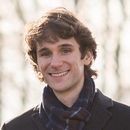
Ramón Soneira Martínez is a Postdoctoral Fellow at the Austrian Archaeological Institute's Department of Classical Studies. He holds a Degree in History from the Complutense University of Madrid (Spain) with a focus on Ancient History, a Master's degree in Religious Studies, and a PhD in Religious Studies from the Max-Weber-Kolleg of the University of Erfurt (Germany) and the University of Graz (Austria). His academic career centers on interdisciplinary approaches to ancient religious phenomena. Education : Bachelor's Degree in History (Ancient History focus), Complutense University of Madrid Master's Degree in Religious Studies Doctor of Philosophy (PhD) in Religious Studies, Max-Weber-Kolleg (University of Erfurt) and University of Graz Research Interests : Ramón specializes in Ancient History of Religion, Theory and Methodology of Religious Studies, Religious Deviance, and Atheism in the ancient Mediterranean. His work explores unbelief narratives, sacred spatial practices, and biopolitical dimensions of religious systems in Greco-Roman contexts. Publication Trends : His recent scholarship (2020–2025) examines atheistic positions in Classical Athens, interdisciplinary frameworks for analyzing ancient religion, biopolitical dimensions of marriage, and ecological interpretations of sacred landscapes. These works frequently engage with Platonic philosophy, pre-Socratic thought, and comparative methodologies across Mediterranean civilizations. Current Research Projects : Doubt and religion in the ancient Mediterranean: A comparative analysis of unbelief narratives Lodging/Living in a Sacred Context: Investigating spatial dynamics of religious environments
Richard Jochelson serves as Dean of Law at the Faculty of Law, University of Manitoba (Robson Hall), a position he has held since July 1, 2016. Previously, he taught criminal law for 10 years at the University of Winnipeg. Dr. Jochelson holds a Ph.D. in Law from Osgoode Hall Law School at York University, an LLM from the University of Toronto Faculty of Law, an LL.B. with Gold Medal from the University of Calgary Faculty of Law, and a B.Sc. in Zoology with Distinction from the same institution. He completed his legal training as a clerk at the Alberta Court of Appeal and Court of Queen's Bench before working at a major Canadian law firm. Dr. Jochelson's research program centers on critical issues in criminal justice and constitutional law, with primary interests in police powers jurisprudence, sexual regulation (particularly obscenity and indecency law), jury systems and representativeness, and legal pedagogy. His interdisciplinary approach bridges law with sociology and psychology, bringing empirical and theoretical rigor to legal scholarship. His work consistently addresses social justice concerns, examining how vulnerable populations interact with the justice system and how concepts like risk, precaution, and visibility shape legal decision-making. He has developed a distinctive methodology combining doctrinal analysis with empirical research on judicial behavior and jury decision-making. His recent publications reveal evolving scholarly priorities that respond to contemporary legal challenges. The 2025 article "Morbid Matters" addresses medical assistance in dying within federal corrections, while his 2024 works on youth terrorism cases and agnotology demonstrate expansion into new interdisciplinary territories. His longstanding commitment to police powers scholarship continues with "Ancillary Police Powers in Canada" (2024). The pandemic period saw significant contributions to understanding digital justice, mental health in legal education, and remote court proceedings. His criminal law scholarship maintains focus on jury representativeness, particularly regarding Indigenous inclusion following Bill C-75's elimination of peremptory challenges. Students' Teacher Recognition Award (CATL) - 2018 Dr. Jochelson has secured multiple SSHRC Insight Grants as both Principal and Co-investigator, demonstrating his ability to lead interdisciplinary research teams. His mentorship extends to junior academics and students, with several publications co-authored with emerging scholars. He has built significant research infrastructure, notably assembling nearly 40 interdisciplinary scholars across Canada for Robsoncrim.com, which has elevated the Criminal Law Edition of the Manitoba Law Journal to prominence as one of Canada's preeminent criminal law publications. As Dean of Law, Dr. Jochelson provides leadership in academic governance and legal education innovation. His service includes extensive committee work on academic affairs, workload policy, and hiring/tenure committees. His commitment to universal design principles informs both his teaching approach and administrative leadership, emphasizing accessibility and student-centered pedagogy that allows flexible evaluation methods tailored to individual learning preferences.
Astrid Wagner is a Senior Scientist and Deputy Director at the Institute of Philosophy (IFS) of the Spanish National Research Council (CSIC) in Madrid. She holds a PhD in Philosophy from Technische Universität Berlin, recognized by the National University of Distance Education (UNED), and previously served as professor for 20 years at TU Berlin. Her research focuses on philosophy of culture, science epistemology, and digital society challenges. Key interests include philosophy of language, perception phenomenology, pragmatism, and ethical implications of digital transformation. Recent work examines uncertainty dynamics, trust frameworks, post-truth phenomena, infodemics, conspiracy theories, cognitive vulnerability, and digital citizenship. Wagner leads major research initiatives including the INconRES project on ethical-epistemological keys to digital social dynamics (2021-2025), the ORTEGA-CM interdisciplinary innovation consortium on José Ortega y Gasset's legacy (2024-2026), and previously directed the RESPONTRUST project combating COVID-19 disinformation (2021-2023). She co-leads the DESTERRA project analyzing disinformation's societal foundations (2022-2025) and participates in UCM's Rationality, Knowledge and Action research group. She serves on Spain's Committee of Experts for National Security against disinformation, advises the Congressional Science Office, and holds editorial positions at the Journal of Ortega Studies. Wagner contributes to GENET Association's Gender Studies Network and juries for the Princess of Asturias Award and Javier Muguerza Philosophy Prize.
John H. Arnold is Professor of Medieval History at the University of Cambridge and Fellow of King's College. Educated at the University of York (BA History, D.Phil Medieval Studies), his academic career includes positions at University of East Anglia and Birkbeck, University of London before joining Cambridge in 2016. He holds editorial roles at Cultural and Social History, Past & Present, and directs publication series at both York Medieval Press and Cambridge University Press. Arnold's research centers on medieval religious culture, particularly lay belief, heresy, inquisition, and the history of gender. His monograph 'The Making of Lay Religion in Southern France' (2024) exemplifies this focus. Current projects investigate the social history of confession and the repression of usury. Analysis of Arnold's 15 most recent publications reveals consistent engagement with medieval religious dissent and belief systems. Key themes include: reinterpretations of heresy trials (2019), sensory dimensions of faith (2018), historiographic debates about Catharism (2016), and methodological examinations of archival sources (2022). His work frequently employs theoretical frameworks from sociology and philosophy to reinterpret medieval religious conflict. Arnold maintains active research networks through editorial leadership and supervision. His Cambridge Studies in Medieval Life and Thought series promotes innovative scholarship in medieval history.
Sarah Banet-Weiser is the Walter H. Annenberg Dean and Lauren Berlant Professor of Communication at the University of Pennsylvania’s Annenberg School for Communication. She also holds a Research Professor position at the University of Southern California’s Annenberg School for Communication and Journalism and directs the Center for Collaborative Communication (C3). Previously, she served as Head of the Department of Media and Communications at the London School of Economics (LSE) and held leadership roles at the University of Southern California, including Vice Dean and Director of the School of Communication. Her interdisciplinary research focuses on gender in media, consumer culture, neoliberal capitalism, branding, and social media. Key publications include Authentic™: The Politics of Ambivalence in a Brand Culture (NYU Press, 2012), Empowered: Popular Feminism and Popular Misogyny (Duke, 2018), and Believability: Sexual Violence, Media, and the Politics of Doubt (2024). She has edited flagship journals like American Quarterly and co-edits Communication, Culture, Critique . Education: B.A., M.A., and Ph.D. in Communication from the University of California, San Diego (1989–1995). Editorial Roles: Former editor of American Quarterly ; founding co-editor of NYU Press’ Critical Cultural Communication Studies series. Her awards include the ICA Outstanding Book Award, Mellon Mentoring Award, and Distinguished Faculty Fellow at USC. She has held fellowships at the Fondation Maison des sciences de l'homme (Paris), Microsoft Research New England, and McGill University. Teaching and courses cover gender, media economies, popular culture, and crisis communication. Her work bridges activism and academia, examining media’s role in global cultural politics.
Sophie Horowitz is an Associate Professor of Philosophy at the University of Massachusetts Amherst, where she has been a core faculty member since 2016. She currently chairs the Climate Committee and maintains active teaching responsibilities, including regular instruction in Medical Ethics. Prior to UMass, she served as an Assistant Professor at Rice University from 2014 to 2016, following her PhD completion at MIT. Her educational background includes: BA in Philosophy and Studio Art from Swarthmore College (2008) PhD from MIT (2014), with a dissertation examining the relationship between epistemic rationality and truth Horowitz's research centers on epistemology, specifically dissecting the interplay between rationality and truth through formal frameworks. She investigates higher-order evidence, permissivism (the Uniqueness Thesis), accuracy norms, and partial belief structures, while also exploring ethical dimensions of belief formation and practical rationality. Her work bridges traditional epistemological questions with mathematical precision, often utilizing epistemic utility theory to analyze truth-conducive belief practices. She has contributed influential perspectives on when evidence demands belief changes and how rational agents should handle conflicting epistemic inputs. Her publication trends reveal deep engagement with epistemic normativity across three distinct phases: early work on epistemic akrasia and rationality (2013-2015), mid-career focus on evidence aggregation and transformative experience (2015-2019), and recent contributions to permissivism debates and credal dynamics (2021-2025). Articles consistently target top philosophy journals while addressing foundational questions about truth, evidence, and rational constraints. Scientific recognition includes: 2015 Marc Sanders Prize in Epistemology for "Accuracy and Educated Guesses" Horowitz demonstrates significant teaching activity across institutions, with Medical Ethics being a recurring course at UMass. She actively shares pedagogical tools like annotated student papers and grading rubrics, indicating commitment to educational innovation. The texts confirm no formal advisees or grant projects are documented, though she co-teaches seminars and has developed specialized courses on higher-order evidence. Her academic service extends to editorial contributions, notably for the Stanford Encyclopedia of Philosophy entry on higher-order evidence. Outside academia, she maintains a documented practice as an oil painter focused on food subjects, reflecting her dual background in philosophy and studio art.
Dr. Jason Ney is an Associate Professor of English and the Director of the Writing Center at Colorado Christian University, where he has been a faculty member since 2013. He is affiliated with the College of Undergraduate Studies and the School of Humanities and Social Sciences, teaching courses in American Literature, Creative Writing, and Literary Criticism and Theory. Ph.D., English - Literary Studies, University of Denver M.A., English and Comparative Literature, University of Cincinnati B.A., English, Cedarville University Dr. Ney's research spans creative nonfiction and film criticism, with a strong focus on ethical issues in narrative truth and memory. He is a noted scholar of film noir and cinematic adaptations of American literature, particularly works like The Great Gatsby and The Scarlet Letter . His academic interests include semiotics, literary theory, and the intersection of faith and storytelling. His recent publications reflect a deep engagement with noir cinema, mid-century Hollywood, and the psychological dimensions of identity in film. He has contributed audio commentaries and critical essays to numerous Blu-ray and DVD releases, and his creative nonfiction has appeared in respected anthologies and journals. His work often explores moral ambiguity, personal transformation, and cultural memory. Dr. Ney is actively involved in academic and public scholarship, presenting at conferences and co-running CCU’s annual film series. He mentors students in creative writing, many of whom have achieved publication. While no formal scientific awards are listed, his sustained contributions to film and literary criticism demonstrate significant scholarly impact. He also contributes to the Augustine Honors Program and has delivered presentations on writing center pedagogy and graduate education. His leadership in the Writing Center reflects a commitment to student development across disciplines.
David Christensen is a Professor of Philosophy and Director of Undergraduate Studies at Brown University. He holds a B.A. from Hampshire College and a Ph.D. from UCLA. Prior to Brown, he taught at the University of Vermont for 20 years. His research focuses on epistemology, formal and informal, with emphasis on rational belief constraints, evidential support, and epistemic disagreement. Current work explores how rational self-doubt should shape ideal rationality frameworks. Christensen’s notable contributions include Putting Logic in its Place (2004) and co-editing The Epistemology of Disagreement: New Essays (2013). His scholarship bridges formal methods with practical questions about belief revision and peer disagreement. Research interests include: logical constraints on belief, higher-order evidence, epistemic akrasia, and the implications of peer disagreement. He examines how self-aware agents navigate cognitive biases and conflicting evidence while maintaining rational integrity. Recent work emphasizes self-critique mechanisms and the ineliminable role of epistemic rationality. Publications span over 30 years, addressing topics like evidential symmetry, Bayesian epistemology, and the limits of rational reflection. His articles consistently explore foundational questions in epistemology using both formal and conceptual analysis. Christensen’s work is characterized by rigorous argumentation and interdisciplinary engagement with philosophy of science and decision theory. Teaching responsibilities include directing undergraduate studies and courses on epistemology, logic, and philosophy of science. No formal awards are listed, though his academic contributions are widely cited in epistemology literature. Labs/Teams: No specific research groups are mentioned, though his work contributes broadly to collective epistemology and formal methods in philosophy.
Patricia Spyer is a Professor of Anthropology & Sociology at The Graduate Institute Geneva since 2016. She holds affiliate positions at the Albert Hirschman Centre on Democracy. Her expertise spans cultural anthropology of Indonesia, visual media studies, and material culture. She has held prestigious roles including Chair of Cultural Anthropology at Leiden University (2001–2015) and Global Distinguished Professor at NYU (2009–2012). Her research focuses on violence, visuality, religion, and urban-rural dynamics in Southeast Asia. Education: PhD in Anthropology from the University of Chicago. Earlier positions included Visiting Fellowships at ANU (2014), NYU Shanghai (2017), and Cambridge University (2020). Research interests include: Visual anthropology and media representations Conflict dynamics and post-war societies Religion-politics intersections Urban and rural sociocultural landscapes Her publications include Orphaned Landscapes: Violence, Visuality, and Appearance in Indonesia (2021), The Memory of Trade (2000), and co-edited volumes like Images That Move (2013) and Handbook of Material Culture (2013). Editorial roles: Vice-chair of the Prince Claus Fund, member of Wenner-Gren Foundation Advisory Council, and editorial boards for Annual Review of Anthropology and Positions: Asia Critique . Her work bridges academic research with public engagement through museum collaborations and policy advisory roles.
Dr. Isabella Kasselstrand is a Senior Lecturer in the Department of Sociology at the University of Aberdeen, part of the School of Social Science. She holds a PhD in Sociology from the University of Edinburgh (2014) and has prior faculty roles at California State University, Bakersfield (Associate Professor) and Pitzer College (Visiting Position). Her research focuses on secularization, secularity, and nonreligious identities, employing quantitative and mixed-methods approaches with a regional emphasis on Northern Europe, particularly Scandinavia and Scotland. Key research areas include religious indifference, immigration impacts on religiosity, social trust dynamics, and cultural religion practices. She co-authored the book Beyond Doubt: The Secularization of Society (2023) and serves as Co-Editor of Secularism & Nonreligion , and on editorial boards of Sociology of Religion and Journal for the Scientific Study of Religion . She also holds the role of Publications Officer for the British Sociological Association's Sociology of Religion Study Group. Teaching expertise includes research methods, social inequality, and introductory sociology courses at both undergraduate and postgraduate levels. Her recent publications analyze trends in secular spirituality, public perceptions of women's empowerment, and comparative secularization patterns. She actively supervises PhD students focusing on quantitative methods and secularization themes.
Joris Spigt is a Researcher at the University of Leipzig's Humanities Centre , affiliated with the Philosophy with a focus on the history of philosophy department. He combines systematic philosophy with history of philosophy , specializing in Hegel, skepticism, ancient philosophy, Kierkegaard, and phenomenology (Husserl, Heidegger, Patočka). Education: University of Amsterdam (BA), KU Leuven (MA, MPhil, PhD 2019/2020) Research: Explores skepticism as a structural element in Hegel's philosophy and self-knowledge as ethical knowledge Teaching: Seminars on Hegel's Phenomenology of Spirit , ancient ethics, forms of skepticism, and phenomenological traditions Publications: Focus on Hegel's dialectics, Kantian subjectivism, and European philosophical currents His work intersects German Idealism and phenomenology , with methodological emphasis on historical-philosophical analysis. Office hours: Monday 1:00 PM – 2:00 PM (pre-registration required).
Eleonora Cappuccilli is a Researcher at the Department of Philosophy, History of Ideas and Art, and Classical Languages at the University of Oslo . Her academic interests focus on English political thought in the early modern period, particularly women's political discourse based on the public sphere , constitutional history , prophecy as a concept , and early modern European political theology . She also explores current feminist theory . Education: PhD in Politics, Institutions and History (2016) from the University of Bologna, MA in International Relations (2012), and BA in International Studies (2009). Experience: Post-doctoral fellow at I Tatti (2022-2023), University of Oslo (2018-2021), Edith Saurer Foundation (2018), and Filippo Burzio Foundation (2018). Her research examines prophetic women in early modern Europe, analyzing their roles in religious reform and political theology . She investigates gender and authority through case studies like Mary Ward, Domenica da Paradiso, and Caterina da Racconigi. Her recent works explore cross-confessional practices , spiritual discipline , and transnational prophetic networks . Her publications span topics from 16th-century prophetic encounters to 17th-century gender conflicts , with a focus on Italian and English Renaissance contexts . She collaborates with scholars like Roberta Ferrari on intersections of feminist theory and Marxist critique , particularly concerning patriarchal structures and social movements . Projects include “Women's prophecy in early modern European religion” , analyzing the subversive expressions of female prophets. Her work appears in journals like Renaissance Studies and edited volumes from Amsterdam University Press and Brill .
Benjamin Mangrum is Associate Professor of Literature at MIT's School of Humanities, Arts, and Social Sciences, specializing in 20th/21st-century literature, digital humanities, and environmental humanities. His scholarship examines literature's engagement with technology, environmental crisis, and political liberalism. Dr. Mangrum's research analyzes computational obsolescence, environmental rights discourse, and the intersections of literary form with political thought. His publications demonstrate interdisciplinary approaches combining literary criticism with philosophy, digital studies, and environmental theory. Recent publications show growing engagement with energy humanities, data visualization ecologies, and artificial intelligence's cultural implications. His work consistently examines how literary forms mediate technological change and environmental consciousness. Awards: Levitan Prize (2023) Fellowships: Michigan Society of Fellows Professor Mangrum teaches courses on comedy, science fiction, environmental literature, and AI at both undergraduate and graduate levels.
Kenneth Yu is an Assistant Professor in the Department of Classics at the University of Toronto, with additional affiliation to the Department for the Study of Religion. His research intersects Imperial Greek literature, ancient religious frameworks, and classical scholarship methodologies. University of Toronto (St. George Campus) Department of Classics & Department for the Study of Religion Academic rank: Assistant Professor Yu's scholarly focus spans three key areas: Analysis of Greek religious epistemology and its disciplinary history Commentary practices in antiquity across philosophical and literary texts Evolution of aetiological reasoning from Homeric hymns to Imperial ethnography His recent publications and projects include: Problems in Greek Religion: Constructing the Gods between Thauma and Philology (monograph) Co-edited volume The Oxford Handbook of Global Commentary (2020-25 SSHRC-funded) Titles in Ancient Greek Literature: Forms, Practices, and Theories (2022-25 SSHRC-funded) Yu has held distinguished fellowships at: Collège de France Hardt Foundation (Switzerland) Institute of Classical Studies (University of Leuven) Center for Hellenic Studies (2022-23) His academic credentials include: AB & PhD in Classics, University of Chicago
Gerd Althoff is a distinguished Professor of Medieval History at the University of Münster, where he has served as Director of the Institute for Early Medieval Studies since 1997. He is actively involved in the Cluster of Excellence "Religion and Politics in Pre-Modern Cultures," leading research projects on religious categories of historical interpretation and the role of the Church in political decision-making. Previously, he held professorships at the universities of Bonn (1995) and Gießen (1990), establishing himself as a leading authority in medieval studies across German academia. Althoff's academic journey began with his Abitur at Amtsgymnasium Ibbenbüren in 1963, followed by studies in History and German Studies at the universities of Münster and Heidelberg (1965-1970). He earned his PhD from the University of Münster in 1974, served as an Assistant Lecturer at the University of Freiburg/Breisgau (1974-1980), and completed his postdoctoral lecture qualification (Habilitation) at the same institution in 1981. His academic career spans over five decades, marked by significant contributions to medieval historiography. Professor Althoff's research focuses on the intricate dynamics of medieval power structures, particularly examining how rituals, symbolic communication, and conflict resolution shaped political authority in the Middle Ages. His work explores the interplay between religious and secular power, with special attention to the Ottonian and Salian periods of German history. He investigates how medieval societies conceptualized divine justice, royal authority, and the mechanisms of trust-building that maintained social cohesion. His approach combines meticulous archival research with theoretical frameworks from sociology and communication studies, offering fresh perspectives on medieval political culture. Althoff's extensive publication record reveals a consistent focus on how power was negotiated, displayed, and maintained through ritualized practices in medieval Europe. His recent works demonstrate growing interest in the religious dimensions of historical interpretation, particularly how medieval thinkers understood divine intervention in worldly affairs. The recurring themes across his scholarship include the fluid boundaries between church and state, the performative aspects of political authority, and the evolving structures of medieval governance. His comparative approach, examining both German and broader European contexts, has significantly advanced our understanding of medieval political culture. Research Prize of the University of Münster (2005) Throughout his career, Professor Althoff has supervised numerous doctoral students whose work reflects his diverse research interests, from political rituals to religious authority in medieval Europe. His leadership extends to major collaborative research initiatives, including serving as Spokesperson for the Cluster of Excellence "Religion and Politics in Pre-Modern Cultures" (2007-2011) and as co-initiator and speaker of Collaborative Research Centre 496 "Symbolic Communication and Social Value Systems from the Middle Ages to the French Revolution" (1997-2003). His international recognition is evidenced by invitations as Visiting Professor at prestigious institutions including the École des Hautes Études en Sciences Sociales in Paris (1998) and the University of California, Berkeley (1995). As Director of the Institute for Early Medieval Studies at the University of Münster, Althoff has fostered a vibrant research environment focused on interdisciplinary approaches to medieval studies. His institute has been instrumental in advancing the field through graduate programs including "Written Culture and Society in the Middle Ages" and "Social Symbolism in the Middle Ages." The collaborative research culture he has cultivated continues to produce significant scholarship on medieval political, religious, and social structures.