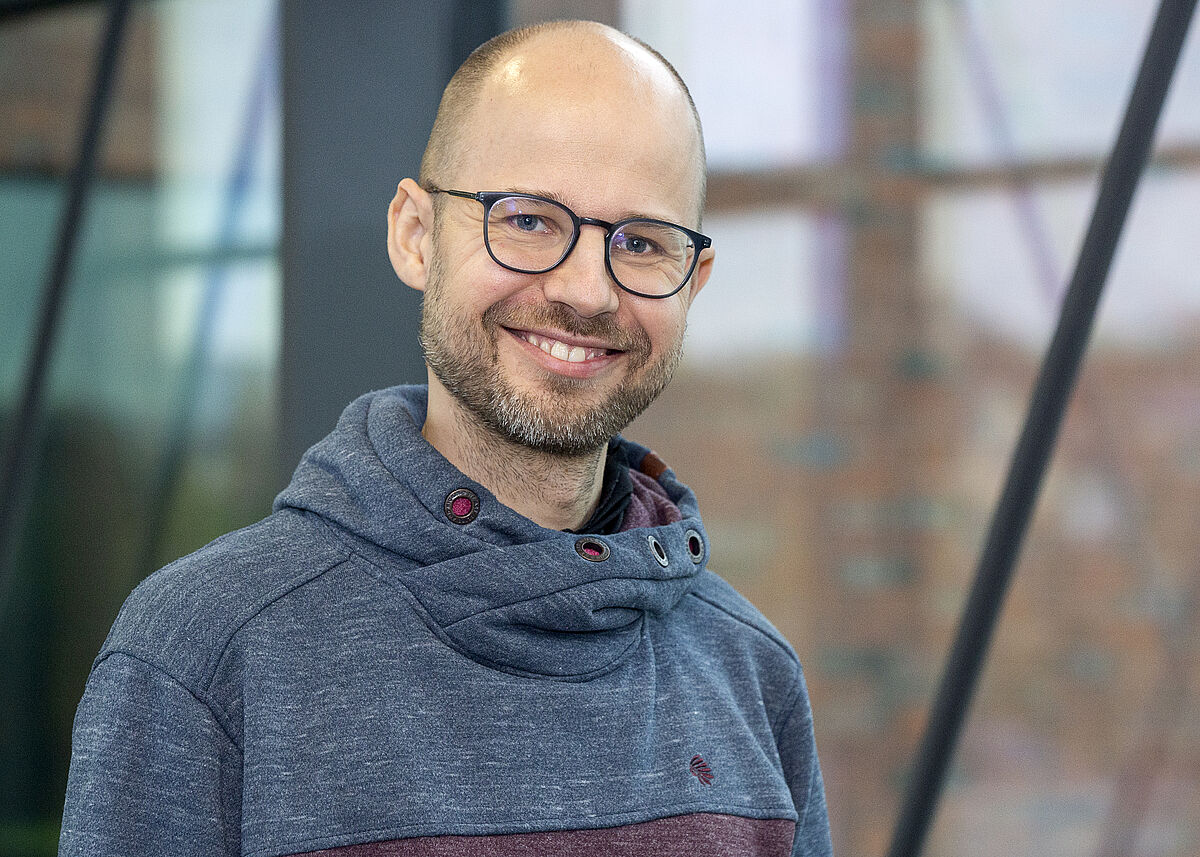
Ignacio David Lopez Miguel is a PreDoc Researcher at the Cyber-Physical Systems department of Vienna University of Technology (TU Wien). His research focuses on formal verification techniques for safety-critical systems, particularly in the context of Programmable Logic Controllers (PLCs) used in industrial and high-stakes environments like CERN's Large Hadron Collider (LHC) cooling systems. Current projects include TAIGER (2023–2027), addressing neural network verification for PLC code. Collaborates with institutions such as CERN, GSI, and NASA on safety-critical control systems. Research Themes : Integration of formal verification with AI/ML components Runtime enforcement in cyber-physical systems Ethical considerations in engineering design Automated translation of natural language requirements to formal specifications His work spans interdisciplinary domains, connecting computer science, control theory, and engineering ethics through rigorous verification methodologies.
Bernd Fröhlich is affiliated with the Virtual Reality and Visualization Research Group at Bauhaus-Universität Weimar, Germany. His work focuses on advancing virtual reality (VR), visualization techniques, and human-computer interaction. He leads research in multi-user VR scenarios, immersive telepresence, and collaborative systems. Key areas include group navigation strategies, spatial audio integration, and embodied conversational agents in virtual environments. Education details are not explicitly mentioned in the provided text. His research interests span VR system design, gesture-based interaction, and perception studies within immersive environments. He has collaborated extensively with institutions like Toshiba Research Europe and contributed to projects involving virtual museums, social VR interfaces, and real-time rendering techniques. Fröhlich’s publications emphasize empirical studies on user behavior in VR, such as perception of asynchrony in rhythmic stimuli and detection thresholds of gaze awareness. He has also explored technical challenges like volumetric calibration, ray casting optimization, and multi-resolution volume rendering. His work frequently addresses practical applications in collaborative learning, cultural heritage digitization, and industrial design validation. While no scientific awards or grants are listed here, his prolific publication record (164+ entries) reflects sustained contributions to the field. His research teams often investigate cutting-edge topics like binaural audio effects, immersive analytics tools, and gesture-driven interaction paradigms for large datasets.
Dr. Estrid He is a Senior Lecturer at RMIT University's School of Computing Technologies. She obtained her PhD from the University of Melbourne in 2020, where she subsequently served as a postdoctoral research fellow. Her research bridges natural language processing, data mining, and deep learning optimization, with applications spanning healthcare, communications, and algorithmic fairness. Research Focus: Core NLP techniques for knowledge extraction from complex texts (patents, medical records) Enhancing security/efficiency of deep learning models in resource-constrained environments Multimodal learning integrating text, sensor data, and biomedical signals Fairness-aware AI systems for computer vision and graph neural networks Her publication portfolio demonstrates strong cross-disciplinary collaboration, with recent work in: Wireless communications (terahertz signal processing, 6G hardware) Biomedical applications (brain disorder prediction, clinical NLP) Generative models for sensor data and multimodal content Algorithmic fairness in computer vision and graph networks She actively supervises graduate research, with current projects including: Graph learning for brain disorder prediction Multimodal health data mining Privacy-preserving AI for urban sensing Integration of spiking neural networks with LLMs
Dr. Alvaro Miyazawa is a Lecturer in the Department of Computer Science at the University of York. He holds a PhD in Computer Science from the University of York (2012) and an MSc from the University of São Paulo, Brazil (2008). His research focuses on formal methods for robotics, including robotics modelling, verification, and tool development. He has held roles such as Deputy Chair of BOE (Paper Checking for On-Campus) and has contributed to projects like RoboTest, RoboCalc, and hiJaC. His work emphasizes diagrammatic notations (e.g., RoboChart), hybrid languages, and formal verification techniques for robotic systems. Miyazawa has developed tools like RoboTool and RoboSim, integrating formal methods with practical robotic applications. He has extensive experience in safety-critical systems, including work on Safety-Critical Java (SCJ-Circus) and probabilistic modelling with PRISM. Research interests span robotics semantics, domain-specific languages, state-based notations (Z, B, VDM), and process algebras. His publications address model-based engineering, architectural design, and verification frameworks for robotics. Miyazawa’s career includes roles as a Research Associate across multiple projects, culminating in his current academic position.
Danny Bøgsted Poulsen is an Associate Professor at the Department of Computer Science, Aalborg University, affiliated with The Technical Faculty of IT and Design. His research focuses on formal methods, model checking, and cyber-physical systems with applications in security analysis and programming languages. He contributes to projects like BEO-COVID (2020–2020) and IDEA4CPS (2011–2015), which explore decision support tools and foundational cyber-physical systems. His academic background includes advanced work in formal verification and statistical model checking. Key research interests include: Formal methods for string constraints and SMT solvers Statistical analysis of security-critical systems Modelling protocols like DTLS and attack-defense scenarios Applications of formal methods in education and public health Recent work highlights include developing SMTQuery for benchmark analysis, statistical evaluation of bit-flip vulnerabilities, and leveraging large language models for educational feedback. His research outputs span over 36 publications across journals and conferences, with active contributions to UPPAAL tool development and open datasets for reproducibility. Poulsen collaborates internationally on projects involving formal verification of embedded systems and cybersecurity protocols. His work bridges theoretical computer science with practical applications in safety-critical systems.
Dr. Tobias Strauß is a Lecturer at the Institute of Mathematics, Faculty of Mathematics and Natural Sciences, University of Rostock. He teaches courses such as Elementary Algebra and Number Theory and Analytical Geometry, focusing on foundational mathematical concepts and their applications. His research interests span historical document analysis, machine learning, and neural networks, with a particular emphasis on handwritten text recognition (HTR) and computational solutions for cultural heritage digitization. He actively contributes to the Mathematics Society RHO eV, supporting students in mathematics competitions and enrichment programs. Dr. Strauß’s research combines computer vision and machine learning to address challenges in document analysis, including text line detection, cursive script recognition, and keyword search in historical manuscripts. His work also explores semi-supervised learning techniques and neural network architectures tailored for HTR tasks. Through RHO eV, he promotes mathematics education through weekend seminars, district clubs, and game-based learning activities, fostering student engagement and problem-solving skills. His publications highlight advancements in HTR systems, such as the CITlab Recognition & Retrieval Engine, and address topics like regular expression-based decoding and Arabic handwriting recognition. These contributions underscore his expertise in bridging theoretical mathematics with practical applications in digital humanities and education. Dr. Strauß can be contacted via tobias.strauss@uni-rostock.de or through the university’s chat platform. No formal awards or grants are noted in the provided materials, though his involvement in international competitions (e.g., ICFHR, ICDAR) reflects his scholarly engagement.
Dr Thiru Balasubramaniam is a Research Fellow at Queensland University of Technology (QUT), working within the Faculty of Science, School of Computer Science. His expertise lies at the intersection of data science, machine learning, and real-world applications, with a specific focus on tensor factorization methods for managing multifaceted data from IoT and Web 3.0 applications. His educational background includes a PhD from Queensland University of Technology and a Bachelor of Engineering from Anna University. Prior to his doctoral studies, he worked as a Research Assistant at the Singapore University of Technology and Design - Massachusetts Institute of Technology (SUTD-MIT) International Design Centre, where he analyzed mobility data to personalize city environments for elderly citizens in Singapore. Dr Balasubramaniam's research interests span multiple areas of data science: Tensor and Matrix Factorization methods Pattern Mining and Text Mining applications Recommender Systems development IoT data processing Web 3.0 applications Real-time analytics for multifaceted data His publication record demonstrates consistent contributions to high-impact venues including IEEE TKDE, ACM TKDD, WWW, WISE, AusDM, and PRICAI. The trend in his recent work shows increasing application of tensor factorization techniques to diverse real-world problems including environmental monitoring, pandemic modeling, social media analysis, and smart grid technology. His research often involves interdisciplinary collaborations, particularly with Professor Richi Nayak at QUT. Scientific recognition includes: QUT-CDS first byte research funding worth 30,000 AUD Dr Balasubramaniam has been actively involved in teaching data analytics subjects at QUT since 2017, including Data Exploration and Mining, Data and Web Analytics, Data Mining Technology and Applications, and Web Computing. His teaching spans both undergraduate and postgraduate levels. His research has been supported through various collaborative grants and institutional funding mechanisms at QUT.
Maria Papadopoulou serves as an Associated Researcher at the LISTIC laboratory of University Savoie Mont Blanc, France, specializing in the intersection of philological traditions and computational methods. Her work bridges Classics, Linguistics, and Digital Humanities through innovative applications of Semantic Web technologies for cultural heritage documentation. Her research focuses on ontology and terminology development for material culture studies, particularly ancient Greek dress and Chinese ceramics. She pioneers humanist-centered approaches to knowledge representation, creating tools like Tedi for multilingual terminology ontologization. Her methodology emphasizes accessibility for non-technical scholars while maintaining computational rigor in semantic modeling. Analysis of her publication trends reveals consistent innovation in domain-specific ontologies, with increasing emphasis on cross-cultural applications (Greek/Chinese) and pedagogical frameworks for digital humanities. Her work demonstrates how formal ontologies can resolve ambiguities in historical terminology while preserving cultural context. Scientific recognition includes: Best paper award at SEMAPRO 2018 for advancing multilingual terminology platforms Papadopoulou actively mentors through post-graduate instruction across international institutions including University Savoie Mont Blanc, Liaocheng University, and Nanjing University NUAA. Her teaching materials integrate AI applications with classical philology, reflecting her commitment to training next-generation digital humanists. She operates within the LISTIC laboratory's interdisciplinary framework, collaborating with computer scientists and domain experts to develop the TAO CI project for cultural heritage terminology. Her current work focuses on scaling ontology-based dictionaries for global humanities research while addressing challenges of semantic interoperability across linguistic traditions.
Dr. Ignatius Ezeani is a Research Fellow in the Department of Computing and Communications at Lancaster University, specializing in Low-Resource Natural Language Processing (LowResNLP). His work focuses on developing tools and methods for under-resourced languages, particularly African languages such as Igbo, and minority languages like Welsh. He leads projects such as the Igbo-English Machine Translation initiative and the Welsh Summary Creator, advancing computational linguistics in these domains. His research interests include machine translation, part-of-speech tagging, named entity recognition, and corpus-based approaches to language processing. He is affiliated with the University Centre for Computer Corpus Research on Language (UCREL), contributing to data science and linguistic resource development. Ezeani supervises PhD student Chiamaka Chukwuneke and collaborates on initiatives like the National Corpus of Contemporary Welsh (CorCenCC). His projects emphasize participatory research, ensuring technologies address real-world linguistic needs in underrepresented communities. Key contributions include the IgboAPI Dataset, IgboBERT models, and frameworks for spatial narrative analysis. Ezeani’s work bridges computational linguistics with societal impact, fostering multilingualism through technology.
Sergio Moreschini is a Postdoctoral Researcher in Computing Sciences, focusing on Artificial Intelligence, Edge Computing, and MLOps. His research explores the integration of AI techniques in microservices, cloud-edge continuum systems, and distributed home automation frameworks. He has contributed to foundational studies such as a Systematic Mapping Study on AI in Microservices Life-Cycle and developed frameworks like Flexconnect for mobile computational offloading. Education: He holds a Bachelor of Science in Technology (2012) and a Higher-Degree in Computing from Università Degli Studi Roma Tre (2016). His work aligns with UN Sustainable Development Goal 4 (Quality Education) through contributions to educational tools and methodologies. Research Interests : Moreschini investigates AI lifecycle management, edge-cloud system orchestration, vulnerability analysis in open-source components, and generative AI applications in software architecture. Key areas include fault-tolerant distributed systems, cognitive cloud continuum frameworks, and MLOps tool ecosystems. Recent Trends in Publications : Recent work emphasizes MLOps adoption challenges, self-organizing edge computing for visual SLAM, and best practices in resource provisioning for cognitive systems. He has explored trade-offs between continuous training and transfer learning in edge environments, and evaluated vulnerability severity metrics in open-source software. Awards : Won the Best Paper Award in 2022 for contributions to industrial edge service scheduling. Data Contributions : Co-created datasets like RARE (cloud-native memory anomalies) and CIVIT (integral microscopy recordings). His collaborative projects include the 6GSoft initiative for edge-cloud continuum systems and the OSSARA tool for open-source component risk assessment. Active in international conferences like IoT and SEAA, he bridges academic research with industrial applications in edge computing and AI infrastructure.
Professor Vincent DeLuca holds a faculty position at UiT The Arctic University of Norway , specifically in the Department of Language and Culture within the Faculty of Humanities, Social Sciences and Education . He serves as Leader of the C-LaBL Brain Domain , leading interdisciplinary research initiatives. His academic rank is Professor of English Language . His research focuses on understanding how bilingual and multilingual experiences shape brain structure, function, and cognitive processes across the lifespan. Key areas include: Neuroplasticity mechanisms underlying language acquisition and control Effects of multilingualism on aging-related cognitive decline Individual differences in bilingual experience and their neural correlates He is affiliated with the C-LaBL and AcqVA Aurora research groups, and leads projects such as the MIND-MAP Project exploring multilingualism and cognitive aging. His work integrates neuroimaging, behavioral studies, and computational models. Key contributions include redefining bilingualism as a spectrum of experiences influencing brain adaptations, and demonstrating how multilingual engagement modulates resting-state neural activity. Recently, his team has investigated third language (L3) development using artificial grammar paradigms and EEG. He collaborates globally with institutions like the University of Reading (Christos Pliatsikas) and the University of Trento (Jubin Abutalebi). His research has been published in journals like NeuroImage , Cerebral Cortex , and PNAS .
Antonio Carzaniga is a Full Professor and founding member of the Faculty of Informatics at Università della Svizzera italiana (USI), where he has been active since 2004. Previously, he served as an Assistant Research Professor at the University of Colorado at Boulder from 2001 to 2007. He holds a Ph.D. in Computer Science and a Bachelor’s degree in Electronic Engineering from Politecnico di Milano. Full Professor, Faculty of Informatics, Università della Svizzera italiana (2004–Present) Assistant Research Professor, Department of Computer Science, University of Colorado at Boulder (2001–2007) Ph.D. in Computer Science, Politecnico di Milano Bachelor’s in Electronic Engineering, Politecnico di Milano His research spans distributed systems and software engineering, with a strong focus on content-based addressing networks, publish/subscribe systems, middleware, software fault tolerance, and verification. He has pioneered work in information-centric networking and developed the Siena project, a scalable publish/subscribe service. His recent work extends into programmable networks, GPU-accelerated matching, and performance annotations for cloud systems. The 15 most recent publications highlight a consistent trajectory in scalable, high-performance networking and adaptive software systems. Key themes include content-based communication, packet subscriptions, information-centric networking, and leveraging redundancy for fault tolerance and testing. His work bridges theoretical foundations with practical implementations, often involving system-level software and performance evaluation. Best Paper Award, ACM SIGCOMM Workshop on Information-Centric Networking (ICN'13) Carzaniga has advised multiple graduate students, including Michele Papalini, Koorosh Khazaei, and Daniele Rogora, and has collaborated on funded research projects in distributed systems and networking. He has contributed to software development through projects like the Siena Fast Forwarding engine and the Synthetic Workload Generator. His service includes organizing workshops and contributing to major conferences in software engineering and computer systems. He leads research initiatives such as Siena and Content-Based Networking, focusing on scalable, decentralized communication infrastructures. His lab has developed key tools for evaluating publish/subscribe performance and implementing high-speed forwarding algorithms.
Prof. Gabriel Juhás is a leading academic at the Institute of Applied Informatics within the Faculty of Informatics at Paneuropean University PEVŠ. With a career spanning over three decades, his expertise bridges formal methods in computer science, particularly Petri net theory, with practical applications in low-code development platforms like Netgrif. Comenius University (BS, Mathematics and Physics, 1993) Slovak University of Technology (PhD, Electrical Engineering and Informatics, 1999) University of Eichstätt-Ingolstadt (Habilitation, Informatics, 2005) His research focuses on modeling event-driven systems using Petri nets, advancing algebraic descriptions of event concurrency, and developing polynomial algorithms for scenario feasibility. He co-created the Petriflow low-code language, enabling process-driven application development deployed in leasing, insurance, healthcare, and energy sectors. Key trends in his publications include formal verification of concurrent systems, token flow analysis in Petri nets, and the evolution of low-code platforms for business process management. His work emphasizes translating theoretical models into practical solutions through startups like NETGRIF. He has supervised over 100 theses, including three doctoral dissertations, and led 15+ research projects. His industry collaborations with AUDI AG and IBM demonstrate his commitment to bridging academia and practice.
Jingmei Hu is an Applied Scientist at Amazon since 2022, with a Ph.D. in Computer Science from Harvard University (2022) under Prof. Margo Seltzer and Prof. Stephen Chong. Her research spans program synthesis and verification for systems, focusing on low-level OS development, human-computer interaction, and parallel computing. Ph.D. in Computer Science, Harvard University, 2022 M.S. in Computer Science, Harvard University, 2018 B.S. in Computer Science, Shanghai Jiao Tong University, 2016 Her work combines program synthesis with human-computer interaction and parallelism to improve usability and scalability, particularly for assembly-level code generation. She has also explored provenance tracking to enhance data scientist workflows and developed secure authentication methods for mobile devices. Her recent publications address assembly synthesis efficiency, OS porting, and provenance-driven debugging tools. Key themes include formal methods, domain-specific languages, and automated reasoning. ACM-W Scholarship (2020) National Scholarship (China), Top 1% at SJTU (2013) She has served on review committees for conferences like OOPSLA, PLDI, and POPL, and her technical expertise includes Python, OCaml, C/C++, and AWS cloud services.
Kimberly Garcia is a researcher at the University of St. Gallen, focusing on mixed reality systems, contextual understanding, and explainable AI frameworks. Her work bridges human-computer interaction with industrial applications through projects like FoodCoach (automated diet counseling), GEAR (gaze-enabled AR feedback), and BLEARVIS (object identification in ubiquitous environments). Research Focus: Context-aware mixed reality interfaces Knowledge graph construction for environmental and health domains Explainable AI for cyber-physical systems Temporal scene understanding with contextual identifiers Recent Publications Highlight: Cross-domain applications of machine learning in AR systems, sensor fusion for object identification, and semantic tools for greenhouse gas accounting. All publications demonstrate interdisciplinary collaboration with computer scientists and domain experts. Key Collaborations: Regular co-authorship with Simon Mayer and Jannis Rene Strecker on human-AI interaction frameworks and sensor-based systems.