- Image Processing
- Pattern Recognition
- Multi-media
- +۳ مورد دیگر
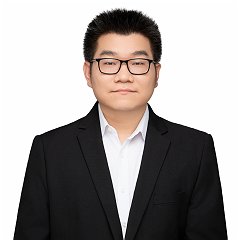
Seiichiro Kamata is a Professor at Waseda University's Faculty of Science and Engineering, specifically within the Graduate School of Information, Production, and Systems. He holds a Doctor of Engineering degree from Kyushu Institute of Technology and maintains an active research laboratory focused on advanced image processing techniques. His professional affiliations include the Institute of Electrical and Electronics Engineers, Institute of Image Information and Television Engineers, Information Processing Society in Japan, and Institute of Electronics, Information and Communication Engineers. Professor Kamata's research spans image processing, pattern recognition, multi-media systems, and signal processing with particular emphasis on deep learning applications. His work bridges theoretical advancements with practical implementations across medical imaging, hyperspectral analysis, and real-time computer vision systems. Recent publications demonstrate his leadership in developing novel neural network architectures for medical diagnostics, video enhancement, and document analysis. His publication record shows consistent high-impact contributions, particularly in medical image analysis (including Alzheimer's disease classification, ADHD diagnosis, and skin lesion detection) and computer vision techniques (including real-time semantic segmentation, visual tracking, and hyperspectral image classification). The research demonstrates a clear trajectory from foundational image processing algorithms toward sophisticated deep learning frameworks. Best Paper Award at ICIPRoB2020 (2020) - Constant-Time Gaussian Filtering Best Paper Award at ICSIPA2019 (2019) - Edge-guided Hierarchically Nested Network Best Paper Award at ICIEV2018 (2018) - Deep Neural Networks with Mixture of Experts Best Paper Award at Image Media Processing Symposium (2017) Best Paper Award at ICARCV2010 (2010) - Fast Polar Harmonic Transforms Professor Kamata's research group maintains a strong publication record with 266 papers and 1,622 citations (h-index: 21) as of September 2025. His work demonstrates consistent innovation in both theoretical foundations of image processing and practical applications across medical diagnostics, robotics, and cultural heritage preservation. The laboratory continues to produce cutting-edge research with recent focus on transformer architectures, multi-modal fusion techniques, and medical AI applications.