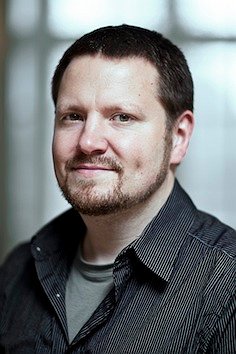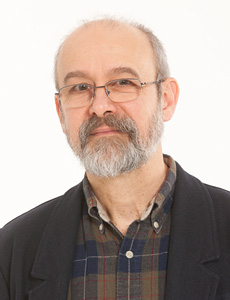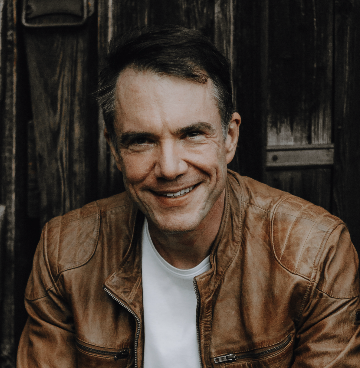
Klaus Ostermann is a Professor of Programming Languages and Software Technology at the Department of Computer Science, Faculty of Science, University of Tübingen, Germany. He leads a research group focused on programming language design, functional programming, and software modularity. Research Interests: His work spans functional programming, type systems, effect handlers, software architecture, and domain-specific languages. He investigates the duality between data and codata, the safe integration of effects in typed languages, and the modularity of software systems. His research often bridges theoretical foundations with practical implementations in languages like Scala and Haskell. The recent publications highlight a strong trend in effect systems, continuation-passing, and the symmetry between data and codata. His group develops the Effekt language and explores advanced compilation techniques for effect handlers, contributing to both theoretical understanding and practical language design. Scientific Awards: Most Influential Paper Award at GPCE 2018 for 'Polymorphic Embedding of DSLs' (2008 paper) He actively supervises PhD and master’s students, including Philipp Schuster, Marius Müller, and Jonathan Brachthäuser. His group has received funding for research in programming language foundations, effect systems, and software modularity, though specific grants are not listed. He serves on the program committees of top conferences such as POPL, ICFP, PLDI, and OOPSLA, reflecting his active role in the programming languages community. The research is conducted within the Uroboro project, which explores duality in programming language constructs, and involves collaboration with both national and international researchers. The team also engages in educational projects, including thesis supervision on topics ranging from probabilistic programming to music notation visualization.