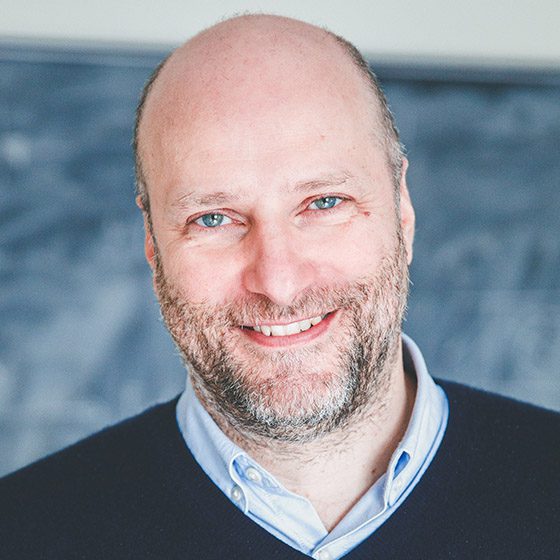
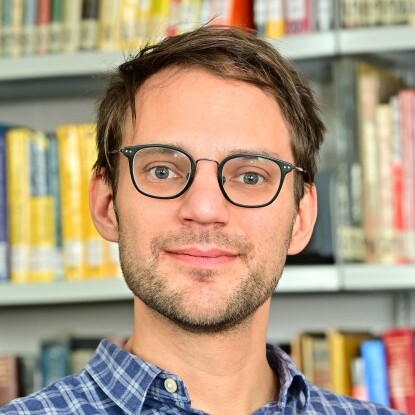
Overview Manfredo Atzori serves as a Scientific Assistant (Adjoint-e scientifique HES A) at HES-SO Valais-Wallis's Haute Ecole de Gestion. His work focuses on advancing machine learning applications in biomedical engineering, digital pathology, and neuroimaging. He leads development of open-source tools like BIDSAlign for EEG standardization and SelfEEG for self-supervised learning in biomedical signals. Research Interests Atzori's research bridges AI and healthcare, emphasizing: Medical Imaging : Histopathology WSI analysis, artifact correction, and cross-modal fusion Prosthetics Control : sEMG-based gesture recognition and adaptive neural interfaces Deep Learning Methodology : Transfer learning optimization, self-supervised pretraining, and reproducibility frameworks Key Contributions 2024 highlights include: Developed RegWSI - winning ACROBAT 2023 challenge for WSI registration Pioneered multimodal WSI-report integration to halve annotation needs Published benchmark studies on Gleason grading deep learning methods Collaborations Active in international projects with institutions like DeeperHistReg group and OpenNeuro. Tools developed are open-source (GitHub: @manfredoatzori) to advance reproducible research practices.
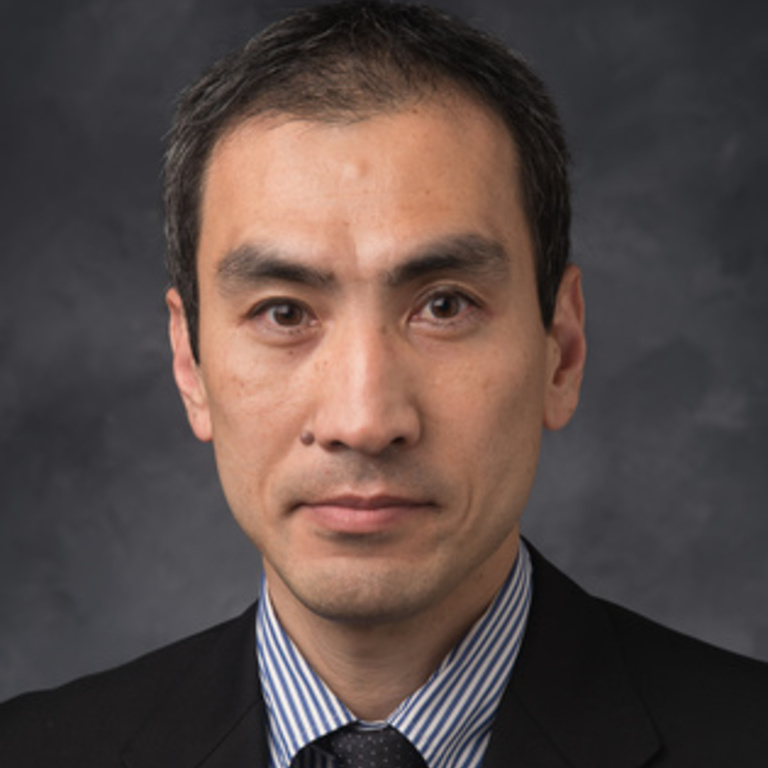
Andrea Lodi serves as the Andrew H. and Ann R. Tisch Professor at the Jacobs Technion-Cornell Institute at Cornell Tech and the Technion, and holds the Canada Excellence Research Chair in “Data Science for Real-time Decision Making” at Polytechnique Montréal. He earned his Ph.D. in system engineering from the University of Bologna in 2000 and was an IBM Goldstine Fellow (2005–2006). Previously, he was a full professor at the University of Bologna (2007–2015). His research focuses on mixed-integer programming, nonlinear optimization, and data science applications in decision-making systems. Notable contributions include advancements in cutting-plane algorithms, machine learning integration in optimization, and fair dynamic resource allocation. Awards include the IBM and Google Faculty Awards, and leadership roles in EU projects and IVADO (Montréal Institute for Data Valorization). Education: Ph.D. in System Engineering, University of Bologna (2000) Consulting: IBM CPLEX R&D team since 2006 Grants: Canadian Federal Government’s Apogée Programme (2024), EU projects His work bridges theoretical optimization and practical applications, including healthcare scheduling, transportation logistics, and algorithmic fairness. Recent projects include developing reinforcement learning frameworks for bike-sharing rebalancing and fairness-aware dynamic decision systems.
Dr. David W. Chappell is a Professor of Physics at the University of La Verne, affiliated with the Natural Science Division within the College of Arts and Sciences. He holds a Ph.D. in Astronomy from the University of Texas at Austin. His academic focus aligns with his department's areas of study, though specific research interests are not explicitly detailed in the provided texts. He is currently active in his role, with no indication of part-time status or retirement. No academic awards or grants are mentioned in the available data. His contact information includes an email address: dchappell@laverne.edu, and he is based at Founders Hall 9 on the La Verne campus.
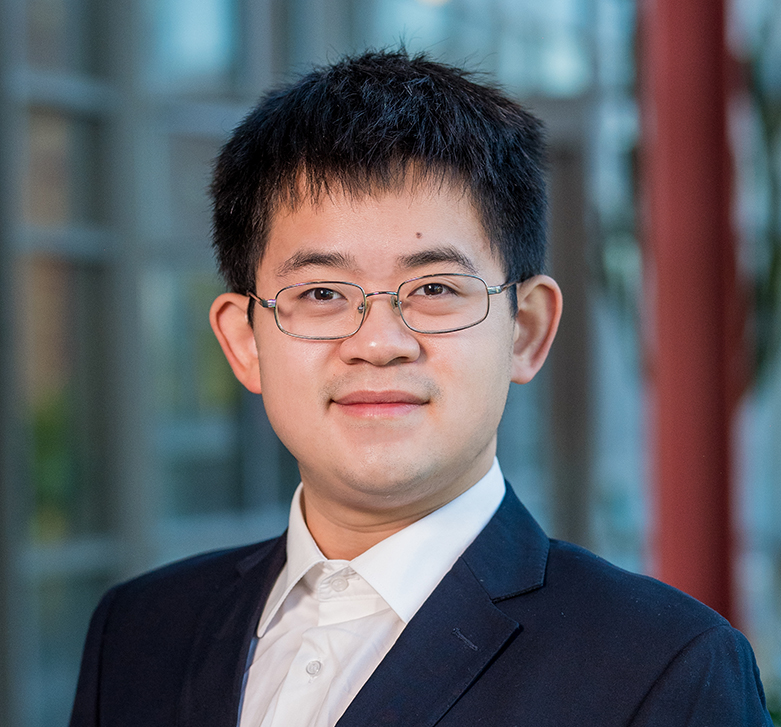
Dr. Hongnai Zhang is an Assistant Professor of Marketing at the University of La Verne's College of Business, within the Marketing and Law department. His research focuses on computational methods, parallel computing, data preservation, machine learning, and power systems. He has contributed to advancements in Hessian-based simulation techniques, sensor network efficiency, and deep learning models. His work spans interdisciplinary fields, including collaborations on chemical dynamics simulations and energy-efficient data dissemination mechanisms. Key research interests include optimizing algorithms for high-performance computing, improving data storage in low-duty-cycle sensor networks, and developing stable recurrent neural networks for power load forecasting. His publications reflect expertise in computational science, parallel processing, and applied mathematics, with notable contributions to journals like the Journal of Chemical Physics and IEEE conferences.
Linyi Li is an Assistant Professor at the School of Computing Science, Simon Fraser University (SFU), and directs the Trustworthy Artificial Intelligence (TAI) Lab. He specializes in certifiably trustworthy deep learning systems and foundation models, bridging machine learning and computer security. His research focuses on providing rigorous guarantees for robustness, fairness, numerical reliability, and scientific evaluation of large language models. Affiliations: SFU (2023-present), University of Illinois Urbana-Champaign (PhD 2023), Tsinghua University (BSc 2018) Experience: Senior Research Scientist at ByteDance (2023-2024), internships at Microsoft, Fujitsu, and Carnegie Mellon University Research interests include certified robustness, fairness certification, adversarial machine learning, and automated testing for neural networks. Notable contributions include the InfiBench code LLM evaluation framework and the α/β-CROWN verifier winning VNN-COMP 2023. Awards: Rising Stars in Data Science (2022), AdvML Rising Star Award (2022), Qualcomm Innovation Fellowship finalist (2022). Lab activities focus on advancing trustworthy AI through principled evaluation, certification frameworks, and alignment with human values. Open PhD positions available starting 2025 Fall.
Gabriel Barrenechea is a Reader in the Department of Mathematics and Statistics at the University of Strathclyde, Faculty of Science. His academic work centers on the development and analysis of finite element methods with strong theoretical foundations, particularly applied to fluid mechanics and partial differential equations. His research interests lie at the intersection of numerical analysis and computational mathematics, with a focus on ensuring stability, accuracy, and physical consistency in simulations. Key areas include discrete maximum principles, bound-preserving schemes, stabilization techniques for convection-dominated flows, and multiscale methods. His work often addresses challenges in non-Newtonian fluids and high-Weissenberg number problems. The recent publications reflect a sustained focus on finite element discretizations that preserve physical bounds and mathematical monotonicity. These works span elliptic, parabolic, and fluid flow problems, employing hybrid, nodal, and implicit-explicit formulations. The trend shows increasing sophistication in handling nonlinearities, variable coefficients, and complex physical constraints through mathematically rigorous approaches. Best paper award Sociedad Espanola de Matematica Aplicada (SEMA) 2018 Gabriel Barrenechea has been actively involved in research leadership and student training. He has served as Principal Investigator on multiple EPSRC-funded and institutional projects, including doctoral training partnerships. He supervises postgraduate research and contributes to academic development frameworks. His professional activities include organizing major conferences such as the Biennial Conference on Numerical Analysis and the Scottish PDE Colloquium. He is a key organizer of academic events including the Impact Case Studies in Maths & Stats workshop and the Early Career Network in Mathematics and Statistics. His collaborations span the UK and international institutions, reflected in co-authored works and joint projects.
Victorita Dolean Maini is a Visiting Professor in the Department of Mathematics and Statistics at the University of Strathclyde, Faculty of Science. She is actively engaged in research and supervision, with a focus on computational science and numerical methods for partial differential equations. Her work bridges applied mathematics, high-performance computing, and interdisciplinary applications in geophysics, biomedical engineering, and pharmaceutical modeling. University: University of Strathclyde School: Faculty of Science Department: Mathematics and Statistics Academic Rank: Visiting Professor Her research interests center on computational science, particularly in developing mathematical models and algorithms for complex physical systems governed by partial differential equations. She specializes in domain decomposition methods, iterative solvers, and high-performance computing, with recent extensions into scientific machine learning and physics-informed neural networks. Her work emphasizes rigorous analysis and validation of numerical results. The most recent publications highlight a strong trend in robust and scalable numerical methods for multiscale and multiphysics problems. Topics include domain decomposition with GenEO coarse spaces, optimized transmission conditions for diffusion, wave propagation in anisotropic media, and computational epidemiology. These works span disciplines such as applied mathematics, computational physics, geophysics, and biomedical modeling, reflecting a highly interdisciplinary approach. There is a clear emphasis on industrial and real-world applications, including seismic imaging, crystallization processes, and hemodynamic simulations. Scientific awards include: Fellow (awarded 7 September 2020) Prix Bull-Joseph Fourier 2015 (awarded 12 April 2016) She has been a co-investigator and principal investigator on multiple research grants, including projects like PharmaCrystNet, Fast solvers for frequency domain wave-scattering, and Blood flow dynamics in pulmonary hypertension. She actively supervises PhD students and collaborates internationally. She has organized key seminars and workshops, particularly in scientific machine learning and physics-informed learning, contributing significantly to academic community building. She leads and participates in research teams focused on computational modeling, numerical linear algebra, and interdisciplinary applications. Her group collaborates with institutions in physics, engineering, and life sciences, leveraging high-performance computing for large-scale simulations. She is also involved in promoting diversity through initiatives like the Women in Data Science and Mathematics Seminar Series.
Robert Weatherup is Professor of Energy Materials in the Department of Materials at the University of Oxford, where he leads the Energy Materials Interfaces Group. Based in the Rex Richards building, his group pioneers interface-sensitive characterization techniques to study reactions critical to electrochemical energy storage, catalysis, and materials synthesis, with strong collaborations at Harwell Campus facilities including Diamond Light Source and ISIS Neutron and Muon Source. His research focuses on understanding interfacial reactions in functional materials under operational conditions. Key interests include solid-gas, solid-liquid, and solid-solid interfaces in Li-ion batteries, solid-state batteries, and catalytic systems for sustainable reactions. The group develops operando X-ray and electron spectroscopy methods to probe buried interfaces, aiming to link interfacial structure to material function for designing advanced energy materials through specialized reaction environments and membrane-based techniques. Recent publications demonstrate a concentrated trend toward operando studies of battery interfaces (cathode stabilization, SEI formation) and catalytic CO2 conversion, utilizing advanced spectroscopic techniques to reveal mechanistic insights under realistic electrochemical and thermal conditions across energy storage and sustainable chemistry domains. Scientific Awards: Royal Society of Chemistry Joseph Black Prize Professor Weatherup supervises a research team of six postdoctoral researchers, nine DPhil students, and two MEng students. His group secures substantial research grants for projects on energy storage and catalytic materials, with close partnerships at Harwell Campus facilities enabling cutting-edge in-situ experiments and methodology development for industrial and academic collaborators. The Energy Materials Interfaces Group operates specialized laboratories in Oxford and maintains deep integration with Harwell Campus infrastructure. They design custom reaction cells for operando studies across electrochemical, gas, and liquid environments, with active beamtime allocations at Diamond Light Source and Alba Synchrotron, fostering cross-institutional collaborations to advance characterization capabilities for next-generation sustainable technologies.
Hiroyuki Sugiyama is a Professor of Mechanical Engineering at the University of Iowa's College of Engineering and a Researcher at the Iowa Technology Institute. He holds a PhD from the University of Illinois at Chicago (2005) and has been with the College since 2013. His research focuses on computational multibody dynamics, railroad vehicle dynamics, tire/road interaction, and finite element methods. Key areas include flexible multibody systems, wheel/rail contact modeling, and off-road mobility simulations. Education: PhD in Mechanical Engineering from University of Illinois at Chicago (2005); MS and BS in Mechanical Engineering from Aoyama Gakuin University, Tokyo (1999 and 1997). Research interests span advanced modeling techniques for vehicle dynamics, including tire-soil interaction, data-driven approaches, and multiscale simulation frameworks. Recent work emphasizes hierarchical modeling, reduced-order methods, and integration of machine learning for efficiency. His studies often involve experimental validation, such as scaled roller test rigs and terrain simulations. Publications highlight contributions to multibody systems, railway dynamics, and computational methods. His work appears in top journals and conferences, with a focus on practical applications like amphibious vehicle design and wind turbine drivetrain optimization. Labs/Teams: Leads the Computational Multibody Dynamics Lab, developing open-source tools like the Chrono dynamics engine. Active in professional societies including the American Society of Mechanical Engineers and Society of Automotive Engineers.
Antonio Huerta is a Professor of Applied Mathematics at the Universitat Politècnica de Catalunya (UPC) and Director of ICREA. He leads the Laboratori de Càlcul Numèric (LaCàN) , focusing on numerical methods for scientific and engineering problems governed by mechanics and interdisciplinary principles. His research spans applied mathematics, computational science, and fluid dynamics. Education : Ph.D. from Northwestern University (1987), preceded by studies at the Escuela Técnica Superior de Ingeniería de Caminos, Canales y Puertos de Barcelona (1983). His work emphasizes numerical methods , particularly hybridizable discontinuous Galerkin (HDG), finite volume methods, and proper generalized decomposition (PGD), applied to problems in incompressible/compressible flow simulation , fluid-structure interaction , and magneto-mechanical coupling . Recent projects include data-driven design for automotive battery optimization ( GREEN ) and MATLAB-based open-source tools. Key collaborations include co-authoring the textbook Finite Element Methods for Flow Problems with Jean Donea and developing error estimation frameworks for finite element solutions. His publications highlight interdisciplinary applications in mechanics, mathematics, and computer science.
Dr. Orlando Ayala is an Associate Professor in the Mechanical Engineering Technology Department at Old Dominion University's Frank Batten College of Engineering and Technology. He holds a Ph.D. (2005) and M.Sc. (2001) in Mechanical Engineering from the University of Delaware, and a B.S. in Mechanical Engineering (Cum Laude, 1995) from Universidad de Oriente, Venezuela. His research focuses on multiphase flows , turbulent particle transport , and high-performance computational methods . Key areas include: fluid-particle interactions in pipeline erosion, lattice Boltzmann modeling for turbulence modulation, cloud droplet collision dynamics, and porous media flow. His work integrates advanced numerical simulations with applications in energy systems and environmental fluid mechanics. Publications emphasize turbulent collision statistics, particle-laden flows, and parallel computing algorithms, with recent studies leveraging DNS and lattice Boltzmann methods to resolve microscale interactions in multiphase systems. Scientific Awards & Honors: Certificate of Excellence in Undergraduate Research (2017) Highly Cited Research in Parallel Computing (2016) Outstanding Contribution in Reviewing, Journal of Natural Gas Science (2015) Research Fellowships: Venezuelan Foundation for Promotion of Researchers (2003, 2006, 2008) Teaching Excellence Nominee, University of Delaware (2005) Grants & Projects: Secured $800,000+ in funding, including NSF-supported studies on turbulent particle collisions ($359,861), naval additive manufacturing ($150,000), and solar energy systems ($158,162). Research collaborations span turbulence modulation, photovoltaic tech, and pipeline erosion.
Erika Ábrahám is a University Professor in the Department of Computer Science at RWTH Aachen University, Germany, where she leads the research group on the Theory of Hybrid Systems. Her work is centered on formal methods for cyber-physical systems, with a strong focus on hybrid and probabilistic systems, SMT solving, and symbolic computation. Her research interests include Formal Methods, Hybrid Systems, Probabilistic Systems, Satisfiability Modulo Theories (SMT), Symbolic Computation, Cyber-Physical Systems, Model Checking, Reachability Analysis, Automated Reasoning, Verification of Safety-Critical Systems, Robotics, Energy Optimization, and Artificial Intelligence . She develops theoretical foundations and practical tools for the analysis and verification of complex systems, especially in safety-critical domains like automotive and robotics. Her recent publications demonstrate a consistent focus on advancing SMT solving techniques, particularly in real algebra and cylindrical algebraic decomposition, and on analyzing probabilistic hybrid systems, including reachability and hyperproperties. She frequently contributes to and organizes major conferences and workshops in her field. Scientific Awards: No specific awards were mentioned in the provided text. Erika Ábrahám actively supervises students and researchers, with advisees including Jasper Kurt Ferdinand Nalbach, Valentin Maxim Promies, Stefan Schupp, and others. She has been involved in projects related to railway timetables, energy load control, and AI-based robotics. She also contributes to academic service through editing conference proceedings and promoting gender equality in software engineering. She is a key contributor to the HyPro library for hybrid systems reachability analysis and continues to publish in top venues such as LNCS, Springer, and Elsevier journals. Her recent work spans from core theoretical advances in SMT to applied research in sonar object detection and robotics.
Prof. Sebastian Schöps is an Associate Professor in the Department of Electrical Engineering and Information Technology at Technische Universität Darmstadt. He leads the Computational Engineering Group, focusing on coupled multiphysical simulations and high-performance computing. His work bridges computational electromagnetics with advanced numerical methods like isogeometric analysis and reduced-order modeling. Education: Joint PhD in Physics (KU Leuven, Belgium) and Mathematics (University of Wuppertal) MSc and BSc in Business Mathematics (University of Wuppertal) Research Interests: Coupled systems involving electromagnetism, thermodynamics, and structural mechanics High-performance parallel algorithms for industrial-scale simulations Uncertainty quantification in engineered systems Optimization of electric machines using isogeometric analysis His work frequently involves developing novel finite element formulations and collaborating with CERN on accelerator magnet simulations. Publications Trends: Recent work emphasizes machine learning integration with physics-based models, optimization under uncertainty, and scalable simulation techniques for superconducting devices. Key applications include electric machine design, particle accelerator magnets, and medical device modeling. Labs & Projects: Leads the PASIROM project (Parallel Simulation and Robust Optimization of Electro-Mechanical Energy Converters), and contributes to CERN's quench protection system research. Active in open-source tool development for multiphysics simulation.
Elynn Chen is an Assistant Professor in the Department of Technology, Operations, and Statistics (TOPS) at the Leonard N. Stern School of Business, New York University, where she has been a faculty member since September 2021. Her research bridges statistics, machine learning, and operations research with applications in business, economics, and healthcare. Her educational background is highly interdisciplinary: Ph.D. in Statistics, Rutgers University B.A. in Economics, Peking University B.S. in Computer Science, Tsinghua University Professor Chen's research is centered on developing novel methodologies for data-driven decision-making and complex data analysis. Her primary interests include: Tensor learning for multi-dimensional data representation Reinforcement learning with applications in societal domains such as healthcare and education Transfer learning and knowledge fusion across heterogeneous tasks High-dimensional time series and matrix-variate factor models She emphasizes algorithmic innovation and statistical rigor in addressing real-world challenges. Her recent publications reveal a consistent focus on advanced statistical learning methods. She has made significant contributions to tensor decomposition, reinforcement learning in heterogeneous environments, and high-dimensional network modeling. Her work combines theoretical depth with practical applications in international trade, clinical treatments, and corporate finance. Her scientific recognition includes: NSF Postdoctoral Research Award DMS-1803241 She actively mentors students and postdoctoral researchers, fostering a collaborative research environment. Her group works on cutting-edge topics such as tensor-view graph neural networks and dynamic matrix factor models. She has received research support through prestigious postdoctoral appointments at UC Berkeley (advised by Prof. Michael I. Jordan), Princeton University (with Prof. Jianqing Fan), and OpenAI. She leads a vibrant research team focused on: Tensor learning Reinforcement learning for social applications Transfer and knowledge fusion She welcomes highly motivated individuals to join her research group.
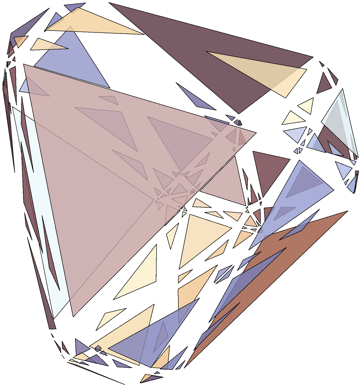
Sam Ballas is an Associate Professor in the Department of Mathematics at Florida State University, where he also serves as the Director of Pure Mathematics. He previously held an RTG Visiting Assistant Professor position at UC Santa Barbara and completed his Ph.D. at The University of Texas at Austin under Alan Reid. His research focuses on geometric structures on manifolds, particularly convex projective structures, CP¹-structures, and deformations of hyperbolic and non-compact 3-manifolds. His work integrates techniques from algebra, geometry, and topology, with applications to representation varieties and discrete subgroups of Lie groups. The recent publications show a consistent trend in low-dimensional geometric topology, with a focus on convex projective geometry, gluing equations, thin subgroups, and generalized cusps. The research spans theoretical classification, constructive methods, and deformation theory, often leveraging collaboration with leading figures in the field. Scientific Awards and Funding: NSF Grant DMS-1709097 Sam Ballas advises graduate students and is involved in mentoring through his role as Director of Pure Mathematics. His research has been supported by external grants and collaborative networks such as GEAR. He has organized multiple academic meetings, including the UF/FSU Topology and Geometry Meeting and AMS special sessions, fostering regional collaboration. He is actively involved in outreach, having contributed to a Futurum article for school-aged children and applied projective geometry to soccer analytics for the FSU Women's Soccer Team. He also organizes seminars and has taught a wide range of courses from Calculus to advanced topics in topology and geometric structures.