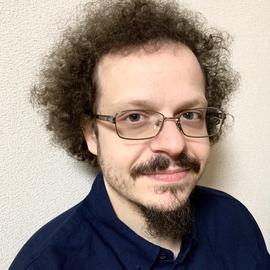
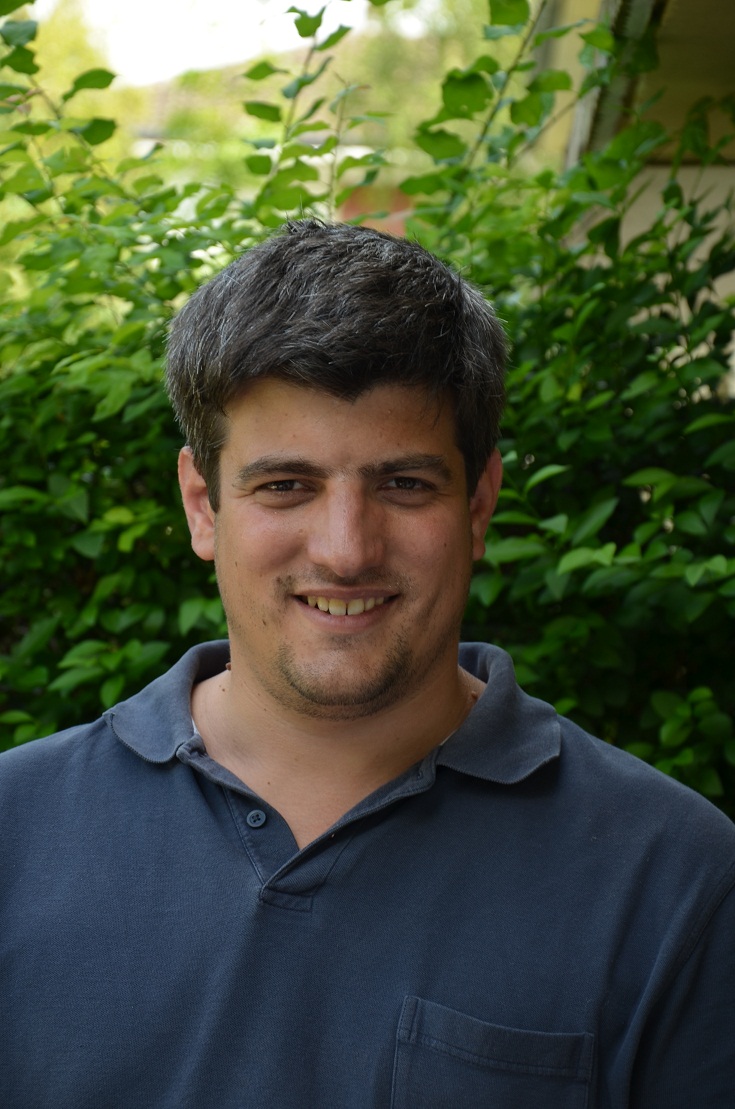
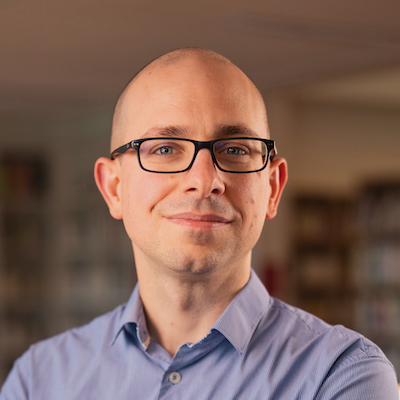
Mathieu Fontaine is an Associate Professor in Machine Listening at Télécom Paris , affiliated with the LTCI Lab within the IDS Department (Information, Data, Signal). His research focuses on machine listening for speech and audio signal processing. PhD in Informatics (2019), Lorraine University Master in Applied and Fundamental Mathematics (2015), Poitiers University BSc in Fundamental Mathematics (2013), Rennes University Fontaine's research spans speech enhancement , speaker separation , source localization , and music source separation using heavy-tailed probabilistic models and deep Bayesian networks , with applications in augmented reality . He has expertise in Python , signal processing , and machine learning (80% proficiency). His recent publications (2024) include work on diffusion models for speech synthesis , room acoustics estimation from 3D meshes , robust audio scene analysis , and direction-aware speech processing . Earlier publications (2022-2023) explore flow-based NMF , alpha-stable representations , and adaptive beamforming in multiparty environments. Fontaine collaborates with the S2A team and ADASP group at LTCI Lab. His work integrates probabilistic modeling with deep learning to address challenges in real-world audio processing, including reverberation, noise, and complex acoustic environments.
Andrea Simonetto is a Research Professor at the Applied Mathematics Unit (UMA) , ENSTA Paris, Institut Polytechnique de Paris. His work spans optimization, control theory, and learning algorithms for large-scale and streaming data , with applications in smart grids, intelligent transportation, personalized health, and quantum computing. Current research focuses on online algorithms for time-varying optimization , personalized optimization for cyber-physical systems , and variational quantum algorithms . Past contributions include theoretical and algorithmic advances in convex/non-convex optimization, distributed optimization (robotic networks, smart grids), and signal processing for sparse reconstructions and parallel computing in particle filtering. Key application domains include renewable energy integration , quantum state preparation , and human-in-the-loop control systems . His research is published in journals like ACM Transactions on Quantum Computing , IEEE Control Systems Letters , and Automatica .
Sébastien Tordeux is an Associate Professor at the University of Pau, affiliated with the Magique 3D research team in the Faculty of Sciences. His research focuses on numerical methods for wave propagation, particularly Trefftz methods, asymptotic expansions, and electromagnetic/acoustic scattering. He holds a PhD in Applied Mathematics from the University of Versailles Saint-Quentin and has held positions at INSA-Toulouse and ETH Zurich. He has advised multiple PhD students and organized conferences such as the 2017 conference in honor of Abderrahmane Bendali. His work emphasizes high-order numerical modeling and efficient solvers for wave equations in complex media. Education: PhD in Applied Mathematics (2004, Université de Versailles), DEA M2SAP (2001), ENSTA Engineer (1998-2001). Professional roles include Chair of Excellence in Numerical Analysis (INRIA-UPPA 2010-2015), and leadership in Master’s program administration and national academic committees (CNU 26). Research interests span Trefftz methods for time-harmonic models, numerical solvers reducing pollution effects, and asymptotic modeling for small obstacle scattering. Recent contributions include quasi-Trefftz methods for electromagnetic systems and iterative approaches for 3D wave simulations. He has supervised PhD students working on topics like antenna patch models, perforated plate acoustics, and multiscale electromagnetic diffraction. His collaborative projects involve institutions like ONERA and TU Berlin, focusing on high-accuracy wave modeling and computational methods.
Maryam Mehri Dehnavi is an Associate Professor in the Department of Computer Science at the University of Toronto and a Principal Research Scientist at NVIDIA. She holds the Canada Research Chair in Parallel and Distributed Computing and leads the ParaMathics research group. Research focuses on high-performance computing , machine learning , sparse matrix optimizations , and compiler design for heterogeneous systems. Her work develops domain-specific languages , scalable numerical libraries , and auto-vectorization techniques for cloud and GPU platforms. Recent publications address LLM compression , sparse code translation , GPU kernel synchronization , and control flow optimization . Scientific recognition: Ontario Early Researcher Award (2021), NSF CRII Grant, NSERC New Frontiers in Research Fund. Current students: Mushegh Shahinyan , Martin Phan , Maryam Haghifam , and others. Former advisees: Kazem Cheshmi (NJIT), Zachary Blanco (MIT Lincoln Lab), Yuanxi Li (Amazon).
Claire Prada is a CNRS Research Director at the Institut Langevin , specializing in laser ultrasound , guided wave propagation , and time-reversal acoustics . Her work bridges fundamental wave physics and applied nondestructive testing. Research Pillars : Zero-group-velocity (ZGV) Lamb modes for material characterization Anisotropic wave propagation and negative refraction phenomena Time-reversal operator decomposition for structural monitoring Passive acoustic defect localization with ambient noise Technological Innovations : Fourier-domain reconstruction algorithms for 3D imaging Single-pixel photoacoustic microscopy Adaptive projection methods for rib-cage ultrasound focusing Wave Physics Discoveries : Documentation of power flux skewing in anisotropic plates Identification of beating resonance patterns in elastic media Experimental validation of negative reflection in chaotic waveguides Medical & Industrial Applications : Quantitative elastography for tissue stiffness measurement Jet engine blade damage detection Cortical bone femoral neck assessment Thin layer thickness measurement via ZGV resonance shifts
Romain Raveaux is an Associate Professor at the LIFAT Computer Science Laboratory, University of Tours, affiliated with Polytech Tours. His research focuses on Image Analysis, Machine Learning, Structural Pattern Recognition, Graph Matching, Graph Neural Networks, Discrete Optimization, Reinforcement Learning, and Transfer Learning . Email: romain.raveaux@gmail.com , romain.raveaux@laposte.net Address: 64 av. Jean Portalis, Tours, France, 37200 Phone: +33 (0)2 47 36 14 27 Research Interests Graph Matching and Neural Networks Discrete Optimization for Pattern Recognition Transfer Learning in Graph-Based Models Historical Document Analysis Scientific Trends His recent work bridges Graph Neural Networks with Mixed-Integer Programming , focusing on Image Semantic Segmentation and Graph Cycle Detection . Earlier studies emphasize Genetic Algorithms for graph classification and Graph Edit Distance optimization in pattern recognition.
Patrick Ciarlet is a Professor at ENSTA Paris, part of the Institut Polytechnique de Paris, where he is a member of the POEMS (Wave Propagation, Mathematical Study and Simulation) research team within the Applied Mathematics Unit (UMA). He also serves as the responsible person for the Master's degree in Mathematics and Applications at the Institut Polytechnique de Paris. His research is structured around two main poles in applied mathematics: Modeling in electromagnetism, neutron scattering and fluid mechanics Numerical analysis of PDEs and scientific computing Professor Ciarlet's work demonstrates a strong focus on mathematical methods for solving problems in wave propagation and electromagnetism, particularly with challenging materials such as metamaterials that have sign-changing coefficients. His research spans theoretical mathematical analysis and practical numerical implementations, with applications in nuclear engineering (neutron diffusion equations) and plasma physics. His publication record shows consistent contributions to finite element methods, with particular expertise in stability analysis, error estimation, and specialized approaches like T-coercivity for handling problems with sign-changing coefficients. He has also developed educational resources through lecture notes on Maxwell's equations and variational methods for non-coercive problems. As an academic leader, he plays a significant role in shaping mathematics education at the graduate level through his responsibility for the Master's degree program in Mathematics and Applications, contributing to ENSTA Paris's research focus on cutting-edge areas with applications in sustainable energy, transportation, and defense.
Vanessa Mattesi is a Researcher affiliated with the Inria Team MAGIQUE-3D and CERFACS . She holds a Ph.D. in Applied Mathematics from the University of Pau and the Adour Region (2011-2014), advised by Sébastien Tordeux. Her postdoctoral research focuses on multiscale modeling of wave propagation in complex media, with emphasis on numerical methods like Trefftz discontinuous Galerkin and boundary element approaches. Education: Ph.D. in Applied Mathematics (2011-2014), University of Pau M.Sc. in Mathematical Engineering (2011), University of Toulouse III Research Interests: Her work centers on wave propagation phenomena, particularly in heterogeneous media. Key areas include: High-order numerical methods for Helmholtz and acoustic equations Equivalent source modeling of small heterogeneities Domain decomposition and absorbing boundary conditions Her methods integrate discontinuous Galerkin formulations with boundary element techniques for enhanced accuracy in complex geometries. Grants & Activities: Member of Inria Bordeaux-Sud Ouest committee. Active contributor to conferences such as ACOMEN (2017), EAGE (2016), and Waves (2013). Labs/Teams: MAGIQUE-3D project team (Inria) and CERFACS collaborative research groups.
Virginie Ehrlacher Galland is a Professor at CERMICS (Centre d'Enseignement et de Recherche en Mathématiques et Calcul Scientifique) within École des Ponts ParisTech. Her expertise lies in applied mathematics, numerical analysis, and computational physics, with a focus on multiscale problems, quantum chemistry, and uncertainty quantification. She holds a PhD from CERMICS (2012) and a Habilitation (2020) from Université Paris-Dauphine. Her research interests include cross-diffusion systems, reduced basis methods, and optimal transport applications. Key contributions involve numerical methods for electronic structure calculations, homogenization techniques, and adaptive algorithms. She leads the ERC Starting Grant HighLEAP (2023-2028) and contributes to major projects like the ERC Synergy project EMC². Awards: Irène Joliot-Curie Prize (2023), Chevalier de l’Ordre National du Mérite (2025). Grants/Projects: ERC Starting Grant HighLEAP (PI), ERC Synergy EMC² (Member), ANR JCJC COMODO (PI). Her work bridges theoretical analysis and computational methods, addressing challenges in materials science, fluid dynamics, and machine learning applications.
Sébastien Tordeux is a Lecturer in Applied Mathematics at the University of Pau and Pays de l'Adour (UPPA), affiliated with the UFR Sciences and Technology and the Laboratory of Mathematics and their Applications (LMAP). His research focuses on wave propagation phenomena, including acoustic wave modeling, impedance analysis, and numerical methods like Finite Elements and Trefftz methods. Research interests include: Acoustic wave propagation in multi-perforated walls Rayleigh conductivity and absorbing boundary conditions Gunter operator theory for elastic waves UWVF methods in electromagnetism Diffraction modeling for small obstacles He has directed multiple PhD students on topics spanning high-order numerical modeling, asymptotic analysis of antennas, and wave propagation in heterogeneous media. Current projects involve Trefftz domain decomposition for poro-elastic media and solar acoustics.
Patrick Le Tallec is a Professor of Mechanics at École Polytechnique in France, where he currently serves as Dean of the Bachelor Program and is a member of the M3DISIM project. His distinguished academic career spans multiple institutions including Université Paris Dauphine, INRIA (French National Institute for Research in Digital Science and Technology), and international universities such as Stanford University, University of Wisconsin, and Shanghai Jiao Tong University. He has held leadership positions including Vice President for Education and Head of the Laboratory of Solid Mechanics at École Polytechnique. His educational background includes: Graduate from École Polytechnique Ph.D. in Engineering Mechanics from The University of Texas at Austin (1980) Thèse d'Etat in Applied Mathematics from Université Pierre et Marie Curie in Paris (1981) Professor Le Tallec's research focuses on computational mechanics and applied mathematics with expertise in nonlinear mechanics, domain decomposition methods, and multiscale modeling. His work bridges theoretical mathematics with practical engineering applications, particularly in material science and fluid-structure interactions. He has developed advanced numerical methods for elasticity, viscoelasticity, and fluid dynamics with applications in industrial manufacturing and biomedical engineering. His recent publications demonstrate progression from foundational numerical methods to sophisticated multiscale approaches addressing complex engineering challenges in material science. The research shows particular emphasis on rubber mechanics, fatigue analysis, and computational methods for nonlinear structures, reflecting his ongoing commitment to solving real-world engineering problems through mathematical innovation. His scientific honors include: CISI award in Scientific Computing Prize Blaise Pascal of the French Academy of Sciences Chevalier des Palmes Académiques Chevalier de la Légion d'Honneur Officier de l'Ordre National du Mérite Professor Le Tallec has directed over 40 Ph.D. students from 10 different nationalities, demonstrating significant impact in academic mentoring. His research has been supported through extensive collaborations with industrial partners including Michelin, PSA Group, and Dassault Aviation, as well as scientific advisory roles at the French Alternative Energies and Atomic Energy Commission. He has served as president of the French Society of Applied and Industrial Mathematics and held editorial positions with leading journals in his field. His laboratory work centers around computational mechanics research, particularly through the M3DISIM project at École Polytechnique. His research team brings together mathematicians, engineers, and computer scientists to develop innovative solutions for complex problems in material science and structural mechanics, with applications ranging from industrial tire manufacturing to biomedical engineering.
Mohamed Najim is a Professor at IMS Bordeaux (Laboratoire de l'intégration, du matériau au système) affiliated with the University of Bordeaux. He is a member of the Signal and Image Processing research group within the MOTIVE team, where he conducts cutting-edge research in multidimensional signal processing and image analysis. His work spans theoretical developments in signal modeling and practical applications in speech enhancement, image colorization, and communication systems. Professor Najim's research interests focus on advanced signal processing techniques, with particular expertise in autoregressive modeling, Kalman filtering, generative adversarial networks, and multidimensional system analysis. His work bridges theoretical signal processing with practical applications in image processing, speech enhancement, and wireless communications. He has made significant contributions to the development of novel algorithms for texture analysis, channel modeling, and noise reduction in various signal processing contexts. The analysis of his publication record spanning over 25 years reveals a consistent research trajectory focused on fundamental signal processing techniques with expanding applications into modern deep learning approaches. His recent work demonstrates a clear progression from traditional signal processing methods toward integrating machine learning techniques, particularly evident in his 2023 SPDGAN paper which combines manifold learning with generative adversarial networks for image colorization. Throughout his career, Professor Najim has maintained strong theoretical foundations while adapting to emerging technologies in the field. Mohamed Najim has supervised numerous research projects and collaborated extensively with colleagues across institutions. His work shows consistent funding support through participation in various research programs focused on signal processing applications. He has maintained active research collaborations with institutions including CNRS and HESAM University. Professor Najim conducts his research within the IMS laboratory, a leading research center for integration from materials to systems. The laboratory provides state-of-the-art facilities for signal processing research, including specialized computing resources for image processing and speech analysis. His work within the MOTIVE team focuses on developing innovative approaches to complex signal processing challenges across multiple application domains.
Jalal Fadili is a Professor at the National School of Engineers of Caen (ENSICAEN) and conducts research at the Research Group in Computer Science, Image, Automation and Instrumentation of Caen (GREYC - CNRS/ENSICAEN/Université Caen Normandie). He serves as director of the AISSAI center and was appointed as a junior member of the Institut Universitaire de France from 2013-2018. His educational background includes: Engineering Degree in Signal Processing from ENSI Caen (1996) MSc in Signal and Image processing from the University of Caen (1996) PhD in Signal and Image processing from the University of Caen (1999) Habilitation in Signal and Image processing from the University of Caen (2010) Professor Fadili's research focuses on signal and image processing, with particular emphasis on inverse problems, variational approaches, and optimization techniques. His work has significant applications in medical and astronomical imaging, including fMRI analysis where he developed wavelet-based methods for structural noise modeling and hypothesis testing. He has created numerous software tools for image processing tasks such as decomposition, inpainting, denoising, and deconvolution. His professional progression shows steady advancement from Assistant Professor at the University of Caen (2000-2001), to Associate Professor at ENSICAEN (2001-2011), and currently Full Professor at ENSICAEN since 2011. His research has resulted in innovative methodologies including MCALab for morphological component analysis and various image restoration techniques. His laboratory work centers around the GREYC research group, where he leads projects related to sparse representation-based image processing techniques and their applications across scientific domains.
Axel Modave is a CNRS Research Fellow at the POEMS laboratory (CNRS, Inria, ENSTA) and the Applied Mathematics Unit (UMA) of ENSTA Paris in Palaiseau, France. He obtained his PhD from the University of Liège (Belgium) in 2013 and his HDR (post-doctoral degree) from IP Paris in 2024. His academic career includes postdoctoral positions at UCLouvain (Belgium), Rice University (USA), and VirginiaTech (USA). Current Affiliation: CNRS Research Fellow, POEMS Laboratory & Applied Mathematics Unit (UMA), ENSTA Paris Education: PhD (2013, ULiège), HDR (2024, IP Paris) Research Focus: Numerical simulation of wave propagation (acoustic, electromagnetic, elastic), high-order finite element methods, domain decomposition techniques, and high-performance computing. Email: axel.modave@ensta-paris.fr | axel.modave@ensta.fr His research explores advanced numerical methods for wave propagation problems, including the ANR WavesDG project on wave-specific DG finite element methods for time-harmonic problems. His recent publications focus on hybridizable discontinuous Galerkin methods for electromagnetic and acoustic wave problems, domain decomposition preconditioners, and GPU-accelerated simulations. He teaches courses on optimization and high-performance computing.
Professor Jean-Rodolphe Roche is a Full Professor at Université de Lorraine , affiliated with the engineering college Polytech Nancy and the Institute Élie Cartan de Lorraine (IECL). His research focuses on numerical methods for partial differential equations, domain decomposition, nonlinear optimization, and scientific computing. Research Fields : Numerical Analysis, Domain Decomposition, Nonlinear Equations, Scientific Computing, Shape Optimization His recent publications emphasize adaptive numerical techniques for nonlinear boundary value problems, domain decomposition in electromagnetic casting, and radiative-conductive heat transfer systems. Collaborations span institutions in Brazil, France, and international conferences.