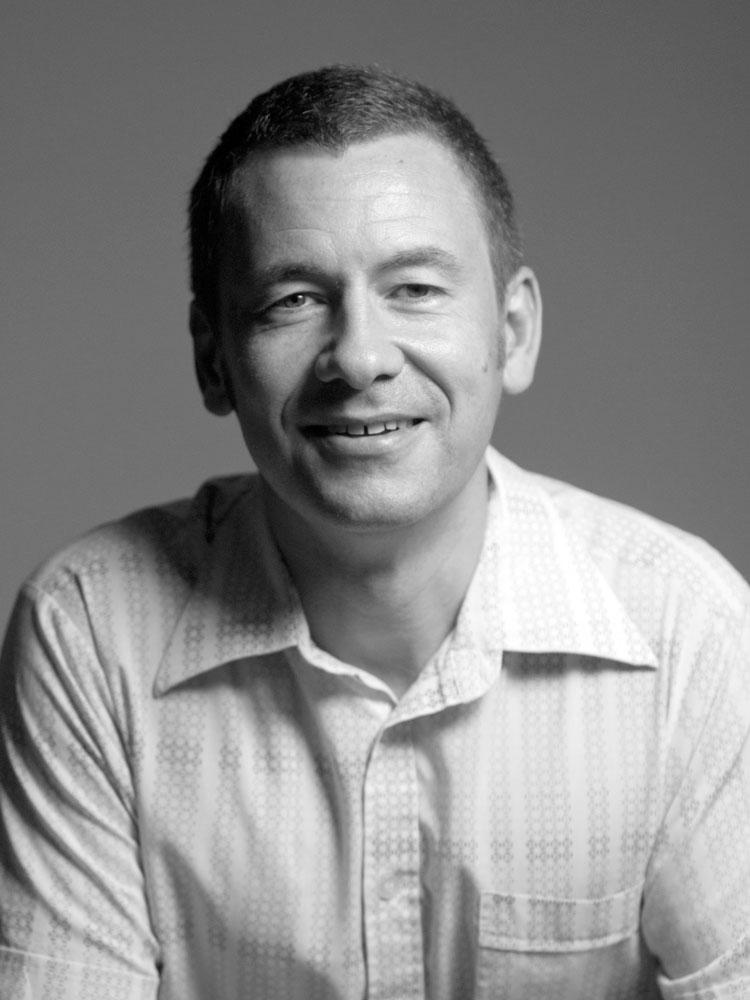
Sean Yendrys is a Professor and Head of the MA Program in Graphic Design at the Estonian Academy of Arts in Tallinn, Estonia. He is an independent graphic designer based in Berlin and Tallinn, collaborating with artists, architects, and institutions globally. He previously directed the independent design summer program "A School, A Park" in Montreal (2016–2018). His teaching roles include Parsons The New School, Vermont College of Fine Arts, and Bergen Academy of Art and Design, among others. Education: BFA from Concordia University, MFA from Yale School of Art. Research focuses on alternative pedagogical models in design education, institutional critique, and the intersection of graphic design with performance art and spatial politics. His design practice spans exhibition identities, editorial projects, and experimental publishing for institutions like the Canadian Centre for Architecture, Harvard GSD, and Tanzkongress 2019. Recent publications include contributions to Para-Platforms (2018), Extra-curricular (2020), and the 2024 Movement Research Performance Journal . Current projects emphasize collaborative editorial work and institutional design frameworks.
Simon Clematide is an Academic Associate at the Department of Computational Linguistics within the Faculty of Arts and Social Sciences at the University of Zurich, where he has been actively engaged in research and teaching since the early 2000s. His work spans computational linguistics, natural language processing, and text mining with a particular focus on historical document processing, multilingual applications, and practical implementations of machine learning techniques. Dr. Clematide's research interests encompass Natural Language Processing , Computational Linguistics , Text Mining , Machine Learning , Sentiment Analysis , Named Entity Recognition , and Historical Document Processing . His interdisciplinary approach bridges computer science with humanities applications, particularly in analyzing historical newspapers and multilingual corpora. His work demonstrates strong expertise in developing practical NLP systems that address real-world challenges in document analysis and language processing. Over the past five years, his publication record reveals a consistent focus on historical text processing, multilingual NLP applications, and shared task competitions. His research shows particular strength in named entity recognition for historical documents (CLEF HIPE shared tasks), grapheme-to-phoneme conversion (SIGMORPHON shared tasks), and OCR post-processing for historical newspapers. The interdisciplinary nature of his work is evident in collaborations spanning computer science, linguistics, history, and geography. Dr. Clematide has been instrumental in organizing and participating in numerous shared tasks including CLEF-HIPE (2020-2022), SIGMORPHON (2017-2021), and CoNLL-SIGMORPHON (2017-2020), where his team achieved multiple first and second places. His teaching portfolio includes courses on Text Mining, Machine Learning for NLP, Deep Learning in Language Technology, and Sentiment Analysis, demonstrating his commitment to educating the next generation of computational linguists. He has led or participated in diverse research projects including NFP 77, impresso, Citizen Linguistics Projects (tonaccent.ch, dindialaekt.ch), SPARCLING, KTI project with Eurospider, and biomedical text mining initiatives (MANTRA, SASEBio). His interdisciplinary work extends to collaborations with material scientists and social scientists on concept extraction and text zoning applications. Dr. Clematide has contributed to the development of several computational tools and resources, including finite-state morphology systems for Rumansh Grishun, Standard German, and Swiss German, as well as the CLab web-based virtual laboratory for computational linguistics. His work on crowdsourcing OCR ground truth for heritage corpora demonstrates practical solutions to real-world digitization challenges.
Michael Neumayr is an Adjunct Associate Professor in Spatial Experience Design at ArtCenter College of Design’s Graduate Environmental Design program, where he contributes to the education of future design innovators. His professional practice, Neumayr Design, is based in Los Angeles and specializes in high-end residential, product, furniture, commercial, and exhibition design. His research and creative interests span spatial experience design, wellness environments, sustainable design, interactive furniture systems, and the integration of technology in living and public spaces. He emphasizes user-centered, sensory-rich environments that blend classical aesthetics with modern innovation. The body of his work, as seen in projects like the Villa Munich and Aquamoon shower system, reflects a consistent trend toward holistic, immersive experiences that engage all senses. His designs often incorporate advanced technology, sustainable materials, and meticulous craftsmanship, particularly evident in wellness architecture and smart furniture. Good Design 2019 NYC-x Design 2018 | Best Product of the Year Stylepark 2018 | Most Innovative Product Good Design 2008 Permanent Collection | Chicago Athenaeum Museum of Architecture and Design Gute Gestaltung 2009 DDC Award Nominated for Designpreis der Bundesrepublik Deutschland 2010 Finalist IDEA International Design Excellence Award 2009 Nominated for Designpreis Deutschland 2009 iF Design Award 2007 Michael Neumayr has led significant design projects and collaborations, including with Hiller Gruppe and Atelier Schneeweiss, resulting in award-winning products and installations. While no formal advising or grant history is documented, his academic role suggests mentorship of graduate students in design innovation and spatial storytelling. His studio functions as a design lab, integrating research, prototyping, and real-world application across residential, commercial, and exhibition domains. Projects like the i-tech chair and Villa Munich spa illustrate a team-based, interdisciplinary approach to solving complex spatial and functional challenges.
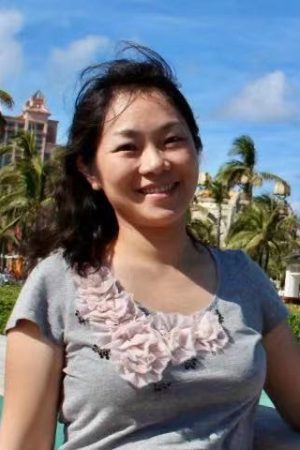
Jing Yang is a full Professor and Director of MS CS Program in the Computer Science Department at the University of North Carolina at Charlotte (UNCC). She has been actively involved in data visualization and visual analytics research since joining UNCC in 2005 after completing her PhD at Worcester Polytechnic Institute. Dr. Yang earned her Bachelor's degrees in Engineering Mechanics and Computer Science from TsingHua University in 1997 and completed her Ph.D. in Computer Science from Worcester Polytechnic Institute in May 2005 under advisors Matthew O. Ward and Elke A. Rundensteiner. Her research focuses on developing visual analytics techniques for abstract data including multidimensional data, time-oriented data, networks, hierarchies, text documents, and trajectory data. She conducts design studies for application domains such as sports, bioinformatics, finance, network security, and health, while exploring fundamental visualization topics like interactions, insight management, clustering-based approaches, and animations. Her recent work emphasizes sports analytics, urban data, and multivariate time series visual analytics. Analysis of Dr. Yang's publication record reveals a strong focus on practical applications of visualization techniques across diverse domains. Her work consistently bridges theoretical visualization frameworks with real-world data challenges, particularly in transportation (taxi trajectories), sports (tennis match analysis), financial transactions, and bioinformatics. The publications demonstrate an evolution from foundational visualization techniques to increasingly sophisticated domain-specific applications. Dr. Yang has secured substantial research funding from NSF, EPA, DHS, and industry partners including Google and Bank of America. Her grants portfolio includes significant projects like TrajAnalytics (NSF, $200,950), Visualizing Event Dynamics (NSF EAGER, $75,317), and Visualizing High Dimensional Categorical Datasets (Google Faculty Research Award, $60,000), among others totaling over $4 million in research support. As an educator, Dr. Yang has taught numerous courses including Visual Analytics, Information Visualization, and Database Design. She directs the Charlotte Visualization Center and has mentored numerous students through research projects. Her collaborative approach is evident in her extensive co-authorship network spanning multiple institutions and disciplines. Current research directions include narrative animation for streaming text visualization and advanced techniques for exploring high-dimensional categorical datasets.
Xin Li is a Professor in the Department of Electrical and Computer Engineering at Duke University and serves as the Associate Vice Chancellor at Duke Kunshan University. He holds a Ph.D. from Carnegie Mellon University (2005) and has held leadership roles in research consortia like the FCRP Focus Research Center and the Center for Silicon System Implementation (CSSI). His research bridges integrated circuits , machine learning , and cyber-physical systems , with applications in autonomous driving, battery lifetime prediction, and smart buildings. Education : Ph.D., Carnegie Mellon University (2005); M.S., Fudan University (2001); B.S., Fudan University (1998) His work emphasizes robust design methodologies for analog/RF circuits, data-driven predictive modeling , and Bayesian inference for high-dimensional variation spaces. Recent publications focus on generative adversarial networks for circuit design, multi-view imputation for incomplete data, and knowledge-driven autonomous systems . He has received numerous accolades, including the NSF CAREER Award (2012) , IEEE Donald O. Pederson Best Paper Awards (2013, 2016) , and IEEE Fellow (2017) . He has served as Editor for journals like IEEE Transactions on Biomedical Engineering and as Chair for conferences including ISVLSI and CAD/Graphics.
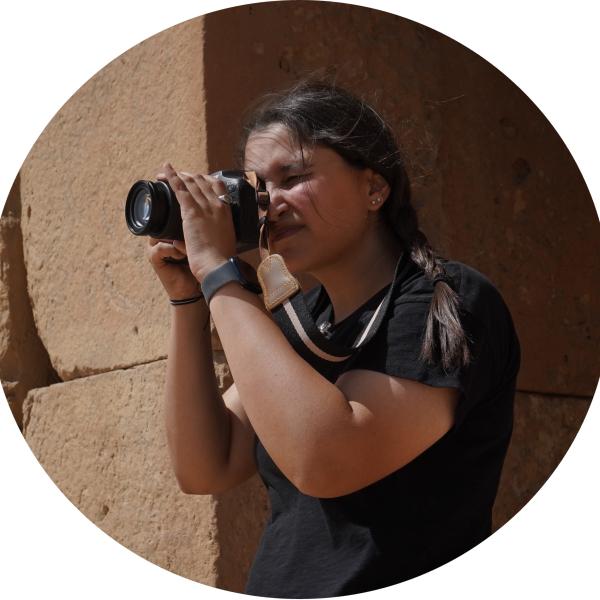
Raghda (Didi) El-Behaedi is a Lecturer in Classics, Archaeology & Religion at the University of Missouri-Columbia and co-director of the Memphis Kom el-Fakhry Archaeological Project (MKAP), a joint mission with Egypt’s Ministry of Tourism and Antiquities. She holds a B.A. (Honors) in Anthropology (Archaeology) from the University of North Carolina Wilmington (2017) with a minor in Geospatial Technologies. Her research focuses on integrating remote sensing, GIS, and 3D modeling to study ancient Egyptian settlement patterns and landscape changes. Notable projects include analyzing the Fayum’s paleolake dynamics, safeguarding Abu Simbel temples from flooding, and exploring Hermopolis via satellite imagery. She has conducted fieldwork in Egypt, France, and the U.S., and held research roles at NASA Langley and Goddard Space Flight Centers. Her work emphasizes cultural heritage preservation through digital tools like SOAP (Satellite Observations for Archaeological Preservation). Awards include a National Geographic Society grant supporting her Fayum research. Current MKAP efforts focus on uncovering Memphis’s Old Kingdom layers, blending excavation with geospatial innovation.
Hannu Hyyppä is a Research Director and Project Employee at Aalto University's Department of Built Environment, affiliated with the MeMo research group. He leads the Research Institute of Measuring and Modelling for the Built Environment, focusing on advanced laser scanning, 3D modeling, and geoinformatics. His work spans interdisciplinary collaborations across engineering, geography, and arts, with a strong emphasis on applications in cultural heritage preservation, urban planning, and environmental monitoring. Education: Doctoral degree (D.Sc.) in Engineering and Technology, Helsinki University of Technology (2000) Licentiate degree in Engineering and Technology, Helsinki University of Technology (1989) Master's degree in Engineering and Technology, Helsinki University of Technology (1986) Research Interests: Laser scanning technologies, point cloud utilization in forestry and urban mapping, virtual reality for cultural heritage, and sustainable infrastructure modeling. His expertise includes photogrammetry, geographic information systems (GIS), and decision support systems for environmental management. Recent Contributions: Over 550 publications and 30+ active projects, including the Centre of Excellence in Laser Scanning Research (2014-2019) and the Pointcloud project (2015-2021). His work advances applications in autonomous road inspection, 3D cultural reconstructions, and smart city technologies. Awards: Recipient of the 2019 Kansallinen avoimen tieteen palkinto for innovative open science contributions. Grants & Leadership: Principal Investigator for projects like DICA (Digital Cultural Heritage) and ToToRo (Automatic Road Inspection). Active in organizing workshops and international conferences on 3D technologies and laser scanning. Labs/Teams: Oversees the MeMo group and collaborates with national organizations like the Finnish Geospatial Research Institute. Develops tools for real-time 3D mapping and virtual environments.
Michele Gattullo serves as an Assistant Professor within the Department of Mechanics, Mathematics & Management at the Polytechnic University of Bari, Italy, specializing in design methods for industrial engineering (ING-IND/15). His research bridges cutting-edge extended reality technologies with practical industrial applications, focusing on human-centered solutions for manufacturing, maintenance, and workplace design. Dr. Gattullo's research portfolio centers on Augmented Reality, Virtual Reality, and Biophilic Design, with significant contributions to Human-Computer Interaction in industrial contexts. He investigates how nature-inspired elements in virtual workspaces enhance employee well-being and productivity, while simultaneously developing practical AR tools for assembly guidance, technical documentation, and maintenance support. His work uniquely integrates ergonomics, cognitive psychology, and industrial engineering to optimize human-technology interaction in complex production environments. Analysis of his 15 most recent publications reveals two dominant research trajectories: biophilic design frameworks for virtual/metaverse workspaces (2023-2025) and industrial AR authoring methodologies. The biophilic stream establishes evidence-based guidelines for digital nature integration, while the AR stream delivers validated tools like ADAM and minimal AR approaches that streamline technical documentation creation. Both trajectories emphasize user experience validation through rigorous industrial studies, demonstrating strong interdisciplinary impact across computer science, industrial engineering, and environmental psychology. Scientific Awards: No awards or honors were documented in the available sources. Advising and Grants: The provided materials contain no information regarding graduate student supervision, research grants, or funding sources. His academic profile emphasizes publication output over mentoring activities or project financing details. Laboratories and Teams: While Dr. Gattullo's research involves advanced XR technologies, the source text does not specify laboratory facilities, research groups, or collaborative teams associated with his work at Politecnico di Bari.
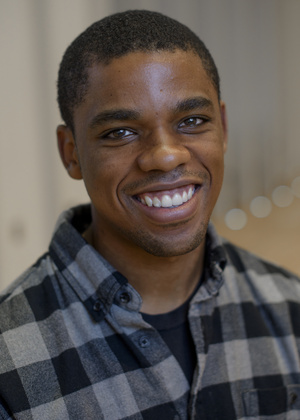
Steve Oney is an Associate Professor at the University of Michigan School of Information and Computer Science and Engineering (by courtesy). His research focuses on enabling and encouraging more people to write and customize computer programs by creating new programming tools and exploring usability issues in programming environments. With a strong background in Human-Computer Interaction, he bridges the gap between theoretical research and practical applications in programming education, accessibility, and developer tool design. Dr. Oney completed his Ph.D in Human-Computer Interaction at Carnegie Mellon University's Human-Computer Interaction Institute under Professor Brad Myers and Dr. Joel Brandt. He also earned an M.Eng in Computer Science and SB degrees in Computer Science and Mathematics from MIT. His research spans multiple interconnected areas with a unifying theme of making programming more accessible and understandable. Key focus areas include programming education tools that help instructors understand student code at scale, web automation systems that simplify repetitive tasks, accessibility research addressing challenges faced by visually impaired programmers, and innovative VR programming environments. His work consistently emphasizes the human aspects of programming, exploring how tools can better support diverse programming needs and contexts. Dr. Oney's research output shows a strong trajectory toward increasingly sophisticated tools that integrate AI capabilities while maintaining a focus on human-centered design principles. Recent publications demonstrate growing emphasis on inclusive design, educational applications, and the integration of generative AI in programming environments. L@S 2024 Best Paper Award for CFlow CHI 2023 Honorable Mention for VizProg UIST 2024 Best Short Paper (EdCode) VL/HCC 2019 Best Short Paper Recognition for Contribution to Diversity and Inclusion (CSCW 2021) UMSI Excellence in Instruction Award (2021) University of Michigan President's Postdoctoral Fellowship (2015) As a mentor, Oney advises multiple Ph.D. students and postdoctoral researchers, with several successful graduates including Dr. Lei Zhang (June 2024). His research has secured over $1 million in funding from the National Science Foundation, Google, and Adobe, supporting projects that address critical challenges in programming education, accessibility, and developer tool design. He leads the Programming Tools Lab at the University of Michigan, where his team develops innovative tools that help programmers work more effectively. Current projects focus on AI-enhanced programming education, web automation, accessibility for diverse user groups, and next-generation programming environments for virtual and augmented reality.
Denny Yu is an Associate Professor at the Edwardson School of Industrial Engineering, Purdue University. His work bridges human factors, neuroergonomics, and healthcare safety through advanced sensor systems and AI. Primary Affiliation : Edwardson School of Industrial Engineering, Purdue University Research Themes : Surgical ergonomics, autonomous vehicle human factors, cognitive workload assessment, multimodal physiological sensing Dr. Yu's research focuses on neuroergonomics and human-robot interaction , particularly in surgical and transportation contexts. His team develops sensor-based systems for workload monitoring, including: EEG-eye tracking fusion for situation awareness Wearable exoskeletons for surgical posture support Computer vision tools for lifting task risk analysis Smart infusion pump usability frameworks AI-driven surgical coaching systems Recent publications emphasize deep learning applications in soft tissue deformation estimation and real-time adaptive systems for robotic surgery augmentation. His work spans both occupational health (veterinary surgeons, airport workers) and medical device innovation domains.
Silvia Cascianelli is an AI and Computer Vision Researcher at the University of Modena and Reggio Emilia (UNIMORE). She actively contributes to the computer vision and document analysis communities through research, conference organization, and academic mentorship. She serves as Area Chair for major computer vision conferences including CVPR2025, BMVC2025, and ECCV2024, demonstrating her standing in the field. Her research focuses on several key areas within computer vision and document analysis: Image Generation : Developing efficient and lightweight methods for image generation with desired characteristics, particularly using diffusion models Handwriting Imitation : Creating algorithms for generating images of text with specific content and handwriting styles, along with evaluation methods Document Understanding : Extracting information from 2D and 3D document images, ranging from modern documents to historical artifacts like carbonized Roman papyri Dr. Cascianelli's work shows a clear progression toward more sophisticated generative models and evaluation frameworks, with recent publications focusing on diffusion models for handwritten text generation, efficient token reduction for multimodal tasks, and innovative approaches to historical document analysis. Her research bridges theoretical advancements with practical applications across diverse document types. Her scientific contributions have been recognized through invitations to serve as Area Chair for top-tier computer vision conferences (CVPR, ECCV, BMVC) and opportunities to organize specialized workshops including VisionDocs at ICCV, AI4DH at ECCV, and ADAPDA at ICDAR. Area Chair at CVPR2025 Area Chair at BMVC2025 Area Chair at ECCV2024 Organizer of VisionDocs Workshop at ICCV2025 Organizer of AI for Digital Humanities Workshop at ECCV2024 Organizer of ADAPDA Workshop at ICDAR2024 Dr. Cascianelli actively mentors the next generation of researchers: Vittorio Pippi - PhD Student at UniMoRe (National PhD program in AI) Fabio Quattrini - PhD Student at UniMoRe (ICT program) Carmine Zaccagnino - Research Intern at UniMoRe (formerly MSc student) Kostantina Nikolaidou - PhD Student at Luleå University of Technology Pau Torras Coloma - PhD Student at Computer Vision Center, Universitat Autònoma de Barcelona Bram Vanherle - CV Engineer at Colruyt Group Smart Innovation (formerly PhD student) She is actively involved in several research initiatives including the AI Governance Lab where she serves as a lecturer, and collaborates with institutions worldwide. Her current projects focus on advancing diffusion models for image generation, improving handwritten text recognition systems, and developing novel methods for document understanding across historical and contemporary contexts.
R. Manmatha is an Adjunct Professor in the College of Information and Computer Sciences at the University of Massachusetts Amherst and a Principal Scientist at Amazon A9 since 2013. His academic journey includes a Ph.D. in Computer Science from University of Massachusetts Amherst (1997), an M.S. in Electrical Engineering from University of Hawaii (1986), and a B.Tech in Electrical Engineering from Indian Institute of Technology Kanpur (1983). Research Interests Manmatha's work spans Computer Vision , Information Retrieval , and Document Analysis . Key projects include: Developing Vision-Language Models for GUI grounding and OCR-free document understanding Creating Word Spotting techniques for historical manuscripts like George Washington's papers Advancing Image Retrieval through statistical and relevance models Building Meta Search systems using score distribution analysis Optimizing Diffusion Transformers for text-to-image generation Scientific Contributions His research has led to numerous publications in conferences like SIGIR , CVPR , and ICDAR , focusing on: Automatic Image Annotation using cross-media relevance models Scale Space Techniques for handwritten manuscript segmentation Alignment Methods for document-groundtruth generation Indian Language Document Search via locality-sensitive hashing Transformer-based architectures for multimodal and document tasks Advising & Collaborations Manmatha has mentored students including Jiwoon Jeon , Shaolei Feng , Toni Rath , Jamie Rothfeder , and Nitin Srimal . He co-founded Snaptell (acquired by Amazon) and contributed to Amazon's mobile search technology. Labs & Teams He leads the Multi-media Indexing and Retrieval (MIR) group at the Center for Intelligent Information Retrieval (CIIR) , focusing on non-textual information indexing through ASCII conversion and direct content analysis.
Hofrat Univ.-Doz. Mag. Dr. Stefan Groh is a Senior Research Fellow at the Austrian Archaeological Institute (ÖAI) of the Austrian Academy of Sciences. He holds the role of Assistant Director since 2009 and has been with the institute since 1996. His research focuses on Roman military infrastructure, transport routes, and urban planning, with special emphasis on the Amber Road and Noricum. Groh has led excavations such as Flavia Solva (1993-1995) and contributed to projects like Ephesos surveys and geophysical studies in Aquileia. Education: Degrees in Classical Archaeology and Ancient History from the University of Graz. Early career included roles at the Landesmuseum Joanneum (1989-1995), directing excavations at Flavia Solva from 1993–1995. Research interests center on military camps, road networks, and urban development. Key projects include studies on Legio II Italica’s fortifications, the Amber Road’s strategic role, and the urban layout of Aquileia. Over 65 journal articles and 16 monographs document his work, including seminal studies on Roman military infrastructure and settlement patterns. Publications highlight interdisciplinary methods like geophysical prospection and GIS analysis. Recent work includes analyses of the Marchfeld as a Roman military zone and the impact of the Antonine Plague on infrastructure. Groh has edited volumes on Celtic-Roman cult practices and contributed to exhibitions like Ephesos Upper City surveys. Grants and funding supported projects like the Legio II Italica studies and the Bruckneudorf villa research. His work bridges field archaeology with theoretical insights, influencing both academic discourse and public engagement through museum collaborations and media outreach. Labs/Teams: Leads ÖAI’s Roman frontier studies team and collaborates with international groups on projects like the Carnuntum-Aquincum comparative study. Active in the Scientific Advisory Board and promotes early career researchers through training programs.
Paul Zanker is a renowned Professor of Storia dell’Arte Antica at the Scuola Normale Superiore di Pisa since 2001. Previously, he held prestigious roles such as Director of the German Archaeological Institute (DAI) in Rome (1996–2002), Sather Professor at UC Berkeley (1991), and Professor of Classical Archaeology at the University of Munich (1976–1996). His career spans over four decades of leadership in academic and archaeological institutions across Europe and North America. His scholarly focus lies in Hellenistic and Roman art, with a particular emphasis on Augustan-era imagery, Roman urbanism, and the socio-political dimensions of ancient art. Notable contributions include groundbreaking studies on Pompeii’s urban structure, Augustus’ visual propaganda, and the symbolic language of Roman sarcophagi. Zanker holds esteemed memberships in multiple academies: the Bavarian Academy of Sciences, British Academy, Academia Europaea, and the Danish Royal Academy of Sciences. These honors reflect his transformative impact on classical archaeology and art history. His research integrates archaeological evidence with historical context, exploring how art shaped and reflected ancient societies. While no specific grants or advising roles are documented, his prolific publication record (over 15 major works) underscores his dedication to advancing scholarly discourse on classical antiquity.
Stuart Shieber is the James O. Welch, Jr. and Virginia B. Welch Professor of Computer Science in the School of Engineering and Applied Sciences at Harvard University. He is a prominent researcher in computational linguistics and natural language processing, with significant contributions across multiple related fields including theoretical linguistics, computer-human interaction, automated graphic design, and the philosophy of artificial intelligence. Professor Shieber's research interests focus primarily on computational linguistics, examining natural language from the perspective of computer science. His work spans scientific and engineering goals, utilizing foundational formal and mathematical tools. He has made significant contributions to grammar formalisms, psycholinguistics, semantics, and synchronous grammars with applications in machine translation and sentence compression. Beyond computational linguistics, his research extends to automatic layout of charts and maps, novel interaction techniques for document reading and diagram layout, online auction mechanisms, library book access prediction, biological evolution tree reconstruction, and the philosophical basis for Turing's test for machine intelligence. His recent publications demonstrate a continued focus on neural language models, syntactic agreement mechanisms, readability assessment, conversational understanding, and bias detection in language models. His research has evolved from traditional grammar formalisms to incorporate modern neural network approaches while maintaining a strong theoretical foundation. The trend shows increasing attention to ethical considerations in NLP, particularly around bias detection and mitigation, alongside continued theoretical work on language structure. Presidential Young Investigator award (1991) Presidential Faculty Fellow (1993) John L. Loeb Associate Professorship in Natural Sciences (1993) Harvard College Professorship (2001) Fellow of the American Association for Artificial Intelligence (2004) Fellow of the Association for Computing Machinery (2014) Fellow of the Association for Computational Linguistics (2017) Professor Shieber has advised numerous PhD students who have gone on to successful careers at institutions including UCSD, Cornell University, Microsoft Research, Google, and various academic institutions. His work on open access and scholarly communication policy, particularly his development of Harvard's open-access policies, led to his appointment as the first director of the university's Office for Scholarly Communication. He is also the founding director of the Center for Research on Computation and Society and a faculty co-director of the Berkman Center for Internet and Society. His laboratory work has focused on advancing computational linguistics through both theoretical and applied research, with numerous patents and co-founding of Cartesian Products, Inc., a high-technology research and development company. His future work appears to be focusing on the intersection of neural network approaches with traditional linguistic theory, particularly in understanding and mitigating bias in language models, while continuing his long-standing interest in the theoretical foundations of language processing.