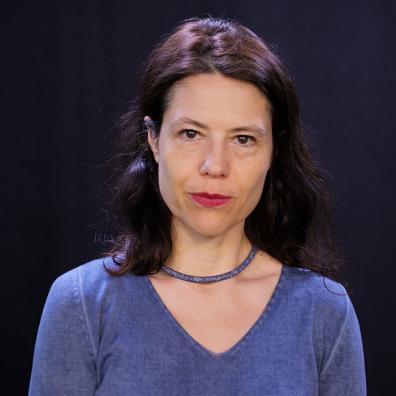
Elizabeth Pollman is a Professor of Law and Co-Director of the Institute for Law & Economics at the University of Pennsylvania Carey Law School. She specializes in corporate law, governance, and entrepreneurship, with a focus on venture capital-backed startups and dual-class structures. Her work examines issues such as CEO turnover, ESG integration, and regulatory frameworks in corporate law. Her research has been published in top-tier journals including the Harvard Law Review, Columbia Law Review, and Duke Law Journal. She co-authored *Business Organizations: A Contemporary Approach* and co-edited *Research Handbook on Corporate Purpose and Personhood*. Pollman has received teaching awards, including the Harvey Levin Memorial Award (2022) and LLM Prize (2021 & 2024). Before joining Penn, she taught at Loyola Law School and held visiting roles at UC Berkeley and the University of Sydney. She practiced at Latham & Watkins and clerked for the Ninth Circuit Court of Appeals. She earned her BA and JD from Stanford University, both with distinction. Her current projects include analyzing governance dynamics in dual-class firms and exploring the historical and modern evolution of corporate purpose clauses. She co-directs the Institute for Law & Economics, which focuses on interdisciplinary research at the intersection of law and economic analysis.
Dr. Adam Storring is a Visiting Research Fellow at King’s College London’s Department of War Studies, School of Security Studies. His research bridges cultural/intellectual history with military operations, focusing on King Frederick II of Prussia (1740–1786). He holds a PhD from the University of Cambridge (2018), supervised by Christopher Clark, and previously held fellowships at the Lichtenberg-Kolleg (Göttingen) and multiple German institutions. His work challenges traditional narratives of Frederick II’s militarism, emphasizing French intellectual influences and subjective military thought. Education: BA History (St. John’s College, Cambridge, 2001); MPhil Historical Studies (2007); PhD History (2018) Awards: 2019 André Corvisier Prize (top global military history dissertation) Roles: Member of the Bibliographical Committee of the International Commission of Military History; peer reviewer for War in History and National Science Centre, Poland His research redefines Frederick II’s military ideas as rooted in French Enlightenment thought rather than German militarism. He examines temporality in warfare, collective strategy formation in Prussia, and Russia’s role in the Seven Years War. His publications analyze battles like Zorndorf (1758) and challenge the notion of warfare as purely mathematical. Teaching includes courses on modern war history, international relations, and historiography. He combines rigorous archival work with interdisciplinary approaches, integrating history of science and classical scholarship into military studies.
William W. Burke-White is Professor of Law at the University of Pennsylvania Carey Law School , where he is a leading scholar at the intersection of international law and international relations. He also serves as Non-Resident Senior Fellow at the Brookings Institution and Senior Advisor to White & Case LLP , bridging academic research with policy and legal practice. He previously held leadership roles as Inaugural Director of Perry World House (2014–2019) and Deputy Dean of Penn Law (2011–2014). Harvard University – A.B., J.D. University of Cambridge – Ph.D. in International Relations (Fulbright Scholar) Burke-White’s research focuses on global governance, multilateral institutions, U.S. foreign policy, human rights, and international economic law . His work examines how shifting power dynamics affect international legal structures and how sub-state actors influence global norms. He has significant regional expertise in Russia, Eastern Europe, and Latin America . His current book project explores the new geography of global governance . His recent scholarly output reveals a consistent trend toward analyzing institutional reform, legal pluralism, and the interplay between domestic and international law . He frequently publishes in top journals on topics such as investor-state arbitration, complementarity in international criminal law, and the legitimacy of global legal regimes. His work often combines doctrinal legal analysis with political science theory. A. Leo Levin Award (2008) Robert A. Gorman Award for Excellence in Teaching (2007) Burke-White has advised governments, law firms, and investment funds on sanctions, sovereign debt, and international litigation. He has served as an expert witness in international arbitrations and currently advises sovereign states on cases before the International Court of Justice . He is also active in media commentary, contributing to The Hill, CNN, The Atlantic , and others. He has taught as a visiting professor at institutions including Harvard Law, Hebrew University, and Moscow State Institute of International Relations .
Dr. Mark G. Reith is an Assistant Professor of Computer Science at the Air Force Institute of Technology (AFIT), part of the U.S. Air Force’s Air University. He is based at Wright-Patterson Air Force Base, Ohio, within the Graduate School of Engineering and Management. Dr. Reith holds a Ph.D. in Computer Science from the University of Texas at San Antonio (2009), an M.S. in Computer Science from AFIT (2003), and a B.S. in Computer Science from the University of Portland (1999). Ph.D., Computer Science, University of Texas at San Antonio, 2009 M.S., Computer Science, Air Force Institute of Technology, 2003 B.S., Computer Science, University of Portland, 1999 Dr. Reith's research focuses on cybersecurity, cyber education, game-based learning, and multi-domain operations. He investigates operational cybersecurity in space systems, software factories, and military training through serious games. His work emphasizes trust management, cyber risk assessment, and defense acquisition innovation. He actively promotes STEM outreach and cyber workforce development within the Department of Defense. His recent publications reflect a strong trend in defense-oriented cybersecurity research, particularly in the domains of space system security, military software acquisition, and gamified cyber training. Articles span journals such as Air & Space Operations Research , Defense Acquisition Research Journal , and International Journal of Serious Games , highlighting interdisciplinary work bridging computer science, military strategy, and education. Dr. Reith has received notable recognition, including: AFA Colonel Charles A. Stone Award (2023) DAF Outstanding STEM Outreach Champion Award (2023) AFIT Team of the Quarter (2017) Bernard A. Schriever Essay Contest Winner (2017) He has advised numerous graduate students, many of whom are co-authors on his publications, particularly in the areas of cyber risk, space cybersecurity, and educational games. Dr. Reith has also contributed to research grants and initiatives focused on improving cyber hygiene, military IoT security, and multi-domain command and control. He is a frequent invited speaker on topics such as game-based learning and industry-academia collaboration in cybersecurity. Dr. Reith is actively involved in research labs and teams at AFIT, particularly those focused on cyber education, serious games (e.g., Battlespace Next), and operational cybersecurity. His work often involves collaboration with students and faculty across engineering, systems, and defense domains.
Trudo Lemmens is Professor and Scholl Chair in Health Law and Policy at the University of Toronto Faculty of Law. He holds cross-appointments at the Dalla Lana School of Public Health, the Temerty Faculty of Medicine, and the Joint Centre for Bioethics, reflecting his interdisciplinary expertise in health law, ethics, and policy. He has also held visiting positions at KU Leuven, Pontificia Universidad Javeriana, University of Otago, and Oxford, and was a member of the Institute for Advanced Study in Princeton. His research focuses on the legal, ethical, and governance challenges in healthcare and biomedical research. Key areas include medical assistance in dying, clinical trial transparency, pharmaceutical regulation, genetic data privacy, and conflict of interest. He has extensively analyzed how legal frameworks interact with ethical norms in contexts such as assisted human reproduction, end-of-life decisions, and public health emergencies. His work emphasizes human rights, equity, and the protection of vulnerable populations. His recent publications reveal a strong focus on the ethical and legal dimensions of medical assistance in dying, particularly regarding mental illness and advance requests. He has also published on vaccine mandates, pandemic triage ethics, and transparency in pharmaceutical data. His scholarship combines doctrinal legal analysis with empirical and policy insights, often addressing urgent public health debates. Fellowship, Royal Flemish Academy of Belgium for Science and the Arts (2006-2007) Membership, School of Social Science, Institute for Advanced Study, Princeton (2003-2004) Law Commission of Canada, Legal Dimensions Initiative Award (with Duff R. Waring) (2003) Graduate Student Paper Award, Association for Politics and the Life Sciences (1996) Doctoral Fellowship, Social Sciences and Humanities Research Council of Canada (1995-1997) Doctoral Fellowship, Fonds pour la formation de chercheurs et l'aide à la recherche du Québec (deferred) (1995-1998) Student Paper Award, Society for Health and Human Values (1995) Chief Justice R.A.E. Greenshields Memorial Scholarship for Graduate Studies in Law (1994) Trudo Lemmens has advised numerous national and international organizations, including the Pan American Health Organization (as a member of its Advisory Committee on Health Research), the World Health Organization, and the Council of Canadian Academies. He has served on expert panels examining access to health data and medical assistance in dying. His policy submissions to Canadian parliamentary committees have shaped national debates on end-of-life legislation. He has also contributed to inquiries into research ethics and institutional governance, including an independent inquiry into the University of Ottawa and its affiliated hospitals. He is actively engaged in public discourse, publishing op-eds in major media outlets and maintaining a presence on social media. His work bridges academia, policy, and public engagement, advocating for transparency, accountability, and ethical integrity in health systems and research.
Ulf Linderfalk is a Professor of International Law at the Faculty of Law, Lund University, and from September 2025, a Distinguished Researcher at the University of A Coruña, Spain, with an approved 80% absence leave from Lund. He is a leading figure in public international law, known for his theoretical depth and interdisciplinary approach. His research focuses on the systemic fabric of international law, including treaty interpretation, jus cogens , proportionality, discretion, and normative conflict. Drawing on sociology, epistemology, and pragmatics, he adopts a 'specialized generalist' approach to address fundamental legal challenges. His work is cited in major reference works such as Brownlie’s Principles of Public International Law and the Max Planck Encyclopedia of Public International Law , and has influenced the UN International Law Commission. Linderfalk has published five monographs, two widely used textbooks (in third editions), and over 40 articles in top journals including European Journal of International Law and Leiden Journal of International Law . His recent and forthcoming works explore discretion, knowledge systems in law, and special regimes. He has led major research projects funded by the Swedish Research Council, the Spanish Government, and other foundations, totaling SEK 34 million. He has been awarded the Nordic Tax Research Council Article Prize (2017) and served as Editor-in-Chief of the Nordic Journal of International Law (2011–2019). He has held leadership roles at Lund University, including Chair of the Nomination Committee and member of the Faculty Board. He regularly advises law firms, parliaments, and international organizations. Nordic Tax Research Council Article Prize (2017) Linderfalk has supervised doctoral candidates such as Samantha S. O'Donnell and Luca Lo Giacco. He has received multiple research grants, including a EUR 1 million Spanish Government grant (2025–2029) as principal investigator. He is currently under consideration for an ERC Advanced Grant, having reached the second round two years consecutively. He is involved in international collaborations with scholars from Leiden, Copenhagen, Tilburg, and Lund. He is active in academic networks, frequently invited to speak at institutions like Oxford, Cambridge, and Maastricht, and participates in seminars and conferences globally, including iCourts in Copenhagen and Maastricht University’s Globalization & Law Network.
Guibourg Delamotte is a tenured Full Professor of Political Science and head of the Japanese Studies Department at the French Institute of Oriental Studies (Inalco), where she has been affiliated since 2006. She also teaches at Sciences Po Paris and holds international research fellowships at the University of Tokyo’s Research Center for Advanced Science and Technology (RCAST), Temple University Japan, and the Japan Forum on International Relations (Tokyo). Her career spans Japanese defense policy, domestic politics, parliamentary institutions, and Indo-Pacific security dynamics. Education: Law, University of Paris Panthéon Assas Law, University of Oxford Japanese (BA, MA), Inalco Political Science, Sciences Po Paris PhD in Political Studies, EHESS (2007, Highest Honours, Shibusawa-Claudel Award) Habilitation à Diriger des Recherches, Sciences Po Paris (2022) Her research focuses on Japanese domestic and foreign policy, parliamentary governance, defense modernization, and Indo-Pacific security. She has authored/co-edited eight books, including Le Japon, un leader discret (Eyrolles, 2023) and La Démocratie au Japon, singulière et universelle (ENS Ed., 2022), and over 20 journal articles and book chapters. Recent publications emphasize Japan's strategic evolution in the Indo-Pacific, AUKUS implications, and democratic governance challenges. She examines security policy intersections with domestic politics, legal frameworks, and international alliances. Scientific Awards: Shibusawa-Claudel Award for PhD dissertation Highest Honours (PhD, EHESS) Delamotte leads the French Research Institute on East Asia (IFRAE)’s program on Contemporary East Asia's trajectory. She serves on the National Academic Council’s Political Science Section (CNU, Section 4) and contributes to policy debates through academic and governmental institutions.
Elizabeth (Lisa) Alexandrin is an Associate Professor in the Department of Religion at the Faculty of Arts, University of Manitoba . Her academic work bridges Islamic Studies , Sufism , and gender theory , with a focus on visual and textual representations of mysticism. Education: PhD in Islamic Studies, McGill University (2006) MA in Anthropology, University of Toronto (1993) BA in Anthropology, Boston University (1993) Research Interests: Islamic intellectual history Sufism Ismaili thought Body histories Visual piety Key Themes in Publications: Apocalyptic narratives in Fāṭimid Ismāʿīlī thought Qurʾanic calligraphy as spiritual practice Symbolism of walāyah (sainthood) in Sufi texts Intersection of dreams and mystical exegesis Awards: SSHRC Insight Development Grant (2018-2022) Explore SSHRC/University of Manitoba grant (2021-2022) SSHRC standard research grant (2011-2012)
David Christensen is a Professor of Philosophy and Director of Undergraduate Studies at Brown University. He holds a B.A. from Hampshire College and a Ph.D. from UCLA. Prior to Brown, he taught at the University of Vermont for 20 years. His research focuses on epistemology, formal and informal, with emphasis on rational belief constraints, evidential support, and epistemic disagreement. Current work explores how rational self-doubt should shape ideal rationality frameworks. Christensen’s notable contributions include Putting Logic in its Place (2004) and co-editing The Epistemology of Disagreement: New Essays (2013). His scholarship bridges formal methods with practical questions about belief revision and peer disagreement. Research interests include: logical constraints on belief, higher-order evidence, epistemic akrasia, and the implications of peer disagreement. He examines how self-aware agents navigate cognitive biases and conflicting evidence while maintaining rational integrity. Recent work emphasizes self-critique mechanisms and the ineliminable role of epistemic rationality. Publications span over 30 years, addressing topics like evidential symmetry, Bayesian epistemology, and the limits of rational reflection. His articles consistently explore foundational questions in epistemology using both formal and conceptual analysis. Christensen’s work is characterized by rigorous argumentation and interdisciplinary engagement with philosophy of science and decision theory. Teaching responsibilities include directing undergraduate studies and courses on epistemology, logic, and philosophy of science. No formal awards are listed, though his academic contributions are widely cited in epistemology literature. Labs/Teams: No specific research groups are mentioned, though his work contributes broadly to collective epistemology and formal methods in philosophy.
Antonios Tzanakopoulos is the Professor of Public International Law at the University of Oxford and a Fellow at St Anne’s College . He has held visiting positions at the Universities of Paris II, Paris X, Angers, King’s College London, National and Kapodistrian University of Athens, Bern, Hebrew University of Jerusalem, IDC Herzliya, and China University of Political Science and Law. He previously taught at University College London and the University of Glasgow. DPhil (Oxford), LLM (NYU), LLM/LLB (Athens) Researcher for the Hellenic Ministry of Foreign Affairs and United Nations Graduate Teaching Assistant at Oxford’s Faculty of Law His research interests span public international law, state responsibility, treaty law, international human rights, law of the sea, and international investment law. He has served as counsel in cases before the International Court of Justice , EU courts, and ICSID tribunals, including Cyprus v Russia and Ukraine v Russia. His recent ICJ involvement includes Malaysia’s advisory opinions on the Occupied Palestinian Territory. His scholarly output is evident in 15 recent articles addressing treaty-custom interaction, maritime jurisdiction, self-defence doctrine, sanctions accountability, ICJ provisional measures, and state reactions to international coercion. He co-edits major handbooks on treaty law and domestic judicial engagement with international law. Secretary-General of the International Law Association Joint Secretary of the ILA’s British Branch Editorial Board of Oxford Reports on International Law
Alberto Cantera Glera is a Professor at the Institute of Iranian Studies within the Department of History and Cultural Studies at Freie Universität Berlin. His research focuses on Zoroastrian studies, Avestan language and literature, Iranian linguistics, and manuscript studies. He teaches courses on Young Avestan, Pahlavi, Zoroastrian rituals, and Iranian literature, with office hours held on Thursdays from 3-5 p.m. Professor Cantera Glera's research interests center on Zoroastrian religious practices, particularly the Long Liturgy, Avestan textual criticism, and the transmission of Zoroastrian texts through manuscript traditions. His work bridges linguistic analysis with religious studies, examining how ritual practices evolved from ancient to medieval Iran. He has made significant contributions to understanding the relationship between oral performance and written transmission in Zoroastrian traditions, as well as the linguistic features of Avestan and Middle Persian texts. His recent publications reveal a consistent focus on Zoroastrian ritual structures, particularly the Long Liturgy, with increasing attention to the relationship between textual manuscripts and ritual performance. The articles show progression from linguistic analysis of Avestan texts toward broader studies of ritual practice, sacred geography, and the historical development of Zoroastrian religious authority. His work demonstrates sophisticated integration of manuscript evidence with ritual theory and historical linguistics. PRIX ROMAN ET TANIA GHIRSHMAN 2021 Professor Cantera has supervised numerous PhD students including Nils Purwins, Stefan Härtel, Yusef Saadat, Jaime Porro, Soheil Delshad, and Xue Li. His research has been supported through various academic projects related to Zoroastrian manuscript studies and Avestan textual criticism, contributing significantly to the field of Iranian studies at Freie Universität Berlin.
Bernardo Jesús Periñán Gómez, currently a Professor of Private Law at Universidad Pablo de Olavide (Seville, Spain) , specializes in Roman Law and its reception into modern legal systems. He leads the research group From the European Common Law to Civil Law and has established research stations at institutions like Harvard and Pavia. His work bridges historical jurisprudence with contemporary legal challenges, particularly in pandemic-related obligations and urban liability frameworks. Education: Doctorate in Roman Law from Universidad de Sevilla (1997) focusing on the Senatus Consultum Macedonianum. Research: Explores Roman legal structures, comparative law, and globalization's impact on individual juridical capacity. Publications: Over 40 articles and monographs in journals like Revista Internacional de Derecho Romano and Boletín Mexicano de Derecho Comparado , emphasizing doctrinal continuity and adaptation. Awards & Roles: Serves on international scientific committees, directs doctoral theses, and contributes to editorial boards including Persona Collection at Comares Publishing.
Dr Hamid Younesi, a Lecturer in Law and Programme Leader for the Postgraduate LLM Law Programme at the University of York, is an international lawyer specializing in energy law, international investment law, and arbitration. He holds an LLB (First Class Honours), LLMs in Private Law, International Business Law, and International Oil and Gas Law & Policy, and a PhD from York Law School. His research focuses on balancing host state and investor interests in energy projects, legal remedies in arbitration, and climate change law. International Energy Investment Law Investor–State Arbitration Climate Change Law Artificial Intelligence in Law Relational Contract Theory Dr Younesi's publications examine energy disputes, stabilisation clauses, and contractual equilibrium in cross-border projects. He has contributed to journals like European Business Law Review and Petroleum Business Review , with a forthcoming book on energy investment law. His work bridges legal theory and practice in arbitration and investment law. 2006 Best Overall Student 2008 Best Overall Student 2018 Postdoctoral Fellowship As a Fellow of Advance HE, Dr Younesi teaches international arbitration and investment law. He has served as counsel in cases at the Permanent Court of Arbitration and advised energy companies. His professional engagements span global institutions like the Chartered Institute of Arbitrators and the Society of Legal Scholars.
Averil Cameron is a distinguished Professor of Late Antique and Byzantine History at the University of Oxford, previously serving at King's College London from 1978–1994. Her research focuses on the intersection of political, religious, and cultural dynamics in late antiquity and Byzantium. She has held prominent roles such as President of the Council for British Archaeology in the Levant and has been honored with prestigious awards including the British Academy Kenyon Medal (2020) and DBE (2006). Her academic contributions include foundational texts on Procopius, Eusebius, and the Mediterranean world. Notable works like Byzantine Matters (2014) and Dialogues and Debates from Late Antiquity (2017) explore intellectual and religious discourses. She has edited volumes in the Cambridge Ancient History series, shaping scholarly narratives on Roman and Byzantine empires. Cameron’s publications consistently bridge micro-historical analysis with macro-historical trends, emphasizing how cultural and political shifts in late antiquity laid foundations for medieval Europe and the Islamic world. Her work integrates textual criticism, archaeological insights, and interdisciplinary approaches to reconstruct complex historical phenomena. Awards: Kenyon Medal, DBE, CBE, Fellow of British Academy Editorial Roles: Cambridge Ancient History series, British Archaeology Council Key Themes: Imperial governance, religious transitions, cultural continuity, and late antique socio-political structures
Professor Imre Hamar, holding a Doctor of Science (DSc) degree, serves as Director of the Institute of East Asian Studies and Head of the Department of Chinese Studies at Eötvös Loránd University (ELTE). He earned his PhD in 1997, habilitated in 2004, and became a full professor in 2008. His academic leadership spans multiple institutions, including directing the ELTE Confucius Institute since 2006. Doctor of Science (DSc) - Institute of East Asian Studies Professor - Department of Chinese Studies Director - Confucius Institute (since 2006) A leading scholar in Chinese Buddhism with a specialization in Huayan philosophy, Hamar has dedicated decades to studying Tang Dynasty religious thought, Buddhist exegesis, and classical Chinese texts. His research traces the development of Buddhist doctrines in China and their cross-cultural transmission through Central Asia. He has taught Chinese religious history, classical Chinese texts, and Buddhist philosophy across undergraduate and postgraduate levels at ELTE. His academic publications focus on the Huayan tradition , Avatamsaka-sutra interpretations, and Yogacara-Huayan synthesis . Recent works examine syncretism in Chinese Buddhist commentaries and the cult of Mount Wutai, reflecting his ongoing engagement with Buddhist sacred geography. Scientific recognition includes: Pro Universitate Award (Gold Level, 2010) Excellent Confucius Institute Director Award (2011) Fulbright Fellowship (University of Virginia, 2008-2009) Numata Guest Professorship (Hamburg University, 2010) He has received multiple research grants from the Japan Foundation, DAAD, and Chiang Ching-kuo Foundation. His editorial work includes co-editing Reflecting Mirrors: Perspectives on Huayan Buddhism (2007) and several volumes in the ELTE Sinological Workshop series.