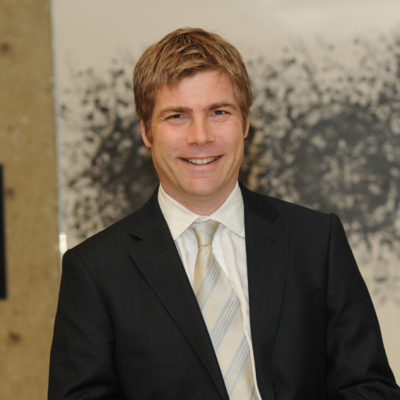
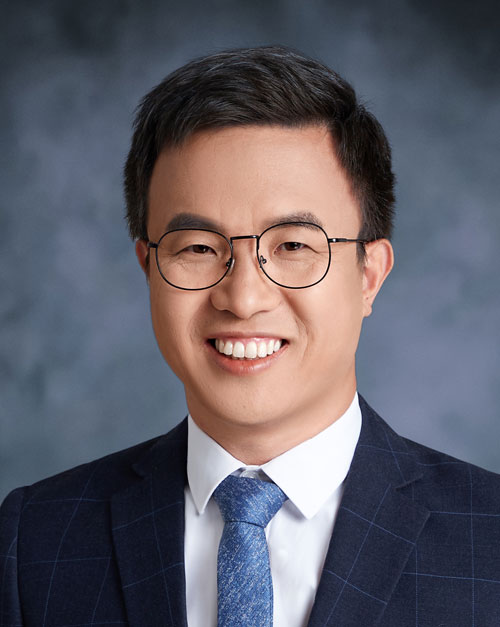
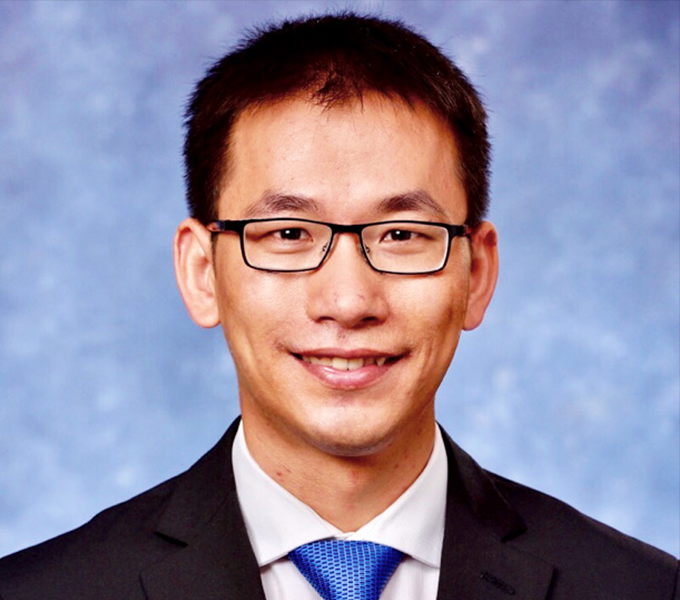
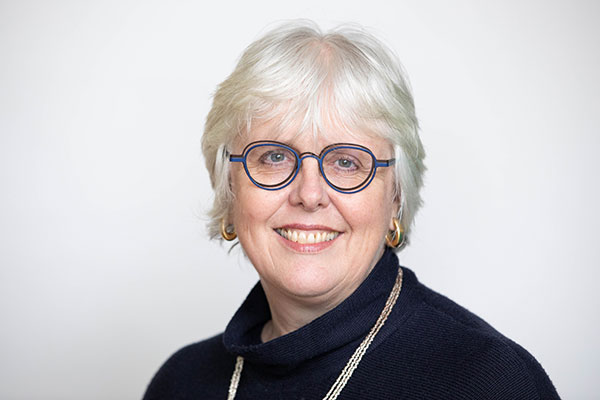
Raquel Fernández is Full Professor of Computational Linguistics and Dialogue Systems at the University of Amsterdam, where she leads the Dialogue Modelling Group at the Institute for Logic, Language & Computation (ILLC). As Vice-Director for Research at ILLC and a Fellow of the ELLIS Society, she bridges computational linguistics, cognitive science, and artificial intelligence through her research on language use in multimodal and conversational contexts. PhD in Computational Linguistics from King's College London Prior research positions at University of Potsdam and Stanford University's CSLI Her work explores how cognitive constraints, social interaction, and perception shape language use, with a focus on: Visually-grounded language processing Multimodal dialogue modeling Model uncertainty and calibration Language grounding in multimodal data Language learning and semantic change Dialogue reference resolution Recent publications analyze multimodal reasoning limitations, cross-lingual knowledge consistency, and uncertainty modeling in dialogue systems. She has received multiple accolades including an ERC Consolidator Grant , NWO VENI/VIDI/Aspasia fellowships , and EMNLP/GenBench awards . Outstanding Paper Award (EMNLP 2023) Best Data Award (GenBench Workshop 2023) ELLIS Society Fellow ERC Consolidator Grant #819455 recipient NWO VENI/VIDI/Aspasia awardee As a leader in academic service, she serves on the SIGDAT Executive Committee and chairs multiple conference committees. Her lab develops models for multimodal dialogue, visual storytelling, and grounded language understanding.
Michael Wara is a Senior Research Scholar at the Stanford Woods Institute for the Environment and Director of the Climate and Energy Policy Program. He holds a JD from Stanford Law School, a PhD in Ocean Sciences from UC Santa Cruz, and a BA from Columbia University. His work bridges legal, scientific, and policy domains to address climate and energy challenges through bipartisan technical assistance and research collaboration with economists, engineers, and scientists. His research focuses on carbon pricing mechanisms, energy innovation, and regulatory solutions for climate policy. He advises policymakers on designing effective laws and regulations, with particular expertise in international environmental treaties like the ozone and climate regimes. Wara also teaches courses on energy law, wildfire policy, and carbon taxation at Stanford Law School. Key contributions include analyzing the economic impacts of EPA regulations, evaluating California’s carbon market mechanisms, and advancing strategies to decarbonize building electrification. His interdisciplinary approach emphasizes practical solutions to global environmental challenges, leveraging Stanford’s expertise in energy systems and policy. Wara’s policy practicum courses engage students in real-world projects such as evaluating carbon pollution standards and wildfire management policies. His work frequently appears in peer-reviewed journals and media outlets like The Atlantic and New York Times , addressing topics like the Supreme Court’s EPA rulings and wildfire insurance issues.
Meng Li is a Professor and the Endowed C. T. Bauer Chair of AI at the C. T. Bauer College of Business, University of Houston. He also serves as the founding Director of the Bauer Human-Centered AI Institute and the SCM PhD coordinator, highlighting his leadership in AI and operations research. His research centers on human-centered AI , managerial behavior , and human-algorithm interaction , with applications in supply chain management, operations, and strategic decision-making. His work explores cognitive biases, behavioral operations, and the integration of AI in business contexts. The 15 most recent publications demonstrate a consistent focus on behavioral aspects of operations management, particularly overconfidence, regret, and trust in AI systems. The research spans journals such as Management Science , Production and Operations Management , and Strategic Management Journal , indicating interdisciplinary impact across operations, strategy, and information systems. Scientific Awards and Honors: The President’s Circle Awards, University of Houston, 2025 Energy Transition Institute Award ($62.5K), 2024 John Aure Buesseler Distinguished Lectureship, Texas Tech, 2024 Shell Sustainability Research Grant ($100K), 2022 Management Science Distinguished Service Award, 2022 Rutgers Research Council Award, 2020 Finalist for INFORMS Best Service Science Paper Award, 2019 Meng Li advises PhD students as SCM PhD coordinator and leads major research initiatives through the Bauer Human-Centered AI Institute . His work is supported by grants from Shell, HPE, and NIST. He serves as Department Editor for Journal of Operations Management and Decision Sciences Journal , and Senior Editor for Production and Operations Management , and has guest-edited AI-focused special issues in top journals. He is actively building interdisciplinary teams at the intersection of AI, operations, and behavioral science, fostering collaborations across business, engineering, and health domains.
Meng Wu is an Assistant Professor in the School of Electrical, Computer and Energy Engineering (ECEE) at Arizona State University, specializing in advanced optimization, control, and machine learning methods for integrating distributed energy resources (DERs) into power systems. Her work addresses critical challenges in power system planning, operations, stability, and electricity markets under high DER penetration. Education: Ph.D. in Electrical and Computer Engineering, Texas A&M University, 2017 M.Eng. in Electrical and Computer Engineering, Cornell University, 2011 B.Eng. in Electrical Engineering & Automation, Tianjin University, China, 2010 Research Interests: Dr. Wu's research focuses on DER integration through transmission-distribution coordination , spatio-temporal price forecasting , and optimal market participation strategies. Key areas include: Physics-guided machine learning for DER-penetrated distribution systems Computational algorithms for wholesale-distribution market coordination Dynamic modeling of DERs and composite loads for voltage stability Optimal bidding strategies for energy storage and DER aggregators Publication Trends: Her 2021-2024 publications reveal a concentrated effort on DER market integration using parametric programming and deep learning, with emphasis on real-time locational marginal price forecasting, transmission-distribution coordination, and degradation-aware energy storage operations. Scientific Awards: Best Paper Award, IEEE PES General Meeting (2021) Best Conference Paper Award, North American Power Symposium (2019) Invited Participant, US Frontiers of Engineering Symposium, NAE (2021) Advising and Grants: Dr. Wu mentors multiple PhD and Master's students, including recent graduates Zhongxia Zhang (PhD) and Sayyid Mohssen Sajjadi (MS). Her group secured PSERC funding for projects on DER aggregation and adaptive transmission-distribution modeling, with industry partnerships at ISO New England and Quanta Technology. Research Group: Leading an active research team at ASU, she collaborates with the Power Systems Engineering Research Center (PSERC) on DER integration challenges, advising students through FURI, MORE, and Barrett Honors College programs.
Jiliang Tang is an MSU Foundation Professor in the Department of Computer Science and Engineering at Michigan State University (MSU), part of the College of Engineering. He holds a PhD from Arizona State University (2015) and previously worked as a research scientist at Yahoo Research. His research focuses on graph machine learning, trustworthy AI, and applications in education and biology. He has received numerous awards, including the 2022 AI's 10 to Watch, IAPR J.K. Aggarwal Award, and NSF CAREER Award. Education: PhD in Computer Science, Arizona State University, 2015 (Advisor: Huan Liu) Research Interests: Graph Neural Networks (GNNs) and Deep Learning on Graphs Trustworthy AI: Safety, Robustness, and Fairness AI+X Applications: Education Technology and Biological Data Analysis His work bridges theoretical advancements and practical applications, with contributions to graph representation learning, privacy in generative models, and educational AI systems. Awards & Recognition: Over 8 best paper awards (or runner-ups) Rock Star Award from Association of Chinese Scholars in Computing Extensive media coverage for innovations in AI education and biology Grants & Projects: NSF CAREER Award (2019) for research on signed networks Co-PI on a $1.7M grant for 5G research Leadership in projects like DSE Lab and Data Science initiatives Labs & Teams: Directs the Data Science and Engineering (DSE) Lab at MSU, focusing on advancing AI for real-world challenges. The lab collaborates with industry leaders and publishes widely in top conferences (e.g., KDD, SIGIR, ACL).
Jingtong Hu is an Associate Professor at the Swanson School of Engineering, University of Pittsburgh, where he also holds the William Kepler Whiteford Faculty Fellowship. His research focuses on Cyber-Physical Systems and Infrastructure Security, with significant contributions to embedded systems, non-volatile memory architectures, and hardware/software co-design for energy-constrained environments. Dr. Hu received his PhD from the University of Texas at Dallas (2007-2013) and his Bachelor of Engineering from Shandong University (2003-2007). His research spans multiple interdisciplinary areas including energy harvesting systems, non-volatile processors, FPGA acceleration, and machine learning at the edge. His recent publications demonstrate a strong focus on algorithm-hardware co-design, particularly for vision transformers, federated learning, and non-volatile memory systems. His work often addresses the challenges of implementing AI on resource-constrained edge devices, with emphasis on energy efficiency, reliability, and performance optimization. The trend in his publications shows increasing focus on sustainable AI processing, heterogeneous computing architectures, and personalized machine learning for IoT applications. Selected Awards: IEEE Transactions on Computer-Aided Design Donald O. Pederson Best Paper Award (2021) ACM SIGDA Meritorious Service Award (2019) Multiple Best Paper Award nominations at top conferences including DAC, ASP-DAC, and CODES+ISSS Dr. Hu's research has been supported by multiple grants focusing on energy-efficient computing, non-volatile memory systems, and hardware acceleration for machine learning. His collaborative work spans numerous institutions and involves interdisciplinary teams working at the intersection of computer architecture, embedded systems, and artificial intelligence. His publications show extensive collaboration with researchers at the University of Pittsburgh, particularly with Albert K. Jones and Yiyu Shi. His laboratory work focuses on implementing practical systems for energy harvesting powered devices, non-volatile processors, and hardware accelerators for machine learning applications. Current projects appear to emphasize sustainable AI processing at the edge, heterogeneous FPGA acceleration, and personalized federated learning for health monitoring applications.
Frede Blaabjerg is a Professor at Aalborg University (AAU Energy) , affiliated with the Faculty of Engineering and Science . Since 1998, he has pioneered power electronics research in applications such as wind turbines , photovoltaic (PV) systems , reliability engineering , and Power-2-X technologies. Education : PhD in Electrical Engineering (1995, Aalborg University) Honorary Degrees : Honoris Causa at University Politehnica Timisoara (2017) and Tallinn Technical University (2018) His research focuses on power electronics control , system optimization , and reliability for renewable energy and electric mobility . Recent work includes grid-forming converters , virtual synchronous generators , and smart EV charging systems. Key publication trends span 15+ years , with over 3,733 peer-reviewed articles and 900+ journal papers in power electronics , renewables , and energy storage . Notable book series: Control of Power Electronic Converters and Systems (4 volumes, Elsevier). Scientific Awards : 46 IEEE Prize Paper Awards 2020 IEEE Edison Medal 2019 Global Energy Prize 2014 IEEE William E. Newell Power Electronics Award Leadership Roles : Editor-in-Chief, IEEE Transactions on Power Electronics (2006–2012) Chairman, Danish Council for Research and Innovation Policy (2020–) President, IEEE Power Electronics Society (2019–2020)
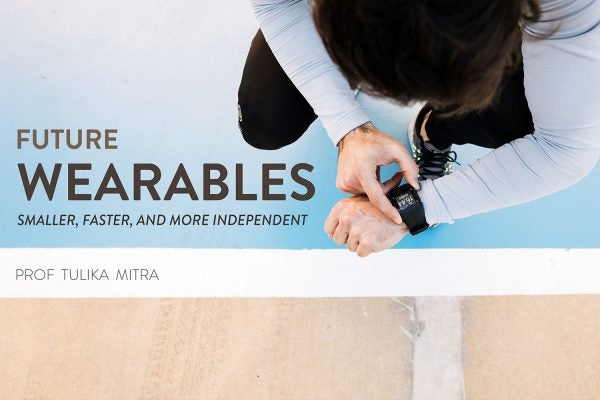
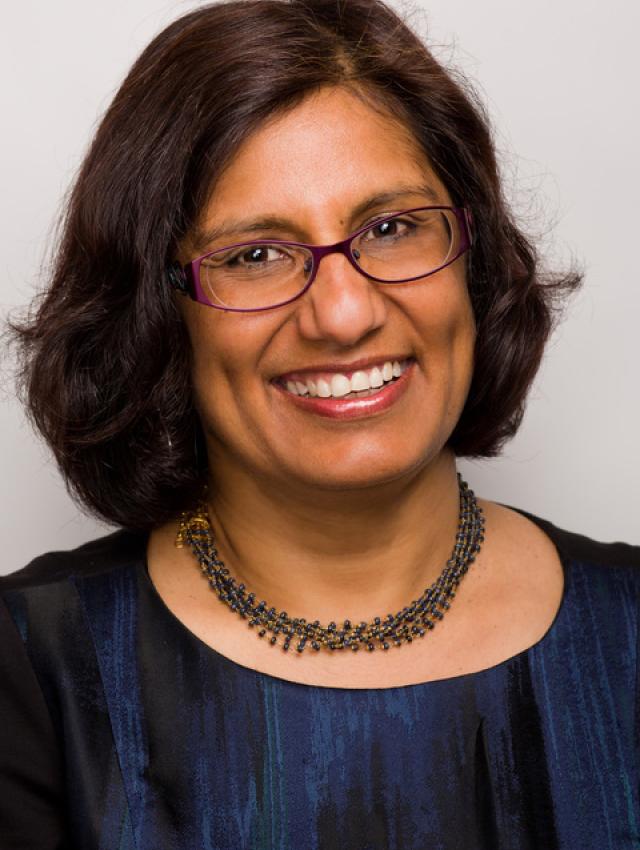
Professor Tulika Mitra is the Dean of the School of Computing and Vice Provost (Special Projects) at the National University of Singapore (NUS). She holds the Provost’s Chair Professor in the Department of Computer Science and has been instrumental in shaping academic policies and strategic initiatives at NUS since joining in 2001. PhD in Computer Science, Stony Brook University (2000) M.E. in Computer Science, Indian Institute of Science (1997) B.E. in Computer Science, Jadavpur University (1995) Her research focuses on hardware-software co-design for energy-efficient computing systems, particularly in real-time embedded systems, heterogeneous architectures, and AI accelerators. She leads major research programs such as the NRF Competitive Research Programme on Low-Power Edge Accelerators and the MOE Tier-3 Programme on Green AI , collaborating with industry leaders like ARM, AMD, and Meta. Her recent publications highlight innovations in CGRA optimization , sparse attention mechanisms , photonic-digital hybrid architectures , and low-power ML inference . These works often integrate compiler techniques, architectural design, and real-time constraints for edge computing applications. Scientific Awards : ESWEEK Test-of-Time Award (2022), ACM SIGDA Distinguished Service Award, IEEE CEDA Outstanding Service Recognition Award, Teaching Excellence Award (2006), and multiple best paper recognitions. Education Leadership : Spearheaded the Computer Engineering (CEG) Programme at NUS, a joint initiative between Engineering and Computing. As a mentor , she has supervised over 25 PhD students , many now in prominent academic or industrial roles. Her research group eCO Lab focuses on embedded computing challenges, while her grant collaborations include projects on 5G base stations, reconfigurable architectures, and IoT-optimized SoCs.
Remko Van Hoek serves as Professor of Practice in the Department of Supply Chain Management at the Sam M. Walton College of Business, University of Arkansas. He teaches Sourcing and Procurement courses across undergraduate, master's, and doctoral programs. Prior to joining the University of Arkansas, Dr. Van Hoek held academic positions in Europe and served as a visiting professor at Cranfield School of Management, complemented by extensive industry experience as a supply chain and procurement executive at global corporations including Nike, PwC, and The Walt Disney Company. He currently serves on the Council of Supply Chain Management Professionals (CSCMP) Board of Directors and acts as executive director of the CSCMP Supply Chain Hall of Fame hosted by the Walton College. Dr. Van Hoek's research centers on digital transformation in procurement and supply chain management, with particular focus on blockchain implementation, artificial intelligence applications, and sustainable sourcing practices. His work investigates how emerging technologies reshape procurement processes, supplier relationship management, and risk mitigation strategies. He explores innovative approaches to supplier diversity programs, ethical sourcing frameworks, and the strategic evolution of procurement from cost reduction to value creation. His research consistently bridges academic theory with industry practice through case studies from major corporations, developing actionable frameworks for practitioners facing digital disruption and sustainability challenges. Analysis of his 15 most recent publications (2023-2025) reveals dominant themes in AI-driven supply chain risk prevention, blockchain implementation for transparency, and sustainable supplier engagement. His work demonstrates consistent industry collaboration, drawing from case studies at Walmart, Moet Hennessy, and Bayer to address post-pandemic resilience challenges. A significant portion examines procurement's strategic evolution beyond transactional functions, with recurring emphasis on ethical considerations in digital transformation and the practical implementation barriers for emerging technologies in global supply networks. As a Professor of Practice, Dr. Van Hoek integrates executive-level industry experience into curriculum development and student mentorship. His industry-engaged teaching model includes guest lecturer programs connecting students with supply chain practitioners, as evidenced by his co-authored work on integrating industry insights into supply chain education. While specific grant funding details are not publicly documented, his leadership in the CSCMP Supply Chain Hall of Fame demonstrates commitment to professional development and industry-academia knowledge transfer. Dr. Van Hoek directs the CSCMP Supply Chain Hall of Fame initiative, which documents transformative contributions to supply chain management through interviews with industry pioneers and historical case studies. This platform serves as both an educational resource for Walton College students and a professional development tool for supply chain practitioners globally. The Hall of Fame preserves critical industry knowledge while highlighting contemporary innovations in supply chain strategy and technology implementation.
Marianne Nordli Hansen is a Professor at the Department of Sociology and Human Geography , University of Oslo. With a career spanning decades, her research focuses on social stratification , class and inequality , labor market conditions , economic inequality , and elites . She has taught courses like Sociological Theory (SOS4001), Theory Specialization in Sociology (SOS4011), and Inequality: Class, Gender and Ethnicity (SOS4100). Education: MA in Sociology (University of Oslo, 1984), Dr. philos in Sociology (University of Oslo, 1996) Positions: Associate Professor (ISS, UiO, 1996), Professor (ISS, UiO, 1999) Her research explores wealth accumulation , intergenerational mobility , social networks , and educational policy . Key collaborators include Professor Olav Korsnes and Associate Professor Johannes Hjellbrekke at the University of Bergen. Current projects focus on social inequality in Norway , with publications analyzing elite professions, wealth distribution, and class-based educational disparities. She has contributed to significant works on Nordic welfare models and public sector impacts on segregation and equality.
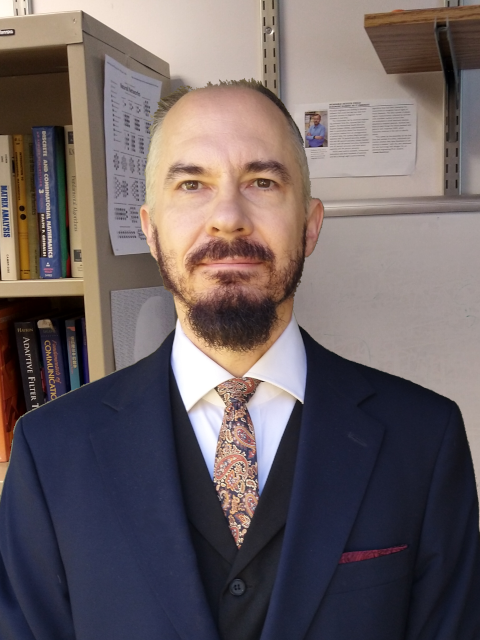
Robert Dick is a Professor in the Department of Electrical Engineering and Computer Science at the University of Michigan, part of the College of Engineering. He previously held roles as Associate Professor at Northwestern University and Visiting Professor at Tsinghua University. He earned his Ph.D. from Princeton University and a Bachelor's degree from Clarkson University. His research focuses on Embedded Systems, Learning Dynamics, Efficient Machine Learning, Privacy, and Censorship Resistance. Key themes include defining problems with correct costs/constraints, broadening access to information technology, mitigating negative tech impacts, and solving inference problems with limited resources. He leads the Embedded Systems Graduate Program and is a member of the Michigan Integrated Circuits Laboratory (MICL). His work spans thermal management, energy-efficient computing, and low-power wireless networks. Notable contributions include innovations in embedded system design, machine vision frameworks, and sensor networks. Courses taught include EECS 507 (Embedded Systems Research), EECS 373 (Embedded System Design), and ENGR 100 (Autonomous Systems). His recent publications emphasize AI model analysis, energy-efficient networks, and environmental sensing. Projects include MemX (attention-aware wearable tech) and LoRa-based LPWAN protocols. Dick co-founded Stryd, a company commercializing embedded systems innovations.
Kusum L. Ailawadi is the Charles Jordan 1911 TU'12 Professor of Marketing at the Tuck School of Business at Dartmouth College. She has established herself as a leading expert in marketing channel strategy, brand equity, and multi-channel distribution systems. Her research examines the strategic interaction and distribution of power between manufacturers and their distribution channel partners, with particular focus on how store brands, promotions, and brand equity affect performance. Education: PhD, University of Virginia, 1991 MBA, Indian Institute of Management, 1984 BSc (Honors), St. Stephen's College, Delhi University, 1982 Professor Ailawadi's research spans two primary streams: the first focuses on manufacturer-retailer relationships and channel strategy, examining how power dynamics affect brand performance; the second investigates how marketing actions influence consumers' health status and the nutritional quality of grocery shopping. She has pioneered research showing how warehouse club shopping affects consumer behavior, revealing that club store shoppers spend more, shop more frequently, and consume more calories than non-club shoppers. Her work on multi-channel distribution has been synthesized in her influential 2020 book Getting Multi-Channel Distribution Right , which provides practical guidance for managing brands across physical and digital channels. Her extensive publication record in top marketing journals like Journal of Marketing , Journal of Marketing Research , and Marketing Science demonstrates consistent scholarly impact. Analysis of her recent work shows a strong focus on the evolving retail landscape, with particular attention to private label brands, multi-channel strategies, and the behavioral economics of consumer shopping patterns. Her research increasingly bridges marketing theory with practical applications in retail strategy and consumer health. Notable Awards: Winner, Paul H. Root Award for Significant Contribution to the Advancement of the Practice of Marketing (2018) Distinguished Alumni Award, Indian Institute of Management Bangalore (2020) Winner, John D.C. Little Best Paper Award, Marketing Science (2005) Winner, First William Davidson Award for Best Contribution to Theory and Practice in Retail Marketing (1997) Multiple finalist positions for Paul E. Green Award across various years Professor Ailawadi serves as president of the INFORMS Society for Marketing Science and has held editorial positions at major marketing journals including Journal of Marketing , Journal of Marketing Research , and Marketing Science . She teaches the highly regarded MBA elective on Multi-Channel Routes to Market and has consulted with companies across consumer goods, retailing, consulting, and financial services sectors. Her expertise has also been sought in legal cases related to distribution, brand equity, and promotions, where she has served as both consulting and testifying expert. Her research has been widely covered in media outlets including Harvard Business Review , Wall Street Journal , Forbes , and Advertising Age , demonstrating the practical relevance of her academic work. Her TEDx talk 'Outsmarting the Marketers' further illustrates her ability to translate complex marketing concepts for broader audiences.
Hanna Halaburda is an Associate Professor of Technology, Operations, and Statistics at the Leonard N. Stern School of Business, New York University, where she joined in 2019. Her research lies at the intersection of economics, technology, and digital platforms, with a strong focus on blockchain, cryptocurrencies, and platform competition. She has published extensively in top academic journals and co-authored the seminal book Beyond Bitcoin: The Economics of Digital Currencies . PhD in Economics, Northwestern University MA in Economics, Warsaw School of Economics MA in Philosophy, Warsaw University Her research interests center on the economic implications of digital transformation. She investigates how blockchain technology reshapes trust, governance, and competition in digital markets. Her work explores token design, consensus mechanisms, smart contracts, and the strategic use of decentralization in platforms. She also studies platform competition under network effects, consumer choice, and omnichannel marketing. A recurring theme is how digital technologies alter traditional economic forces and business models. The most recent articles show a strong trend toward analyzing the governance, security, and economic design of blockchain systems. Her work combines rigorous theoretical modeling with empirical insights, often applying game theory and industrial organization frameworks. Topics include permissioned vs. permissionless blockchains, the role of cryptographic tokens in coordination, and the macroeconomic implications of digital currencies. She also contributes to debates on Web3, AI, and the future of digital platforms. Scientific awards and recognitions include: ISR Best Paper Published in 2022 Runner-Up Lead article in RAND Journal of Economics Best Paper Award at Tokenomics 2023 Best Paper Award at WISE 2023 Best Paper Finalist at WISE 2022 and WISE 2021 Hanna Halaburda has advised and collaborated with numerous researchers and institutions. Her co-authors include leading scholars from Harvard, NYU, and international universities. She has received research recognition through best paper awards and invitations to contribute to high-impact journals and policy discussions. Her work has been supported by academic and policy institutions, including the Bank of Canada, where she previously served as a senior economist. She frequently publishes in both academic and practitioner outlets, including Harvard Business Review and Nature Human Behavior , indicating strong translational impact. She is actively involved in research teams focused on digital assets, blockchain governance, and platform economics. While no formal lab is mentioned, her extensive list of working papers and collaborations suggests leadership in a dynamic research group at NYU Stern. Her recent work on DAOs, public crypto mining firms, and CBDCs indicates ongoing, forward-looking research programs with real-world policy and business implications.
Professor Jane Ohlmeyer is the Erasmus Smith’s Professor of Modern History at Trinity College Dublin and Chair of the Irish Research Council. She previously served as Trinity’s first Vice-President for Global Relations (2011-14) and Director of the Trinity Long Room Hub Arts and Humanities Research Institute (2015-20). Her research focuses on New British and Atlantic Histories, early modern Irish and British history, and the intersection of humanities with digital innovation. Key projects include the 1641 Depositions digitization (€22m in grants), SHAPE-ID (EU-funded interdisciplinary collaboration), and Human+ (placing humanity at the center of technology). She has published 13 books, including *The Cambridge History of Ireland* (2018) and edited volumes on Irish colonialism and empire. Her current project explores 'Ireland, Empire and the Early Modern World', slated for the 2021 Ford Lectures at Oxford. Teaching and supervision include courses on early modern war and nobility, with 11 PhD students, 8 postdocs, and 9 Marie Skłodowska-Curie fellows supervised. She has served as external examiner for Oxford, Cambridge, and other institutions. Public engagement includes the 'Behind the Headline' series and commentary on Brexit and democracy crises.
Jee Choi is an Assistant Professor in the Department of Computer and Information Science within the College of Arts and Sciences at the University of Oregon. His research focuses on developing high-performance algorithms for big data analytics, particularly in tensor decomposition and parallel computing systems. Education: PhD in Electrical and Computer Engineering, Georgia Institute of Technology, 2015 MS in Electrical and Computer Engineering, Georgia Institute of Technology, 2004 BS in Electrical and Computer Engineering, Georgia Institute of Technology, 2000 Research Interests: Dr. Choi specializes in High Performance Computing with expertise in parallel algorithm design, performance modeling, and energy efficiency. His work targets Tensor Decomposition & Data Mining for big data, developing scalable solutions for sparse and dense tensor computations. He advocates leveraging HPC systems to transform massive datasets into societal benefits through efficient data mining techniques. Publication Trends: Choi's recent publications (2021-2025) demonstrate consistent innovation in tensor decomposition methodologies, with increasing focus on adaptive storage (Alto), streaming data factorization, and energy-aware autotuning. His work spans GPU clusters, distributed systems, and emerging architectures, maintaining strong connections to real-world big data challenges while advancing theoretical algorithm design. Professional Background: After completing his PhD under Richard Vuduc at Georgia Tech (notable for SpMV GPU autotuning and Energy Roofline Model), Choi conducted DoD-funded research on tensor decomposition at IBM Watson Research Center (2015-2018) before joining the University of Oregon faculty.