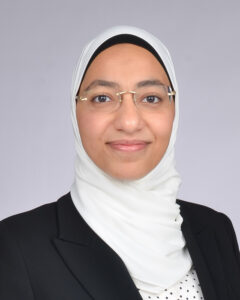
Salma Emara is an Assistant Professor in the Department of Electrical and Computer Engineering at the University of Toronto within the Faculty of Applied Science & Engineering. Her academic journey includes a B.Sc. in Electronics and Communications Engineering from the American University in Cairo (2018) and a Ph.D. in Computer Engineering from the University of Toronto (2022), supervised by Professor Baochun Li. Her research spans two domains: (1) technical work in reinforcement learning for computer networking , including adaptive bitrate selection, edge caching, and congestion control; and (2) pedagogical work focused on debugging skill development for beginner programmers and leveraging natural language processing in engineering education . She emphasizes hands-on learning through in-class activities and problem-solving assignments. Publication trends reveal a focus on reinforcement learning in networking (2018–2023) and a parallel interest in educational technology (2024). Her recent work (e.g., TextCraft ) explores NLP-driven resource recommendation for textbooks, while earlier projects (e.g., Cascade , Pareto ) address network optimization through machine learning. Scientific awards include: Faculty of Applied Science & Engineering Early Career Teaching Award (2025) Departmental Teaching Awards (2022–2024) Shortlisted for TATP Teaching Assistant Excellence (2022)
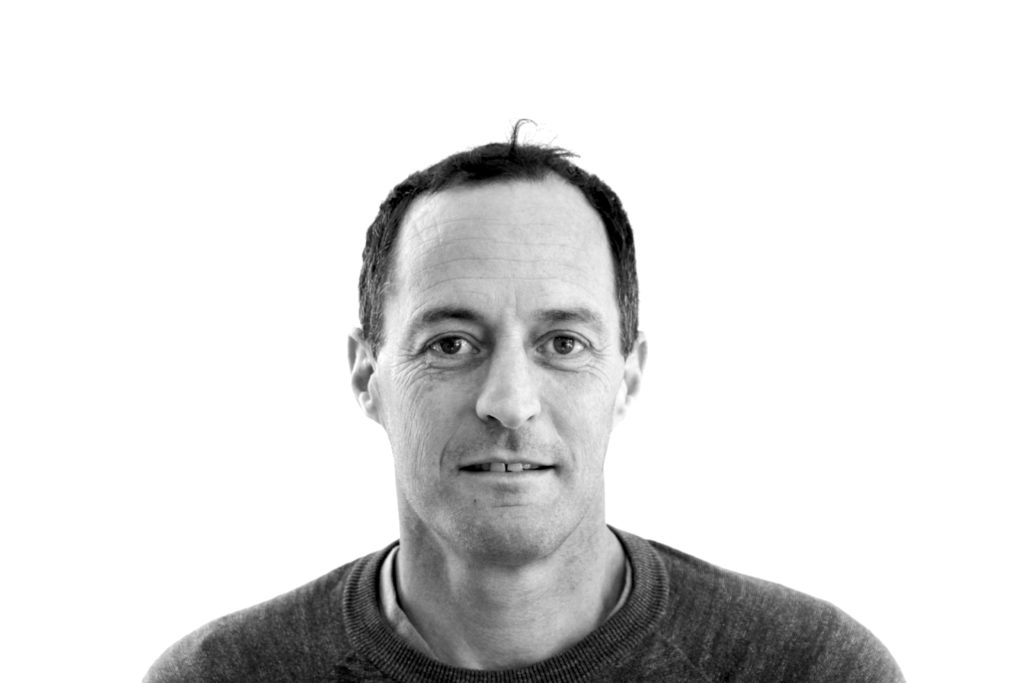
Dan Gutfreund is a Principal Research Scientist and Senior Manager at the MIT-IBM Watson AI Lab, focusing on machine learning with applications to natural language processing and computer vision. He previously held managerial and technical roles at IBM's Haifa Research Lab and was involved in IBM Project Debater. Gutfreund earned his PhD in computer science from the Hebrew University in Jerusalem in 2005. His research spans Neuro-Symbolic AI , Computational Complexity , and Foundations of Cryptography , with notable contributions to datasets like Moments in Time and ObjectNet . His recent work includes multimodal models for the metaverse, generative AI for engineering design, and simulator-assisted training for interpretable systems. Gutfreund's publications reflect expertise in AI applications for supply chain prediction, avatar personalization, and reconciling virtual disputes. He has also explored evolutionary algorithms for software engineering and constraint-based generative models in design tasks.
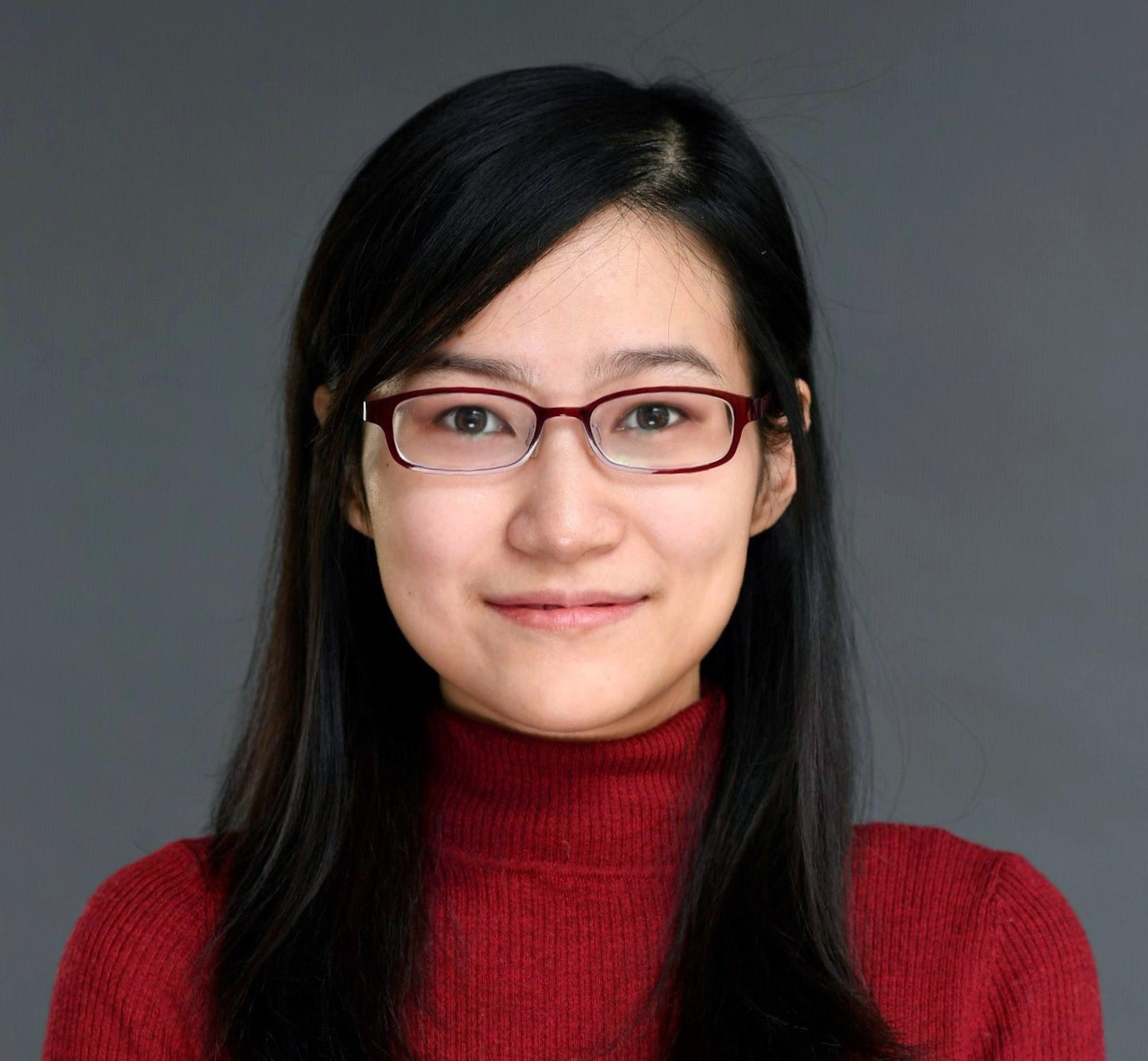
Tsui-Wei Weng is an Assistant Professor at the Halıcıoğlu Data Science Institute, affiliated with the Department of Computer Science and Engineering at the University of California, San Diego (UCSD). Her research focuses on enhancing the robustness, reliability, and safety of AI systems and deep learning models. Education: Ph.D. in Electrical Engineering and Computer Science (EECS), Massachusetts Institute of Technology (MIT), 2020; M.S. in Communication Engineering, National Taiwan University, 2013; B.S. in Electrical Engineering, National Taiwan University, 2011. Her research interests span neural network robustness, AI safety, adversarial robustness certification, control policy verification, and theoretical machine learning. She has contributed foundational work on probabilistic and deterministic robustness certification frameworks like PROVEN and CNN-Cert, with a focus on improving the scalability and efficiency of verification methods. Her publications from 2018–2021 reveal a trajectory in adversarial robustness, randomized smoothing, deep reinforcement learning, and interpretable AI. Collaborative efforts with institutions like MIT-IBM Watson AI Lab, Google DeepMind, and IBM Research further underscore her interdisciplinary approach. Scientific awards include the Best Paper Award at IEEE Components, Packaging and Manufacturing Technology (2016). She actively collaborates with students and postdocs, emphasizing mathematical and machine learning rigor in their research contributions.
Siobhán Clarke is a Professor at the School of Computer Science and Statistics, Trinity College Dublin, specializing in software systems for smart urban environments . Her work addresses dynamic software adaptation in large-scale, mobile IoT ecosystems , with a focus on QoS optimization and collaborative agent models . Director, Enable : National SFI IoT Research Programme Director, Future Cities Centre for Smart & Sustainable Cities Co-Lead, ADVANCE : SFI Centre for Advanced Networks Co-PI, CONNECT (Future Networks) and Lero (Software Research) Her research spans smart city infrastructure , edge computing , and multi-agent coordination , informed by 15+ years of publications on service-oriented architectures , QoS prediction , and self-adaptive systems . Key project contributions include DIVERSIFY (2016) and TRANSFoRm (2015). Scientific awards include election to the Royal Irish Academy (2023) and a Best Student Paper at IEEE ICWS 2011. She has supervised 20+ PhD/MSc students, including Fan Li (2020: SLA Negotiation Systems), Gary White (2020: IoT QoS Forecasting), and Andrei Palade (2019: Stigmergic Optimization).
Akshay Narayan is an Assistant Professor of Computer Science at Brown University. His research focuses on computer systems and networking, particularly on improving specialization for dynamic network environments through novel abstractions. Education: PhD (2022), MS (2019), BSc (2015) from MIT and UC Berkeley His research addresses challenges in network congestion control, dynamic network environments, and systems optimization. He has developed abstractions for managing bandwidth variability and network complexity, with applications in datacenter transport and internet protocols. Recent publications explore topics like eBPF verification, automated reasoning for network architectures, and congestion control algorithm behavior. His work spans SIGCOMM, HotNets, IMC, EuroSys, and NeurIPS conferences. Scientific awards include NSF Graduate Research Fellowship, Irwin Mark Jacobs and Joan Klein Jacobs Presidential Fellowship, Best Artifact at EuroSys 2021, and Best Student Paper at SIGCOMM 2018. Narayan advises PhD students at Brown and serves on program committees for NSDI, SIGCOMM, and HotNets. He teaches courses like CSCI 2680 (Computer Networks) and CSCI 1675 (Designing High-Performance Network Systems).
Athanasios D. Panagopoulos is a Full Professor at the School of Electrical and Computer Engineering, National Technical University of Athens (NTUA), specializing in Satellite & Space Communications , Antennas and Propagation , and Quantum Communication . He leads the Division of Information Transmission Systems and Material Technology, with a focus on wireless systems, machine learning, and 5G/6G technologies. Born in Athens (1975), received summa cum laude Diploma and Dr. Engineering from NTUA (1997, 2002). Former roles: part-time Assistant Professor (2003-2007), head of Satellite Division at Hellenic Authority for Information Security (2005-2008). Research Trends emphasize Quantum Key Distribution (QKD) , Reconfigurable Intelligent Surfaces , and Deep Learning Applications in satellite networks. His work bridges atmospheric propagation effects with terrestrial-satellite convergence , including AI-driven excess attenuation prediction and UAV channel modeling. Scientific Awards include URSI General Assembly Young Scientist Award (2002, 2005) Best Paper Awards: IEEE RAWCON 2006, IEEE ISWCS 2015 Grants & Collaborations : Principal Investigator for EU/ESA R&D programs, with editorial roles at IEEE Transactions on Antennas and Propagation, and Elsevier Physical Communication. Member of ITU-R , ETSI Study Groups , and IEEE (Senior) .
Pinar Okumus serves as Associate Professor in the Department of Civil, Structural and Environmental Engineering at the University at Buffalo's School of Engineering and Applied Sciences. Her research focuses on advancing infrastructure resiliency through low-damage seismic systems, prefabricated concrete structures, and high-performance materials for rapid construction and repair of bridges and buildings. Her academic credentials include: PhD in Civil Engineering, University of Wisconsin, Madison (2012) MS in Civil Engineering, University of Wisconsin, Madison (2008) BS in Civil Engineering, Middle East Technical University (2006) Dr. Okumus' research integrates nonlinear structural analysis, material-scale testing, and in-situ monitoring to develop rapidly deployable infrastructure solutions. Her work emphasizes practical applications of pre-tensioned, post-tensioned, and reinforced concrete components for extreme event resilience, with particular focus on coastal infrastructure vulnerability and seismic retrofitting. The Dr. Okumus Research Group employs advanced methodologies including machine learning for structural assessment and optical fiber technologies for long-term monitoring. Recent publications (2023-2025) reveal strong thematic trends in corrosion effects on coastal infrastructure, 3D-printable cementitious composites for rapid repair, and tessellated structural-architectural systems. Her work increasingly incorporates machine learning for shear strength prediction and crack pattern analysis while maintaining core expertise in post-tensioned systems and seismic retrofit solutions. Research funding is secured through competitive grants from the National Science Foundation and Federal Highway Administration, supporting experimental validation of novel concepts like self-centering shear walls and ultrahigh-performance concrete retrofits. The group actively collaborates with transportation agencies to translate laboratory findings into field applications for bridge and building systems. The Dr. Okumus Research Group operates as an interdisciplinary team investigating structures that enable rapid reoccupation after extreme events. Current projects focus on modular systems with interlocking components, optical sensing integration for tendon force monitoring, and material innovations for climate-resilient infrastructure, maintaining strong connections with industry partners for practical implementation.
Francesco Liberati is an Associate Professor in Automatic Control at Sapienza University of Rome, Department of Computer, Control and Management Engineering (DIAG). His research focuses on cyber-physical systems, model predictive control (MPC), and hybrid MPC-deep learning algorithms with applications to power systems, traffic control, and task scheduling. PhD in Systems Engineering from Sapienza University (2015) Assistant Professor (RTD-B) at Sapienza University (2021-2024) Assistant Professor (RTD-A) at eCampus University (2015-2017) Liberati’s work combines theoretical advancements in control theory with real-world implementations in smart grids and transportation systems. He has pioneered approaches integrating MPC with reinforcement learning for large-scale optimization problems, particularly in electric vehicle (EV) charging and grid reconfiguration. His recent publications emphasize: Stochastic and economic MPC for renewable energy storage Decentralized control algorithms for EV charging Cyber-physical security in microgrids and smart infrastructure Hybrid AI-control solutions for traffic and industrial systems Scientific recognition includes: 2021 Best Paper Award, IEEE World AI IoT Congress (AIIoT) 2021 Networked Systems Best Paper Award He serves as Associate Editor for Advanced Control for Applications (Wiley) and on the Editorial Board of Smart Cities (MDPI). His applied research spans European Commission H2020 projects and collaborations with industry partners in energy and transportation sectors.
Daniel Hissel is a Professor of Electrical Engineering and Hydrogen Energy at the University of Franche-Comté, France. He serves as the Head of the SHARPAC research team (Systèmes Hydrogène, ActionneuRs, Production, stockAge et Conversion de l'énergie électrique) within the Energy Department of the FEMTO-ST laboratory. Since January 2020, he has been Deputy Director of the national hydrogen research federation FRH2 (FR CNRS). He was named IEEE Fellow in 2021 and serves as President of the French chapter of IEEE/VTS. His educational background includes: Engineering degree from École Nationale Supérieure d'Ingénieurs Electriciens de Grenoble (ENSIEG) in 1994 PhD from École Nationale Supérieure d'Electrotechnique, Electronique, Informatique, d'Hydraulique de Toulouse (ENSEEIHT) in 1998 Habilitation à Diriger des Recherches (HDR) in 2004 Daniel Hissel's research focuses on energy efficiency and the diagnostics/prognostics of energy systems, particularly in the field of hydrogen energy for applications in mobility and stationary systems. His work encompasses fuel cell technology, energy conversion systems, and the development of predictive maintenance strategies for hydrogen-based energy systems. He has made significant contributions to understanding degradation mechanisms in fuel cells and developing methods to extend their operational lifetime. His recent publications (2025) demonstrate a strong focus on PEM fuel cell technology for transportation applications, with particular emphasis on heavy-duty vehicles. His research spans multiple disciplines including power electronics, control systems, electrochemistry, and artificial intelligence applied to energy systems. Key themes include nonlinear control of power converters, predictive maintenance using machine learning, physics-based modeling of fuel cells, and analysis of degradation mechanisms. His notable scientific awards include: Blondel Medal (2017) CNRS Innovation Medal (2020) IEEE Fellow (2021) Senior Member of the Institut Universitaire de France (IUF) (2022) Gold Medal of the Société d'Encouragement au Progrès (2024) Professor Hissel has published over 600 articles in international journals and conferences. He previously served as Director of the FCLAB Research Federation (FR CNRS) from 2012 to 2019. He is also an administrator of the "Véhicule du Futur" competitiveness cluster, demonstrating his strong connections with industry. His research has significant practical applications in the development of hydrogen-based energy systems for sustainable transportation and stationary power generation. He leads the SHARPAC research team at FEMTO-ST laboratory, which focuses on hydrogen systems, actuators, production, storage, and electrical energy conversion. This team conducts cutting-edge research in hydrogen energy technology, contributing to France's national efforts in developing hydrogen as a key component of the future energy system.
Davide Di Ruscio is a Full Professor at the Department of Information Engineering Computer Science and Mathematics of the University of L'Aquila (Italy), where he leads research in Model-Driven Engineering and Software Engineering. His work spans domain-specific modeling languages, model transformations, and recommender systems applied to open source software and autonomous systems. His research interests focus on Model Driven Engineering , Model evolution , Open Source Software , and Recommender Systems , with recent work exploring LLM applications in code analysis and fairness engineering. Key application domains include service-based systems, autonomous systems, and hybrid polystore systems. Di Ruscio actively contributes to the software engineering community through leadership roles in major conferences and journals. He serves on the steering committees of ICMT, SLE, SATTOSE, MiSE, and RoSE, and is on the editorial boards of SoSyM, IEEE Software, Journal of Object Technology, and IET Software. His work has been published in over 200 papers across top-tier venues. He has contributed to numerous European and Italian research projects since 2006, applying MDE concepts to real-world systems. Current teaching includes Software Engineering for Autonomous Systems and Software Engineering for the Internet of Things, with office hours on Tuesdays and Wednesdays from 11:30-13:30 at Edificio Alan Turing, Room 208.
Brooks Paige serves as an Associate Professor in Machine Learning at University College London's Department of Computer Science, where he leads research at the intersection of artificial intelligence, computational biology, and environmental science. His work bridges theoretical machine learning with high-impact applications in drug discovery, genomics, and climate modeling. His research portfolio spans: Machine Learning (core methodology development) Artificial Intelligence (generative models and deep learning) Information Systems (data-intensive applications) Cognitive and Computational Psychology (human-AI interaction aspects) Analysis of his 56 publications (2021-2025) reveals a dominant focus on generative modeling for molecular design, particularly protein-ligand binding prediction and antibody-epitope analysis. His methodological innovations include Gibbs sampling variants, Gaussian processes on non-Euclidean domains, and active learning frameworks, applied across biomedical and environmental domains including Arctic sea ice forecasting and urban analytics. No scientific awards are documented in available sources. Similarly, student advisement records, research grant details, laboratory facilities, and collaborative team structures remain unspecified in the current dataset.
Ryoma Hattori is an Assistant Professor at the University of Florida, based at the UF Scripps Biomedical Research campus in Jupiter, FL. His laboratory, the Hattori Lab, focuses on neural mechanisms underlying cognitive functions, learning, and their disruption in autism. Dr. Hattori received his educational degrees from prestigious institutions: Ph.D. in Molecular and Cellular Biology from Harvard University (2016) A.M. in Molecular and Cellular Biology from Harvard University (2012) B.S. in Biophysics and Biochemistry from the University of Tokyo (2010) His research interests center on decision making, reinforcement learning, and number sense, using systems and computational approaches. The lab employs techniques such as in vivo 2-photon imaging, optogenetics, virtual reality behaviors, and machine learning to investigate neural activity and plasticity dynamics in mice. A significant focus is understanding how these processes are impaired in autism spectrum disorder. Analysis of his recent publications reveals a strong emphasis on computational neuroscience and neural circuit mechanisms. His work spans from developing advanced imaging and analysis tools to uncovering fundamental principles of value coding and meta-reinforcement learning, with applications in both basic neuroscience and artificial intelligence. Dr. Hattori has received numerous scientific awards, including: Outstanding Mentor Award 2025 from Society of Research Fellows, UF Scripps SFARI Bridge-to-Independence Award 2022-Current from Simons Foundation Warren Alpert Distinguished Scholar Award 2021-2024 from Warren Alpert Foundation Postdoctoral Grant Award 2021-2022 from The KANAE Foundation And several fellowships during his postdoctoral and graduate training. As a principal investigator, Dr. Hattori leads multiple active grants, including the Shenoy Undergraduate Research Fellowship in Neuroscience (2025-2026) and a project on "Neural activity and plasticity dynamics for reinforcement learning in autism" funded by the Simons Foundation. His mentorship has been recognized with the Outstanding Mentor Award. The Hattori Lab is a dynamic research group utilizing cutting-edge technologies to explore the neural basis of cognition, with a particular interest in translational implications for autism and related disorders.
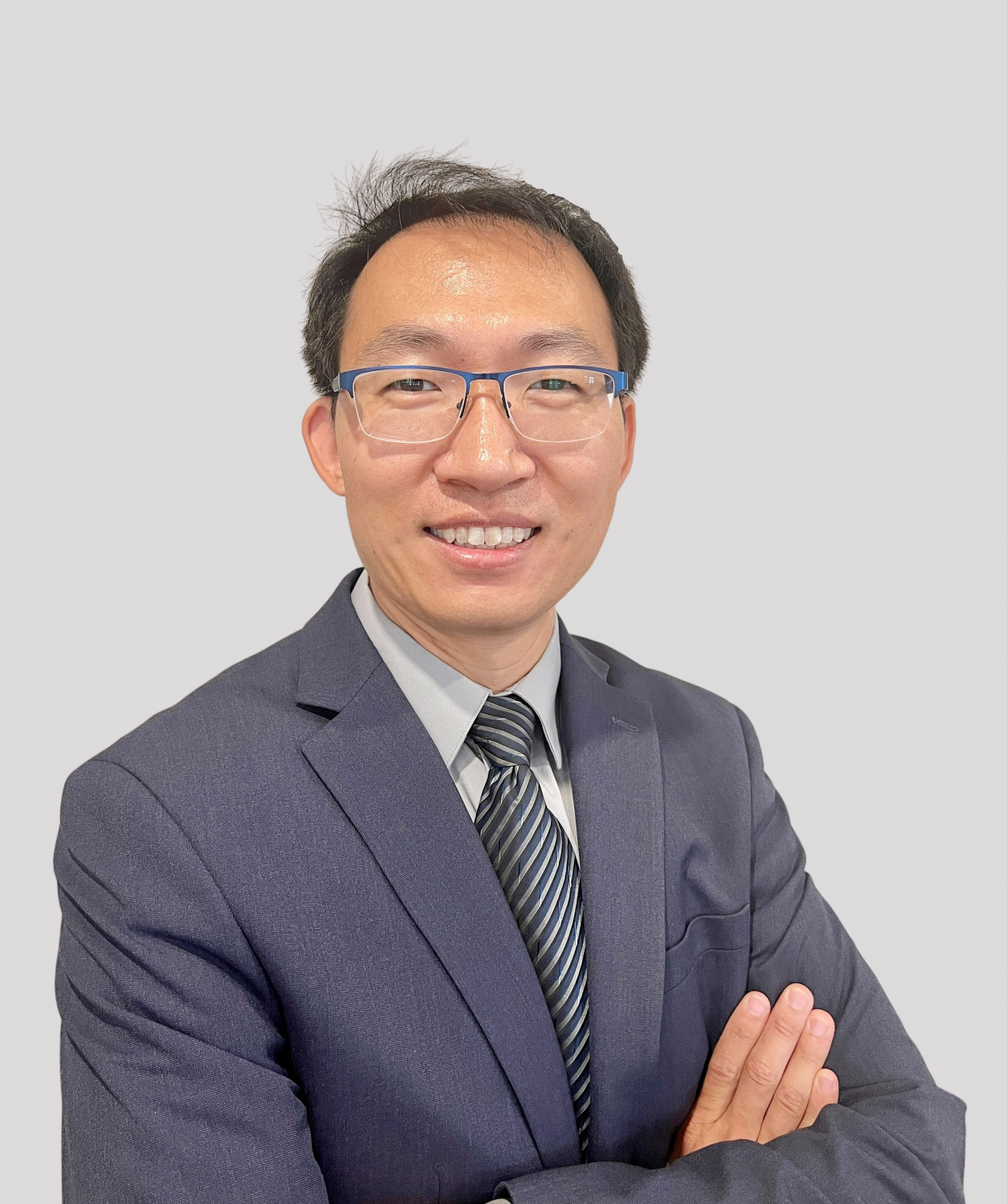
Dr. Junfeng Zhao is an Assistant Professor at Arizona State University's Polytechnic School within the Ira A. Fulton Schools of Engineering. He serves as the Principal Investigator of the Battery Electric & Intelligent Vehicle (BELIV) Lab and holds graduate faculty appointments in both the Robotics & Autonomous Systems (RAS) and Clean Energy Systems (CES) programs. Dr. Zhao's educational background includes: Ph.D. in Mechanical Engineering from The Ohio State University (2015), recipient of OSU Presidential Fellowship M.S. in Mechanical Engineering from University of British Columbia (2009) B.S. in Electrical Engineering from Tsinghua University (2007) Dr. Zhao's research focuses on connected and automated vehicles (CAV), with expertise spanning system integration, safety assessment, motion planning and controls, cooperative perception, AI/ML applications in automotive systems, and electrified propulsion control. His BELIV Lab develops advanced systems for battery electric and intelligent vehicles, targeting safer, cleaner, and more energy-efficient transportation solutions. With industry experience at General Motors R&D and Cummins Technical Center, his work bridges theoretical research with practical automotive applications. Analysis of Dr. Zhao's recent publications reveals a strong emphasis on cooperative perception frameworks, safety assessment methodologies for automated driving systems, integration of satellite positioning for vehicle localization, and novel testing approaches using digital twin and augmented reality technologies. His research consistently addresses critical challenges in autonomous vehicle deployment. Professional recognitions include: OSU Presidential Fellowship during doctoral studies 15 patents in automotive and vehicle systems Dr. Zhao actively mentors 9 current graduate students across PhD and Master's programs, with research areas spanning autonomous driving, battery management systems, and intelligent transportation. His former students have secured positions at major companies including Caterpillar Inc., BYD North America, and TSMC. The BELIV Lab has established itself as an Autoware Center of Excellence, received funding from industry partners like Cox, and has been featured in media coverage including The State Press and documentaries on self-driving technology. BELIV Lab maintains active industry collaborations and participates in outreach activities such as the 10th Annual Hands-on STEM Fair, demonstrating Dr. Zhao's commitment to inspiring future engineers and advancing autonomous vehicle technology through both academic research and practical implementation.
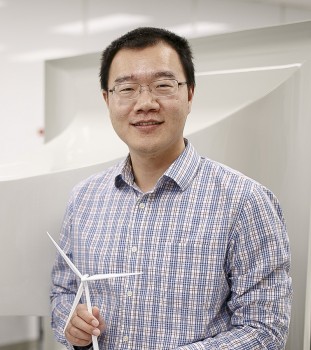
Dr. Jie Zhang is a Professor in the Department of Mechanical Engineering at the University of Texas at Dallas (UTD), affiliated with Electrical and Computer Engineering and the Center for Wind Energy. He holds a Ph.D. in Mechanical Engineering from Rensselaer Polytechnic Institute (2012), and M.S. and B.S. from Huazhong University of Science & Technology (2008, 2006). Before joining UTD in 2015, he was a Research Engineer and Postdoctoral Researcher at the National Renewable Energy Laboratory (2012–2015). His research focuses on sustainable energy systems, including renewable integration, grid resilience, and AI-driven optimization. Notable projects include using Navy ships for emergency power, hydrogen systems in Texas, and generative AI for EV cybersecurity. His lab, the Design and Optimization of Energy Systems (DOES), has secured grants from DOE, NSF, and industry partners. Dr. Zhang has authored over 100 peer-reviewed publications and received awards such as the ONR Young Investigator Award (2020), ASME Design Automation Young Investigator Award, and 16 best paper awards. He leads a team of ~15 graduate/undergraduate students and postdocs, with alumni in academia and industry. Recent achievements include a 2025 UTD Faculty Research Award, promotion to Full Professor (2025), and a $3.5M DOE grant for EV cybersecurity research. His work bridges engineering, AI, and policy to address energy challenges like decarbonization and grid resilience.
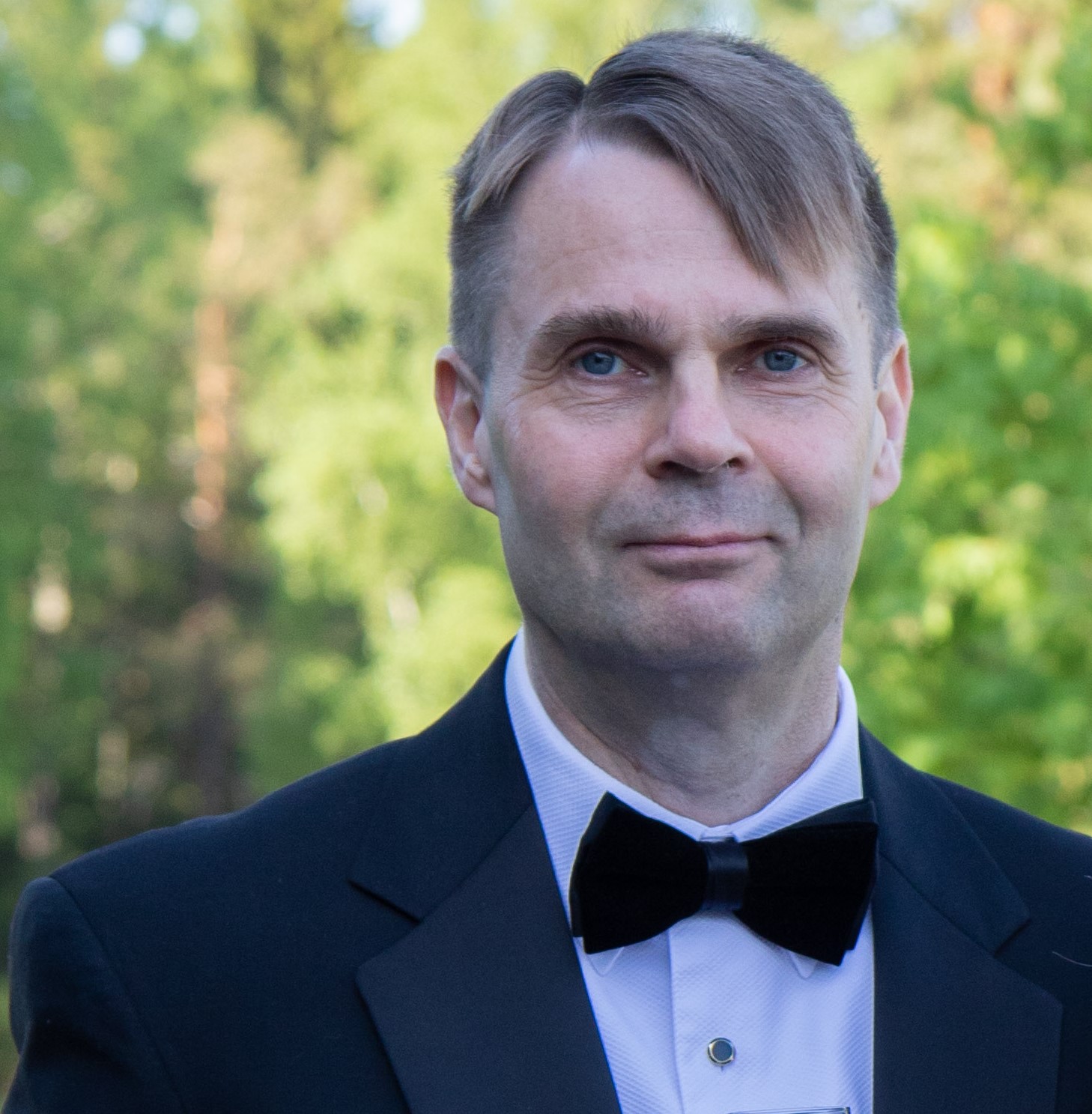
Visa Koivunen is a Distinguished Professor of Signal Processing at Aalto University (since 1999), with positions as Academy Professor (2010) and Aalto Distinguished Professor (2020). He holds an honorary D.Sc. (Tech.) from the University of Oulu and has held visiting roles at Princeton University, the University of Pennsylvania, and EPFL. His research focuses on statistical signal processing, wireless communications, radar systems, and integrated sensing and communications (ISAC). He has published over 490 papers, including award-winning works, and advised 31 doctoral theses. Key roles include leadership in conferences (e.g., Asilomar 2018 General Chair) and technical committees (IEEE SPS). Recognitions include the EURASIP Technical Achievement Award (2015), IEEE Signal Processing Society Best Paper Awards (2007, 2017), and EURASIP Fellow status (2020). He co-chairs NATO panels on cognitive radars and ISAC. His research interests span signal processing fundamentals and applications in radar, communications, and machine learning. Recent work emphasizes ISAC, reinforcement learning for resource allocation, and causal inference in federated systems. He has pioneered waveform design techniques using GANs and Bayesian methods for spatial signal analysis. Educations: D.Sc. (Tech.) with honors from the University of Oulu (1994), Primus Doctor Award (1989-1994). Awards: IEEE Fellow, EURASIP Fellow, Member of Academia Europaea. Service: Associate Editor for IEEE Transactions, Chair of IEEE SPAWC and Asilomar conferences. His work bridges theory and practice, addressing challenges in radar-communication coexistence, energy-efficient edge computing, and secure distributed inference. He has delivered over 50 invited talks globally and actively contributes to NATO initiatives on cognitive radar systems.