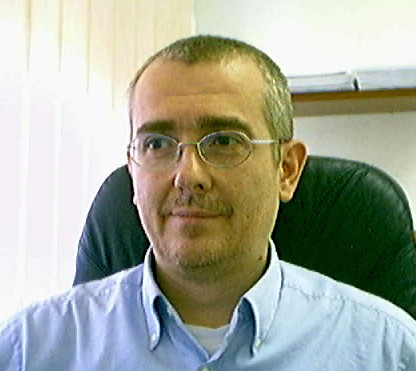
Mauro Bonafini is a Temporary Assistant Professor at the Department of Engineering for Innovation Medicine, University of Verona. His research focuses on geometric variational problems, optimal transport theory, and hyperbolic partial differential equations. Current academic rank: Assistant Professor (Mathematical Analysis) University: University of Verona Research groups: Analysis of PDE and Calculus of Variations His research projects include: Geometric Measure Theoretical approaches to Optimal Networks (since 2018) Geometric evolution of curves, surfaces and networks (since 2017) Stochastic Partial Differential Equations and Stochastic Optimal Control with Applications to Mathematical Finance (since 2016) Teaching activities: Mathematical analysis (6 credits, 2025/2026) Optimization (6 credits, 2025/2026) Mathematical Analysis II (12 credits, 2024/2025) Previous courses in Mathematical Analysis I and II across multiple academic years Email: mauro.bonafini@univr.it
Matteo Cristani is an Associate Professor at the University of Verona 's Department of Computer Science , where he teaches courses in Artificial Intelligence , Semantic Web , and Programming across multiple degree programs including Bioinformatics, Computer Science, and Artificial Intelligence. His research focuses on Knowledge Representation , NLP , and Formal Security Analysis , with applications spanning from blockchain technology to geospatial systems. Research Focus Intelligent agents and multi-agent systems Distributed artificial intelligence Formal methods in security theory Network security and cybersecurity NLP and large language models Ontology engineering Projects Active in third-mission activities, Cristani leads projects such as SHIELD (Securing Decentralized Finance and Healthcare Systems), SLOTS (Smart Legal Order in Digital Society), and NOMEN (Next-Gen Cyber Ranges). He has participated in 30+ research initiatives since 2001, including PRIN grants and industrial collaborations in semantic web applications.
Rosalba Giugno is a Full Professor of Informatics at the University of Verona's Department of Computer Science. She serves as Principal Investigator of the InfOmics Laboratory and is the reference person for the Master in Medical Bioinformatics program. Previously, from 2017 to 2022, she directed the Infolife laboratory, which comprised 35 research groups from various Italian universities. Her research focuses on algorithmic bioinformatics and computational biology, specifically developing graph algorithms for biological networks, integrating and analyzing biomolecular data, and modeling biological systems for personalized medicine. She leads a research group consisting of 5 PhD students and multiple master's thesis students. Her work bridges theoretical computer science with practical biomedical applications, utilizing approaches from machine learning, data science, mathematics, and graph theory. Professor Giugno has authored 130 scientific publications, with 70 appearing in international journals. Her recent work shows a strong trend toward applying advanced computational methods to solve complex problems in personalized medicine, particularly in patient stratification using multi-omics data, drug repurposing, and combination therapy prediction. She has secured funding for numerous national and European research projects, with recent initiatives focusing on multi-drug resistance in rheumatoid arthritis and personalized prostate cancer evaluation. She serves as an editor for the journal Information Systems and participates in scientific committees for international conferences and schools. Her leadership extends to university governance through roles on the Computer Science Teaching Committee and Department Council. Professor Giugno teaches courses in the Master's program in Medical Bioinformatics and the PhD program in Computer Science, including 'Analisi di dati Multi-omics da single-cell' and 'Programming for bioinformatics.' She has consistently taught these courses from 2016 through 2025, demonstrating commitment to training the next generation of bioinformatics specialists. The InfOmics Laboratory under her direction develops computational methods for biomedical data analysis, with applications spanning genomics, patient classification, and therapeutic optimization. The lab maintains strong connections with both academic and industrial partners through collaborative research projects.
Paola Cappanera is an Associate Professor of Operations Research at the Department of Information Engineering (Università di Firenze), affiliated with the School of Engineering. She is a member of the IBIS Lab. Her expertise spans combinatorial optimization, healthcare logistics, telecommunication networks, and scheduling problems. She teaches courses such as Fondamenti di Ricerca Operativa , Combinatorial Optimization , and Ottimizzazione su Reti di Flusso at both undergraduate and graduate levels. Her research focuses on optimizing healthcare delivery systems, including home care services, surgical scheduling, and resource allocation. She also addresses challenges in telecommunication networks, such as latency-aware scheduling and routing. Recent work emphasizes robustness in home care planning, equitable resource distribution, and mitigating risks in hazardous material transportation. Her articles highlight advancements in decomposition methods for scheduling, genetic algorithms for network functions, and integration of healthcare service models. Key contributions include models for emergency department physician rostering and optimizing tele-assistance systems.
Antonino Nocera is an Associate Professor at the University of Pavia's Department of Electrical, Computer and Biomedical Engineering, within the Faculty of Engineering. He specializes in Data Science, Social Network Analysis, Privacy, Security, and Artificial Intelligence. He holds a PhD in Information Engineering from the University Mediterranea of Reggio Calabria (2013). His research focuses on cybersecurity, machine learning applications, and privacy-preserving technologies, with over 85 publications. He is an Associate Editor for *Information Sciences* (Elsevier) and *IEEE Transactions on Information Forensics and Security*. He leads the Digital Content Analysis Lab (DCALab) and collaborates with Microsoft on cloud computing initiatives. Recent projects include a 2020 Hackathon on analyzing the spread of the SARS-CoV-2 virus and a Microsoft Learn mini-course on Azure. His work spans federated learning security, malware detection, and IoT trust models. He actively participates in conference TPCs and promotes ethical AI practices. Key contributions include frameworks like SECTIS for CTI sharing and DROIDTTP for Android application analysis. His teaching emphasizes data science and big data analytics, integrating industry tools like Azure into curricula.
Jonathan Franceschi serves as a Visiting Professor in the Department of Mathematics at the University of Pavia, maintaining an office in room C11. His academic profile is anchored in the Mathematical Physics research group, with active contributions to interdisciplinary mathematical modeling. His research spans Mathematical Physics, Network Theory, Kinetic Theory, and Fractional Calculus, with pronounced applications in social dynamics and public health. Key focus areas include epidemic modeling, opinion polarization mechanisms, and fake news diffusion—particularly examining Italian vaccination hesitancy during the Covid-19 pandemic. His methodological toolkit integrates kinetic equations, graph theory, and optimal control frameworks for complex networked systems. Analysis of his 15 publications (2019–2025) reveals a cohesive trajectory: early work established foundations in fractional calculus and numerical methods, while recent research pivots toward data-driven social modeling. Dominant themes include consensus optimization with condensation phenomena, graphon-based opinion dynamics, and uncertainty quantification in epidemic control—all demonstrating rigorous mathematical formalism applied to real-world sociotechnical challenges. Franceschi actively supports academic community initiatives including Five o'clock TeX (offering LaTeX courses via Zoom), The break bridge (curating educational handouts), and the CompMat poster template project. His digital scholarship footprint is visible through arXiv, ResearchGate, ORCID, and Google Scholar profiles.
Vincenzo Trovato is Associate Professor in Civil, Environmental and Mechanical Engineering at University of Trento, specializing in power systems, energy storage, and renewable integration. With extensive industry experience at EDF R&D and ACER, he develops solutions for grid stability and market operations. Research focuses on frequency response optimization, thermostatic load control, HVDC interconnectors, and storage economics. His publications demonstrate consistent innovation in grid flexibility solutions for low-carbon systems. Awards & Honors: Energy UK Young Energy Professional Award (2018) EDF R&D Trophies Finalist (2018) Italian National Scientific Qualification (2020) Supervision: Mentors 12+ graduate students on power systems and energy storage projects, including PhD candidates at Imperial College London.
Omiros Papaspiliopoulos is a Full Professor at Bocconi University’s Department of Decision Sciences. He joined Bocconi in 2021, previously serving as an ICREA Research Professor at Universitat Pompeu Fabra in Barcelona. His academic career includes roles at Warwick, Oxford, Lancaster, Berlin, Osaka, Paris, Madrid, and Lima. He has been awarded the Royal Statistical Society’s Guy Medal (2010) and the DeGroot Prize for his influential work with Nicolas Chopin. His research focuses on computational statistics, spanning Bayesian inference, machine learning, probability, and applied mathematics. Notably, he founded Europe’s first Master in Data Science at the Barcelona Graduate School of Economics (2013) and directed the Data Science Center until 2021. Since 2022, he has been Director of Bocconi’s Bachelor of Science in Economics, Management, and Computer Science (BEMACS). Papaspiliopoulos is co-Editor of Biometrika (top-4 in Statistics) and Associate Editor of the Journal of Uncertainty Quantification . He has delivered keynote talks at institutions like Chicago Booth, Duke, and LSE, emphasizing the societal impact of data science. His teaching spans courses on data science, statistics, machine learning, and quantitative methods in social sciences. Education & Academic Leadership PhD in Statistics (Implied by career trajectory) Founded Bocconi’s BEMACS program (2022) Directed the Master in Data Science (2013–2021) Executive course design for SDA Bocconi and Barcelona School of Economics Research Interests Computational Statistics & Bayesian Methods Machine Learning & Applied Mathematics Data Science in Social Sciences Hidden Markov Models & State-Space Systems High-Dimensional Inference & Scalable Algorithms Recent Work Trends His publications emphasize scalable Bayesian computation, treatment effect inference, and applications in social sciences. Recent topics include confounder importance learning, particle filtering, and computational efficiency in hierarchical models. Collaborations bridge theory and practice, addressing challenges in policy, finance, and public administration. Awards & Recognition 2010: Royal Statistical Society’s Guy Medal DeGroot Prize for Nonparametric Hidden Markov Models Onassis Foundation Scholar Grants & Outreach Directed the Barcelona Data Science Center (2016–2021) Outreach activities: Talks for high-school students, policymakers, and the European Commission Editorial roles in top journals: Biometrika , Journal of Uncertainty Quantification Labs & Teams Current affiliation with Bocconi’s Department of Decision Sciences and involvement in interdisciplinary data science initiatives.
Paolo Nesi is a full professor at the University of Florence, leading the DISIT Lab. He holds roles such as Chair of DISIT Lab and member of the Scientific Committee of CSAVRI. His expertise spans Big Data, IoT, Cloud Computing, AI, and Smart City technologies. He has coordinated major European projects like Snap4City, RESOLUTE, and AXMEDIS. His research focuses on distributed systems, semantic computing, and Industry 4.0 solutions. Education: PhD from the University of Padova, with IBM research experience in Almaden, California. Research interests include: IoT and Cloud architectures Semantic computing frameworks Smart City digital twins AI-driven traffic management Notable achievements include over 300 publications, top rankings in Software Engineering research, and leadership in international standards like MPEG-SMR.
Tooska Dargahi serves as a Postdoctoral Researcher at Netgroup Laboratory, University of Rome Tor Vergata, with dual affiliation at CNIT (Consorzio Nazionale Interuniversitario per le Telecomunicazioni). Her work bridges theoretical cryptography with practical implementations for next-generation networked systems, focusing on security architectures for resource-constrained environments including IoT devices and mobile platforms. She maintains active collaborations with international researchers across multiple institutions on cutting-edge security challenges. Her research program centers on Security and Privacy, Wireless Sensor Networks, Ad-Hoc Networks, and Attribute-Based Cryptography. She pioneers lightweight cryptographic solutions for IoT and smartphone ecosystems, develops k-anonymous frameworks for location-based services, and advances forensic methodologies for cloud storage and mobile applications. Key contributions include optimizing attribute-based encryption for constrained devices and designing novel key pre-distribution schemes for wireless sensor networks. Analysis of her publication record reveals consistent focus on applying cryptographic primitives to real-world systems. Her work spans Software-Defined Networking security, IoT device hardening, cloud/mobile forensics, and privacy-preserving location services. A distinctive trend involves translating complex cryptographic concepts into deployable solutions for infrastructure-limited scenarios, evidenced by implementations tested on Android devices and IoT platforms. Scientific recognition includes: Best Paper Award at IEEE WiMob 2017 for WLAN access control research As a core member of Netgroup Lab, Dr. Dargahi contributes to collaborative projects in network security and privacy. While the provided materials indicate extensive co-authorship with senior researchers like Mauro Conti and Giuseppe Bianchi, they contain no explicit references to student advising or principal investigator roles in grant-funded projects.
Alessio Farcomeni is a Professor of Statistics at the University of Rome Tor Vergata, specializing in statistical methodology development. His work bridges academia and applied research across disciplines including economics, medicine, ecology, and engineering. He has authored/co-authored over 250 peer-reviewed papers and two books, with notable contributions in hidden Markov models, Bayesian analysis, and quantitative social science measurement. His research emphasizes interdisciplinary collaboration, reflected in studies on population health, economic policy evaluation, and surgical outcome optimization. Farcomeni’s research interests span statistical theory, with a focus on methodological innovations for complex data structures (e.g., longitudinal, spatial, and high-dimensional datasets). He has pioneered approaches in quantile regression, semi-Markov processes, and latent variable modeling. His applied work addresses real-world challenges such as estimating material deprivation scales, modeling cardiovascular disease risk factors, and analyzing pandemic dynamics (e.g., COVID-19 forecasting in Italy). His recent articles highlight advancements in statistical techniques for healthcare (e.g., AI-driven dermatology diagnostics, atrial fibrillation prediction models) and socio-economic analysis (e.g., macroprudential policy impacts, cross-country material deprivation comparisons). He is recognized for developing open-source statistical software packages, contributing to reproducible research practices. Farcomeni holds the distinction of being ranked among Italy’s top scientists by VIA-Academy. His work frequently integrates Bayesian methods, machine learning, and big data analytics to address pressing questions in public health, environmental science, and economic policy.
Prof. Remo PARESCHI is an Associate Professor at the Department of Bioscienze e Territorio, University of Molise. His research spans blockchain technology, artificial intelligence, smart contracts, IoT, and genomics. He explores interdisciplinary areas such as human-AI collaboration, cybersecurity in distributed systems, and applications of blockchain in agriculture and healthcare. Key research interests include system-theoretical approaches to multi-agent interactions, vulnerability detection in smart contracts, and ethical frameworks for AI integration. He has contributed to projects like Genesy (blockchain-based genomic data ecosystems) and Mybottega (digital art platforms). His work bridges technical innovation with societal impact, addressing sustainability, data privacy, and cultural heritage preservation. Publications highlight advancements in blockchain security, IoT integration, and cognitive systems. He has authored over 50 peer-reviewed articles, with notable contributions to conferences and journals in computer science, AI, and information systems. His research is characterized by cross-disciplinary collaboration, emphasizing practical implementations in real-world scenarios.
Luca Lanzoni is an Associate Professor in the Department of Engineering 'Enzo Ferrari' at the University of Modena and Reggio Emilia. His expertise lies in structural mechanics, materials science, and sustainable construction. He teaches courses such as Construction Science, Structural Design of Dams and Reservoirs, and Theory of Structures, focusing on both theoretical and computational methods. His research emphasizes finite elasticity, nonlinear mechanics, and composite materials like Shot-Earth. Key areas include beam and plate mechanics, material characterization, and sustainable construction solutions. He has contributed to advancements in structural stability, energy forms in hyperelastic materials, and computational modeling of nanoscale systems. He maintains active collaborations in experimental and numerical analysis, with a focus on translating theoretical insights into practical applications. His work bridges micro and macro scales, addressing challenges in both traditional and cutting-edge materials.
Guy Bouchitté is a Full Professor at Université du Sud Toulon-Var. His research focuses on Calculus of Variations, Optimal Transport, Density Functional Theory, and Homogenization. He has contributed to theoretical advancements in optimal design, shape optimization, and multi-marginal transport problems. His work bridges mathematical analysis with applications in quantum chemistry, structural mechanics, and material science. Key research areas include asymptotic analysis of variational problems, optimal transport with non-linear costs, and the interplay between geometry and functional inequalities. Recent studies address dissociation limits in Density Functional Theory and quantization effects in many-body systems. He has organized seminars on Geometric Measure Theory and Frontiers of the Calculus of Variations. His contributions span over 35 publications, including works on Monge-Kantorovich duality, compliance sensitivity, and spectral optimization for Schrödinger operators. Professional activities include participation in workshops such as 'Variational Challenges in Materials Science' and 'Calculus of Variations and Applications'.
Eugene Stepanov is a Full Professor at the St. Petersburg Branch of the Steklov Research Institute of Mathematics of the Russian Academy of Sciences. His research focuses on geometric measure theory, optimal transportation, and calculus of variations. He has contributed extensively to studies on metric measure spaces, isoperimetric problems, and differential equations. Key research interests include the structure of metric cycles, branched transportation networks, and the application of geometric integration techniques to nonsmooth systems. His work bridges pure mathematics with applied areas such as control theory and stochastic analysis. Stepanov has authored 56+ publications, with recent trends emphasizing multidimensional scaling, fractal geometry, and constructive controllability. His articles frequently explore the intersection of geometry and optimization, addressing problems like Steiner tree configurations and functional quantization. He has participated in conferences on optimal transport, geometric analysis, and measure theory, often contributing to seminar discussions on topics ranging from nonholonomic systems to invariant measures. His research also involves collaborations with international scholars, evident in co-authored works on eigenvalue problems, self-contracted curves, and operator theory. Despite no listed awards, his prolific publication record highlights sustained contributions to foundational mathematical theories.