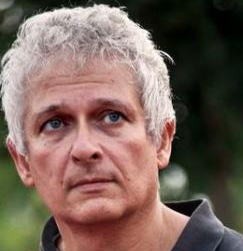
Gloria Menegaz is a Full Professor of Bioengineering at the Department of Engineering for Innovation Medicine, University of Verona, where she directs the BraiNAVLab. She has been serving in this position since 2021, following her appointment as Full Professor in Computer Science in 2017. Previously, she held Associate Professor and Assistant Professor positions at the University of Verona, University of Siena, and University of Fribourg (Switzerland). Her research spans multiple interdisciplinary fields including bioengineering, artificial intelligence, machine learning, and neuroimaging. She specializes in explainable AI methods applied to biomedical data, with particular focus on brain connectivity analysis using multi-modal neuroimaging data (fMRI, EEG) integrated with genetic information. Her work has resulted in over 160 publications in prestigious journals including IEEE Transactions on Image Processing, IEEE Transactions on Medical Imaging, and Frontiers in Neuroscience. Her recent research trends emphasize the development of explainable AI frameworks for clinical applications, particularly in neurological disorder diagnosis and treatment planning. She has pioneered approaches for integrating structural and functional brain connectivity data with genetic markers to identify numerical biomarkers for various neurological conditions. Senior Member of IEEE (2017) Chair of Steering Committee of IEEE Transactions on Medical Imaging Member of IEEE-SPS Challenges and Data Collection Technical Committee Vice-Chair of IEEE Bioimaging and Signal Processing Committee Recipient of Rita Levi Montalcini grant Throughout her career, Professor Menegaz has secured over 1 million euros in research funding from international institutions including the European Commission (H2020, FP7), European Science Foundation, MIUR (PRIN, SIR, FIRB), and ANR (France). She maintains extensive international collaborations with Georgia Tech University, INRIA (France), EPFL (Switzerland), Queen Mary University, and University College London. Her laboratory, BraiNAVLab, focuses on developing advanced computational methods for brain imaging analysis and navigation.