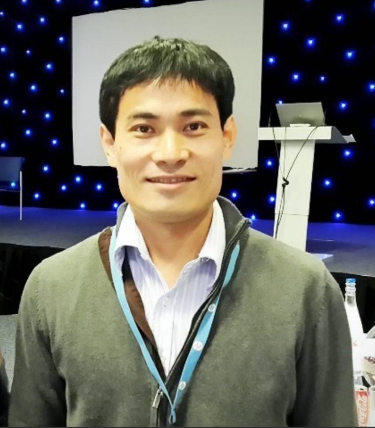
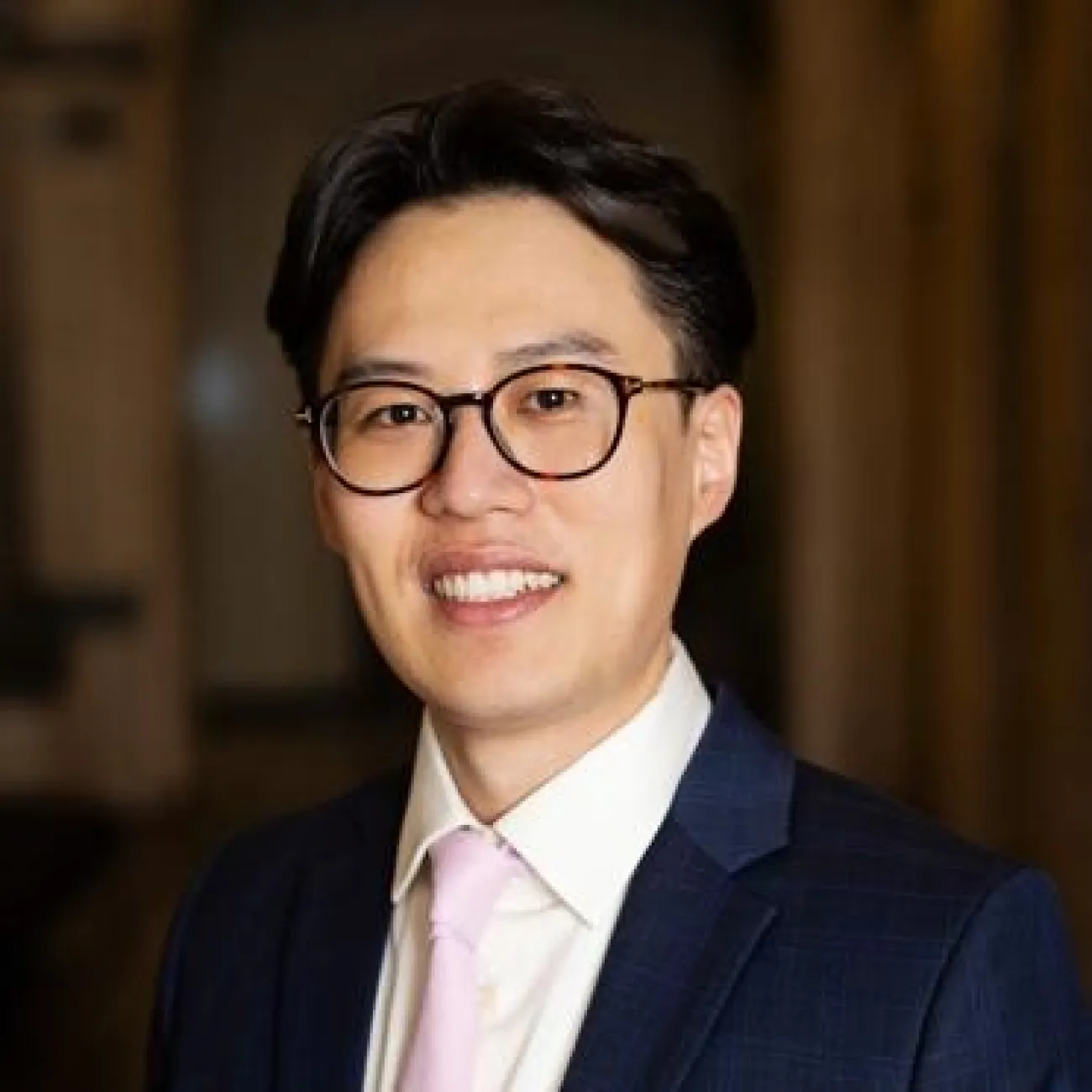
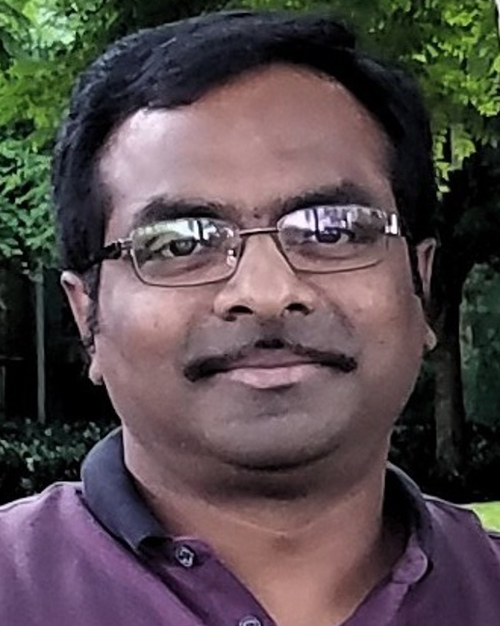
Dr. Ronald Huisman is an Associate Professor at the Finance Section of the Department of Economics , Faculty of Law, Economics and Governance , Utrecht University . With extensive research focused on Energy Markets, Renewable Integration, and Financial Risk , he contributes to the Pathways to Sustainability initiative, particularly in Energy Transition studies. His work bridges Economic Theory with Energy Policy , addressing critical challenges in modern power markets. Key research themes: Energy Economics, Climate Risk, Market Design Active in: Benelux Association for Energy Economics Teaches: Impact Investing courses Research Trends: Recent publications examine climate change risk in municipal financing, extreme energy price dynamics under renewable intermittency, and carbon-energy market interactions in China. Earlier work established foundational models for electricity futures pricing , overconfidence measurement , and regime jumps in energy prices.
Dominik Fay is a Researcher at the Division of Decision and Control Systems within Kungliga Tekniska Högskolan (KTH). His work focuses on federated machine learning, data privacy, and their applications in healthcare. He is supported by the Wallenberg AI, Autonomous Systems and Software Program (WASP) through their industrial PhD program in collaboration with Elekta, a healthcare technology company. Education: MSc in Computer Science from KTH (2019) BSc in Applied Computer Science from Heidelberg University (2017) His research primarily addresses privacy challenges in distributed machine learning environments. Key contributions include methods for locally differentially private federated learning, dynamic privacy allocation, and privacy amplification techniques tailored for healthcare applications. His work also explores the intersection of machine learning and medical imaging, particularly in segmentation tasks requiring stringent privacy guarantees. Dominik's publications reflect a strong emphasis on data privacy, federated learning, and healthcare applications. Recent articles focus on correlated noise in federated learning, privacy allocation for composite objectives, and privacy-preserving medical image segmentation. Earlier works extend into smart grid privacy, metabolomics data analysis, and scalable privacy-preserving algorithms. Grants and Collaborations: Supported by WASP Industrial PhD Program Collaboration with Elekta, a leader in healthcare technology He is part of Mikael Johansson's research group, which specializes in decision and control systems, and his work aligns with broader efforts in privacy-preserving AI and machine learning for sensitive healthcare data.
Jonathan Bean is an Associate Professor at the University of Arizona, affiliated with the School of Architecture and School of Landscape Architecture and Planning . As a CUES Distinguished Fellow , he bridges architecture, marketing, and civil engineering through research on market transformation, taste regimes, and sustainable building practices. His work integrates consumer research, human-computer interaction, and building science. PhD, University of California at Berkeley (2011) MS, University of California at Berkeley (2008) BA, University of University of California at Berkeley (2002) Bean's research focuses on high-performance building systems , consumer culture theory , and taste regime analysis . He advocates for energy-efficient AI systems and explores sociomaterial dimensions of cosmopolitan servicescapes. His work on the SunBlock distributed district energy system highlights innovative approaches to carbon reduction. Recent publications examine AI ethics, energy equity, Solar Decathlon innovations, and IoT challenges. Awards include the CUES Distinguished Fellow title and leadership roles in the Passive House Alliance US . Grants from the SSHRC Canada and National Institute for Transportation and Communities support his interdisciplinary work. Bean advises the Master of Science in Architecture Sustainable Market Transformation Concentration and contributes to the Consuming Tech column for ACM Interactions. His TEDx talk Demand Less underscores the potential of passive building principles for net-zero museums and energy stability.
Andrea La Nauze is an Associate Professor at Deakin Business School , Deakin University, specializing in environmental and energy economics. She previously held roles as Senior Research Fellow (2024), Research Fellow (2023–2024), and Lecturer (2021–2023) at The University of Queensland. She holds a PhD in Economics from the University of Melbourne (2017) and has worked with the Victorian Government and the United Nations. Her research intersects behavioral economics and policy analysis , focusing on energy markets, air pollution, and climate-related behaviors. She leads the Virtual Energy Network (VEN) research study, exploring community energy-sharing models through smart technology. Scientific Awards : Westpac Fellow, Honorary Senior Research Fellow at UQ, Research Affiliate at CESifo Munich
Jia Hu is an Associate Professor in Computer Science at the University of Exeter. He holds a PhD in Computer Science from the University of Bradford (2010), and M.Eng/B.Eng degrees in Electronic Engineering from Huazhong University of Science and Technology. His research specializes in edge-cloud computing, federated learning, and AI-driven optimization for networks and IoT systems. Research Interests: Hu's work spans resource optimization, applied machine learning (particularly in distributed settings), network security, blockchain integration, and intelligent systems for electric vehicles and Industry 4.0. His recent projects focus on federated edge AI, 6G-enabled industrial IoT, and real-time federated learning via hardware-algorithm co-design. Publications: His 150+ papers emphasize federated learning, edge computing, and reinforcement learning applications. Recent works (2020–2025) show a strong trend toward optimizing AI at the network edge, with themes like digital twins, blockchain security, and EV-integrated systems dominating. Awards & Recognition: Best Paper Awards: IEEE SOSE'16, IUCC'14 Outstanding Service & Leadership Awards for IEEE conferences Top 4% contributor to EPSRC Peer Review Fellow of the Higher Education Academy (HEA) Grants & Projects: Secured €4.7M+ funding from EU Horizon, EPSRC, and Royal Society for projects including: SAILING (Secure AI for Smart Internet-of-Energy, €3.6M) REFINE (Real-time Air Quality Monitoring with UAVs, €897K) SustainAIRA6G (Energy-Efficient AI for 6G Networks, £118K) Advising: Supervised 12 PhD students to completion; currently mentoring 7 students in federated learning, edge computing, and AIoT.
Robert Hsu is Chair Professor and Dean of the College of Information and Electrical Engineering at Asia University, Taiwan, and holds concurrent appointments as Professor at National Chung Cheng University. He serves as President of the Taiwan Association of Cloud Computing and Research Consultant at China Medical University Hospital. His research spans parallel and distributed computing , cloud and edge systems , AI , and medical applications , with over 350 publications in top venues like IEEE TPDS, IEEE TSC, and ACM TOMM. Editor-in-Chief of International Journal of Grid and High Performance Computing Founding Editor-in-Chief of International Journal of Big Data Intelligence Advisory roles in 10+ journals including IEEE Transactions on Cloud Computing His research focuses on cloud-edge collaboration , AI for medical imaging , IoT security , and big data analytics . Key projects include federated learning frameworks for multi-institutional healthcare, optimization techniques for UAV-assisted MEC, and blockchain-based security solutions. His 15 most recent articles highlight advancements in malware detection, resource orchestration in edge environments, and lightweight AI models for retail and rural applications. Scientific accolades include: Stanford University's World's Top 2% Scientists (2020-2023) Best Paper Awards at IEEE ICEIB 2023 and SysCom 2021 Over 25 grants from Ministry of Science and Technology and Ministry of Education Leadership roles as IEEE TCCLD Chair and Steering Committee member He has supervised 30+ PhD/Master's students , including Shih-Chang Chen (2010), Tai-Lung Chen (2010), and Nithin Melala Eshwarappa (2020). His laboratory focuses on edge computing , cloud systems , and AI-driven solutions for healthcare and urban infrastructure.
Dr. Jose Paolo Talusan is a Research Scientist at the Department of Computer Science and Computer Engineering , Vanderbilt University, specializing in smart transportation systems , distributed computing , and cyber-physical systems . He is affiliated with ScopeLab , a research group focused on smart cyber-physical systems. Education: PhD from Nara Institute of Science and Technology, Japan (2020) Research Interests: His work addresses challenges in urban mobility through middleware architectures, optimization algorithms, and machine learning. Key areas include incident detection in transportation systems, privacy-preserving route planning, and vehicle-to-building charging optimization. Publication Trends: Recent publications focus on real-time transit optimization (2024-2025), leveraging reinforcement learning for heterogeneous agents in vehicle-to-building systems, and privacy-aware route planning in smart cities. His work integrates IoT , edge computing , and graph neural networks to tackle imbalanced data and sparsity issues in transit analytics. Labs & Teams: Actively contributes to ScopeLab at Vanderbilt University, collaborating on interdisciplinary projects with researchers in computer science, electrical engineering, and urban planning.
Dr Hongyu Zhang is a Lecturer in Optimization for Machine Learning and AI at the School of Mathematical Sciences, University of Southampton. His expertise spans operational research and energy systems optimization, with a focus on stochastic programming and quantum computing applications. PhD Operational Research, NTNU MSc Operational Research with Data Science, University of Edinburgh BSc Mathematics and Applied Mathematics, Huaqiao University His research develops optimization models and algorithms for large-scale energy system planning, integrating machine learning, artificial intelligence, and quantum computing tools to address complexities in energy transition and policy-making. Key areas include multi-timescale uncertainty analysis, decomposition methods, and offshore energy hub modelling. Recent publications show strong trends in energy systems optimization (7 papers), algorithm development for stochastic programming (4 papers), and quantum computing applications (2 papers). His work addresses European energy security, hydrogen infrastructure development, and carbon capture technologies. Currently accepting PhD applications, Dr Zhang contributes to academic supervision and teaches optimization methods at the university. He is affiliated with the Operational Research group and CORMSIS center.
Gurunath Gurrala serves as an Associate Professor in the Department of Electrical Engineering at the Indian Institute of Science (IISc), Bangalore. His research focuses on power systems dynamics, high-performance computing applications, and renewable energy integration. He maintains active collaborations with international institutions including Oak Ridge National Lab and Texas A&M University. His research interests center on Power Systems Analysis and Control , with specialization in High Performance Computing Applications, Nonlinear and Intelligent Control, Weak Grid Integration of Renewables, Microgrid Protection, and Smart Grid Stability. His work bridges theoretical control systems with practical power grid challenges, particularly for renewable-rich grids. His recent publications demonstrate a strong interdisciplinary trend, spanning power systems (35%), control theory (25%), renewable integration (20%), and emerging applications in biomedical engineering and environmental systems (20%). Key recurring themes include grid stability under high renewable penetration, advanced protection schemes for microgrids, and computational methods for power system analysis. IEEE Power and Energy Society (PES) Outstanding Engineer Award 2018 Young Engineer Award 2015, Indian National Academy Engineers Best Conference Paper, IEEE PES General Meeting 2015 Best Ph.D Thesis Award (Prof.D.J.Badkas Medal) 2010 Elevated to Senior Member IEEE (2016) Professor Gurrala has secured competitive research funding including the Young Scientist Grant from DST (2015) and International Travel Support from SERB (2017). He actively mentors students through PhD and Master's programs while teaching advanced courses including Power System Dynamics and Control (E4 231), Computer Control of Power Systems (E4 233), and Selected Topics in Integrated Power Systems (E4 237). His research group collaborates with power utilities and international research labs on grid modernization challenges.
Nilufar Neyestani is an Assistant Professor in the Electrical Engineering department at Eindhoven University of Technology (TU/e), where she joined in 2023. She is affiliated with the Integrated Energy Systems team within the Electrical Engineering Systems (EES) group, focusing on multi-energy carrier perspectives of energy systems with emerging technologies and sector coupling. Her academic background includes: MSc in Electrical Engineering (Power System Studies) from Iran University of Science and Technology PhD completed in 2016 in Portugal Neyestani's research focuses on the integration of multi-energy systems, examining how different energy carriers can work together to create more resilient and efficient energy networks. Her work particularly addresses the challenges of renewable energy integration, with emphasis on wind power variability mitigation and the role of sector coupling in enhancing system flexibility. She investigates market mechanisms for multi-energy systems and the operational impacts of emerging technologies like plug-in electric vehicles on power distribution networks. Her publication record demonstrates consistent focus on energy system optimization across multiple sectors. The research shows evolution from analyzing PEV impacts on distribution networks (2018), to strategic market participation of multi-energy aggregators (2019), to wind variability mitigation using multi-energy systems (2020), indicating growing sophistication in modeling complex energy system interactions. Neyestani has held research positions at INESC TEC in Portugal, where she was promoted to senior researcher after six months, and at VITO in Belgium as a senior researcher (2021-2023) before joining TU/e. Her work has been supported by Portuguese funding agency FCT and European Regional Development Fund through the COMPETE 2020 Programme. She is actively involved in teaching Power System Analysis and Optimization and System Integration Project courses at TU/e and is a member of the Intelligent Energy Systems group and the Electrical Energy Systems (EIRES) research team.
Nikolaos Paterakis is an Assistant Professor of Power System Optimization and Electricity Markets with the Electrical Energy Systems research group at the Department of Electrical Engineering, Eindhoven University of Technology (TU/e). He is the founder and principal investigator of the Electricity Markets & Power System Optimization Laboratory (EMPSOLab) established in 2019, and a member of the Cyber-Physical Systems Center Eindhoven (CPSe). His research focuses on applying optimization and machine learning techniques to power system and electricity market problems, particularly regarding renewable energy integration and smart grid technologies. Dr. Paterakis received his Dipl.Eng. from Aristotle University of Thessaloniki in 2013, followed by a PhD in Industrial Engineering and Management (cum laude) from the University of Beira Interior in 2015. After serving as a post-doctoral fellow at TU/e from 2015-2017 and working as a consultant for the Energy Market Regulatory Authority of Turkey, he was appointed Assistant Professor at TU/e in April 2017. His research spans power system optimization, electricity market design, renewable energy integration, and the application of machine learning techniques to grid management problems. Recent work emphasizes distributed energy resource integration, local electricity markets, congestion management in low-voltage grids, and real-time grid control using advanced optimization techniques. His publications demonstrate a clear trajectory toward increasingly sophisticated methods for managing grid constraints while enabling market participation of distributed energy resources. Dr. Paterakis has received several prestigious awards including IEEE SEGE'15, SEST 2019, and SEST 2020 Best Paper Awards, and recognition as a Best Reviewer for IEEE Transactions on Smart Grid (2015, 2017) and IEEE Transactions on Sustainable Energy (2016). He serves as Associate Editor for multiple journals including IET Renewable Power Generation, IEEE Systems Journal, IEEE Transactions on Intelligent Transportation Systems, and Elsevier's e-Prime. He leads multiple research projects including MEGAMIND (NWO-funded), P2P-TALES (NWO-funded), and the Electricity Markets Game series (TU/e BOOST!-program). His educational contributions include teaching courses on power system analysis and optimization, electricity markets modeling, and developing innovative educational tools for power systems education. In 2021, he was elevated to Senior Member of the IEEE Power & Energy Society.
Dr. Aryan Pasikhani is a Lecturer in Cybersecurity at the University of Sheffield , affiliated with the Security of Advanced Systems research group . Holding a PhD from the same institution, his research focuses on Intrusion Detection Systems , Reinforcement Learning , and Quantum Computing applications in security. Specializes in securing Embedded Systems and Internet of Things architectures Active in Adversarial Machine Learning and Privacy-Preserving Technologies Peer-reviewer for IEEE Internet of Things Journal and IEEE Transactions on Industrial Informatics His recent work explores 6LoWPAN security through reinforcement learning and Federated Learning frameworks for privacy-preserving data analysis. Awards include Fellow of the Higher Education Academy . Current grants involve real-time ransomware detection (CipherGrit) and automated threat modeling for AI systems. He supervises four PhD students and teaches Security of Control and Embedded Systems .
Pawan Sharma is an Associate Professor at the Department of Electrical Engineering, Faculty of Engineering Science and Technology, UiT The Arctic University of Norway (Narvik Campus). He is affiliated with the Electromechanical Systems research group and the ARC research center. His research focuses on: Power system dynamics and control Distributed generation integration Microgrid optimization Smart grid technologies Reactive power control Electric vehicle-grid interaction Key research trends observed in his publications include: Hybrid microgrid control frameworks Cyber-physical co-simulation for grid applications Machine learning approaches for power optimization Integration of renewable energy sources Advanced converter control techniques Voltage stability and reactive power management He serves on the editorial boards of: International Transactions on Electrical Energy Systems Designs (MDPI) Electrical Engineering (Springer) Teaching responsibilities: Master's course: Power System Fundamentals (10 credits) Special PhD course: Distributed Energy Resources Integration (10 ECTS) Distributed Generation & Microgrids: Role and Concepts (5 credits) Research projects include: Cooperative Isolated Renewable Energy Systems (rural reliability) Hybrid Renewable Energy Micro Grid development Smart Solar PV Control Technology in Arctic regions arcICE, Arctic Energy, nICE initiatives
Dr. Paola Falugi is a Senior Lecturer in Electro-Mechanical Engineering at the University of East London and holds an honorary visiting researcher position at Imperial College London. Her expertise spans predictive control systems, data-driven modeling, and energy network optimization under uncertainty. Senior Lecturer, Department of Engineering & Construction, School of Architecture, Computing and Engineering, University of East London Honorary Visiting Researcher, Imperial College London Research focuses on: Predictive control strategies for uncertain systems Data-driven modeling for control applications Optimization methods in energy network expansion Energy management under stochastic conditions Control systems for robotics and mechatronics Recent publications highlight her contributions to: Robust co-design frameworks for building energy systems Machine learning integration in transmission expansion planning Automated scenario generation for optimal control Control strategies for residential buildings with energy storage Her work bridges theoretical advancements in control theory with practical applications in energy systems and building automation.
Andrea Vinci is an accomplished researcher with 66 publications and 1,261 citations, specializing in the intersection of quantum computing, edge-cloud architectures, and Internet of Things (IoT) systems. His work demonstrates significant contributions to solving complex computational problems through innovative approaches that bridge theoretical quantum algorithms with practical distributed computing applications. His research interests span quantum computing applications for resource management, multi-density clustering techniques for urban analytics, and platform-independent IoT application development. Vinci has pioneered work in variational quantum algorithms for cloud/edge resource allocation, quantum kernels for IoT data classification, and distributed AI for cognitive building systems. His research demonstrates a consistent focus on addressing NP-hard problems through quantum-classical hybrid approaches. Analysis of Vinci's publication trends reveals a strategic research trajectory moving from foundational work in smart city analytics and crime prediction toward cutting-edge quantum computing applications for IoT and edge-cloud systems. His recent publications (2023-2025) show increasing focus on quantum machine learning techniques specifically tailored for IoT data processing, with significant attention to practical implementation challenges. Vinci maintains an extensive collaborative network, frequently publishing with researchers including Fabrizio Marozzo, C. Mastroianni, J. Settino, and Antonio Guerrieri across multiple high-impact venues including IEEE Transactions, ACM conferences, and specialized journals in quantum computing and distributed systems. His technical contributions include the development of the COGITO platform for cognitive buildings, novel approaches to multi-density crime prediction, and significant advancements in quantum kernel methods for IoT data analysis. Vinci's tutorial publications indicate his role in educating the broader research community about emerging quantum computing applications for distributed systems.