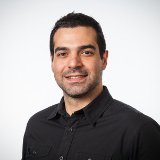
Fernando De Mathia is a researcher at the Institute of Bioprocess Science and Engineering, part of the Department of Biotechnology and Food Science at the University of Natural Resources and Life Sciences, Vienna (BOKU). His work focuses on bioprocess optimization, particularly in vaccine development and protein purification technologies. Research interests include bioprocess science, bioengineering, and downstream purification techniques for viral and recombinant protein-based therapeutics. His recent publications address continuous virus filtration and antibody purification processes, with applications in biopharmaceutical manufacturing. Key projects involve optimizing affinity-based RNA purification systems and continuous bioprocessing methods. He holds an M.Sc. degree and collaborates with international research teams on biotechnological innovations.
Bruno Ebner is a researcher at the Institute of Stochastics within the Department of Mathematics at Karlsruhe Institute of Technology (KIT). He maintains an active research program in theoretical and applied statistics, with particular expertise in goodness-of-fit testing and distribution characterizations. His office is located in Kollegiengebäude Mathematik (20.30) room 2.018, and he holds regular office hours on Tuesdays from 2 p.m. to 3 p.m. Dr. Ebner's primary research interests focus on asymptotic statistics , goodness-of-fit problems , stochastic processes , and distribution characterizations . His work prominently features Stein's method as a theoretical foundation for developing new statistical tests. He has made significant contributions to directional data analysis, particularly for hyperspherical data, and has developed novel approaches for testing uniformity on spheres. Analysis of his recent publications reveals a strong trend toward developing unified theoretical frameworks for goodness-of-fit testing across various distribution families. His work increasingly integrates computational methods with theoretical statistics, particularly through collaborations that bridge Stein's method with modern computational techniques. The development of R packages like gofIG, mnt, and gofgamma demonstrates his commitment to making theoretical advances accessible to practitioners. Dr. Ebner has developed several R packages that implement his theoretical work, including gofIG for Inverse Gaussian distribution testing, mnt for multivariate normality tests, and gofgamma for Gamma distribution testing. These packages represent significant contributions to statistical methodology with practical applications across various scientific domains. His teaching portfolio demonstrates expertise across multiple domains, including introductory stochastics for teaching candidates, generalized regression models, statistics for biology students, and specialized courses on Stein's method. He has also contributed to educational initiatives for economics students at KIT, reflecting his commitment to statistical education across disciplines.
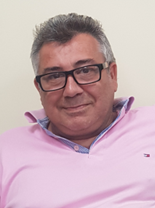
Walter Prochaska is an Associate Professor affiliated with the Austrian Archaeological Institute at the Austrian Academy of Sciences. His research focuses on archaeometric analysis of white marble provenance in Roman contexts, utilizing geochemical and petrographic methods. Key projects include marble sourcing in Roman Thrace, Corinth, and Ephesos, with significant contributions to establishing provenance databases. Position: Associate Professor Institution: Austrian Academy of Sciences Institute: Austrian Archaeological Institute His work intersects Archaeometry and Material Science , examining marble trade networks across the Roman Empire . Recent publications highlight interdisciplinary approaches combining geoarchaeology with database development to trace marble origins. Scientific awards and honors are not explicitly mentioned in the available data. His expertise in marble provenance analysis has been applied to sites in Bulgaria, Turkey, Greece, and North Africa, revealing patterns of material circulation and workshop dynamics.
James A. Bain is a Professor in the Electrical and Computer Engineering (ECE) Department at Carnegie Mellon University’s College of Engineering. He also holds a courtesy appointment in the Department of Materials Science and Engineering and serves as Associate Director of the Data Storage Systems Center (DSSC). Bain’s research focuses on magnetic, optical, and resistive switching devices for information storage, including heat-assisted magnetic recording (HAMR) and phase change materials. Education : B.S. (1988) in Materials Science and Engineering from the University of Pennsylvania; M.S. (1991) and Ph.D. (1993) in Materials Science and Engineering from Stanford University. His work spans nanotechnology, energy-efficient computing, RF metrology, and multiphysics modeling. Bain’s research has received recognition through the Scott Institute seed grant for energy research. He has co-authored over 225 papers and holds a leadership role as ECE’s Associate Department Head for Academic Affairs since 2018. His laboratory investigates thermal transport, device reliability, and emerging memory architectures. Recent publications highlight advancements in HAMR thermal management, resistive switching dynamics, and phase-change RF switches. Bain’s expertise intersects with the IEEE Magnetics, Electron Devices, and Photonics Societies, as well as the Materials Research Society.
F. Alijani is a researcher at TU Delft in the Dynamics of Micro and Nano Systems department. Their work focuses on nonlinear dynamics, nanomechanical resonators, and graphene-based sensor technology. Department: Dynamics of Micro and Nano Systems Research interests include: Nonlinear dynamics of 2D materials Graphene engineering for bio-sensing Atomic force microscopy (AFM) applications Optimization of nanomechanical systems Structural and aeroelastic modeling Recent publications highlight advancements in topology optimization, bacterial nanomotion detection, and AFM techniques. Collaborations include institutions like TU Delft and TU Delft - 4TU.ResearchData for datasets. No scientific awards are explicitly mentioned in the provided data. Labs & teams: Dynamics of Micro and Nano Systems group at TU Delft, working with Prof. P.G. Steeneken and Prof. A.M. Aragón.
Mark Ehrensberger is an Associate Professor in the Department of Biomedical Engineering at the University at Buffalo, State University of New York. He is also the Director of the Kenneth A. Krackow MD Orthopaedic Research Lab within the Orthopaedics division, where he focuses on translational research for orthopaedic implant improvement. PhD, Bioengineering, Syracuse University (2008) MS, Bioengineering, Syracuse University (2002) BS, Bioengineering, Syracuse University (2000) His research spans orthopaedic biomaterials and orthopaedic biomechanics , with specific emphasis on electrochemical surface interactions of metallic implants and innovative mechanical testing for tissue repair . He has pioneered methods for infection control via electrical stimulation and osseointegration enhancement. His 15 most recent publications highlight interdisciplinary work in electrochemical biofilm eradication, titanium corrosion resistance, and biomechanical stability analysis for shoulder and dental implants. Key trends include electrotherapy integration with antibiotics and computational modeling of implant microenvironments. Young Investigators Initiative, US Bone and Joint Decade (2008) Jeanette Wilkins Award, Musculoskeletal Infection Society (2015) Senior Teacher of the Year, School of Engineering and Applied Sciences, University at Buffalo (2022) Ehrensberger has secured over $2.3 million in grants, including awards from the Office of Naval Research and Congressionally Directed Medical Research Program. His lab, the Ehrensberger Orthopedic Research Group (EORG), collaborates with clinicians and engineers to develop technologies like the Electrochemical Sense and Respond Osseointegrated Prosthesis .
Prof. Crispin H. W. Barnes is a Professor of Quantum Physics at the Cavendish Laboratory and Professorial Fellow of Girton College, University of Cambridge. He holds a PhD from Imperial College, London (1991) and has over 30 years of research experience in condensed matter physics and industrial collaboration. His work spans quantum device physics, environmental physics, and advanced materials research. He leads a materials growth facility with molecular beam epitaxy systems and a GPU-accelerated quantum computing simulation team funded by Hitachi Cambridge. His environmental group in Peru focuses on river contamination analysis using DNA assays and satellite imaging. Awards include the Brian Mercer Feasibility Award (2014) for magnetic microcarrier tag technology. He teaches quantum information and condensed matter physics at the undergraduate level. Education: PhD in Physics from Imperial College London (1991). Previous roles include Royal Society Postdoctoral Fellow at Simon Fraser University (Canada) and research scientist at RIKEN, Japan. Research interests include quantum computing algorithms, topological insulators, magnetic microstructures, and environmental impact studies in extreme environments. His labs specialize in thin-film fabrication, low-temperature measurements, and quantum device simulation. Current industrial collaborations involve Mursla Ltd, Cambridge Biomagnetics, and the National Physical Laboratory. Publications highlight quantum phase estimation optimization, environmental contamination analysis in Peru, and materials characterization of superconductors and nanomaterials. His work bridges theoretical quantum mechanics with applied technologies such as quantum sensors and eco-friendly materials recycling. Awards and grants include funding from Hitachi Cambridge for GPU server infrastructure and collaborative projects with Peruvian universities. His lab facilities include a cleanroom, molecular beam epitaxy systems, and quantum computing access via IBM.
Steve Ko is a Volunteer Associate Professor in the Department of Computer Science and Engineering at the University at Buffalo, part of the School of Engineering and Applied Sciences. His research focuses on distributed systems, networking, and operating systems. He holds a PhD and maintains an active research profile with interdisciplinary interests in materials science, particularly in dental and biomedical applications. Education: PhD (specific field not stated in text) Research interests span both computer science and materials engineering, addressing topics such as antimicrobial coatings for orthodontic appliances, composite material properties, and CAD/CAM dental prosthetics. His recent work explores the mechanical and optical properties of materials like zirconia and Gummetal® archwires. Publications highlight advancements in orthodontic material characterization, adhesive properties in dental applications, and fatigue testing of endodontic instruments. His research often bridges computational systems with biomedical material science. Grants and Advising: No specific grants or advising details provided in text. Dr. Ko collaborates on lab projects involving material testing fixtures, such as gripping systems for micro-tensile testing and cyclic fatigue analysis of dental instruments.
Makiko Sasada is a Professor at the Graduate School of Mathematical Sciences, The University of Tokyo. Her research focuses on probability theory, interacting particle systems, and classical integrable systems, with an emphasis on hydrodynamic limits, spectral gaps, and non-gradient models. She has made significant contributions to understanding energy diffusion in stochastic systems and integrable cellular automata like the box-ball system. 2010: MSJ Takebe Katahiro Prize for Encouragement of Young Researchers 2011: Second JSPS Ikushi Prize 2011: University of Tokyo President's Prize Her recent work explores scaling limits in the box-ball system, thermal conductivity in stochastic models, and topological structures in large-scale systems. She actively participates in international conferences, serves as an associate editor for leading journals, and organizes educational initiatives like the FoPM program, which trains students to apply basic science to societal challenges through mathematical and physical innovation. Selected publications include: The incompressible Navier–Stokes limit from the discrete-velocity BGK Boltzmann equation (2025) Characterization of Gradient Condition for Asymmetric Partial Exclusion Processes (2025) Topological structures of large-scale interacting systems (2024)
Dr. Tyler J. Grassman is an Associate Professor at The Ohio State University in the Departments of Materials Science and Engineering and Electrical and Computer Engineering. His research focuses on materials development and integration for electronic and photonic applications, particularly in photovoltaics and clean energy technologies. Joint appointment in Materials Science & Engineering and Electrical & Computer Engineering Research areas: epitaxy, heteroepitaxy, defect engineering, electron microscopy, computational materials science His recent work involves characterizing defects in III-V/Si heterostructures and optimizing metamorphic tunnel junctions for solar cells. Dr. Grassman received the NSF CAREER Award in 2021 for his research on dislocation-induced electronic states in III-V semiconductors. Scientific Awards: NSF CAREER Award (2021) He advises graduate students in Materials Science and Engineering and Electrical and Computer Engineering, including Marzieh Baan, Lauren Kaliszewski, and Tal Kasher. His laboratory at Fontana Laboratories (4012) uses advanced microscopy and computational modeling for materials discovery.
Tao Yang is a Marie Skłodowska-Curie Postdoctoral Fellow at the Chair of Vibroacoustics of Vehicles and Machines, Technical University of Munich (TUM School of Engineering and Design, Department of Engineering Physics and Computation). His research addresses urban noise pollution through innovative textile-based metamaterials for broadband low-frequency sound absorption, targeting the critical Research focuses on integrating acoustic and textile disciplines to overcome limitations of current metamaterials (narrowband absorption) and traditional absorbers (impractical size requirements). Key interests include acoustic metamaterial design, fibrous material characterization, and numerical simulation techniques for sound absorption optimization in polyester-based nonwovens and fiber assemblies. Publications from 2018-2020 demonstrate consistent expertise in experimental and computational analysis of porous materials, with emphasis on homogeneity assessment, airflow resistivity modeling, and multi-component fiber systems for noise control applications. Scientific recognition: Marie Skłodowska-Curie Postdoctoral Fellowship Dr. Yang serves as assistant lecturer for "Numerical Acoustics in Python" at TUM (Summer term 2025). His fellowship-funded project emphasizes two-way knowledge transfer through training and presentations, enhancing both technological innovation in noise reduction and professional development.
Marco Mazzarisi serves as an Assistant Professor in the Department of Mechanics, Mathematics and Management at the Polytechnic University of Bari, Italy, specializing in Manufacturing Technology and Systems (ING-IND/16 classification). Based at Via Orabona 4, 70125 Bari, he can be contacted via marco.mazzarisi@poliba.it or the departmental line +39 080 596 3522. His research centers on laser-based additive manufacturing processes, with primary expertise in Laser Metal Deposition (LMD) and Directed Energy Deposition. Key investigation areas include real-time process monitoring using coaxial infrared systems and off-axis optical techniques, defect detection (particularly subsurface voids), melt pool dynamics analysis, and sustainability assessment through exergetic analysis. His work focuses on nickel-based superalloys (Inconel 718) and stainless steels (AISI 316L), addressing critical challenges in geometric accuracy, energy consumption, and material compatibility in hybrid manufacturing. Analysis of his 2020-2025 publications reveals consistent innovation in LMD monitoring methodologies. His research demonstrates strong interdisciplinary integration between thermal physics, optical engineering, and sustainable manufacturing principles. Notable contributions include the development of off-axis monitoring frameworks, causal models for void prediction, and exergy-based sustainability metrics that bridge process quality with environmental impact assessment. Scientific awards: No awards, fellowships, or medals are documented in the provided materials. Advising and grants: No information regarding graduate student supervision, research grants, or funding sources is provided in the source text. Laboratory facilities: The text does not specify any dedicated laboratories, research teams, or collaborative groups associated with Dr. Mazzarisi's work.
Dr. Li Ying is an Associate Professor and Doctoral Supervisor at the Department of Marine Science and Engineering, Southern University of Science and Technology (SUSTech), where she directs the Center for Marine Atmospheric Sciences. Her research focuses on atmospheric aerosol remote sensing , secondary pollution numerical modeling , and ocean-atmosphere interaction studies under climate change contexts. She holds a PhD in Atmospheric Environmental Science from the Hong Kong University of Science and Technology (2011), MSc in Atmospheric Science from Peking University (2006), and BSc in Physics from Bohai University (2002) with joint study at Tsinghua University. Her professional journey includes roles as Research Assistant Professor at HKUST (2015-2016) and Postdoctoral Fellow at HKUST (2011-2015), with visiting scholar experience at the University of Tennessee (2008-2009). Her research group develops satellite-based remote sensing algorithms for aerosol components (PM2.5, black carbon), studies ozone formation mechanisms in the Pearl River Delta, and creates novel emission control evaluation methods . She leads major projects including Shenzhen Smart City Atmospheric Monitoring and Guangdong-Hong Kong-Macao Air Quality Research Team . Scientific achievements include 60+ SCI publications in journals like Remote Sensing of Environment and Environmental Science & Technology Over 2,400 citations and H-index 24 Two ESI Highly Cited Papers Recipient of Shenzhen Overseas High-level C Talent (2017)
Professor Konstantinos Politis is a distinguished academic in the Department of Statistics and Actuarial Science at the University of Piraeus, where he has served since 2004, progressing from Assistant Professor to his current position as Professor (2025-present). His academic career spans prestigious institutions including the University of Manchester, University of Southampton, and the University of Cambridge where he earned his PhD. Education: B.A. in Mathematics, University of Athens (1989) MSc in Statistics, University of Sheffield, UK (1991) PhD in Statistics, University of Cambridge, UK (1997) Professor Politis specializes in stochastic processes with particular focus on ruin theory, risk analysis, and actuarial mathematics. His research examines complex probability models related to insurance risk, surplus processes, renewal theory, and failure rate analysis. He has made significant contributions to understanding the mathematical properties of insurance risk models, particularly in the Sparre Andersen framework and compound Poisson processes. His work bridges theoretical probability with practical applications in actuarial science and financial risk management. His extensive publication record demonstrates consistent contributions to leading journals in probability and actuarial science. The research trajectory shows evolution from foundational work on ruin theory and risk models toward more sophisticated analyses of renewal processes, failure rate functions, and stochastic bounds. His recent work focuses on precise mathematical characterizations of recurrence times, convolution properties, and monotonicity in stochastic systems. Professor Politis has co-authored significant textbooks including Introduction to Probability: Models and Applications (2019) and Introduction to Probability: Multivariate Models and Applications (2021) with Balakrishnan and Koutras, as well as his Greek-language work Introduction to the Theory of Collective Risk (2012, 2nd ed. 2016). In teaching, Professor Politis has contributed to both undergraduate and graduate education, offering courses including Probability I, Special Topics in Probability, Variance Analysis, Loss Distributions, Generalized Linear Models, and Risk Theory II. His academic journey reflects a deep commitment to advancing statistical theory while maintaining practical relevance to actuarial science and risk management.
Jason F. Luck is an Assistant Research Professor in the Department of Biomedical Engineering at Duke University and a Faculty Network Member of the Duke Institute for Brain Sciences. His research focuses on impact biomechanics, traumatic brain injury, and spinal injury mechanisms. Ph.D., Duke University (2012) Dr. Luck's work investigates biomechanical responses to head and neck trauma, particularly in sports and vehicular contexts. Key areas include: Instrumented Mouthguard Validation: Assessing accuracy in measuring head kinematics during combat sports impacts. Pediatric Spinal Biomechanics: Analyzing cervical spine dynamics and failure properties in children. Trauma Epidemiology: Identifying mortality predictors in global traumatic brain injury cases. His recent publications emphasize sensor technology validation, sports-related concussion, and spinal injury thresholds. Dr. Luck collaborates with multidisciplinary teams on helmet design and impact mitigation strategies. Dr. Luck's laboratory (Hudson Hall Annex, Durham, NC) conducts experimental injury biomechanics using cadaveric and computational models.