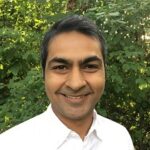
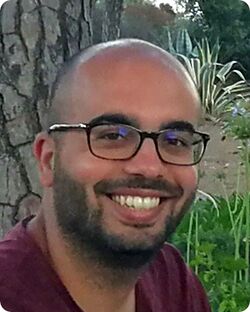
AEIMIT K. LAKDAWALA is an Associate Professor in the Department of Economics at Wake Forest University. He received his B.S./B.A. from the University of Texas at Austin and his Ph.D. from the University of California, San Diego. His research focuses on empirical macroeconomics with specializations in monetary policy transmission, emerging market economies, and the intersection of macroeconomics with finance. His investigations span firm-level uncertainty, distributional effects of inflation, central bank credibility, and international spillovers of monetary policy. Recent publications demonstrate a strong emphasis on emerging economies (particularly India), analysis of monetary policy uncertainty through market-based measures, and heterogeneous effects of policy across firms and demographics. Methodologically, his work employs structural VAR models, high-frequency identification, and micro-level data analysis.
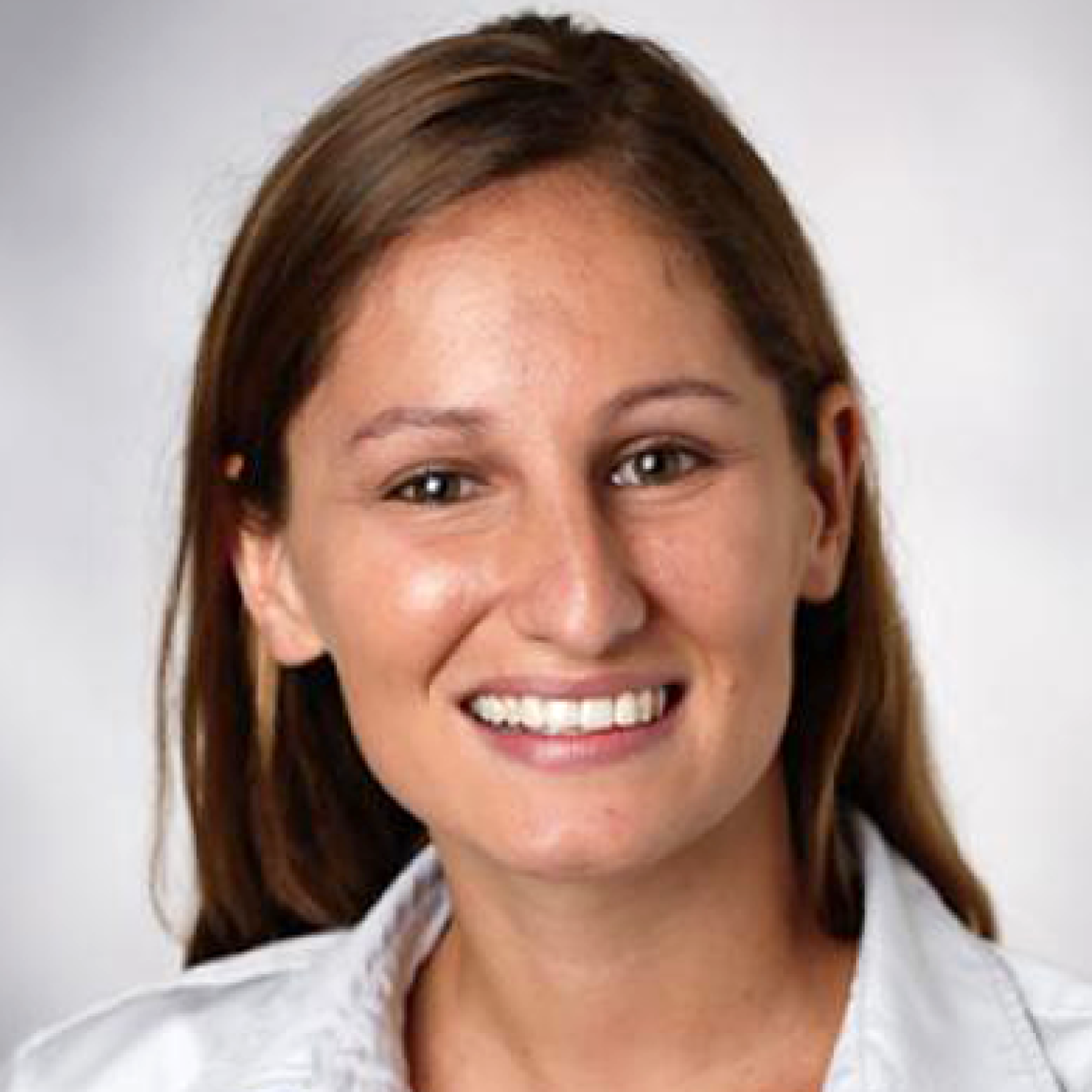
Dr. Karen Dow is an Associate Professor in the Department of Civil Engineering and Associate Dean (Undergraduate Programs) at the University of Manitoba's Price Faculty of Engineering. Her research focuses on river ice engineering and hydraulics, combining field monitoring, experimental investigations, and numerical modelling. She holds a Ph.D. (2009) and M.Sc. (2003) in Water Resources Engineering from the University of Alberta, and a B.Sc. (2001) in Civil Engineering from the University of Manitoba. Research Interests : River ice processes and hydraulics Experimental fluid mechanics Computational hydraulics Particle image velocimetry (PIV) Research Trends : Her publications emphasize understanding ice jam dynamics, turbulent flow behavior beneath ice covers, and numerical/experimental methods in hydraulics. Projects often involve fieldwork in Northern Manitoba and advanced PIV systems. Advising & Research Opportunities : She mentors students in hydraulics with a focus on theoretical fluid mechanics and teamwork. Current projects include ice jam database development and flow modeling under simulated ice conditions. Labs/Teams : Part of a collaborative research group in civil engineering, emphasizing experimental and computational hydraulics.
Tamara Lehman is an Assistant Professor at the University of Colorado Boulder in the Electrical, Computer & Energy Engineering Department , with a courtesy appointment in Computer Science . Her work focuses on computer security from microarchitectural perspectives , particularly in the intersection of computer architecture and security . PhD in Electrical and Computer Engineering from Duke University (2019) MEng from Duke University (2013) BS in Industrial and Systems Engineering from University of Florida (2007) Her research spans secure memory systems , side-channel attack mitigation , and trusted execution environments , with industrial experience at Intel Labs (2015-2016) leading to a patent on Cryptographic Cache Lines . She has authored 11 publications in top-tier venues, including a best paper award and honorable mention in Micro Top Picks. Email: Tamara.Lehman@colorado.edu
Anuradha Ravi is a Research Assistant Professor in the Department of Information Systems at the University of Maryland, Baltimore County (UMBC). Previously, she served as a Research Scientist at the Living Analytics Research Center, Singapore Management University (2018-2023), and as an Assistant Professor at Shiv Nadar University (2016-2018). She holds a Ph.D. in Computer Science from the Indian Institute of Technology Roorkee, where her doctoral research focused on optimizing energy efficiency and latency reduction for mobile devices through intelligent offloading strategies in heterogeneous networks. Her research interests span multiple cutting-edge domains in computing and networking: Distributed machine intelligence at the edge Low-power AI systems for IoT devices Indoor localization and occupancy sensing Wireless networking protocols Mobile and ubiquitous computing Smart building management systems Analysis of her recent publications (2015-2025) reveals a consistent focus on efficiency optimization in constrained environments, with key themes including autonomous robotics, AI-driven compression techniques, multi-sensor localization, and energy-aware mobile systems. Her work increasingly emphasizes real-world applications in contested or resource-limited settings, leveraging machine learning for adaptive solutions. She actively mentors graduate students at UMBC in projects related to perception systems for unmanned vehicles, compression-aware federated learning, and network middleware development. During her tenure at Shiv Nadar University, she supervised undergraduate research on cooperative IoT strategies and 5G edge computing. She previously contributed to the Living Analytics Research Center's initiatives in smart building occupancy detection and collaborative machine intelligence frameworks for IoT devices.
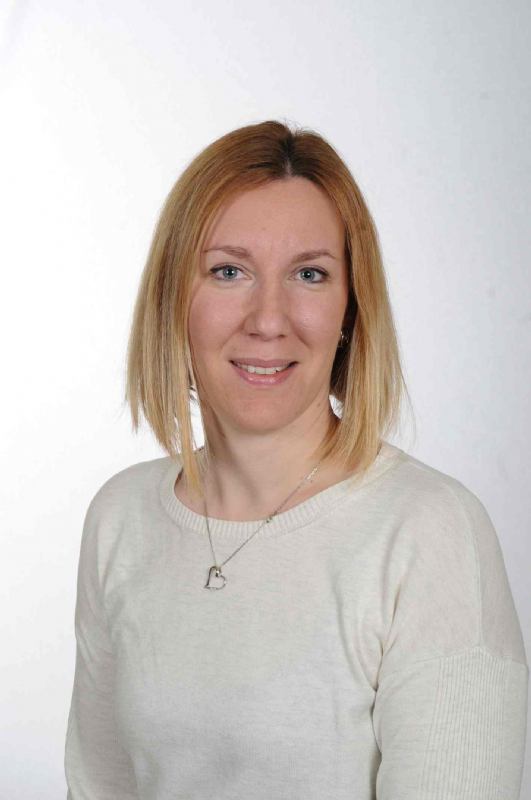
Dr. Jana Katunar is an Assistant Professor at the Faculty of Economics and Business (EFRI) of the University of Rijeka. Her research focuses on agricultural economics, EU policy analysis, wine industry dynamics, entrepreneurship, and family business management. She holds a PhD and teaches courses such as 'Foundations of Entrepreneurship,' 'Cost Management,' and 'Valuation of Enterprises.' Her work integrates macroeconomic factors with micro-level business strategies, particularly in Mediterranean agricultural systems and Croatian wine sector challenges. Education: PhD in Economics Teaching Responsibilities: Undergraduate and graduate courses in entrepreneurship, cost management, and agricultural economics Office Hours: Monday 11 AM–1 PM Research Interests: Prioritizes sustainable agricultural practices, EU policy impacts on Mediterranean farming, consumer behavior in wine markets, and family business succession strategies. She employs multi-criteria analysis and econometric models to evaluate industry competitiveness and market access challenges. Articles Overview: Recent work examines wine quality perception, distribution channel efficiencies in Croatia's wine sector, and the role of EU policies in shaping agricultural investment decisions. Her studies highlight regional disparities and macroeconomic determinants affecting vineyard productivity and export competitiveness. Advising/Grants: No specific grants or advisees listed, but her teaching and research roles suggest active involvement in student mentorship through coursework. Labs/Teams: Engaged in collaborative research with EFRI faculty on Mediterranean agriculture and EU economic integration.
Dr. Alireza Esfahani is a Senior Lecturer in Cyber Security at the School of Computing and Engineering (SCE) at the University of West London, where he also serves as the Course Leader for the BSc (Hons) Cyber Security and BSc (Hons) Cyber Security with Foundation Year programs. Previously, he held a lecturing position at the University of Greenwich from 2021 to 2023. He earned his PhD in Telecommunications from the University of Porto, Portugal, through the MAP-TELE doctoral program in 2017, followed by postdoctoral research at the Instituto de Telecomunicações in Portugal (2017–2019). Education: PhD in Telecommunications (University of Porto, 2017) Experience: Research Associate at SnT-CritiX (University of Luxembourg), contributing to EU cybersecurity projects SPARTA and CyberSec4Eu Affiliations: European Cyber Security Organisation (ECSO) and IEEE member Research Interests: Dr. Esfahani focuses on cybersecurity in IoT, connected vehicles, intrusion detection, machine learning applications, and semiconductor supply chain security. His work emphasizes secure authentication mechanisms, network coding security, and resilient systems design. Teaching: He teaches courses in BSc and MSc programs, including Cyber Security, Computer Science, and specialized modules in network security and secure communication protocols. Grants & Projects: Instrumental in EU-funded initiatives like SPARTA and CyberSec4Eu, focusing on cybersecurity frameworks and distributed systems. Labs/Teams: Collaborated with SnT-CritiX at the University of Luxembourg, developing cybersecurity solutions for critical infrastructure.
Dr. Gurram Gopal serves as an Industry Professor at Illinois Institute of Technology and a Visiting Professor at ISM. He has held roles as a strategy consultant, manager at ZS Associates, and supply chain executive at Tellabs. His research focuses on business strategy, supply chain optimization, sustainability, and corporate social responsibility. He has published over 50 papers and presented globally at conferences like PRME. Dr. Gopal has received prestigious honors including the Fulbright Scholar Award (2011-2012) and selection as a Fulbright Specialist Candidate (2013-2018). He teaches courses in operations management, supply chain analytics, and global business processes. His work integrates technology applications with ethical business practices, emphasizing innovation in process management and B2B marketing. Notable contributions include studies on blockchain in humanitarian logistics, AI adoption in retail, and sustainable marketing's impact on customer loyalty. He leads educational initiatives in Ireland, India, and Turkey, advocating for global supply chain resilience and data synchronization strategies.
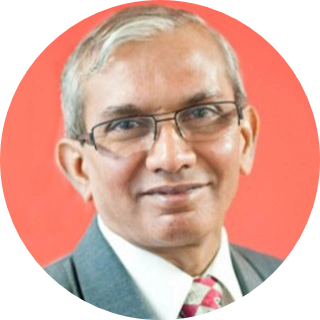
Prof. Nevzat YILDIRIM is a full-time Professor at Çankaya University's Department of Civil Engineering (since 2016) and previously held professorships at Gazi University (2001-2016) and other institutions. He holds a PhD in Hydraulic Engineering from The University of Iowa (1982), following a MSc from the same university (1978) and a BSc from Istanbul Technical University (1975). His research focuses on hydraulic engineering, particularly intake design, vortex dynamics, and fluid mechanics. He has advised over 14 graduate students on topics like critical submergence analysis and sediment transport. Research interests include optimizing intake systems, analyzing free-surface vortices, and understanding sediment transport mechanisms. His work bridges theoretical fluid dynamics with practical hydraulic engineering solutions. Notable contributions include developing equations for air-core vortex profiles and critical submergence criteria for multi-pipe intakes. Prof. YILDIRIM has over 30 peer-reviewed articles in journals like the KSCE Journal of Civil Engineering and Journal of Hydraulic Engineering . His collaborations with researchers like Kerem Taştan and Fikret Kocabaş highlight interdisciplinary approaches to hydraulic challenges. He has led projects on intake vortex mitigation and sediment impact studies. No specific awards are listed, but his extensive contributions to hydraulic theory and education are evident through his prolific publications and academic leadership roles.
Géza Szabó is a Researcher at Ericsson Research in Budapest, Hungary. His work focuses on advanced networking solutions for industrial and robotic systems, particularly in 5G/6G integration, network resource management, and AI-driven automation. He has extensively contributed to optimizing wireless resource allocation in industrial IoT environments and enhancing network performance through programmable data planes. Key areas: Network Co-Design, Industrial Automation, Reinforcement Learning Notable collaborations: József Peto, Sándor Rácz, Rafael Antonello His research bridges theoretical advancements with practical implementations, addressing challenges in real-time systems and quality-of-control (QoC) for cyber-physical processes. He has pioneered solutions for multipath channel switching in ROS2 and 3GPP frameworks, and developed adaptive traffic reduction techniques using SDN/NFV architectures. Recent work includes the FATHER project (Factory on the Road) exploring agile industrial production cells and the application of digital twins for network-physical system synchronization. His publications span top venues like IEEE Access, GLOBECOM, and ICC, reflecting his deep engagement with both academic and industry-relevant networking challenges.
Md. Munjure Mowla is an active researcher at Curtin University's School of Electrical Engineering, Computing and Mathematical Sciences, with a strong publication record spanning from 2014 to 2024. His work primarily focuses on next-generation wireless communications, with particular expertise in 5G/6G networks, energy efficiency, and resource allocation strategies. Dr. Mowla's research interests center around sustainable wireless communications, with a growing emphasis on 6G technologies and cell-less network architectures. His work explores innovative approaches to resource management, energy efficiency in backhaul networks, and the integration of emerging technologies like Free Space Optics (FSO) and mmWave for next-generation wireless systems. Recent publications demonstrate an increasing focus on sustainability in 6G networks, workload prediction in virtualized RAN environments, and the application of machine learning techniques to wireless resource management. Analysis of his recent publications (2021-2024) reveals a clear research trajectory toward more sustainable and intelligent wireless network architectures. His work shows a significant shift from traditional cellular approaches to cell-less RAN architectures, with increasing attention to energy efficiency metrics and sustainability frameworks. The publications demonstrate strong collaboration patterns, particularly with researchers from Curtin University including Iftekhar Ahmad, Daryoush Habibi, and Quoc Viet Phung, as well as international collaborators from European institutions. Dr. Mowla has contributed significantly to the understanding of resource allocation challenges in heterogeneous wireless environments, with publications spanning top-tier journals like IEEE Access, IEEE Transactions on Green Communications and Networking, and Computer Networks, as well as prestigious conferences including GLOBECOM, CSCN, and PIMRC. His research output shows consistent growth and increasing impact in the wireless communications domain, with recent work exploring the integration of quantum technologies and machine learning in next-generation networks.
Il Min Kim is a Professor and Chair of Undergraduate Studies in the Department of Electrical and Computer Engineering at Queen's University, Canada. He is affiliated with the Smith Engineering School and holds cross-appointments as Adjunct Professor at the University of Ottawa's School of Electrical Engineering and Computer Science. His research focuses on AI-driven wireless systems, including edge AI, federated learning, and Geoscience AI. He leads the Ubiquitous Artificial Intelligence Lab (UAI Lab) and is a core member of the Ingenuity Labs Research Institute and Queen's Centre for Security & Privacy. Education: PhD in Electrical Engineering from KAIST (2001), followed by postdoctoral work at MIT and Harvard. He joined Queen's in 2003, progressing from Assistant to Full Professor (2014). Awards include the CVPR 2024 Challenge Prize, KOFST President’s Award (2021), and multiple ECE Best Professor Awards. He has over 150 patents in AI/communications and serves on editorial boards of IEEE journals. Research interests span AI for 6G, V2X communications, and secure machine learning. His work emphasizes practical applications in IoT, energy efficiency, and privacy-preserving techniques.
Jeroen Wijsman is a Researcher at Wageningen Marine Research, part of Wageningen University & Research. His work focuses on marine and estuarine ecosystems, including benthic communities, sediment dynamics, and shellfish aquaculture. He leads projects on coastal nourishment, ecosystem modeling, and the ecological impacts of infrastructure developments like the Sand Motor. His research spans topics such as oyster and mussel ecology, sediment composition recovery, and environmental monitoring in estuaries like the Oosterschelde and Grevelingenmeer. Key research interests include benthic ecology, ecosystem engineering by shellfish, and the effects of human interventions on coastal environments. He has contributed to large-scale studies on the Sand Motor mega nourishment, evaluating its impact on biodiversity and sediment distribution. His work also addresses invasive species management, such as the Pacific oyster in the Dutch Delta. Wijsman has published extensively on coastal and marine ecosystems, with over 200 outputs including reports, datasets, and peer-reviewed articles. He collaborates widely, presenting at international conferences and contributing to media discussions on environmental issues like invasive species and coastal management. He leads projects such as the 'Shaping shoreface sand nourishments to optimize biodiversity' and 'Dynamic Ecosystem Model for the Oosterschelde.' His research integrates field data, modeling, and policy support to inform sustainable coastal management practices.
Dr. Christophoros Christophorou is an Assistant Professor in Computing at University of Central Lancashire Cyprus (UCLan Cyprus), holding a PhD in Mobile Cellular Networks from the University of Cyprus (2011). He specializes in 6G network architectures, edge computing, and distributed AI applications in wireless networks. His research focuses on next-generation communication systems, including security protocols, dynamic resource allocation, and AI-driven optimization frameworks. Dr. Christophorou has held roles as Senior Researcher at CYENS – Center of Excellence, Invited Assistant Professor at the University of Cyprus, and Postdoc Researcher (2017–2023). He has contributed to major EU-funded projects such as ADROIT6G (Horizon Europe), METACITIES, and ENDORSE, focusing on AI-driven networks, smart cities, and healthcare robotics. His publications emphasize machine learning for network security, 6G architecture innovations, and distributed AI frameworks for D2D communication. He teaches advanced programming and system analysis courses at UCLan Cyprus.
Prof. Dr. V. Çağrı GÜNGÖR is a Professor and Department Chair of Computer Engineering at Abdullah Gül University, Kayseri, Turkey. He holds a Ph.D. from Georgia Institute of Technology and has been actively involved in research and academia since 2001. His primary roles include leading the Computer Engineering department and contributing to editorial boards of prestigious journals. Education: B.S. and M.S. in Electrical and Electronics Engineering (Middle East Technical University, 2001/2003); Ph.D. in Electrical and Computer Engineering from Georgia Tech (2007). Research focuses on next-generation wireless networks, smart grid communications, cognitive radio networks, underwater acoustic networks, and AI-driven data mining. His work bridges theoretical advancements with practical applications in smart grids and vehicular networks, emphasizing reliability and efficiency. Notable awards include TUBITAK Young Scientist Award (2017), BAGEP (2017), and IEEE Best Paper Awards (2012, 2006). He leads multiple research projects funded by TÜBİTAK, EU Marie Curie, and industry partners like Alcatel-Lucent and Eaton Corporation. Grants and projects include developing low-power WSNs for structural health monitoring, underwater acoustic networks, and smart grid communication frameworks. He has co-authored over 100 peer-reviewed publications and edited books on industrial wireless networks. Teaching courses include Computer Networks, Wireless Sensor Networks, and Capstone Design Projects. His lab explores cutting-edge solutions in IoT, vehicular networks, and AI-driven network optimization.
Martin Klapez is an Assistant Professor at the University of Modena and Reggio Emilia, affiliated with the Department of Engineering Enzo Ferrari. He holds an M.S. in Theoretical Computer Science from the University of Bologna and a Ph.D. in Information and Communication Technologies (ICT) from the University of Modena and Reggio Emilia. His primary research focuses on computer networking, particularly safety-related V2X communications, public safety networks, and energy-efficient 5G architectures. He leads the UNIMORE Networking Lab and is involved in experimental evaluations of protocols like IEEE 802.11p for vehicular networks, TCP performance optimization over wireless, and green 5G design. Key research contributions include studies on TCP congestion control algorithms, energy footprint analysis of multi-RAT cellular systems, and field trials for safety-critical applications. His work bridges theoretical networking principles with practical implementations, including experiments in data visualization and smart infrastructure testing. Klapez has taught advanced courses on SDN, network emulation, and ns-3 tool usage at the university. He collaborates actively with international conferences and publishes widely in IEEE journals and forums. His technical expertise spans network softwarization, resource pooling in SDN, and middleware development for mission-critical networks. Current projects include LTE-V2X field tests for vulnerable road user safety and optimizing TCP modules like BBR and Small Queues for wireless environments. He contributes to standardization efforts through practical validation tools like Earthcloud for IoT seismic alerts.