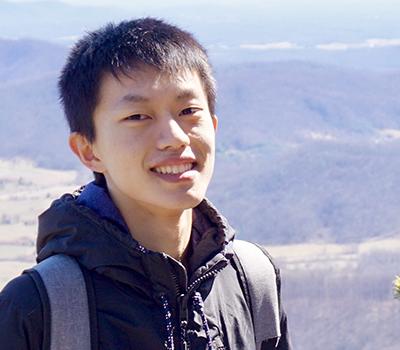
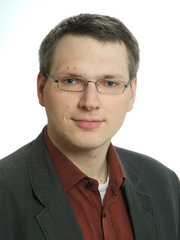
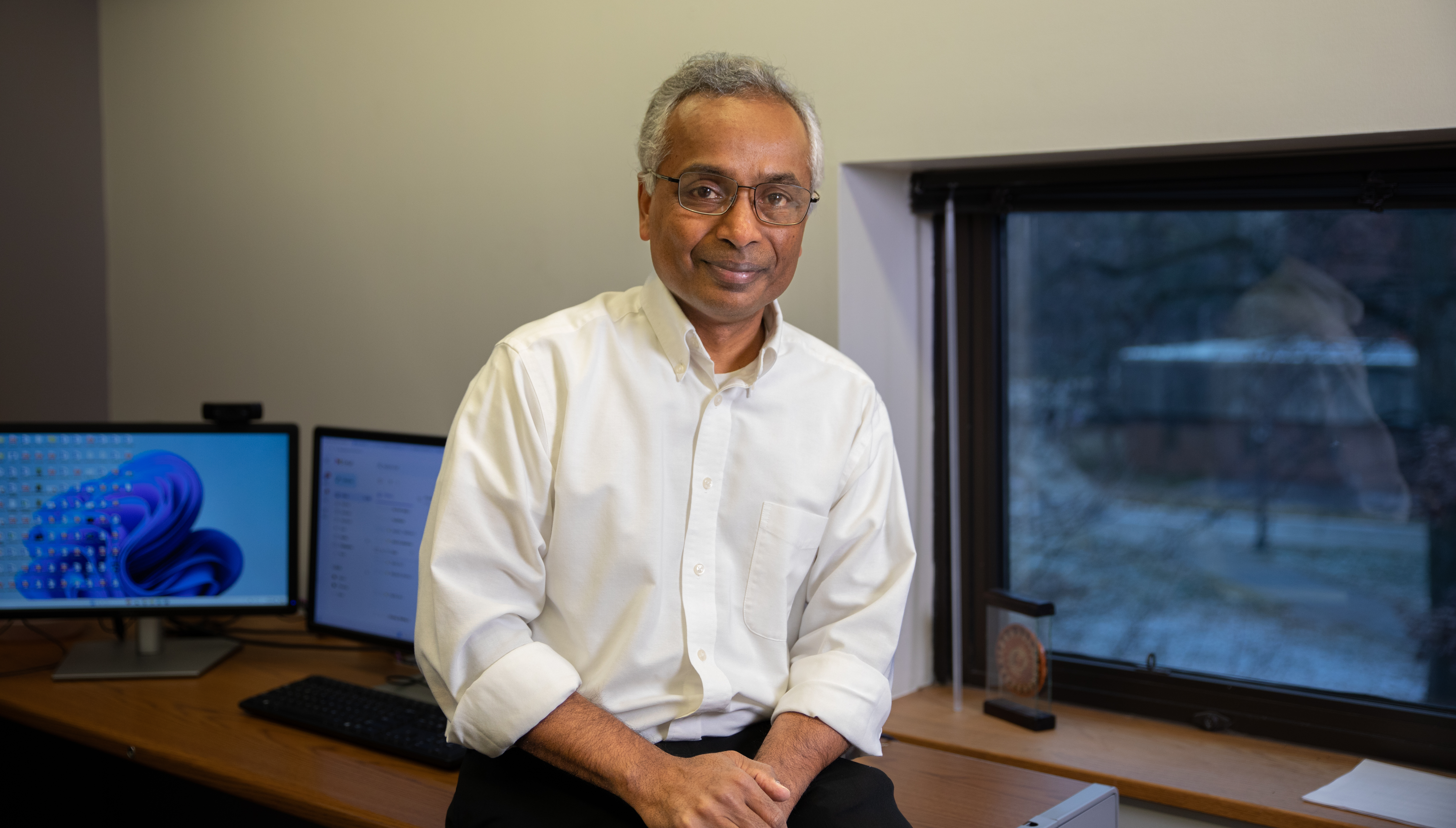
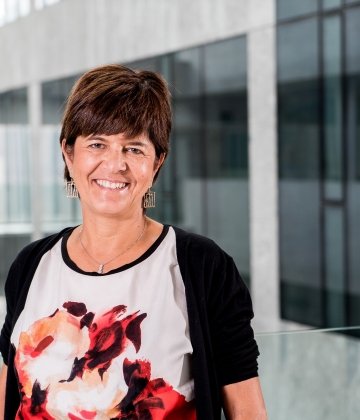
Prof. Dr. Dominik Schwarz is a faculty member at the Faculty of Physics , Bielefeld University. His research focuses on Cosmology and Particle Physics , particularly in the areas of Dark Energy , Dark Matter , Cosmological Inflation , and Large-Scale Structure Formation . He contributes to projects like the International LOFAR Telescope Consortium and the SFB-TRR 211 on strongly interacting matter. APART Fellow of Austrian Academy of Sciences Humboldt Fellow CERN Fellow His recent work explores the cosmic dipole anisotropy , axion density perturbations , and multi-wavelength cosmic web mapping . He also advances data science infrastructure through the PUNCH4NFDI consortium.
Mark Coeckelbergh is a Professor of Philosophy at the University of Vienna, specializing in the philosophy of technology, AI ethics, and robot ethics. He is affiliated with the Department of Philosophy and the Research Network Data Science at the University of Vienna. In addition to his academic position, Coeckelbergh has held significant roles including Former President of the Society for Philosophy and Technology (SPT) and Member of the European Commission's High-Level Expert Group on Artificial Intelligence (AI HLEG). His research focuses on the ethical, political, and philosophical implications of emerging technologies, particularly artificial intelligence and robotics. Coeckelbergh has published extensively in these areas, authoring influential books such as Robot Ethics (2022), The Political Philosophy of AI (2022), and Why AI Undermines Democracy and What To Do About It . His work explores how AI systems affect democratic processes, human agency, and social relationships. Recent publications demonstrate a strong focus on the relationship between AI, democracy, and ethical governance, examining how AI systems can both threaten and potentially enhance democratic processes through algorithmic transparency and participatory design approaches. Finalist of the World Technology Award 2017 Coeckelbergh teaches various courses including 'Introduction to Philosophy of LLMs,' 'LLMs and the Future of Writing,' 'Ethics and Robotics,' and 'Global Governance of AI.' He has supervised numerous students working on topics related to technology ethics and philosophy. He has been involved in several major research projects including H2020 PERSEO, WWTF Democracy Responsible Entrepreneurship, and FP7 DREAM (Development of Robot-Enhanced therapy for children with Autism spectrum disorders). Coeckelbergh has also announced upcoming guest professorships at the Institute of Philosophy of the Czech Academy of Sciences and Uppsala University, where he will work on environmental and technology ethics projects.
Ameet Talwalkar is an Associate Professor in the Machine Learning Department at Carnegie Mellon University and Chief Scientist at Datadog. He holds a PhD from the Courant Institute at NYU (2010) where he received the Janet Fabri Prize for Best Thesis. His professional achievements include co-founding Determined AI (acquired by HPE), creating MLlib in Apache Spark, co-authoring the textbook 'Foundations of Machine Learning,' and spearheading the MLSys conference. Talwalkar's research focuses on fundamental challenges in machine learning systems, including distributed ML, federated learning, neural architecture search, and human-AI interaction. His work bridges theoretical foundations with practical applications across domains like computational biology, PDE solving, and code generation. Current interests include AI for science, specialized model development, and agent-based systems. His publications demonstrate strong focus on ML systems optimization, foundation model evaluation, and interpretable AI. Recent works investigate specialized foundation models, PDE-solving frameworks, code generation tools, and human-AI interaction paradigms. The research consistently targets efficiency, scalability, and practical deployment challenges. Best Paper Award at EAAMO 2023 Best Student Paper at NYAS ML Symposium 2009 Runner-up for Best Real-world Application at Socal ML Symposium 2017 Janet Fabri Prize for Best PhD Thesis (2010) Talwalkar leads the CMU MLSys Lab focused on scalable ML systems and has served as Board President for the MLSys conference series. His educational contributions include developing courses like 'Machine Learning with Large Datasets' and creating the LEAF benchmark for federated learning and NAS-Bench-360 for neural architecture search.
Dr. Theophilus A. Benson is a Professor in the Department of Electrical and Computer Engineering at Carnegie Mellon University, with additional responsibilities at Carnegie Mellon University-Africa. His research group focuses on improving network performance and availability through models, algorithms, and frameworks that manage network state semantics. Key application areas include addressing the digital divide, optimizing microservices/cloud systems, software-defined networks, and CDN designs. Education: Ph.D., University of Wisconsin, Madison (2012) M.S., University of Wisconsin, Madison (2008) B.S., Tufts University (2004) Research Focus: Professor Benson's work spans three core domains: Democratizing Web Performance (measurements and optimizations for developing regions), Systems Abstractions for Programmable Infrastructures (eBPF/P4 frameworks), and Self-Managing Networks (ML-driven configurations). His African Internet Observatory initiative analyzes Africa's internet ecosystem to address digital inequity through assessment probes and statistical methods. Publication Trends: Recent works (2021-2024) demonstrate a strong focus on programmable networks (eBPF/P4 management), web performance in developing regions, and data-driven cloud/CDN optimizations. Earlier foundational work established expertise in SDN fault tolerance, network updates, and video streaming characterization. Awards & Honors: SIGCOMM Test of Time Award NSF CAREER Award NEC Faculty Award Google Faculty Award Facebook Faculty Award (2x) DARPA ISAT Study Group Member Grants & Advising: Secured funding from NSF (CAREER, NeTS), Google, Facebook, and Yahoo. Current advisees include 4 PhD/MS students working on programmable networks and web performance. Actively recruiting post-docs and students for African connectivity and eBPF projects. Leadership: Co-chairs NSDI'25 and ApNet'24 conferences. Leads the NetLab research group developing deployable systems adopted by web-scale companies and open-source communities.
Qiang Tang is currently an Associate Professor (Level D) at the School of Computer Science of The University of Sydney. Previously, he was a Senior Lecturer (2021.1-2024.12) at USYD and an Assistant Professor at the Computer Science Department of New Jersey Institute of Technology (2016.8-2021.1), where he co-directed the JACOBI Blockchain Lab with Prof. Jian Pei and Prof. Zhenfeng Zhang. He completed his PhD at the University of Connecticut under Prof. Aggelos Kiayias and Prof. Alexander Russell, following postdoctoral research at Cornell University with Prof. Elaine Shi. His research spans applied and theoretical cryptography, blockchain technology, privacy, and computer security. His work is supported by ARC, Google, Ethereum Foundation, Stellar Foundation, Protocol Labs, Algorand Foundation, Oracle, and USYD. Previous funding includes NSF, JD.com, AFRL, DoE, and Particl Foundation. His research has led to significant contributions in consensus protocols, distributed randomness generation, secure multi-party computation, and privacy-preserving technologies. Tang's publications reveal a strong focus on practical cryptographic solutions for blockchain and distributed systems. His recent work demonstrates expertise in asynchronous consensus, optimal protocol design, and secure implementations for real-world applications. His research shows consistent innovation in improving efficiency, security, and scalability of distributed systems. Scientific Awards: 2025 DSN Best Paper Award 2024 ICDCS Distinguished Paper Award 2023 SOAR Prize, USYD 2023 Oracle for Research Award 2022 Stellar Foundation Research Awards 2022 Ethereum Academic Award 2019 MIT Technical Review, 35 Chinese Innovators Under 35 Tang actively mentors PhD and Master's students, with several alumni now holding faculty positions or research roles at institutions like City University Hong Kong, Chinese Academy of Sciences, and A*STAR Singapore. He has received significant research funding including a multi-year Google project on End-to-End Secure Cloud and an ARC DP grant on Order Fairness in Decentralized Systems. He leads the research in his lab focusing on blockchain protocols and cryptographic applications, with strong industry connections through collaborations with Google, Ethereum Foundation, Stellar Foundation, and Protocol Labs. His team regularly publishes in top security and cryptography venues including CRYPTO, CCS, USENIX Security, and S&P.
Catherine Tucker is the Sloan Distinguished Professor of Management and Professor of Marketing at the MIT Sloan School of Management. She serves as the faculty director of the EMBA program and has chaired the MIT Sloan PhD Program. Her research focuses on the intersection of technology, marketing, and public policy, with expertise in digital privacy, online advertising, and blockchain applications. She co-founded the MIT Cryptoeconomics Lab and has testified before Congress on digital privacy issues. Tucker holds a PhD in Economics from Stanford University and a BA from the University of Oxford. Education: PhD in Economics, Stanford University Bachelor of Arts, University of Oxford Research Interests: Algorithmic bias and fairness Privacy regulation and consumer data Blockchain technology applications Healthcare technology and digital health Marketing strategy in digital ecosystems Awards: NSF CAREER Award (2010s) William F. O’Dell Award (Long-term Impact in Marketing) Garfield Economic Impact Award (2020) Editorial Roles: Senior editor at Marketing Science , former co-editor at Quantitative Marketing and Economics , and associate editor roles at Management Science and Journal of Marketing Research . Labs & Initiatives: Co-director of the NBER Digital Economics and AI program, and co-founder of the MIT Cryptoeconomics Lab studying blockchain applications.
Tamer Başar is a Maybelle Leland Swanlund Endowed Chair Emeritus and Professor Emeritus of Electrical and Computer Engineering at the University of Illinois' College of Engineering. He leads research in game theory, control systems, and networked systems through the Coordinated Science Lab. His work focuses on stochastic processes, multi-agent systems, and optimization under uncertainty. Research interests include Nash equilibrium analysis, mean-field theory, and reinforcement learning applications in dynamic systems. Recent publications explore strategic incentives in large population games, nonstationary reinforcement learning, and coupled bi-virus models. Notable honors include the IEEE Control Systems Award (2014), American Academy of Arts and Sciences Membership (2023), and honorary doctorates from multiple institutions. His work bridges theoretical foundations with practical applications in socio-technical networks and edge computing systems. Basar's contributions span over 900 publications, focusing on distributed control algorithms, network security, and strategic information design. His research lab at Illinois addresses challenges in timely computation, resilient systems, and decentralized decision-making frameworks.
Phillip J. Ansell is an Associate Professor in the Department of Aerospace Engineering at the University of Illinois at Urbana-Champaign (UIUC), affiliated with the Grainger College of Engineering. He directs the Center for Sustainable Aviation and the Center for High-Efficiency Electrical Technologies for Aircraft. His academic positions include Assistant Professor (2015–2021) and current role as Associate Professor since 2021. He teaches courses such as AE 416 (Applied Aerodynamics), AE 419 (Aircraft Flight Mechanics), and AE 515 (Wing Theory). Education: BS, The Pennsylvania State University, Aerospace Engineering, 2008 MS, UIUC, Aerospace Engineering, 2010 PhD, UIUC, Aerospace Engineering, 2013 Research Interests: Focuses on applied aerodynamics, sustainable aviation, distributed propulsion, flow control, and aircraft electrification. His work integrates experimental fluid mechanics and computational models to advance aviation sustainability. Key projects include hydrogen propulsion systems, cryogenics in aviation, and unsteady aerodynamics for rotorcraft. Research Contributions: Authored/co-authored books like Aircraft Cryogenics (Springer, 2024). His articles address sustainable aviation frameworks, hydrogen-electric propulsion, and high-lift aerodynamics. Recent trends emphasize decarbonization pathways and system-of-systems analysis. Awards & Honors: Dean's Award for Excellence in Research (2025) NASA Innovative Advanced Concepts Fellow (2025) AIAA Associate Fellow (2024) Forbes 30 Under 30 (2016) Advising & Grants: Advises graduate students on propulsion and aerodynamics. Secured grants from AFOSR, ARO, and NASA. Active in AIAA committees, including Electrified Aircraft Technology Technical Committee (Chair, 2020–2023). Labs & Teams: Leads the Aerodynamics and Unsteady Flows Research Group, using UIUC’s wind tunnel facilities. Collaborates on projects like the Five Circles of Sustainable Aviation framework and cryogenic propulsion systems.
Subir Biswas is a Professor in the Department of Electrical and Computer Engineering (ECE) at Michigan State University (MSU), part of the College of Engineering. His research focuses on wireless networking, low-power protocols, vehicular networks, and health monitoring systems, conducted through the NeEWS laboratory. He holds a Ph.D. from the University of Cambridge and degrees from Jadavpur University. Education: Ph.D., Computer Engineering, University of Cambridge (1994) M.S., Electrical Engineering, Jadavpur University (1989) B.S., Electrical Engineering, Jadavpur University (1987) Professional Experience: Professor, MSU ECE (2011–present) Associate Professor, MSU ECE (2003–2010) Research interests include traffic analysis firewalls, pricing calculus for social wireless networks, low-energy green networking, and ultrasound-based sensor systems . He leads the NeEWS lab, exploring embedded systems and network middleware. His work spans IoT, cybersecurity, and biomedical applications like wearable sensors for autism monitoring and hydration tracking. Publications emphasize innovative protocols (e.g., pulse position coding) and machine learning for network optimization. Collaborations include NSF-funded projects and industry partnerships (e.g., Tellium Optical Systems).
Wendy W Wolford is the Robert A. and Ruth E. Polson Professor of Global Development at Cornell University, affiliated with the College of Agriculture and Life Sciences. She also serves as Vice Provost for International Affairs, overseeing global partnerships including the Global Hubs and Grand Challenges initiatives. Her research focuses on land governance, social movements, and agrarian societies, with extensive fieldwork in Brazil, Ecuador, and Mozambique. Key projects include analyses of the Brazilian MST landless movement and colonial legacies in Mozambican agriculture. Wolford earned her PhD from UC Berkeley (2001) and has authored/co-edited seminal works like This Land is Ours Now (2010) and The Social Lives of Land (2024). She has held prestigious fellowships, including a Fulbright (2016–17), and her work addresses critical issues like global land grabbing, participatory democracy, and environmental justice. Teaching spans undergraduate and graduate levels, emphasizing critical analysis in development theory and political ecology. Recognition includes awards for internationalizing curricula and advancing global development research. Her outreach includes curricula development on Brazilian rural development and multimedia case studies on sustainable food systems. Current research explores the Plantationocene framework and Mozambique’s agrarian histories.
Huazheng Wang is an Assistant Professor in the School of Electrical Engineering and Computer Science at Oregon State University. His research focuses on reinforcement learning, information retrieval, and trustworthy AI. He received his Ph.D. from the University of Virginia (2021) and B.E. from the University of Science and Technology of China (2015). He holds awards including the 2025 EECS Fabulous Teacher Recognition and SIGIR 2019 Best Paper Award. His work addresses challenges in robust reinforcement learning, adversarial attacks on bandit systems, and applications in scientific discovery. Education: Ph.D., Computer Science, University of Virginia (2021) B.E., Computer Science and Technology, University of Science and Technology of China (2015) Research interests emphasize developing efficient algorithms for reinforcement learning, multi-armed bandits, and their applications in recommendation systems, protein optimization, and security. Notable contributions include provably efficient risk-aware reinforcement learning frameworks and adversarial attack analysis on bandit systems. Recent work includes NSF-funded research on neural bandits (IIS-2403401) and publications in top venues like ICML, NeurIPS, and AAAI. His lab explores embodied LLM agents for team cooperation and federated collaborative online monitoring frameworks.
Björn Brandenburg is a researcher at the Max Planck Institute for Software Systems (MPI-SWS) in Kaiserslautern, Germany. His work focuses on real-time systems, scheduling algorithms, and operating system design, with a particular emphasis on predictable resource allocation and performance guarantees in multiprocessor and cyber-physical environments. His research interests include real-time response-time analysis (e.g., PROSA ), locking protocols for multiprocessor systems, side-channel mitigation in cloud environments, and the verification of real-time scheduling policies. He has contributed to foundational studies on deadline failure probabilities, self-suspending tasks, and predictable real-time Linux implementations. Scientific awards include recognition for outstanding papers on TimerShield (2017) Offline Equivalence (2017) . His work intersects with practical systems like LITMUSRT and ROS 2, aiming to bridge theoretical guarantees with real-world applications in safety-critical and distributed real-time systems.
Mithuna S. Thottethodi is a Professor and Interim Associate Head of Teaching and Learning at the Elmore Family School of Electrical and Computer Engineering at Purdue University. He holds a B.Tech. from the Indian Institute of Technology, Kharagpur (1996), and a Ph.D. in Computer Science from Duke University (2002). His research focuses on computer architecture, interconnection networks, distributed systems, and security, with notable work on sparse tensor accelerators and processing-near-memory architectures. His work has been funded by the NSF, AT&T, and SK Hynix. Research interests include security, interconnection networks in multicores, storage performance optimization, and memory hierarchies. Notable contributions span hardware accelerators for machine learning, secure speculative execution, and datacenter network congestion control. He has advised over 20 graduate students, many of whom have joined top tech firms like Google, Microsoft, and Intel. Awards: NSF CAREER Award (2007) Wilfred Hesselberth Teaching Excellence Award (2021) Multiple Eta Kappa Nu Outstanding Professor Awards Teaching includes undergraduate courses like EE 437 (Computer Design) and graduate courses such as ECE 666 (Advanced Computer Architecture). He also advises VIP and EPICS student teams.
Ananth Grama is the Samuel D. Conte Distinguished Professor of Computer Science and Associate Director of the Center for Science of Information at Purdue University. He holds a faculty position in the Department of Computer Science, College of Science. His research focuses on parallel computing, distributed systems, machine learning, and their applications in complex systems such as materials modeling and clinical analytics. He teaches advanced courses like CS525 (Parallel Computing) and CS314 (Numerical Methods). Research interests span parallel algorithms, fault-tolerant learning, quantum machine learning, and data-driven healthcare analytics. Recent work addresses fundamental limits of generative models, online learning under noisy conditions, and clinical outcome predictions. His projects include DOE-funded research on critical element recovery and NIH grants for hearing assessment technologies. Notable contributions include over 50 peer-reviewed publications since 2022, with recent papers appearing at ICLR, NeurIPS, and ICML. Current postdocs include Changlong Wu (collaborating with Wojciech Szpankowski) and Luopin Wang (with Nadia Atallah). He advises seven graduate students and oversees multidisciplinary research teams.
Dr. Sonia Petrone is a Full Professor of Statistics at Bocconi University's Department of Decision Sciences. She earned her PhD in Statistics from Bocconi University and has held academic positions at the University of Pavia and University of Insubria before joining Bocconi. Her extensive international experience includes research visits across North America, Latin America, Europe, India, and Russia. Her research specializes in Bayesian statistics, with contributions to foundational theory, predictive modeling, Bayesian nonparametrics, and stochastic processes. She currently directs the Bocconi Summer School in Advanced Statistics and Probability and previously led the PhD program in Statistics (2011-2018). Her research portfolio demonstrates consistent focus on Bayesian nonparametric methods, predictive modeling, and applications to complex data structures. Recent work explores urn processes, time series analysis, and network modeling using innovative Bayesian approaches. Awards & Honors: IMS Medallion Lecture Award (2018) ISBA Foundational Lecture Award (2016) Fellow of International Society for Bayesian Analysis Fellow of Institute of Mathematical Statistics Fellow of European Laboratory for Intelligent Systems Fellow of Bocconi Institute of Data Science She has held editorial leadership positions as Editor of Statistical Science (2020-2022) and Bayesian Analysis (2010-2014), and served as President of the International Society for Bayesian Analysis (2014).