Raine Viitala is an Assistant Professor at Aalto University's Department of Energy and Mechanical Engineering. His research focuses on mechanical vibration analysis, electromagnetic influence in rotating systems, and sustainable energy management in industrial applications. Aalto University Department of Energy and Mechanical Engineering His work spans mechanical engineering , fluid dynamics , and machine learning applications . Recent publications address torsional vibration modeling, aerostatic bearing design, and AI integration in pulp & paper industry energy systems. Viitala's research trends include digital twin technology for collaborative design, eddy current sensing for tool monitoring, and nonlinear damping solutions for mechanical systems.
Oum El Kheir Aktouf is a Professor in Computer Science at Grenoble Institute of Technology (Esisar Engineering School) and a member of the LCIS laboratory, France. She previously served as a Visiting Professor at San José State University, USA, during a sabbatical leave. Education : Master and PhD in Computer Science from Grenoble Institute of Technology Her research focuses on dependability, safety, and security of embedded and interconnected systems, including sensor-based applications and multi-agent architectures. She employs runtime testing, diagnosis, and monitoring approaches. Her work spans mobile application testing, fault diagnosis in RFID and wireless sensor networks, and security frameworks for autonomous systems. Recent publications highlight trends in Android security benchmarking , decentralized cryptography , and multi-agent resilience . She has participated in 12 funded national and international research projects and supervised courses in operating systems, real-time systems, distributed computing, and system dependability.
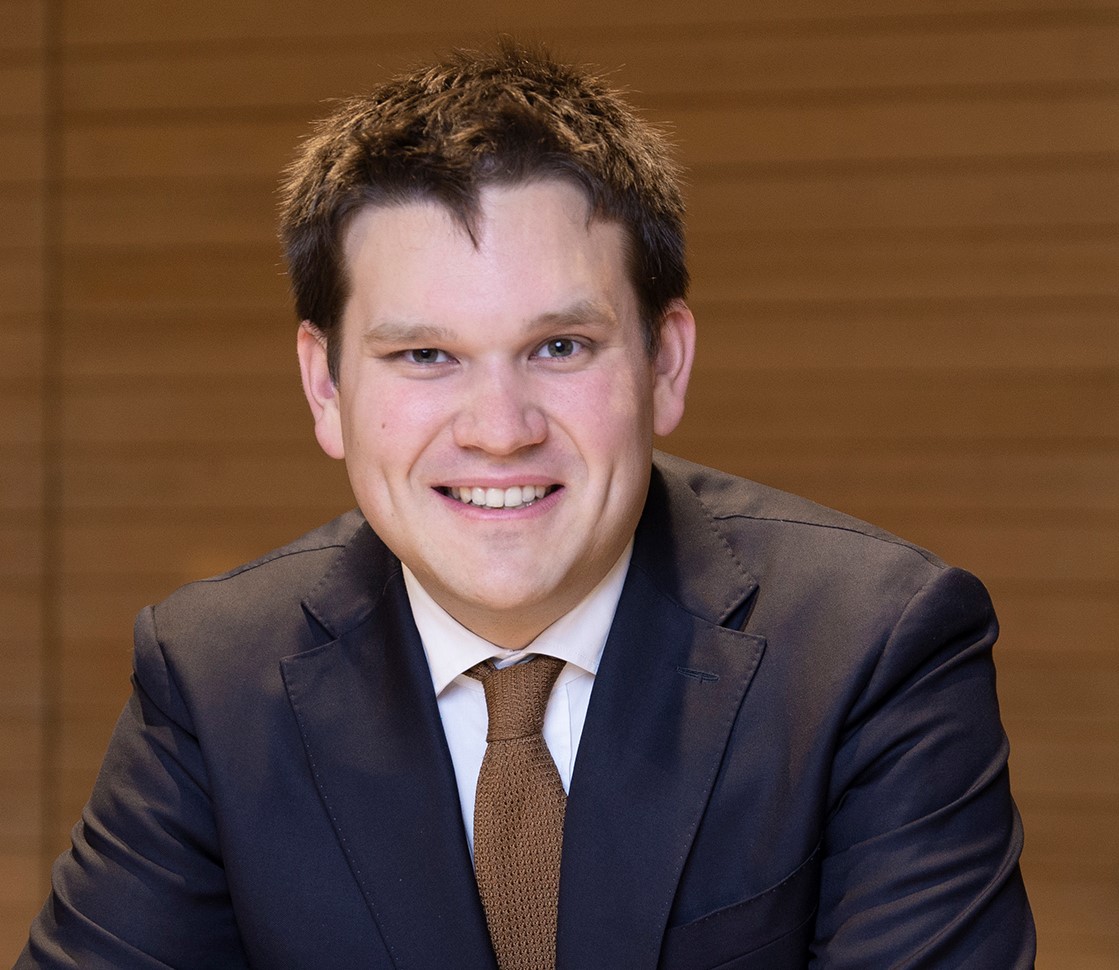
Eugene Y. Vasserman is an Associate Professor in the Department of Computer Science at Kansas State University's College of Engineering, where he also serves as Director of the Center for Cybersecurity and Trustworthy Systems. His office is located in 2171 Engineering Hall, and he holds office hours on Tuesdays from 2:30 pm to 4:00 pm and Wednesdays from 11:30 am to 1:00 pm during the Fall 2025 semester. Dr. Vasserman's research spans multiple critical areas of cybersecurity including network and distributed system security, privacy and anonymity, censorship resistance, operating system security, medical and IoT security, usable security, and applied cryptography. His work bridges theoretical security concepts with practical implementations, addressing real-world challenges in diverse domains from medical systems to blockchain technologies. His recent publications reveal a research trajectory that has evolved from foundational network security work to increasingly interdisciplinary research intersecting with artificial intelligence, medical systems, and cybersecurity education. The 15 most recent publications demonstrate his ongoing commitment to both theoretical advances and practical security solutions across multiple domains. Outstanding short paper award for 'Hypersparse Traffic Matrix Construction using GraphBLAS on a DPU' at IEEE HPEC 2023 Best graduate student poster award for 'Empowering pre-service teachers to utilize programming in the classroom' at ASEE Midwest Conference 2013 Dr. Vasserman has mentored numerous graduate students through the Systems and Network Security (SyNeSec) Lab, with alumni now working at organizations including Paycom, Corelight, Sandia National Labs, Microsoft, and Cerner. He teaches multiple cybersecurity courses each semester including CIS 525: Introduction to Network Programming, CIS 755: Systems Security, and CIS 351: Cyber Defense Basics, demonstrating his long-term commitment to cybersecurity education since at least 2010. As Director of the Center for Cybersecurity and Trustworthy Systems, he leads initiatives that address critical security challenges across multiple domains, fostering collaboration between researchers, students, and industry partners to develop trustworthy systems for the future.
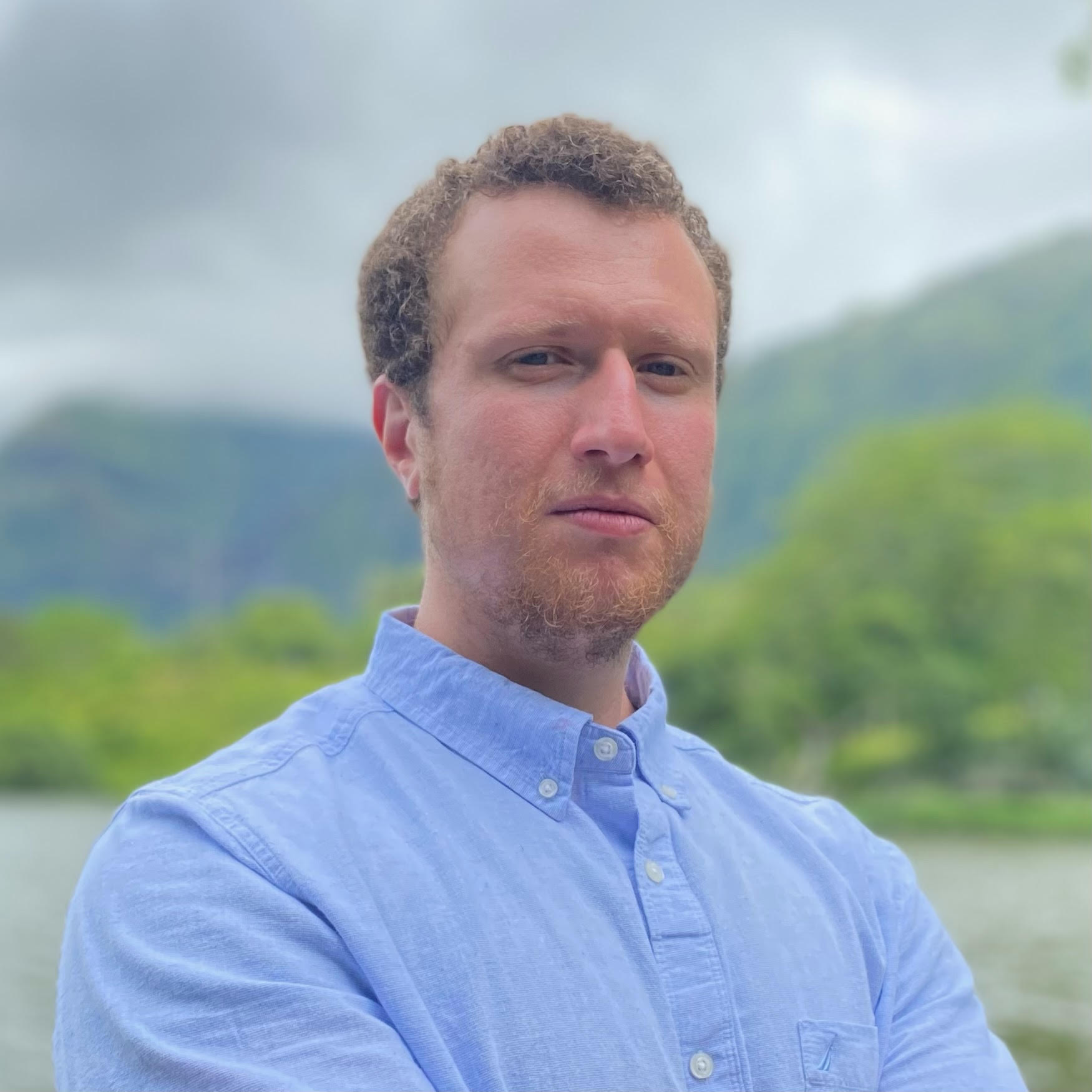
Ole Arve Misund serves as a Professor at the Norwegian Fisheries College within UiT The Arctic University of Norway, Tromsø. His research spans polar science, Arctic marine ecology, fisheries management, and international relations in polar regions, with particular focus on Norway-Russia scientific cooperation dynamics following geopolitical shifts in 2022. His research interests center on climate change impacts on Arctic marine ecosystems, acoustic monitoring of marine organisms, and the geopolitical dimensions of polar research. Recent work examines boreal species migration into the Central Arctic Ocean, machine learning applications for backscatter analysis, and management frameworks for the Central Arctic Ocean. Analysis of his recent publications reveals strong interdisciplinary trends, integrating marine ecology with political science through studies of Russian-Norwegian scientific collaboration under sanctions, illegal fishing enforcement, and policy-relevant polar research. His work consistently bridges academic research with practical fisheries management and geopolitical considerations. Misund actively engages in science communication through Norwegian media outlets like Nordlys and Fiskeribladet, addressing topics from climate policy contradictions to Antarctic hydrological changes. His expeditionary work includes North Pole 2022 aboard the "Kronprins Haakon" research vessel. Professional activities demonstrate significant leadership in polar research infrastructure development and international scientific collaboration, particularly through the Norwegian Polar Institute where he contributes to strategic planning and policy advice. His work emphasizes evidence-based approaches to Arctic governance amid evolving geopolitical landscapes.
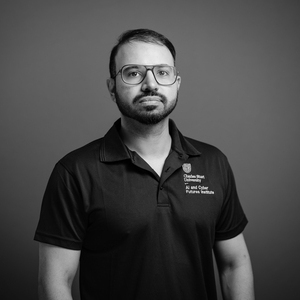
Dr. Ibrar Yaqoob serves as a Senior Research Fellow and Program Lead for the Smart and Resilient Supply Chain strand at the Artificial Intelligence and Cyber Futures Institute (AICF) at Charles Sturt University. He leads a research team comprising PhD students and postdoctoral fellows, and previously held research positions at Khalifa University in the UAE and Kyung Hee University in South Korea. Dr. Yaqoob holds a PhD in Computer Science from Universiti Malaya (2017) and has been a Visiting Academic at the University of Cambridge. His research focuses on blockchain, NFTs, and metaverse applications for healthcare, supply chain and logistics, wireless networks, IoT, and smart cities, with additional expertise in mobile edge-cloud computing and big data. Dr. Yaqoob has published over 100 research articles with more than 24,000 citations and an h-index of 58, with 98.9% of his publications appearing in Q1 journals. His recent publications demonstrate a strong trend toward practical blockchain implementations across diverse sectors including healthcare data management, sustainable supply chains, and smart city infrastructure. His work frequently combines blockchain with emerging technologies like NFTs, metaverse applications, and large language models to solve complex real-world problems in supply chain transparency, medical data security, and sustainable development. Ranked in the world's top 0.1% of researchers for three consecutive years (2023-2021) as a Highly Cited Researcher Listed among the World's top 2% scientists for five consecutive years (2020-2024) 2024 IEEE Consumer Electronics Magazine Best Paper Award (1st Place) 2024 Vice Chancellor's Researcher of the Year Commendation 2024 AICF Research Excellence Award 13 highly cited papers (top 1%) and 21 most downloaded articles Dr. Yaqoob serves as Chief Investigator on multiple significant research projects including the AgriTwins project (AUD $2.38 million), Trustworthy Operations and Supply Chain Management project (AUD $10,000), and Decentralized AI Juries project (AUD $13,875). He actively mentors PhD students and postdoctoral researchers while serving on editorial boards for prestigious journals including IEEE Network Magazine, Future Generation Computer Systems, and IEEE Access. His research team at the AICF Institute focuses on bridging emerging technologies with practical applications to address real-world challenges in supply chain resilience and sustainability.
Dr. Sharmin Jahan serves as a tenure-tracked Assistant Professor in the Department of Computer Science at Oklahoma State University since August 2022. Her research centers on dynamic security assurance for autonomous systems (self-adaptive systems) through explainable AI models that interpret uncertain operational environments to enable autonomous security decision-making and compliance maintenance. Her educational background includes a Ph.D. and Master's in Computer Science from the University of Tulsa (2018-2021), and a B.Sc. in Computer Science and Engineering from Bangladesh University of Engineering and Technology (2007-2012). She teaches Introduction to Computer Security (CS 4243/5243) and leads Dr. Jahan's Lab focused on security for autonomous systems. Research interests span Explainable AI in Cyber Security, IoT Security, Self-Protecting Systems, and Micro-service Security. Her work develops frameworks that embed security awareness in dynamic systems, using XAI to interpret environmental uncertainty and maintain security compliance through autonomous adaptation. Current projects explore machine learning models for security analysis and XAI challenges in domain-specific security applications. Recent publications (2025-2020) demonstrate concentrated research on security assurance in self-adaptive systems, particularly for IoT and microservice architectures. Key trends include XAI-driven anomaly detection, security profile extraction from operational data, and risk-adaptive access control. Subfield specializations cover service mesh security, blockchain-based access frameworks, runtime trust evaluation, and autonomous threat containment. Scientific awards include: Principal Investigator for 2023 Arts and Sciences Summer Research Award on XAI-enhanced security awareness in autonomous systems Senior personnel on 2022 NSF RET Grant for Big Data and Machine Learning research experiences She advises M.Sc. student Masrufa Bayesh and teaches graduate/undergraduate security courses. Her lab actively investigates frameworks for security assurance in dynamic environments, with emphasis on IoT and microservice architectures requiring continuous adaptation to environmental changes while maintaining security compliance. Dr. Jahan's research team develops analysis and assessment models to determine security compliance degradation risks and optimal adaptation strategies, enhancing system resiliency through separate analytical frameworks integrated with her PhD-developed assessment methodology.
Shengwu Li is a Professor of Economics at Harvard University, specializing in economic theory and behavioral economics. His research focuses on designing simple and transparent economic systems, particularly addressing computational complexity challenges. He has contributed to mechanism design, auctions, and market design, emphasizing cognitive simplicity and bounded rationality. Key research interests include obviously strategy-proof mechanisms, cursed equilibrium extensions, and the effects of salary benchmarking. His work spans dynamic matching markets, fairness in bargaining, and the ethical dimensions of market design. Awards: Aliprantis Prize (2017), Exeter Prize (2018), EC'18 SIGecom Best Paper Award Notable Projects: Salary benchmarking studies, cursed equilibrium dynamics, and fair bargaining norms Literature Contributions: Maintains a curated page on obviously strategy-proof mechanisms and related literature His research integrates theoretical insights with empirical data, addressing real-world applications in labor markets, auctions, and negotiation systems.
Prof. Ulrich Schmid is a full professor at TU Wien, affiliated with the Forschungsbereich Embedded Computing Systems. His research focuses on distributed systems, fault-tolerant computing, and asynchronous algorithms. He leads projects like 'Asynchronous Distributed Algorithms in the Theta-Model' and 'Gracefully Degrading Agreement in Directed Dynamic Networks.' Prof. Schmid has received honors at TU Wien and actively supervises numerous students in PhD and Master's programs. His academic work spans theoretical foundations (e.g., epistemic logic in Byzantine systems) and practical applications (e.g., digital circuit delay modeling). Key contributions include hybrid delay models for integrated circuits and formal verification frameworks for timed circuits. Collaborations involve institutions like the Institut für Technische Informatik and the E191-02 research group. Notable research areas: Byzantine fault tolerance, consensus protocols, and embedded systems Leadership in 4 major projects addressing distributed computing challenges Recipient of TU Wien honors (2021) Prof. Schmid's lab emphasizes bridging theoretical computer science with hardware-software co-design, producing over 220 publications and 10+ supervised theses since 2000.
Petra van den Bos is an Assistant Professor at the University of Twente, affiliated with both the Digital Society Institute and the Formal Methods and Tools department. Her research focuses on advancing software engineering through formal methods, model-based testing, and automated testing techniques. She has contributed to integrating Behavior-Driven Development (BDD) with model-based approaches, as well as developing tools like VeyMont for choreography-based concurrent programming. Her work emphasizes practical applications in video game development, web testing, and user story-driven methodologies. Notably, she received the FORTE 2023 Best artefact award for outstanding contributions to formal techniques. Petra collaborates on datasets archived on Zenodo, showcasing reproducible research in testing frameworks and formal verification. Research Interests: Formal Methods, Model-Based Testing, Automated Testing, Concurrent Programming, and Software Verification. Awards: FORTE 2023 Best artefact (2022). Advising & Grants: No formal advisees listed; contributions focus on collaborative research projects and open-source tool development. Labs/Teams: Active in the Formal Methods and Tools research group, advancing software reliability through interdisciplinary approaches.
Kristopher Micinski is an Assistant Professor in the Electrical Engineering and Computer Science Department at Syracuse University. His research focuses on scalable program analysis, static analysis, and formal methods applied to computer security and privacy. He holds a PhD in Computer Science from the University of Maryland and a BS in Computer Engineering from Michigan State University. Education: PhD, Computer Science, University of Maryland at College Park BS, Computer Engineering, Michigan State University Research Interests: His work bridges theory and application of program analyses, emphasizing scalable static analysis frameworks, Datalog optimization for distributed systems, and security applications. Recent efforts include GPU-accelerated Datalog engines and large-scale malware analysis pipelines like Assemblage. Grants & Projects: NSF PPoSS Large: $1M grant for declarative analytics DARPA V-SPELLS: $400K for legacy software optimization Assemblage: $350K DoD grant for malware classification Teaching: He teaches undergraduate and graduate courses on programming languages (CIS352) and formal methods (CIS700), with materials publicly available on YouTube.
Feras Saad is an Assistant Professor in the Computer Science Department at Carnegie Mellon University, affiliated with the Principles of Programming and Artificial Intelligence groups. He received his Ph.D. in Computer Science from the Massachusetts Institute of Technology (MIT) in 2022, where his dissertations on probabilistic programming systems earned him the George M. Sprowls PhD Thesis Award and Charles & Jennifer Johnson MEng Thesis Award. His research focuses on developing scalable computing systems for probabilistic modeling and inference, integrating ideas from programming languages and probabilistic AI. Key research themes include probabilistic programming languages, automated probabilistic model discovery, statistical estimation and testing, random sampling algorithms, and applications in science and engineering. His lab explores new techniques to improve reasoning systems through automation, accuracy, and scale. Dr. Saad has published extensively in top venues including PLDI, POPL, ICML, and Nature Communications. His work spans foundational computational questions to practical software systems for probabilistic inference. Research trends show consistent focus on bridging theoretical computer science with practical applications in probabilistic modeling, with recent advances in random sampling algorithms and probabilistic programming systems. Awards and honors include: George M. Sprowls PhD Thesis Award in Artificial Intelligence and Decision Making (2023) Charles & Jennifer Johnson MEng Thesis Award in Computer Science (2017) Editor's Highlight for Nature Communications paper (2024) He currently advises graduate students Gaurav Arya and Thomas Draper in the Probabilistic Computing Systems Lab. His research is supported by software libraries including GenSQL, BayesNF, and SPPL that enable practical applications across scientific domains.
Hoda Maleki is an Assistant Professor in the Department of Computer & Cyber Sciences at Augusta University's School of Computer and Cyber Sciences. She holds a Ph.D. (2019) and an M.S. in Computer and Information Sciences from the University of Connecticut. Her research focuses on cybersecurity, blockchain technology, digital forensics, and secure access control systems. She has contributed to frameworks like ForensiBlock, exploring blockchain for data provenance and auditability, and has published extensively on topics including machine learning in healthcare cybersecurity and multi-dimensional encryption techniques. Dr. Maleki serves on Augusta University committees including the Faculty Affair Committee and the MS Cybersecurity degree development workgroup. She advises the Women in Cybersecurity Club and the VIVID team. Her professional service includes roles as a grant proposal reviewer for NSF and CICI-NSF, and committee membership for conferences like CCSW'24 and IPDPS. Her recent work emphasizes integrating blockchain with AI for secure systems, such as DLACB (Deep Learning-Based Access Control using Blockchain) and ForensiBlock. Awards include the 2023 Faculty Inclusive Excellence Initiative and 2022 Faculty Recruitment and Retention honors. She teaches advanced courses on cybersecurity topics like secure pollbook systems and cryptographic protocols.
Joshua Sunshine is an Assistant Professor in the S3D Software and Societal Systems Department at Carnegie Mellon University's School of Computer Science. His research focuses on the intersection of programming languages, software engineering, and human-computer interaction (HCI), emphasizing usability-driven language design and tools for developers. He leads the REU Site in Software Engineering (REUSE), a National Science Foundation-funded program fostering undergraduate research and equity in computing. Key research areas include: (1) Formal methods for software testing and verification (e.g., TerzoN, Gradual C0), (2) Domain-specific languages for mathematical visualization (Penrose), (3) Secure blockchain programming (Obsidian), and (4) Automated test generation tools (Nanofuzz). His work bridges theory and practice through user-centered methodologies, evident in projects like PLATEAU workshops and Glacier's transitive immutability. Awards include the NSF CAREER Award (2024) and sustained leadership in REU programs. His grants emphasize reproducible scientific programming, framework debugging, and interdisciplinary tool development. Notable contributions include frameworks like Rose for web-based autodiff and Edgeworth for scalable visual activity authoring. Labs/Teams: Core contributor to the S3D group, collaborating with HCI and PL communities. Active in organizing PLATEAU workshops (2018–2023), fostering evaluation and usability research in programming languages.
Kyle J. M. Bishop is Professor of Chemical Engineering at Columbia University's Fu Foundation School of Engineering and Applied Science (Columbia Engineering), where he leads research at the intersection of active matter, soft materials, and micro-robotics. Appointed in 2016 after serving as Assistant Professor at Penn State and postdoctoral fellow with George Whitesides at Harvard, his work focuses on non-equilibrium assembly of colloidal systems. Education: BS in Chemical Engineering (highest distinction), University of Virginia PhD, Northwestern University Professor Bishop's research pioneers strategies for directing colloidal assembly outside thermodynamic equilibrium, with emphases on magnetic micro-robot navigation, synchronization phenomena in active matter, and electrochemical control of soft materials. His lab develops fundamental principles for programming collective behavior in synthetic systems, bridging chemical engineering, physics, and robotics to create materials with lifelike functionalities. Recent work explores biomolecular condensates, field-driven transport, and non-equilibrium information processing. Analysis of his 2023-2025 publications reveals a cohesive trajectory toward autonomous control of active systems: magnetic micro-robots navigate complex landscapes through field programming, enzymatic coacervates implement biological feedback loops, and oscillator networks achieve emergent synchronization. These studies span soft matter physics, electrochemistry, and microfluidics, consistently targeting applications in programmable materials and environmental engineering while advancing non-equilibrium thermodynamics. Scientific Awards: 3M Non-tenured Faculty award NSF CAREER award for 'Contact Charge Electrophoresis for Mobile Microfluidics' Professor Bishop secures substantial research funding including his NSF CAREER grant developing contact charge electrophoresis for microfluidic applications. While current students aren't listed in source materials, his lab trains graduate researchers in experimental soft matter physics and micro-robotics. His group collaborates across disciplines to translate fundamental discoveries into technologies for targeted delivery and environmental remediation. The Bishop Lab at Columbia Engineering operates as an interdisciplinary hub where chemical engineers, physicists, and materials scientists develop experimental platforms for manipulating colloids at fluid interfaces, with recent work focusing on magneto-capillary dynamics and field-programmable micro-robot swarms.
Jorge Bernal Bernabe is an Associate Professor at the University of Murcia , affiliated with the Faculty of Informatics and the Department of Information and Communication Engineering . He holds a PhD in Computer Science from the University of Murcia (2015), focusing on 'Authorization and Trust Management in Distributed Systems Based on the Semantic Web.' His research group, Intelligent Systems and Telematics , explores cutting-edge cybersecurity solutions for IoT, 5G/6G networks, and privacy-preserving technologies. He is a key contributor to frameworks like OLYMPUS (privacy-aware identity management) and ARIES (European identity ecosystem). Education : PhD in Computer Science, University of Murcia (2015) Research Interests : His work centers on securing next-generation networks (e.g., 5G/6G), IoT privacy, federated learning applications for intrusion detection, blockchain-based identity systems, and policy-driven security enforcement. He emphasizes privacy-by-design principles and explores challenges in digital sovereignty and decentralized governance. Notable Projects : OLYMPUS: Oblivious identity management system ARIES: Pan-European identity framework ANASTACIA: Security agents for CPS/IoT INSPIRE-5Gplus: Cognitive security for 5G networks Labs/Teams : Active in the Intelligent Systems and Telematics Group , collaborating with industry partners on secure IoT deployments and 5G cybersecurity solutions.