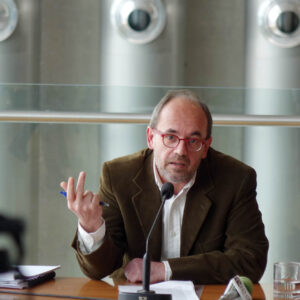
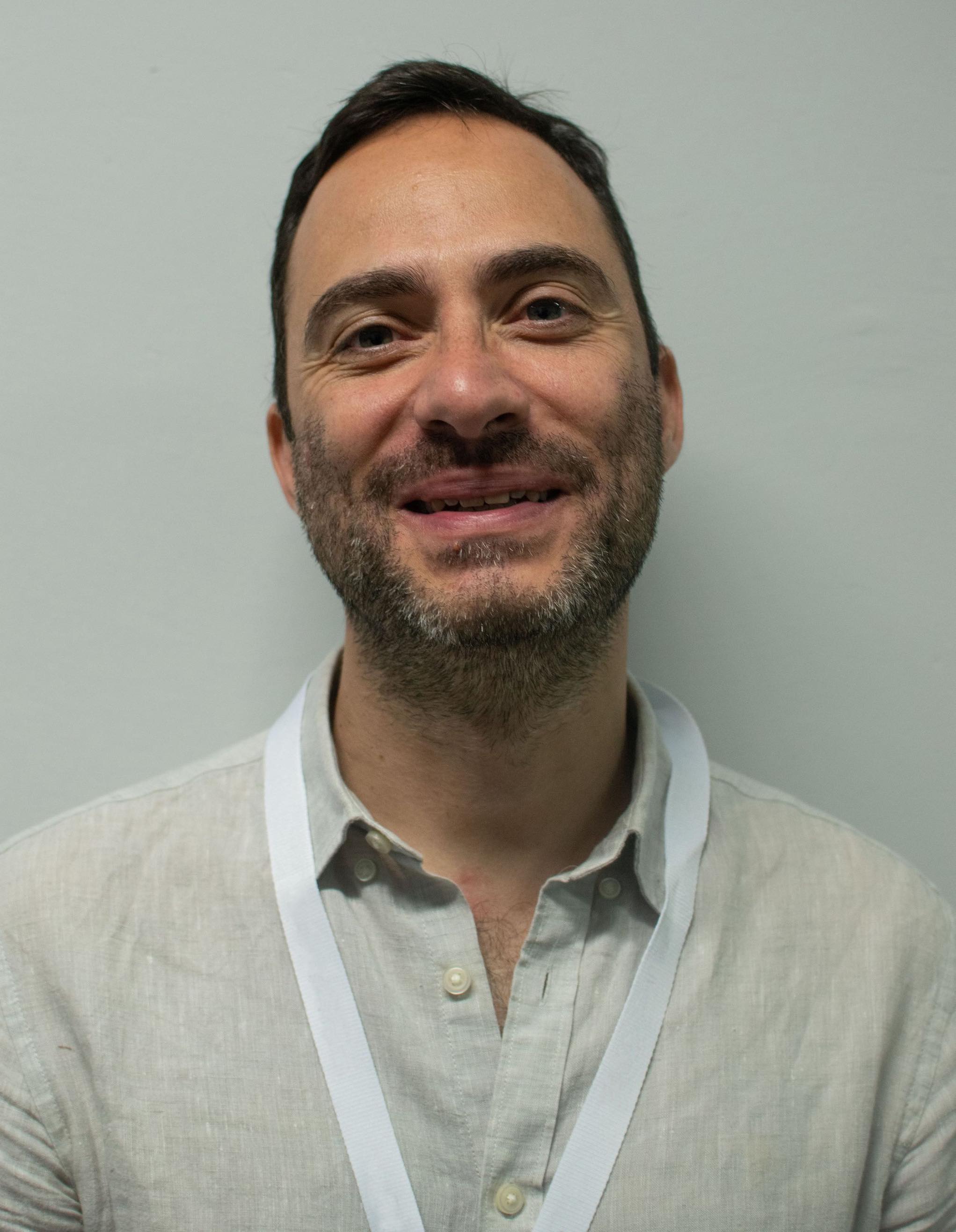
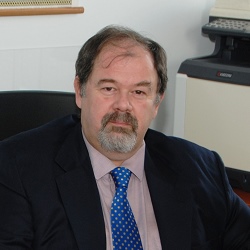
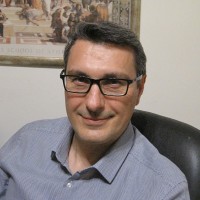
Nikitas Mylopoulos is a Professor at the Department of Civil Engineering, University of Thessaly, Greece, and Director of the Laboratory of Hydrology and Water Systems Analysis. He holds a Civil Engineering diploma (1989) and a PhD (1994) from Aristotle University of Thessaloniki. Research Focus: Integrated water resources management under climate change, risk analysis under uncertainty, groundwater protection, and hydro-economic modeling. Teaching: Courses in water supply, flood control, risk assessment, and environmental policy. Leadership: Directed the Mediation Office (2003-2013), served on research committees, and led multidisciplinary projects. His 15 most recent publications (2021-2025) address data-scarce hydrological modeling, climate change impacts on Mediterranean watersheds, nitrate contamination dynamics, and innovative frameworks for water cost estimation. Key themes include stochastic optimization, integrated systems analysis, and policy-driven sustainability solutions. Current Projects: Focus on degraded aquifer restoration, coastal watershed resilience, and agronomic-hydrological synergies. Utilizes GIS, remote sensing, and OpenMI modeling platforms for multidisciplinary evaluations.
Kostas Philippides serves as Professor in the Department of Mechanical Engineering at the Polytechnic School of the University of Western Macedonia, Greece, a position held since 2019 following the institution's transition from the Technological Educational Institute of Western Macedonia (where he was Professor from 2017-2019). Born in Athens in 1965, he maintains active roles in both theoretical physics research and innovative science education methodologies within an engineering faculty context. His academic credentials include: Philosophy Doctorate in Theoretical Physics of Elementary Particles, New York University (1996) Master in Science, New York University (1993) Postgraduate Fellowship, NCSR Demokritos (1989-1991) Bachelor of Physics, National and Kapodistrian University of Athens (1990) Professor Philippides' research demonstrates a significant evolution from high-energy particle physics to educational science. His early career (1990s-2000s) produced foundational work in electroweak theory, gauge boson couplings, and radiative corrections published in Physical Review D and Nuclear Physics. Since 2011, he has pioneered interdisciplinary studies at the physics-education interface, investigating how force concept teaching reinforces language acquisition, implementing CLIL (Content and Language Integrated Learning) methodologies, and analyzing science club impacts on academic performance. His educational philosophy emphasizes making complex scientific principles accessible through fundamental concepts. Publication trends reveal a strategic pivot from theoretical particle physics to educational research around 2010. While his pre-2010 work focused on Standard Model validations and electroweak corrections for major facilities like CERN, recent publications examine pedagogical frameworks, language integration in science instruction, and assessment metrics. This transition aligns with his dual commitment to advancing physics knowledge and transforming its transmission across educational levels. His notable recognition includes: Marie Curie Fellowship for postdoctoral research at University of Durham (1997-1999) Professor Philippides has supervised students across multiple educational tiers: mentoring secondary students during his tenure at Thessaloniki's 2nd Experimental Lyceum (2007-2017), guiding undergraduate engineers in mechanical engineering courses, and advising research projects in physics education. Though specific grant details aren't documented, his consultancy work with Atlantis S.A. and Q-PLAN International on laboratory accreditation systems demonstrates applied research translation. His teaching portfolio spans Physics, Mechanics, Electrical Circuits, and Electrical Machines at university level. He maintains connections with international research networks through past presentations at CERN, UCLA, and University of Cambridge, while currently focusing on pedagogical innovation within the Department of Mechanical Engineering. His work bridges theoretical physics foundations with practical engineering education through curriculum development and assessment frameworks.
Roles and Affiliation: Nikolaos Bekiaris-Liberis is an Associate Professor in the Department of Electrical & Computer Engineering at the Technical University of Crete (TUC). He holds a PhD in Aerospace Engineering from the University of California, San Diego (2013) and has held positions including Marie Skłodowska-Curie Fellow, Assistant Professor, and Adjunct Professor at TUC. Education: PhD in Aerospace Engineering, UC San Diego (2013) MS in Aerospace Engineering, UC San Diego (2010) Bachelor of Science in Electrical and Computer Engineering, National Technical University of Athens (2007) Research Interests: His work focuses on theoretical and applied control systems, including distributed parameter systems, delay systems, nonlinear control, and switched systems. Applications span traffic flow control, automated vehicles, biological transport systems, and automotive catalysts. He emphasizes translating PDE-based models into practical control solutions for real-world systems. Notable Achievements: Recipient of the European Research Council (ERC) 2022 Consolidator Grant for the C-NORA project. 2019 IEEE ITS Outstanding Research Paper Award for contributions to traffic control. Marie Skłodowska-Curie Individual Fellowship (2017) and Chancellor's Dissertation Medal (2014). Advising & Grants: Supervises PhD and Master’s students in control systems and traffic dynamics. Leads the ERC-funded C-NORA project and previously directed the PADECOT (Marie Curie) initiative. His team includes postdocs and undergraduate researchers focusing on traffic flow modeling, epidemics transport, and PDE-based control. Professional Contributions: Editor for IEEE Transactions on Intelligent Transportation Systems and Automatica. Organized workshops on traffic flow control and PDE techniques at major conferences like CDC and ECC. Active in industry partnerships, including collaborations with Ford Motor Company on catalytic converter control.
Nikolaos Bekiaris-Liberis is an Associate Professor in the Department of Electrical & Computer Engineering at the Technical University of Crete (TUC). He holds a Ph.D. from the University of California, San Diego (2013), an M.S. from the same institution (2010), and a Diploma from the National Technical University of Athens (2007). His research focuses on nonlinear control, distributed parameter systems, delay systems, and their applications in traffic flow, automated vehicles, and biomedical systems. Education: Ph.D., University of California, San Diego (2013) M.S., University of California, San Diego (2010) Diploma, National Technical University of Athens (2007) Research Interests: Nonlinear control theory and applications Control of systems with distributed parameters and delays Traffic flow modeling and automated vehicle systems Biological transport systems and cardiovascular flow Dr. Bekiaris-Liberis has authored over 100 papers and serves as an Associate Editor for Automatica and IEEE Transactions on Intelligent Transportation Systems . His work has been recognized with awards such as the Chancellor’s Dissertation Medal (2014), a Marie Sklodowska-Curie Fellowship (2016), and an ERC Consolidator Grant (2022). His research highlights include advancements in predictor feedback for systems with input delays, stabilization of hyperbolic PDEs, and control strategies for traffic flow and connected vehicles. Recent work explores the impact of ventilation on epidemic transport dynamics and the stability of cardiovascular systems under stenosis conditions. Awards: Chancellor’s Dissertation Medal in Engineering (2014) Marie Sklodowska-Curie Individual Fellowship (2016) ERC Consolidator Grant (2022) Grants and Funding: ERC Consolidator Grant for large-scale PDE control research Marie Sklodowska-Curie Fellowship (2016–2019) He leads the Automation Laboratory at TUC and teaches courses on Linear Systems, Control Systems, and Nonlinear Systems. His work bridges theoretical control advancements with practical applications in transportation, biomedical systems, and industrial processes.
Karasavvidis Stefanos is a Lecturer at the Technical University of Crete (TUC), affiliated with the School of Electrical and Computer Engineering, Department of Electrical and Computer Engineering. He is part of the SoftNet Laboratory (Software Technology and Network Applications Laboratory). His research interests include software engineering, networking, cybersecurity, edge computing, and web technologies. He has contributed technical guides on topics such as handling Greek character encoding in Java JSP applications and configuring Apache Tomcat for proper URI encoding. Teaching: He has taught courses like 'Data Structures and Algorithms' and 'Algorithms and Complexity' since 2018/2019. His technical expertise spans distributed systems, modular design, and edge computing solutions. Projects: He developed the Partial Reconfiguration Cost Calculator (PRCC) for FPGA systems and maintains TYPO3 extensions for GDPR-compliant content delivery. His webpage highlights contributions to software development practices and technical troubleshooting.
Petros Gikas is a Professor of Environmental Engineering at the Technical University of Crete , currently serving as Dean of the School of Chemistry . His work focuses on energy-positive wastewater treatment, biosolids management, and nitrogen utilization via microorganisms, with leadership roles in European Commission working groups and editorial boards of journals like Journal of Environmental Management . Education: Ph.D. in Chemical Engineering from Imperial College London (1996) MSc in Chemical Engineering from National Technical University of Athens (1990) Research Interests span liquid/solid waste management , water reuse , heavy metal effects on microorganisms , and integrated water resource strategies . His projects emphasize sustainable technologies like gasification, anaerobic digestion, and microalgae-based CO₂ conversion. Article Trends highlight expertise in wastewater treatment , climate change adaptation , microplastics in compost , and digitalization for waste recycling , with collaborations across Europe and Indonesia. Funding includes the European Commission and Unified Waste Management Association of Crete. Scientific Leadership : Special Advisor to Greece’s Special Secretariat for Water Associate Editor for Journal of Environmental Management Editorial Board Member for Water , Heliyon , and others Labs & Collaborations : Leads the Environmental Process Design laboratory, collaborating on EU-funded initiatives like LIFE B2E4SustWWTP and CO₂-BioProducts. Projects include landfill gas utilization, advanced primary filtration, and biosolids-to-energy pilots.
Petrakis Evangelos is an Assistant Professor at the Department of Mineral Exploitation within the School of Mineral Resources Engineering at the Technical University of Crete. His research focuses on modeling and optimization of material separation circuits, beneficiation of ores and industrial minerals, physicochemical characterization, and sustainable management of mining/metallurgical by-products through circular economy principles. Role: Assistant Professor Location: Office M2.015, Technical University of Crete, Chania, Crete Contact: Phone +30 28210 37608 | Email: evpetrakis@tuc.gr Research Interests: Modeling and optimization of material separation circuits Beneficiation research of ores, industrial minerals, and mining/metallurgical wastes Study of mechanical properties and physicochemical characterization Management and utilization of mining by-products Zero waste and circular economy applications Article Trends: Petrakis' publications demonstrate expertise in grinding process modeling, leaching technologies, waste valorization, and energy efficiency optimization. His work spans hard-rock lithium processing, alluvial gold mining history, and alkali activation of metallurgical residues. Projects: Involved in Horizon Europe's ENICON project (2022-2026) for sustainable processing of low-grade ores and the H2020 Metgrow+ project (2016-2020) focused on metal recovery from low-grade resources. Teaching Responsibilities: Instructs undergraduate courses in Industrial Ecology and ore processing, along with postgraduate studies in waste decontamination technologies.
Ioannis S. Triantafyllou is an Associate Professor at the Department of Statistics and Actuarial Science of the University of Piraeus, where he has been serving since 2022. Previously, he was an Associate Professor at the Department of Informatics with applications in Biomedicine at the University of Thessaly (2017-2021) and a Lecturer at the same department (2016-2017). He also serves as Collaborating Educational Staff at the School of Natural Sciences & Technology, Hellenic Open University since 2013. Education: Postdoctoral Research (2011) in Probability and Statistics at the University of Piraeus Doctoral Degree (2009) from the Department of Statistics & Actuarial Science, University of Piraeus Master's Degree in Applied Statistics (2005) from the University of Piraeus Bachelor's Degree (2002) from the Department of Mathematics, National & Kapodistrian University of Athens Dr. Triantafyllou's research focuses on Statistics and Applied Probability, with particular emphasis on Nonparametric Statistical Process Control, Nonparametric Statistical Inference, Statistical Reliability Theory, Order Statistics Theory, and Aging properties study. His work bridges theoretical statistics with practical applications in reliability engineering and quality control. He has developed innovative nonparametric methods for monitoring industrial processes without assuming specific distributional forms, which has significant implications for quality assurance in various industries. His recent publications demonstrate a strong focus on reliability structures, particularly consecutive-type systems, weighted components, and distribution-free control charts. The research shows a clear trend toward developing more sophisticated models that incorporate multiple failure modes, redundancy mechanisms, and nonparametric approaches that don't require distributional assumptions. His work increasingly intersects with applications in supply chain management, medical diagnostics, and engineering systems. Professional Recognition: Associate Editor at International Journal of Mathematical Engineering and Management Sciences Reviewer at Mathematical Reviews/MathSciNet Guest Editor for special issues in Mathematics, International Journal of Quality and Reliability Management, and Reliability: Theory and Applications Member of Scientific Committees for multiple Panhellenic Statistical Conferences Dr. Triantafyllou has supervised more than 60 undergraduate theses and over 35 master's theses throughout his career. His teaching spans 8 undergraduate and 23 graduate courses across multiple institutions, totaling more than 13 academic semesters of instruction. He has authored 18 teaching textbooks and served as a reviewer for 37 different international scientific journals, evaluating more than 70 papers. His research laboratory focuses on reliability engineering and statistical process control, with active collaborations across multiple institutions. Current projects involve developing advanced nonparametric control charts for industrial applications and studying complex reliability structures with multiple failure criteria.
Dr. Georgios Kokosalakis serves as Assistant Professor at the School of Business and Economics, American College of Greece (ACG), and Executive Director of the Center of Excellence in Logistics, Shipping and Transportation (CoELST). He maintains dual academic roles as Senior Research Associate at University of Patras' Civil Engineering Department and Educational Counselor at MIT, while also directing industry ventures through Proteus Marine Ltd. His academic credentials include: Science Doctorate in Civil and Environmental Engineering, MIT (2006) Master of Science in Civil and Environmental Engineering, MIT (2000) Diploma in Civil Engineering (Structural Division), National Technical University of Athens (1998) Dr. Kokosalakis' research centers on Maritime Systems and Environmental Protection, with emphasis on operational efficiency, energy conservation, and emissions control in shipping logistics. His interdisciplinary approach integrates large data analytics, systems modeling, and sensor technology to develop practical solutions for sustainable maritime operations while addressing environmental pollution challenges. Recent publications (2019-2021) reveal dual research trajectories: maritime-focused work on energy efficiency impacts on container ship valuation, regulatory responses in shipping, and pandemic effects on second-hand markets; and civil engineering contributions to water distribution network optimization through probabilistic modeling of minimum night flow and real losses. This cross-disciplinary pattern demonstrates his ability to transfer methodologies between maritime and infrastructure domains. His scientific recognition includes: Schoettler Fellowship Award from MIT (2002-2003) Technical Chamber of Greece Best Thesis Award (1998) Exceptional Student Performance Awards (1995-1997) Active grant funding supports his research through projects with Athens Water Supply Company (2021), Greece's Center for Renewable Energy Sources (2020), and Hellenic Foundation for Research Innovation (2019). His industry experience as a shipowner and Proteus Marine Ltd Director provides practical grounding for academic work, though specific student supervision details aren't documented in available materials. The Center of Excellence in Logistics, Shipping and Transportation (CoELST) functions as his primary research ecosystem, facilitating collaborations between ACG, University of Patras, MIT, and maritime industry partners to advance sustainable transportation solutions through integrated engineering and business perspectives.