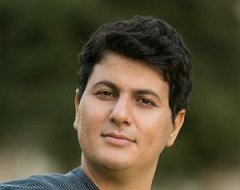
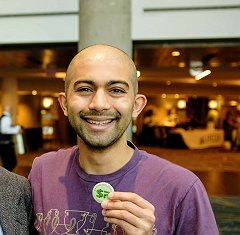
John Psarras is a Professor at the National Technical University of Athens (NTUA) in the School of Electrical and Computer Engineering, specifically within the Division of Industrial Electric Devices and Decision Systems. He serves as the Director of the Decision Support Systems Laboratory (DSSlab) and the University Research Institute of Communication and Computer Systems. He holds a Diploma in Mechanical Engineering (1982) and a Ph.D. in Electrical and Computer Engineering (1989), both from NTUA. His research specializes in decision support systems with applications in energy management, environmental analysis, and information systems. Key areas include: Multi-criteria analysis for energy policy and renewable integration AI-driven optimization of smart grids and building efficiency Sustainable finance mechanisms for green projects Blockchain applications in education and data security His recent publications (2023–2025) demonstrate a strong focus on AI-enhanced decision tools for energy transitions, smart infrastructure, healthcare diagnostics, and cross-border renewable cooperation, reflecting interdisciplinary innovation. He has supervised 22 PhD theses and coordinates EU-funded projects in energy policy, clean technology, and capacity building. No scientific awards are listed in available sources. He leads the Decision Support Systems Laboratory (DSSlab), advancing research in energy analytics, and directs the University Research Institute of Communication and Computer Systems, facilitating large-scale interdisciplinary collaborations.
Mohsen Lesani is an Associate Professor in the Computer Science and Engineering Department at the University of California, Santa Cruz's Baskin School of Engineering. His research focuses on reliability and security of software systems, particularly concurrent and distributed systems, with recent emphasis on secure replicated systems and distributed machine learning. Dr. Lesani received his PhD from UCLA, MS in artificial intelligence from Sharif University of Technology, and BS in software engineering from University of Tehran. He was previously a postdoc at MIT. His educational background provides a strong foundation for his interdisciplinary research spanning programming languages, distributed systems, and security. His research interests center on creating reliable and secure distributed systems. Current projects include resilient and secure distributed systems, heterogeneous and reconfigurable secure distributed systems, automatic analysis and synthesis of replicated objects, verification of distributed systems, data analytics, secure exchange across blockchains, machine learning for performance models, domain-specific languages and type systems, and automatic fence insertion for concurrent systems. His work bridges theoretical foundations with practical implementations to address real-world challenges in distributed computing. Lesani's research has been recognized with several prestigious awards including the NSF CAREER award in 2020 and DARPA YFA award in 2022. His work has also received the SIGPLAN Research Highlight in 2019, a distinguished paper award at OOPSLA 2018, and a best paper award at ISSRE 2015. These accolades reflect the impact and quality of his contributions to the field. He actively mentors PhD students in the Safe and Secure Software (S3) lab, including Xiao Li, Eric Chan, Javad Saber-Latibari, and Tejas Mane. His research has been supported by multiple NSF grants, demonstrating sustained funding for his innovative work. Lesani serves on program committees for major conferences including POPL, PLDI, OOPSLA, and DISC, contributing to the academic community. Lesani leads the Safe and Secure Software (S3) lab at UC Santa Cruz, where his team works on cutting-edge research in distributed systems, programming languages, and security. The lab fosters a collaborative environment where theoretical insights are translated into practical systems that address real-world challenges in reliability and security of distributed applications.
Emmanouel (Manos) Varvarigos is a Professor at the School of Electrical and Computer Engineering, National Technical University of Athens (NTUA), where he leads the High Speed Communication Networks Laboratory. He holds a Diploma from NTUA (1988) and an M.S./Ph.D. from MIT (1990/1992). Prior roles include Professorships at UC Santa Barbara (1992-1998) and Delft University (1998-1999), and leadership at the University of Patras (1999-2015). He has coordinated over 30 EU research projects, including H2020 initiatives like ORCHESTRA and FLEXGRID. His research focuses on optical networking, cloud computing, smart energy grids, and high-speed network protocols. He has published over 450 papers and serves on numerous conference committees. Awards include the NSF Research Initiation Award. His lab employs 5 postdocs and 10+ PhD students, addressing challenges in networking, data centers, and grid computing. Education: Ph.D., Electrical Engineering and Computer Science, MIT, 1992 M.S., Electrical Engineering and Computer Science, MIT, 1990 Diploma in Electrical and Computer Engineering, NTUA, 1988 Research Interests: Optical networking, high-speed network protocols, data center architectures, cloud computing, smart energy grids, wireless networks, and distributed systems. Grants & Projects: Coordinated 7 EU projects (e.g., FLEXGRID, ORCHESTRA) and participated in 35+ others. National projects include roles as Scientific Director of the Greek School Network and CTI’s Network Technologies Division. Labs & Teams: Directs the High Speed Communication Networks Lab (HSCNL), collaborating with global institutions on optical networks, edge cloud, and smart grids. The lab’s work includes EU-funded projects on 5G, data centers, and renewable energy integration.
Dr. Ioanna Kantzavelou is an Associate Professor at the Department of Informatics and Computer Engineering, School of Engineering, University of West Attica. She leads the INSSec Research Group, focusing on Information, Networks, and Systems Security. Her expertise spans Cybersecurity, Game Theoretic approaches in Intrusion Detection, and Critical Infrastructure Protection. She holds a Ph.D. from the University of the Aegean (2011), an M.Sc. from University College Dublin (1994), and a B.Sc. from the Technological Educational Institution of Athens (1991). Education: Ph.D. in Intrusion Detection with Game Theoretic Approaches – University of the Aegean (2011) M.Sc. in Computer Security – University College Dublin (1994) B.Sc. in Informatics – TEI of Athens (1991) Research Interests: Intrusion Detection in IoT/Wireless Sensor Networks (WSN) and Cyber-Physical Systems Cyber Ranges for Education and Research Cybersecurity for Merchant Shipping and Critical Infrastructures Hybrid Threats, Cyberterrorism, and Cyberwarfare Digital Forensics and Blockchain-Based Authentication Systems Her work includes over 30 peer-reviewed publications, three books, and contributions to R&D projects funded by the Greek government, EU, and Irish government. She actively reviews for IEEE, Elsevier, and Springer journals, and is a member of ACM, IEEE Computer Society, and the Greek Computer Society. Grants & Collaborations: EU-funded projects on Cybersecurity and Critical Infrastructure Protection Greek government grants for Cyber Ranges and IoT Security Labs/Teams: Head of the INSSec Research Group, collaborating with industry partners on Cybersecurity solutions for maritime and industrial sectors.
Christos Makris is an Associate Professor in the Department of Computer Engineering and Informatics at the University of Patras, Greece. His academic career spans over two decades with significant contributions to computer science, particularly in data structures, algorithms, and information systems. He maintains active research collaborations and supervises graduate students in his areas of expertise. Dr. Makris's research spans several key areas in computer science with a strong focus on efficient data organization and processing. His work encompasses Data Structures , Information Retrieval , Data Mining , String Management and Processing Algorithms , Computational Geometry , Internet Technologies , Bioinformatics , and Multimedia Databases . His interdisciplinary approach bridges theoretical computer science with practical applications across various domains including web technologies, bioinformatics, and emergency response systems. Analysis of Dr. Makris's publication record reveals a consistent research trajectory focused on efficient algorithms for information management. His work demonstrates evolution from foundational data structure research in the 1990s to more applied work in web technologies, social media analysis, and machine learning applications in recent years. A notable pattern is his ability to adapt core algorithmic techniques to emerging application domains while maintaining theoretical rigor. Dr. Makris maintains an impressive scholarly record with over 3,000 citations, an h-index of 29, and an i10-index of 71 according to Google Scholar metrics. These indicators reflect the significant impact of his research within the computer science community. As an active faculty member, Dr. Makris maintains regular office hours on Tuesdays from 18:00-20:00 and Thursdays from 12:00-14:00. He is accessible via email at makri@ceid.upatras.gr or makri@upatras.gr for academic inquiries and student supervision.
Laxman Dhulipala serves as an Assistant Professor in the Department of Computer Science at the University of Maryland, College Park, while also working as a research scientist at Google Research with the Graph Mining team. Dr. Dhulipala earned his Ph.D. from Carnegie Mellon University under Guy Blelloch's supervision and completed a postdoctoral fellowship at MIT with Julian Shun. His research centers on efficient parallel algorithms, particularly for parallel clustering and graph processing, along with developing computational models for emerging hardware technologies. His scholarly output demonstrates significant expertise across parallel computing domains, with particular emphasis on scalable graph algorithms, dynamic data structures, and computational geometry. Dr. Dhulipala's work bridges theoretical computer science with practical systems implementation, producing algorithms that achieve both theoretical optimality and real-world performance. His research group has made substantial contributions to benchmarking frameworks including the Graph Based Benchmark Suite (GBBS) and ParClusterers Benchmark Suite, establishing standardized evaluation methods for graph processing systems. The collective work shows progression from theoretical foundations to practical implementations that handle massive-scale datasets. Best Paper Award at SPAA 2022 Best Paper Runner Up at VLDB 2022 Distinguished Paper Award at PLDI 2019 Memorable Paper Award Finalist at NVMW'20 CMU's SCS Dissertation Award Honorable Mention As an educator, Dr. Dhulipala mentors numerous graduate students while teaching advanced courses in algorithm design and parallel computing. His research collaborations span multiple institutions including Carnegie Mellon University, MIT, and Google Research, reflecting his position at the intersection of academia and industry research.
Ioannis Theodoridis is a Professor at the Department of Informatics, University of Piraeus, and Director of the Data Science Laboratory under the School of Information and Communication Technologies. His research focuses on data science, particularly large-scale data management and analysis, with applications in maritime informatics, spatiotemporal data, and mobility patterns. He holds editorial roles at ACM Computing Surveys and has contributed to numerous international conferences and journals. As a project leader in Horizon 2020 initiatives, he has coordinated research on data-driven solutions for maritime safety and urban mobility. He earned his Diploma (1990) and PhD (1996) in Electrical and Computer Engineering from the National Technical University of Athens (NTUA). His work includes developing scalable systems for maritime route forecasting (e.g., GMSA), frameworks for vessel trajectory prediction (e.g., VesselVision), and platforms like i4sea for fisheries monitoring. Contact: ytheod@unipi.gr .
Professor Gregoris Mentzas is a faculty member at the National Technical University of Athens, School of Electrical and Computer Engineering, where he directs the Division of Industrial Electric Devices and Decision Systems. His research focuses on AI-enabled decision systems, knowledge management, and semantic technologies applied to digital enterprises and e-government. With over 350 publications, he ranks among the top 2% most cited scientists globally. Research Interests: Artificial intelligence for decision augmentation, big data analytics in personalized health and smart mobility, semantic web technologies, and industrial internet of things. Current projects investigate trustworthy AI frameworks and hybrid intelligence systems for Industry 5.0. Teaching: Leads courses in Digital Enterprise Management, Strategic Information Systems, and Project Management at undergraduate and postgraduate levels, incorporating industry case studies and experiential learning approaches. Awards & Leadership: Top 2% Highly Cited Scientist (PLOS Biology 2021) 5 Best Paper Awards in international conferences Director of Information Management Unit (1997-present) Board Member of Institute of Communication and Computer Systems (2006-2009) Projects & Funding: Secured over €18 million in research grants through 60+ European projects with industry partners including SAP, IBM, and Siemens. Research outcomes led to three technology spin-offs.
Kostas Magoutis is Professor and Chair of the Computer Science Department at the University of Crete , and a collaborating researcher at FORTH-ICS . His research focuses on scalable distributed systems, cloud computing, IoT, and quantum-enhanced control. Education and Career: Ph.D. in Computer Science, Harvard University (2003) Research Staff Member, IBM T. J. Watson Research Center (2003-2009) Assistant Professor (2014-2019, tenured 2017) and Associate Professor (2020-2024), University of Crete Professor and Chair, University of Crete (2024-present) Research Interests: His work spans distributed computer systems , cloud computing , scalable data stores and stream-processing engines , Internet of Things , and the emerging area of quantum-enhanced control . Representative projects include the H.F.R.I.-funded QUADS (2025-2028) on quantum-enhanced adaptive systems, STREAMSTORE (2020-2023) on elastic stream processing, SmartCityBus on IoT-driven public transport, and the EU FP7 PaaSage project on model-based cloud lifecycle management. Awards and Honors: Best Paper Awards: USENIX ATC 2002, USENIX BSDCon 2002, IEEE SRDS 2014 (Best Student Paper), IoT 2024 (Runner-up) Grand Challenge Audience Award, ACM DEBS 2022 Best Poster Award, ACM EuroSys 2022 EU Marie Curie IEF Fellow (2009-2011) Alexander S. Onassis Fellow (1994-1995) and J. William Fulbright Scholar (1993-1994) Students and Mentoring: He has supervised or co-supervised more than 30 Ph.D., M.Sc. and undergraduate students, including Antonis Papaioannou (Ph.D. 2021), Efthimios Papageorgiou (current Ph.D.), and numerous M.Sc. graduates now in industry and academia. Labs and Teams: At FORTH-ICS he leads activities within the Distributed Systems and Storage Laboratory, coordinating research on scalable storage, stream processing, and IoT data management. The lab collaborates closely with European and national initiatives, hosting visiting researchers and industry partners.
Jovan Stojkovic is an incoming Assistant Professor at the Department of Computer Science at the University of Texas at Austin, set to join in Fall 2026. Prior to his appointment at UT Austin, he will spend a year at Meta working with the AI and Systems Co-design group. His research focuses on cloud computing and datacenters, with particular emphasis on cloud-native workloads and machine learning inference. Education: PhD in Computer Science from the University of Illinois at Urbana-Champaign, advised by Professor Josep Torrellas Undergraduate studies at the School of Electrical Engineering, University of Belgrade, Serbia, where he was recognized as the best student of the Computer Engineering and Information Theory Department every year from 2017-2020 Research Interests: Jovan's research focuses on cloud computing and datacenters , with two primary domains: Cloud-native workloads , such as microservices and serverless computing. He investigates how to co-design novel hardware platforms and software systems that deliver orders-of-magnitude improvements in performance, energy efficiency, and resource utilization for these emerging workloads. Machine Learning (ML) inference , particularly large language models (LLMs). His work addresses the challenges of ML inference through smart scheduling, workload placement, and system-level configuration tuning to reduce energy, power, and thermal overheads while maintaining performance and accuracy guarantees. Publication Trends: Jovan's publications demonstrate a strong focus on optimizing cloud infrastructure for emerging workloads. His research spans across serverless computing, microservices, and large language model inference. A clear trend emerges in his work: addressing the performance, energy efficiency, and resource utilization challenges of modern cloud workloads through innovative hardware-software co-design approaches. His most recent work shows increasing focus on LLM inference optimization, particularly in the areas of thermal management, power efficiency, and scheduling for many-adapter environments. Awards and Honors: HPCA Best Paper Award (2025) IEEE MICRO Top Picks Honorable Mention (2024) 6 patents with IBM and Microsoft on: Serverless systems, Processor overclocking in the cloud, and Energy-efficient LLM inference W. J. Poppelbaum Memorial Award (2025) for hardware and architecture innovation Mavis Future Faculty Fellowship (2024–2025) Invited to present at 11th Heidelberg Laureate Forum (2024) Kenichi Miura Award (2022) for excellence in High Performance Computing Multiple student travel grants to ISCA, MICRO, ASPLOS, and HPCA Advising and Grants: Jovan is actively seeking prospective PhD students for his research group at UT Austin. His research has been supported through collaborations with major tech companies including IBM, Microsoft, and Meta. His six patents with IBM and Microsoft demonstrate the practical impact of his research in serverless systems, processor overclocking, and energy-efficient LLM inference. His work on serverless computing (MXFaaS, EcoFaaS) and LLM inference optimization has received significant recognition in top-tier computer architecture conferences. Research Groups: During his PhD at UIUC, Jovan worked with Professor Josep Torrellas on cloud infrastructure research. He has collaborated extensively with researchers at IBM Research (particularly Hubertus Franke) and Microsoft (particularly Íñigo Goiri and Ricardo Bianchini). His upcoming position at UT Austin will establish his independent research group focused on cloud computing and datacenter systems. His year at Meta working with the AI and Systems Co-design group will further strengthen his expertise in AI infrastructure.
Dr. Aris Dimeas is a Researcher at the National Technical University of Athens in the Department of Electric Power and Industrial Applications . He holds a diploma and PhD in Electrical and Computer Engineering from NTUA and has extensive experience in power systems operations, renewable energy integration, and smart grid technologies. Specialized in AI applications for power systems Developed control software for demand side management Consultant for PPC (2007-2012) Research Focus : Smart grids and digital twin implementations Renewable energy market dynamics Microgrid optimization and control algorithms Collaborations : Active participant in EU research projects, collaborating with HEDNO and other energy grid operators on electronic meters and intelligent network deployments. Teaching : Instructs courses on electric energy systems, power system analysis, and energy management.
Tim Kraska is an Associate Professor in the Department of Electrical Engineering and Computer Science at the Massachusetts Institute of Technology (MIT), affiliated with the Computer Science and Artificial Intelligence Laboratory (CSAIL) within the School of Engineering. His research spans foundational areas in modern data systems: Database Systems Distributed Systems Machine Learning Systems Learned Indexes Cloud Databases Dr. Kraska pioneers the integration of machine learning into core database components, developing "learned systems" that replace traditional algorithms with ML models for significant performance gains. His work on learned indexes redefined indexing paradigms, while recent research extends this approach to garbage collection, query optimization, and concurrency control. His publication trends reveal a strategic shift toward applying ML to low-level systems problems, particularly in memory management and runtime optimization as demonstrated by his PLDI 2020 paper on Learned Garbage Collection. Award highlights include: ACM SIGMOD Jim Gray Doctoral Dissertation Award VLDB Early Career Research Contribution Award Marie Curie Fellowship At MIT, he leads a research group focused on next-generation data systems, securing grants from NSF and industry partners to explore the theoretical and practical boundaries of learned components in database engines. His team collaborates extensively with industry research labs on real-world deployment challenges. As a core member of CSAIL's distributed systems group, he contributes to MIT's leadership in reimagining data infrastructure for the AI era through cross-lab initiatives on scalable machine learning systems.
Labros Bisdounis is a Professor at the Department of Electrical and Computer Engineering, University of the Peloponnese, Greece. He previously held positions at the Technological Educational Institute of Western Greece, including Associate Professor, Full Professor, and Dean of the School of Technological Applications (2016–2018). He has extensive industry experience as a senior research engineer and project manager at Intracom S.A. (2000–2008), focusing on VLSI circuits and telecom applications. His research interests include CMOS circuit timing/power modeling, low-power/high-speed design, MOSFET modeling, and sensor applications. He has authored over 30 papers with 740+ citations and is an IEEE member. Education: Diploma in Electrical Engineering (1992), University of Patras Ph.D. in Electrical Engineering (1999), University of Patras Research Interests: CMOS circuit timing and power dissipation modeling Deep-submicron/nano-CMOS circuit design MOSFET device modeling Low-power embedded systems and SoC Sensor applications and organic electronics Leadership Roles: Dean of the School of Engineering, University of the Peloponnese (2023–present) Director of Training & Lifelong Learning Centre (2019–2019) Board Member, Hellenic NARIC (2016–2019) Collaborations: Active at the Hellenic Open University as a tutor in Computer Architecture and Digital Systems modules. Co-developed the AETHER framework for pervasive computing and contributed to energy-aware SoC designs for 5 GHz WLANs.
Stavrakakis Ioannis is a Professor at the Department of Informatics and Telecommunications, School of Science, University of Athens, where he has served since 2002. He previously held academic positions at Northeastern University (1994-1999) and University of Vermont (1988-1994). Ph.D., Electrical Engineering (1988), University of Virginia Diploma, Electrical Engineering (1983), Aristotle University of Thessaloniki His research focuses on network resource allocation algorithms , cooperative content dissemination , mobile ad hoc networks , and privacy-aware protocols . He leads the Advanced Networking Research (ANR) Group. Recent publications highlight trends in AI-driven network optimization , edge computing for VR , drone-assisted sensor networks , and privacy in vehicular systems . Key themes include game theory applications, energy-efficient protocols, and distributed learning frameworks. Contact: ioannis@di.uoa.gr
Kostas Magoutis is Professor and Chair of the Computer Science Department at the University of Crete and collaborating researcher with FORTH-ICS. His research focuses on distributed systems, scalable data processing, IoT, and cloud computing, with projects including GreenInCities for urban regeneration and STREAMSTORE for stateful stream processing systems. Research interests include: Distributed computer systems architecture Elastic stream processing platforms Quantum-enhanced computing applications Multi-cloud application lifecycle management Recent publications demonstrate strong focus on federated data systems, quantum computing applications, and IoT-enhanced infrastructure, with consistent output in high-impact conferences and journals. Awards and distinctions: Multiple best paper awards from USENIX conferences Grand Challenge Audience Award at DEBS 2022 Marie Curie Fellowship and IBM Research awards Advises over 20 PhD and MSc students in distributed systems research. Leads multiple EU-funded projects and serves on program committees for top conferences including SOSP, EuroSys, and IEEE BigData. Directs research groups in distributed systems and cloud computing at FORTH-ICS.