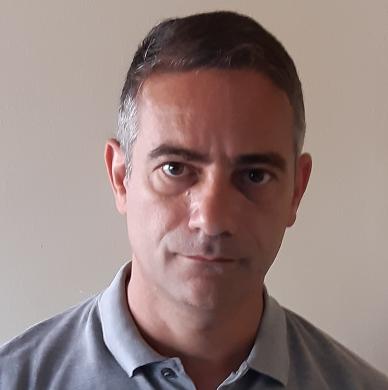
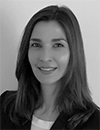
Yaser S. Abu-Mostafa is a Professor of Electrical Engineering and Computer Science at the California Institute of Technology (Caltech), with a distinguished career spanning over four decades. He earned his B.Sc. from Cairo University in 1979, an M.S.E.E. from Georgia Tech in 1981, and a Ph.D. from Caltech in 1983. Holding roles such as Garrett Research Fellow (1983), Assistant Professor (1983-89), Associate Professor (1989-94), and Professor since 1994, he has cemented his reputation as a pioneer in artificial intelligence and machine learning. Educational Background B.Sc., Cairo University (1979) M.S.E.E., Georgia Institute of Technology (1981) Ph.D., California Institute of Technology (1983) Abu-Mostafa’s research bridges AI/ML with medical diagnostics and computational finance. His projects include non-invasive blood pressure measurement via ultrasound, AI-based detection of congestive heart failure through video analysis, and early stroke prediction using clot-detection algorithms. These innovations leverage machine learning to address biological variability and real-world complexity. His recent publications focus on predictive modeling for epidemiology (2022, 2021), theoretical advancements in machine learning (2015, 2006, 2005), and foundational work in swarm robotics and financial mathematics (2004). Trends in his work emphasize robustness, adaptability, and interdisciplinary applications. Scientific Awards Clauser Prize (Caltech’s most original Ph.D. thesis) ASCIT Teaching Awards (1986, 1989, 1991) GSC Teaching Awards (1995, 2002) Richard P. Feynman Prize for Excellence in Teaching (1996) Abu-Mostafa Fellowship established by Hertz Foundation (2005) Abu-Mostafa has advised numerous students and led research teams at Caltech, while also serving on scientific advisory boards and consulting for industries. His Caltech MOOC on machine learning has garnered over 8 million views, and his textbook Learning from Data is an Amazon bestseller. He collaborates extensively, including a major project with UCSF on heart failure detection and partnerships in computational finance. His work on a Caltech patent for stroke prediction received a US patent in 2025, alongside other medical AI patents.