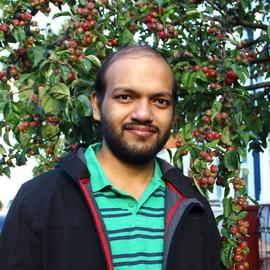
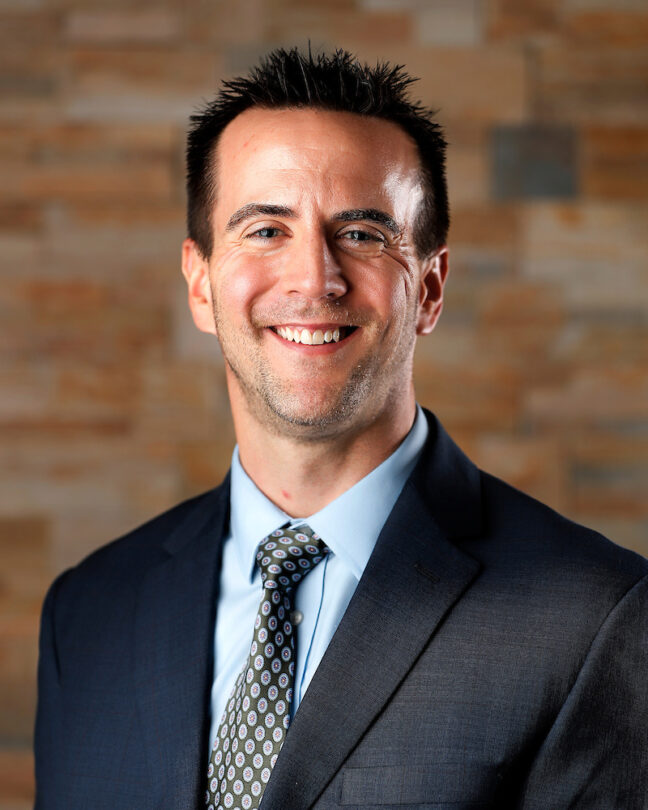
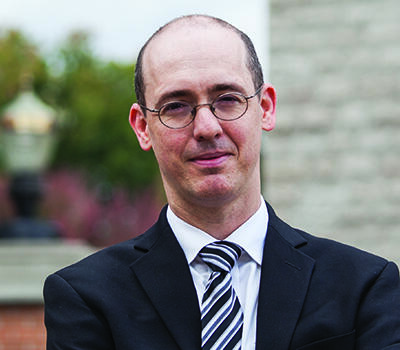
Yasser Mohamed is a Professor in the Civil and Environmental Engineering Department at the University of Alberta . His academic and professional focus revolves around construction engineering, discrete-event simulation, and process optimization for industrial and tunneling operations. He has also explored knowledge engineering techniques and the application of TRIZ (Theory of Inventive Problem Solving) to construction processes. Email: yaly@ualberta.ca Location: 7-269 Donadeo Innovation Centre For Engineering, Edmonton, AB Courses Taught: CIV E 603 (Construction Informatics), CIV E 606 (Design and Analysis of Construction Operations) His research emphasizes modeling construction processes using discrete-event simulation to optimize performance and develop synthetic environments for construction operations. Recent publications, however, indicate a shift toward power systems, focusing on DC microgrids , grid-forming converters , and renewable energy integration . Scientific Awards: None explicitly mentioned in the provided data. Advising and Grants: No formal advisees listed. A co-applicant on a CRD grant (2007–present) for synthetic environments in construction simulation.
Dr. Zhiyuan Tan is an Associate Professor in the School of Computing at Edinburgh Napier University (ENU), specializing in cybersecurity research. He holds a PhD in Computer Systems from the University of Technology Sydney (UTS), Australia (2014), an MEng from Beijing University of Technology, China (2008), and a BEng with high distinction from North-eastern University, China (2005). Before joining ENU in 2016, Dr. Tan held research positions at the University of Twente (Netherlands), University of Technology Sydney (Australia), and La Trobe University (Australia). Dr. Tan's research focuses on cybersecurity, machine learning, data analytics, virtualisation, and cyber-physical systems. His work has resulted in over 44 scholarly publications with an H-Index of 13 and more than 830 citations according to Google Scholar. His recent publications demonstrate a continued focus on network security, intrusion detection systems, and the application of machine learning techniques to cybersecurity challenges, with publications spanning from 2022-2025 in top venues including IEEE Transactions and international conferences. Dr. Tan has received significant research funding, including AUD 27,800 from CSIRO and UTS for autonomous network intrusion detection research and £6,987 from ENU for securing future 5G health care systems. His research has been recognized with awards including the National Research Award 2017 from the Research Council of the Sultanate of Oman, a Best Paper Award, and the Kaspersky Lab's Annual Student Cyber Security Conference Finalist Award. National Research Award 2017 from the Research Council of the Sultanate of Oman Best Paper Award Kaspersky Lab's Annual Student Cyber Security Conference Finalist Award Dr. Tan has mentored 9 PhD students over the past 5 years, with 6 successfully completing their studies. His students have produced 12 journal and 10 conference publications. He has also served as an editorial board member for international journals, organized special issues, and participated as a technical program committee member for major international conferences. Dr. Tan is currently recruiting PhD students for research projects on network security, adversarial machine learning for anomaly/malware detection, virtualization security, and IoT security.
Bo Wang is an active academic researcher primarily affiliated with multiple Chinese institutions, with strong connections to Tsinghua University, Beijing Jiaotong University, and other leading Chinese universities. His research spans artificial intelligence, machine learning, computer vision, medical image analysis, and intelligent control systems, demonstrating significant interdisciplinary work across computer science, engineering, and biomedical applications. Primary institutional affiliation: School of Computer Science and Technology at multiple Chinese universities Active research areas: AI/ML applications in healthcare, computer vision, federated learning, and intelligent control systems Extensive publication record across top-tier venues in multiple disciplines Wang's research interests focus on the intersection of artificial intelligence and practical applications. His work demonstrates strong expertise in developing novel machine learning architectures for medical image analysis, including applications in CT imaging, MRI, and sperm tracking. He has made significant contributions to federated learning approaches for large language models, sliding mode control systems, and molecular optimization frameworks. His research consistently bridges theoretical advances with practical implementations across healthcare, manufacturing, and environmental monitoring domains. Analysis of Wang's recent publications reveals a strong trend toward interdisciplinary AI applications, particularly in medical imaging and bioinformatics. His work on VAE-GANMDA for microbe-drug association prediction, ACE-QSM for accelerating MRI acquisition, and text-guided molecular optimization demonstrates innovative approaches at the intersection of AI and life sciences. Wang also maintains active research in industrial applications including digital twin technology for energy systems and robust scheduling approaches for multi-factory production. Notable research contributions include: FLFT: A Large-Scale Pre-Training Model Distributed Fine-Tuning Method with Federated Learning VAE-GANMDA: Microbe-drug association prediction model ACE-QSM: Accelerating quantitative susceptibility mapping using diffusion models Digital twin-empowered power consumption prediction systems Wang actively collaborates with researchers across China and internationally, with publications spanning computer science, engineering, medical imaging, and environmental science journals. His work demonstrates strong technical depth across multiple AI methodologies while maintaining focus on practical applications that address real-world challenges in healthcare, manufacturing, and environmental monitoring.
Thang Hoang is an Assistant Professor in the Department of Computer Science at Virginia Tech and a CCI Researcher. He holds a PhD from the University of South Florida (2020), an M.S. from Chonnam National University (2014), and a B.S. from University of Science, VNU-HCMC (2010). His research focuses on applied cryptography, cybersecurity, privacy-preserving technologies, and secure machine learning. Notable contributions include work on encrypted databases (Hermes), certificate revocation systems (AccuRevoke), and privacy-preserving federated learning. He has received grants such as the NSF SaTC Core Medium Grant (2024) and has advised multiple students including Tung Le, Arman Riasi, and Hoang-Dung Nguyen. His work has been published in top venues like IEEE S&P, PETS, and ACM CCS. He is actively involved in program committees for conferences like PETS and IEEE MASS.
Sylvain Arlot is a Professor at the Mathematics Department of Université Paris-Saclay, affiliated with the Probability and Statistics team at Laboratoire de Mathématiques d'Orsay. He leads the Celeste INRIA Saclay project-team and is a junior member of the Institut Universitaire de France (IUF) since 2020. His research focuses on statistical learning theory, non-parametric methods, model selection, and change-point detection. Arlot has contributed to foundational work on cross-validation, penalization techniques, and random forests. He co-organizes the Séminaire Palaisien and serves as an associate editor for the Annales de l'Institut Henri Poincaré B. Education: PhD in Mathematics from Université Paris-Sud (2007), HDR (Habilitation) from Université Paris Diderot (2014). Research Interests: Core areas include statistical learning theory, resampling methods (e.g., cross-validation and bootstrap), and applications in high-dimensional data analysis. His work bridges theoretical guarantees with practical algorithm design, emphasizing data-driven model selection and robust estimation techniques. Grants & Projects: Leads the PEPR IA Project Causali-t-AI (2023–2028) and was a member of the ANR Fast-Big project (2018–2023). He coordinates the math-AI program under Labex Mathématique Hadamard. Awards: Junior IUF membership (2020–2025). Labs/Teams: Heads the Celeste team at INRIA Saclay, collaborating on statistical machine learning and data science challenges.
Bahar Haghighat is a Tenure Track Assistant Professor in Robotics and Automation at the Faculty of Science and Engineering, University of Groningen. She leads the Distributed Autonomous Intelligent Systems (DAISY) Lab as Principal Investigator and contributes to academic governance as a Member of the Faculty Council. Her professional affiliations include the Royal Netherlands Institute of Engineers (KIVI), the Institute of Electrical and Electronics Engineers (IEEE), and editorial roles with Nature Portfolio Journal Robotics and Springer Nature Journal Autonomous Robots. Her educational background includes: PhD in Robotics, Control, and Intelligent Systems from the Swiss Federal Institute of Technology in Lausanne (EPFL), Switzerland (2018) Master's degree in Electrical Engineering/Digital Electronics from Sharif University of Technology (SUT), Tehran, Iran Bachelor's degree in Electrical Engineering/Physics (double major) from Sharif University of Technology (SUT), Tehran, Iran Dr. Haghighat's research focuses on building novel miniaturized robotic swarms and algorithmic frameworks for sensing, surveying, and inspection applications. Her work spans mechatronics, electronics, embedded systems, embedded artificial intelligence and machine learning, and distributed systems. She envisions developing surface, aquatic, and aerial miniaturized robot swarms and small-scale intelligent devices for basic research and commercial applications including inspection of complex structures, environmental monitoring, space exploration, and search-and-rescue operations. Her recent publications demonstrate a strong focus on swarm robotics, particularly using particle swarm optimization techniques for multi-robot coordination, surface inspection tasks, and spacecraft hull inspection. Her research shows an interdisciplinary approach combining mechatronic design with advanced algorithms for self-assembly and collective decision-making in resource-constrained robotic systems. Her notable scientific achievements include: EPFL's PhD research award of Gilbert Hausmann for the best PhD thesis in mechanical engineering, electricity, and physics (2019) EPFL distinction of excellence for a PhD thesis in Robotics, Control, and Intelligent Systems (2018) Swiss National Science Foundation Postdoc Mobility Fellowship (2019) Swiss National Science Foundation Early Postdoc Mobility Fellowship (2017) Third place in EPFL's "My Thesis in 180 Seconds" competition (2017) EECS Rising Star recognition (2021 at MIT and 2019 at UIUC) Dr. Haghighat has served as Program Co-Chair for The International Symposium on Distributed Autonomous Robotic Systems (DARS) and has held visiting scholar positions at MIT and Harvard University. Her research has received media attention for applications in Mars rover technology and drone swarms for defect detection. She leads the DAISY Lab, which focuses on distributed autonomous intelligent systems for various inspection and monitoring applications.
Mohamed-Lamine Messai is a Professor at Université Lyon 2, France, specializing in cybersecurity, IoT security, and networking. He teaches courses such as Computer Security, Hacking Labs, and Cryptography, and is actively involved in research projects like ROMANCE (knowledge graph modeling for organizational vulnerabilities) and GLADIS (graph-based intrusion detection). His work focuses on key management systems, resource-constrained networks, and AI-driven cybersecurity solutions. He has supervised numerous PhD and master's students, including Abel Oroke, Floribert Katembo, and Sami Bettayeb. His research spans IoT security, blockchain applications, and graph neural networks for threat detection. He frequently presents at international conferences and workshops, including GRASEC, ARES, and IWCMC. Current projects include Federated Learning with Hybrid Encryption for APT detection and autonomous bio-inspired 5G deployment strategies. Key Projects: ROMANCE, GLADIS, CyberSecGraph, DATACAP Teaching: M1/M2 courses in Computer Security, IoT, Networking, and Distributed Computing Lab Affiliations: Involved in L3i lab activities and Open Days at the University of La Rochelle
Michael P. Friedlander is a Professor of Computational Mathematics at the University of British Columbia (UBC), holding joint appointments in the Department of Computer Science and the Department of Mathematics. He also serves as the Director of the UBC Institute of Applied Mathematics and holds the title of Sauder School Distinguished Scholar. His research focuses on optimization, machine learning, and computational methods, with notable contributions to convex optimization, federated learning, and large-scale data analysis. He earned a PhD in Operations Research from Stanford University (2002) and a BA in Physics from Cornell University (1993). Friedlander has held academic positions at UBC since 2004 and previously at the University of California, Davis (2014–2016) and Argonne National Laboratory (2002–2004). His work spans theoretical and applied aspects of optimization, including development of algorithms for sparse optimization, gauge duality, and federated learning. He has authored numerous influential papers in top journals and conferences, such as SIAM Journal on Optimization and IEEE Transactions on Signal Processing. His contributions were recognized with the SIAM Fellowship (2024). Friedlander has held leadership roles, including Board membership at the Pacific Institute for Mathematical Sciences (2017–2023) and Program Director for SIAM’s Optimization Group (2014–2020). He is an active editor for journals like the Open Journal of Mathematical Optimization and Mathematics of Operations Research. His research lab focuses on advancing optimization theory and its applications to real-world problems, such as geochronology and signal processing. He has developed open-source software tools for optimization, including SPGL1 and TFOCS.
Paul Liang is Assistant Professor at the Massachusetts Institute of Technology with joint appointments in the Media Lab and the Department of Electrical Engineering and Computer Science, where he directs the Multisensory Intelligence research group. His work spans foundational research in multisensory AI technologies and their applications in enhancing human experiences and real-world human-AI interaction. Liang's research focuses on three interconnected thrusts: developing theoretical foundations for multisensory machine learning systems; designing interactive AI technologies to augment human capabilities; and addressing societal concerns in real-world human-AI interaction. His work integrates principles from machine learning, natural language processing, and human-computer interaction to create novel multimodal architectures. Professor Liang's research group actively publishes on multimodal representation learning, evaluation frameworks for foundation models, and methods for quantifying multimodal interactions. Recent work includes developing the Holistic Evaluation of Multimodal Models (HEMM) framework and the MultiBench benchmarking suite.
Abhirup Ghosh is an Assistant Professor at the School of Computer Science, University of Birmingham, and a visiting researcher at the Mobile Systems Research Lab, University of Cambridge. His research focuses on distributed machine learning, particularly Federated Learning and Gossip Learning, applied to mobile health and mobility analysis. He holds a PhD from the University of Edinburgh and has held roles at Imperial College London and Intel Inc. Education: PhD in Computer Science, University of Edinburgh (2019) M.Tech in Computer Science, Indian Institute of Technology Bombay (2011) Bachelor in Information Technology, Jadavpur University (2009) Research Interests: Distributed Machine Learning, Privacy-Preserving Algorithms, Mobile Health, and Mobility Analysis. His work emphasizes collaborative learning on edge devices while addressing resource constraints and privacy concerns. Recent projects include early Alzheimer’s detection using mobility data and federated learning for health diagnostics. Publications Trends: His work spans theoretical advancements (e.g., Gossip Learning convergence) and applied healthcare solutions (e.g., Alzheimer’s detection via outdoor mobility). Key areas include federated learning optimizations, privacy techniques, and domain generalization in activity recognition. Awards: Best Publication of the Year (2022) from University of Cambridge’s Department of Computer Science Lab & Collaborations: Collaborates with the Mobile Systems Research Lab at Cambridge on projects like MEDEA (Wellcome Trust-funded Alzheimer’s detection initiative). Leads efforts in cross-device learning and health data privacy.
Dr. David Boland is a Senior Lecturer at the School of Electrical and Computer Engineering, University of Sydney. He holds an MEng and PhD from Imperial College London. His research focuses on energy-efficient hardware acceleration, particularly using FPGAs and application-specific integrated circuits (ASICs), to optimize computational efficiency in domains like machine learning and optical communications. He has contributed to projects involving custom hardware accelerators, federated learning for edge computing, and real-time signal processing. Education: MEng, Imperial College London, 2007 PhD, Imperial College London, 2012 Research Interests: Dr. Boland’s work emphasizes reducing computational overhead through customized hardware solutions. He explores techniques for minimizing unnecessary computations while maintaining accuracy, leveraging FPGA-based designs for parallelism and energy efficiency. Key areas include: Hardware acceleration for machine learning FPGA optimization for neural networks Energy-efficient algorithms for edge computing Online arithmetic and latency-accuracy trade-offs Grants & Collaborations: 2022: On-Board Federated Learning in Orbital Edge Computing (NSW Department of Industry) 2017: Fast Automated Anomaly Detection in Communication Networks (Defence Science & Technology Group) Affiliations: Member of the Net Zero Institute, collaborating on sustainable computing solutions.
Madeleine EL ZAHER is a Researcher-Lecturer at CESI, affiliated with the Engineering and Numerical Tools research team. Her work focuses on Artificial Intelligence, Collaborative Robotics, Human-Machine Interaction, and Multi-Agent Systems. She holds a PhD in Computer Sciences from the University of Technology of Belfort-Montbéliard (2013) and a Master’s degree in Computer Sciences and Telecommunications from Paul Sabatier University (2010). Teaching responsibilities include Computer Sciences and Electronics at the Engineering program level, emphasizing project-based learning and training through research. She co-supervises PhD students in industrial robotics and cyber-physical systems, including Abdessalem ACHOUR (defending in 2024) and Badra Souhila GUENDOUZI (defending in 2025). Her research spans semantic mapping in mobile robotics, federated learning for industrial systems, and platooning algorithms for autonomous vehicles. Notable publications include work on semantic mapping with 3D models (2024), federated learning frameworks using genetic algorithms (2023), and verification of platooning systems (2012–2015). No scientific awards are explicitly listed, but her contributions reflect impactful work in autonomous systems and robotics. Grants and lab affiliations are not detailed in the provided text, though her team’s research aligns with CESI’s focus on engineering and numerical tools.
Frank Biocca is a Professor in the Department of Informatics at New Jersey Institute of Technology (NJIT). His research focuses on augmented reality, user experience, virtual environments, and human-computer interaction. He has led or co-led multiple federally funded projects, including studies on interactive deception analysis, wearable augmented reality interfaces, and the molecular mechanisms of RNA processing. Biocca’s work bridges technology design and psychological impacts, with applications in health communication, transportation, and media studies. He has authored over 100 publications and contributed to interdisciplinary collaborations across computer science, neuroscience, and social sciences. Key research projects include the NSF-funded 'Mobile Infospaces' initiative (2002-2006), exploring augmented reality interface design, and the ongoing 'POLYAMACHINES' project (2007-2022) investigating RNA polyadenylation mechanisms. His recent publications address algorithmic transparency in news systems, spatial presence in digital displays, and trust in mobility-as-a-service technologies. Biocca has advised numerous projects at NJIT, integrating cutting-edge technologies like spatial augmented reality and VR headsets. His contributions to HCI and media studies have been recognized through sustained academic engagement and collaborations with institutions worldwide. Current research trends emphasize ethical implications of AI-driven media and immersive technology’s role in health interventions.
Stephen Ramsey, an Associate Professor at Oregon State University, holds dual appointments in the School of Electrical Engineering and Computer Science (College of Engineering) and the Department of Biomedical Sciences (Carlson College of Veterinary Medicine). With a PhD in Physics from the University of Maryland, his postdoctoral training in computational genomics at the University of Washington, and professional experience at the Institute for Systems Biology and Center for Infectious Disease Research, Ramsey bridges computational methods with biomedical applications. Education : Ph.D., Physics, University of Maryland; M.S., Physics, University of Maryland; Sc.B., Mathematical Physics, Brown University Ramsey specializes in computational systems biology , focusing on bioinformatics , biomedical knowledge graphs , and precision medicine . His research integrates machine learning , gene regulatory network modeling , and multi-omics data analysis to address challenges in rare disease diagnostics , drug monitoring , and inflammatory disease mechanisms . Current work includes AI-driven biomedical translation and electrochemical biosensor development for non-invasive diagnostics . Recent publications highlight knowledge graph applications in translational biomedicine , causal network inference in clinical-environmental data integration , and cross-species cancer transcriptomics . His team develops tools like RTX-KG2 and PloverDB to standardize biomedical data sharing and semantic reasoning . Scientific Awards : 2019 Zoetis Award (Carlson College of Veterinary Medicine) 2016 NSF CAREER Award 2016 PhRMA New Investigator Award 2010 NIH K25 Mentored Quantitative Research Award Ramsey advises in computational biology courses (CS 446/546) and contributes to biomedical AI through projects like mediKanren for rare disease diagnostics . His NSF-funded research explores gene expression noise and regulatory network dynamics , while NIH and PhRMA grants support his translational medicine initiatives. He leads the Ramsey Laboratory , which develops graph-based reasoning tools for biomedical data translation and multi-omics integration . The lab's work spans comparative oncology models, electrochemical biosensors , and knowledge graph infrastructure for clinical decision support .