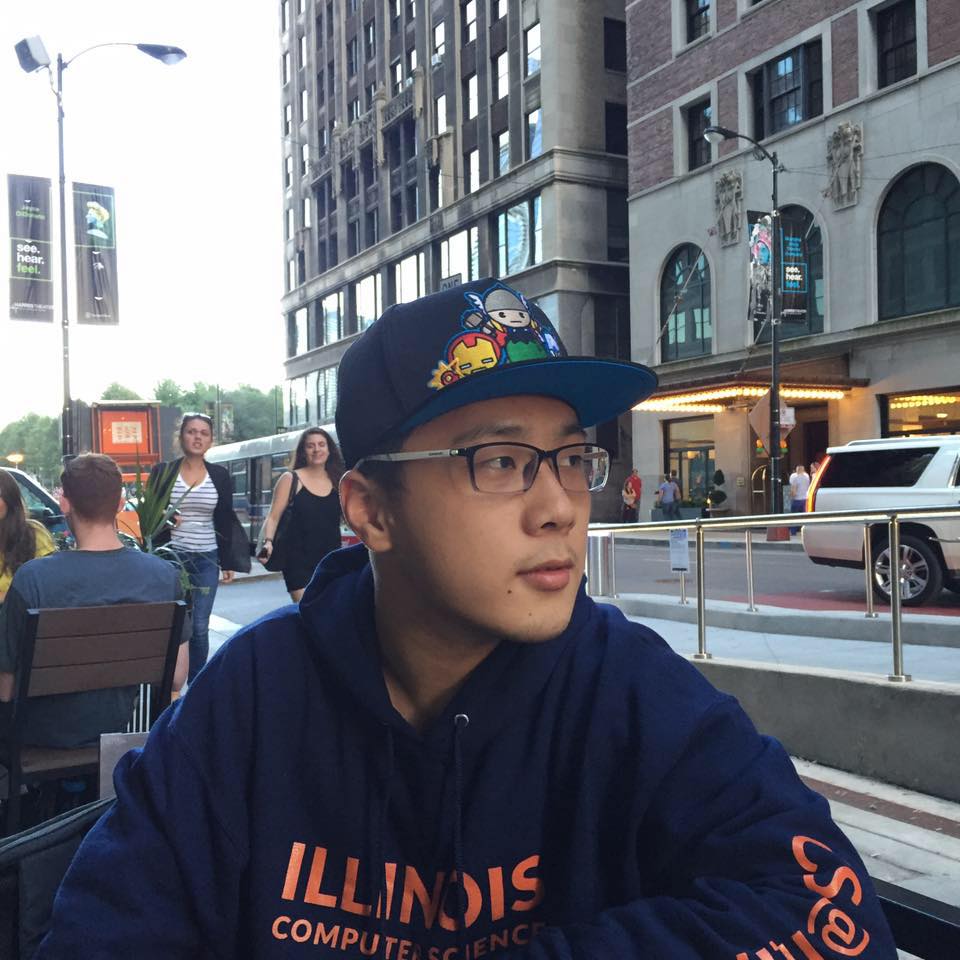
Bo Chen is a postdoctoral researcher at the Siebel School of Computing and Data Science and the Coordinated Science Laboratory at the University of Illinois at Urbana-Champaign. His work focuses on AI-system co-design for immersive computing, particularly in extended reality (XR) and multi-modal content delivery over wireless networks. Ph.D. in Computer Science (2022), advised by Klara Nahrstedt B.S. in Computer Science from Shanghai Jiao Tong University (2016) His research integrates AI techniques with system-level optimizations to address challenges in XR infrastructure , including multi-view video streaming , NeRF-based content delivery , and uncertainty management in video transmission . He has pioneered methods like Loose Frame Referencing for learned codecs and Context-Aware NeRF Serving for mobile XR applications. Bo Chen's recent publications span top venues like ACM MobiSys, ACM SenSys, and USENIX NSDI. Key themes include AI-driven compression , dynamic 3D rendering , and reliable streaming over mobile networks . He has received recognition including the Rising Star Best Presentation Award (ACM MobiSys 2025) and Best Student Paper Award (ACM MMSys 2022). Bayesian optimization for XR systems Multi-view video aggregation at edge networks 3D Gaussian Splatting for immersive media
Sri Kolla, Ph.D. is a tenured Professor in the Department of Electronics and Computer Engineering Technology at Bowling Green State University (BGSU) , where he has served since August 2002. He also served as a Visiting Professor at the Indian Institute of Science (2017) and as a Fulbright Research Scholar (2008-2009). His academic career spans faculty roles at Penn State University, University of Toledo, and consortium graduate faculty at Indiana State University. Education: Ph.D. in Electrical Engineering and Computer Science (University of Toledo, 1989) M.S. in Electrical and Computer Engineering (University of Saskatchewan, 1986) M.E. in Electrical Engineering (Indian Institute of Science, 1983) B.E. in Electrical Engineering (Andhra University, 1981) Research Interests: Dr. Kolla specializes in Electrical Power and Energy Systems with Smart Grid applications, Control Systems for networked environments, and Machine Learning techniques for power system diagnostics. His work focuses on fault detection in microgrids using LSTM networks, stability robustness of discrete-time systems, and multi-agent protection schemes for power infrastructure. Scientific Contributions: Developed robust control frameworks for microgrid systems under parameter variations (2023-2025) Pioneered AI-based fault identification in induction motors and transformers (1995-2000) Advanced networked control system designs addressing time delays (2002-2012) Published 82+ technical articles in IEEE, ISA Transactions, and conference proceedings Honors and Recognition: Recipient of the Fulbright-Nehru Academic and Professional Excellence Award and Whiteford Scholarship . Senior member of IEEE and ISA , with listings in Marquis Who’s Who and fellowships in The Institute of Engineers (India) .
Prof. Dr. Johan Robertsson is a Full Professor of Applied Geophysics and Head of the Exploration and Environmental Geophysics (EEG) Group at ETH Zürich's Department of Earth and Planetary Sciences. He holds a MSc from Uppsala University (1991) and a PhD in Geophysics from Rice University (1994). Before joining ETH in 2012, he spent 15 years at Schlumberger in R&D roles, leading projects that revolutionized marine seismic data acquisition. His research focuses on wave propagation physics, seismic data inversion, and applications in exploration and environmental geophysics. He pioneered the use of Distributed Acoustic Sensing (DAS) for landslide monitoring and contributed to Mars seismology via the InSight mission. Education: MSc in Engineering Physics, Uppsala University (1991) PhD in Geophysics, Rice University (1994) Research Interests: Seismic wavefield modeling and inversion Planetary seismology (Mars, Moon) Acoustic metamaterials and wave control Environmental geohazard monitoring Marine seismic acquisition techniques His work on the Martian soil properties using InSight data and lunar exploration instrumentation (ALGEP) reflects his cross-disciplinary approach. He holds 90+ patents and has secured prestigious grants like the ERC Advanced Grant. Awards: EAGE Guido Bonarelli Award (2020) ERC Advanced Grant MATRIX (2017) EAGE Conrad Schlumberger Award (2018) Grants & Advising: Led the MATRIX ERC project advancing seismic imaging algorithms Advised over 20 PhD/MS students (names not listed) Secured Schlumberger's largest R&D project in marine seismic sampling His EEG Group operates cutting-edge labs for immersive wave experimentation and planetary geophysical instrumentation. Current initiatives include lunar subsurface exploration and acoustic invisibility experiments.
Nikita Zhivotovskiy is an Assistant Professor in the Department of Statistics at the University of California Berkeley within the College of Letters and Science. His research spans the intersection of mathematical statistics, probability theory, and statistical learning theory with particular focus on high-dimensional data analysis and non-parametric inference. His research interests include mathematical statistics, applied probability, statistical learning theory, high-dimensional data analysis, non-parametric inference, and artificial intelligence/machine learning. Zhivotovskiy's work addresses fundamental questions in statistical learning theory, including risk bounds, algorithmic stability, and convergence rates, with applications spanning multiple domains including robust statistics and private learning. His recent publications (2021-2025) demonstrate significant contributions to theoretical machine learning, particularly in statistical learning theory, risk bounds, high-dimensional statistics, and algorithmic stability. These works appear in top venues including NeurIPS, COLT, and FOCS, reflecting the theoretical depth and importance of his contributions to the field. Among his notable achievements is a Best Paper Award at the Conference on Learning Theory (COLT) in 2020 for his work on 'Proper Learning, Helly Number, and an Optimal SVM Bound.' Zhivotovskiy has also contributed to the theoretical foundations of PAC learning, risk minimization, and statistical aggregation. Prior to his current position, Zhivotovskiy was a postdoctoral researcher at ETH Zürich (2021-2022) and Google Research (2019-2020). He completed his PhD at Moscow Institute of Physics and Technology in 2018 under the supervision of Vladimir Spokoiny and Konstantin Vorontsov.
Yaoqing Yang is an Assistant Professor at the Department of Computer Science, Dartmouth College. He earned his PhD in Electrical and Computer Engineering (ECE) from Carnegie Mellon University (CMU) and completed postdoctoral research at UC Berkeley's RISE Lab. His work focuses on robustness in machine learning systems, spectral analysis of neural networks, and algorithm design for structured data like graphs and point clouds. PhD in ECE, Carnegie Mellon University Postdoc, RISE Lab, UC Berkeley BS in Electrical Engineering, Tsinghua University Research interests include diagnosing and mitigating model failures through heavy-tailed spectral analysis, decision boundary studies, and loss landscape visualization. He develops methods such as AlphaPruning and SharpBalance to enhance large language models and ensemble learning. Recent work spans 2025 publications on spectral evolution of neural networks, agentic AI for science, and LLM safety. Key collaborations include Michael W. Mahoney and other researchers. Burke Research Initiation Award, Dartmouth (2024) DOE grant for scientific foundation models (2024) DARPA grant for AI robustness (2024) He serves as Area Chair at NeurIPS 2025 and ICLR 2026, and has presented at Google Research, Lawrence Berkeley National Laboratory, and leading universities worldwide. His lab at Dartmouth engages in theoretical and applied research, with connections to UC Berkeley's RISE Lab and collaborations across institutions like CMU and Tsinghua University.
Dr. Janis Nötzel is a senior researcher at the Chair of Theoretical Information Technology (Technische Universität München) and leads his independent Emmy Noether research group. Previously, he held a postdoctoral position at Universitat Autónoma de Barcelona and contributed to 5G practical implementations at TU Dresden's 5G Lab. His research spans quantum information theory, physical layer security, and machine learning applications. Key focuses include Quantum channel capacities under adversarial conditions Entanglement-assisted communication Quantum software frameworks (QuNetSim, QuReed) Interplay between classical and quantum communication Security analysis for 6G networks Resource optimization in quantum systems Recent publications (2023-2025) showcase innovations in Quantum satellite communication architectures Hybrid quantum-classical clustering algorithms Photonic processor instability modeling Covert capacity of compound channels Quantum key distribution resilience Free-space Bessel beam communication He actively collaborates with 6G-life research hub and contributes to quantum network simulation tools. Grants include funding from DFG (Leibniz Program), BMBF (6G-life, Q.Link.X), and StMWi (6G Zukunftslabor Bayern).
Victor Vianu is a Professor in the Department of Computer Science and Engineering at the University of California, San Diego, within the Jacobs School of Engineering. His work focuses on the intersection of database theory and verification techniques, particularly in the context of data-driven business processes and workflows. Research Interests Professor Vianu's primary research interests span database theory, verification of database-driven systems, and computational logic. His current work focuses on automatic verification of interactive data-driven web services and business processes, exploring how to provide customized workflow views for different stakeholders in organizational settings. His research addresses significant technical challenges at the intersection of data management and process modeling, requiring novel approaches that go beyond traditional relational algebra to handle both data and process aspects simultaneously. His work on data-driven business processes investigates how to specify, analyze, and synthesize views of workflows that expose only information relevant to specific user roles. This research has important applications in e-commerce, digital government, healthcare, and scientific infrastructure, where different stakeholders require varying levels of workflow abstraction and detail. Research Contributions and Trends Professor Vianu's recent publications demonstrate a consistent focus on the integration of data management and workflow processes. His work has evolved from foundational database theory to increasingly practical applications in business process management. A key trend in his research is the development of formal frameworks for workflow views that maintain consistency while providing appropriate abstractions for different user roles. His publications reveal a progression from theoretical foundations to more applied aspects of workflow verification and integration, often in collaboration with researchers from INRIA and other institutions. Advising and Research Support Professor Vianu leads the UCSD Database Laboratory, which conducts research on database systems and theory. He currently advises graduate student Marysia Tran and has likely mentored numerous other students throughout his career. His research is supported by the National Science Foundation under grant "Views of Data-Driven Business Processes: Foundations and Applications" (NSF Project III 1815247). This project brings together techniques from logic, automata theory, complexity theory, algorithms, and automatic verification to address challenges in workflow management. Research Environment Professor Vianu is an active member of the UCSD Database Laboratory, which maintains a regular research seminar series. He has collaborated extensively with researchers including Alin Deutsch (UC San Diego), Serge Abiteboul (INRIA and ENS-Paris), Pierre Bourhis (Univ. of Lille and CNRS), and Adrien Koutsos (ENS Cachan). His foundational work includes co-authoring the influential textbook "Foundations of Databases" with S. Abiteboul and R. Hull, which remains a standard reference in database theory.
Prof. Dr.-Ing. Gerhard Müller is a Full Professor at the Chair of Structural Mechanics within the TUM School of Engineering and Design at Technical University of Munich (TUM). Since 2004, he has held this distinguished position, and since 2014, he has served as Executive Vice President for Academic and Student Affairs at TUM. His research focuses on structural dynamics and vibroacoustics, with specific expertise in dynamic soil-structure interaction, sound radiation analysis, and seismic risk assessment. Professorship: Structural Mechanics University: Technical University of Munich School: TUM School of Engineering and Design Department: Chair of Structural Mechanics in Civil Engineering Prof. Müller's research spans multiple domains, including: Structural Dynamics : Examining building and vehicle vibrations, seismic soil-structure interaction, and advanced model order reduction techniques Vibroacoustics : Investigating sound radiation from vibrating structures and developing acoustic metamaterials for noise control Computational Methods : Pioneering hybrid deterministic-statistical approaches, Wave Based Methods (WBM) for saturated elastodynamic structures, and parametric model order reduction His recent publications demonstrate expertise in: Wave propagation analysis in poroelastic media Bayesian parameter updating for structural models Acoustic metamaterials for vibration control Advanced numerical methods for seismic risk assessment Hybrid ITM-FEM approaches for soil-structure interaction Energy flow analysis in timber structures Awarded the Spindler Prize in 1984 , Prof. Müller also holds significant academic leadership roles: President of European Association for Structural Dynamics (EASD) Chairman of Bavarian-French University Center (BayFrance) Active member of ASIIN accreditation agency and Bavarian Chamber of Engineers Previously served as Dean of Civil Engineering and Surveying at TUM (2010-2014) He leads the Structural Dynamic Lab (formerly Vibroacoustics Lab) and has developed interactive web apps for engineering education. His work bridges theoretical advancements with practical applications in construction acoustics, transportation noise control, and geothermal energy infrastructure analysis.
Dr Brandon M Grainger is an Eaton Faculty Fellow and Associate Professor of Electrical and Computer Engineering at the University of Pittsburgh’s Swanson School of Engineering, where he also directs the Electric Power Technologies Laboratory, serves as Associate Director of the Energy GRID Institute, and co-directs Pitt AMPED. A key architect of Pitt’s electric power program since 2008, he focuses on advanced power conversion, high-voltage electronics, wide-band-gap semiconductors, and aerospace power systems. Education PhD, Electrical Engineering (Power Conversion), University of Pittsburgh, 2014 MS, Electrical Engineering, University of Pittsburgh, 2011 BS, Mechanical Engineering & Minor in Electrical Engineering, University of Pittsburgh, 2007 Executive Education Certificate, Tepper School of Business, Carnegie Mellon University, 2019 Research Focus Dr Grainger’s work lies at the intersection of power electronics, high-voltage engineering, and sustainable energy systems. He specializes in medium- and high-voltage power electronics (HVDC, STATCOM), resonant converters, and ultra-high-power-density designs leveraging SiC and GaN semiconductors. His investigations extend to electric-vehicle traction drives, solid-state transformers, optimized magnetics for aerospace applications, and resilient microgrids. He and his students routinely collaborate with NASA JPL, Johns Hopkins APL, Honeywell Aerospace, and the Naval Research Laboratory, leveraging Pitt’s NSF SHREC center to push the boundaries of power conversion in space and defense systems. Selected Research Themes High-frequency, high-density DC/DC converters for satellite power systems Radiation-tolerant GaN converters and point-of-load power stages Medium-voltage testbed development (13.8 kV, 5 MVA) Rare-earth-free permanent-magnet machine topologies Model-predictive control of multi-phase drives and microgrids Honors & Awards 2024 IEEE Region 2 Outstanding Educator Award 2024 Pitt STRIVE Outstanding DEI Service Award 2019 ESWP Engineer of the Year 2019 ASEE 2nd Place Best Paper Award 2019 SRI Undergraduate Best Mentor Award Richard K. Mellon Endowed Graduate Fellowship National Academies of Science & Engineering Ambassador Senior Member, IEEE Grants & Industry Partnerships Dr Grainger’s research has been continuously funded by federal agencies and industry partners including NASA JPL, Johns Hopkins APL, Honeywell Aerospace, the Naval Research Laboratory, Eaton, and the National Science Foundation through the SHREC Center. These awards support graduate students and post-docs working on next-generation power systems for aerospace, naval, and terrestrial applications. Laboratories & Teams Director, Electric Power Technologies Laboratory (EPTL) Associate Director, Energy GRID Institute Co-Director, Pitt AMPED (Advanced Multimodal Power and Energy Development) Faculty Affiliate, NSF SHREC Center
Victoria Lemieux is a Professor at the University of British Columbia (UBC) Faculty of Arts, School of Information, and Cluster Lead for Blockchain@UBC, Canada’s largest research cluster focused on blockchain technology. Her research centers on risks to trustworthy records in blockchain systems and their impact on transparency, financial stability, and human rights. She has pioneered Canada’s first research-oriented graduate blockchain training program and organized multiple interdisciplinary summer institutes. Education: Ph.D. in Archival Studies from University College London (2002), Certified Information Systems Security Professional (CISSP, 2005). Affiliated with UBC’s Peter Wall Institute for Advanced Studies, Sauder School of Business, and Institute for Computers, Information and Cognitive Systems (ICICS). Research interests span blockchain technology , trustworthy records , risk management , information governance , and visual analytics , with recent work addressing healthcare data frameworks, Web3 AI integration, and socio-cultural dynamics of decentralized systems. She has published extensively on blockchain applications in archives, land transactions, and privacy-preserving technologies. Scientific Awards : 2015 Emmett Leahy Award 2015 World Bank Big Data Innovation Award 2016 Emerald Literati Award 2016 Emerald Literati Outstanding Paper Award Supervision: Currently accepts doctoral students in Computational Archival Science and blockchain-related archival research. Affiliated with the Blockchain@UBC cluster and multidisciplinary research teams exploring decentralized systems for social good.
Maria Elena Valcher is a Professor at the Department of Information Engineering, University of Padova, Italy. She is an IEEE Fellow (since 2012), IFAC Fellow (since 2023), Socio Effettivo of Istituto Veneto di Scienze, Lettere ed Arti (since 2017, previously Socio Corrispondente 2008-2017), and Socio Effettivo of Accademia Galieliana di Scienze, Lettere ed Arti in Padova (since 2022, previously Socio Corrispondente 2017-2022). She currently serves as Administrator of the Istituto Veneto and holds leadership positions including EUCA President (2024-2025) and IEEE Control Systems Society Past President. Her research focuses on control systems, systems theory, optimization, Boolean control networks, multi-agent systems, and consensus problems. She has made significant contributions in distributed control, data-driven methods, and network optimization, with recent work exploring applications in opinion dynamics and social networks. Recent publications demonstrate a strong emphasis on data-driven approaches to control systems, particularly in distributed state estimation, unknown-input observer design, and multi-agent coordination. Her work shows consistent development in theoretical frameworks for networked systems with practical applications. Awards and Honors: IEEE Fellow (2012) IFAC Fellow (2023) Socio Effettivo, Istituto Veneto di Scienze, Lettere ed Arti (2017-present) Socio Effettivo, Accademia Galieliana di Scienze, Lettere ed Arti in Padova (2022-present) She teaches 'Controlli Automatici' (Bachelor in Information Engineering) and 'Systems Theory' (Master in Control Systems Engineering) during the 2024/2025 academic year. She has chaired major conferences including the 61st IEEE Conference on Decision and Control (CDC 2022) and serves as Program Chair for ICSTCC 2025.
Dr. Leila Notash is a Professor in the Department of Mechanical and Materials Engineering at Queen's University, where she has been a faculty member since 1997. She is a Fellow of Engineers Canada (FEC) and a licensed Professional Engineer with Professional Engineers Ontario (PEO), with significant contributions to engineering education and professional service. Her educational background includes: Bachelor of Science in Mechanical Engineering, Middle East Technical University (Ankara, Turkey) - High Honor Student (2nd out of 166) Master of Applied Science in Mechanical Engineering, University of Toronto PhD in Mechanical Engineering, University of Victoria Dr. Notash's research centers on robotics and mechatronics, with specialized expertise in cable-driven parallel manipulators. Her work integrates kinematics, fault-tolerant design, and neural network applications to address challenges in robot calibration, workspace analysis, and motion control under real-world constraints like cable mass and elasticity. She investigates both theoretical frameworks and practical implementations for industrial and specialized robotic systems. Analysis of her recent publications (2020-2024) reveals a clear trajectory toward intelligent control systems, where machine learning techniques—particularly neural networks and reinforcement learning—are increasingly applied to solve complex problems in cable-driven robotics. This includes motion control optimization, path generation, and kineto-static analysis while accounting for physical limitations such as cable elasticity and mass effects, demonstrating a shift from traditional mechanical analysis to data-driven adaptive control methodologies. Her scientific recognition includes: Fellow of Engineers Canada (FEC) University of Toronto Open Fellowship University of Toronto International Differential Fee Waiver Charles S. Humphrey Graduate Student Award NSERC Doctoral Prize Nominee (1996) Dr. Notash has mentored 161 undergraduate students as Faculty Advisor for the Mechanical '06 cohort and pioneered international educational initiatives like the International Undergraduate Student Design project (IVDS), connecting Queen's University with Middle East Technical University and Union College. Her service extends to editorial leadership for Mechanism and Machine Theory and ASME journals, and governance roles including Faculty Senator at Queen's University (2009-2025) and PEO Council Councillor-at-Large (2019-2025). She has established collaborative research networks through initiatives like the Reading Week shop course 'Design Basics 1.0' and sustained leadership in the Canadian Committee for the Promotion of Mechanism and Machine Science (CCToMM) and the International Federation for the Promotion of Mechanism and Machine Science (IFToMM), where she chaired the Permanent Commission on Communications (2006-2011).
Michael Ferdman is an Associate Professor in the Department of Computer Science at Stony Brook University, where he leads research in computer architecture and systems. His office is located in Room 343 at Stony Brook, NY 11794-2424, and he can be contacted via phone (631-632-8449) or email. Ferdman directs the Computer Architecture and Systems Laboratory (compas.cs.stonybrook.edu), focusing on next-generation server infrastructure. Ferdman's research spans the entire computing stack with emphasis on: FPGA integration for server environments (Intel HARP, Microsoft Catapult) Machine learning accelerators for convolutional neural networks Server systems optimization in the post-Moore era Network processing and software-defined networking Programming models for emerging memory technologies (HBM, 3D XPoint) Reconfigurable hardware and high-level synthesis His work addresses both performance and security challenges in modern computing infrastructure. Analysis of his 15 most recent publications (2022-2025) reveals consistent focus on: Hardware acceleration techniques (FPGAs, specialized processors) Memory hierarchy optimization and cache management Security vulnerabilities in web applications and systems Post-Moore computing architectures Parallel processing and distributed systems His research shows strong emphasis on practical implementations bridging hardware and software layers. Awards recognizing his contributions include: Graduate Teaching Award (2014) Best Paper Award at ASPLOS XVII Best Paper Finalist at HPCA XVII Three IEEE Micro Top Picks selections (2009, 2012) He teaches advanced courses including CSE 502, CSE 602, and CSE 506 at Stony Brook University.
Sergii Strelchuk is an Associate Professor of Computer Science at the University of Oxford, specializing in quantum computing and its applications. His research sits at the intersection of quantum information theory, computer science, and bioinformatics, with a focus on developing quantum algorithms for practical problems in genomics and beyond. Professor Strelchuk's primary research interests include quantum algorithms and their applications (particularly in bioinformatics), classical simulation methods for quantum computation, quantum complexity theory, and quantum learning theory. His work bridges theoretical quantum computing with practical applications, especially in the emerging field of quantum genomics and pangenomics, with significant implications for understanding human and pathogen genomes. His recent publications demonstrate a strong focus on applying quantum computing techniques to genomic data analysis, developing efficient fermion-qubit mappings for quantum simulation, and exploring fundamental aspects of quantum complexity theory. His research shows a clear trajectory toward making quantum computing practically applicable to biological data analysis and advancing our theoretical understanding of quantum computational models. Among his notable scientific achievements are: Royal Society University Research Fellow Leverhulme Early Career Fellow John and Delia Agar Research Fellow Professor Strelchuk leads several significant research projects including the Wellcome Leap "Human and Pathogen Quantum Pangenomics" project (2023-2026), which recently entered Phase 3 in April 2025, the EPSRC "Structure and symmetry in quantum verification" grant (2023-2025), and the "Quantum Algorithms for Quantum Field Theory" project (2022-2025). His research has attracted substantial funding for quantum computing applications in genomics. His work has received significant attention in both academic and popular science media, including coverage in Quanta Magazine and collaborations with institutions like the Sanger Institute to tackle complex genomic challenges using quantum computing approaches, with recent publicity about his leadership in the final phase of the Wellcome Leap-funded quantum pangenomics project.
Cheuk Wai Tai is a Senior Staff Researcher at Stockholm University's Department of Environmental and Materials Chemistry since 2009. He manages the transmission electron microscopes and sample preparation equipment at the Electron Microscopy Center and serves as Section Editor for the Journal of Electronic Materials. His work focuses on quantitative structure characterization in functional materials research, particularly within nanoscience and nanotechnology contexts. Education: Ph.D. in Applied Physics, The Hong Kong Polytechnic University, 2004 M.Phil. in Applied Physics, The Hong Kong Polytechnic University, 2001 M.Sc. in Physics, The Chinese University of Hong Kong, 1998 B.Sc. (Hons) in Engineering Physics, The Hong Kong Polytechnic University, 1997 Dip. in Mechanical Engineering (Computer Aided Engineering), Institute of Vocational Education (formerly Haking Wong Technical Institute), Hong Kong, 1992 His research centers on structure-property relationships in functional materials through advanced electron microscopy techniques. Current specializations include Pair Distribution Function (ePDF) & Diffuse Scattering, Energy Materials characterization, and EM sample preparation methodology development. The group maintains strong focus on translating structural data into functional performance metrics for nanomaterials. Recent publications (2013-2019) demonstrate consistent emphasis on electron microscopy applications for energy storage materials (batteries, photocatalysts) and functional ceramics. Key trends include structural disorder analysis in piezoelectrics, development of quantitative TEM methods like SUePDF, and nanoscale characterization of electrocatalyst surface phases. His work bridges materials chemistry with advanced imaging techniques. Scientific recognition includes: Fellow of The Royal Microscopical Society (U.K.) Senior Member of IEEE Marie Curie Fellowship (2007-2009) from European Commission Sir Edward Youde Memorial Fellowship (2003/2004) from Hong Kong S.A.R. Government He teaches Solid State Chemistry (KZ7003) and leads Introduction to Analytical Electron Microscopy (KZ8009), having previously taught Advanced Transmission Electron Microscopy (KZ8010) before 2011. Major grants supporting his work include: "Quantitative structural characterisation using 3D electron-based pair distribution function" (Swedish Research Council) "A Multidimensional Toolkit for Modern Electron Microscopy" (Swedish Foundation for Strategic Research) "Mitigating Ni-rich Li-ion cathode side-reactions" (Swedish Energy Agency, Co-applicant) He leads the Cheuk-Wai Tai group within Stockholm University's chemistry department and oversees operations at the Electron Microscopy Center, where his team develops and applies advanced characterization techniques for functional materials research.