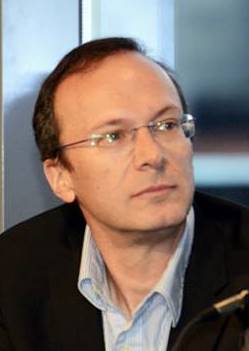
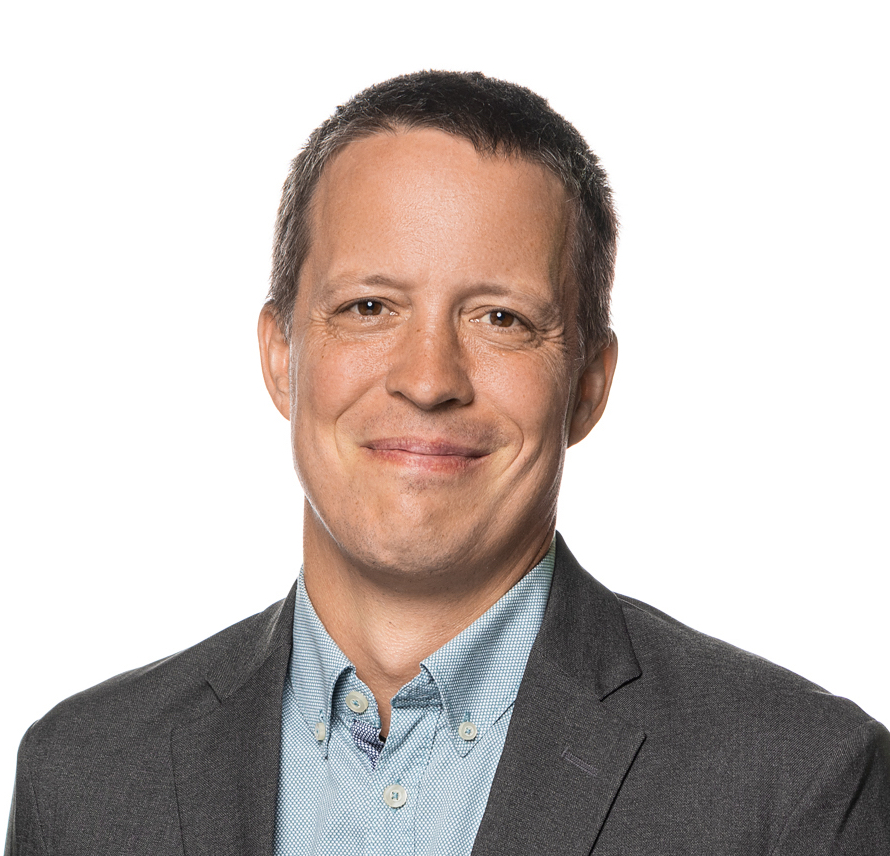
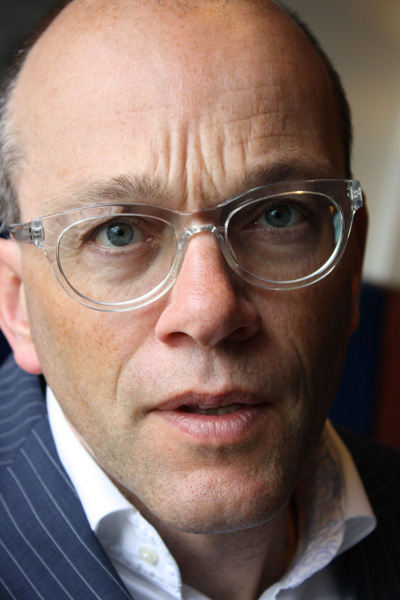
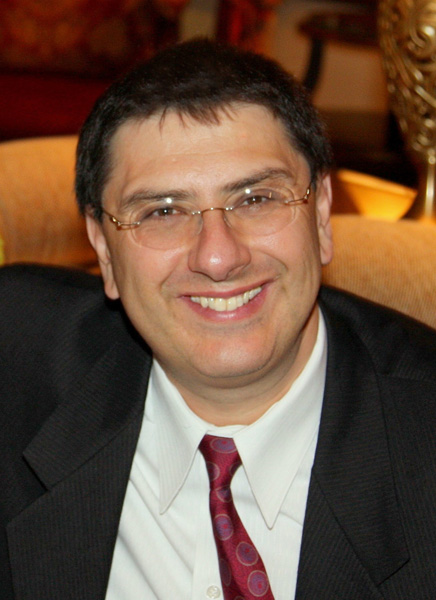
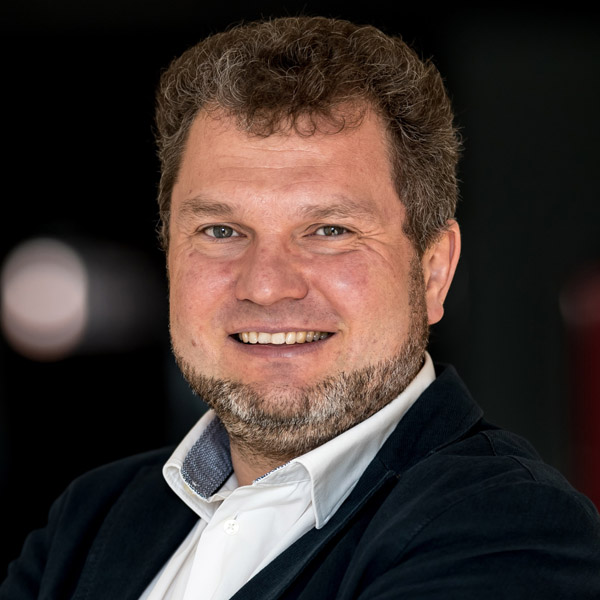
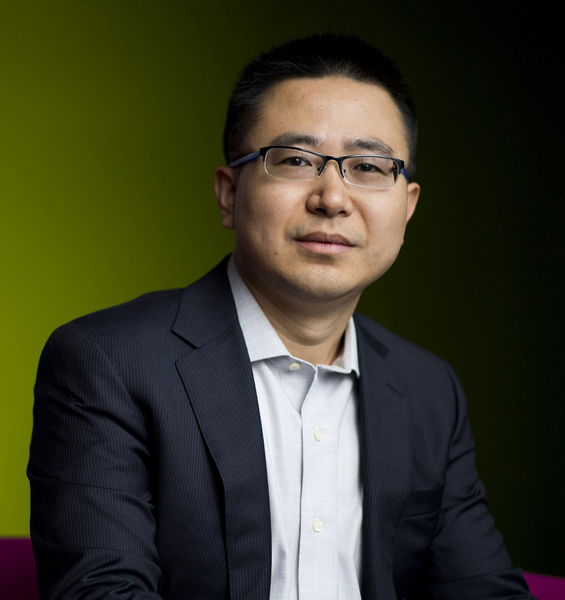
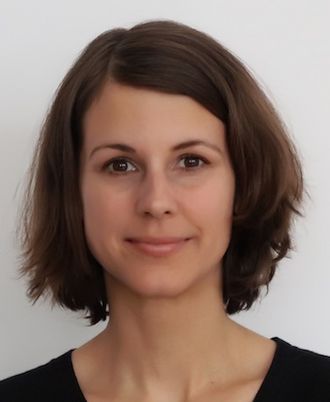
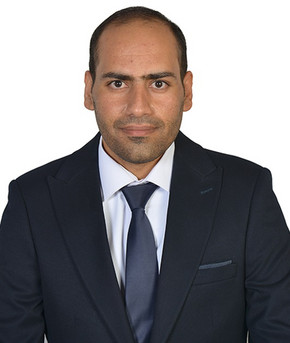
Craig Gotsman is a Professor and Dean at the Ying Wu College of Computing, New Jersey Institute of Technology. He previously held roles at Cornell Tech, Technion, ETH Zurich, and MIT. His research focuses on computational geometry, computer graphics, and 3D animation. Ph.D. in Computer Science, Hebrew University of Jerusalem (1991) His work spans geometric modeling, mesh processing, and applications in animation and visualization. Recent research trends include gaze correction in video conferencing, mesh parameterization, and spectral compression techniques. Notable awards include Fellowships in the US National Academy of Inventors and the Academy of Europe, multiple best paper awards, and the Technion's Hewlett Packard Chair in Computer Engineering. Gotsman has mentored over 50 postgraduate students and holds ten US patents. He co-founded three companies: Virtue 3D Inc. (acquired by NVIDIA), Estimotion Inc. (now ITIS Israel Ltd.), and CatchEye.
Christian Timmerer is a Professor at the Institute of Information Technology, Alpen-Adria-Universität Klagenfurt. His research focuses on adaptive video streaming , energy efficiency , MPEG standardization , and quality of experience (QoE) , with significant contributions to HTTP Adaptive Streaming (HAS), multi-codec optimization, and immersive media systems. Email: christian.timmerer@aau.at Office Hours: Monday 3:00-4:00 PM (by appointment) Projects: CD-Labor ATHENA, GAIA, SPIRIT His research integrates machine learning and generative AI to enhance video encoding, super-resolution, and voice dubbing, while prioritizing sustainability through energy-aware algorithms and open-source tools like GREEM and VEED. Current work emphasizes latency reduction and dynamic bitrate adaptation in live streaming environments. Recent publications address VVC optimization , multi-resolution encoding , and perceptual quality modeling , reflecting interdisciplinary efforts in networking , computer vision , and human-computer interaction . Awards include leading funded projects on adaptive streaming and green video systems.
Axel Polleres is a full professor at the Institute for Data, Process and Knowledge Management in Vienna University of Economics and Business (WU Wien). He leads the department of Information Systems and Operations Management while maintaining active research in knowledge graphs, semantic web technologies, and ontology engineering. PhD and Habilitation from Vienna University of Technology Former positions at University of Innsbruck, Universidad Rey Juan Carlos, DERI Ireland, and Siemens AG Co-chair of W3C SPARQL working group Editorial board member for Semantic Web Journal and IJSWIS His research focuses on: Querying and reasoning over ontologies Graph schema languages (SHACL, SPARQL) Wikidata constraint formalization Ontology reuse in collaborative platforms Crisis management knowledge graphs FAIR data principles implementation Recent publications analyze knowledge graph evolution, constraint validation methodologies, and semantic web standardization efforts. Key topics include: OWL/RDF interoperability solutions Unit conversion systems for Wikidata Partition-based query processing frameworks Network resilience analysis for urban planning Open data platform discovery tools Temporal analysis of collaborative knowledge graphs He has co-organized major conferences like ISWC2023 and ESWC workshops while maintaining active roles in European research projects. Current work involves spatiotemporal knowledge graphs for city resilience and semantic web infrastructure development.
Prof. Karl Kunisch is the Scientific Director at RICAM (Johann Radon Institute for Computational and Applied Mathematics) and a Full Professor of Mathematics at the University of Graz, Austria. He has held academic positions worldwide, including visiting roles at Brown University, INRIA, and Technical University Berlin. His research focuses on Optimization and Optimal Control, Partial Differential Equations (PDEs), Inverse Problems, and their applications in mathematical imaging, medicine, and computational science. Education: 1975: Diploma Degree, Technical University of Graz, Austria 1975: Master Degree, Northwestern University, Evanston, Illinois, USA 1978: Ph.D. Degree, Technical University of Graz 1980: Habilitation, Technical University of Graz Research Interests: Prof. Kunisch’s work spans theoretical and applied aspects of optimal control, including stabilization of PDEs, infinite horizon control problems, and feedback design. He explores numerical methods for PDE-constrained optimization and their applications in medical imaging, cardiac electrophysiology, and machine learning. His projects also address shape optimization and mathematical models for fluid dynamics and quantum systems. Publications Trends: His recent articles emphasize feedback stabilization for nonlinear systems, sparse control approaches, and the intersection of optimal control with machine learning. Key themes include robust algorithms for uncertainty handling, efficient numerical methods for high-dimensional problems, and applications in biomedical engineering. Awards: Pro Scientia-Scholarship (1974–1977) Research Award of Theodor-Körner-Fonds (1979) Fulbright Travel Scholarship (1979/80, 1985) Max Kade Scholarship (1982–83) Japanese Society for the Promotion of Science Fellowship (1990) Christian Doppler Laboratory Fellowship (1992) Advising & Grants: Prof. Kunisch leads the Optimization and Optimal Control research group at RICAM and has directed projects on mathematical data science and inverse problems. His work involves collaborations with institutions globally and has been supported by grants from NASA, the European Union, and national funding bodies. He has advised numerous researchers, though specific student names are not listed here. Labs/Teams: Group Leader of the Group "Optimization and Optimal Control" at RICAM since 2004, contributing to interdisciplinary research in computational mathematics and its applications.
Alexander Selzer is a PreDoc Researcher in Databases and Artificial Intelligence at Vienna University of Technology. His research focuses on query optimization, database systems, and AI-driven data processing. His work bridges theoretical computer science and practical database engineering, emphasizing efficient algorithms for modern data challenges. Recent projects explore machine learning applications in query performance and distributed computing frameworks. He mentors students in database optimization research, including projects on structure-guided query techniques and SQL-based system enhancements.
Joost-Pieter Katoen is a full Professor at RWTH Aachen University and Head of its Computer Science Department since 2012. He also holds a part-time (20%) Professorship at the University of Twente . His research focuses on model checking , probabilistic verification , formal semantics , and software verification , with applications in aerospace systems. His work has led to significant tools like MRMC (probabilistic model checker), COMPASS (AADL analysis tool-set), and libalf (learning automata library). He has authored over 18 international projects (total €5.2 million) and graduated 12 PhD students. Scientific Awards : Member, German National Academy of Sciences (Leopoldina), 2024 ACM Fellow, 2020 ERC Advanced Grant, 2018 Honorary doctorate, Aalborg University, 2017 Teaching Award, RWTH Aachen, 2010 Philips Early Career Development Award, 1988 Research Trends (from articles): His recent work spans probabilistic program verification , quantitative game theory , Markov chain analysis , and parameter synthesis for stochastic systems, with applications in AI, quantum computing, and fault tree analysis. Leadership & Service : Katoen co-founded the QEST conference , chairs ETAPS steering committee, and has led numerous program committees (CONCUR, TACAS, QEST). He has served on editorial boards and organized conferences/seminars globally.
Rafail Ostrovsky is a Professor of Computer Science and Mathematics at UCLA , affiliated with the Center for Information and Computation Security at the Henry Samueli School of Engineering and Applied Science. He earned his Ph.D. in Computer Science from MIT in 1992 under Silvio Micali. Research Focus: His work spans cryptography, algorithms, and theoretical computer science, emphasizing secure multi-party computation, zero-knowledge proofs, oblivious RAM, and high-dimensional data analysis. Applications include privacy-preserving data mining, systems security, and quantum cryptography. Article Trends: Recent publications address concurrent security protocols, robust secret sharing via expander graphs, and efficient multi-party computation. Topics intersect computational complexity, cryptographic reductions, and practical security implementations. Awards: Recipient of the 2018 RSA Conference Excellence in Mathematics Award , 2017 IEEE Fellow , and multiple IEEE/ACM honors. Holds 14 U.S. patents and over 290 refereed papers. Advising: Supervised 27 Ph.D. students, many now professors at top institutions. Served on 40+ program committees, including FOCS 2011 Chair. Labs: Leads the CICS research center, fostering interdisciplinary work in information security and cryptographic systems.
Zhang Yi-Cheng is a Full Professor of Theoretical Physics at the University of Fribourg, Switzerland, since 1992. His academic career includes visiting professorships at Nordita (Denmark) and INFN (Italy), and postdoctoral research at Brookhaven National Lab (USA). He specializes in interdisciplinary fields such as Econophysics , Statistical physics , and Complex network sciences , focusing on applications in financial markets, social systems, and global trade networks. His research explores topics like market dynamics, network structures, and algorithmic ranking systems. Notable awards include the 2011 Honorary Director of the Complexity Sciences Research Center and recognition as a 2011 Chinese '1000 Talents' awardee . His work bridges physics-based methodologies with socio-economic systems, addressing challenges in information-driven economies and networked societies. Zhang has contributed to influential studies on ranking algorithms, percolation theory in networks, and the interplay between economic complexity and trade. His interdisciplinary approach has led to advancements in understanding systemic risks, market inefficiencies, and the role of information in shaping global economic interactions.
Prof. Hermann Hellwagner is a Full Professor at the Department of Information Technology, University of Klagenfurt. He has held roles such as Vice President (Natural and Technical Sciences) at the Austrian Science Fund (FWF) and Vice Dean of the Faculty of Technical Sciences. His research focuses on multimedia communication, network engineering, and future internet architectures. Notable projects include work on adaptive streaming, edge computing, and drone networks. He holds a Ph.D. in Systolic Architectures from the University of Linz (1988). Research interests span distributed multimedia systems, information-centric networking (ICN), and optimizing video streaming quality-of-experience (QoE). Recent work emphasizes edge computing solutions for low-latency streaming and dynamic codec adaptation. His contributions include frameworks like ALPHAS and MEDUSA for bitrate optimization, and studies on point cloud streaming in augmented reality. Publications (2021–2025) highlight advancements in edge-assisted streaming, hybrid P2P-CDN architectures, and transcoding techniques. His work often bridges theoretical models with real-world implementations, addressing challenges in latency, cost, and device adaptability. Current projects involve 6DoF video streaming and multi-robot system optimization. Labs/Teams: Part of the Institute of Information Technology (ITEC), Klagenfurt. Collaborates on EU-funded projects and industry partnerships in 5G edge computing and drone networks. Active in standards groups for HTTP adaptive streaming protocols.
Rafał Weron is a Full Professor at Wrocław University of Science and Technology, where he has held leadership roles since 2015, including Head of the Department of Operations Research and Business Intelligence and Chairman of the Scientific Discipline Council for Management and Quality Sciences. His expertise spans electricity price forecasting, computational economics, and risk management, with significant contributions to probabilistic forecasting methods. As a globally recognized scholar, he has received prestigious awards such as the Hugo Steinhaus Prize (2018) and the Tao Hong Award (2017). Key Affiliations : Wrocław University of Science and Technology; Polish Academy of Sciences (Statistics and Econometrics Committee); Polish Mathematical Society. Research Trends: Weron's work focuses on electricity price forecasting, leveraging machine learning and statistical models to enhance accuracy and reliability. His publications emphasize probabilistic forecasting frameworks, quantile regression, and hybrid modeling techniques, reflecting a commitment to methodological rigor and practical applications in energy markets. Scientific Awards: Top 1% globally ranked economist (IDEAS/RePEc, 2013-2022) World's Top 2% Most Widely Cited Scientist (2019-2021) 'Hugo Steinhaus' Prize (2018) Tao Hong Award (2017) Emerald Citation of Excellence (2017) Minister of Science & Higher Education Prize (2016) Commission of National Education Medal (2016)
Yun Fu is a Distinguished Professor at Northeastern University, affiliated with the College of Engineering and Khoury College of Computer Science. He holds tenure in Electrical and Computer Engineering (ECE). His roles include Professor, Senior Vice President at Shiseido Americas, founder of Giaran (acquired by Shiseido), and co-founder of TVision Insights. He earned his Ph.D. from the University of Illinois at Urbana-Champaign. His research focuses on artificial intelligence, computer vision, machine learning, and data mining. Key achievements include over 500 publications, 50+ patents, and prestigious awards like IEEE Fellow, OSA Fellow, and AAIA Fellow. He leads the SMILE Lab, exploring AI applications in vision, robotics, and healthcare. Notable entrepreneurship includes AI-driven ventures in cosmetics and media analytics. Research interests emphasize AI-driven solutions for computer vision challenges, including anomaly detection, trajectory prediction, and multimodal learning. His work bridges academia and industry, with impactful contributions to both fields.
Alex X. Liu is a Professor in the Department of Computer Science & Engineering at Michigan State University (2016-2022), currently serving as Chief Information Security Officer and President of Midea Software Engineering Institute. His academic career includes roles as Associate Professor (2012-2016) and Assistant Professor (2006-2012) at the same institution. He holds a Ph.D. and M.S. in Computer Science from The University of Texas at Austin, and a B.S. in Computer Science from Jilin University, China. Education Ph.D. in Computer Science (UT Austin, 2006) M.S. in Computer Science (UT Austin, 2002) B.S. in Computer Science (Jilin University, 1996) Liu's research focuses on Dependable computing , Networking algorithms , Cloud computing , Mobile computing , Privacy computing , and Computer/network security . His work spans secure systems, network protocols, and resource optimization in distributed environments. Recent publications address quantum neural networks , microservices autoscaling , RFID tag recognition , network traffic classification , and hybrid physical-layer authentication , demonstrating expertise at the intersection of AI and network security. Key trends include deep learning applications for cloud systems and robust security protocols. Scientific Awards IET Fellow (2021) IEEE Fellow (2019) ACM Distinguished Scientist (2019) Withrow Distinguished Scholar Awards (Senior 2019, Junior 2011) NSF CAREER Award (2009) IEEE & IFIP William C. Carter Award (2004)
Wilfried Gansterer is a Professor at the Faculty of Computer Science, University of Vienna, leading the Theory and Applications of Algorithms research group. His work focuses on numerical algorithms, distributed computing, and machine learning, with notable contributions to graph neural networks and fault-tolerant systems. Active in projects such as Algorithmic Data Science for Computational Drug Discovery (2020–2028) and REPEAL (Resilience vs. Performance in Numerical Linear Algebra, 2016–2020). Research Interests: Dr. Gansterer’s expertise spans graph neural networks, matrix compression, adversarial defense mechanisms, and high-performance computing. His work addresses challenges in efficient computation, resilience against node failures, and optimizing distributed systems. Projects : Algorithmic Data Science for Computational Drug Discovery (2020–2028) REPEAL: Resilience vs. Performance in Numerical Linear Algebra (2016–2020) Verteiltes Rechnen (Distributed Computing, 2007–2014) Awards : 2023 Best Paper Award for work on Crossfire: An Elastic Defense Framework for Graph Neural Networks. Labs/Teams : Directs the Theory and Applications of Algorithms group, focusing on algorithmic innovation in distributed and high-performance computing environments.
Sophie N. Parragh is Professor and Head of the Institute of Production and Logistics Management at Johannes Kepler University Linz, where she also serves as program director of the master's degree program in Economic and Business Analytics. She received her PhD from the University of Vienna in 2009 and completed her habilitation in 2016, following postdoctoral research at the IBM Center for Advanced Studies in Porto and a visiting professorship at the Vienna University of Economics and Business. Her research focuses on developing exact and heuristic optimization algorithms for complex logistics and transportation problems. Key areas include vehicle routing, green logistics, disaster relief distribution planning, scheduling, and multi-objective optimization. She has particular expertise in branch-and-bound, branch-and-price, column generation, and metaheuristics approaches to solve challenging combinatorial optimization problems. Dr. Parragh's publication record shows a consistent trend toward increasingly complex multi-objective problems, with recent work focusing on electric vehicle routing, multi-echelon production planning under uncertainty, and bi-objective facility location problems with applications in disaster relief. Her research bridges theoretical optimization methods with practical applications in logistics and transportation. Scientific Awards: ÖGOR (Austrian Society for Operations Research) dissertation prize doc.award from the University of Vienna Hertha Firnberg Postdoc fellowship from the Austrian Science Fund (FWF) Dr. Parragh has served as department editor for OR Spectrum and as associate editor for Transportation Science, Transportation Research Part B: Methodological, INFORMS Journal on Computing, and Networks. She has led and participated in numerous third-party funded research projects in operations research, including work in healthcare logistics, field staff routing, production planning, and electric vehicle routing. In 2021-2022, she co-organized the monthly VeRoLog webinar series, demonstrating her active engagement with the international operations research community. She maintains strong research collaborations across Europe, evidenced by her co-authored publications with researchers from institutions in Austria, France, Portugal, Denmark, and beyond. Her work consistently addresses both theoretical challenges in optimization and practical applications in industry and public service contexts.
Dr. Adel Aazami is an Assistant Professor at the Institute of Transport Economics and Logistics at Vienna University of Economics and Business (WU Vienna) since 2023. His academic journey began with a B.Sc. in Industrial Engineering from University of Tehran (2010-2014), followed by an M.Sc. (2014-2016) and Ph.D. (2016-2021) from Iran University of Science and Technology (IUST), Tehran. Prior to his current position, he worked as a Postdoctoral Researcher at Sharif University of Technology (2021-2022) and was a Visiting Researcher at the University of Toronto (2020). His educational background includes: Ph.D. in Industrial Engineering (2016-2021) - Iran University of Science and Technology (IUST), Tehran, Iran M.Sc. in Industrial Engineering (2014-2016) - Iran University of Science and Technology (IUST), Tehran, Iran B.Sc. in Industrial Engineering (2010-2014) - University of Tehran, Tehran, Iran Dr. Aazami's research spans multiple interconnected domains within operations research and supply chain management. His primary focus areas include Operations Research and Optimization, Supply Chain and Logistics, Production and Distribution/Transportation Planning, Competition and Game Theory, Stochastic Programming, and Decomposition Algorithms. His work demonstrates a strong emphasis on developing mathematical models and optimization algorithms for complex supply chain problems, particularly those involving perishable goods, competitive environments, and sustainability considerations. He has made significant contributions to integrating environmental factors into traditional logistics problems and developing robust optimization approaches for supply chain networks. Analysis of Dr. Aazami's publication record reveals a consistent trajectory of increasingly sophisticated research in supply chain optimization. His work shows a clear progression from foundational mathematical optimization techniques to increasingly complex integrated problems involving multiple stakeholders, uncertainty, and environmental considerations. A notable trend is his focus on perishable products within supply chains, developing models that account for limited product lifetimes while optimizing across multiple echelons of the supply chain. More recently, his research has expanded to incorporate green logistics considerations, developing algorithms that balance economic and environmental objectives in transportation and distribution problems. His notable scientific achievements include: Winner of the 'Best Student' award among nationwide students evaluated by the Iranian Ministry of Science (2020) Winner of the Iranian Nobel Prize (known as the Alborz National Foundation Prize) (2019) Winner of the Best Student Award at IUST (2018) Winner of the Top Researcher Award at IUST (2018) Annual Awards of the National Elites Foundation Iran (2015-2020) Dr. Aazami has extensive teaching experience across multiple Iranian universities including Tehran University, Amirkabir Technical University, Isfahan University, Yazd University, Zanjan University, Damghan University, Abrar University and Iran Technical University. His peer review activities include reviewing for prestigious journals such as Soft Computing, Expert Systems with Applications, and Annals of Operations Research. While specific grant information isn't detailed in the provided text, his research output suggests active engagement with complex optimization problems relevant to transportation and logistics industries. At WU Vienna, Dr. Aazami is part of the research team at the Institute of Transport Economics and Logistics, working alongside other faculty members including Prof. Kummer and Prof. Wakolbinger. His research integrates theoretical optimization methods with practical applications in transportation and logistics, contributing to the institute's focus on sustainable and efficient supply chain solutions.