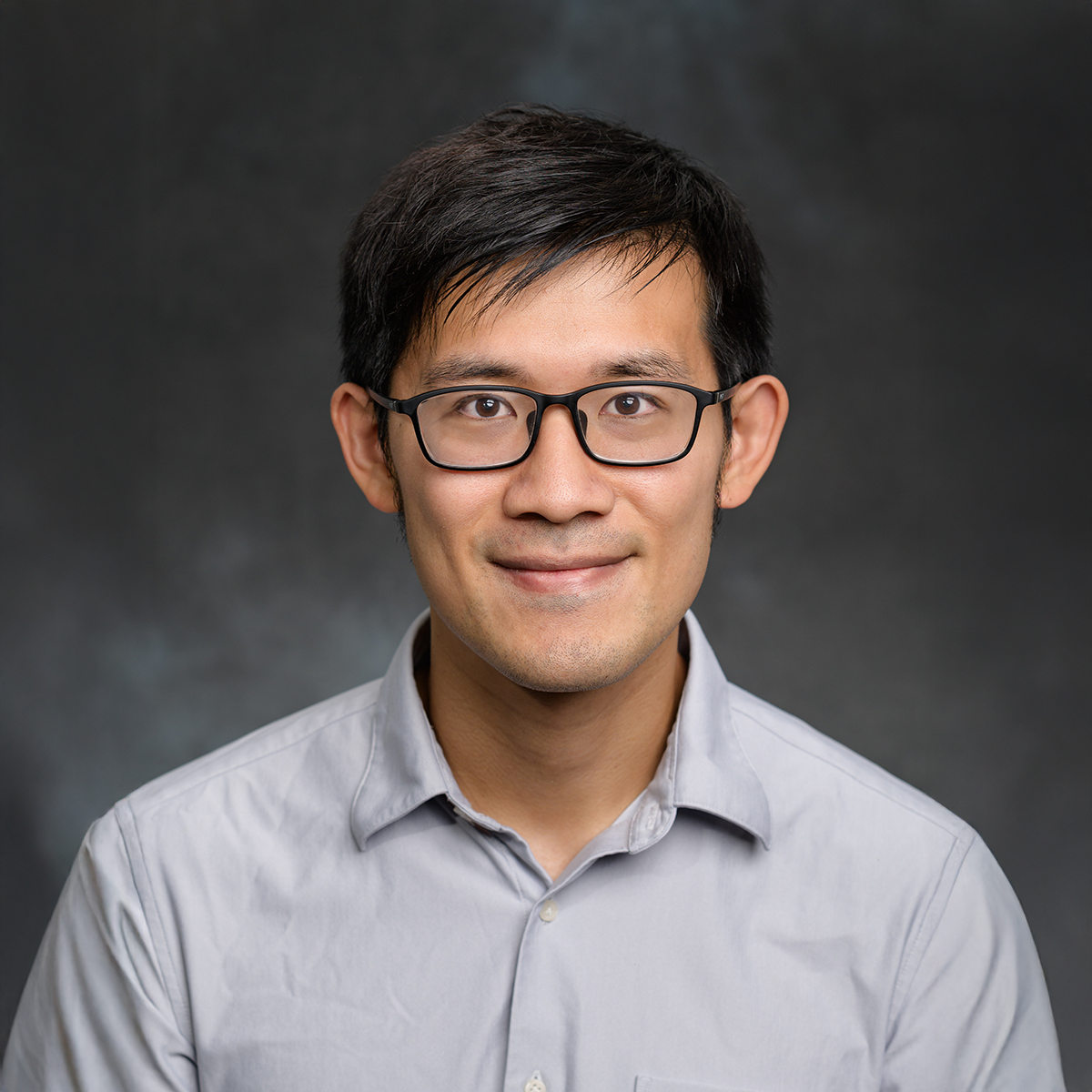
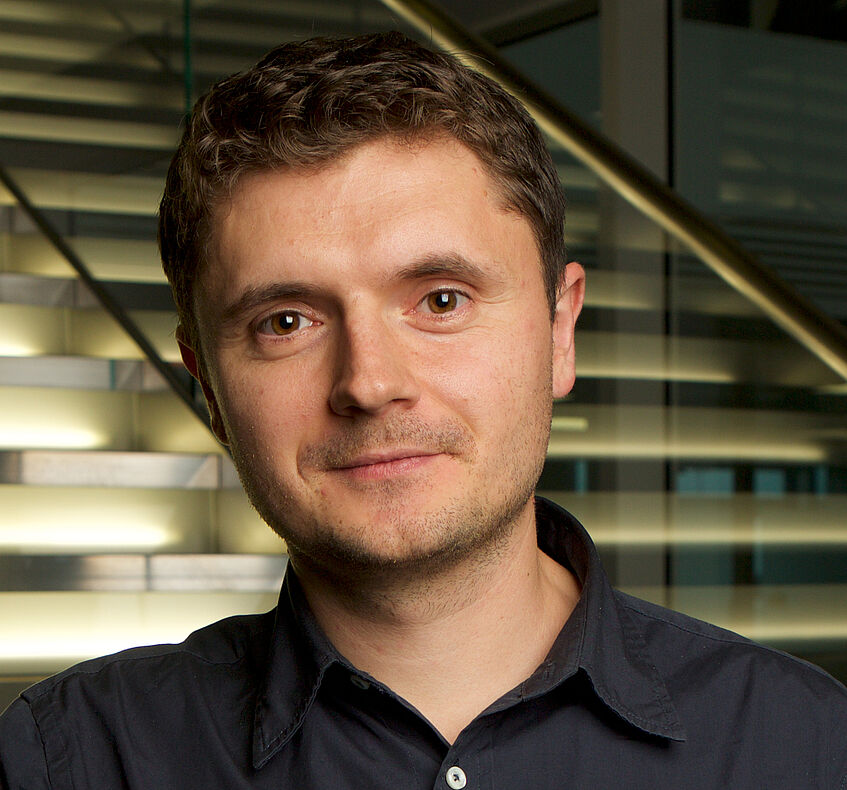
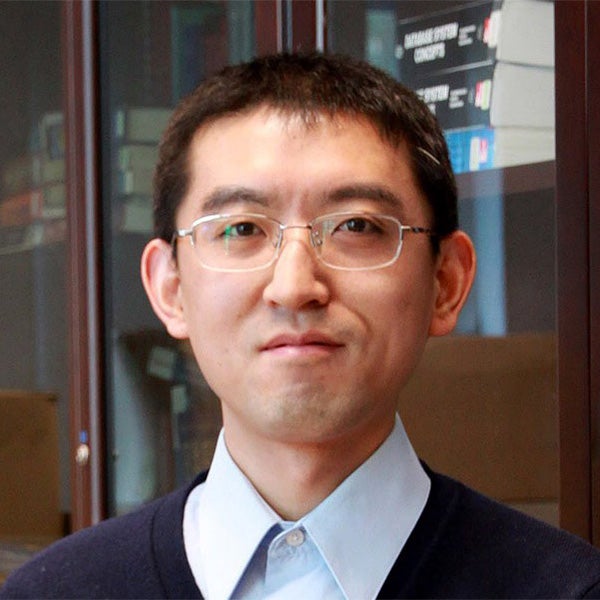
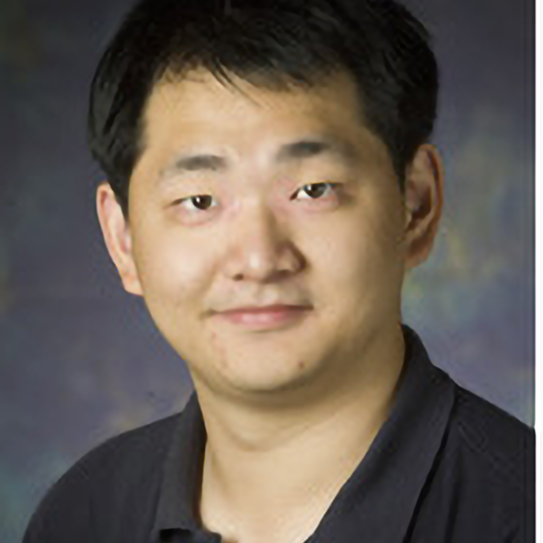
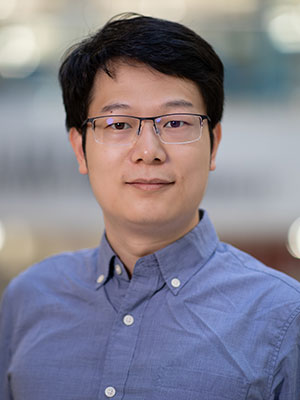
Zining Zhu is an Assistant Professor at the Department of Computer Science at Stevens Institute of Technology, affiliated with the Stevens Institute for Artificial Intelligence (SIAI) and the Center for Research Toward Advancing Financial Technologies (CRAFT). He leads the Explainable and Controllable AI Lab, focusing on foundational and applied research in model interpretability, natural language explanations, and safe AI deployment. His work bridges theoretical advancements and practical applications in NLP and AI systems. Education: PhD in Computer Science (2024, University of Toronto), advised by Frank Rudzicz; BS in Engineering Science (2019, University of Toronto). Prior to Stevens, he was a research intern at Amazon, Tencent, and Winterlight Labs. Research Interests : Explainable AI and Model Interpretability Natural Language Processing and Large Language Models Societal Implications and Safe AI Deployments Knowledge Editing and Model Intervention Publications : Recent work emphasizes explainability in LLMs, dataset effects, and financial AI applications. Key papers include NAACL’s Outstanding Paper Award-winning ACCORD and tutorials on LLM explanations. Awards : Top Reviewer at NeurIPS (2023), Ontario Graduate Scholarship (2022-2023), and Vector Institute grants (2020-2023). Teaching : Instructors CS 584 (Natural Language Processing) and CS 810 (Explainable NLP). Extensive TA experience at University of Toronto. Labs : Leads the Explainable and Controllable AI Lab, fostering research into trustworthy AI systems.
Dan Alistarh is a Professor at the Institute of Science and Technology Austria (IST Austria) and leads the Deep Algorithms and Systems Lab (DASLab). His research focuses on efficient algorithms and systems for machine learning, including distributed optimization, sparse and quantized neural networks, and scalable training/inference techniques. He holds a PhD from École Polytechnique Fédérale de Lausanne (EPFL) and has held positions at MIT, Microsoft Research, and ETH Zurich. Research interests: Optimization for data analysis, parallel and distributed optimization, efficient machine learning algorithms, and distributed systems. Collaborations include work on optimization under uncertainty with Immanuel Bomze, Radu Bot, and others. Publications span top venues like NeurIPS, ICML, and DISC, with notable contributions in model compression (e.g., GPTQ, SparseGPT), communication-efficient distributed training, and concurrency algorithms. Awards include ERC grants and best paper awards. He advises a team of PhD students and postdocs, and his lab's tools are widely used (e.g., GitHub repositories). His work has been adopted in industry (e.g., OpenAI, Neural Magic).
Aranya Chakrabortty is a Professor and Associate Department Head for Research in the Electrical and Computer Engineering Department at North Carolina State University, affiliated with the FREEDM Systems Center. He holds the University Faculty Scholar title (2019) and was elevated to IEEE Fellow in 2025. His career includes a postdoctoral stint at the University of Washington (2008-2009) and faculty roles at Texas Tech University (2009-2010) before joining NC State in 2010. He served as a NSF Program Director from 2020-2024. Education: PhD (2008), MEng (2005) from Rensselaer Polytechnic Institute, and BEng (2004) from Jadavpur University, India. Research focuses on control systems theory applied to power grids, including wide-area control with synchrophasor technology, integration of renewables, machine learning-based controls, and cyber-security. Recent work emphasizes electric vehicle charging control, distributed energy resource dispatch, and resilient control architectures. Key awards include the NSF CAREER Award (2011), NSF Director’s Superior Accomplishment Award (2022), and IEEE Fellow distinction (2025). His group develops advanced control methodologies for power systems, with applications in grid stability, adaptive systems, and secure cyber-physical infrastructure. Current projects include AI-enabled tools for grid cyber-hardening and reinforcement learning for multi-agent systems. Awards and recognitions span academic excellence (e.g., Allen B. Dumont Prize for top PhD graduate) to NSF leadership accolades. His teaching includes graduate courses on power systems stability and optimal control. Active in IEEE Transactions editorial roles and conference leadership, he bridges theoretical control science with practical grid challenges through interdisciplinary collaboration.
Eduard Gorbunov is a Tenure-Track Assistant Professor at the Mohamed Bin Zayed University of Artificial Intelligence (MBZUAI) , where he focuses on Stochastic Optimization, Distributed Optimization, Derivative-Free Optimization, and Variational Inequalities. His work bridges theoretical advancements with practical applications in Machine Learning and Federated Learning. Education: PhD in Computer Science (2021), Moscow Institute of Physics and Technology (MIPT), advised by Alexander Gasnikov and Peter Richtárik MSc in Applied Mathematics (2020), MIPT BSc in Applied Mathematics (2018), MIPT Research Trends: Key contributions to Heavy-Tailed Noise Analysis in Stochastic Optimization Communication-Efficient Methods for Distributed/Federated Learning Byzantine-Robust Algorithms with Partial Participation Gradient Compression and Adaptive Optimization Techniques Awards & Grants: Ilya Segalovich Award (2019) A. M. Raigorodskii Scholarship (2020, 2021) Outstanding Reviewer at NeurIPS 2022 and ICML 2022 Huawei Scholarship for Academic Achievements (2019) Leadership: Action Editor at Transactions on Machine Learning Research (TMLR) (2024) Area Chair at NeurIPS (2025)
Fei Dou is an Assistant Professor in the School of Computing at the University of Georgia, which operates under the Franklin College of Arts and Sciences. He joined UGA in August 2023 and serves as Graduate Program Faculty. His office is located in the Boyd Research and Education Center. He holds a Ph.D. and M.S. in Computer Science and Engineering from the University of Connecticut, both completed in 2023. Dr. Dou's research spans several key areas of computer science with particular focus on: Machine learning systems : Federated learning, reinforcement learning, and self-supervised techniques Wireless sensing : Healthcare monitoring using WiFi signals and contactless sensing Networked systems : Underwater sensor networks and secure communication protocols Applied AI : Education technology, precision agriculture, and indoor positioning His recent publications (2021-2025) demonstrate strong emphasis on federated learning adaptations for resource-constrained environments, healthcare applications using novel sensing methodologies, and security solutions for underwater networks. A consistent theme involves developing efficient machine learning techniques that operate in challenging real-world conditions while preserving privacy and security.
Saeed Ghadimi is an Assistant Professor at the University of Waterloo, with affiliations in Data Analytics, Applied Operations Research, and Energy Market research groups. His work focuses on developing advanced optimization algorithms for stochastic systems, machine learning applications, and decision-making under uncertainty. He is particularly noted for contributions to bilevel programming, quantum optimal control, and robust regression techniques with missing data. Research interests include optimization theory, stochastic programming, and interdisciplinary applications in energy systems and public policy. His methodologies often address nonconvexity, nonstationarity, and high-dimensionality challenges. Recent work emphasizes projection-free algorithms, adversarial robustness in regression, and parametric cost function approximations for multistage problems. He maintains a personal webpage at https://sites.google.com/view/sghadimi .
Giovanni Iacca is an Associate Professor at the University of Trento's Department of Information Engineering and Computer Science (DISI), where he serves as Coordinator of the Master's Degree in Computer Science and Deputy Director of the Information Engineering and Computer Science Doctoral School. He leads the Distributed Intelligence and Optimization Lab (DIOL) and teaches courses including Computer Architectures, Introduction to Machine Learning, Bio-Inspired Artificial Intelligence, and Optimization Techniques across multiple academic programs. PhD in Computer Science, University of Jyväskylä, Finland (2011) MSc in Computer Engineering, Technical University of Bari, Italy (2006) Professor Iacca's research focuses on the intersection of evolutionary computation, machine learning, and optimization with applications in distributed systems and robotics. His work spans from theoretical foundations of memetic computing and multi-objective optimization to practical implementations in soft robotics, embedded systems, and healthcare applications. Recent efforts emphasize interpretable AI, particularly in reinforcement learning contexts, where his team develops methods to make decision processes transparent while maintaining performance. His research bridges the gap between fundamental algorithmic development and real-world engineering challenges, with over 15 years of industrial experience in optimization applied to engineering, logistics, and scheduling. Analysis of his recent publications reveals a strong trend toward interpretable AI systems, particularly in reinforcement learning contexts, with significant contributions to federated learning optimization, evolutionary neural architecture search, and applications in healthcare scheduling. His work consistently combines evolutionary algorithms with modern machine learning techniques to solve complex optimization problems across diverse domains including soft robotics, batteryless edge computing, and supply chain management. Scientific Awards: EvoApplications Best Paper Award (2017) UKCI AWARENESS Best Paper Award (2012) IEEE CIS Outstanding Student-Paper Award (2011) Professor Iacca actively supervises a large research group with numerous PhD students across multiple doctoral programs, including Information Engineering and Computer Science, Industrial Innovation, and the National PhD in Artificial Intelligence for Society. His lab has secured significant research funding through collaborations with industry partners and international research consortia. Recent grants support work on interpretable reinforcement learning, federated optimization, and applications of evolutionary computation in healthcare and robotics. He has also been appointed to editorial roles for prestigious journals including IEEE Transactions on Evolutionary Computation and Evolutionary Intelligence. The Distributed Intelligence and Optimization Lab (DIOL) under Professor Iacca's leadership comprises over 30 researchers including postdocs, PhD students, and master's students. The lab maintains strong international collaborations and has developed specialized expertise in evolutionary computation, interpretable AI, and optimization for embedded systems. Current projects include work on the EIC Pathfinder Challenge "Awareness Inside," development of methods for batteryless edge intelligence, and applications of evolutionary algorithms to healthcare scheduling problems.
Qi Lei is an Assistant Professor of Mathematics and Data Science at New York University's Courant Institute of Mathematical Sciences and Center for Data Science. By courtesy, they also hold an Assistant Professor position in Computer Science. Dr. Lei is a member of the CILVR lab and Math and Data groups, and serves as a Google DeepMind Faculty. Dr. Lei's research focuses on machine learning, deep learning, and optimization , with particular interest in developing sample- and computationally efficient algorithms for fundamental machine learning problems. Their recent work spans several key areas: Data and Model Pruning Data Reconstruction Attack and Defense Theoretical Foundations of Pre-trained Models Analysis of Dr. Lei's recent publications reveals a strong focus on theoretical foundations of machine learning, particularly around data efficiency, model robustness, and privacy. Their work bridges theoretical guarantees with practical applications, demonstrating expertise in both the mathematical underpinnings of learning algorithms and their real-world implementation. A notable trend is the increasing focus on privacy-preserving machine learning and defenses against data reconstruction attacks. Dr. Lei is actively involved in academic service, having organized the minisymposium "Efficient Computation and Learning with Randomized Sampling and Pruning" at SIAM MDS 2024 and delivered invited talks at prestigious venues including IMS@NUS, ICSDS, Harvard Statistics, and workshops on Data-driven PDE-based inverse problems and Large Language Models. As an educator and mentor, Dr. Lei welcomes self-motivated students to collaborate on research projects. They advise prospective Ph.D. applicants to apply through Courant Mathematics or the Center for Data Science programs at NYU, where they are actively involved in supervising graduate research.
Alexander Vladimirovich Gasnikov is a Leading Researcher at the National Research University Higher School of Economics (HSE), specifically within the Faculty of Computer Science, the Institute of Artificial Intelligence and Digital Sciences, and the International Laboratory of Stochastic Algorithms and Multidimensional Data Analysis. He has been working at HSE since 2015 and has accumulated 17 years of scientific and teaching experience. Gasnikov received his academic credentials from the Moscow Institute of Physics and Technology (State University). He earned his Bachelor's degree in Applied Mathematics and Physics in 2004, followed by a Master's degree in the same specialty in 2006. He completed postgraduate studies at MIPT from 2006-2007, earned his Candidate of Physical and Mathematical Sciences degree in 2007, was awarded the academic title of Associate Professor in 2011, and ultimately received his Doctor of Physical and Mathematical Sciences degree in 2016 with a dissertation on 'Efficient Numerical Methods for Finding Equilibria in Large Transport Networks.' Gasnikov's research focuses on convex optimization, mathematical modeling of traffic flows, and Markov processes. His work bridges theoretical mathematics with practical applications in optimization algorithms and transportation science. He has made significant contributions to developing efficient numerical methods for optimization problems, particularly in the context of large-scale networks and stochastic settings. His research has evolved from traditional optimization methods to more advanced techniques involving stochasticity, decentralization, and applications to machine learning problems. His publications demonstrate expertise in both theoretical analysis (establishing convergence rates, lower bounds) and practical algorithm development across multiple prestigious venues including Journal of Optimization Theory and Applications, SIAM Journal on Optimization, and top machine learning conferences like NeurIPS. Gasnikov has received recognition including a bonus for publication in international peer-reviewed journals (2019-2021) and has served as a member of the editorial board of the 'Siberian Journal of Computational Mathematics' since 2017. As a supervisor, Gasnikov has guided multiple doctoral candidates, including Alexander Ogaltsov, Titov A. A. (2023), and Tyurin A. I. (2020) for Candidate of Sciences degrees, and Dvurechensky P. E. (2020) for a Doctor of Science degree. His research has been supported by grants from the President of Russia (MD-1320.2018.1) and the Russian Foundation for Basic Research (18-31-20005 mol_a_ved). Gasnikov's work contributes significantly to the theoretical foundations of optimization algorithms that power modern artificial intelligence systems. His leadership in the International Laboratory of Stochastic Algorithms and Multidimensional Data Analysis positions him at the forefront of research connecting mathematical optimization with practical applications in machine learning and data science.
Zhaozhuo Xu is an Assistant Professor of Computer Science at Stevens Institute of Technology, affiliated with the Charles V. Schaefer, Jr. School of Engineering and Science. He joined Stevens in 2024 after earning his Ph.D. in Computer Science from Rice University. His research focuses on machine learning, randomized algorithms, and efficient computing for large-scale AI systems. Xu has been recognized with the AAAI 2025 New Faculty Highlights award. His work emphasizes scalable and sustainable AI, including compression techniques for large language models (LLMs), efficient inference methods, and ethical considerations in AI deployment. Xu has served as an Area Chair for the 2024 Conference on Empirical Methods in Natural Language Processing (EMNLP) and is a member of IEEE and AAAI. Key research trends in Xu's articles include optimizing LLM efficiency through sparsity, quantization, and adaptive architectures; probing ethical boundaries in AI (e.g., copyright compliance); and developing multi-agent systems for financial decision-making. His contributions span theoretical foundations (e.g., randomized algorithms) and applied systems (e.g., on-device LLM execution). Awards: AAAI 2025 New Faculty Highlights Grants/Advising: No explicit grants listed; advising status unclear due to no student listings Labs/Teams: No dedicated lab/team named in provided texts
Tong Zhang is a Professor in the Siebel School of Computing and Data Science at the University of Illinois Urbana-Champaign (UIUC), part of the Grainger College of Engineering. He previously held positions at The Hong Kong University of Science and Technology, Rutgers University, and industry roles at IBM, Yahoo, Google, Baidu, and Tencent. His research focuses on machine learning algorithms, statistical methods for big data, and their applications in areas like reinforcement learning, generative AI, and optimization. Education: PhD in Computer Science (Stanford University, 1999), MS in Computer Science (Stanford University, 1996), BA in Mathematics and Computer Science (Cornell University, 1994). Research Interests: Machine learning theory, large language models, reinforcement learning, adversarial attacks, optimization algorithms, and ethical AI. His work emphasizes robustness, generalization, and scalable methods for complex systems. Awards: ASA Fellow, IEEE Fellow, IMS Fellow, and recipient of multiple top-tier conference awards (e.g., NAACL 2024 Outstanding Papers). Labs/Teams: Leads a research group at UIUC with active collaborations in areas like generative AI and embodied agents. Supervised over 20 PhD students and postdocs, many now in academia and industry leadership roles.
Shiqian Ma is a Professor of Computational Applied Mathematics and Operations Research at Rice University. His research focuses on optimization, machine learning, and their applications. He holds a Ph.D. from Columbia University, an M.S. from the Chinese Academy of Sciences, and a B.S. from Peking University. Education: Ph.D. in Industrial Engineering and Operations Research, Columbia University (2011) M.S. in Computational Mathematics, Chinese Academy of Sciences (2006) B.S. in Mathematics, Peking University (2003) Research Interests: Dr. Ma specializes in optimization theory and algorithms, particularly in stochastic approximation, distributed/decentralized optimization, and applications in machine learning. His work addresses challenges in non-convex optimization, Riemannian geometry-based methods, and high-dimensional data analysis. Advising and Grants: While no specific advisees or grant details are listed, his academic role suggests involvement in mentoring graduate students and securing research funding in computational mathematics and operations research. Labs/Teams: Not explicitly mentioned, but his research likely involves collaborations within Rice's computational and applied mathematics community.
Quanyan Zhu is an Associate Professor in the Department of Electrical and Computer Engineering at the NYU Tandon School of Engineering, affiliated with the NYU Center for Cybersecurity (CCS). His research focuses on game theory, control theory, cyber-physical systems, risk management, smart grids, and wireless networks. He leads the Laboratory for Agile and Resilient Complex Systems, exploring game-theoretic tools for system design. He is also part of the Center for Advanced Technology in Telecommunications (CATT) and the USDOT Tier 1 University Transportation Center C2SMARTER. Contact: quanyan.zhu@nyu.edu , Room 1004, 370 Jay Street, Brooklyn, NY. Research Interests: Game Theory & Strategic Decision-Making Cyber-Physical Systems Security Resilient Control Systems Smart Grid & Energy Networks Wireless Network Optimization AI/ML for Cybersecurity Labs & Collaborations: Laboratory for Agile and Resilient Complex Systems NYU Center for Cybersecurity (CCS) Center for Advanced Technology in Telecommunications (CATT) C2SMARTER (USDOT Tier 1 UTC) Key Contributions: Develops game-theoretic frameworks for cybersecurity, resilient control systems, and strategic AI applications. His work bridges theory and practice, addressing challenges in autonomous systems, cyber-physical security, and smart infrastructure.
Dr. Xin Chen is an Assistant Professor in the Department of Electrical and Computer Engineering at Texas A&M University, leading the SPEED Lab. His research focuses on scalable learning-assisted control, distributed algorithms, and human-cyber-physical systems, particularly in advancing grid decarbonization and sustainable power systems. He holds a Ph.D. from Harvard University and postdoctoral experience at MIT. Dr. Chen received notable awards including the IEEE PES Outstanding Doctoral Dissertation Award and multiple best paper awards. His work integrates control theory, optimization, and machine learning to address challenges in power grid reliability and sustainability. Key contributions include model-free optimization frameworks, carbon-aware power flow models, and distributed inverter coordination. Recent research highlights include developing regression-based zeroth-order optimization algorithms and carbon-aware demand response mechanisms. He has secured grants from the U.S. Department of Energy and NSF, addressing grid resilience and climate impacts. His lab collaborates on projects such as the Grid Resilience and Climate Change Impacts Analysis (GRACI) initiative.
Abhishek Roy is an Assistant Professor in the Department of Statistics at Texas A&M University, affiliated with the College of Arts & Sciences. His role involves teaching and research in statistical methodologies and their applications in machine learning and optimization. Research interests focus on stochastic optimization, adversarial machine learning, algorithmic fairness, Bayesian inference, nonconvex optimization, and game theory. He explores robust statistical algorithms under complex data conditions (e.g., heavy-tailed distributions, Markovian dependencies) and develops defenses against adversarial attacks in clustering and predictive models. His work intersects computational statistics with modern AI challenges, emphasizing theoretical foundations and practical implementations. Recent publications (2023–2025) emphasize online covariance estimation, nonstationary optimization, and quantifying fairness in machine learning models. Earlier works (2018–2022) address adversarial attacks, moving target defenses, and game-theoretic security frameworks. No scientific awards are explicitly mentioned. Details on grants or advising roles are not provided in the available texts. He is based in Blocker 415E with contact information listed on the Texas A&M Statistics Department website.