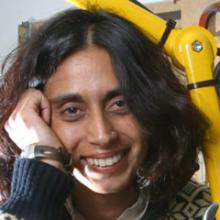
Eleonora Riva Sanseverino is a Full Professor of Engineering at the University of Palermo, affiliated with the Department of Electrical Engineering (DEIM). She serves as a delegate for coordination of European programs at the university. Her research focuses on renewable energy integration, smart grids, energy storage systems, and blockchain applications in energy markets. She actively supervises master’s theses on topics such as offshore wind energy in Sicily, energy transition strategies, and microgrid optimization. Her work includes analyzing the impact of renewable energy sources on grid stability, developing energy management systems, and exploring blockchain solutions for energy communities. She teaches courses on electroenergy systems and advises on projects related to electric vehicle infrastructure, hydrogen utilization, and grid-forming converter technologies. Her office hours are held at DEIM and the Caltanissetta Educational Center.
Luca Giaccone is an Associate Professor at the Department of Energy (DENERG) of the Polytechnic University of Turin. He is a member of the Academic Senate and the Committee for Teaching Coordination. His research focuses on bioelectricity, computational electromagnetics, dosimetry, and the application of machine learning in engineering. He leads the CADEMA research group and has supervised PhD student Junlong Liu in electrical engineering. Giaccone has extensive experience in funded projects including WPT-SAFE and SAFECHARGE, addressing electromagnetic exposure safety in automotive and medical contexts. He holds the Mentoring Polito Project (M2P) award (2023). His teaching includes courses on fundamentals of electrical engineering and electrical machines within the College of Electrical and Energy Engineering. Research Interests : Giaccone’s work spans numerical dosimetry for human exposure assessment, wireless power transfer systems, and electromagnetic compatibility. He develops data-driven models for traction motors and investigates the impact of electromagnetic fields on medical devices like pacemakers. His projects emphasize safety compliance with international guidelines and the mitigation of magnetic fields in urban and industrial environments. Key Projects : WPT-SAFE (2025–2027): Electromagnetic modeling for automotive wireless charging systems SAFECHARGE (2024–2026): Evaluating exposure risks for electric vehicle charging systems Virtual Human Models (2015): Validation for electromagnetic safety analysis Awards : Recognized with the Polito M2P Mentoring award for contributions to academic mentoring. Consulting & Industry Collaboration : Advised on magnetic field mitigation for welding equipment, substations, and industrial facilities, focusing on occupational safety and environmental compliance.
Massimo MIGLIORINI is a contract professor specializing in biodiversity, soil ecology, and arthropod biology. His research focuses on ecological communities in Mediterranean environments, including studies on soil microarthropods, invasive species, and disturbance ecology. He has conducted extensive work on oribatid mites, carabid beetles, and their roles as bioindicators of environmental health. His investigations span topics ranging from the molecular biology of Drosophila germ cells to the conservation of Mediterranean pine woodlands. Key research areas include the impact of human activities (e.g., agriculture, urbanization, fire) on soil biodiversity, the structure of forest ecosystems, and the use of taxonomic and functional approaches to assess community dynamics. He has contributed to debates on neutral theory, stochastic processes in biodiversity, and the application of geometric models to biological measurements. His publications highlight interdisciplinary approaches, blending field studies, molecular analyses, and theoretical ecology. While no awards are explicitly mentioned, his work demonstrates sustained contributions to understanding Mediterranean and global ecological systems. No advising or grant details are provided in the text.
Rita Vignani is a Professor at the University of Siena engaged in molecular biology, genetics, and archaeology-focused research. Her work centers on plant and animal genetic diversity, particularly in agricultural contexts like viticulture and pig breeding. She specializes in applying DNA analysis techniques for food traceability, archaeological investigations, and conservation efforts. Her research integrates lab-based molecular methods with bioinformatics to study historical and modern biological samples. Key projects include analyzing ancient grapevine seeds from Bronze Age sites in Iran, tracing genetic diversity in Tuscan grape varieties, and developing protocols for wine authenticity verification. She has also contributed to the conservation of endangered species such as the Giglio Island mouflon and the Cinta Senese pig breed. Rita has received the Premio Antico Fattore 2013 award for her work in molecular authentication of wines. Her interdisciplinary approach bridges archaeology, botany, and animal science, with a focus on applying genetic tools to solve both historical and contemporary agricultural challenges. Ongoing projects include investigations into medieval olive trees and the application of non-invasive sampling techniques for ancient biological materials.
Giancarlo Rampazzo is a Senior Researcher at the Department of Environmental Sciences, Computer Science and Statistics, Ca' Foscari University of Venice. His research focuses on geochemistry, atmospheric processes, and environmental monitoring, particularly in coastal and urban contexts. He specializes in particulate matter analysis, air quality assessment, and the hydrological dynamics of lagoon ecosystems. His work integrates advanced analytical techniques such as ion beam-induced luminescence (IBIL), X-ray absorption spectroscopy (XAS), and isotopic tracing to study pollutants, aerosol sources, and environmental interactions. Key research areas include the Venice Lagoon's water cycle, airport and road dust emissions, and the impact of human activities on coastal environments. Rampazzo collaborates with institutions like INFN (National Institute for Nuclear Physics) and has contributed to projects on PM2.5 dispersion modeling, secondary aerosol formation, and sustainable transportation policies in Venice. His publications emphasize methodological rigor and interdisciplinary approaches to environmental challenges.
Francesco Paolo Deflorio is an Associate Professor in the Department of Environmental, Land and Infrastructure Engineering (DIATI) at the Polytechnic University of Turin , where he has been active since 2018. He is affiliated with the CARS@PoliTO Interdepartmental Center for Automotive Research and Sustainable Mobility and teaches courses such as Models and Technologies for Traffic and Transport , Simulation Tools for Transport Systems , and Traffic Observation, Simulation, and Regulation across various engineering programs including Civil, Mechanical, Automotive, and Environmental Engineering. He is a member of the PhD collegium in Civil and Environmental Engineering and supervises several doctoral candidates. Education: PhD in Automation and Computerization of Transport, Polytechnic University of Turin Master of Science in Civil Engineering, Polytechnic University of Bari His research focuses on transportation systems engineering , with emphasis on intelligent transport systems (ITS), electric mobility, sustainable logistics, traffic modeling, and simulation. He has made significant contributions to dynamic route guidance, wireless sensor networks for traffic safety, and in-motion charging for electric vehicles. His recent work explores autonomous vehicle integration, energy efficiency in freight transport, and smart road technologies. The analysis of his recent publications reveals a consistent trend toward sustainable and intelligent mobility systems , combining engineering modeling with real-world applications in urban and freight transport. His work bridges theoretical simulation with practical ITS deployment, particularly in energy-efficient and safety-enhancing technologies. Scientific Participations: President, Italian Association for Traffic and Transport Engineering – Piedmont and Aosta Valley Section (2012–2018) Full Member, Italian Society of Transport Teachers (SIDT) (2006–present) He leads numerous research initiatives, including the EPIGNOSIS project under the PNRR, and has served as scientific manager for over 20 funded research and commercial projects related to vehicle energy efficiency, traffic control, and smart mobility. He advises doctoral students on topics such as autonomous vehicle integration and electric mobility modeling. His research is supported by collaborations with regional authorities, industry partners, and foundations. Labs and Research Centers: Member, CARS@PoliTO – Center for Automotive Research and Sustainable Mobility Involved in the CLIK Laboratory (“Contamination Lab and Innovation Kitchen”) for innovative teaching challenges
Claudia Perini is an Associate Professor at the Department of Life Sciences , Università degli Studi di Siena. Her research focuses on Mycology , particularly in the areas of fungal biodiversity, conservation strategies, and taxonomy. She teaches courses on Mycology for first-cycle degrees and Biodiversity and Conservation of Fungi for second-cycle programs. Recent work includes advancements in edible fungi cultivation and taxonomic revisions of fungal genera. Research keywords: Mycology, Fungal Ecology, Conservation Biology Selected article trends: Edible fungi productivity, Taxonomic diversity, Conservation tools
Paolo Biagi is a Senior Researcher in the Department of Asian and North African Studies at Ca' Foscari University of Venice. He is a leading figure in prehistoric archaeology, with a career spanning decades of fieldwork and research across South Asia, the Caucasus, the Mediterranean, and Eastern Europe. His work is deeply interdisciplinary, combining excavation, lithic analysis, archaeometry, and environmental studies. His research interests encompass a broad temporal and geographical scope, focusing on the Paleolithic, Mesolithic, Neolithic, and Bronze Ages. Key themes include lithic technology, obsidian sourcing and circulation, shell middens, prehistoric mining, human-environment interactions, and the settlement of coastal and highland zones. He has conducted extensive fieldwork in the Indus Valley (Pakistan), the Arabian Sea coast, the Caucasus (Georgia), Greece (Pindus Mountains, Lemnos), Italy (Alps, Liguria), and Eastern Europe (Romania, Ukraine). His recent publications (2023–2025) reveal a continued focus on the prehistoric archaeology of the Indus Valley and the Caucasus, with detailed studies on chert and obsidian exploitation, Bronze Age monumental landscapes, and the Upper Paleolithic of the Aegean. His work often addresses broader theoretical questions about human adaptation, technological change, and long-distance exchange networks in prehistory. Archaeometric Analysis of the Obsidian Assembly from Hodoni/Hodony (Banat, Romania) Building the Lesser Caucasus Monumental Landscape during the Bronze Age Exploitation, Transport, and Circulation of the Rohri Hills Chert (Sindh, Pakistan) The Late Palaeolithic and Mesolithic Settlement of Northern Italy Forgotten Islands of the Past: The Archaeology of the Northern Coast of the Arabian Sea Paolo Biagi has not been mentioned as receiving specific scientific awards or prizes in the provided text. His career is marked by a prolific output of scholarly articles, book chapters, and monographs, as well as editorial work for academic volumes. He has collaborated with a wide network of international researchers. He has supervised and collaborated with numerous researchers and students, as evidenced by his co-authorship on many publications with scholars such as Elisabetta Starnini, Renato Nisbet, Bernard Gratuze, and Nikos Efstratiou. While specific grant details are not listed, his long-term field projects in Pakistan and the Caucasus suggest sustained funding from national and international sources. His research is closely tied to field projects and excavation teams rather than a formal laboratory. His work is associated with the research infrastructure of Ca' Foscari University, particularly within the Department of Asian and North African Studies. His teams have conducted surveys and excavations in remote and challenging environments, from the Thar Desert in Pakistan to the highlands of the Pindus and the Javakheti Plateau.
Marco Filippo Torchio is an Associate Professor in the Department of Energy (DENERG) at Politecnico di Torino. He holds membership in both the College of Electrical and Energy Engineering and the College of Mechanical, Aerospace and Automotive Engineering. His primary teaching responsibility is Applied Thermodynamics and Heat Transfer across multiple engineering programs including Energy Engineering, Automotive Engineering, and Mechanical Engineering for over a decade. Dr. Torchio's research focuses on several key areas in energy engineering and sustainability. His primary interests include combined heat and power systems, energy and environmental sustainability, development of environmental indicators and indices, and thermodynamic irreversibility analysis. He has developed expertise in analyzing energy, exergetic, and environmental indicators for sustainability monitoring, with particular attention to OECD-PISA indicators. His work also encompasses fuel cell technology and thermophysical property measurement, including the design and construction of experimental apparatus for thermal conductivity and specific heat measurements. His publication record shows a clear evolution from more purely technical energy engineering topics toward broader sustainability assessment frameworks that integrate economic, environmental, and social dimensions. While his early work (2003-2010) focused heavily on combined heat and power systems, district heating, and fuel cell technology, his recent publications (2019-2024) increasingly address sustainability indicators, environmental cost impacts, and well-being metrics. Dr. Torchio has demonstrated strong commitment to engineering education through his consistent teaching of Applied Thermodynamics and Heat Transfer across multiple engineering disciplines. His work aligns with Sustainable Development Goals 4 (Quality education), 7 (Affordable and clean energy), and 12 (Responsible consumption and production), contributing to both technical education and sustainable energy development.
Alessio Orsino is a Research Fellow at the Department of Computer Science, Modeling, Electronics and Systems Engineering (DIMES) at the University of Calabria. His academic journey includes a Ph.D. in Information and Communication Technologies (ICT) awarded in January 2025, a Master’s in Computer Engineering (Big Data Analytics and Data Science) from 2020, and a Bachelor’s in Computer Engineering from 2018, all from the University of Calabria. He also served as a visiting researcher at the University of Cambridge’s Department of Computer Science and Technology (July–December 2023). His research focuses on big data analysis, distributed computing, machine learning, and edge-cloud integration. He contributes to projects like ASPIDE (Exascale programming models) and INSIDER (cloud-edge IoT deployment optimization), funded by EU Horizon 2020 and Italy’s MIUR. He is a contract professor at DIMES and a member of the Scalable Computing and Cloud Laboratory (SCALab). Orsino’s work bridges theoretical and applied computing, emphasizing efficient machine learning on resource-constrained systems and real-time adaptive models for edge environments. His publications address edge-cloud continuum challenges, adversarial robustness in AI, and scalable big data frameworks. Key grants include Horizon 2020 (ASPIDE) and PRIN 2022 (INSIDER), supporting his interdisciplinary research in hybrid cloud-edge infrastructures and data-intensive applications. He has authored/co-authored a book on big data programming and collaborates internationally through visiting positions and lab engagements.
Sergio Greco is Full Professor at University of Calabria's DIMES Department, Coordinator of the Computer Engineering Degree, and Vice-president of the Computer Engineering national Group. His research spans database theory, data integration, inconsistent data processing, and computational logic. Research Focus: Development of theoretical frameworks for data management including argumentation frameworks, knowledge base querying under inconsistency, and decentralized learning systems. Recent work integrates machine learning with formal reasoning methods. Honors: Best Paper Award at International Conference on Logic Programming (2020) Best Paper Award at RuleML Symposium (2014) Leads projects on cybersecurity and data management funded by EU and Italian Ministry of Research, coordinating national and international research groups.
Gianfranco Pergher is a Professor specializing in Agricultural Machinery at the University of Udine, Department of Agricultural and Environmental Sciences. His research focuses on sustainable agricultural practices, precision agriculture technologies, and occupational safety in farming. He has contributed extensively to studies on pesticide application optimization, alternative weed control methods, and biomass energy utilization. Key areas of interest include vineyard management, tractor safety, and bioenergy systems. Education details are not explicitly documented here, but his academic position suggests advanced qualifications in agricultural engineering or related fields. His work often intersects with environmental sustainability, emphasizing both economic feasibility and ecological responsibility. Research interests prominently feature spray technology innovation, agricultural safety protocol development, and the technical and economic evaluation of renewable energy solutions. Notable projects include the Demetra farm safety survey and studies on biomass-fueled weed control systems. Publications highlight trends in precision agriculture, sustainable pest management, and accident prevention in agricultural settings. His work on tractor rollover dynamics and chainsaw safety underscores a commitment to reducing workplace hazards. Collaborative efforts with regional stakeholders have advanced practical applications of research findings. Grants and funding details are not explicitly mentioned, but his prolific publication record indicates sustained research activity. Future directions likely include expanding bioenergy applications and improving farm safety through technological and procedural innovations.
Christian Micheloni is an Associate Professor at the University of Udine's Department of Mathematics and Computer Science. He holds a Laurea (cum Laude) and Ph.D. in Computer Science from the University of Udine (2002 and 2006 respectively). His research focuses on Active Vision, Pattern Recognition, and Resource Aware Networks. He has been involved in European projects like MUSAS (2008-2010) and HAMLet (2006-2008), and collaborates with international research centers and industry. Key research areas include person re-identification using neural networks, trajectory analysis, and camera network optimization. He has received the Best Paper Award at the International Conference on Distributed Smart Cameras (2014) and serves as an editor for the IEEE Journal of Selected Topics in Signal Processing. His work emphasizes real-time surveillance systems and adaptive sensor networks to manage computational and power constraints. Micheloni teaches courses like Artificial Vision and advises post-doctoral researchers. He maintains an active lab (AVires Lab) and offers post-doctoral positions. His publications span journals like IEEE Transactions on Pattern Analysis and Machine Intelligence, and conferences such as CVPR and ICCV.
Arti Ahluwalia is Professor of Bioengineering at the University of Pisa's School of Engineering, affiliated with the Research Center 'E. Piaggio' and serving as Director of the Interuniversity Center for the Promotion of the 3Rs Principles in Teaching and Research (Centro 3R). With a multidisciplinary background spanning physics, instrumentation science, and bioengineering, her research integrates biomaterials, microfabrication, and computational modeling. Research focuses on human-based organ and system models using soft materials, cell derivatives, and intelligent bioreactor design. Current projects include: in-vitro models of metabolic disease/aging, nanotoxicology, advanced imaging, and open biomedical engineering education. Her work has produced commercialized multicompartment bioreactors through spin-off companies Kirkstall Ltd and IVTech srl. Recent publications demonstrate strong emphasis on open-source medical devices, 3Rs principles implementation, and computational platforms for nanotoxicology and cellular construct design. Key themes include regulatory frameworks for open-source medical technology, diagnostic tools for resource-limited settings, and ethical alternatives to animal testing. Teaching encompasses Biomechanics of Tissues, Micro & Nanobioscopy, and Design Principles for Bionics Engineering across undergraduate and graduate biomedical engineering programs.
Gigliola Vaglini is Full Professor of Computer Engineering at the University of Pisa's Department of Information Engineering. She teaches Software Systems Engineering and Databases, with research focusing on formal specification and verification of concurrent/distributed systems. Her work integrates model checking methodologies with machine learning techniques for industrial anomaly detection and mobile security applications. She has participated in multiple research projects funded by the Italian Ministry of University and Research, National Research Council, and European Community. Research Focus: Vaglini's work bridges theoretical computer science and practical applications, developing verification frameworks for complex systems while creating AI solutions for real-world problems. Her current investigations span swarm intelligence coordination, structural monitoring via digital twins, and multimodal deep learning architectures. Recent publications demonstrate cross-disciplinary approaches combining formal methods with machine learning, particularly in environmental monitoring, structural engineering, and neural architecture design. This reflects a consistent pattern of translating theoretical computer science concepts into applied technological solutions.