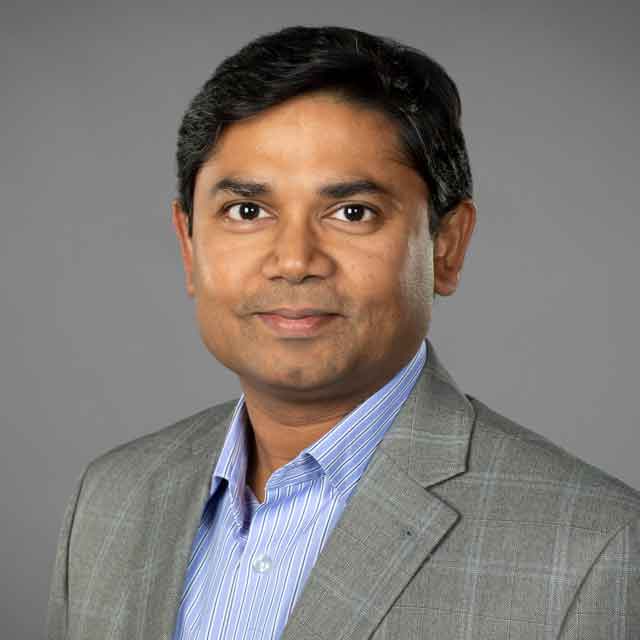
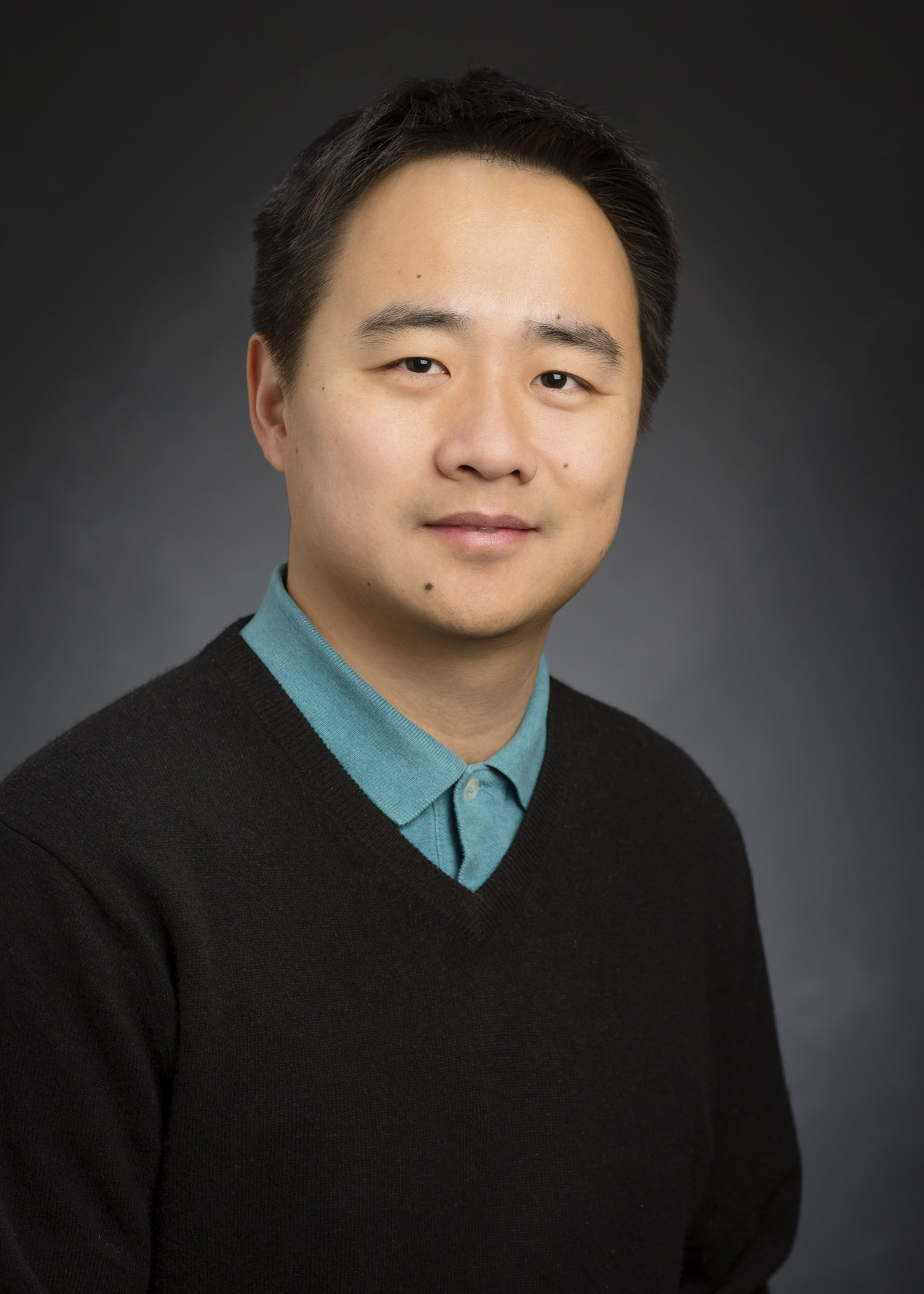
Shamik Sengupta is the Ralph E. and Rose A. Hoeper Professor at the University of Nevada, Reno (UNR) , where he serves as Professor in the Department of Computer Science & Engineering and Executive Director of the Cybersecurity Center . He holds a PhD in Computer Science from the University of Central Florida (2007) and a BE in Computer Science from Jadavpur University (2002). IEEE Senior Member Director, UNR Cybersecurity Center NSF CAREER Award Recipient
Dr. Dima Alhadidi is an Associate Professor in the School of Computer Science at the University of Windsor. His research focuses on Cybersecurity, Data Privacy, Machine Learning, and their applications in Health Informatics, Cloud Computing, and Smart Grids. He holds a PhD in Computer Science and Software Engineering from Concordia University (2010). His research interests include secure federated learning frameworks, privacy-preserving techniques for genomic and health data, and adversarial machine learning defenses. Notable contributions include Trustformer (2025), secure aggregation methods in federated learning, and hybrid malware classification using deep learning. Recent work emphasizes mitigating membership inference attacks and developing privacy-preserving analytics for distributed systems. Dr. Alhadidi actively advises graduate students on topics like social network clustering (NICASN 2022) and federated learning security. No scientific awards are explicitly listed. His research spans theoretical frameworks (e.g., λ_AOP calculus) to applied systems in smart grids and healthcare informatics.
Professor Jinho Choi is a Chair and Professor in Radio Frequency at the School of Electrical and Mechanical Engineering, University of Adelaide, Australia. He holds a B.E. (magna cum laude) from Sogang University, and M.S.E. and Ph.D. degrees from KAIST. His research focuses on advancing wireless communication and sensing technologies, particularly in IoT, 5G/6G, non-terrestrial networks, and cognitive satellite systems. He authored three books and has been recognized with the 1999 EURASIP Best Paper Award, IEEE Fellowship, and inclusion in Stanford's Top 2% Scientists list since 2020. He currently serves as a Senior Editor of IEEE Wireless Communications Letters and editorial roles in multiple journals. Education: B.E. (Electronics Engineering) - Sogang University, Seoul (1989) M.S.E. (Electrical Engineering) - KAIST (1991) Ph.D. (Electrical Engineering) - KAIST (1994) Research Interests: Professor Choi's work addresses connectivity challenges in non-terrestrial networks, leveraging statistical signal processing and machine learning. Current projects include UAV-assisted LEO satellite technologies, cognitive satellite radios, and semantic communication protocols. His research aims to enhance global connectivity and efficiency in terrestrial and satellite networks. Publications: His recent work spans semantic communication, satellite quantum key distribution, federated learning optimization, and coverage diversity in mega constellations. These studies reflect trends in 6G-ready technologies, AI-driven communication systems, and hybrid satellite-terrestrial networks. Awards: 1999 Best Paper Award for Signal Processing (EURASIP) IEEE Fellow (Leadership in technical excellence) World’s Top 2% Scientists (Stanford University, 2020–present) Grants & Supervision: As a senior academic, he oversees grants in wireless innovation and has advised numerous students on advanced communication systems. His lab focuses on next-generation networks, integrating theoretical insights with practical implementations. Labs/Teams: Active in interdisciplinary teams at the University of Adelaide, collaborating on projects funded by industry and government to bridge gaps between academic research and real-world applications.
Javier Saez Valero is a Professor in the Department of Biochemistry and Molecular Biology at Miguel Hernandez University of Elche, where he also serves as Deputy Vice Rector for Research - Management of Research and Transfer. His academic roles include teaching Biochemistry I in the Bachelor's in Medicine program and courses in the Master's in Neuroscience and Master's in Translational Neuropsychopharmacology, while coordinating the Doctorate in Neuroscience program. His research focuses on neurochemical mechanisms in neurodegenerative disorders, particularly Alzheimer's disease biomarker discovery in cerebrospinal fluid and blood. Key areas include NMDA receptor dynamics, ACE2 fragments, apolipoprotein E interactions, and reelin signaling pathways. His work bridges molecular biochemistry with clinical neurology to develop diagnostic tools and understand disease pathogenesis. Analysis of his 15 most recent publications (2023-2025) reveals a dominant focus on Alzheimer's disease biomarkers, especially CSF protein alterations (nicastrin, ADAM10, ACE2). Significant themes include synaptic vs extrasynaptic receptor distributions, COVID-19 neurological impacts, and nanocarrier drug delivery limitations. His work consistently targets translational applications for early diagnosis and therapeutic development. No scientific awards were documented in the provided information. Professor Saez Valero provides academic guidance through tutorials and course coordination across undergraduate, master's, and doctoral programs. As Doctorate in Neuroscience coordinator, he oversees research training while managing institutional research transfer activities through the Vice Rectorate. His teaching spans biochemistry, neuropathology, and molecular neuroscience with laboratory components. He operates from Laboratory 241 at the Institute of Neurosciences (Campus de San Juan), a joint research center with CSIC. His work integrates with the university's Vice Rectorate for Research and Transfer, facilitating technology transfer and collaborative neuroscience research within the university's research infrastructure.
Ray Reutzel is a Research Fellow at the Emma Eccles Jones College of Education and Human Services , affiliated with the Center for the School of the Future at Utah State University. His work focuses on literacy instruction, reading comprehension strategies, and teacher training in early childhood education. Research Fellow, Center for the School of the Future, Utah State University Research Interests: Dr. Reutzel’s research emphasizes improving reading instruction through evidence-based practices, including silent reading scaffolding, alphabet knowledge instruction, and text structure analysis. He explores the role of teacher preparation programs, Common Core Standards implementation, and literacy environment design in elementary education. Article Trends: His publications highlight strategies for supporting struggling readers, integrating informational texts into writing instruction, and enhancing fluency and comprehension through structured interventions. Key subfields include collaborative teaching, text structure pedagogy, and educational policy analysis. Labs & Teams: He contributes to research at the Center for the School of the Future, focusing on innovative literacy frameworks and classroom practices.
Stefan Decker is a full University Professor (Universitätsprofessor) at RWTH Aachen University, Germany, where he heads the Chair of Information Systems and Databases (Informatik 5) within the Faculty of Mathematics, Computer Science and Natural Sciences. He is actively involved in teaching, research, and the supervision of numerous ongoing and completed doctoral, master’s, and bachelor theses. Education & Academic Background Doctorate (Dr. rer. pol.) – field of Information Systems or related (exact institution/year not stated in text). Appointed as University Professor and Chair of Information Systems and Databases at RWTH Aachen University. Research Interests Prof. Decker’s work lies at the intersection of databases, knowledge graphs, semantic web technologies, data science, and cybersecurity . He investigates architectures and algorithms for large-scale, privacy-preserving, decentralized data analytics , develops ontology-driven information systems , and explores the use of large language models (LLMs) for educational technology, anomaly detection, and incident-response playbooks. Additional focal areas include smart energy systems, mixed-reality learning environments, FAIR data principles, and federated machine learning . Scientific Contributions & Trends His recent publications (2022-2025) demonstrate a clear trend toward explainable AI, LLM-enhanced systems, secure data spaces, and semantic interoperability . Key contributions include novel anomaly-detection frameworks for encrypted power-grid communications, knowledge-graph-driven chatbots for higher-education support, and methodological advances in decentralized analytics and FAIR data sharing. These works are disseminated in top-tier venues such as AAAI, IEEE ISGT Europe, ESWC, IDEAL, and various Springer LNCS and IEEE Transactions. Supervision & Grants Doctoral Theses Advised: A. T. Neumann – “Chatbots as professional companions in large-scale community information systems” (2024) S. M. Welten – “Methods for practical data sharing and decentralized analytics” (2025) Master’s Theses Co-Advised: A. R. Küsters – “Object-centric process constraints using variable bindings” (2025) Additionally supervising more than 30 ongoing bachelor, master, and doctoral projects covering topics such as LLM-driven cybersecurity playbooks, knowledge-graph construction for German law, privacy-preserving analytics in smart grids, and mixed-reality learning agents. Principal investigator or senior researcher in large collaborative projects including NFDI4DS, WestAI, champI4.0ns and several EU/national initiatives on sovereign data spaces and AI services. Labs & Teams Prof. Decker leads the Information Systems & Databases (DBIS) Research Group . The group operates well-equipped laboratories for knowledge-graph engineering, mixed-reality applications, privacy-enhancing technologies, and secure distributed analytics . Current team size exceeds 30 researchers including PhD candidates, postdocs, and scientific programmers, supported by national and EU funding streams.
Darko Etinger is an Associate Professor and currently serves as the Dean of the Faculty of Informatics at Juraj Dobrila University of Pula in Croatia. His academic career spans over two decades with significant contributions to the fields of information systems, educational technology, and artificial intelligence. He teaches undergraduate courses including Artificial Intelligence, Business Information Systems, Business Process Management, ICT Fundamentals, Information Systems, Introduction to Artificial Intelligence, and Multimedia Systems. At the graduate level, he teaches Development of IT Solutions, IT Management, Modelling and Simulation, and Project Management. He also supervises doctoral research in Management of Information Technologies in Education. Dr. Etinger's research interests span several key areas in computer science and education technology. He has made significant contributions to understanding how information and communication technologies can support children with special educational needs, as evidenced by his 2024 and 2025 books on the topic. His work also focuses on business process management, educational data mining, and the application of artificial intelligence in educational contexts. His 2024 book 'Introduction to R and RStudio' demonstrates his commitment to data science education. Analysis of his recent publications shows a strong focus on practical applications of technology in education and business. His work spans educational robotics, learning management systems analysis, business process modeling, and the application of large language models in healthcare. He has a particular interest in how technology can be made accessible and beneficial for diverse learner populations, including those with special needs. His research often takes a human-centered approach, examining not just the technology itself but how it's adopted and used by end users. His 2025 bibliometric analysis of metaverse security demonstrates his ability to tackle emerging technological challenges. Associate Professor at Faculty of Informatics, Juraj Dobrila University of Pula Current Dean of Faculty of Informatics Author of multiple publications on educational technology and information systems Supervisor for numerous graduate theses on educational technology topics Active participant in EDIH Adria project as evidenced by 2025 publications Researcher in educational robotics implementation in Croatian schools Dr. Etinger has advised numerous students completing their theses, with a focus on educational technology applications. His research has been published in various international conferences and journals including IEEE Engineering Management Review, Procedia Computer Science, and System Dynamics Review. His current research appears to be heavily focused on the EDIH Adria project, which is a European Digital Innovation Hub initiative focusing on technology transfer and business innovation. He maintains an active research program with publications spanning from 2003 to the present, demonstrating sustained scholarly contribution to his fields of expertise.
Jian Peng is an Associate Professor and Willett Faculty Fellow at the University of Illinois at Urbana-Champaign with primary appointment in the Department of Computer Science and courtesy appointments in the College of Medicine. He holds affiliate positions at the Institute of Genomic Biology, Cancer Center at Illinois, and National Center for Supercomputing Applications. His research integrates computational biology and machine learning, focusing on functional genomics, cancer genomics, neurodegenerative diseases, deep learning architectures, and reinforcement learning applications in biological domains. His work bridges algorithmic development with real-world biomedical challenges. Analysis of recent publications (2020-2021) reveals strong emphasis on machine learning applications in drug design, protein engineering, and computational biology. Key technical themes include generative modeling for molecular structures, reinforcement learning advancements, causal inference frameworks, and novel computer vision approaches. The work demonstrates consistent interdisciplinary innovation across computational and biological domains. Major Scientific Awards: Donald Biggar Willett Faculty Fellow (2020) Overton Prize - ISCB (2020) Dean's Award for Excellence in Research (2020) C.W. Gear Junior Faculty Award (2019) NSF CAREER Award (2017-2022) Sloan Research Fellowship (2016) He leads significant research initiatives including co-directing the NSF AI Institute's Molecular Maker Lab and an ASAP collaborative grant for Parkinson's disease research. His students have secured faculty positions at leading institutions including Georgia Tech and University of Washington.
Nancy McCreary Waters serves as Associate Professor in the Department of Biology at Lafayette College, where she has taught since 1985. Her instructional responsibilities include Ecology, Limnology, Environmental Biology, General Biology 102, and a VaST course in Reproductive Technology. Education Ph.D., Notre Dame University Research Focus : Dr. Waters investigates freshwater ecosystem dynamics with emphasis on population/community-level phenomena and physiological adaptations to environmental stressors. Her work spans stream invertebrate distribution, aquatic macrophyte-invertebrate interactions, and mercury toxicity pathways in polluted ecosystems. Laboratory approaches integrate field sampling, greenhouse mesocosms, and analytical chemistry to examine competition, disturbance responses, and bioremediation potential. Publication Trends : Recent work (2000-2005) demonstrates consistent focus on macroinvertebrate community responses to reservoirs, colonization timelines, and pollution impacts. Publications frequently feature undergraduate co-authors examining diel limnological cycles and mercury-resistant bacterial symbiosis, reflecting her commitment to student-integrated research in applied freshwater ecology. Mentorship & Training : She supervises academic-year and summer research projects through programs like the Nalven Summer Fellowship. Student collaborations address stream invertebrate colonization, macrophyte competition dynamics, and effluent pollution impacts, with outcomes presented at conferences like Sigma Xi and the National Conference for Undergraduate Research. Laboratory Operations : The Waters lab conducts multi-method investigations of freshwater systems using field sites in New Jersey streams and lakes. Current projects analyze mercury-bacteria-plant interactions, macroinvertebrate community assembly on artificial substrates, and physiological adaptations of submersed macrophytes under nutrient stress.
Paul Major is Professor and Chair of the School of Dentistry, Senior Associate Dean (Dental Affairs), and ACFD Project Lead at the University of Alberta's Faculty of Medicine & Dentistry. He leads the Orthodontic Biomechanics Research Group and co-founded the Inter-disciplinary Airway Research Clinic (I-ARC), driving innovation across dental academia and clinical practice. His educational background includes a Doctorate of Dental Surgery (DDS) from the University of Alberta (1980) followed by MSc and Orthodontic Specialty training at the same institution (1988). He joined the academic staff in 1989 and served as Director of the TMD/Orofacial Pain Program (1991-2001) and Orthodontic Graduate Program (2001-2010). Dr. Major's research centers on Orthodontic Biomechanics , 3D Craniofacial Imaging , and Ultrasound Imaging . His Orthodontic Biomechanics Research Group developed the OSIM system for 3D force measurement on dental appliances, while his imaging work pioneers reconstruction of craniofacial structures and periodontal ultrasound diagnostics. Through the I-ARC, he leads interdisciplinary studies on pediatric sleep-disordered breathing, examining craniofacial morphology and orthodontic interventions. Analysis of his 190+ publications reveals consistent innovation in biomechanical analysis of orthodontic appliances, machine learning for dental image processing, and hydrogel development for intraoral imaging. Recent work bridges dentistry with engineering through projects on dental aerosols, clear aligner mechanics, and airway measurement software. Dr. Major has supervised over 75 graduate students while maintaining clinical teaching duties despite administrative leadership roles. His research is supported by grants enabling the OSIM system development and interdisciplinary I-ARC projects. He directs the Orthodontic Biomechanics Research Group's experimental biomechanics work and the I-ARC's clinical research team, which integrates pediatric ENT, pulmonology, radiology, and biomedical engineering specialists to advance treatment of pediatric sleep apnea through craniofacial analysis and innovative imaging techniques.
Aaqib Saeed is an Assistant Professor in the Department of Industrial Design at Eindhoven University of Technology. His research focuses on Human-Centric AI, Federated Learning, Self-Supervised Learning, and Audio Understanding, with applications in Personal Health. He holds a PhD (cum laude) from TU/e and an MSc (cum laude) from the University of Twente. Education: PhD in Computer Science (cum laude), TU/e (2021) MSc in Computer Science (cum laude), University of Twente (2018) Research Interests: Development of robust federated learning frameworks for decentralized data Self-supervised learning for audio and physiological signal analysis AI-driven solutions for healthcare monitoring Key Contributions: DeltaMask: Reducing communication overhead in federated fine-tuning FedNS: Mitigating noisy decentralized data in federated learning Labeling Chaos to Learning Harmony: Handling label noise in FL Professional Experience: Visiting Industrial Fellow, University of Cambridge (2023) Research Scientist, Philips Research (2019–2023) Research Internships: Google Research, TNO/EIT Digital Awards: UT Scholarship (MSc) Cum Laude awards for both PhD and MSc Labs/Teams: EAISI Health, EAISI Foundational, Computational Design Systems.
Monika Kuffer is a Full Professor at the University of Twente's Faculty of Geo-Information Science and Earth Observation (ITC), holding additional roles as Associate Professor in the Department of Urban and Regional Planning and Geo-Information Management. She leads research in urban remote sensing, deprived area monitoring, and sustainable urban development. Her work integrates spatial statistics, machine learning, and citizen science to inform inclusive city planning. Education: PhD in Human Geography & GIS from the University of Twente MSc in Human Geography (TU Munich) MSc in Geographic Information Science (University of London) Research Interests: Urban Remote Sensing Slum and Deprivation Mapping Climate Adaptation Strategies Citizen Science for Urban Inequalities Earth Observation Policy Support Articles Trends: Recent work emphasizes multi-city climate adaptation analyses, thermal inequality assessments in African slums, and scalable deprivation modelling frameworks like IDEAMAPS. Projects like ONEKANA and NightWatch highlight fusion of EO data with community-driven methods. Awards: 2022 EO4all Prize for innovative Earth Observation applications Advising & Grants: Supervised 3 PhD/MSc projects. Active in global initiatives like the EU's Knowledge Centre on EO and the UN's SDG frameworks. Leads datasets on deprivation (e.g., IDeAMapSudan). Labs/Teams: Core member of ITC's Urban Remote Sensing and GeoAI teams. Collaborates with the Digital Society Institute for interdisciplinary urban research.
Meng Jiang is an Assistant Professor in the Department of Energy and Process Engineering at the Norwegian University of Science and Technology (NTNU). He is affiliated with NTNU’s Industrial Ecology Programme and collaborates closely with Prof. Edgar Hertwich. His research focuses on input-output analysis, material flow analysis, and modeling resource efficiency and circular economy strategies, particularly in chemical systems. He holds a Ph.D. in Chemical Engineering (Industrial Ecology) from Tsinghua University, China, and has additional academic training at the University of Washington (Seattle) and professional experience at the International Institute for Applied Systems Analysis (IIASA) and the United Nations Industrial Development Organization (UNIDO). Research interests include resource management, material flow analysis, and the intersection of chemical systems with sustainability. His work emphasizes China’s material and carbon footprints, circular economy transitions, and socio-economic-environmental interactions. He has contributed to frameworks like the Planetary Pressure-Adjusted Human Development Index and studies on regional disparities in resource use. Publications highlight contributions to understanding China’s fossil-based chemical production, machinery carbon footprints, and urban low-carbon transitions. Collaborations span global institutions, including presentations at the International Conference on Industrial Ecology (ISIE) and Gordon Research Conferences. Teaching includes courses on input-output analysis and environmental trade impacts. His work bridges academic research with practical policy implications, addressing global sustainability challenges through data-driven methodologies.
Prof. Akash Kumar is a Professor at the Chair of Embedded Systems at Ruhr University Bochum, Germany. He previously held professorships at TU Dresden (2015–2024) and the National University of Singapore (NUS; 2011–2015). His research focuses on design automation of embedded systems, reliability optimization, and approximate computing, with a strong emphasis on FPGA and emerging technologies. He leads projects such as Lean-MICS (DFG-funded) and SecuREFET-II, addressing cross-layer reliability and secure circuits. Education: PhD in Multimedia Multiprocessor Systems from Eindhoven University of Technology (TUe) and NUS (2005–2009), Master of Technological Design (Embedded Systems) from NUS (2003–2004), and B.Eng (Computer Engineering) from NUS (1999–2002, First Class Honours). Research interests span embedded systems, reconfigurable architectures, and hardware-software co-design. His work includes optimizing energy efficiency, fault tolerance, and cross-layer approximation techniques. Recent publications highlight advancements in FPGA-based accelerators, machine learning optimizations, and mixed-criticality systems. Active in grants and leadership, Kumar is Principal Investigator on multiple DFG and industry-funded projects, emphasizing collaborative research in distributed computing and approximate architectures. His contributions bridge theory and practice, with applications in edge AI, IoT, and cybersecurity.
Ilan Shomorony is an Assistant Professor at the University of Illinois at Urbana-Champaign, affiliated with the Grainger College of Engineering, Electrical and Computer Engineering Department, and Coordinated Science Lab. He also holds an affiliation with the Carl R. Woese Institute for Genomic Biology. His research focuses on genomic data science, information theory, and their applications in DNA storage, bioinformatics, and machine learning. He has received an NSF CAREER Award for his work on genomic data science. Shomorony’s academic journey includes roles in multiple departments and labs, reflecting his interdisciplinary approach. His recent publications explore topics such as molecular communication channel capacity, metagenomic binning, and efficient sequence alignment algorithms. Education: Not explicitly stated in provided text, but his academic roles suggest advanced degrees in electrical engineering or computer science. Research Interests: His work bridges theoretical information theory and practical genomic applications. Key areas include DNA storage systems, algorithmic improvements for sequence analysis, and the application of machine learning to biological data. He develops novel coding schemes for molecular data storage and explores fundamental limits of genomic data reassembly. Grants & Awards: NSF CAREER Award (2021): Supported research on genomic data science, integrating informational theory and algorithm design. Labs & Teams: Active in the Coordinated Science Lab and collaborates with the Carl R. Woese Institute for Genomic Biology, emphasizing interdisciplinary research in genomics and computational biology.