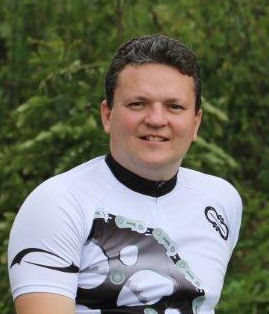
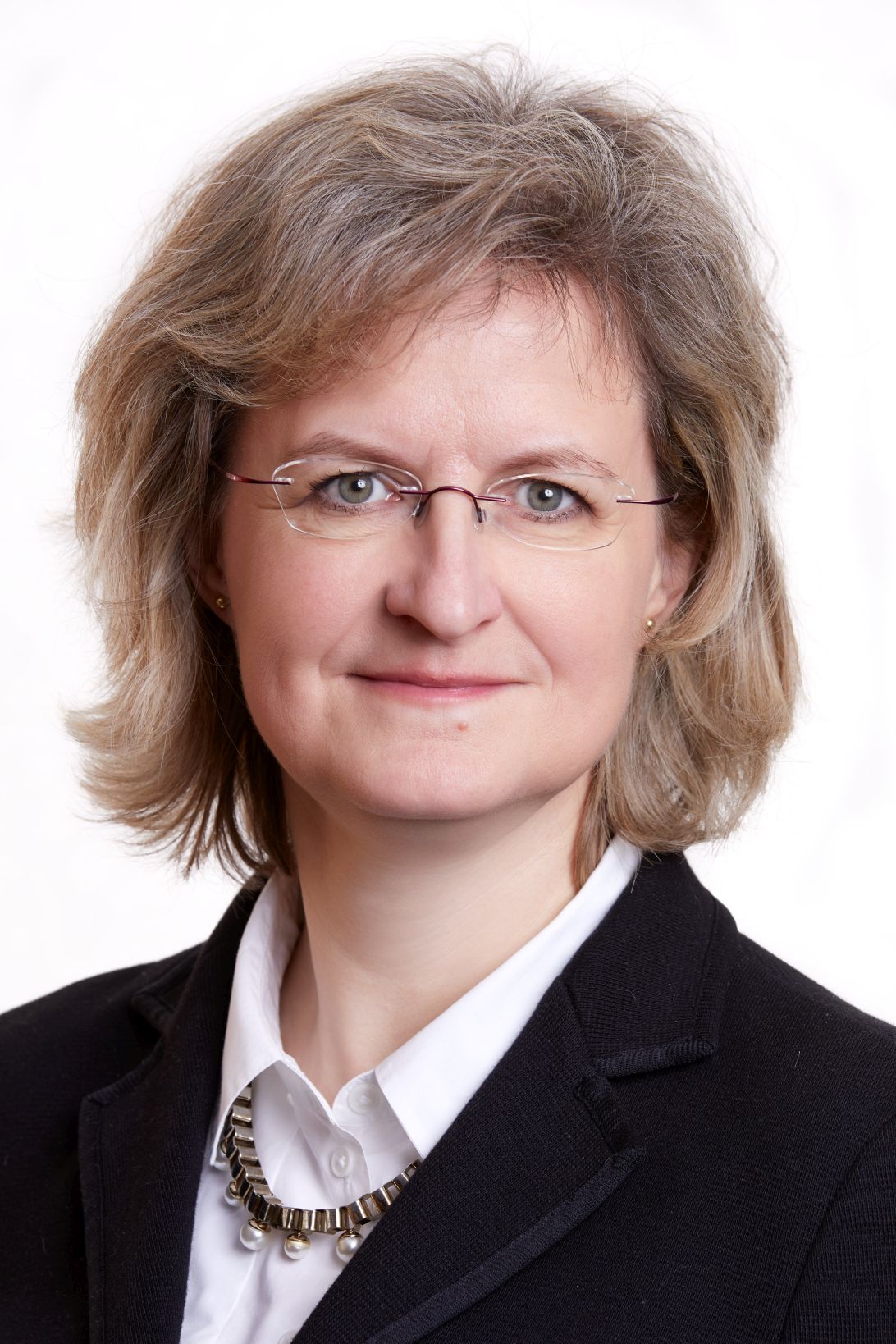
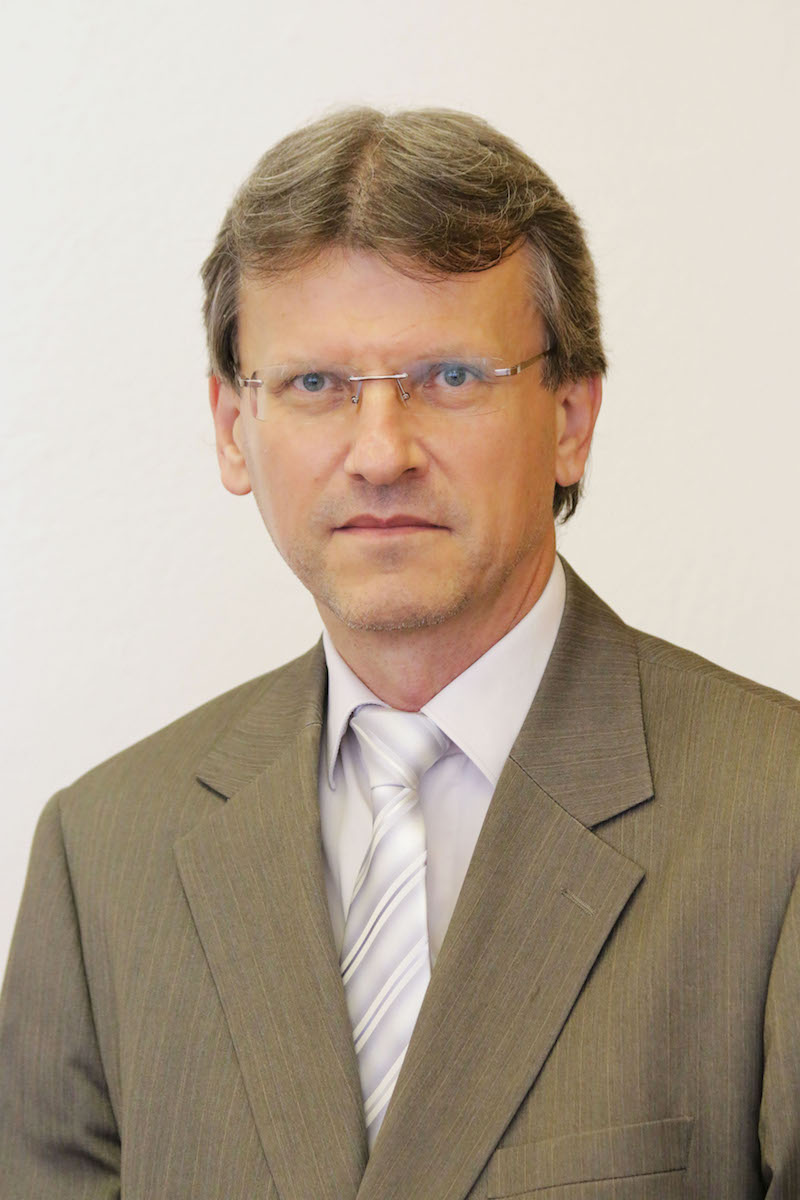
Beáta Stehlíková is a Professor at the Department of Economics within the Faculty of Economics and Business at PANEUROPEAN UNIVERSITY PEVŠ. Her research focuses on the intersection of environmental economics, biodiversity, and quantitative methods. Fields: Environmental Economics, Quantitative Methods, Public Health, Neural Networks Email: stehlikovab2@gmail.com Research Trends: Her recent work emphasizes the application of quantitative techniques to environmental health challenges, including geoenvironmental impacts on public health and socioeconomic polarization in Slovakia. She has also explored neural networks in medical geochemistry. Grants: She has contributed to projects funded by VEGA (e.g., VEGA No. 2/0002/19, 2/0026/15) and APVV (APVV-15-0722), focusing on industrial revolution implications, income stratification, and environmental health impacts.
Anton Trushechkin is a Leading Researcher at the Steklov Mathematical Institute and Professor at Moscow Institute of Physics and Technology. His work bridges mathematical physics and quantum information science, with breakthrough contributions to quantum master equations and quantum cryptography security proofs. Research develops rigorous mathematical frameworks for open quantum systems, including derivations of quantum kinetic equations applicable to non-Markovian regimes. Created security proofs for practical quantum key distribution protocols that account for real-world device imperfections. Awards and Honors: Moscow Government Award for Young Scientists (2022) CIHR Postdoctoral Fellowship BrainsCAN Postdoctoral Fellowship Teaches quantum computation and quantum cryptography courses while supervising graduate students in mathematical physics. Currently leads research on quantum network correlations at Heinrich Heine University Düsseldorf.
Vladimír Siládi, PhD, serves as Assistant Professor and Head of the Department of Computer Science at Matej Bel University in Banská Bystrica, Slovakia, where he has held academic positions since 1995. His current roles include Project Coordinator for the Virtual University initiative and Registration Authority for SlovakGrid, with prior experience as a part-time Assistant Professor at Slovak University of Technology. Educational Background: PhD in Computer Science, Slovak University of Technology in Bratislava (1997-2007) Master's in Theology, Comenius University in Bratislava (2003-2008) Master's in Secondary Education and Teaching (cum laude) and PaedDr. (EdD), Matej Bel University (1988-1993, 2005) High School Diploma, GMN Banská Štiavnica (1984-1988) His research centers on Grid Computing architectures , parallel processing techniques , and security frameworks for distributed systems . Specialized expertise includes GPU-accelerated algorithms for NP-hard problems, trust models in ad hoc grid environments, and cloud-based educational platforms. His interdisciplinary work bridges computer science with environmental modeling and psychological applications through virtual reality systems. Publication analysis reveals a consistent focus on computational optimization across 12 major works (2006-2014), with recent contributions emphasizing trust intersection models for decentralized grids (2012-2013) and cloud-based educational infrastructure (2013). Earlier works established foundations in GPU-accelerated network topology optimization and genetic algorithms for irregular systems (2006-2010). Scientific Awards: No awards documented in source materials Project leadership includes the Virtual University of Matej Bel University (ITMS 26110230077) coordinating 85 team members across 280 courses, plus TEMPUS-FLACE distance learning development (1998-2000). His registration authority role for SlovakGrid since 2009 supports national research infrastructure. Departmental leadership involves managing the Computer Science team while teaching core courses in algorithms, grid technologies, and GPU programming, maintaining consultation hours for student engagement.
Associate Professor Dušan Medved serves at the Department of Electrical Power Engineering within the Faculty of Electrical Engineering and Informatics at the Technical University of Košice. As Head of the Electricity Generation and Distribution Department, he plays a key leadership role in shaping electrical engineering education and research at the institution. His extensive teaching portfolio spans fundamental electrical engineering concepts through to specialized topics in power systems and renewable energy technologies. Medved's research interests primarily focus on power system modeling, renewable energy integration, and smart grid technologies . His work demonstrates particular expertise in photovoltaic systems, electric vehicle integration, electromagnetic field analysis, and power quality assessment. He has developed significant expertise in using EMTP-ATP software for power system transient analysis and has published extensively on modeling techniques for electrical power engineering applications. An analysis of his recent publications (2023-2024) reveals a strong emphasis on the integration of renewable energy sources into power grids, with particular attention to photovoltaic systems, electric vehicle charging infrastructure, and energy storage solutions. His work bridges theoretical modeling with practical implementation challenges, addressing critical issues such as grid stability during high renewable penetration, optimal sizing of energy storage systems, and maximizing self-consumption of locally generated renewable energy. The interdisciplinary nature of his research connects electrical engineering with energy economics and environmental considerations. Medved has been actively involved in teaching a wide range of courses including Fundamentals of Electrical Engineering, Electrothermal Technology, Electrical Energy Transformations, and Modeling in Electrical Power Engineering. His teaching materials demonstrate a hands-on approach with practical assignments covering resistance furnace design, arc steelmaking furnace analysis, and power system modeling using EMTP-ATP software. His commitment to education is evident in his development of numerous teaching resources and student projects spanning from 2012 to the present.
Štefan Rehák is an Associate Professor and Head of the Department of Public Administration and Regional Development at the University of Economics in Bratislava. His academic career focuses on regional development, urban economics, and spatial analysis. He holds a PhD and serves as a ResearchGate profiled scholar in regional sciences. Affiliations: Faculty of Economics and Finance, University of Economics in Bratislava Key Roles: Department Head, Academic Researcher, Educator His research explores human capital migration, innovation ecosystems, and spatial economic dynamics. Specific interests include hedonic pricing models for real estate, local economic impacts of major events, and regional policy effectiveness. Research Trends: Over 60+ publications emphasize urban development, creativity metrics in economies, and EU regional policy analysis. Grants & Projects: Led projects on university impact assessment (UNIREG), creative economy stimulation (KRENAR), and EU cohesion policy evaluations. He advises on regional innovation strategies and collaborates internationally on topics like smart cities and academic patenting trends.
Anton Hovana is a Senior Lecturer and Deputy Head of the Department of Applied Mathematics and Informatics at the Faculty of Mechanical Engineering, Technical University of Košice (TUKE). He has been actively contributing to the academic community through teaching, research, and administrative roles within the department. Dr. Hovana completed his educational journey at Pavol Jozef Šafárik University in Košice, earning a Bachelor's degree in interdisciplinary Mathematics-Chemistry (2011-2014), followed by a Master's degree in Mathematics-Chemistry Teacher Education (2014-2016), and ultimately a PhD in Applied Mathematics (2018-2020). His primary research focus lies in Non-additive Analysis , specifically exploring measure and integral theory, integral inequalities, and aggregation functions. Dr. Hovana's work contributes significantly to theoretical advancements in fuzzy integrals and their applications. His research bridges pure mathematical theory with practical applications in decision making and operational research. Analysis of Dr. Hovana's recent publications reveals a strong emphasis on theoretical developments in Sugeno integrals, Chebyshev-type inequalities, and other integral inequalities within non-additive measure frameworks. His work spans multiple prestigious journals including Fuzzy Sets and Systems and European Journal of Operational Research, demonstrating interdisciplinary impact across mathematics, operational research, and artificial intelligence. Dr. Hovana has received several notable awards for his scholarly contributions: Dean's Award of the Faculty of Law of the University of Prague (2020) Best Paper Award at the MDAI international conference in Milan (2019) Best PhD Presentation at the FSTA Conference (2018) As an active researcher, Dr. Hovana serves as Principal Investigator for project VVGS-2017-255 and as Co-investigator for multiple significant projects including VEGA 1/0243/23, APVV-21-0120, APVV-16-0337, SK-PL-18-0032, and KEGA 013TUKE-4/2020. His international collaboration is evidenced by academic visits to Lodz University of Technology in Poland during 2018-2019. Dr. Hovana is also a member of the Union of Slovak Mathematicians and Physicists, contributing to the broader mathematical community in Slovakia.
Szilárd Svitek is Assistant Professor and Head of the Department of Mathematics at the Faculty of Economics and Informatics, J. Selye University , Komárno, Slovakia. Holding a PhD in the Theory of Mathematics and Informatics Education, he has continuously served the university since 2018, leading curriculum development and research initiatives while lecturing in both Slovak and Hungarian. Education 2012–2015: Teaching of German Language & Literature and Mathematics – Faculty of Education, J. Selye University 2015–2017: Master’s continuation in the same programme – Faculty of Education, J. Selye University 2020–2024: PhD in Theory of Teaching Mathematics and Informatics – Faculty of Economics and Informatics, J. Selye University Research Focus His scholarly work straddles pure mathematics and mathematics education . In pure mathematics he investigates densities, distribution and convergence properties of numerical sequences, while in education he explores digital distance learning, comparative competences of Slovak and Hungarian secondary students, and innovative didactic methods including visualization and open-ended problem solving. Publications & Impact Since 2021 he has authored or co-authored 20 scholarly outputs indexed in Web of Science Core Collection, Scopus and Current Contents Connect, accruing 19 citations (10 without self-citations). His works appear in journals such as Mathematics (MDPI), Journal of Humanistic Mathematics and Annales Mathematicae et Informaticae . Grants & Projects VEGA 1/0663/19 (2019–2021): Analysis of science & mathematics education in secondary schools and innovation of subject-didactic content VEGA 1/0386/21 (2021–2023): Reasons for student success/failure in mathematics with emphasis on electronic distance education VEGA 1/0776/21 (2021–2023): Densities, distribution and convergence properties of number sequences Department Leadership & Collaboration As Head of the Department of Mathematics, he coordinates curriculum design, supervises junior colleagues and fosters international cooperation, notably through Erasmus+ partnerships and cross-border Slovak–Hungarian educational projects.
Pavel Povinec is a Professor of Physics at the Department of Nuclear Physics and Biophysics, Faculty of Mathematics, Physics and Informatics, Comenius University in Bratislava, Slovakia. He has held this position since 2006 and previously served as Head of the Laboratory at the International Atomic Energy Agency's Marine Environment Laboratories in Monaco from 1993 to 2005. His distinguished career spans over six decades in nuclear physics, environmental radioactivity, and isotope applications. His educational background includes: Physics (MSc.), Faculty of Natural Sciences, Comenius University (1960-1965) Tata Institute of Fundamental Research, Bombay (1969-1970) Physics (PhD), Comenius University (1974) Doctor of Sciences (DrSc.), Comenius University (1983) Povinec's research spans multiple disciplines with a focus on nuclear physics, environmental radioactivity, and isotope applications. His work includes investigations of rare nuclear processes and decays, double beta-decays, underground physics experiments, and the development of high-sensitive radioanalytical methods. He has made significant contributions to understanding radionuclides as tracers of environmental processes, climate change studies using isotope archives, and assessments of nuclear accident impacts including Chernobyl and Fukushima. His methodological innovations include the Povinec method for simultaneous activity and background measurement and the Povinec detector for H-3 and C-14 counting. His scientific contributions have been recognized with numerous prestigious awards: Fellow of the Royal Society of Chemistry (2023) Fellow of the European Academy of Sciences and Arts (2018) Hevesy Medal Award (2017) PROSE Award for best book in Environmental Sciences (2013) Nobel Prize for Peace as part of the IAEA team (2005) Ilkovič Medal Award, Slovak Academy of Sciences (2022) Povinec has supervised 21 MSc and 29 PhD students, including recent graduates Jakub Kvasniak (2023), Miloslava Bagínová (2023), and Veronika Palušová (2022). He has led numerous international research projects including CRESST, LEGEND, and NEMO/SuperNEMO collaborations, and has secured funding from the European Commission, IAEA, and Slovak research councils. His leadership extends to the development of the Centre for Nuclear and Accelerator Technologies (CENTA) as a major research facility. He directs research teams involved in underground physics experiments, marine radioactivity studies, and the development of advanced radioanalytical techniques. His laboratory participates in major international collaborations including the CRESST dark matter search experiment and the LEGEND neutrinoless double beta-decay project. He has organized multiple international oceanic cruises and developed numerous reference materials for marine radioactivity studies.
Zuzana Francová is an Associate Professor at the Department of Marketing, Faculty of Commerce, Bratislava University of Economics and Business. She serves as Vice-Dean for Education and has published extensively on retail, consumer behavior, and sustainable business practices. Her research spans electromobility, circular economy, consumer neuroscience, and CRM. She has contributed to academic literature through book chapters and peer-reviewed journal articles, often analyzing consumer attitudes and sustainable innovation. She participates in multiple VEGA research projects focused on integrated management standards, sustainable development, and consumer neuroscience applications in business optimization.
Patrik Richnák is an Associate Professor at the Department of Business Economy, Faculty of Economic Informatics, University of Economics in Bratislava. His academic work focuses on production management, logistics, and digital transformation in Slovak industrial enterprises. Academic Rank: Associate Professor Institution: University of Economics in Bratislava Department: Business Economy Research Focus: Industry 4.0, Sustainable Logistics, Digital Technologies His research explores the intersection of Industry 4.0 and sustainable development , particularly in metallurgy, electronics, and wood processing sectors. Key themes include quality management evolution, logistics digitalization, and green innovation adoption. Recent publications analyze trends in smart manufacturing , reverse logistics , and electromobility across Slovak industrial enterprises, with a focus on aligning technological progress with SDGs.
Matúš Sulír is an Assistant Professor at the Department of Computer Science and Engineering, Faculty of Electrical Engineering and Informatics, Technical University of Košice. He specializes in software engineering, program comprehension, and educational methodologies in programming. He teaches courses like Základy softvérového inžinierstva (Foundations of Software Engineering) and actively contributes to research in software build systems, domain-specific languages, and usability evaluation. His research interests include Java build processes, educational tools for programming, and empirical studies on software quality and testing. He has published extensively on topics such as automated test case identification, voice command APIs, and large-scale software build analysis. His work often integrates empirical methods with practical software development challenges. No awards or advisory roles are listed, and there are no explicitly mentioned research grants or projects. His academic contributions focus on advancing software engineering practices through empirical research and tool development.
Prof. Gabriel Juhás is a leading academic at the Institute of Applied Informatics within the Faculty of Informatics at Paneuropean University PEVŠ. With a career spanning over three decades, his expertise bridges formal methods in computer science, particularly Petri net theory, with practical applications in low-code development platforms like Netgrif. Comenius University (BS, Mathematics and Physics, 1993) Slovak University of Technology (PhD, Electrical Engineering and Informatics, 1999) University of Eichstätt-Ingolstadt (Habilitation, Informatics, 2005) His research focuses on modeling event-driven systems using Petri nets, advancing algebraic descriptions of event concurrency, and developing polynomial algorithms for scenario feasibility. He co-created the Petriflow low-code language, enabling process-driven application development deployed in leasing, insurance, healthcare, and energy sectors. Key trends in his publications include formal verification of concurrent systems, token flow analysis in Petri nets, and the evolution of low-code platforms for business process management. His work emphasizes translating theoretical models into practical solutions through startups like NETGRIF. He has supervised over 100 theses, including three doctoral dissertations, and led 15+ research projects. His industry collaborations with AUDI AG and IBM demonstrate his commitment to bridging academia and practice.
Sándor Szénási is a Professor at the Department of Informatics within the Faculty of Economics and Informatics at J. Selye University, where he serves as the person responsible for the Applied Informatics study program. With over two decades of academic experience, he has established himself as a leading researcher in parallel programming, GPU programming, and image processing, with recent expansion into machine learning applications. Eötvös Loránd University, Faculty of Science and Informatics (2001-2004): Information technology teacher Budapest Polytechnic, John von Neumann Faculty of Information Technology (1997-2001): B. Engineer in Information Technology Óbuda University (2010-2013): PhD in Applied Informatics Habilitation at Óbuda University (2019): Information Science and Technology Professor inauguration at Óbuda University (2022) Szénási's research spans computational methods with practical applications across multiple domains. His early work focused on parallel and GPU programming for image segmentation and heat transfer simulation. More recently, he has integrated machine learning techniques with traditional computational approaches, particularly in metaheuristic optimization, speech processing, and inverse problem solving. His interdisciplinary research bridges computer science with transportation safety, manufacturing, and medical applications. His recent publications reveal a clear evolution toward hybrid computational approaches that combine machine learning with traditional algorithms. There is a strong emphasis on optimization techniques, particularly metaheuristics enhanced with machine learning components. His work spans diverse application areas including speech emotion recognition, autonomous vehicle control, additive manufacturing, and heat transfer simulation, while maintaining a core focus on computational efficiency and parallel processing. Szénási has been actively involved in multiple EFOP-funded research projects including 'Improvement of higher education institutes for better teaching quality and accessibility,' 'Dynamics and control of autonomous vehicles,' and 'Solving the Inverse Heat Conduction Problem with Machine Learning.' His collaborative work with researchers like Gábor Kertész, Zoltán Vámossy, and Imre Felde demonstrates his commitment to interdisciplinary research.
Igor Košťál is an Assistant Professor at the Department of Applied Informatics within the Faculty of Economic Informatics at the University of Economics in Bratislava . His research focuses on Distributed Technologies , Parallelization of Applications , and Data Structure Optimization , particularly in the context of .NET frameworks and industrial robotics. University: University of Economics in Bratislava School: Faculty of Economic Informatics Department: Department of Applied Informatics Academic Rank: Assistant Professor Košťál's work emphasizes software performance testing , with publications analyzing execution efficiency in .NET applications using parallel programming , Dijkstra's algorithm , and symbol table implementations . His recent research explores modern UI development in mobile applications and algorithm optimization for industrial robotics. Key trends in his 15 most recent articles (2014-2022) include: Performance analysis of parallel and sequential algorithms in .NET environments Optimization of data structures (arrays, linked lists, skip lists) for search efficiency Integration of asynchronous methods in WCF services and clients Testing precision in KUKA welding robots through structured data extraction
Šlapak Eugen is an Assistant Professor at the Technical University of Košice. His research focuses on autonomous driving systems, edge computing, and network optimization, with a particular emphasis on applying neural networks and blockchain technologies in vehicular and 5G networks. Eugen Šlapak holds a PhD in [specific field not explicitly stated, likely Engineering/Computer Science] and an Ing. (engineer) degree. His academic background combines technical expertise in telecommunications and computer science. His research interests span autonomous driving technologies, including simulation and control systems, as well as edge computing and metaverse integration. He also explores blockchain applications in vehicular networks, resource allocation in 5G and beyond, and the use of graph neural networks for network optimization. His work intersects machine learning, robotics, and telecommunications to address challenges in modern communication systems and intelligent transportation. Recent publications highlight advancements in neural radiance fields for industrial robotics, distributed edge video compression for autonomous driving, and blockchain-based resource allocation in connected vehicles. Earlier work includes optimization of UAV-assisted networks and HetNet topology design using machine learning clustering methods. While no formal awards are listed, his contributions to vehicular networks, edge computing, and AI-driven network design reflect significant scholarly impact. Advising details are not documented here, but his research collaborations likely involve cross-disciplinary teams focusing on autonomous systems and 5G infrastructure. No lab affiliations or teams are explicitly mentioned, though his teaching role in the course Stochastické modelovanie a analýza dát (SMaAD) suggests involvement in data analysis and stochastic modeling initiatives.