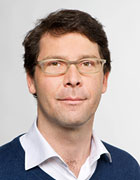
Michael Luck is a Professor of Computer Science at University College London, specializing in intelligent agents, multi-agent systems, and trust and reputation frameworks. His work contributes to UN Sustainable Development Goals related to education and innovation. He holds a BSc and PhD from UCL (1988, 1993). Education: BSc (1988), PhD (1993) in Computer Science from UCL Research focuses on formal frameworks for agent systems, norms, trust mechanisms, and applications in genome analysis and grid computing. Recent projects include AQUAREOS (robotics collaboration), SAIS (AI assistants), and TrustATrip (reputation systems). Publications emphasize adaptive service environments, norm enforcement, and Bayesian trust models. He has been awarded Fellow of the British Computer Society (2005). Advising/Grants: Lead/co-investigator on 21 projects including EPSRC-funded initiatives. Supervised 14 students. Active in global conferences like AAMAS and contributed to standards via EPSRC Peer Review College.
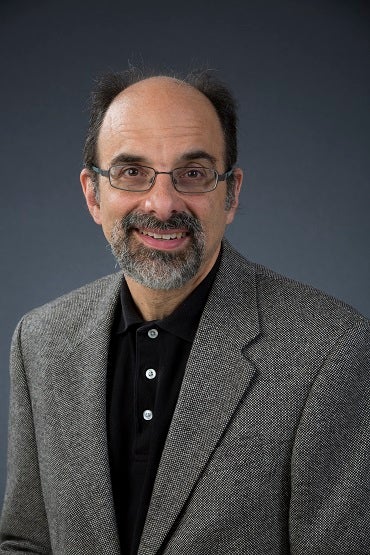
Christian Poellabauer is a Professor at Florida International University (FIU) in the Knight Foundation School of Computing and Information Sciences, serving as Interim Associate Dean for Research and Graduate Studies in the College of Engineering & Computing. He holds a Ph.D. from Georgia Institute of Technology (2004) and a Diplom-Ingenieur from TU Vienna (1998). His research focuses on mobile sensing, data analytics, and healthcare technologies, leading the MOSAIC Lab which develops solutions for healthcare, IoT, and smart cities. He previously led the Mobile Computing Lab at the University of Notre Dame and held leadership roles in data science institutes. Research Interests: His work spans digital biomarkers for neurodegenerative diseases, speech analysis for mental health, wearable device authentication, and wireless sensor networks. The MOSAIC Lab addresses challenges like real-time sensor data analysis on constrained devices and translating insights into clinical applications. Teaching: He has taught courses on Operating Systems, Mobile Computing, and Smart Health at both FIU and Notre Dame. Recent courses include COP4610 (Operating Systems Principles) and COP5614 (Graduate Operating Systems) at FIU. Service: He serves as Associate Editor for IEEE Transactions on Network Science and Engineering, and has organized conferences like ICNC 2023 and IEEE MASS 2021. His academic service includes roles on editorial boards and technical program committees for major conferences in distributed computing and networking. Advising & Labs: Advises current Ph.D. students in areas like multi-modal sensing for affective computing and mental health crowdsensing. Past students have pursued roles in academia and industry (e.g., Rose-Hulman Institute of Technology, Facebook, Microsoft). The MOSAIC Lab collaborates on projects like digital clinical outcome assessments and motor impairment detection.
Amitav Acharya is UNESCO Chair in Transnational Challenges and Governance and Distinguished Professor at American University's School of International Service. He holds honorary positions at Rhodes University, University of Pretoria, and Nankai University, with previous appointments at Harvard, Oxford, and Tsinghua University. Research focuses on: Global international relations and world order transitions US-China relations and Asian regionalism Non-Western international relations theory United Nations and global governance Publications demonstrate extensive contributions to IR theory with works translated into multiple languages. Honors include: Three-time ISA Distinguished Scholar Award recipient American University Scholar-Teacher of the Year (2020) First non-Western President of International Studies Association (2014-2015)
Professor Cedo Maksimovic is a leading academic in the Department of Civil and Environmental Engineering at Imperial College London, Faculty of Engineering. He is a Principal Research Fellow and heads the Urban Water Research Group (UWRG), with affiliations to the Environmental and Water Resource Engineering group, Grantham Institute, Space Lab, and Urban Systems Lab. His research focuses on urban water systems , including storm drainage, urban flooding, water supply, and the interaction between urban infrastructure and the environment. He has pioneered work in applied fluid mechanics , smart water infrastructure , and flood risk management , with innovations such as the AOFD method for urban surface flood modelling and intelligent sensor networks recognized by the ICE Telford Gold Medal. His recent research, as reflected in publications, spans urban pluvial flooding , leakage detection , integrated urban water management , and blue-green infrastructure . These works emphasize computational modelling, real-time monitoring, and climate resilience in urban environments. UNESCO/IAHR Lecturer of the Year 2001 ICE Telford Gold Medal (WINES project team) Prof. Maksimovic has led major projects funded by EPSRC, EU (Climate-KIC, Interreg), UNESCO, and ERANET_CRUE. He advises postgraduate students and has created international educational initiatives like the EDUCATE programme. He also serves as Editor-in-Chief of the Urban Water Book Series and co-founded the Urban Water journal. He leads the UNESCO-endorsed IRTCUD/CUW network with centres in Banjaluka, Belgrade, Cairo, Kuala Lumpur, London, Porto Alegre, Tehran, and Trondheim, promoting global collaboration in urban water research and education.
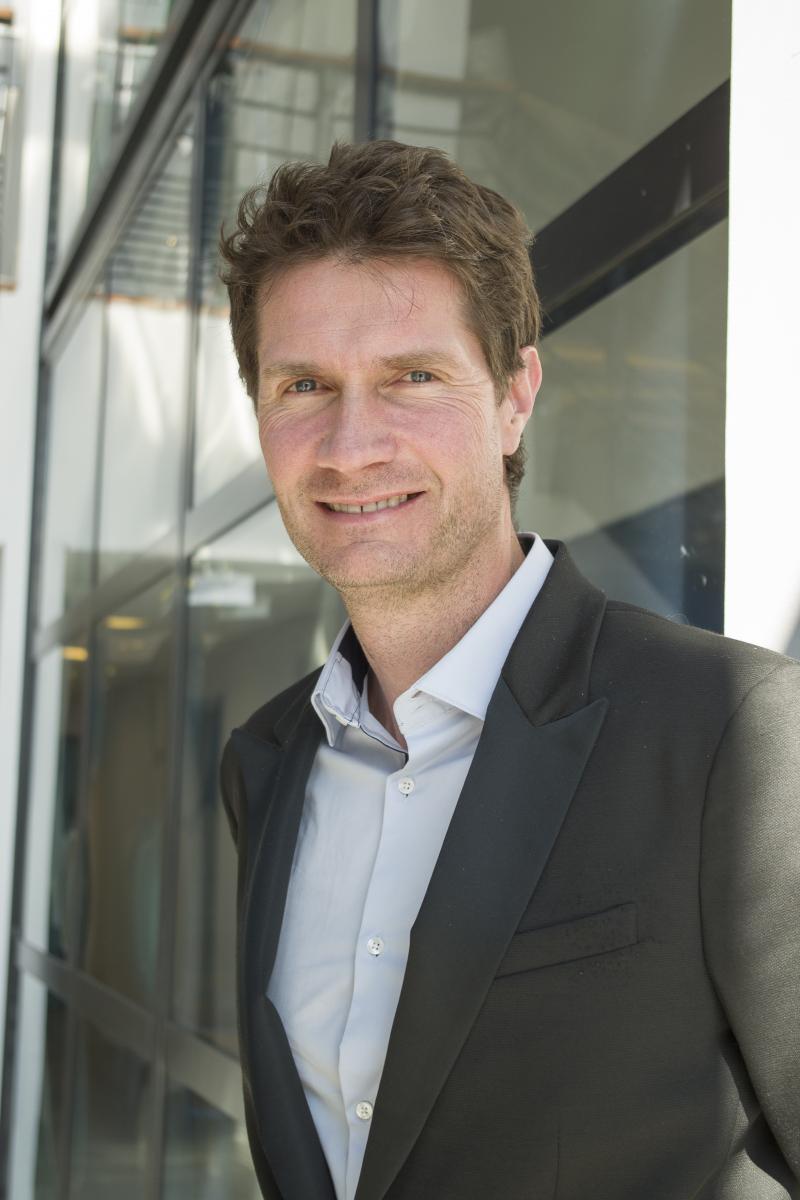
Prof. Alexander Pretschner is a Professor of Software & Systems Engineering at the Technical University of Munich (TUM) and Founding Director of the Bavarian Research Institute for Digital Transformation (bidt). He also serves as Scientific Director of fortiss, a Bavarian research institute for software-intensive systems. His research focuses on software engineering, testing, information security, and ethical software development. Pretschner holds a PhD from TUM and has held academic positions at Karlsruhe Institute of Technology (KIT) and TU Kaiserslautern. He is a co-editor of several prestigious journals, including IEEE Transactions on Reliability and the Journal of Software Testing, Verification and Reliability. Education: PhD in Computer Science, Technical University of Munich MSc in Computer Science, University of Kansas (on Fulbright Scholarship) Diplom in Computer Science, RWTH Aachen University Research Interests: His work spans testing methodologies, secure software design, and ethical considerations in agile development. Notable contributions include frameworks for metamorphic testing, distributed data usage control, and accountability mechanisms for cyber-physical systems. Awards: IBM Faculty Award (2012, 2013) Google Focused Research Award (2011, 2012) EARTO Innovation Prize (2014) 2nd Platz Supervisory Award (2020) Advising & Grants: Pretschner has supervised numerous PhD and Master’s students, contributing to over 200 publications. He leads projects like EDAP (Ethical Deliberation in Agile Processes) and collaborates with industry partners on cybersecurity and AI ethics initiatives. Labs & Teams: His work is anchored in bidt, fortiss, and TUM’s Chair of Software & Systems Engineering, focusing on societal impacts of digitalization and trustworthy AI systems.
Stephen A. Vavasis is a Professor in the Department of Combinatorics and Optimization at the University of Waterloo, part of the Faculty of Mathematics. He holds a PhD in Computer Science from Stanford University (1989) and has held academic positions at Cornell University (1989–2006) before joining Waterloo. His research focuses on continuous optimization, data science, first-order methods, scientific computing, and computational mechanics. Current teaching includes courses on convex optimization and portfolio optimization methods. He has served as Associate Dean of Computing (2017–2020) and Interim Director of Data Science graduate programs. His work is supported by NSERC grants. Notable awards include the Hertz Fellowship, Churchill Scholarship, and Guggenheim Fellowship. Vavasis's research emphasizes applications of optimization to clustering, machine learning, and fracture mechanics. His publications span convex optimization frameworks, algorithmic analysis of gradient methods, and numerical methods in mechanics. Recent work explores unifying analyses of first-order optimization algorithms and robust optimization techniques for high-dimensional data problems.
Hanna Halaburda is an Associate Professor of Technology, Operations, and Statistics at the Leonard N. Stern School of Business, New York University, where she joined in 2019. Her research lies at the intersection of economics, technology, and digital platforms, with a strong focus on blockchain, cryptocurrencies, and platform competition. She has published extensively in top academic journals and co-authored the seminal book Beyond Bitcoin: The Economics of Digital Currencies . PhD in Economics, Northwestern University MA in Economics, Warsaw School of Economics MA in Philosophy, Warsaw University Her research interests center on the economic implications of digital transformation. She investigates how blockchain technology reshapes trust, governance, and competition in digital markets. Her work explores token design, consensus mechanisms, smart contracts, and the strategic use of decentralization in platforms. She also studies platform competition under network effects, consumer choice, and omnichannel marketing. A recurring theme is how digital technologies alter traditional economic forces and business models. The most recent articles show a strong trend toward analyzing the governance, security, and economic design of blockchain systems. Her work combines rigorous theoretical modeling with empirical insights, often applying game theory and industrial organization frameworks. Topics include permissioned vs. permissionless blockchains, the role of cryptographic tokens in coordination, and the macroeconomic implications of digital currencies. She also contributes to debates on Web3, AI, and the future of digital platforms. Scientific awards and recognitions include: ISR Best Paper Published in 2022 Runner-Up Lead article in RAND Journal of Economics Best Paper Award at Tokenomics 2023 Best Paper Award at WISE 2023 Best Paper Finalist at WISE 2022 and WISE 2021 Hanna Halaburda has advised and collaborated with numerous researchers and institutions. Her co-authors include leading scholars from Harvard, NYU, and international universities. She has received research recognition through best paper awards and invitations to contribute to high-impact journals and policy discussions. Her work has been supported by academic and policy institutions, including the Bank of Canada, where she previously served as a senior economist. She frequently publishes in both academic and practitioner outlets, including Harvard Business Review and Nature Human Behavior , indicating strong translational impact. She is actively involved in research teams focused on digital assets, blockchain governance, and platform economics. While no formal lab is mentioned, her extensive list of working papers and collaborations suggests leadership in a dynamic research group at NYU Stern. Her recent work on DAOs, public crypto mining firms, and CBDCs indicates ongoing, forward-looking research programs with real-world policy and business implications.
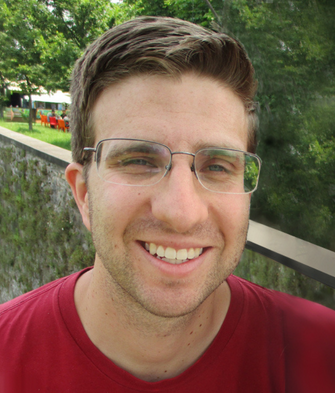
Benjamin Landon is an Assistant Professor in the Department of Mathematics at the University of Toronto, where he has been faculty since 2021. His office is located in the Bahen Centre for Information Technology, Room 6264. Prior to joining the University of Toronto, he was a CLE Moore Instructor at the Massachusetts Institute of Technology from 2018-2021. Education: PhD in Mathematics, Harvard University (2018). Advisor: Horng-Tzer Yau M.Sc. in Mathematics, McGill University (2013). Advisors: Vojkan Jaksic and Robert Seiringer B.Sc., McGill University (2012) Dr. Landon's research focuses on Probability and Mathematical Physics, with particular expertise in Random Matrix Theory. His work spans various aspects of spectral statistics, eigenvalue distributions, and universality phenomena in random matrix ensembles. He has made significant contributions to understanding the behavior of extremal eigenvalues, linear spectral statistics, and connections to other areas of mathematical physics such as spin glasses and the KPZ universality class. His research often involves developing novel analytical techniques to establish precise asymptotic behavior in complex random systems. Analysis of Dr. Landon's publication record reveals a strong focus on the intersection of probability theory and mathematical physics. His work consistently explores universality phenomena across different random matrix ensembles and related stochastic systems. A notable trend is his investigation of connections between random matrix theory and other areas of mathematical physics, particularly spin glass models and the KPZ equation. His research demonstrates both technical depth in establishing rigorous asymptotic results and breadth in connecting seemingly disparate areas of mathematical physics.
David Gesbert serves as Professor and Director of EURECOM, a leading research institution in Sophia Antipolis, France, specializing in digital sciences. Previously heading the Communications Systems Department, he now directs EURECOM while leading the Foundations & Algorithms research group within the Communication Systems Department. His leadership spans institutional administration and cutting-edge research supervision. Dr. Gesbert's research portfolio demonstrates exceptional depth across communications theory and wireless networking: Communication theory and information theory fundamentals Signal processing for wireless networks with emphasis on robustness Machine learning applications for decentralized network optimization Connected robotics and UAV-enabled flying radio access networks 6G wireless architecture with focus on AI integration Distributed decision making under information uncertainties His publication trajectory reveals a strategic evolution from classical communication theory toward AI-integrated wireless systems, particularly focusing on UAV-aided networks and connected robotics for 6G. Recent work emphasizes learning-based approaches for network optimization under asymmetric information conditions, with growing emphasis on sustainability and green communications. Dr. Gesbert's scientific recognition includes: Fellow of IEEE (2011) and Asia Pacific Artificial Intelligence Association (2021) Thomson-Reuters List of Highly Cited Researchers in Computer Science Multiple Best Paper Awards at IEEE conferences (EW 2017, ICC 2019) ERC Advanced Grant recipient for the PERFUME project on Smart Device Communications 3IA Chair funding for AI for future IoT Networks 2019 Winner of 'Fundamental research project of the year' by French SCS He actively mentors PhD students and researchers, welcoming collaboration in his research domains. His group secures substantial research funding including ERC grants, 3IA Chairs, and participation in major European projects like the WINDMILL ITN Marie Curie project on Machine Learning in Wireless Communications. Dr. Gesbert serves on editorial boards and regularly delivers keynotes at premier international conferences, establishing himself as a thought leader in next-generation wireless communications.
Marcella Lusardi is an Assistant Professor in the Department of Chemical and Biological Engineering and the Princeton Materials Institute at Princeton University, leading interdisciplinary research at the intersection of materials synthesis, catalysis, and sustainability. Her educational background includes: Ph.D. in Materials Science and Engineering from MIT (2018) B.S. in Chemical Engineering from Columbia University (2012) Dr. Lusardi's research focuses on designing advanced catalytic materials for environmental challenges, with core expertise in surface science, light-matter interactions, and complex materials processing. Her group develops natural and engineered materials for energy and sustainability applications, emphasizing CO 2 capture/reduction, pollution abatement, and photocatalysis through molecular-level catalyst design. The MatCat Lab integrates experimental techniques like NMR spectroscopy with computational guidance to create scalable solutions for closed carbon cycles and greener chemical processes. Analysis of her 15 most recent publications (2019-2025) reveals a dominant focus on zeolite-based catalysis for CO 2 conversion and carbonylation reactions, with growing emphasis on supramolecular assemblies and water-tolerant acid catalysts. Her work consistently bridges fundamental material properties with practical sustainability applications, showing progression toward integrated systems for direct air capture and light-mediated reactions. The MatCat Lab employs a highly interdisciplinary approach centered on defect engineering in silica matrices and molecular recognition for supramolecular networks. Current projects target tailored reaction environments for CO 2 reduction and microplastic oxidation, utilizing advanced synthesis methods and structural elucidation to develop practical catalytic technologies for a sustainable future.
Dr. Min Chi is a Professor in the Department of Computer Science at North Carolina State University, where she joined in 2013 as a Chancellor's Faculty Excellence Program cluster hire in the Digital Transformation of Education. Her academic journey includes a Ph.D. and M.S. in Intelligent Systems from the University of Pittsburgh and a B.E. in Information Science and Technology from Xi'an Jiaotong University, China. She completed postdoctoral fellowships at Carnegie Mellon University's Machine Learning Department and Stanford University's Human Sciences and Technologies Advanced Research Institute. Dr. Chi's research focuses on the development and empirical evaluation of cutting-edge Artificial Intelligence, Deep Learning, and Reinforcement Learning frameworks tailored for addressing human-centric challenges. Her work spans multiple domains including advanced learning technologies, AI and intelligent agents, data sciences and analytics, and human-computer interaction. She has made significant contributions to intelligent tutoring systems, healthcare applications, nuclear power systems, and humanitarian efforts such as food distribution and disaster relief. Her publication record demonstrates a strong focus on applying AI techniques to real-world educational challenges, with recent work examining metacognitive knowledge transfer, reinforcement learning for pedagogical policy induction, and deep learning approaches for proactive help in educational settings. Her research also extends to healthcare applications, food distribution systems, and other socially impactful domains. 10 Best Paper, Best Student Paper, and Outstanding Paper Awards Prestigious Alcoa Foundation Engineering Research Achievement Award NSF CAREER Award Dr. Chi leads multiple significant research projects funded by the National Science Foundation, National Institutes of Health, and the Department of Energy, with a total funding exceeding $7 million. Her work bridges theoretical advances in AI with practical applications that address critical societal challenges in education, healthcare, and humanitarian operations.
Anamitra Pal is an Associate Professor at Arizona State University's School of Electrical, Computer and Energy Engineering. His work focuses on power system resilience, renewable energy integration, and time-synchronized measurement analytics. He leads research initiatives combining artificial intelligence with grid modernization challenges. Ph.D. Electrical Engineering, Virginia Tech (2014) M.S. Electrical Engineering, Virginia Tech (2012) B.E. Electrical and Electronics Engineering, Birla Institute of Technology (2008) Prior to ASU, Pal conducted postdoctoral research at Virginia Tech's Network Dynamics and Simulation Science Laboratory (2014-2016). His research interests center on enhancing grid stability through: Advanced synchrophasor data analytics AI-driven power system security frameworks Renewable generation integration strategies Critical infrastructure protection during extreme events Recent publications demonstrate his focus on grid resilience during wildfires, deep learning-based state estimation, and innovative PMU applications. Pal has received multiple accolades including the NSF CAREER Award (2022) and IEEE Phoenix Section's Outstanding Young Professional Award (2019).
Chee-Wooi Ten is a tenured Professor in the Department of Electrical and Computer Engineering at Michigan Technological University, where he has served since 2010 and achieved tenure in 2016. He concurrently holds an Affiliated Professor appointment in Applied Computing and directs both the PSERC Site and ICC CPS Center. His institutional roles emphasize cyber-physical security integration within power infrastructure. His educational background includes: PhD in Electrical Engineering from University College Dublin (2009) MSc in Electrical Engineering from Iowa State University (2001) BSc in Electrical Engineering from Iowa State University (1999) Ten's research pioneers cyber-informed security engineering strategies for bulk power systems, focusing on quantifying rare events through system risk models and data science. His work bridges power grid interactions with robotics and transportation systems to advance decarbonization and electrification. Key methodologies include validating cyber-physical security frameworks against steady-state and dynamic grid approaches, with emphasis on attack/defense combinatorics and smart home technologies. This transdisciplinary approach supports the fourth industrial revolution's resilience requirements. His publication trends reveal strong focus on risk-aggregated substation testbeds using generative adversarial networks, cyber insurance models for power systems, and cascading failure analysis from switching attacks. Recent works increasingly integrate machine learning with physics-based modeling to address cybersecurity threats in inverter-based resource integration and distribution emergency operations. Ten has secured over $6.5M in active funding including: $2M DOE grant (MTU portion $105,000) for CyDERMS Center on DERs/Microgrids cybersecurity $704,409 CyManII award for secure digitalization in smart manufacturing $1.05M DOE ARPA-E grant for decarbonized freight transportation modeling NSF CyberCorps Scholarship for Service program ($3.38M) His grants consistently address risk management through data-driven and physics-based modeling, with industry partnerships through PSERC and utility collaborations. As ICC CPS Center Director, he leads research on cyber-physical security testbeds and coordinates the PSERC Summer Transformation School. His team develops validation frameworks for NERC CIP compliance while addressing practical pain points in OT cybersecurity for grid operators.
Qiang Tang is currently an Associate Professor (Level D) at the School of Computer Science of The University of Sydney. Previously, he was a Senior Lecturer (2021.1-2024.12) at USYD and an Assistant Professor at the Computer Science Department of New Jersey Institute of Technology (2016.8-2021.1), where he co-directed the JACOBI Blockchain Lab with Prof. Jian Pei and Prof. Zhenfeng Zhang. He completed his PhD at the University of Connecticut under Prof. Aggelos Kiayias and Prof. Alexander Russell, following postdoctoral research at Cornell University with Prof. Elaine Shi. His research spans applied and theoretical cryptography, blockchain technology, privacy, and computer security. His work is supported by ARC, Google, Ethereum Foundation, Stellar Foundation, Protocol Labs, Algorand Foundation, Oracle, and USYD. Previous funding includes NSF, JD.com, AFRL, DoE, and Particl Foundation. His research has led to significant contributions in consensus protocols, distributed randomness generation, secure multi-party computation, and privacy-preserving technologies. Tang's publications reveal a strong focus on practical cryptographic solutions for blockchain and distributed systems. His recent work demonstrates expertise in asynchronous consensus, optimal protocol design, and secure implementations for real-world applications. His research shows consistent innovation in improving efficiency, security, and scalability of distributed systems. Scientific Awards: 2025 DSN Best Paper Award 2024 ICDCS Distinguished Paper Award 2023 SOAR Prize, USYD 2023 Oracle for Research Award 2022 Stellar Foundation Research Awards 2022 Ethereum Academic Award 2019 MIT Technical Review, 35 Chinese Innovators Under 35 Tang actively mentors PhD and Master's students, with several alumni now holding faculty positions or research roles at institutions like City University Hong Kong, Chinese Academy of Sciences, and A*STAR Singapore. He has received significant research funding including a multi-year Google project on End-to-End Secure Cloud and an ARC DP grant on Order Fairness in Decentralized Systems. He leads the research in his lab focusing on blockchain protocols and cryptographic applications, with strong industry connections through collaborations with Google, Ethereum Foundation, Stellar Foundation, and Protocol Labs. His team regularly publishes in top security and cryptography venues including CRYPTO, CCS, USENIX Security, and S&P.
Mark Coeckelbergh is a Professor of Philosophy at the University of Vienna, specializing in the philosophy of technology, AI ethics, and robot ethics. He is affiliated with the Department of Philosophy and the Research Network Data Science at the University of Vienna. In addition to his academic position, Coeckelbergh has held significant roles including Former President of the Society for Philosophy and Technology (SPT) and Member of the European Commission's High-Level Expert Group on Artificial Intelligence (AI HLEG). His research focuses on the ethical, political, and philosophical implications of emerging technologies, particularly artificial intelligence and robotics. Coeckelbergh has published extensively in these areas, authoring influential books such as Robot Ethics (2022), The Political Philosophy of AI (2022), and Why AI Undermines Democracy and What To Do About It . His work explores how AI systems affect democratic processes, human agency, and social relationships. Recent publications demonstrate a strong focus on the relationship between AI, democracy, and ethical governance, examining how AI systems can both threaten and potentially enhance democratic processes through algorithmic transparency and participatory design approaches. Finalist of the World Technology Award 2017 Coeckelbergh teaches various courses including 'Introduction to Philosophy of LLMs,' 'LLMs and the Future of Writing,' 'Ethics and Robotics,' and 'Global Governance of AI.' He has supervised numerous students working on topics related to technology ethics and philosophy. He has been involved in several major research projects including H2020 PERSEO, WWTF Democracy Responsible Entrepreneurship, and FP7 DREAM (Development of Robot-Enhanced therapy for children with Autism spectrum disorders). Coeckelbergh has also announced upcoming guest professorships at the Institute of Philosophy of the Czech Academy of Sciences and Uppsala University, where he will work on environmental and technology ethics projects.