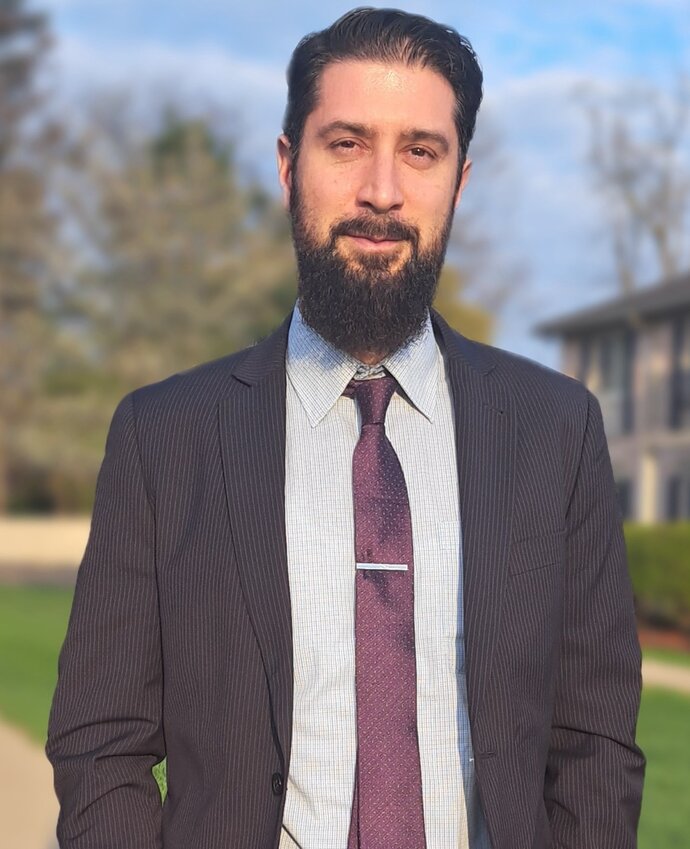
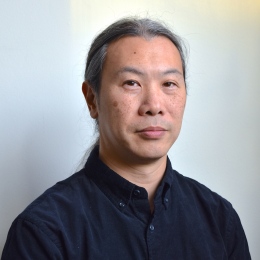
Lars Nordström is a Professor at the Division of Electric Power and Energy Systems within KTH Royal Institute of Technology, Stockholm, Sweden. His work bridges control systems , communication networks , and power systems , with a focus on future architectures, functionality, and quality aspects of ICT for power grid operations. He has led initiatives such as the Swedish Centre of Electric Power Engineering and served as Thematic Leader for Smartgrids in KIC InnoEnergy. In 2014, he was a Visiting Professor at Washington State University. Education : Ph.D., MSc.EE Nordström's research explores the intersection of smart grids , machine learning , and cybersecurity for power systems. Key areas include: Wide-Area Monitoring and Control (WAMC) systems Decentralized control strategies for DC microgrids Impedance modeling using neural networks Data-driven methods for islanding detection ICT reliability and protocol design for grid operations His recent publications emphasize machine learning applications in power systems, including LSTM networks for EV charging management, graph attention networks for stability monitoring, and digital twin approaches for cyber-attack mitigation. These works span disciplines such as Smart Grids, Power Electronics, and Data Science. Scientific Recognitions : Senior Member, IEEE Senior Member, CIRED Senior Member, Cigre Past Chairman, Swedish IEC TC57 Mirror Committee Nordström actively teaches and examines graduate courses like Communication and Control in Electric Power Systems and Computer Applications and Machine Learning in Electric Power Systems . His work influences industry practices through collaborations on digital substations, energy market analysis, and resilience strategies.
Zhibo Pang is an Adjunct Professor at KTH Royal Institute of Technology's Department of Intelligent Systems (EECS) and Senior Principal Scientist at ABB Corporate Research Sweden. His work focuses on digital transformation in industry and healthcare, spanning robotics, AI, control systems, and wireless communication. He leads projects in embodied intelligence, Industry 4.0, and Healthcare 4.0, with 23 granted patents and over 120 journal papers. Education: PhD in Electronic and Computer Systems (KTH, 2013), MBA in Innovation & Growth (University of Turku, 2012). Key Roles: IEEE Technical Committee Chair, Editor of 6 IEEE journals, ABB Inventor of the Year (2016, 2018, 2021). Research Interests: Robotics safety, wireless automation, federated learning, digital twins, and IoT security. Recent Projects: Cloud-fog automation frameworks, robot skin systems for healthcare, and latency-aware industrial control. His work bridges academia and industry through cross-functional collaborations.
Saurabh Amin is a Professor in the Department of Civil and Environmental Engineering at the Massachusetts Institute of Technology (MIT), where he also serves as the Edmund K. Turner Professor and Undergraduate Officer. He is a Principal Investigator at the Laboratory of Information and Decision Systems and holds affiliations with the Operations Research Center and the Center for Computational Science and Engineering. His educational background includes: B.Tech. 2002, Indian Institute of Technology (IIT) Roorkee M.S. 2004, University of Texas (UT) Austin Ph.D. 2011, University of California (UC) Berkeley Saurabh Amin's research focuses on the design and control of infrastructure systems using game theory and optimization in networks. His work spans three main areas: resilient network control, information systems and incentive design, and optimal resource allocation in large-scale infrastructure systems. By concentrating on critical infrastructure domains including highway transportation, electric power distribution, and urban water networks, his research develops innovative theory and tools to enhance system performance against both stochastic and adversarial disruptions. His approach involves modeling cyber-physical interactions in infrastructures to assess vulnerabilities, developing detection and response tools for failures at various scales, and designing economic incentive schemes that improve aggregate public good while accounting for dependencies and private information among strategic entities. Amin's work bridges mathematical systems theory with practical civil engineering applications, creating a rigorous theoretical foundation for infrastructure resilience that addresses diverse failure mechanisms from natural disasters to deliberate malicious actions. His recent publications demonstrate a strong focus on decarbonization of energy systems, resilient infrastructure planning under climate uncertainty, optimization methods for complex networked systems, and game-theoretic approaches to sustainable infrastructure management. His work increasingly integrates artificial intelligence and machine learning techniques with traditional control theory to address contemporary challenges in infrastructure resilience and sustainability. The research shows a clear trajectory toward addressing climate change impacts on infrastructure systems while maintaining economic efficiency and operational reliability. Professor Amin has received numerous prestigious awards and honors: Common Ground Excellence in Teaching Award, 2025 HSCC Test-of-Time Award, 2024 MIT CEE, Distinguished Service and Leadership Award, 2023 Samuel M. Seegal Prize (SoE) – inspiring students in pursuing and achieving excellence, 2022 Earll M. Murman for Excellence in Undergraduate Advising, 2022 C3.ai Digital Transformation Institute Research Award, 2020 MIT, Ole Madsen Mentoring Award, 2020 MIT, Energy Initiative Research Award, 2020 National Academy of Engineering, China-America Frontiers of Engineering Symposium speaker, 2019 MIT, Robert N. Noyce Career Development Professor, 2015-2018 Google Faculty Research Award, 2015 National Science Foundation CAREER Award, 2015 Siebel Energy Institute Research Award, 2015 MIT, Solomon Buchsbaum AT&T Research Fund Award, 2012 Professor Amin has been actively involved in significant research projects including the C3.ai DTI project on Causal Reasoning for Real-Time Attack Identification in Cyber-Physical Systems and another on Learning in Routing Games for Sustainable Electromobility. He serves as the chief scientist on multi-institutional NSF grants, including the $9 million Foundations of Resilient Cyber-Physical Systems (CPS) project. His teaching portfolio includes courses such as 1.008 Engineering for a Sustainable World, 1.104 Sensing and Intelligent Systems, 1.020 Engineering Sustainability: Analysis and Design, and 1.208 Resilient Networks. As Undergraduate Officer, he plays a key role in shaping the educational experience for civil and environmental engineering students at MIT. Professor Amin leads the Resilient Infrastructure Networks Lab at MIT, where his team develops theoretical foundations and practical tools for infrastructure resilience. The lab focuses on the intersection of control theory, game theory, and optimization applied to cyber-physical infrastructure systems. Current research directions include pandemic-resilient urban mobility and hurricane-resilient smart grid operations, reflecting the lab's commitment to addressing pressing societal challenges through rigorous systems engineering approaches.
Cyrille Artho is an Associate Professor in the Division of Theoretical Computer Science at KTH Royal Institute of Technology, actively contributing to research in formal methods, software testing, and cybersecurity. His work spans model checking, smart contract security, and concurrent systems verification, with significant contributions to tools like Java Pathfinder and Modbat. PhD from ETH Zurich (2005) with dissertation on multi-threading fault detection Teaches Software Safety and Security, Software Engineering Fundamentals, and supervises degree projects His research focuses on developing formal techniques for safety-critical systems, particularly in blockchain security and distributed applications. Recent work emphasizes smart contract verification, anomaly detection in microservices, and trusted execution environments for secure cloud analytics. The 15 most recent publications reveal a strong trend toward blockchain security (6 articles), formal verification of distributed systems (5), and novel testing methodologies (4), with increasing integration of machine learning for vulnerability detection. As chair of the FTSCS workshop series and contributor to major conferences like ASE and ICST, Artho has significantly shaped the formal methods community. His leadership in organizing workshops demonstrates commitment to advancing safety-critical systems research. Principal investigator for C3.ai DTI Cyber Safety Cage for Networks project Develops Modbat framework for model-based API testing Active in Digital Futures research initiative at KTH
Karl Henrik Johansson is a Professor at the School of Electrical Engineering and Computer Science, KTH Royal Institute of Technology in Stockholm, Sweden, where he also serves as the Founding Director of Digital Futures. He is a Fellow of both IEEE and the Royal Swedish Academy of Engineering Sciences, and has held leadership positions including Immediate Past President of the European Control Association and IEEE Control Systems Society Vice President Diversity, Outreach & Development. Dr. Johansson earned his MSc in Electrical Engineering and PhD in Automatic Control from Lund University. His academic journey includes visiting positions at prestigious institutions such as UC Berkeley, Caltech, and NTU. His research focuses on networked control systems and cyber-physical systems with applications in transportation, energy, and automation networks. His work investigates fundamental challenges in connecting physical world systems through communication networks, exploring how wireless communication and sensor technology can enhance system robustness, reliability, energy efficiency, and safety. Current research directions include security of cyber-physical systems, distributed optimization, multi-agent systems, and applications to intelligent transportation and energy networks. Analysis of his recent publications reveals a strong focus on distributed optimization algorithms, secure networked control, multi-agent systems, and applications to transportation and energy networks. His work increasingly integrates machine learning techniques with traditional control theory, addressing challenges in privacy-preserving distributed computation, resilient state estimation, and resource allocation in complex networked systems. IEEE Control Systems Society Hendrik W. Bode Lecture Prize (2024) Swedish Research Council Distinguished Professor (2018-2027) Wallenberg Scholar (2009-2026) IFAC Young Author Prize IEEE CSS Distinguished Lecturer (2017-2019) IFAC Outstanding Service Award IEEE Fellow Dr. Johansson has supervised over 100 postdocs and PhD students, with many now holding prominent positions at institutions worldwide. His research has been supported by significant grants including the Swedish Research Council Distinguished Professor Grant (2018-2027), multiple Wallenberg Foundation grants, and numerous EU and national research projects. He has directed major research centers including ACCESS Linnaeus Centre (2009-2016) and Strategic Research Area ICT TNG (2013-2020). His research group operates within the Digital Futures initiative and maintains strong connections with industry partners through projects like the Integrated Transport Research Lab (supported by Scania and Ericsson) and Smart Mobility Lab. The group actively collaborates with international institutions and participates in major EU-funded projects addressing challenges in cyber-physical systems, transportation, and energy networks.
Sami Al Daghistani is an Associate Professor in Contemporary Islamic Studies at Lund University's Centre for Theology and Religious Studies, a Researcher at the Centre for Advanced Middle Eastern Studies (CMES), and holds associate appointments at Columbia University (Middle East Institute) and the Brooklyn Institute for Social Research. His work bridges Islamic economics, environmental ethics, legal philosophy, and intellectual history, emphasizing interdisciplinary methodologies and cross-cultural analysis. Ph.D. (2017) in Islamic Studies from Leiden University, co-supervised by Columbia University and WWU Münster Postdoctoral Fellow at Norwegian School of Theology (2020-2024) Visiting Researcher at Istanbul University and Swedish Research Institute in Istanbul His research focuses on decolonizing economic thought through Islamic traditions, integrating environmental ethics, moral philosophy, and legal theory. Recent publications analyze intersections between Islamic economic cosmology, pre-modern intellectual traditions, and contemporary societal challenges. Key projects include: SWEMENA (Swedish Middle East and North Africa Network), Critical Islamic Studies consortium (founded 2021), and GreenMENA. He has received the 31st World Book of the Year Award in Islamic Studies (2024) and Islamic Economics Research Award (2024). Academic roles span teaching at Lund University (Islamology courses), guest lectures at Istanbul Forum, and leadership in international research collaborations. His translations of Ibn Baṭṭūṭa and Ibn Ṭufayl into Slovenian demonstrate linguistic expertise and cultural bridge-building.
Cheuk Wai Tai is a Senior Staff Researcher at Stockholm University's Department of Environmental and Materials Chemistry since 2009. He manages the transmission electron microscopes and sample preparation equipment at the Electron Microscopy Center and serves as Section Editor for the Journal of Electronic Materials. His work focuses on quantitative structure characterization in functional materials research, particularly within nanoscience and nanotechnology contexts. Education: Ph.D. in Applied Physics, The Hong Kong Polytechnic University, 2004 M.Phil. in Applied Physics, The Hong Kong Polytechnic University, 2001 M.Sc. in Physics, The Chinese University of Hong Kong, 1998 B.Sc. (Hons) in Engineering Physics, The Hong Kong Polytechnic University, 1997 Dip. in Mechanical Engineering (Computer Aided Engineering), Institute of Vocational Education (formerly Haking Wong Technical Institute), Hong Kong, 1992 His research centers on structure-property relationships in functional materials through advanced electron microscopy techniques. Current specializations include Pair Distribution Function (ePDF) & Diffuse Scattering, Energy Materials characterization, and EM sample preparation methodology development. The group maintains strong focus on translating structural data into functional performance metrics for nanomaterials. Recent publications (2013-2019) demonstrate consistent emphasis on electron microscopy applications for energy storage materials (batteries, photocatalysts) and functional ceramics. Key trends include structural disorder analysis in piezoelectrics, development of quantitative TEM methods like SUePDF, and nanoscale characterization of electrocatalyst surface phases. His work bridges materials chemistry with advanced imaging techniques. Scientific recognition includes: Fellow of The Royal Microscopical Society (U.K.) Senior Member of IEEE Marie Curie Fellowship (2007-2009) from European Commission Sir Edward Youde Memorial Fellowship (2003/2004) from Hong Kong S.A.R. Government He teaches Solid State Chemistry (KZ7003) and leads Introduction to Analytical Electron Microscopy (KZ8009), having previously taught Advanced Transmission Electron Microscopy (KZ8010) before 2011. Major grants supporting his work include: "Quantitative structural characterisation using 3D electron-based pair distribution function" (Swedish Research Council) "A Multidimensional Toolkit for Modern Electron Microscopy" (Swedish Foundation for Strategic Research) "Mitigating Ni-rich Li-ion cathode side-reactions" (Swedish Energy Agency, Co-applicant) He leads the Cheuk-Wai Tai group within Stockholm University's chemistry department and oversees operations at the Electron Microscopy Center, where his team develops and applies advanced characterization techniques for functional materials research.
Michael Felsberg is a Professor and Head of Division at the Department of Electrical Engineering (ISY) at Linköping University, leading the Computer Vision Laboratory (CVL). His research focuses on artificial visual systems (AVS), including 3D computer vision, computational imaging, object tracking, and autonomous systems. He emphasizes HVS-inspired approaches to bridge the gap between human and machine vision capabilities. Notable achievements include over 20,000 citations (h-index 47), leadership roles in the Wallenberg AI, Autonomous Systems and Software Program (WASP), and recognition as Sweden’s top AI researcher by Vinnova. His work spans academic contributions, industry collaborations, and interdisciplinary projects like climate science applications of machine learning. Positions : WASP Executive Committee Member, WASP Area Cluster Leader for Machine Learning, and Vice-Head of Department (Electrical Engineering). Education : Extensive academic background in electrical engineering and computer vision (details not explicitly stated). Research trends in his articles reflect advancements in autonomous systems, multimodal AI, and robust vision models. His teams address challenges like object tracking, generative models for 3D simulation, and culturally diverse AI systems. Awards : Tracking Challenge Winner (OpenCV, 2015) Best Paper Awards (ICPR 2016, VISAPP 2021) Vinnova’s Highest-Ranked Swedish AI Researcher (2018) He advises numerous PhD students and oversees grants in WASP-funded initiatives. CVL collaborates on projects like disaster-response robotics and Berzelius supercomputer utilization for AI.
Sven Werner is a Senior Professor at Halmstad University's Academy of Entrepreneurship, Innovation and Sustainability. His expertise lies in district heating and cooling systems, with a focus on decarbonization, energy efficiency, and fourth/fifth generation technologies. He has authored foundational textbooks, such as Energiförsörjning: En introduktion till vårt energisystem , and contributed to international platforms like DHC+ and the IEA's Low-Temperature District Heating Annex. His research includes pioneering the concept of 'Fourth Generation District Heating' and analyzing global heating/cooling demands. Key achievements include over 50 short courses for industry professionals and presentations across 20 countries. Current projects include a book on the world history of district heating. Research Highlights: Low-temperature systems, renewable integration, and thermal storage. Impact: Most-cited article on district heating (Annex X Final Report, 2014), cited every six hours in 2021. International Contributions: Co-developed the Pan-European Thermal Atlas (PETA) and advised the EU Energy Council on energy efficiency. Werner's work bridges academia and industry, emphasizing practical solutions for sustainable energy systems. His publications span journals, conference papers, and policy guides, addressing topics like heat distribution costs, industrial heat recovery, and smart grid technologies.
Anh Tuan Le is an Associate Professor at the Department of Electrical Engineering, Chalmers University of Technology. He holds a PhD in Power Systems from Chalmers (2004) and a Master's in Energy Economics from the Asian Institute of Technology (1997). Specializes in power grid planning, electricity market modeling, and renewable energy integration Active in electric vehicle-grid interaction and battery storage systems Develops voltage stability solutions and decentralized control strategies His recent research focuses on: Flexibility markets for congestion management Machine learning applications in load forecasting Real-time security margin control using AI Key projects include: DigiRES (2024-2027): Digital integration of multi-energy flexibility POTENT-X (2024-2027): Port energy transition hubs FLEXIGRID (2019-2023): Distribution grid flexibility solutions
Erik G. Larsson is a Professor and Head of the Division for Communication Systems within the Department of Electrical Engineering (ISY) at Linköping University (LiU), Sweden. He joined LiU in September 2007 and has previously held academic and research positions at the Royal Institute of Technology (KTH), University of Florida, George Washington University, and Ericsson Research. Research Interests: Enabling technologies for 6G wireless communication Statistical inference and signal processing Network science and complex networks Decentralized and federated machine learning over networks Physical layer security and privacy Energy-efficient digital signal processing His research group, active in areas like RadioWeaves and massive MIMO, focuses on robust, efficient, and secure wireless connectivity. Recent publications highlight trends in decentralized learning, resource allocation in wireless networks, and the integration of AI into mobile networks, particularly through projects like 'Turning the Air into an AI Computer' funded by the Knut and Alice Wallenberg Foundation. Scientific Awards and Honors: IEEE Signal Processing Magazine Best Column Award (2012, 2014) IEEE ComSoc Stephen O. Rice Prize (2015) IEEE ComSoc Leonard G. Abraham Prize (2017) IEEE ComSoc Best Tutorial Paper Award (2018) IEEE ComSoc Fred W. Ellersick Prize (2019) IEEE SPS Donald G. Fink Overview Paper Award (2023) IEEE Fellow Member, Royal Swedish Academy of Sciences (KVA) Gyllene Moroten Best Teacher Award (2021) Advising and Grants: He has supervised numerous Ph.D. and Licentiate students, many of whom now hold positions at leading industry and academic institutions. His research is currently funded by major organizations including the Knut and Alice Wallenberg Foundation, Swedish Foundation for Strategic Research (SSF), ELLIIT, Security-Link, Swedish Research Council (VR), and EU Horizon 2020 (H2020-SNS-6GTandem). Previous sponsors include VR, KVA, NSF, ORAU, and multiple EU FP7 and H2020 projects (e.g., MAMMOET, REINDEER, 5G-Wireless). Leadership and Service: He has served as Associate Editor for IEEE Transactions on Communications and IEEE Transactions on Signal Processing, chaired technical committees and steering committees in IEEE Signal Processing Society, and held leadership roles in major conferences such as the Asilomar Conference on Signals, Systems and Computers. He was a Visiting Fellow at Princeton University in 2015.
Professor Ingrid Undeland leads the Marine research group at the Division of Food and Nutrition Science, Department of Life Sciences at Chalmers University of Technology. She is a distinguished researcher with expertise spanning marine food science, lipid chemistry, and blue biorefining, having established herself as a leading figure in sustainable seafood research and marine biotechnology. Her educational background includes food science studies from Linnaeus University and a PhD in bioscience from Chalmers University of Technology and SIK (now RISE). Between 1999-2002, she was a post-doctoral fellow at University of Massachusetts Marine Station, which significantly shaped her research trajectory in marine food science. Professor Undeland's research focuses on pioneering next-generation seafood through innovative value chains from seaweed, small pelagic fish, fish side streams, mussels, and microalgae. Her specialized expertise lies in marine lipids and proteins, particularly their stabilization, isolation from complex sources, and nutritional properties including digestibility. She has extensive experience with antioxidant strategies using plant-derived side streams or extracts and fundamental studies of fish hemoglobins as pro-oxidants. Her work also encompasses innovative technologies for biomass fractionation and nutrient recycling to build blue biorefineries, along with in vitro digestion models and general seafood analytics. Beyond marine research, she explores filamentous fungi as sustainable alternative food protein sources. The trends in her recent publications reveal a strong emphasis on valorizing marine resources through advanced processing techniques. Her work increasingly focuses on sustainable extraction methods for seaweed proteins, particularly Ulva fenestrata, and developing antioxidant strategies using berry side streams to stabilize fish proteins. There's a growing interest in understanding the nutritional properties and digestibility of alternative marine proteins, along with environmental assessments of processing technologies. Her research consistently bridges fundamental science with practical applications for creating sustainable seafood value chains. Swedish representative in Nordic Lipidforum, WEFTA, and EuCheMS Editorial board member of Journal of the Aquatic Food Product Technology Member of the National Committee for Nutrition and Food Science at the Royal Swedish Academy of Sciences Co-founder of the startup company AquaFood H-index of 47 according to Google Scholar Professor Undeland has an extensive record of academic mentorship, having supervised or currently supervising 23 PhD students, 14 postdoctoral researchers, and examining over 25 MSc students. Her research is supported by numerous grants, including the WaSeaBi Project which focuses on valorizing seafood side-streams through holistic value chain design. She collaborates with various industry partners and academic institutions across Europe. Her laboratory includes technicians Dr. Karin Larsson and Dr. Rikard Fristedt, and she leads a dynamic research team working on multiple projects related to marine biorefining and sustainable seafood development. Her research group operates within well-equipped facilities at Chalmers University, with specialized laboratories for marine food analysis, protein extraction, lipid oxidation studies, and in vitro digestion modeling. The team also maintains cultivation systems for seaweed and filamentous fungi, enabling integrated research from raw material production to final product development.
Jonas Faleskog is a Professor in the Department of Materials and Structural Mechanics at KTH Royal Institute of Technology. His research focuses on mathematical modeling of material deformation and failure mechanisms, particularly in metallic and polymeric materials. Key areas include ductile and brittle fracture analysis, fracture mechanics, and computational modeling of material behavior under various stress conditions. He leads a research group collaborating internationally to develop models describing material failure at microscopic scales. Faleskog teaches courses such as Fracture Mechanics (SE2139) and Modeling in FEM (SE2860), emphasizing practical applications of theoretical models. His work spans experimental and numerical methods, addressing challenges in material heterogeneity, porosity effects, and environmental degradation. Notable contributions include advancements in weakest-link modeling for brittle failure, probabilistic fracture models, and strain gradient plasticity analysis. His research bridges material science, applied mechanics, and numerical methods to optimize material utilization in engineering systems like reactor tanks, aircraft, and vehicles. Key collaborations involve international teams exploring microstructural influences on fracture behavior. While no specific awards are listed, his extensive publication record reflects sustained contributions to mechanical and materials engineering.
Martin Nilsson Jacobi serves as President and CEO of Chalmers University of Technology, holding the position of the institution's fourteenth President since September 2023. He simultaneously maintains his academic standing as Professor of Complex Systems at the university, demonstrating his dual commitment to academic leadership and scholarly work. Professor Nilsson Jacobi's research portfolio spans theoretical physics, complex systems theory, and ecological applications. His work bridges multiple disciplines, creating innovative approaches to understanding natural systems through mathematical and computational frameworks. His research trajectory shows an evolution from theoretical physics to complex ecological systems, with particular emphasis on spatial patterns, ecosystem stability, and marine conservation strategies. His scholarly output demonstrates consistent productivity across multiple domains. The most recent publications (2020-2022) focus on complex ecological communities, spatial coherence in heterogeneous landscapes, and species-area relationships, while earlier work (2010-2015) explored self-assembly systems, hierarchical dynamics, and theoretical approaches to complex systems. This progression reflects his ability to apply fundamental theoretical concepts to increasingly complex real-world ecological challenges. Lifetime member of the Swedish Royal Academy of Engineering Sciences (IVA) Professor Nilsson Jacobi has held significant leadership roles beyond his current presidency, including serving as chairman of the Faculty Senate and Head of Department at Chalmers. His international research experience includes collaborations with Los Alamos National Laboratory and the Nordic Institute for Theoretical Physics (NORDITA), highlighting his global scientific engagement. He has successfully secured research funding through multiple projects supported by the Swedish Research Council and the European Commission, demonstrating his ability to lead substantial research initiatives.
Jonas Eliasson is a Visiting Professor at Linköping University's Department of Science and Technology (ITN), focusing on Communications and Transport Systems. He concurrently serves as Director of Transport Access at the Swedish National Transport Administration and chairs the Planning & Construction committee of the Royal Academy of Engineering Sciences. Previously, he was Director of the Stockholm City Transportation Administration (2016–2019) and a professor at the Royal Institute of Technology (KTH) from 2007 to 2016. His research emphasizes transport policy design and evaluation, including cost-benefit analysis, transport pricing, railway capacity allocation, and public acceptability of policies. He advises governments on sustainable transport planning, congestion pricing, and socio-economic appraisals. His work bridges theoretical frameworks and practical implementation, with a focus on accessibility, equity, and climate targets. Key research themes include infrastructure cost overruns, traffic demand reduction strategies, and the integration of passenger and freight transport systems. Recent publications analyze policy impacts, forecasting methods, and carbon-neutral transportation systems. His interdisciplinary approach addresses both technical and socio-political dimensions of transport challenges. Eliasson collaborates with research groups like Railway and Public Transport and contributes to initiatives like the 'Next Generation Smart Transportation Systems' project. Despite extensive professional roles, no formal student advisees are listed. His work is disseminated through journals like Transportation Research Part A and policy reports for national and regional governments.