Alan Briones Delgado is a researcher at the La Salle School of Engineering , Universitat Ramon Llull , with a focus on Internet of Things , Cybersecurity , and Transport Protocols . His work spans projects funded by the European Commission and national grants, including EXCEL4HOUSING4.0 , WeB-Nimbus , and NG-SOC , addressing challenges in cloud computing education, ecological monitoring, and security operations. His research integrates Artificial Intelligence and Wireless Sensor Networks for sustainable solutions. Key research areas include Quality of Service in heterogeneous networks, Environmental Conservation via IoT, and Teaching and Learning strategies for Big Data. Projects like EcoSentinel and BTL-COP highlight his commitment to Environmental Monitoring and Community Policing applications. His collaborations extend to institutions in the UK , Albania , and Western Balkans . Contact: alan.briones@salle.url.edu
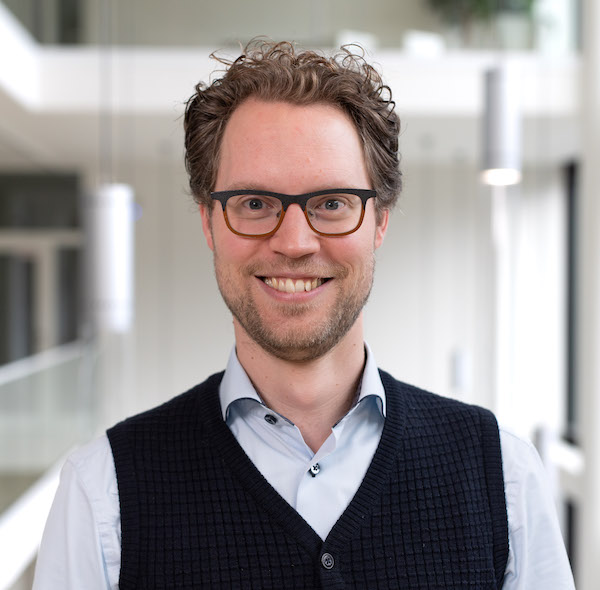
Wouter Lueks is a faculty member at the CISPA Helmholtz Center for Information Security in Saarbrücken, Germany. His research focuses on designing secure, practical, and privacy-friendly systems using applied cryptography, anonymous communication, and systems engineering. He leads a lab and actively mentors PhD and PostDoc researchers. Education: PhD in Computer Science (Radboud University, Netherlands), advised by Jaap-Henk Hoepman and Bart Jacobs. Postdoctoral Researcher at EPFL, Switzerland (SPRING Lab). Research Interests: Privacy-preserving systems for humanitarian aid and public health. Cryptography in decentralized networks and anonymous communication. Secure protocols for identity management and voting systems. Key Publications: Recent work includes privacy-preserving digital wallets for aid distribution (IEEE S&P 2025), biometric deduplication systems (IEEE S&P 2024), and decentralized proximity tracing protocols (Commun. ACM 2022). His research emphasizes practical applications of zero-knowledge proofs and attribute-based credentials. Awards: Distinguished Paper Award at IEEE S&P 2023. Runner-up Casper Bowden PET Award 2021 and CNIL-Inria Privacy Award 2021. Advising & Grants: Supervises PhD/PostDoc researchers and collaborates on projects funded by EU and industry grants. Active in open-source contributions, including the zksk library and Lightnion anonymous communication tool. Labs/Teams: Principal investigator at CISPA, collaborates with the SPRING Lab (EPFL) and leads interdisciplinary teams in privacy-enhancing technologies.
Felix Gomez Marmol is an Associate Professor at the University of Murcia's Faculty of Informatics, Department of Information and Communication Engineering. His research focuses on cybersecurity, artificial intelligence, network security, and IoT security. He holds a PhD in Computer Science from the University of Murcia (2010), supervised by Dr. Gregorio Martínez Pérez. Key research interests include adaptive intrusion detection systems, dark web analysis, and AI-driven cybersecurity frameworks. He leads the Intelligent Systems and Telematics research group and previously contributed to the Sistemas Inteligentes group. His work emphasizes practical applications such as the SCORPION Cyber Range platform for cybersecurity training and gamification. Recent projects involve detecting hate networks on social media, optimizing malware defense using transfer learning, and developing SIEM systems for IoT environments. His contributions span technical papers on cybersecurity education, ethical hacking fundamentals, and blockchain-based security solutions. Prof. Gomez Marmol has collaborated on initiatives like the COBRA framework for simulating advanced persistent threats (APTs) and the COnVIDa dashboard for pandemic-related data analysis. His research bridges theoretical advancements with real-world cybersecurity challenges.
Florina Almenares Mendoza is an Associate Professor at the Telematics Engineering Department of Carlos III University of Madrid , where she also serves as the Director of the University Master's Degree in Cybersecurity. Her research focuses on addressing security challenges in emerging technologies such as IoT, post-quantum cryptography, and privacy-preserving systems. Email: florina.almenares@uc3m.es Contact: 916246234 Location: 4.0.F06 - Quevedo Towers (Leganés) Research Interests Florina's work spans cybersecurity , Internet of Things (IoT) , and post-quantum cryptography , with a focus on scalable authentication, quantum-resistant protocols, and privacy. She explores machine learning applications for security, federated identity management , and smart grid security frameworks. Recent Publications Her recent research includes papers on DNSSEC soft delegation, hybrid quantum security for TLS/IPsec, PUF-based authentication in IoT, and blockchain-enabled auditability. These studies emphasize IoT security , quantum-resistant algorithms , and privacy-enhancing technologies .
Gemma Boleda is an ICREA Research Professor at Universitat Pompeu Fabra in Barcelona, Spain, where she co-directs the Computational Linguistics and Linguistic Theory (COLT) research group. Her research focuses on understanding how humans convey meaning through language, investigating the formal properties that support communication, and exploring how languages are shaped by cognitive and communicative factors. Her primary interests include lexical semantics, cross-linguistic variation, and the integration of linguistic theory with computational methods. She employs interdisciplinary approaches combining linguistics, artificial intelligence, and cognitive science, utilizing large-scale data analysis to study universal patterns and variations across languages. Boleda's publications demonstrate a consistent focus on computational semantics, lexical variation, and language evolution. Her recent work explores the intersection of symbolic and neural approaches to language processing, lexical creativity across development and evolution, and computational models of semantic phenomena like colexification and polysemy. She teaches Computational Semantics in the Master's in Theoretical and Applied Linguistics program and has secured significant research funding including ERC Starting Grants. Her work has contributed valuable linguistic resources such as the ManyNames dataset and Database of Catalan Adjectives.
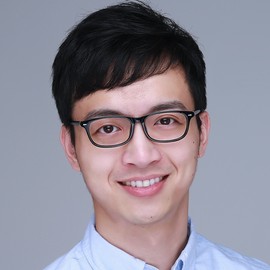
Luo Mai is an Assistant Professor at the University of Edinburgh's School of Informatics , with an upcoming promotion to Associate Professor (UK Reader) in August 2025. He leads the Large-Scale Machine Learning Systems Group and co-leads the UK EPSRC Centre for Doctoral Training in Machine Learning Systems and an ARIA Project on Scaling AI Compute by 1000X . PhD in Computer Science (Imperial College London, 2018) MRes in Advanced Computing (Imperial College London, 2012) His research focuses on the intersection of computer systems , machine learning , and data management . Key contributions include award-winning systems like WaferLLM (wafer-scale LLM inference), Tenplex (elastic ML), and ServerlessLLM (serverless LLM serving), published at top venues (OSDI, SOSP, ICML, NeurIPS, JMLR). Recent publications demonstrate trends in GPU-based distributed systems , LLM optimization , and adaptive machine learning . His team has developed groundbreaking open-source projects including TensorLayer , TorchOpt , and ServerlessLLM . Awarded Microsoft Research StarTrack Scholar (2024) , secured ARIA grant (2024) with Imperial College & Cambridge University, and received Google Fellowship during PhD (2012-2016). As an educator, he designed Edinburgh's popular Machine Learning Systems course (150+ students). His group supervises multiple PhD students including Yao Fu (recognized as 2024 Rising Star in ML & Systems) and Leyang Xue .
Victoria Veguilla Del Moral is an Associate Professor in Public Law at Universidad Pablo de Olavide, specializing in Political and Administrative Science with a focus on Western Sahara politics. Her research examines the complex interplay between territorial administration, political mobilization, and identity in contested spaces, particularly in Dakhla, Western Sahara. She earned her PhD from the University of Granada in 2011 with a thesis titled Policies of the Octopus in Dakhla: Public Action, Halieutic Resources and Social Dynamics , supervised by Dr. Bernard Botiveau and Dr. Juan Montabes Pereira. Her academic journey reflects deep engagement with both theoretical political science frameworks and extensive fieldwork in North Africa. Veguilla Del Moral's research interests span International Politics of the Middle East, MENA region studies, political ethnography, and electoral processes in occupied territories. Her work particularly focuses on Sahrawi youth movements, Moroccan territorial policies in Western Sahara, and the dynamics of political mobilization in contested spaces. She approaches these topics through a lens that combines political science, anthropology, and postcolonial studies, revealing the complex ways local populations navigate occupation and political control. Her publication record shows consistent scholarly output with significant recent contributions including Regionalization under Occupation: Western Saharan Parliamentary Elites and the Moroccan Regionalization Strategy (2011-16) (2024) and Do Electoral Processes in Western Sahara Produce Representation Beyond the Context of Occupation? (2023). These works demonstrate her ongoing commitment to analyzing the political realities of Western Sahara through empirical research on governance structures, electoral participation, and resistance movements. While no specific scientific awards are mentioned in the available materials, her extensive publication record in reputable academic venues and her contributions to edited volumes like Arab Youths: From Morocco to Yemen: Leisure, Cultures and Politics indicate significant scholarly recognition. Her research methodology combines political ethnography with institutional analysis, often working across linguistic boundaries (publishing in English, French, and Spanish). She has established herself as a leading expert on Western Sahara politics, with particular expertise in the social dynamics of Dakhla and the political mobilization of Sahrawi youth. Her work contributes to broader discussions about governance in contested territories and the relationship between state administration and local populations in postcolonial contexts.
Jorge Garcia Vidal is a Professor in the Department of Computer Architecture at the School of Computer Science, Universitat Politècnica de Catalunya (UPC). He is a key member of the CNDS - Computer Networks and Distributed Systems research group, with a sustained record of research activity from the late 1980s to the present, including publications projected into 2025. His work bridges theoretical network performance analysis and applied IoT systems, particularly in environmental monitoring. His research interests center on Computer Networks , Internet of Things (IoT) , Sensor Networks , and Data Quality in IoT . He has made significant contributions to ATM network performance, medium access control, and traffic modeling. More recently, his focus has shifted to air quality monitoring using low-cost sensor networks, employing techniques in Graph Signal Processing , Machine Learning , and Anomaly Detection to improve data reliability and estimate pollutants like black carbon. The recent article trends show a strong emphasis on developing data-driven frameworks, virtual sensors, and robust models for environmental IoT platforms. His work integrates advanced signal processing and machine learning to address the challenges of heterogeneous, low-cost sensor data in urban settings. His scientific achievements have been recognized with awards including the Premio Extraordinario de Doctorado and the Premio Mejor Tesis Doctoral . He has advised several doctoral students, including Pau Ferrer-Cid, David Fusté Vilella, Steluta Iordache, and Julian David Morillo Pozo. He is actively involved in numerous competitive and non-competitive R&D projects, such as those related to digital twins, IoT platforms for smart cities, and nature-based urban solutions, often funded by state and regional programs. He collaborates extensively within UPC and with external partners. His research is conducted primarily within the CNDS research group at UPC, a collaborative environment focused on computer networks and distributed systems, with connections to broader initiatives in smart cities and environmental monitoring.
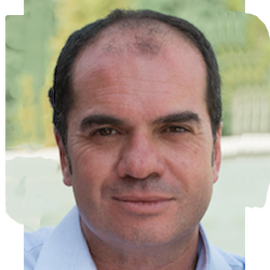
Jesus Escudero-Sahuquillo is a Full Professor at the Computing Systems Department (DSI) of the Faculty of Computer Science Engineering at the University of Castilla-La Mancha (UCLM), Spain. His academic journey began at UCLM where he completed his Degree in Computer Science in 2006, followed by a Master of Science in 2008, and a PhD in Advanced Computing Technologies in 2011. His professional experience includes: Full Professor at UCLM (current position) PostDoc at Technical University of Valencia (2015) PhD Senior Engineer at Oracle Norway (2013-2015) 5-year PostDoc position at UCLM funded by UCLM and European Commission (2016) Dr. Escudero-Sahuquillo's research focuses on high-performance computing and Big Data, with particular emphasis on interconnection networks and related optimization strategies. His work spans congestion management, routing algorithms, network topologies, and power saving techniques. He has extensive experience with InfiniBand technology and has contributed significantly to congestion control mechanisms in high-performance interconnects. His publication record demonstrates a strong focus on advancing network performance in high-performance computing environments. Over the past decade, his research has evolved from foundational work on routing algorithms and network topologies to more sophisticated congestion management techniques applicable to modern data centers and exascale computing architectures. His most recent work addresses cutting-edge challenges in packet identification, hybrid congestion control, and adaptive routing for next-generation interconnection networks. Dr. Escudero-Sahuquillo has served as a program committee member and reviewer for numerous prestigious conferences and journals including IEEE Micro, IEEE Transactions on Parallel and Distributed Systems, and Journal of Parallel and Distributed Computing. He was the co-organizer for five editions of the IEEE International Workshop on High-Performance Interconnection Networks in the Exascale and Big-Data Era (HiPINEB). His research has been supported through participation in multiple projects funded by the European Commission and the Spanish Government. He has collaborated extensively with researchers across Europe and has been instrumental in advancing the state of the art in high-performance interconnection networks.
Carolina Luis Bassa is a Research Professor at the Universitat Pompeu Fabra Barcelona School of Management (UPF-BSM), serving as Academic Director and leading the Department of Business and Strategic Management. She directs multiple master’s programs and heads the Mercadona UPF-BSM Chair of Circular Economy. Her expertise spans Marketing, Sustainability, and Technology applied to business strategy, with a focus on digital transformation and circular economy practices in industries like agri-food distribution. Her academic journey includes roles as Vice-Dean of Teaching Staff and Academic Director, reflecting her commitment to educational innovation. Research interests emphasize sustainable consumer behavior, data-driven business models, and the integration of technology in CRM and customer experience management. Over 35 years, she has advised students and professionals on strategic applications of marketing and technology. Research Trends: Recent publications highlight circular economy adoption in agriculture, transparency in sharing economies, and data-driven strategies in customer-centric models. She bridges academic insights with industry challenges, particularly in leveraging technology for sustainable business practices. Awards & Grants: No specific awards are listed, but her leadership roles and chair position indicate significant institutional recognition. Grants and partnerships likely stem from her involvement with initiatives like the Mercadona Chair. Labs & Teams: Leads the Mercadona UPF-BSM Chair, focusing on circular economy research and collaboration with industry partners.
Maria Elena Cobas Cobiella is an Associate Professor in the Department of Civil Law at the Faculty of Law, University of Valencia. Her academic work is deeply rooted in civil and private law, with significant contributions to inheritance, family, mediation, and European private law. She is an active member of two research groups: the GPF Research Group on Person and Family and the GEDPED Study Group on European Private and Digital Law. Research Interests: Her research spans civil law, succession law, bio-law, legal mediation, reproductive rights, and legal education. She has explored the legal implications of posthumous reproduction, European succession instruments, Cuban property law, and innovative teaching methods such as concept mapping and cooperative learning in legal education. Her work often bridges doctrinal analysis with practical and ethical considerations. The trends in her scholarly publications from 2001 to 2017 reflect a sustained focus on succession law and legal modernization, with increasing attention to European harmonization, digital law, and interdisciplinary issues in bio-law. Her articles also reveal a strong commitment to pedagogical innovation and comparative legal analysis, particularly between Spanish and U.S. legal systems. Scientific Contributions: PhD from the University of Valencia (2001) on testamentary executorship. Active researcher in European private and digital law. Prolific author on mediation, inheritance, and legal education. Advising and Grants: While no specific grants are listed, she has supervised PhD research, as evidenced by her role as advisor to Dr. Lorenzo Prats Albentosa’s thesis. She actively contributes to academic discourse through publications and research group leadership. Her work in legal education suggests involvement in curriculum development and pedagogical projects. Labs and Teams: She collaborates with the GPF Research Group on Person and Family and the GEDPED Study Group on European Private and Digital Law, indicating active participation in team-based legal research focused on contemporary civil law challenges.
Mariano Cabezas is a researcher in medical imaging and computer vision, currently affiliated with Macquarie University and as an affiliate at the University of Sydney . His work focuses on automating brain MRI analysis for pathologies like multiple sclerosis, Alzheimer's disease, and tumors, with additional contributions to UAV image analysis. PhD in Computer Science (2013), University of Girona MSc in Automation, Computation, and Systems (2010), University of Girona BSc in Computer Science (2009), University of Girona Research Interests : Specializes in magnetic resonance imaging , lesion detection , deep learning , and image processing , with applications in multiple sclerosis , hearing loss , and UAV-derived ecological data . His recent work includes federated learning frameworks for cross-site MS lesion segmentation and pseudo-labeling techniques for longitudinal brain volume estimation. Publication Trends : Over the past five years, his research has emphasized federated learning (4 articles), lesion segmentation (9 articles), and UAV image analysis (3 articles), with a strong focus on clinical validation and cross-institutional collaboration. Labs & Collaborations : Contributed to the NIC-VICOROB group at the University of Girona and maintains affiliations with the Research Institute of the Hospital Vall d'Hebron (VHIR) in Barcelona and Macquarie University in Sydney. Actively develops open-source tools hosted on GitHub.
Fernando Sánchez-Figueroa is a Full Professor at the University of Extremadura's Department of Computer Systems Engineering and Telematics. He is a co-founder of Homeria Open Solutions, a spin-off engaged in R&D projects under EU frameworks. His research focuses on Software Engineering, Machine Learning, Data Visualization, and Ambient Intelligence. He has authored over 50 scientific articles and led numerous R&D contracts with public and private entities. Key roles include: Academic: Full Professor at University of Extremadura Entrepreneur: Co-founder of Homeria Open Solutions Research: Participation in EU-funded projects and development of AI-driven solutions for healthcare, smart cities, and education Research Interests: Machine Learning applications in healthcare, predictive analytics for education, and sustainable smart city technologies. His work bridges theoretical advancements with practical implementations, such as medical image segmentation using SAM models and cost-efficient UAV systems. Publications: Recent works include decision support systems for employability analysis, zero-shot learning in medical imaging, and recommender systems for education. He emphasizes data-driven approaches and model-driven engineering in software development. Impact: Developed tools like CompareML for preliminary data analysis and LiveSankey for advanced web visualization. His contributions span academia and industry, addressing challenges in healthcare, urban sustainability, and educational technology.
Dr. Luiz Augusto Nobrega Barroso is a Research Affiliate at Comillas Pontifical University's Institute for Research in Technology (IIT), where he has been a visiting researcher since 2007. He is also the CEO of PSR Energy Consulting and Analytics, a global firm specializing in energy economics, consulting, and software development. His career spans industry, government, and academia, with expertise in energy policy, power system economics, and stochastic optimization. Barroso holds a PhD in Systems Engineering from COPPE/UFRJ (2006) and has served as Director General of Brazil’s Energy Research Office (EPE), a visiting fellow at the International Energy Agency (IEA), and editor for top journals like IEEE Power and Energy Magazine . He is an IEEE Fellow and recipient of the 2010 IEEE PES Outstanding Young Engineer Award. His research focuses on energy market design, renewable integration, and grid resilience. Notable contributions include studies on capacity mechanisms, retail liberalization, and pandemic-era grid operations. He has authored over 50 peer-reviewed articles and contributed to global energy policy frameworks through roles in CIGRE and the Florence School of Regulation.
Mateo Valero Cortés is a renowned Professor of Computer Architecture at the Polytechnic University of Catalonia and Director of the Barcelona Supercomputing Center (BSC). He has held academic and leadership roles since 1974, advancing high-performance computing (HPC) and computer architecture research. His work includes pioneering contributions to vector architectures, multithreading, and instruction-level parallelism. Education includes a Telecommunications Engineering degree from the Polytechnic University of Madrid (1974) and a PhD in Telecommunications Engineering from the Polytechnic University of Catalonia (1980). His research spans over 700 publications, focusing on HPC systems, parallel computing, and supercomputing infrastructure. Key research interests include vector processing, super-scalar processors, and task-based programming models. Recent work emphasizes scalable architectures for exascale computing and energy-efficient hardware-software co-design. Notable achievements include the Eckert-Mauchly Prize (highest in computer architecture), Seymour Cray Award, and Charles Babbage Prize. He has led initiatives like the Spanish Supercomputing Network (RES) and PRACE (European HPC partnership). Academic affiliations include the Royal Academy of Engineering of Spain, ACM Fellow, and IEEE Fellow. He has received 13 honorary doctorates and awards such as Mexico’s Order of the Aztec Eagle. Current projects include the Mont-Blanc HPC prototype and ERC-funded research on multi-core chip design. His BSC oversees over 300 researchers and manages MareNostrum supercomputers.