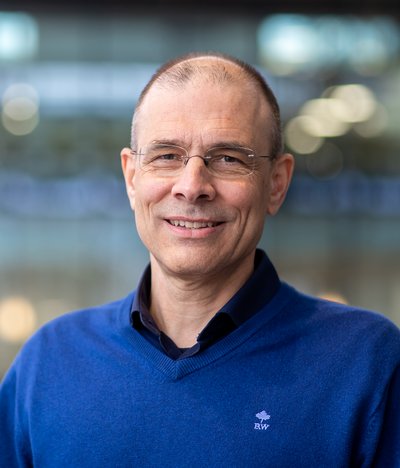
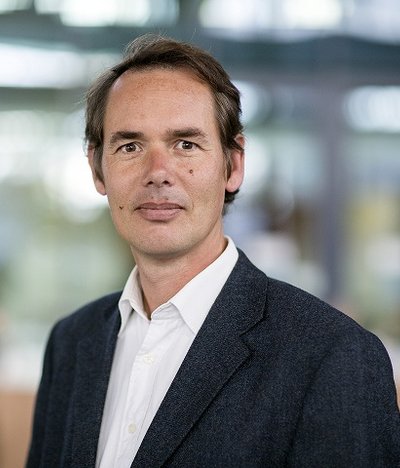
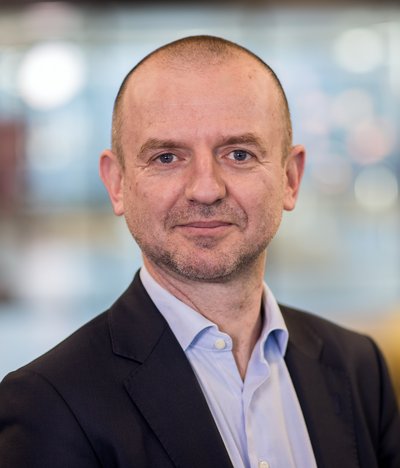
Dr. Matthieu Brinkhuis is an Associate Professor at the Faculty of Science , Utrecht University , with a focus on Software Technology for Learning and Teaching . He serves as Director of Education for the Department of Information and Computing Sciences and is a Senior Fellow at the Center for Academic Teaching and Learning. His work bridges Learning Analytics , Computational Psychometrics , and Human-Centered AI . Research Themes : AI Labs, Governing the Digital Society, Human-Centered Artificial Intelligence Technical Expertise : Data Science, Learning Analytics, Adaptive Learning Systems, Process Mining His scholarly output includes pioneering methods like the Urning Algorithm for dynamic ability tracking and Federated Learning Analytics balancing privacy and performance. He leads the Utrecht Platform for Applied Data Science and contributes to Higher Education Research through large-scale online learning systems. Notable collaborations include projects on Privacy in SMEs , E-Assessment Validation , and Cognitive Diagnostic Models for actionable educational feedback. His work has been published in venues such as the British Journal of Mathematical and Statistical Psychology and Frontiers in Education .
PAM (P) Overgaauw is a Researcher at Utrecht University's Faculty of Veterinary Medicine within the Department of Population Health Sciences and Institute for Risk Assessment Sciences (IRAS) . Active in zoonotic disease research, they serve as Treasurer/Secretary of ESCCAP Benelux , own Overgaauw Veterinary Advice , and collaborate with the Brabant Zoonoses Knowledge Network . Specializing in zoonotic diseases from companion animals , their work focuses on veterinary parasitology , microbiology , and One Health paradigms . Research spans environmental contamination , vector-borne diseases , and raw meat diet risks . Recent publications analyze zoonotic risks of raw meat diets , Giardia epidemiology , and tick distribution modeling . Their work integrates environmental hygiene , companion animal health , and public health policy , with a strong focus on pathogen transmission mechanisms and prevention strategies . Key collaborations include: ESCCAP Benelux leadership IRAS - One Health Microbial Agents Brabant Zoonoses Knowledge Network
Don Kalb is an Assistant Professor in Cultural Anthropology at Utrecht University's Faculty of Social and Behavioural Sciences. He chairs the Bryant Sovereignty and Social Contestation research group and has produced 93 research outputs throughout his career. His work spans multiple domains of anthropological inquiry with a particular focus on globalization, European integration, and Balkan studies. Dr. Kalb's research interests center on cultural and social anthropology with specific attention to globalization processes, late capitalism, wealth distribution, and political developments in Eastern Europe. His work often examines the intersection of economic systems, cultural practices, and political transformations, particularly in post-communist contexts. He has developed significant expertise in analyzing populism, European enlargement processes, and property rights regimes across different cultural settings. His scholarly contributions reveal a consistent focus on understanding how global economic forces interact with local cultural contexts. The publications spanning from the 1990s to 2014 demonstrate an evolving research trajectory that has increasingly addressed contemporary economic crises, inequality, and political transformations in Europe. His work connects historical anthropological approaches with contemporary social theory to analyze shifting social formations. Dr. Kalb has served as an editor for the academic journal Focaal across multiple years (1996, 1998, 1999, 2005), demonstrating his commitment to scholarly communication in anthropology. His extensive activity record shows 17 documented academic engagements including 11 invited talks, 4 editorial activities, conference participation, and committee membership. His academic service includes participation in the Reset-Summer program as a Senior Resource Person in 2005 and membership in external academic organizations since 2002. His invited talks at numerous international venues reflect the international recognition of his expertise, particularly in Balkan studies and globalization processes.
Dr. L.B. Snoek serves as an Assistant Professor in the Bioinformatics group within the Faculty of Science at Utrecht University. His research bridges computational biology with experimental approaches to understand genetic and phenotypic variation across different organisms. He leads the systems genetics and network biology lab, focusing on high-throughput techniques like RNA-sequencing to analyze complex biological interactions. Dr. Snoek obtained his Bachelor's degree in Biochemistry/Biotechnology from Enschede University College in 2000, followed by a Master's in Plant Biotechnology/Genetics from Wageningen University in 2002. He completed his PhD at Utrecht University in 2009, with subsequent research positions at Wageningen University, NIOO, and his current role at Utrecht University where he became Assistant Professor in 2020. His research interests center on genetical genomics and systems genetics, particularly studying natural variation in transcript abundance in organisms like Caenorhabditis elegans and Arabidopsis . He investigates how gene regulatory networks can be constructed using Recombinant Inbred Lines and Introgression Lines, with applications to agriculturally important traits and human disease models. His work on network biology focuses on integrating multi-level biological measurements to understand complex interactions from gene to ecosystem levels. Analysis of his recent publications reveals a strong focus on quantitative trait loci mapping, expression QTL analysis, and the impact of environmental factors on gene expression. His work spans plant biology (particularly lettuce, rice, and tomato), nematode genetics, and microbiome interactions, demonstrating an interdisciplinary approach that combines computational methods with experimental validation. Recent projects show increasing integration of machine learning and big data approaches to tackle complex biological questions. Dr. Snoek is actively involved in teaching, contributing to programs including Bioinformatics and Biocomplexity, Molecular and Cellular Life Sciences, and teaching courses on Python and R for life sciences. He currently serves as Principal Investigator for the LettuceKnow project, a TTW Perspective Grant focused on establishing lettuce as a model crop through quantitative genetics approaches. His lab maintains collaborations across multiple institutions, including ongoing work with NIOO-KNAW on ecosystem studies and Wageningen University on nematode research.
Dr. Ward van der Stam is an Assistant Professor in the Department of Inorganic Chemistry and Catalysis at Utrecht University's Faculty of Science. His research focuses on developing advanced electrocatalysts for CO 2 conversion, particularly through the synthesis and characterization of colloidal metal nanoparticles with controlled size, shape, and composition. He is actively involved in teaching electrochemistry courses at both undergraduate and graduate levels. His research interests span electrochemistry, electrocatalysis, spectroscopy, and CO 2 conversion technologies. Dr. van der Stam's work emphasizes the development of colloidal metal nanoparticles for CO 2 reduction reactions (CO 2 RR), with particular focus on understanding reaction mechanisms through in-situ diffraction and spectroscopy measurements under true reaction conditions. His group investigates how to direct C-C coupling to efficiently produce longer hydrocarbon chains (C>2) from CO 2 , addressing critical challenges in sustainable energy conversion. Analysis of his recent publications reveals a strong emphasis on multiscale in-situ characterization of electrocatalyst stability, facet-dependent restructuring of copper electrodes, and halide-guided active site engineering for selective CO 2 conversion. His work bridges fundamental understanding of reaction mechanisms with practical applications for sustainable energy technologies, with significant contributions to both electrochemical CO 2 reduction and advanced characterization methodologies. Dr. van der Stam is developing educational material for the new BSc course 'Electrochemistry' and the MSc course 'Advanced Electrochemistry,' and is involved in teaching multiple chemistry courses including Bachelor thesis projects, Master research chemistry modules, and Nanomaterials. His research group benefits from collaborations across Utrecht University and with international partners in the field of sustainable catalysis and energy conversion.
Marit van den Berg is a researcher at the Department of Clinical Sciences within Utrecht University's Faculty of Veterinary Medicine . Combining clinical practice with research, she specializes in endocrinology and internal medicine for companion animals. EBVS® European Veterinary Specialist in Companion Animal Internal Medicine PhD candidate on canine pheochromocytomas since May 2021 Supervised by Dr. S. Galac and Prof. Dr. H.S. Kooistra Educational Background: Degree in Veterinary Medicine (cum laude), Utrecht University (2016) Small Animal Rotating Internship & Residency in Internal Medicine, Ghent University (2016-2020) Diplomate, European College of Veterinary Internal Medicine-Companion Animals (ECVIM-CA) (2021) Research Focus: Primary research area involves canine pheochromocytomas , utilizing organoid models and transcriptome analysis to develop novel treatment approaches. Secondary interests include acute kidney injury biomarkers , hormonal profiling , and comparative oncology applications. Scientific Contributions: Her work spans both basic science (organoid development, transcriptome analysis) and clinical applications (diagnostic imaging, surgical outcomes). Awards highlight her expertise in endocrinology and oncology domains. Awards & Recognition: Best oral abstract, Wintervet 2024 Best oral presentation, Veterinary Science Day 2023 MSD award for best oral abstract, ECVIM-CA 2022 Andrew Higgins Prize 2018
Dr. Anke Huss is an Associate Professor in the Department of Population Health Sciences at Utrecht University's Faculty of Veterinary Medicine, where she leads research at the Institute for Risk Assessment Sciences (IRAS). Her work focuses on environmental epidemiology with special expertise in exposure assessment for spatially distributed environmental factors. Dr. Huss serves as co-Principal Investigator of the Dutch LIFEWORK cohort study and holds influential positions as a member of ICNIRP (International Commission on Non-Ionizing Radiation Protection) and SSM (Swedish Radiation Safety Authority), with previous service on the Dutch Health Council. Dr. Huss's research centers on advanced methods of exposure assessment for diverse environmental factors including electromagnetic fields, pesticides, perceived exposures, and noise. She investigates the health effects of these exposures across multiple domains including sleep quality, neurodegenerative diseases, and neurodevelopmental outcomes. Her methodological expertise spans case-control and cohort study designs, spatial analysis techniques, and innovative exposure modeling approaches that account for the complex spatial distribution of environmental risk factors. Her work bridges environmental science, epidemiology, and public health policy. Analysis of Dr. Huss's recent publications reveals a strong focus on electromagnetic field research, particularly RF-EMF exposure assessment and health effects. Her work demonstrates increasing sophistication in exposure modeling techniques while maintaining relevance to public health policy. Recent articles show growing attention to the nocebo effect in electromagnetic field research, methodological challenges in exposure assessment, and the intersection of environmental exposures with neurodegenerative disorders. Her research portfolio demonstrates consistent contributions to both methodological advancement in exposure science and practical applications for public health protection. Dr. Huss maintains active collaborations across international research networks, contributing to major scientific bodies that inform radiation protection guidelines. Her work has been featured in numerous media outlets where she provides expert commentary on environmental health topics, particularly regarding electromagnetic fields and pesticide exposures. She has organized significant scientific conferences including the ISEE Young 2015 conference for early career researchers in environmental epidemiology. At IRAS, Dr. Huss contributes to a vibrant research environment focused on environmental risk assessment. Her work connects with broader university initiatives related to sustainable development goals, particularly those addressing good health and well-being, sustainable cities and communities, and responsible consumption and production. Her research group employs interdisciplinary approaches that integrate epidemiology, spatial analysis, and exposure science to address complex environmental health challenges.
R.P. Sampat is a researcher at the Faculty of Aerospace Engineering, Delft University of Technology (TU Delft), specializing in combustion engineering and sustainable aviation technologies. His work focuses on jet-stabilized combustors, emission characterization, and turbulent flow analysis for propulsion systems. Research interests include: Combustion stability and reaction zone dynamics Emission modeling for jet propulsion Hydrogen-methane fuel blends Flow field distribution in novel combustor designs Flameless combustion systems Recent publications highlight his work on: Jet-in-coflow combustion evolution (2025) CH4-H2 blend emissions (2025) Enclosed jet-in-hot-coflow burner analysis (2024) Flameless combustor modeling (2022) These studies demonstrate expertise in combustion diagnostics, fuel efficiency, and sustainable aviation solutions.
Daan Swarts is an Associate Professor in Biochemistry at Wageningen University. His research focuses on prokaryotic immune systems, Argonaute proteins, CRISPR technology, and RNA interference mechanisms. Research output: 37 publications (15 most recent included) Projects: Active in 5 PhD projects on microbial immunity and genome editing Collaborations: Extensive international partnerships in molecular biology His work explores the intersection of bacterial defense systems, DNA repair, and applications of CRISPR for plant genome engineering. Articles demonstrate expertise in RNA-guided silencing, anti-defense evolution, and temperature-dependent immune system distribution. Scientific Awards: Research Award 2015 As co-promotor for PhD candidates Zhang, Sanz Andres, Potocnik, Barendse, and Olijslager, he contributes to training the next generation of researchers in microbial immunity and gene editing applications.
Bert van Beek is an Assistant Professor at the Department of Mechanical Engineering at Eindhoven University of Technology (TU/e). His research focuses on modeling, interactive simulation-based validation and visualization, supervisory control synthesis, and real-time controller code-generation for hybrid industrial systems. He is affiliated with the Control Systems Technology group and EAISI High Tech Systems, and is one of the founders of and major contributors to the CIF formalism and toolset. His academic background includes: Master of Science in Electrical Engineering from TU/e (1985, with distinction) PhD from TU/e (1993) Van Beek's research interests center around model-based engineering approaches for supervisory controller development. He has been instrumental in developing frameworks that combine formal methods with practical industrial applications, particularly in the areas of discrete-event systems and supervisory control synthesis. His work emphasizes the importance of proper theory and tools to achieve better systems in shorter development times. He has contributed significantly to the Eclipse Supervisory Control Engineering Toolkit (ESCET™), which supports the entire development process of controllers from specification to code generation. Analysis of his recent publications reveals a consistent focus on applying formal methods to industrial control problems. His work spans diverse application domains including baggage handling systems, infrastructure management, and complex machinery coordination. A common thread is the development of model-based approaches that enable automatic generation of correct-by-construction controllers. His research increasingly addresses challenges in scaling these techniques to handle real-world system complexity while maintaining usability for industrial practitioners. Van Beek has been actively involved in several international research projects including HYCON 1 and 2 (EU networks of excellence) and EU FP7 projects C4C and Multiform, where he served as work package leader. His collaborations span both academic and industrial partners, with notable projects involving Rijkswaterstaat (Dutch infrastructure agency) and ASML. He is a member of the Control Systems Technology group, which is part of the EAISI High Tech Systems initiative and Group Steinbuch at TU/e. This research group focuses on developing theoretical foundations and practical tools for model-based design of supervisory controllers, with applications across various industrial sectors.
Wan Fokkink is a part-time Full Professor of Model Based System Engineering at the Eindhoven University of Technology (TU/e) , affiliated with the Control Systems Technology Group in the Faculty of Mechanical Engineering. His research bridges theoretical computer science and mechanical engineering, focusing on formal methods for distributed systems and safety-critical software. Education : MSc in Mathematics (University of Amsterdam), PhD in Computer Science (University of Amsterdam) Affiliations : Vrije Universiteit Amsterdam (Full Professor of Theoretical Computer Science since 2004), TU/e (since 2012) Research Interests include applying formal modeling techniques to synthesize PLC code for civil engineering structures, protocol verification, and multi-valued abstraction methods. His work often involves collaboration with industry partners and national research institutes. Key Contributions are in model-based design frameworks that automate software transformation from requirements, with applications in baggage handling systems, network protocols, and distributed control algorithms. He co-founded IFIP Working Group 1.8 and chaired the national research school IPA board.
Sandro Etalle is a Full Professor at Eindhoven University of Technology (TU/e), leading the Security group within the Department of Mathematics and Computer Science . His research focuses on multi-faceted system security, spanning network monitoring, intrusion detection, and policy enforcement, with emphasis on industrial control systems and IoT environments. Co-founder of SecurityMatters , applying academic research to real-world cybersecurity challenges Active in EU projects like SECREDAS and SAFECARE Developed empirical frameworks for analyzing SCADA networks and automotive CAN systems His recent publications highlight vulnerabilities in healthcare protocols, IoT classification methods, and operational security analysis. Etalle also advises startups and venture capital funds in cybersecurity innovation. He has contributed to Dutch national cybersecurity agendas and led multiple EU/national research initiatives.
Johan J.M. Slot is a Professor at Eindhoven University of Technology , affiliated with the Mathematics and Computer Science department's Applied Analysis group. His research bridges polymer science, mathematical modeling, and materials engineering. Focus on step-growth polymerization , thermal buckling in composites , and microphase separation in copolymers Teaches courses such as Advanced Calculus and Tensor Calculus Recent publications highlight his work on polymer topology , fiber orientation in FRP , and Landau free energy calculations , with methodological innovations in bivariate distribution analysis. Collaborations include the Dutch Polymer Institute (Project 137) and DSM Material Science Center , with applications in industrial polymer manufacturing. Contact: j.j.m.slot@tue.nl
Dr. Tessa Diphoorn is an Associate Professor at the Department of Cultural Anthropology, Faculty of Social and Behavioural Sciences, Utrecht University. Her research focuses on policing, security, violence, and authority in Kenya and South Africa, with expertise in ethnographic fieldwork and sovereignty studies. ERC Starting Grant recipient (2024) for 'ARMIES' project Previously held NWO Veni Grant (2017-2020) Co-founder of Travelling Concepts on Air podcast Research Themes: She analyzes state and non-state security arrangements through comparative frameworks, examining algorithmic policing in South Africa, firearm communities in three continents, and digital surveillance systems in Kenya. Her work bridges Governing the Digital Society , Institutions for Open Societies , and Migration and Societal Change at Utrecht University. Key Publications: Her 2016 book Twilight Policing (University of California Press) established her as a leading scholar on private security in South Africa. Recent articles explore corporate sovereignty (2022), data-driven policing (2024), and nodal security governance (2024). Academic Leadership: She co-founded the Contesting Governance platform at Utrecht Center for Global Challenges and serves on editorial boards for security studies. Her interdisciplinary work appears in journals like Policing and Society and Anthropological Theory .
Prof.dr.ir. J.A. la Poutré is a professor at the Faculty of Electrical Engineering, Mathematics and Computer Science, specializing in intelligent electrical power grids. His work bridges computer science, energy economics, and power systems engineering. Research Interests : Smart energy market design and fair pricing mechanisms Congestion management in power distribution networks AI-driven optimization of energy systems Demand response and deferrable load coordination Research Outputs : His publications demonstrate expertise in applying multiagent systems, hybrid congestion models, and real-time forecasting to energy systems. Recent work focuses on balancing fairness and welfare in grid management while enabling carbon-free energy transitions through AI. Supervision : He has supervised 5 academic works, though specific student names are not detailed in the provided text.