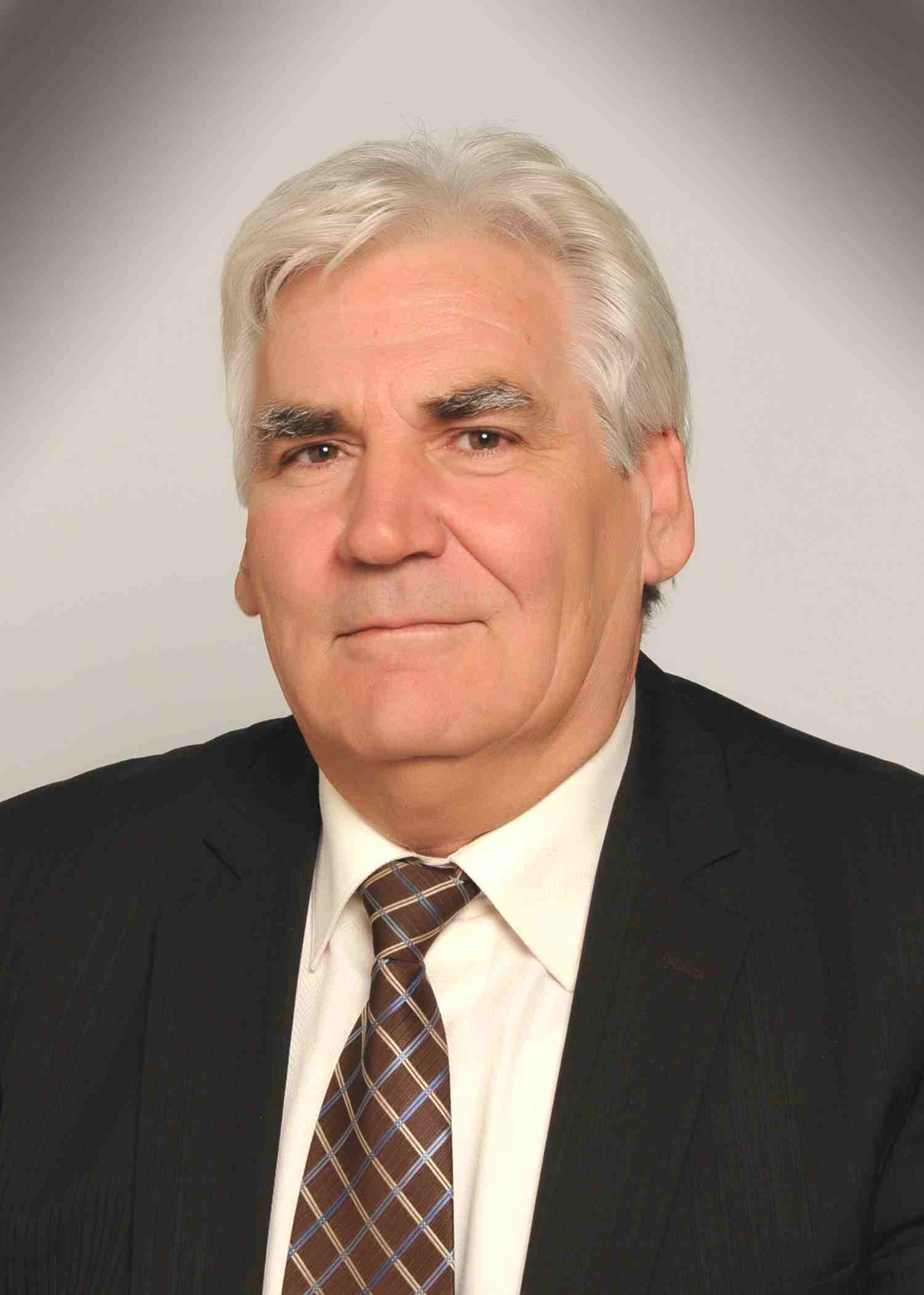
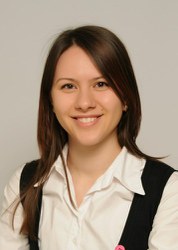
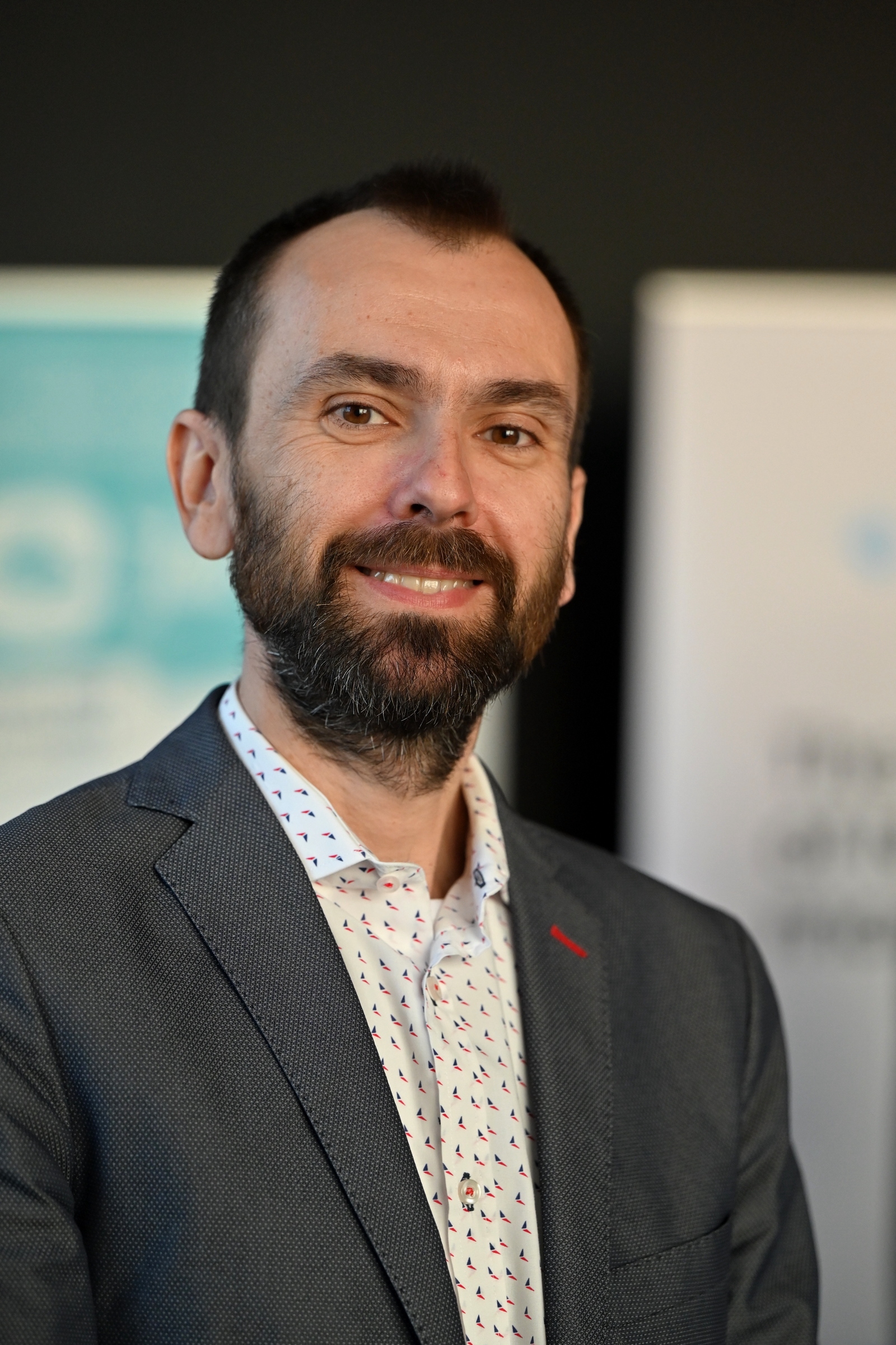
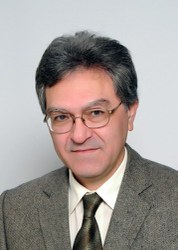
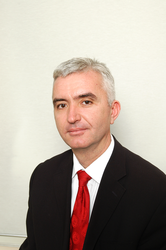
Arsenov Arsen is an Associate Professor at the Faculty of Electrical Engineering and Information Technologies (Ss. Cyril and Methodius University in Skopje), affiliated with the Institute of Power Plants and Switchgear. His work focuses on power systems, electrical engineering, and renewable energy technologies. Research interests include energy distribution systems, switchgear innovation, and power plant optimization. No specific awards or recent publications are listed in the provided texts. Currently active as part of the academic staff, with no indication of part-time status or retirement. Contactable via aarsenov@feit.ukim.edu.mk.
Dimirovski Georgi is a Professor at the Department of Control and Systems Engineering, Faculty of Electrical Engineering and Information Technologies, Ss. Cyril and Methodius University of Skopje. His research focuses on advanced control systems, neural networks, cyber-physical systems, and computational cybernetics. He has extensively contributed to theoretical and applied aspects of switched systems, nonlinear control, fault-tolerant mechanisms, and networked control systems. His work integrates methodologies such as Lyapunov theory, adaptive control, and reinforcement learning to address complex challenges in robotics, aerospace, and industrial automation. Recent studies emphasize resilient control under adversarial attacks, optimal resource allocation, and synchronization of dynamic systems. Key research trends include: (1) developing robust control strategies for systems with time-delays and uncertainties, (2) enhancing cybersecurity in cyber-physical systems through deception attack detection and mitigation, and (3) advancing machine learning techniques for real-time system estimation and prediction. Dimirovski has published over 200 peer-reviewed articles, with recent contributions appearing in top journals and conferences. His work frequently explores intersections between control theory and artificial intelligence, particularly in applications requiring safety-critical performance guarantees.
Dr. Aristotel Tentov is a Full Professor at the Faculty of Electrical Engineering, Computer Science Department of the University 'St. Kiril i Metodij' in Skopje, Macedonia. He holds a Ph.D. in Computer Science (1994), M.S. (1989), and B.S. (1983) from the same university. His career spans over three decades, progressing from Research Assistant (1985) to Assistant Professor (1994), Associate Professor (1999), and Full Professor (2004). His research encompasses Computer Architectures Multiprocessor Systems Networking (Wired/Wireless/ATM) Embedded Systems RFID Process Control Dr. Tentov authored/co-authored over 20 scientific papers and technical reports, with notable work on TCP performance modeling (2000–2001) and double-loop network analysis (1990s). Projects include NATO fighter avionics integration (1991) and EU-funded HeliNet stratospheric network design (2001). He led multiple industrial projects including control systems for zinc smelters, university computer networks, and the Macedonian Rosetta Stone deciphering initiative (2003–2005). His work bridges academic research with practical industrial solutions.
Nuhi Besimi is an Assistant Professor at the Faculty of Contemporary Sciences and Technologies, South East European University (SEEU). His research focuses on machine learning, data mining, AI applications in education and music, and disaster response systems. He has published extensively in conferences like MECO and IEEE, addressing topics ranging from ethno-fusion music datasets to low-cost machine learning architectures. His work includes creating benchmark datasets for ethno-fusion music, developing energy-efficient ML systems using Raspberry Pi clusters, and analyzing media bias through data mining. Besimi collaborates with institutions in Montenegro, Croatia, and Albania on interdisciplinary projects. Recent trends in his publications emphasize AI-driven solutions for education, music technology, and disaster management. He has contributed to fake news detection surveys and automatic literature review systems leveraging OpenAI tools. His research bridges theoretical data science with practical applications in diverse cultural and technological domains.
Katerina Angelevska - Najdeska is an academic researcher at St. Clement of Ohrid University - Bitola, specializing in tourism economics and marketing. With a doctoral thesis completed in 2009 on tourist resource management for sustainable tourism development in Macedonia, she has established herself as a prominent researcher in Balkan tourism studies. Her research spans sustainable tourism development, tourist resource valorization, marketing management in tourism, intercultural competence of tourism professionals, and insurance market analysis. She has extensively studied Macedonian tourism potential, particularly focusing on the Southwest Planning Region, spa tourism, and Ohrid's tourism offerings. Her work demonstrates how market mechanisms can be leveraged for effective tourism resource management and sustainable development. Analysis of her recent publications reveals a consistent focus on practical applications of tourism theory to Macedonian contexts, with increasing attention to wellness tourism, intercultural communication in tourism services, and the economic impacts of tourism development. Her research often employs interdisciplinary approaches, combining economics, marketing, and cultural studies perspectives. She has been actively involved in regional development projects, including the Study on the Tourism Potentials in the Southwest Planning Region (2013) and the Programme for the Development of the Southwest Planning Region (2010-2015), demonstrating her commitment to practical applications of academic research for regional economic development. Her collaborative work with colleagues across multiple institutions indicates strong networking within the Balkan academic community, particularly in tourism and economics research. While specific grant information isn't provided in the available materials, her sustained publication record and involvement in regional development projects suggest successful research funding acquisition.
Suzana Loshkovska, PhD , is a Full Professor at the Faculty of Computer Science and Engineering of Ss. Cyril and Methodius University in Skopje , Macedonia. Since 1992 she has held continuous academic appointments, interrupted only by a visiting-researcher stay at the Academy of Sciences of Lower Austria (1993–1994) where she designed a medical information system for Krems Hospital. Education : BSc (1989) and MSc (1992) in Computer Science and Automation, Faculty of Electrical Engineering, Skopje PhD (1995) in Technical Sciences, Technical University of Wien, Austria Research Interests span programming, visualization, human–computer interaction, virtual reality, medical imaging, and modelling/visualization of medical processes. Her work integrates advanced algorithmic techniques—such as hierarchical multi-label classification, support-vector machines, predictive clustering trees, and Bayesian networks—into practical medical and multimedia applications. Across more than one hundred peer-reviewed publications, her recent articles concentrate on content-based medical image retrieval , annotation of medical images , visual concept detection , and interactive medical systems . These contributions collectively advance computer-aided diagnosis, clinical decision support, and efficient management of large-scale medical data sets. Scientific Awards & Recognition : Member, Editorial Board, INFORMATICA (international journal, Slovenia) Projects & Funding : Principal investigator or participant in bilateral and EU-funded projects including SEE-ERA.NET Plus, TEMPUS DL@WEB, TEMPUS M.Sc. E-Learning, and multiple Macedonian Ministry of Science grants covering medical imaging, environmental modelling, distance learning, and electromagnetic-effects visualisation. While no specific research group or laboratory name is provided, her sustained involvement in national and international projects indicates active leadership within the university’s medical-informatics and multimedia-research community.
Xhemal Zenuni is a Full Professor and current Dean at the Faculty of Contemporary Sciences and Technologies, South East European University (Tetovo, North Macedonia). His academic career spans multiple roles from IT Administration Assistant (2003-2004) to progressively senior positions including Young Assistant (2004-2006), Assistant (2006-2008), Assistant Professor (2013-2018), Associate Professor (2018-2023), and now Full Professor since 2023. Education: PhD in Computer Sciences (2006-2012, Technical University of Sofia), specialization in Computer Systems, Complexes and Networks Master of Sciences in Informatics (2004-2005, New Bulgarian University), specialization in Internet Software Technologies Bachelor of Sciences in Computer Sciences (2001-2003, SEEU) With expertise in Machine Learning , IoT , Cloud Computing , and Database Systems , his research focuses on applying AI/ML techniques across multiple domains. Recent work includes predictive modeling in education, hate speech detection for Albanian social media, smart agriculture systems, and microservices architecture migration. His publications demonstrate consistent engagement with modern computational challenges, particularly around low-resource language processing , smart city infrastructure , and educational technology . While serving as Dean and Vice-Dean, he has maintained active research output through collaborations with colleagues like Mentor Hamiti, Jaumin Ajdari, and Florije Ismaili.
Azir Aliu is a Part-Time Full Professor at the Faculty of Technical Sciences , South East European University (Tetovo, North Macedonia). His academic focus lies in computer science, cybersecurity, and blockchain technology, with a career spanning technical research and education in digital systems. Email: azir.aliu@seeu.edu.mk Address: Ilindenska bb, Tetove Phone: +389 44 356 168 Research Interests: Aliu's work bridges advanced computing with practical applications in education, security, and blockchain. His recent research emphasizes academic ranking platforms , blockchain integration in higher education , and data mining techniques for curriculum-market alignment . Earlier studies explored cryptography , cybersecurity challenges , and natural language processing for Albanian language . Publication Trends (2018-2024): Spanning blockchain for academic systems, cybersecurity frameworks, and sentiment analysis in multilingual contexts, his work reflects interdisciplinary collaboration across North Macedonia, Turkey, Montenegro, and Bahrain. Topics include smart contract implementation , parallel computing architectures , and child online safety .
Артан Лума is a Full Professor at the Faculty of Contemporary Sciences and Technologies, South East European University (Tetovo, North Macedonia). He holds a PhD in Computer Sciences (Cryptography) from SEEU, a Master's in Multimedia, and an engineering degree in Informatics. His academic roles span over two decades, including Deputy Director of e-Learning Center and prior positions as Associate Professor (2015–2020), Assistant Professor (2010–2015), and Teaching Assistant (2003–2010). His research focuses on Cryptography, Cybersecurity, Blockchain Technology, and Data Mining, with notable contributions to academic credential verification systems, alignment of university curricula with job markets, and industrial IoT security. He has authored/co-authored over 40 peer-reviewed publications in venues like IEEE, International Journal of Online and Biomedical Engineering, and SAR Journal. Key Research Themes: Blockchain applications in education, cybersecurity frameworks for IIoT, parallel computing algorithms. Grants/Projects: Developed the North Macedonia Research Ranking Platform and collaborated on EU-funded projects aligning education with labor market needs. Educational Leadership: Pioneered e-Learning initiatives and curriculum modernization in Balkan universities.
Leyla Abazi-Bexheti is a Full Professor of Computer Sciences at the Faculty of Modern Sciences and Technologies, South East European University (SEEU) in Tetovo, Macedonia. She holds a Doctorate in Computer Science (2009) from SEEU, a Master's in Electrical Engineering (2006) from Ss. Cyril and Methodius University, and a Computer Science Engineering degree (2000) from the same institution. Her research focuses on e-learning systems, cybersecurity, open data governance, VR/AR integration in education, and gender disparities in computing. She has held leadership roles including Director of the PhD School (2019–present), Pro Rector for Academic Issues (2016–2018), Dean of Faculty (2014–2015), and Director of the eLearning Center (2010–2014). Her work spans 20+ peer-reviewed publications since 2016, emphasizing machine learning applications in safety analytics, VR/AR pedagogy, and policy-driven open data initiatives. She has co-authored studies on road accident prediction using web data and cyber efficacy in public platforms. Her research often intersects technology adoption challenges in Balkan educational systems. Abazi-Bexheti has led institutional reforms in academic governance, curriculum development, and digital transformation initiatives. She contributes to international conferences (MECO, MIPRO, ENTRENOVA) and collaborates with institutions across Europe on ICT education frameworks and gender equity in STEM fields.
Sanja Atanasova is an Associate Professor in the Department of Mathematics and Physics at the Faculty of Electrical Engineering and Information Technologies (FEIT), Ss. Cyril and Methodius University in Skopje. Her academic journey includes a PhD in Mathematical Sciences from the University of Novi Sad, Serbia, under the mentorship of Academician Stevan Pilipović. She also holds a postgraduate degree in Applied Mathematics from FEIT and a Mathematics teaching diploma from the same university. Her research focuses on integral transforms, time-frequency analysis, asymptotic behavior of distributions, and their applications in signal processing and mathematical physics. Key projects include collaborations with institutions in Austria and Serbia on Frame Theory, Microlocal Analysis, and Asymptotics in coorbit spaces. She has co-authored textbooks like Introduction to Probability for Engineers and contributed to numerous peer-reviewed publications. Atanasova actively participates in international conferences and workshops, presenting on topics such as the Stockwell transform, Gabor frames, and wavelet applications. She is a member of professional organizations including European Women in Mathematics (EWM) and the International Society for Analysis and its Applications (ISAAC). Her work emphasizes bridging theoretical mathematics with practical engineering challenges.
Vladimir Atanasovski is an Adjunct Professor at the Department of Telecommunications, Faculty of Electrical Engineering and Information Technologies (FEIT) at Ss. Cyril and Methodius University in Skopje. He holds a Doctorate in Technical Sciences (2010), a Master’s in Electrical Engineering (2006), and a Bachelor’s in Electrical Engineering (2004), all from the University of Skopje. His career spans over 19 years at FEIT, progressing from Demonstrator (2004–2006) to Assistant Professor (2006–2010), Associate Professor (2010–2015), and Adjunct Professor since 2015. His research focuses on telecommunications , blockchain applications , and AI integration in academic systems. Notable areas include blockchain-based diploma verification systems, 5G network optimization, IoT traffic classification, and radio spectrum management. He has contributed to projects like eWALL for eHealth platforms and Flash Crowd Management in virtualized networks. Recent publications emphasize blockchain security , AI-driven credential verification , and 5G NR architecture . His work bridges academia and industry, addressing challenges in cybersecurity, network efficiency, and education technology. Vladimir’s expertise extends to collaborative projects with international partners, leveraging machine learning and cognitive radio networks for innovative solutions in telecommunications and smart systems.
Kjosev Josif is an academic affiliated with the Faculty of Electrical Engineering and Information Technologies at Ss. Cyril and Methodius University in Skopje. He holds a position in the Department of Electronics within the Institute of Electronics. His work focuses on practical applications of electronics in education and industrial systems, with a particular emphasis on power electronics, embedded systems, and circuit design. His research interests include developing educational tools using embedded systems (e.g., toys as teaching aids), optimizing power conversion techniques, and designing instrumentation for network infrastructure. He has contributed to advancements in switched-capacitor converters, stepper motor synchronization, and low-component-count power solutions. His publications reflect a blend of theoretical and applied electronics engineering, spanning from foundational circuit design (1996) to modern applications like 3D printer motor control (2018). While no formal awards are listed, his work demonstrates sustained engagement in both academic research and pedagogical innovation. He is currently active in the academic community, contributing to the Department of Electronics’ research and teaching activities without any indication of emeritus or retired status.
Pero Latkoski is a Professor at the Faculty of Electrical Engineering and Information Technologies (FEIT) of Ss. Cyril and Methodius University of Skopje, specializing in Telecommunications. He holds a PhD from FEIT (2010), M.Sc. (2006), and B.Sc. (2004) from the University of Technology in Skopje (ETF). His research focuses on wireless communication systems, spectrum management, heterogeneous networks, and protocol engineering. Notable contributions include work on cognitive radio networks, secondary spectrum usage (e.g., TVWS), and network function virtualization (NFV) architectures. He has led projects on RIWCoS platform development for heterogeneous networks and contributed to digital switchover (DSO) studies in Macedonia. Latkoski has authored over 60 peer-reviewed articles and two books. His recent work explores blockchain applications in education and healthcare, AI-driven perimeter security, and 5G/edge computing integration. He actively collaborates with institutions like SPRINGER, IEEE, and COST Action IC0902. Labs/Teams: Head of Telecommunications Institute at FEIT, RIWCoS platform developer, and contributor to COST Action IC0902 spectrum whitespace initiatives.
Prof. Goran Rafajlovski is a Full Professor at the Faculty of Electrical Engineering and Information Technologies (FEIT), Ss. Cyril and Methodius University of Skopje. He holds a Ph.D. in Electrical Engineering and has extensive experience in academia, industry, and diplomacy. His roles include former General Director of Electrostopyanstvo Macedonia (1998–2001) and Ambassador of the Republic of Macedonia to Germany (2001–2005). He has been a member of IEEE-IAS since 1989 and chairs the Energy Committee at the European Commission’s DG RTD-Unit K1-Energy. Education: Diploma in Electrical Engineering (1987, Skopje), M.Sc. (1991, Zagreb), Ph.D. (1996, Skopje). Research Interests: Focuses on electric drives, power quality, renewable energy integration, and energy policy. His work addresses harmonic mitigation in power systems, transformer efficiency optimization, and sustainable energy strategies for the Western Balkans. He actively participates in international conferences and advises on EU energy security policies. Professional Contributions: Over 80 publications, including seminal works on vector-controlled drives, energy efficiency in Macedonia, and renewable energy systems. Served as DAAD Alumni Club representative and chairs the Boris Trajkovski Foundation. Additional Roles: Engaged in policy-making through roles like Energy Committee member of the European Commission and guest lecturer at institutions such as the Lower Austria State Academy. His work bridges technical innovation with geopolitical and economic challenges in energy sectors.