

Gilbert Fridgen is Full Professor in Digital Financial Services and holder of the PayPal-FNR PEARL Chair at the University of Luxembourg's Interdisciplinary Centre for Security, Reliability and Trust (SnT). He leads the FINATRAX research group focusing on blockchain, digital identity, and sustainable digital solutions. His research explores decentralized technologies in finance, energy systems, and public administration. Current projects investigate blockchain applications in industrial demand response, NFT markets, EU digital identity wallets, and DeFi institutional adoption. Prof. Fridgen examines the intersection of technology with regulatory frameworks and user behavior in energy and financial systems. He collaborates extensively with industry partners including PayPal and Spuerkeess. Prof. Fridgen actively contributes to EU digital policy discussions, particularly regarding the European Digital Identity Wallet framework and decentralized finance governance.
جستجوی استاد راهنمای دانشگاهی
برای مسیر پژوهشیتان، استاد راهنما، استاد دانشگاه و پژوهشگر مناسب را پیدا کنید و با آنها ارتباط بگیرید.
نمایش ۱-۱۵ از ۴۴ استاد راهنما
اطلاعات پروفایلها از صفحات عمومی دانشگاهها گرفته شده و ممکن است بهروز نباشد.
Grégoire DANOYمشاهده پروفایل
پژوهشگر
Grégoire DANOY is a Researcher at the University of Luxembourg's Interdisciplinary Centre for Security, Reliability, and Trust (SnT) and Head of the Parallel Computing and Optimization Group (PCOG). He specializes in artificial intelligence, with a focus on optimization algorithms, machine learning, and swarm intelligence. His work addresses challenges in cloud computing, high-performance computing, smart mobility, and unmanned autonomous systems like drone swarms. He has authored over 150 publications, including articles in IEEE Transactions and conferences like NeurIPS and GECCO. He currently leads major projects such as UltraBO (€1.019M), ADHOC (€1.291M), and SERENITY (€1.228M), collaborating with institutions in France and Poland. Education: PhD in Computer Science (2008) from École Nationale Supérieure des Mines de Saint-Étienne, Master’s in Computer Science (2004), and Industrial Engineering Degree (2003) from Luxembourg University of Applied Sciences. Research Interests: Developing novel AI techniques for solving large-scale optimization problems, with applications in distributed systems, autonomous robotics, and federated learning. He emphasizes scalable solutions for combinatorial challenges using parallel computing and swarm intelligence. Grants & Projects: Principal Investigator for EU-funded initiatives like ADARS (2021–2024) and FNR PoC/SIMMS (2019–2021). His work bridges academia and industry, with technology transfer projects in autonomous robot swarms. Awards: Recognitions include the Best Student Paper Nomination (2022), IEEE CybConf Best Paper Award (2017), and ACM GECCO nominations (2016, 2009). He serves on the editorial board of Engineering Applications of Artificial Intelligence (EAAI). Labs & Teams: Leads the Parallel Computing and Optimization Group (PCOG), focusing on interdisciplinary research in AI and distributed systems. He also contributes to outreach programs like FNR's Researchers at School.
Radu State is Full Professor in Network Management and Cyber Security at the University of Luxembourg's Interdisciplinary Centre for Security, Reliability and Trust (SnT), where he leads the SEDAN research group. Research focuses on: Network security architectures Distributed system management Service-oriented security Cybersecurity protocols His work addresses fundamental challenges in secure network operations and resilient service deployment across complex infrastructures.
Pascal BOUVRY is a full Professor of parallel computing and optimization techniques at the University of Luxembourg's Department of Computer Science , within the Faculty of Science, Technology and Medicine (FSTM) . He currently serves as the Dean of the FSTM and leads the Parallel Computing and Optimisation group . Additionally, he oversees the University's High Performance Computing (HPC) infrastructure. His research focuses on parallel computing, optimization algorithms, distributed systems, and their applications in bioinformatics and distributed environments. Prof. BOUVRY holds a Ph.D. in Computer Science from the University of Grenoble (France) and has extensive industry experience, including roles as CEO/CTO of tech firms and leadership in telecom and financial services sectors. He has pioneered initiatives like the Master in High-Performance Computing and Technopreneurship programs at the University of Luxembourg. His research interests span GPU programming paradigms , federated learning , distributed optimization , and trustworthy AI . Recent work includes advancements in HPC education frameworks, federated learning frameworks (e.g., FedPref), and quantum circuit optimization. He contributes to editorial boards of journals like IEEE Transactions on Sustainable Computing and IEEE Cloud Computing Magazine. Prof. BOUVRY has held international leadership roles, including as Honorary Chair of conferences and active participation in technical committees. His educational efforts emphasize bridging academic research with industrial applications, particularly in HPC and AI.
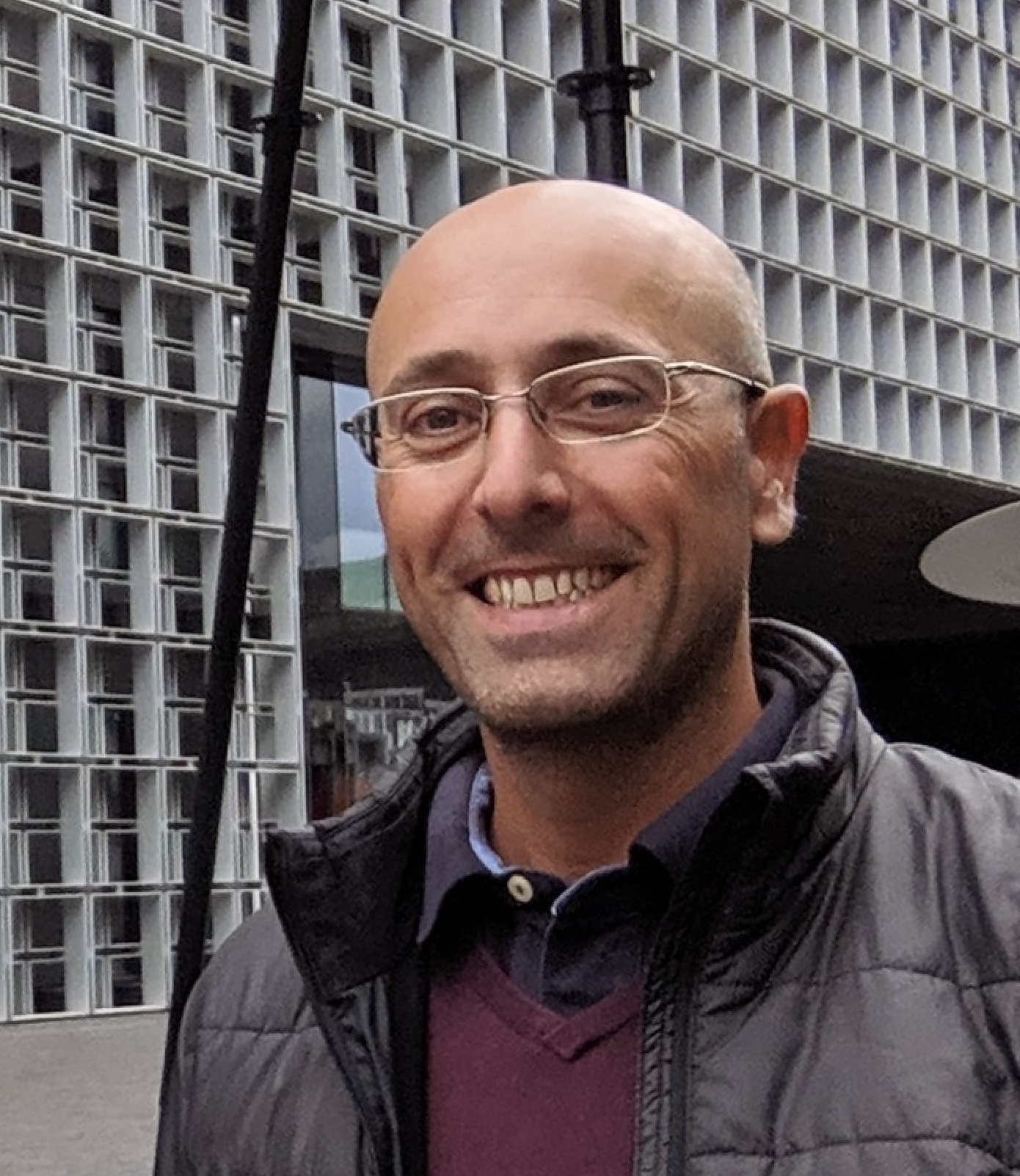
Alfredo Capozucca is a full permanent Researcher at the Department of Computer Science (DCS) within the Faculty of Science, Technology and Medicine (FSTM) at the University of Luxembourg. He holds a PhD in Computer Science from the University of Luxembourg (2010) and an M.S. from the National University of Rosario, Argentina (2003). His research focuses on modern software engineering methods, dependable systems, and computing education, with an emphasis on formal verification and sustainable computing practices. Capozucca has contributed to the design of courses at undergraduate and master's levels, including serving as Deputy Programme Director for the BSc in Computer Science from 2021-2024. His work bridges theoretical foundations with practical applications in education and industry. Research interests prominently include AI in education (e.g., ChatGPT's role in formal specification writing), formal verification techniques, and the integration of DevOps philosophies into academic curricula. He has authored numerous papers on topics ranging from security policy analysis to energy-efficient transactional models. Capozucca's contributions extend to open-source projects and tool development, such as the Messir UML requirements engineering tool. His teaching spans software engineering fundamentals, dependability, and modern DevOps practices, reflecting a commitment to aligning education with industry needs. Key professional roles include R&D engineer positions (2004-2006) and leadership in educational program design. His research infrastructure is based at the Maison du Nombre facility in Luxembourg. While no specific grants or awards are listed, his extensive publication record and teaching contributions highlight sustained academic engagement.
Konstantinos KANAVOURAS is a Doctoral Researcher at the Interdisciplinary Centre for Security, Reliability and Trust (SnT) within the University of Luxembourg, specifically in the Space Systems Engineering research group (SpaSys). He is advised by Prof. Andreas Hein and focuses on model-based systems engineering, software development, and aerospace engineering applications in satellite systems. His research integrates agile methodologies and machine learning for spacecraft design and anomaly detection. Kanavouras holds a Master’s degree from Aristotle University of Thessaloniki (2021) and contributed as an avionics engineer to ESA’s AcubeSAT nanosatellite project under the Fly Your Satellite! program. His work emphasizes lightweight data management tools, PocketQube missions like POQUITO, and fractionated satellite systems for planetary observation. His publications highlight trends in small satellite development, including agile systems engineering practices, thermal anomaly detection via machine learning, and adapting space projects to remote collaboration (e.g., during the pandemic). Key projects include the University of Luxembourg’s first PocketQube mission (POQUITO) and lean approaches to spacecraft subsystems. Current affiliations include the SpaSys group at SnT, with a focus on interdisciplinary collaboration between systems engineering and software development. No scientific awards are listed, but his work aligns with cutting-edge space technologies and mission design.
Prof. Leon van der Torre is a full professor of computer science at the University of Luxembourg, affiliated with the Lab for Intelligent and Adaptive Systems (ILIAS). He specializes in formal models of reasoning and interaction in intelligent systems, with research spanning deontic logic, argumentation theory, cognitive robotics, and compliance technologies. He was granted the Bao Yugang Chair Professorship at Zhejiang University (2023) and has held visiting positions, including at Stanford University's CSLI (2013). His research focuses on integrating logical formalisms with computational systems to address normative reasoning, multiagent coordination, and ethical AI. Key contributions include work on argumentation frameworks, deontic logic applications, and formal models of normative systems. He teaches courses such as 'Introduction to Intelligent Systems' and 'Game Theory', reflecting his expertise in AI and computational reasoning. Prof. van der Torre actively participates in international conferences (e.g., DEON, PRIMA) and has authored over 400 publications. His work bridges theoretical foundations with practical applications, addressing challenges in AI ethics, legal reasoning, and multiagent systems coordination.
Raphaël Frankمشاهده پروفایل
استادیار
Dr. Raphaël Frank is an Assistant Professor and Senior Research Scientist at the University of Luxembourg's Interdisciplinary Centre for Security, Reliability and Trust (SnT), where he leads the UBIX Research Group and directs the ATLAS IPBG Programme. With over 80 peer-reviewed publications, his research focuses on intelligent distributed systems, network security, and ubiquitous computing architectures. Dr. Frank serves on the University Council and actively participates in international scientific committees as a senior IEEE member. His professional experience includes co-founding Motion-S (the University of Luxembourg's first tech spin-off) where he served as Operations Director. He holds a Master's in Cryptography and Network Security from Université Joseph Fourier and a Ph.D. in Computer Science from University of Luxembourg, including research at UCLA.
François Koulischer is an Assistant Professor in Sustainable Finance at the University of Luxembourg's Department of Finance (Faculty of Law, Economics and Finance). He is also an affiliated researcher with the MFI and MECSD Chair in Sustainable Finance. His research focuses on sustainable finance mechanisms, monetary policy impacts, and housing market dynamics. Key areas include ESG disclosure regulation, tax policies affecting housing affordability, and the distributional effects of low interest rates on household debt. His work bridges theoretical financial economics with policy-relevant analysis, particularly in central bank liquidity operations and crisis responses. Notable contributions include studies on quantitative easing mechanisms in the Eurozone and the visible hand of policy during the 2020 pandemic. He has been recognized with the American Real Estate Society's Manuscript Prize for his work on tax subsidies and housing markets. Publications span high-impact journals such as the Journal of Financial Economics and Journal of Financial Stability , with a focus on banking systems, collateral frameworks, and crisis management. His research often integrates empirical evidence from Luxembourg and broader European contexts, emphasizing policy implications for financial stability and equitable growth.
Christos KOULOVATIANOS is a Full Professor and Head of the Department of Finance at the University of Luxembourg's Faculty of Law, Economics, and Finance. His academic career includes roles as Associate Professor at the University of Nottingham, Assistant Professor at the University of Vienna, and Visiting Professorships at Goethe University Frankfurt and the University of Cyprus. He holds a PhD from the University of Rochester (1999). His research focuses on the intersection of finance and micro-founded macroeconomics, with specialties in asset pricing, household finance, fiscal policy, dynamic games, and resource economics. Key projects include the FNR-funded 'POPULISM' grant (2024-2027) examining social media polarization and the MORTGAGE project analyzing post-COVID-19 nonperforming loans. He has served on editorial boards and advised Luxembourg's economic policy during the pandemic. Publications span journals like Journal of Economic Theory , European Economic Review , and Dynamic Games and Applications . Recent work addresses populism dynamics, demographic impacts on FDI, and policy evaluation of pronatalist measures.
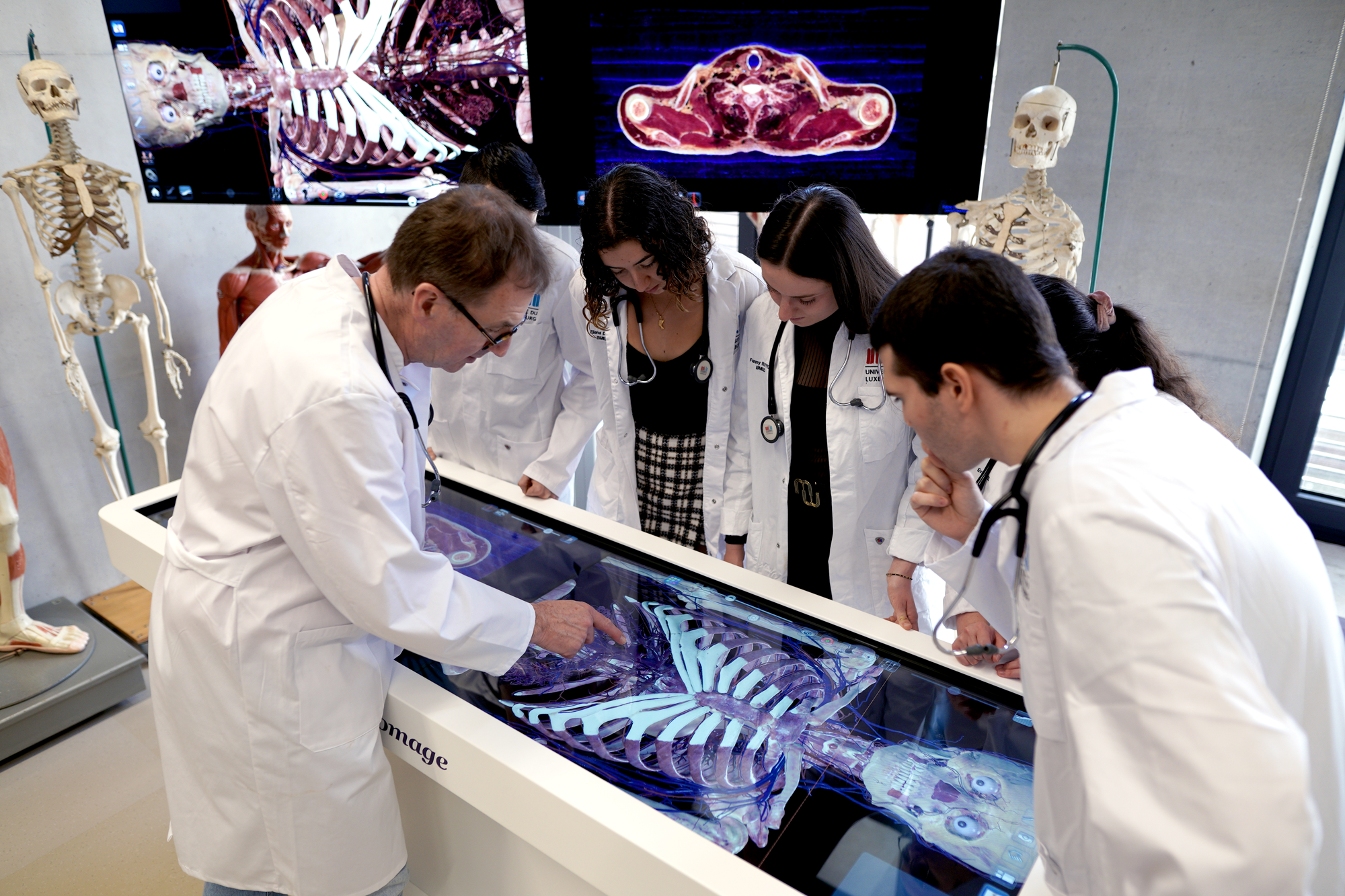
Ivan Nourdin is a Full Professor of Stochastic Modelling in the Department of Mathematics at the University of Luxembourg. He holds a PhD in Mathematics from Université de Lorraine (2004) and has held academic positions at Université Pierre et Marie Curie (2005–2010) and Université de Lorraine (2010–2014). His research focuses on probability theory, stochastic analysis, and their applications to statistics, geometry, and data science. He co-founded GrewIA, a startup focused on AI and mathematics education. **Research Interests**: Malliavin calculus, Stein’s method, functional inequalities, free probability, rough paths theory, inference for high-dimensional problems. He has authored/co-authored over 80 journal articles and two monographs, including the award-winning Normal Approximations with Malliavin Calculus (2012). **Awards**: 2015 FNR Award for Outstanding Scientific Publication, 2013 France Scopus Researcher Award, 2011 Fondation des Sciences Mathématiques de Paris Prize. **Advising & Teams**: Leads a research group including postdocs and PhD students. Former advisees include Simon Campese, Federico Dalmao, and Guangqu Zheng. His team explores topics like stochastic processes, limit theorems, and applications in AI. **Contact**: Office MNO E05 0515090, Maison du Nombre, University of Luxembourg. Phone: (+352) 46 66 44 6380. Email: ivan.nourdin@uni.lu.
Eva LAGUNASمشاهده پروفایل
استادیار
Eva LAGUNAS is an Assistant Professor and Deputy-Head of the SIGCOM research group at the Interdisciplinary Centre for Security, Reliability and Trust (SnT) , University of Luxembourg. Her expertise lies in Non-Terrestrial Communication Systems , focusing on radio resource management and wireless networks optimization. She holds a Ph.D. and M.Sc. in Telecommunications Engineering from the Polytechnic University of Catalonia (UPC), Barcelona. Key Affiliations & Roles: Principal Investigator (PI) of the FNR CORE project VARRAY-5G (Vehicular Phase Array Antennas for 5G) PI of the CHIST-ERA project SHIELD (Secure Distributed Learning & Smart Contract Ecosystems) Co-PI in the ESA ARTES-funded NeuroSat project (Neuromorphic Processors for SatCom) Deputy-Head of SIGCOM group and active contributor to the TelecomAI-Lab (AI-driven satellite communication) Event organizer: Special Session on ML for NTN at IEEE ICMLCN 2025, Track Chair at EUCNC 2025 Research Interests: Non-Terrestrial Networks (NTN), 6G integration, satellite-ground network convergence, AI-driven optimization, reconfigurable intelligent surfaces (RIS), and neuromorphic computing for onboard processing. She also leads efforts in vehicular communications and energy-efficient satellite payloads. Recent Achievements: 2025: Elected to the EURASIP Board of Directors 2024: Listed in the 100 Brilliant and Inspiring Women in 6G list 2023: Co-authored NeuroSat project's IEEE publication on neuromorphic computing for SatCom Labs & Projects: TelecomAI-Lab : Developing neuromorphic hardware (e.g., Intel Loihi2, BrainChip AKIDA) for satellite applications ESA NeuroSat : Pioneering neuromorphic processors for onboard SatCom resource management Grants & Funding: Secured Luxembourg National Research Fund (FNR) and CHIST-ERA grants for projects like VARRAY-5G and SHIELD, totaling over €2M in research investment.
Dr. Mirko HIRSCHMANN is a Postdoctoral researcher at the University of Luxembourg's Interdisciplinary Centre for Security, Reliability and Trust (SnT) , specializing in the Entrepreneurship, Innovation, and New Technology department. His research focuses on the intersection of entrepreneurship with sustainability, impact investing, and socio-economic challenges such as climate change, conflict zones, and economic inequality. He explores themes like B Corp certification, social enterprise financing, and policy-driven entrepreneurial behavior. His work spans environmental entrepreneurship (e.g., biodiversity loss impacts), conflict-driven economic adaptation, and institutional roles of family firms. Recent studies analyze how climate policies and conflict environments shape entrepreneurial strategies, alongside the role of trademarks in social innovation measurement. He has published widely on topics including impact investor vs. VC performance and social incubator selection criteria. Research trends show a strong emphasis on sustainability-driven entrepreneurship, with particular attention to certification systems (e.g., B Corp) and their signaling effects in finance markets. He also investigates how social enterprises balance market and social goals through IP strategies and funding mechanisms. No scientific awards are listed, though his contributions to interdisciplinary research are notable. His work is part of SnT’s broader mission to address societal challenges through innovative solutions. He collaborates on projects analyzing entrepreneurial resilience in crises and policy frameworks for equitable economic development.
Jorge GONCALVES is a Full Professor at the Luxembourg Centre for Systems Biomedicine (LCSB), University of Luxembourg, and a Principal Research Associate at the University of Cambridge's Department of Plant Sciences. He holds expertise in computational biology, systems biomedicine, and machine learning applications in healthcare. His roles include leading research on gene regulatory networks, epidemic modeling, and deep brain stimulation technologies. Education: Licenciatura from University of Porto (1993), M.S. and Ph.D. from MIT (1995/2000). Postdoctoral work at MIT and Caltech, followed by academic positions at the University of Cambridge (Lecturer, Reader, Principal Research Associate). Visiting Professorships at the University of Luxembourg and Caltech. Research Interests : Dynamical systems modeling, network inference, biomedical applications of AI, and systems biology. His work spans drug repositioning, early warning signals for disease transitions, and multiomics analysis in immunology. Publications : Focused on interdisciplinary approaches combining machine learning with biological systems. Key themes include computational methods for gene network analysis, epidemic monitoring systems, and AI-driven medical diagnostics. Awards : Not explicitly listed in provided texts. Advising and grants: Extensive collaboration with institutions globally, including leadership in EU-funded projects and industry partnerships. Active in mentoring researchers across computational biology and engineering disciplines. Labs/Teams: Leads LCSB teams focused on systems biomedicine and AI-driven health solutions. Collaborates with the University of Cambridge on plant sciences and robotics initiatives.
Marcus Völpمشاهده پروفایل
دانشیار
Marcus Völp is an Associate Professor and head of the CritiX research group at the University of Luxembourg's Interdisciplinary Centre for Security, Reliability and Trust (SnT). His research focuses on ultra-reliable operating systems, fault and intrusion tolerant systems for cyber-physical environments, and hierarchical hybridization techniques to construct resilient computing platforms. His work bridges theoretical foundations with practical implementations, particularly in developing dependable systems-on-chip that can withstand faults and intrusions. Research spans formal verification methods, radiation-hardened hardware, blockchain security, and autonomous vehicle safety systems. Recent publications demonstrate advancement in parameterized system verification, radiation effects on routers, and N-version machine learning for autonomous systems. His group maintains strong focus on practical resilience mechanisms for real-time and critical systems across computing layers.