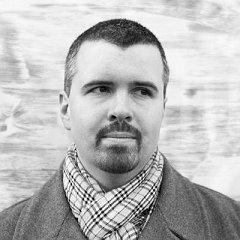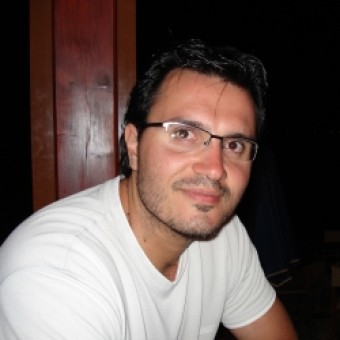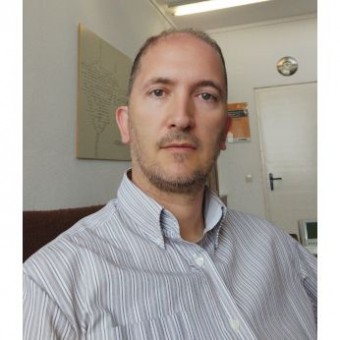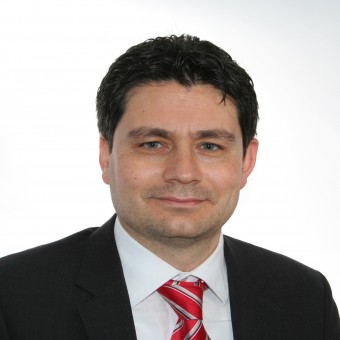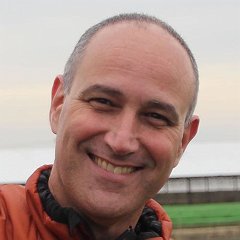
Erez Petrank is a Professor of Computer Science at the Technion - Israel Institute of Technology, where he holds the Andrew and Erna Viterbi Chair. His academic career spans decades with significant contributions to systems research, particularly in memory management and concurrent programming. He has maintained continuous academic service through leadership roles in major conferences including SPAA'24, ISMM 2023, and PPOPP 2021. His research focuses on concurrent computing, programming languages, and systems with special emphasis on memory management. Additional interests include parallelism, cryptography, data structures, approximation algorithms, and distributed computing. Petrank's work bridges theoretical foundations with practical systems implementation, particularly evident in his persistent memory research and garbage collection innovations. Petrank's publication record shows consistent contributions to ACM SIGPLAN conferences over two decades, with recent work focusing on non-volatile memory systems, lock-free data structures, and memory reclamation techniques. His research demonstrates a clear trajectory from foundational memory management concepts toward modern persistent memory architectures, reflecting adaptability to evolving hardware paradigms while maintaining theoretical rigor. H-index: 41 (Google Scholar) Erdos number: 2 62 co-authors across diverse research collaborations Petrank has mentored numerous researchers through his academic position and conference leadership roles, serving on program committees for major venues including PLDI, PPoPP, and ISMM. His professional service includes executive committee membership in ACM SIGPLAN (2009-2012) and steering committee roles for multiple conferences. He maintains active research collaborations with institutions worldwide, as evidenced by his extensive co-author list spanning theoretical computer science to practical systems implementation. His academic lineage traces back through Oded Goldreich, Shimon Even, and Hao Wang to intellectual giants including Isaac Newton and Galileo Galilei, reflecting deep roots in theoretical computer science and mathematics.